Why Cold Plunge Socks Deserve a Spot in Your Ice Bath Routine
Home / News / Why Cold Plunge Socks Deserve a Spot in Your Ice Bath Routine
September 27, 2026
Anyone who has lowered themselves into freezing water knows the first shock hits the feet. Cold plunge socks exist to soften that first jolt without dulling the therapy itself. They wrap the extremities in a thin, water-tolerant layer while leaving the rest of the body exposed to the immersion that actually drives the physiological response people are after.
This matters because the feet and hands are disproportionately sensitive to cold. They carry a dense concentration of nerve endings and comparatively little insulating fat, so they often reach painful cold thresholds well before the torso does. For someone easing into a new cold exposure habit, that mismatch can be the difference between a sustainable routine and a session abandoned after ten seconds.
What Cold Plunge Socks Actually Do
Cold plunge socks are not wetsuit boots and they are not thermal ski socks repurposed for water. They are typically made from neoprene or a similar closed-cell material that traps a thin layer of water against the skin, which the body then warms slightly through its own heat. That trapped layer slows further heat loss without blocking the cold stimulus that reaches deeper tissue.
The practical effect is a buffer, not a barrier. Someone wearing them still feels cold. What changes is the intensity curve at the start of the session, which for many people is the part that determines whether they finish the plunge or climb back out.
Reduced sharp pain at the extremities during the first thirty to sixty seconds of immersion
Better grip and reduced slipping risk when stepping onto wet tub steps or decking
Lower likelihood of numbness that can make it hard to climb out safely afterward
That last point is worth pausing on. Numb feet on a wet step are a real fall hazard, and it is one of the more overlooked safety issues in home cold therapy setups.
Why Feet and Hands Feel Cold Faster Than the Rest of the Body
The body prioritizes core temperature over extremity temperature. When cold water hits the skin, blood vessels in the hands and feet constrict first, redirecting blood flow toward the trunk to protect vital organs. This is a normal and healthy vasoconstriction response, but it means circulation to the fingers and toes drops sharply within the first moments of a plunge.
For regular practitioners, this isn’t a flaw in the process. It’s the same vascular constriction and dilation cycle that proponents of cold immersion point to when discussing circulation benefits, since the rebound dilation after exiting the water is part of what drives increased blood flow to tissue. Cold plunge socks don’t interrupt this cycle. They simply make the entry phase tolerable enough that people stay in the water long enough for the full cycle to occur.
Matching Cold Plunge Socks to Tub Design
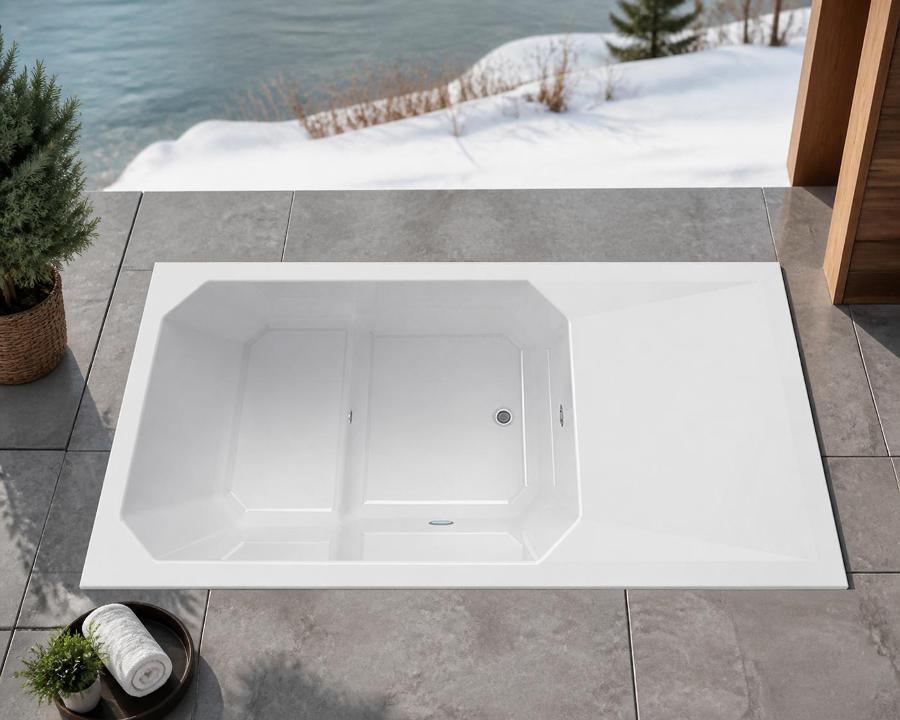
Not every ice bath is built the same way, and the tub’s interior geometry affects how much foot protection actually matters. A unit with a smooth, flat basin floor and no seating step puts more direct, sustained contact on the soles of the feet. A tub with an integrated entry step, like a stepped acrylic basin, changes where and how long the feet rest against a cold surface during entry and exit.
The Outdoor Cold Plunge Tub C02, for example, uses a 320-liter white acrylic interior basin with an integrated resting step and a recessed drain fitting built into the floor. That step gives users a stable place to pause partway into the tub rather than dropping straight to a flat bottom, which shortens the amount of time feet spend flat against the coldest part of the basin during entry.
This kind of interior detail doesn’t replace what cold plunge socks do, but it changes how much they’re needed. Someone using a tub with a gradual step-down entry may find socks helpful mainly for grip, while someone using a deep, flat-bottomed vessel may lean on socks more for thermal buffering.
Temperature Consistency Changes the Calculation Too
How cold plunge socks feel also depends heavily on how stable the water temperature is session to session. A tub relying purely on ice and ambient cooling will drift in temperature depending on the weather and how much ice was added that day. A tub with an integrated heat pump control system, by contrast, holds a set target temperature more consistently.
The C02 tub uses a 900W heat pump system paired with a 54W brushless pump for circulation and temperature regulation, according to the product’s technical specifications. Consistent temperature control means the shock at entry is predictable session after session, which makes it easier for someone to judge, over time, whether they actually need socks for a given target temperature or can go without them.
Consideration
Flat-Bottom, Ice-Only Tub
Stepped Basin, Heat Pump Regulated
Foot contact during entry
Direct, sustained
Shortened by step
Temperature predictability
Variable by session
Consistent target temperature
Sock reliance for comfort
Higher
Moderate, mainly for grip
Sock reliance for safety on exit
Higher
Still recommended
Choosing the Right Pair
Picking cold plunge socks isn’t complicated, but a few practical checks save people from buying the wrong thing twice.
Check the material thickness. Thicker neoprene (around 3mm to 5mm) buffers cold longer but reduces flexibility for gripping tub steps.
Confirm the sole has grip texture. Smooth neoprene soles on a wet acrylic step surface are genuinely slippery.
Size them snugly. Loose socks let cold water flush in and out, which defeats the trapped-layer effect they’re designed to provide.
Dry them fully between uses. Damp neoprene left folded up is a reliable way to grow odor-causing bacteria.
None of this requires expensive gear. Most people do fine with a basic pair sold for cold water sports or open-water swimming, since the material requirements overlap closely with what cold plunge use demands.
Where This Fits Into a Broader Recovery Setup
Cold plunge socks are a small accessory, but they sit inside a larger picture of how people actually use ice baths day to day. Athletes running post-training recovery protocols tend to use plunges more frequently and for longer durations, which raises the practical value of anything that keeps a session comfortable enough to complete consistently. The same logic applies in commercial settings, where ice therapy studios and boutique spas need clients to have a good enough experience that they return for another session.
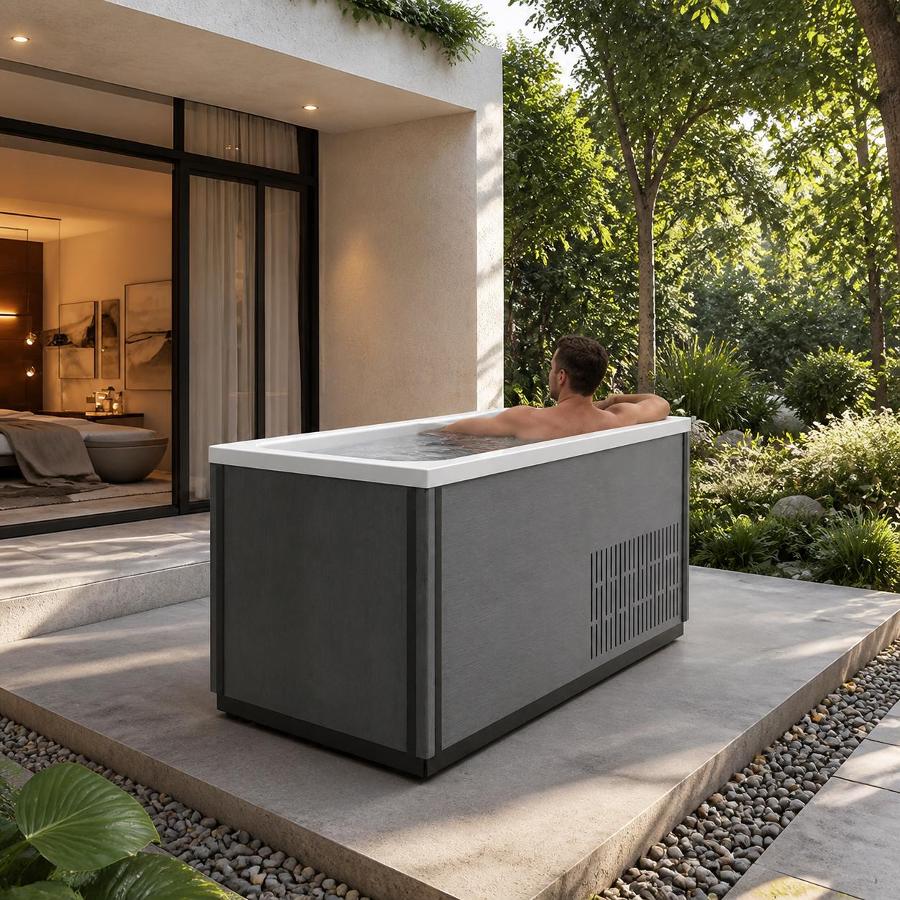
Home setups follow a similar pattern. A tub installed on a backyard patio or deck sees more use when the barrier to entry, both literal and psychological, stays low. That’s part of why exterior design details matter alongside the water itself. The C02’s cabinet is available in Platinum and Midnight color options with a vented composite panel design, intended to fit into a patio or courtyard aesthetic rather than look purely utilitarian.
Common Questions About Cold Plunge Socks
Do cold plunge socks reduce the benefits of cold water therapy? No, not meaningfully. They buffer the extremities but leave the legs, torso, and arms fully exposed to the water, which is where most of the vasoconstriction response associated with cold immersion occurs.
Can I use regular wool socks instead? Wool socks absorb water and lose their insulating properties almost immediately once submerged. Closed-cell neoprene is preferred because it resists water absorption and maintains a thin insulating layer.
Are cold plunge socks necessary for short dips? For very brief exposures of under a minute, some people skip them entirely. They become more useful as session length increases or when someone is new to cold immersion and still building tolerance.
Will socks affect my grip on a tub’s entry step? This depends on the sole material. Textured rubber soles improve grip on wet acrylic surfaces, while smooth neoprene soles can reduce it, so checking the sole pattern before buying matters more than checking the brand.
A Small Accessory With an Outsized Role
Cold plunge socks solve a narrow but real problem: the feet and hands hit their pain threshold long before the rest of the body does, and that mismatch pushes a lot of beginners out of the water before they get any benefit. Pairing the right socks with a tub designed for stable footing and consistent temperature, such as the stepped basin and heat pump regulation found in the C02, gives people a more complete setup for sustainable cold immersion practice. Whether the goal is post-workout recovery, better circulation, or simply a calmer evening ritual, cold plunge socks remain one of the simplest additions that make the whole routine easier to stick with.
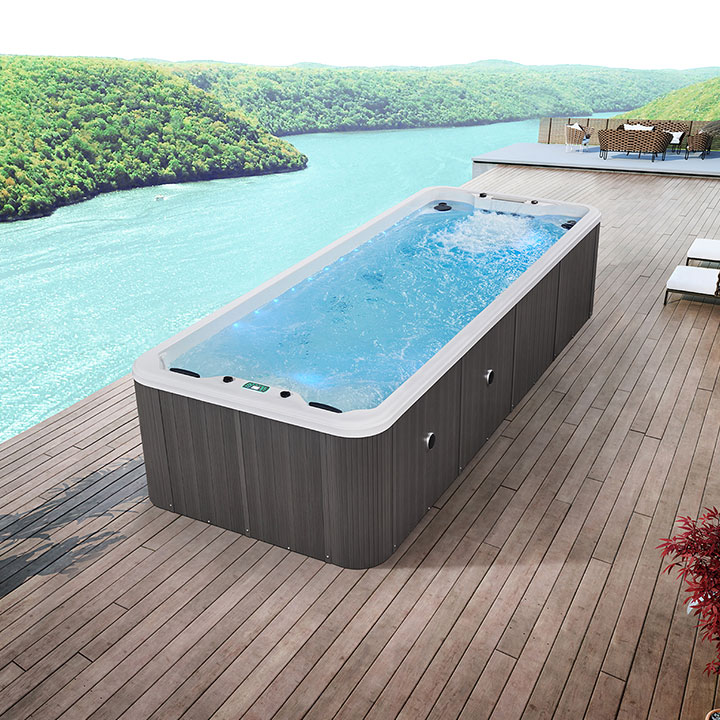
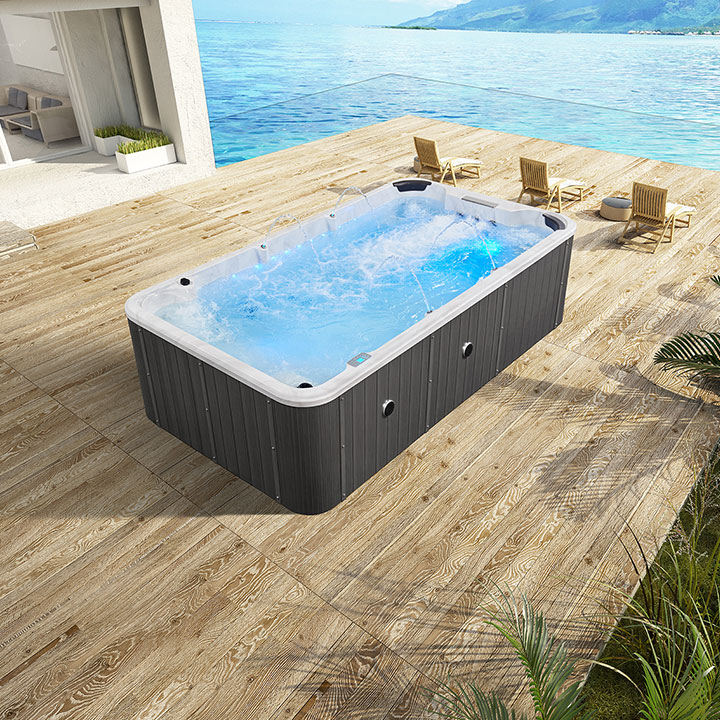
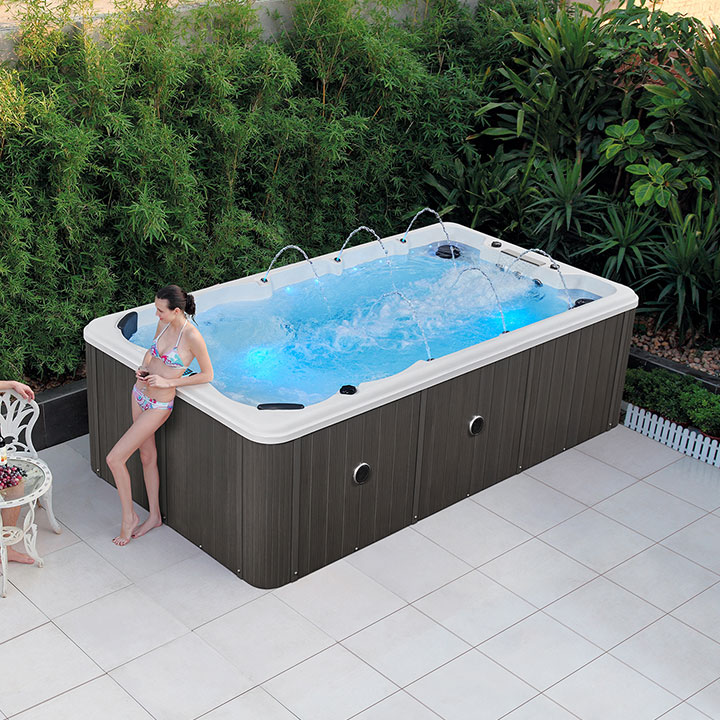
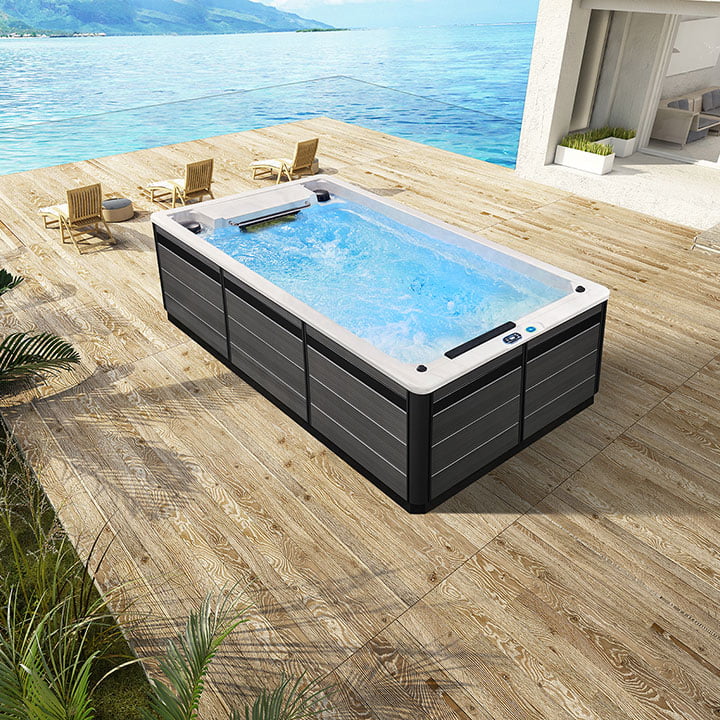
Victoria Star Swim Spa offers the perfect balance between exercise and relaxation, whether you want to swim for fitness or relax in the spacious seating.
Victoria Star Swim Spa offers the perfect balance between exercise and relaxation, whether you want to swim for fitness or relax in the spacious seating.