Big Hot Tub Buying Guide: How to Choose the Right Size, Layout, and Setup
Home / News / Big Hot Tub Buying Guide: How to Choose the Right Size, Layout, and Setup
November 07, 2026
Investing in a big hot tub can reshape how you enjoy your backyard, creating an inviting retreat for quiet evenings and lively weekend gatherings. Yet the word large means little without context. When homeowners begin searching for a large hot tub or spacious outdoor spa, they quickly encounter practical questions about patio dimensions, bather ergonomics, weight loads, and electrical infrastructure. Navigating these details before purchasing prevents expensive site modifications later.
This guide breaks down everything required to plan, select, and install a spacious home spa. By examining seating geometry, plumbing mechanics, foundation engineering, and maintenance protocols, you can evaluate large multi-person spas with confidence. Along the way, we reference published specifications from the VS-501L model to ground theoretical advice in real-world equipment numbers.
What Defines a Big Hot Tub? Capacity Versus Usable Footprint
Rated Seating Capacity vs. Physical Dimensions
A manufacturer’s advertised seat count indicates how many molded bathing positions exist inside the shell. It does not promise that five or six tall adults will enjoy expansive legroom simultaneously. A labeled five-person hot tub might comfortably seat a family with children, yet feel tight during an evening gathering of full-grown adults.
Exterior dimensions also vary independently from internal volume. Spas sharing an identical 1800 mm by 1800 mm footprint can provide drastically different interior space depending on rim width, shell slope, and footwell diameter. Always compare physical shell dimensions against interior water volume rather than relying solely on nominal seating labels.
Why Interior Architecture Dictates Usability
Interior architecture determines whether bathers sit comfortably or jostle for foot space. In a compact footwell, adult bathers often bump knees, turning a relaxing hydrotherapy session into an awkward balancing act. Generous floor space and unobstructed footwells make a substantial difference in daily comfort.
Seat elevation and contouring also govern immersion depth. Shallow bench seats leave taller bathers with exposed shoulders in chilly weather, while overly deep buckets submerge shorter individuals past a natural resting posture. Inspecting the floor pan and elevation variations helps determine whether the shell accommodates your household’s diverse body types.
Loungers Versus Upright Seats: Space and Comfort Trade-offs
The Footprint and Anatomy of Full-Body Loungers
A molded recliner offers targeted hydrotherapy from upper shoulders down through calves and feet. For solitary decompression or lower-back tension relief, a full-length lounger provides an immersive massage posture that upright seats cannot replicate.
However, dedicated loungers consume substantial interior real estate, reducing available space for additional upright positions. Smaller bathers may experience buoyancy issues, floating out of molded contours unless the shell features ergonomic knee rises and secure foot braces.
Multi-Bather Flexibility of Deep Contour Bucket Seats
Upright bucket seats prioritize posture stability, shoulder clearance, and eye contact across the footwell. Because occupants sit vertically, upright layouts maximize usable legroom and prevent the bather overlap common in dual-lounger models.
Bucket seats also simplify entry and exit. Users step directly onto stable intermediate steps or flat seating benches rather than maneuvering over reclined contours. For social households prioritizing group conversation and multi-guest flexibility, open-concept upright seating remains a practical baseline.
Mixed Layouts: Balancing Shared Lounging and Social Seating
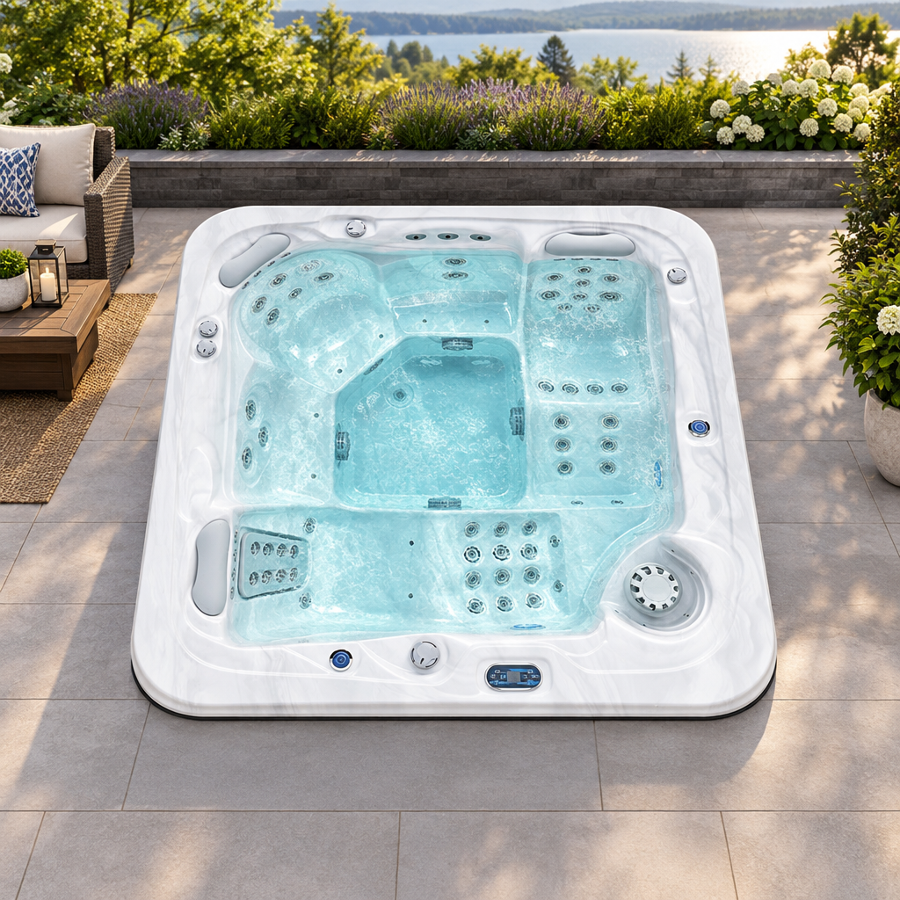
A hybrid layout bridges the gap between solitary hydrotherapy and group entertaining. By pairing two full-length recliners with three contoured bucket positions, multi-zone spas let partners stretch out together while preserving upright seating for additional guests.
Balancing these priorities comes down to usage frequency. If your hot tub serves primarily as an evening retreat for two with occasional weekend guests, a dual-lounger layout offers personal luxury without surrendering the option to host a small circle of friends.
Hydrotherapy Engineering: Demystifying Jets, Pumps, and Air Systems
Why Jet Placement and Pressure Trump Total Jet Count
Marketing materials frequently highlight jet counts exceeding seventy or eighty ports. However, raw numbers do not guarantee massage coverage. An abundance of small, low-pressure orifice jets driven by an undersized pump creates pinprick surface agitation rather than soothing water-flow patterns.
Effective hydrotherapy depends on strategic placement and balanced hydraulic delivery. Look for directional, rotational, and pulsating nozzles mapped along spinal, cervical, and calf muscle groups. Dedicated diverter valves allow users to redirect pump volume toward occupied seats, ensuring invigorating flow where needed most.
Multi-Pump Hydraulics: Dedicated Massage, Circulation, and Air Blowers
High-performance spas isolate mechanical responsibilities across specialized pumps rather than overburdening a single motor. Large water pumps, such as 3 horsepower and 2 horsepower units, power high-pressure hydrotherapy arrays during active sessions, while small continuous circulation pumps, typically around 0.35 horsepower, quietly handle filtration and thermal regulation.
An independent air pump operates separately from hydraulic water circuits. By introducing fine ambient air bubbles through dedicated air ports, a 0.5 horsepower blower produces soft, effervescent skin sensations without diluting the hydraulic power of primary water massage jets.
Site Preparation: Foundation, Structural Loads, and Delivery Routing
Calculating True Working Loads on Patios and Decks
A filled hot tub represents a concentrated static load that exceeds the engineering tolerances of standard residential structures. Calculate the total operating weight by adding the dry shell weight, full water volume, and maximum occupant load from the manufacturer’s specifications.
Placing a large spa on an elevated wooden deck requires evaluation and structural reinforcement by a licensed contractor or structural engineer. The filled spa’s actual load must be verified against local building codes and the deck’s existing load-bearing capacity for the specific site conditions.
Concrete Pad Specifications and Ground Base Leveling
Ground-level installations require a firm, level, continuously supported foundation. Consult the specific spa’s installation manual for acceptable foundation materials, required thickness, and level tolerance. Common options include reinforced concrete pads poured over compacted gravel bases or prefabricated modular spa pads.
The foundation must resist ground shifting and frost heaves over years of seasonal exposure. Any slope or uneven settling will create uneven water levels and stress internal structural components, compromising water line aesthetics and shell integrity.
Pre-Delivery Access Route and Service Clearance Audit
Moving an 1,800-millimeter rigid shell from street to backyard demands meticulous route planning. Measure gate widths, exterior air conditioner projections, gas meters, low roof eaves, and tight fence corners along the path. Spas travel vertically on specialized dollies, requiring continuous vertical and lateral clearance.
Equally important is future maintenance accessibility. Provide the service clearance specified in the manufacturer’s installation manual, including unobstructed access to the equipment panel and any removable service panels. Enclosing a spa within tight structural borders without adequate access leads to expensive dismantling during routine repairs.
Electrical Planning: Code Compliance, Voltage, and Power Supplies
Dedicated 240V Circuits vs. Plug-and-Play 120V Units
Compact entry-level spas occasionally operate on standard 120V wall outlets, but large multi-pump models typically require hardwired dedicated circuits. High-draw components, such as heating elements running alongside dual massage pumps and air blowers, demand substantial amperage to function simultaneously.
The required supply voltage, conductor size, and overcurrent protection must come from the specific model’s nameplate and installation manual. Have a licensed electrician verify your home panel’s capacity and pull proper municipal permits before delivery day.
GFCI Protection and Disconnect Placement Under Code Requirements
Electrical work around water must adhere strictly to local building codes and applicable National Electrical Code standards. The spa typically requires a maintenance disconnect that is readily accessible, within sight of the spa, and positioned at least 5 feet horizontally from the water’s edge.
The entire installation must route through a certified Ground Fault Circuit Interrupter breaker. Due to high amperage draws and life-safety considerations, all conduit trenching, subpanel mounting, and final terminations should be executed by a licensed electrician who determines whether any separate emergency shutoff is required under the adopted local code and equipment configuration.
Energy Efficiency and Running Costs in Large Hot Tubs
Thermal Insulation Methods: Full Foam, Perimeter, and Cabinet Barriers
Operating costs depend heavily on the cabinet’s thermal barrier. In cold climates, heat escaping through the acrylic shell forces heating elements to cycle repeatedly. Premium spas employ dense polyurethane foam applied directly to the shell reverse, supplemented by multi-layer reflective perimeter barriers along cabinet walls.
This multi-barrier insulation helps contain heat within the cabinet cavity during standby periods. High-grade composite skirts resist wind penetration and UV degradation, keeping internal mechanical compartments sheltered from damp winter drafts.
Cover Integrity and Evaporative Heat Retention
An ill-fitting or waterlogged cover accelerates heat loss and chemical evaporation. Select a well-designed cover featuring high-density tapered foam cores that shed rainwater efficiently.
Continuous hinge heat-seal gaskets and reinforced tie-down locking straps keep warmth locked inside the water chamber. A properly fitted cover can reduce standby heat loss, though actual energy savings depend on climate, usage patterns, and the specific spa model.
Digital Controls and Temperature Management
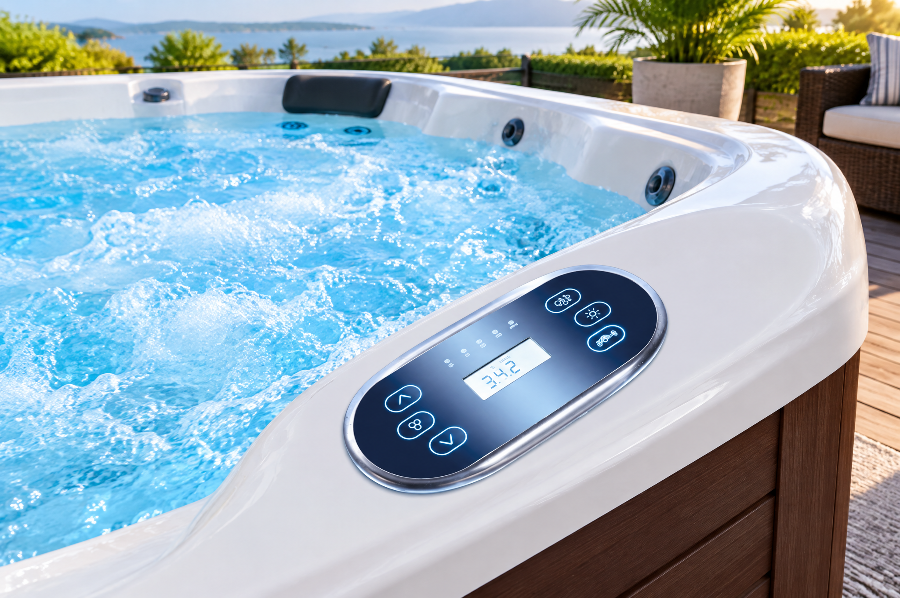
Modern digital control systems allow users to adjust water temperature, jet functions, and lighting modes from a centralized interface. These panels typically feature digital displays and touch-sensitive controls for convenient operation during spa sessions.
Consult the manufacturer’s documentation to understand your model’s specific control capabilities, temperature-regulation accuracy, and any programmable features that may help manage operating schedules.
Water Care and Daily Sanitation Protocols
Sanitizer Regimes: Balancing Chlorine, Bromine, and pH
Maintaining pristine water in a warm-water spa requires routine testing and chemical balance. Warm water accelerates organic bather waste decomposition and bacterial growth, demanding consistent sanitizer residuals. The CDC recommends maintaining at least 3 parts per million free chlorine or at least 4 ppm bromine in hot tubs.
Keeping water pH balanced between 7.0 and 7.8 preserves bather comfort, prevents eye irritation, and protects metal heater elements against premature corrosion. Follow the sanitizer manufacturer’s instructions and your spa manufacturer’s recommendations. Routine shock treatments using non-chlorine oxidizers break down chloramines and restore crystalline water clarity after heavy group use.
Adhering to Safe Water Temperature Limits
Bather safety hinges on strict temperature management. The CDC and the Consumer Product Safety Commission recommend capping hot tub water temperatures at 104°F or 40°C. Prolonged soaking at higher temperatures causes drowsiness, hyperthermia, and rapid shifts in blood pressure.
The CDC advises that children under five should not use hot tubs. For older children and pregnant users, consult pediatric and manufacturer safety guidance. Many find comfort at lower thermostat settings that minimize dehydration and overheating risks while extending safe soaking duration.
Filtration Skimmers and Maintenance Schedules
Effective filtration catches hair, body oils, and suspended debris before contaminants settle into internal plumbing lines. High-flow skimmer boxes draw surface water across pleated paper or micro-fiber filter cartridges, running quietly in conjunction with low-wattage circulation pumps.
Clean and replace filters according to the manufacturer’s instructions, water quality, and bather load. Drain and refill the spa based on the manufacturer’s recommendations, usage patterns, and local water-quality requirements. Following these maintenance protocols prevents total dissolved solids buildup and maintains sanitizer effectiveness.
Product Case Study: VS-501L Square Hot Tub
Architectural Specifications and Seating Blueprint
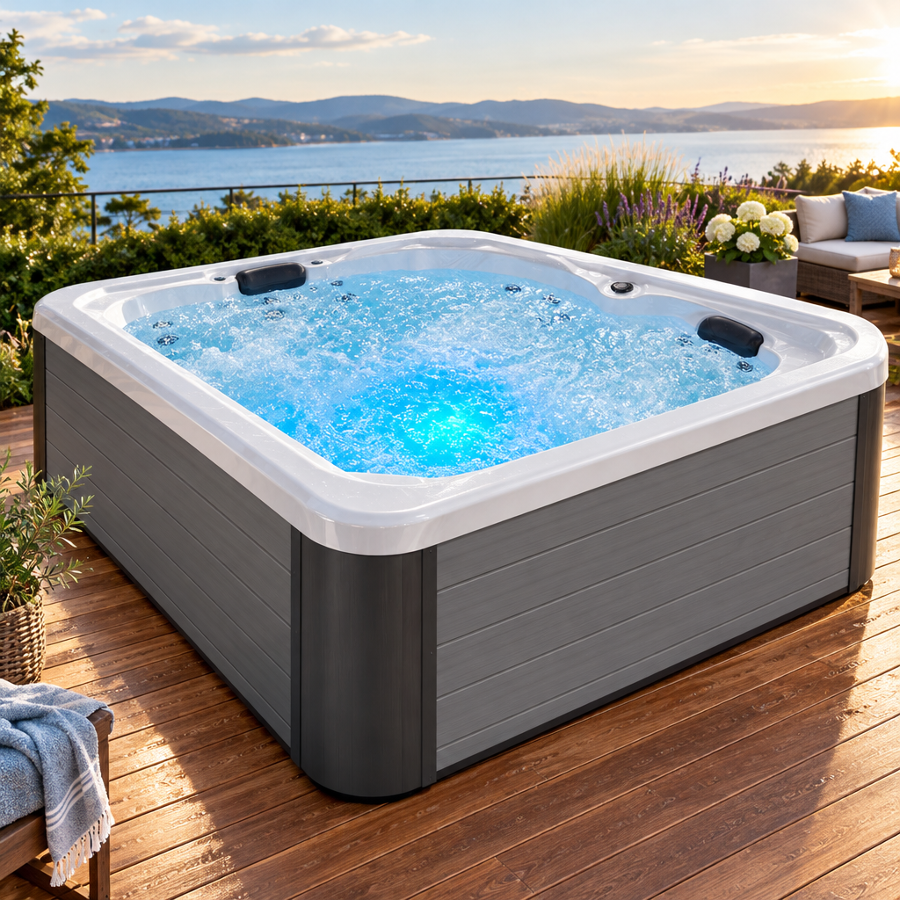
To examine how these engineering and dimensional variables translate into an actual installation, consider the VS-501L model. Engineered as a 6-foot square spa, it balances a compact residential footprint with a 5-person interior layout comprising three deep contour seats and two full-length loungers.
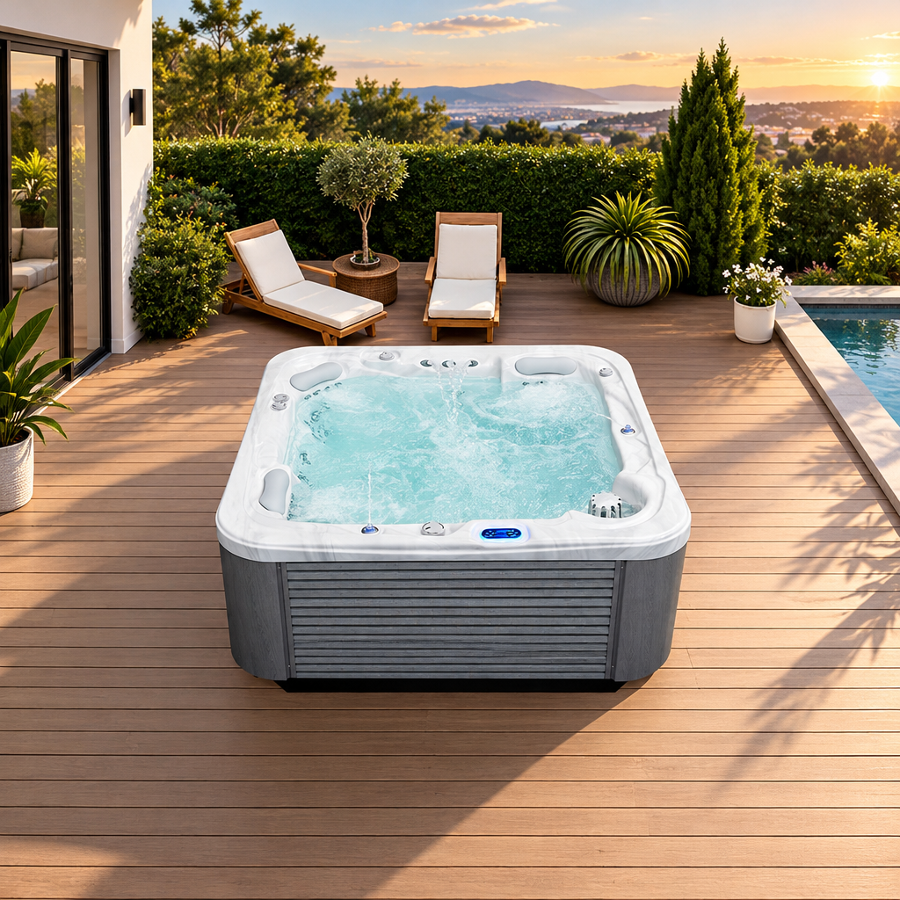
The 1800 mm by 1800 mm shell may fit some patios or decks, subject to foundation preparation, access verification, and structural assessment based on the filled weight and installation manual requirements.
Comprehensive Specification Matrix
The following table outlines the manufacturer’s published specifications for the VS-501L model, illustrating how mechanical equipment and seating contours integrate into a unified system:
Specification Parameter
Published VS-501L Technical Data
Dimensions (Metric)
1800 mm × 1800 mm × 780 mm
Seating Configuration
5 Persons (3 Seats + 2 Loungers)
Total Hydrotherapy Jets
77 Jets
Digital Control Interface
KL2022 with Smart Keypad Control
Primary Heating Element
1 × 3 KW
Water Massage Pumps
1 × 3 HP + 1 × 2 HP
Continuous Circulation Pump
1 × 0.35 HP
Aeration Blower Pump
1 × 0.5 HP
Audio Entertainment
Bluetooth system with 1 set / 4 pcs AV speakers
Ambient Lighting System
Integrated LED underwater and perimeter mood lighting
Exterior Skirt Construction
Aluminum Plastic Skirt with LED lighting
Total Electrical Power Load
7.35 KW
Shell Color
Porcelain
Cabinet Colors
Platinum, Midnight
Lifestyle Application and Outdoor Integration
The product specification table lists 77 total jets; confirm the final jet count and configuration with the manufacturer before purchase. The model is designed to provide manufacturer-described hydromassage across multiple seating zones. Ambient underwater and perimeter LED mood lighting enhances evening visibility while creating a relaxing atmosphere for night-time soaking.
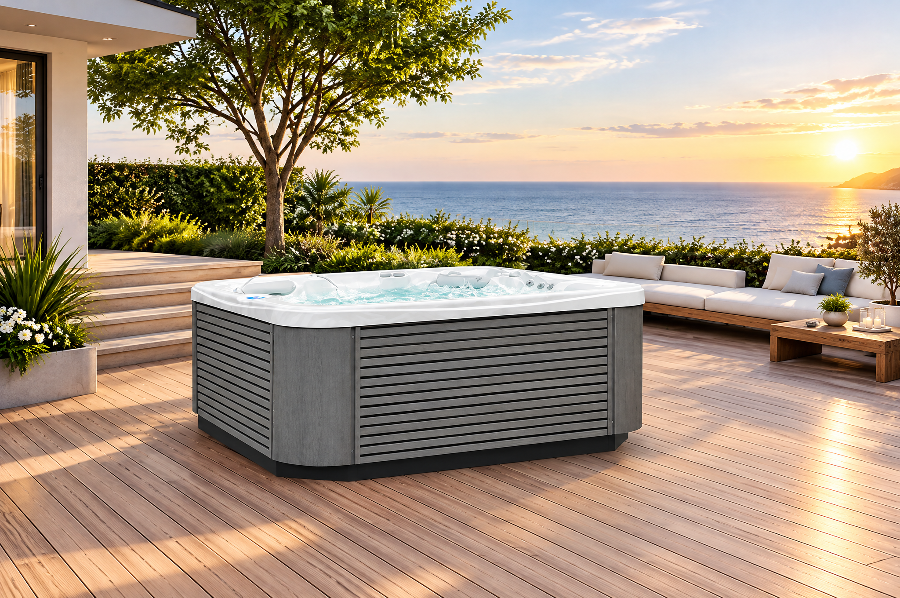
The integrated 4-speaker Bluetooth audio system allows bathers to stream acoustic playlists directly from a mobile device without exposing electronics to water spray. Its aluminum plastic composite exterior cabinet, available in Platinum or Midnight, and porcelain acrylic shell integrate naturally into garden wellness corners, modern decking, or boutique vacation rental patios.
Practical Checklist: 7 Steps to Choosing Your Spa
Work Through These Decisions in Order
Define your primary bathing patterns. Establish whether you need an open, bench-style social gathering hub for family and guests, or a hydrotherapy-focused retreat with dual full-body loungers for muscle recovery.
Survey the proposed installation ground. Confirm a flat, stable ground plane capable of supporting the foundation specified in the spa’s installation manual.
Assess elevated structural capacity. If planning an installation on an elevated wooden deck or rooftop terrace, commission a structural engineer to verify that the structure can support the spa’s filled weight and occupant load under local building codes.
Audit home electrical service panels. Consult a licensed electrician to verify your home panel has adequate capacity for the spa’s electrical requirements as listed on the nameplate and installation manual.
Map delivery access dimensions. Walk the delivery path with a tape measure, checking gate clearances, house eaves, garden steps, and air conditioning units from driveway to backyard.
Evaluate thermal insulation and cover quality. Verify the hot tub features quality shell insulation, cabinet thermal barriers, and a well-fitting cover designed to reduce heat loss.
Confirm warranty terms and parts support. Verify the manufacturer provides responsive customer service, accessible replacement filter cartridges, and dependable pump, heater, and control pack warranties.
FAQs
What dimensions classify an outdoor spa as a big hot tub?
Size labels and seating capacity vary by manufacturer, and rated capacity does not establish comfortable usable space. Compare exterior dimensions, interior layout, and intended number of bathers when evaluating whether a model suits your needs. Deep square models measuring around 1800 mm with dual loungers can provide spacious big hot tub experiences for small families while fitting smaller residential patios, whereas models over 2100 mm may accommodate larger groups.
Can an existing wooden deck support a 5-person hot tub without reinforcement?
The filled spa’s operating weight must be calculated from its actual water volume, dry weight, and maximum occupants as specified by the manufacturer. Have a qualified structural professional verify that the deck or rooftop structure meets local code requirements and can safely support the spa’s load under your specific site conditions before installation.
Is a hot tub with two loungers practical for family use?
A dual-lounger layout offers exceptional relaxation for couples, providing dedicated full-body massage contours. However, loungers occupy substantial interior footprint. If your family regularly bathes together with four or five active bathers, an all-bucket or open-bench configuration provides greater seating flexibility.
What electrical supply is needed to power a large hot tub?
The required electrical supply, including voltage, amperage, conductor size, and breaker rating, must come from the specific spa model’s nameplate and installation manual. A licensed electrician should verify your home panel’s capacity, determine the correct circuit configuration, and pull proper permits before delivery day.
Does a higher jet count automatically mean better massage coverage?
Not necessarily. Massage coverage depends on pump hydraulic pressure, plumbing line diameter, and ergonomic nozzle placement along key muscle groups. A spa with properly balanced jets powered by dedicated dual water pumps can deliver more effective water flow than a model with more jets sharing a single underpowered motor.
How hot should hot tub water be for daily soaking?
The CDC and CPSC recommend that water temperature never exceed 104°F or 40°C. Most bathers find comfort between 100°F and 102°F. The CDC advises that children under five should not use hot tubs. Consult your healthcare provider regarding appropriate water temperatures for older children, pregnant women, or individuals with medical conditions.
How often do you need to drain and refill a large spa?
Drain and refill frequency depends on water volume, bather load, sanitizer system, and manufacturer instructions. Many residential hot tubs require draining every three to four months under typical use. Over time, dissolved minerals, body lotions, and chemical byproducts saturate the water, reducing sanitizer efficiency. Follow your manufacturer’s maintenance schedule and adjust based on water quality.
Conclusion: Selecting the Ideal Spa for Long-Term Enjoyment
Selecting the right big hot tub comes down to balancing internal comfort with external site logistics. A truly rewarding spa provides ample shoulder room, manufacturer-described massage arrays, and intuitive controls, all while resting on a properly engineered foundation backed by safe electrical infrastructure. By evaluating exterior dimensions, internal footwells, pump configurations, and routine sanitation protocols before committing, you protect your investment and simplify ongoing care. Whether you choose a versatile mixed layout or an open-concept social bench design, thorough site planning ensures your spacious outdoor hot tub delivers years of relaxation and backyard enjoyment.
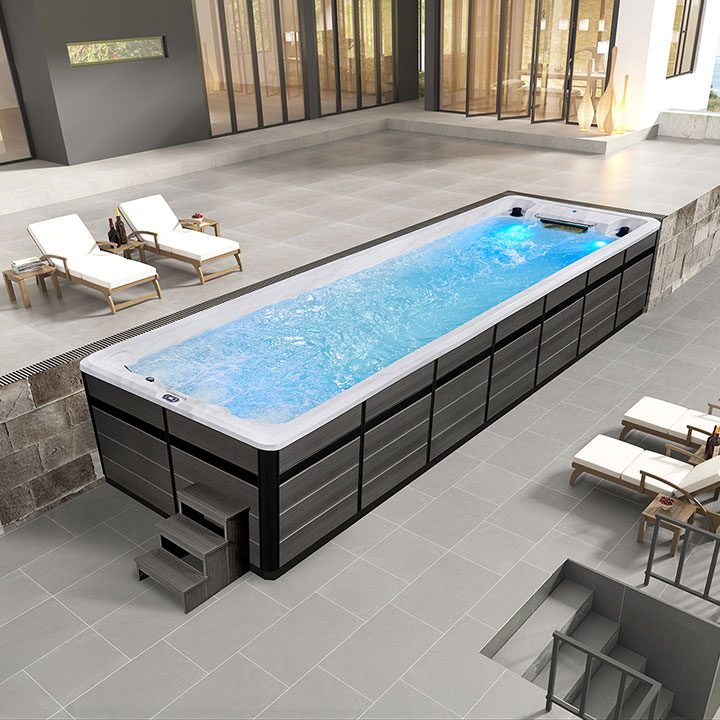
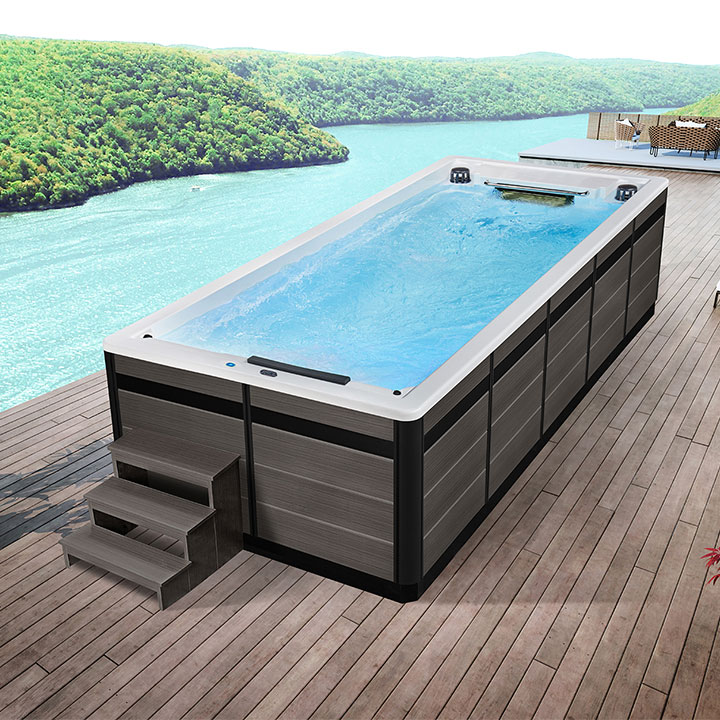
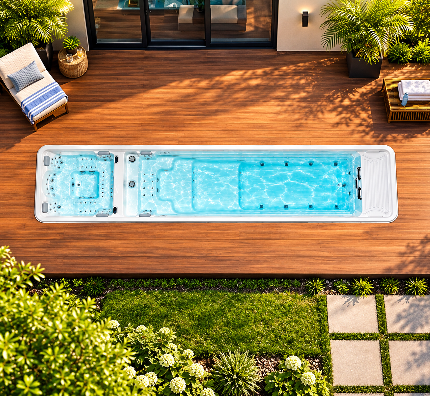
Victoria Star Swim Spa offers the perfect balance between exercise and relaxation, whether you want to swim for fitness or relax in the spacious seating.
Victoria Star Swim Spa offers the perfect balance between exercise and relaxation, whether you want to swim for fitness or relax in the spacious seating.