Why a 55 Degree Cold Plunge Is a Practical Sweet Spot for Recovery
Home / News / Why a 55 Degree Cold Plunge Is a Practical Sweet Spot for Recovery
October 29, 2026
A 55 degree cold plunge challenges one of the loudest myths in recovery culture. Social media rewards people who break through sheets of surface ice, yet your physiology does not score you on theatrical suffering. At 55 degrees Fahrenheit (12.8 degrees Celsius), cold water immersion is cold enough to trigger real physiological responses, including cold shock, and moderate enough that many people can build a routine around it with care.
Many athletes and home wellness buyers eventually ask whether 55 degrees is actually cold enough to work. Research on cold water immersion and muscle soreness often points to a range of roughly 11 to 15 degrees Celsius (about 52 to 59 degrees Fahrenheit). Within that range, the cold stimulus is real, and the cold shock response can still be substantial. A routine you can sustain usually beats a brutal one you dread.
What Happens to Your Body in a 55 Degree Cold Plunge?
Your skin contains cold-sensitive thermoreceptors that send signals to the brain the moment you submerge. Water also pulls heat from the body far faster than air at the same temperature, so 55-degree water feels much colder than a 55-degree morning. Your body responds by shifting priorities toward protecting its core. The next three sections explain what that looks like in practice.
Vasoconstriction and Blood Vessel Response
The best-established response is vasoconstriction. Smooth muscle in the walls of peripheral blood vessels tightens, narrowing the vessels in your skin, arms and legs and reducing blood flow near the surface. Cooling tissue and reduced local blood flow are often proposed as reasons cold immersion may ease swelling and soreness after hard training.
When you step out and warm up, those vessels gradually widen again. Whether this constriction and rewarming sequence delivers a lasting circulation benefit is not firmly established. Recovery results also depend on the goal, the training load and the individual, so treat cold immersion as one option for managing soreness rather than a guaranteed fix.
Neurochemical Responses to Cold Water
Cold water also changes the chemistry in your blood. In a widely cited study, Šrámek and colleagues had volunteers sit in 14-degree Celsius (57.2-degree Fahrenheit) water for one hour and measured plasma norepinephrine and dopamine. Both rose substantially. Norepinephrine and dopamine are linked to alertness and mood in general, but blood levels alone do not prove a matching effect in the brain.
That study used a full hour of immersion, so it does not tell us what a brief 55 degree cold plunge does. Many people say they feel calm and clear-headed after a session, but those reports are anecdotal. Cold shock, with its gasp reflex, rapid breathing and rise in heart rate and blood pressure, can be substantial at 55 degrees. Its severity does not necessarily climb in steps as the water gets colder.
Brown Fat and Non-Shivering Heat Production
Shivering is not the only way humans make heat. Deposits of brown adipose tissue, commonly called brown fat, sit around the neck, upper back and chest. Unlike white fat, which stores energy, brown fat is rich in mitochondria and burns fuel to generate heat. Cold exposure is one of the known triggers for this non-shivering heat production.
How strongly a short 55 degree cold plunge activates brown fat has not been established. Researchers continue to study how brown fat responds to repeated cold exposure, and results vary between people. For that reason, it is safer to treat any metabolic benefit as possible rather than expected.
Is 55 Degrees Cold Enough Compared to Near-Freezing Ice Baths?
Many buyers hesitate before setting a chiller to 55 degrees because online forums equate pain with progress. That belief causes real problems. When every session feels like an ordeal, your brain starts inventing reasons to skip it. Understanding how different temperature zones affect your body helps you separate useful cold stress from unnecessary risk.
Why Extreme Cold Is Not Automatically Better
Below about 40 degrees Fahrenheit (4.4 degrees Celsius), the margin for error shrinks. Fingers and toes can become painfully numb, and the body loses heat quickly, which shortens the time you can stay in safely. Cold shock itself is not limited to near-freezing water. It can be just as severe at 50 to 60 degrees Fahrenheit, so a colder bath does not simply mean a stronger or weaker shock.
Some experienced athletes use brief, very cold dips as mental toughness practice. For routine recovery at home, though, that level of cold adds risk without a clear, proven payoff. Research reviews on post-exercise soreness have not shown that the coldest water performs best. A systematic review of soreness protocols linked results to a moderate range of roughly 11 to 15 degrees Celsius.
Comparing Cold Water Immersion Temperature Zones
The right water temperature depends on your goal, your cold adaptation and your health. The table below is a general overview of how the zones differ, not medical advice and not a set of recommended exposure times. Cold shock is possible in every one of these zones, and its severity does not necessarily rise step by step as the water gets colder, so individual tolerance and medical advice matter.
Temperature Zone
Celsius Equivalent
What to Expect
Notes
60°F – 65°F
15.5°C – 18.3°C
Mild to moderate cold sensation; cold shock is still possible
Often used by beginners or for cooling off after heat exposure
50°F – 55°F
10.0°C – 12.8°C
Strong cold sensation; a substantial cold shock response is possible
Overlaps the range most often studied for muscle soreness, but still needs a cautious start
45°F – 49°F
7.2°C – 9.4°C
Very strong cold sensation; cold shock severity varies by person
Usually chosen by people with prior cold water experience
38°F – 44°F
3.3°C – 6.7°C
Acute cold stress, rapid numbing and faster heat loss
Medical guidance is wise before using this range
Why Consistency Matters More Than Intensity
Cold adaptation builds up over repeated exposure, not in a single heroic session. Some summaries of the research on deliberate cold exposure mention totals of roughly 11 minutes per week, split across several sessions. That figure is a rough reference from the literature, not a safe-dose prescription for every person or every temperature.
In a 55 degree cold plunge, a short, comfortable session repeated regularly is easier to keep than a punishing one. Lengthen your time only gradually, and only if you feel in control of your breathing. Months of steady, moderate sessions will do more for your routine than two weeks of punishing plunges followed by an abandoned tub.
Step-by-Step Protocol for Your 55 Degree Cold Plunge Session
The right temperature only solves half the problem. How you enter the water, control your breathing and rewarm afterward determines how you feel an hour later. A simple routine turns the session into something predictable rather than something you have to survive.
Pre-Plunge Breathing and Preparation
Do not hyperventilate before you get in. Rapid over-breathing lowers carbon dioxide in your blood and can cause dizziness or fainting, which is dangerous in water. Instead, stand beside the tub for about a minute and take slow breaths in through your nose and longer breaths out through your mouth. Never plunge alone if you are new to cold water.
Managing the First 60 Seconds
The first minute in a 55 degree cold plunge is the hardest part, because the cold shock response peaks early. Follow this sequence to move from entry to calm adaptation:
Check the display and remove the cover: Confirm the water sits at 55 degrees Fahrenheit on the control display, then fold back the insulated cover so your entry path is clear.
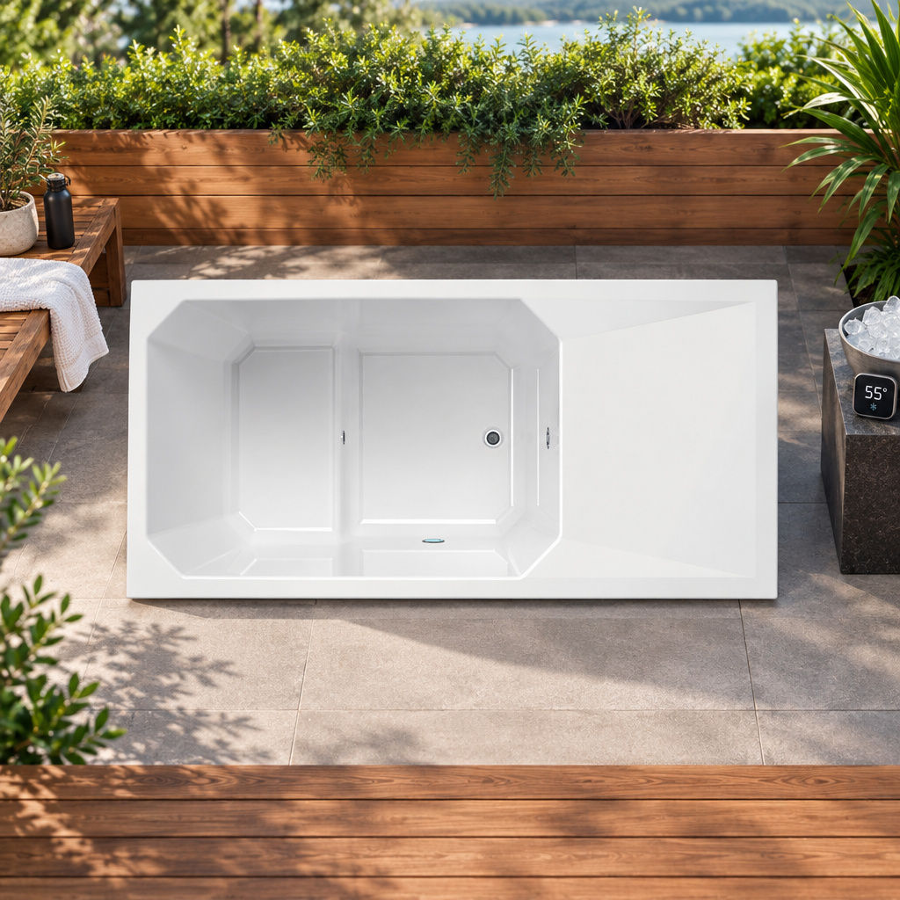
Use the interior step: Lower yourself in using the integrated entry step, keeping a hand on the rim for balance.
Submerge with control: Take a moderate breath in, then lower your shoulders into the water while keeping your face above water and focusing on controlled breathing. This does not prevent cold shock.
Stay calm and still: Keep your movements slow and your breathing steady. If your hands ache, rest them on your thighs or hold them above the surface.
Exit when your planned time is up: Decide on a short time before you get in, and leave sooner if you feel dizzy, confused or unable to control your breathing. Stand up slowly so you do not get lightheaded, then step onto a non-slip mat.
Rewarming After the Plunge
What you do after drying off affects how the session feels. A very hot shower right away feels good, but it can make some people lightheaded as blood vessels widen quickly. A gentler approach is to towel off and rewarm through light movement, such as a short walk or a few air squats. Many people find this keeps their energy up.
If you pair cold water with a hot tub or sauna, the order matters. Ending on the cold side tends to leave people feeling more awake, which suits a morning routine. For evening sessions, many people prefer to finish with warmth. Choose whichever sequence fits your schedule and how your body responds.
Why DIY Ice Baths Struggle to Hold 55 Degrees
Many people start with a stock tank or a large barrel in the garage. For the first week, hauling bags of ice feels adventurous. By week three, the effort wears down the habit. Without active cooling and good insulation, holding a steady 55 degree cold plunge temperature is difficult.
The Friction of Manual Ice and Temperature Drift
Water has a high specific heat capacity, so cooling a large volume from summer tap temperature down to 55 degrees takes a lot of ice. An uninsulated container then gains heat from the surrounding air, the sun and your own body. Your body temperature is roughly 98.6 degrees Fahrenheit, which means every minute you spend in the tub warms the water slightly.
The running costs add up too. Ice has to be bought, stored and loaded before each session. Debris and film can build up in basic containers that are hard to clean, and a tub that needs this much preparation tends to get used less and less over time.
How an Integrated Heat Pump Keeps Temperature Steady
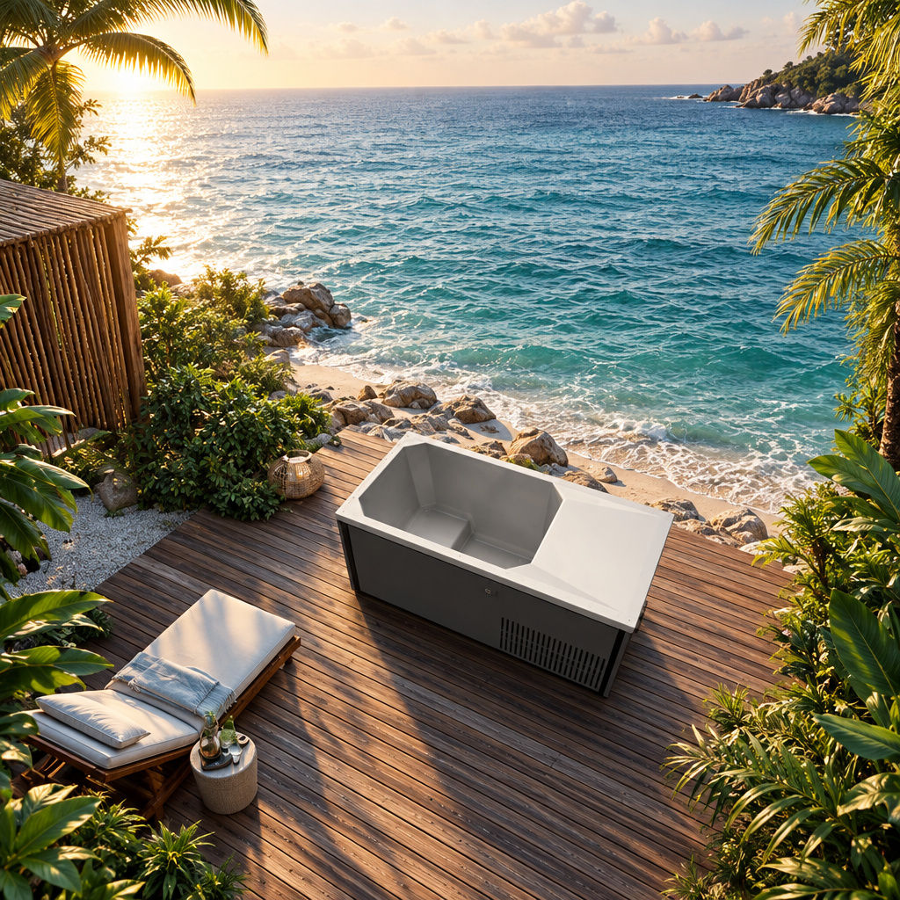
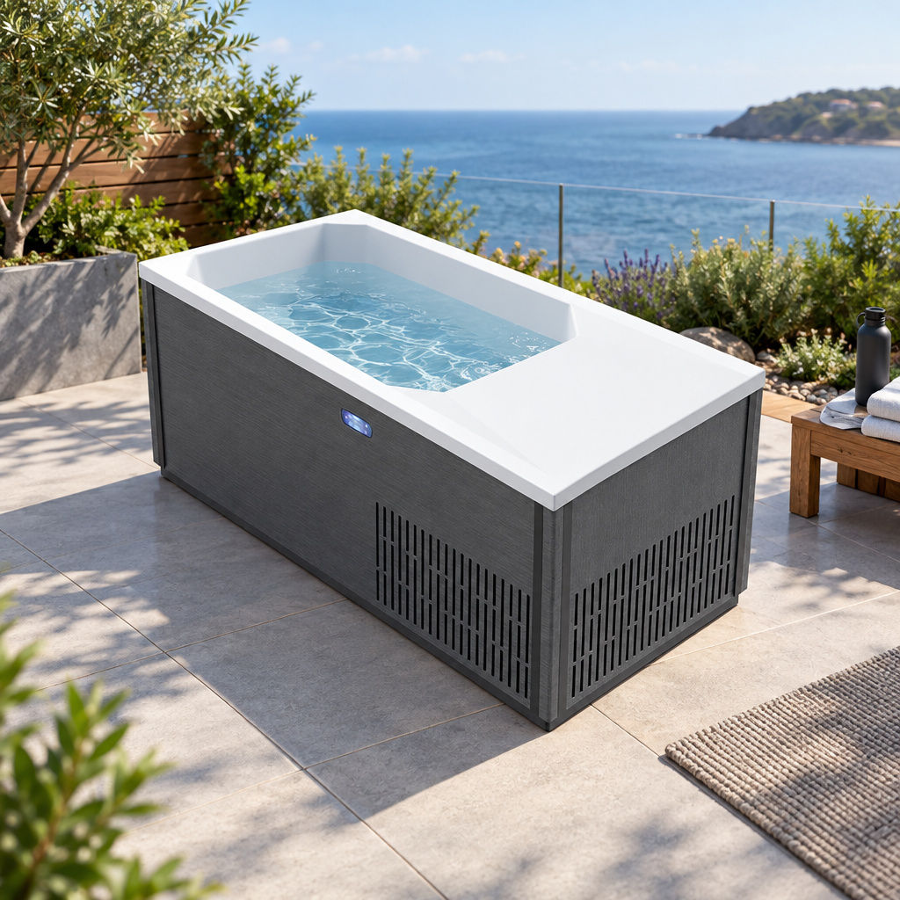
Removing the daily guesswork means building temperature control into the tub itself. Foshan Gaoming Shiyi Sanitary Ware Technology Co., Ltd. is a hot tub and swim spa manufacturer with its own mold forming, assembly and wood workshops, and it created the Victoria Star brand for hydrotherapy and wellness products. For us, the Outdoor Cold Plunge Tub C02 was designed around reliable temperature regulation.
According to the C02 product specifications, the tub uses a 900W heat pump control system with a 54W brushless pump and a total power supply of 0.954 KW. The manufacturer describes this combination as providing reliable temperature regulation with low energy consumption. An exterior digital control interface lets you set a target temperature, such as 55 degrees Fahrenheit, without managing ice by hand.
Build Details of the Outdoor Cold Plunge Tub C02
Outdoor equipment has to cope with weather and regular use while keeping the cold water contained. The C02 specifications include the following:
320-liter basin: Interior dimensions are not listed, but the overall unit measures 1695 mm × 830 mm × 850 mm (approximately 66.7 in × 32.7 in × 33.5 in). An integrated interior seating step helps with entry and seating.
White porcelain acrylic shell: A smooth acrylic surface that is easy to wipe down between sessions.
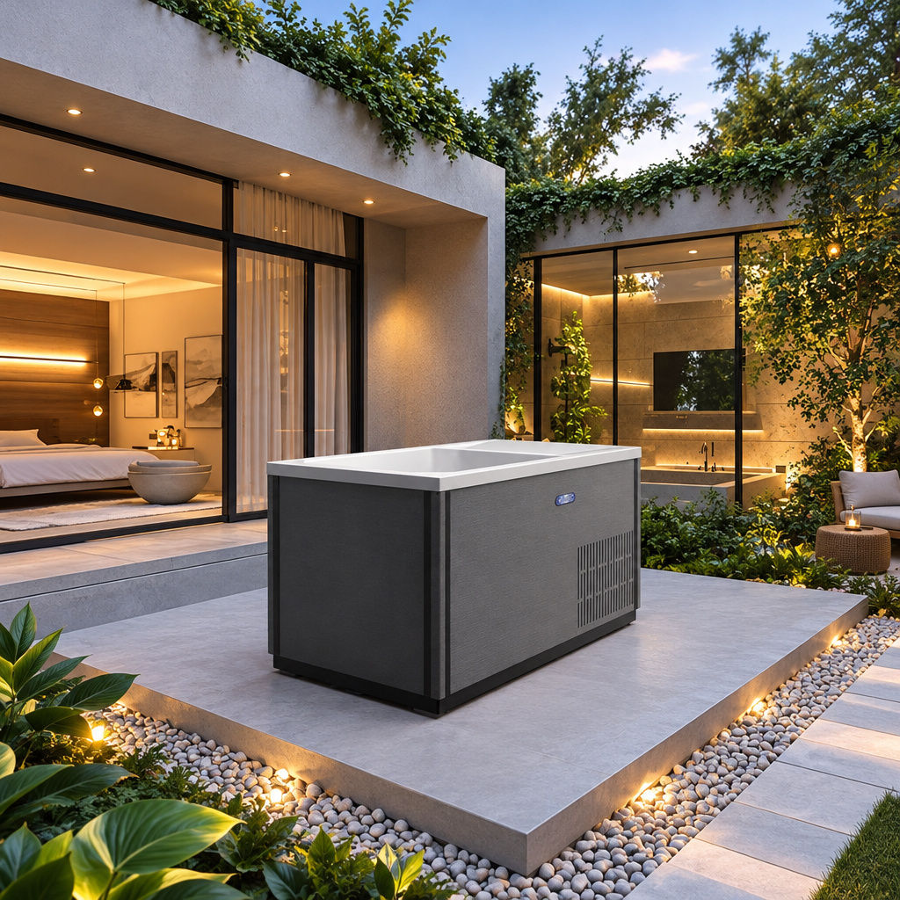
Vented composite cabinet: Weather-resistant exterior panels in Platinum or Midnight, with ventilation slots for the heat pump system.
Weight: 140 KG net and 180 KG gross, which is useful to know when planning delivery and placement.
Insulated cover: One cover is included to keep debris out and reduce heat gain when the tub is not in use.
How to Choose and Set Up a Cold Plunge Tub for Your Space
A permanent recovery station needs more planning than a kitchen appliance. Whether you are outfitting a backyard, a training room or a resort deck, think through the footprint, the load and the look before delivery day.
Footprint, Structural Load and Airflow
Measure your pathways and your final pad against the tub’s dimensions before delivery. The C02 has a net weight of 140 KG, or about 308 pounds. Filling its 320-liter capacity adds roughly 320 KG, or about 705 pounds, before counting the person inside. Concrete patios and well-supported decks usually handle this load, but an elevated balcony or older deck should be checked by a qualified contractor first.
Airflow matters too. The cabinet has ventilation slots, and heat pump systems generally need clear space around their vents. Pushing the tub flush against a solid wall may restrict airflow and make the system work harder. Follow the manufacturer’s installation guidance for exact clearances, and confirm the electrical requirements with a licensed electrician.
Matching Finishes to Your Setting
A cold plunge tub sits in plain view, so its finish should suit the space. In a modern backyard with dark window frames and concrete pavers, the Midnight cabinet blends into the surroundings, while the illuminated control screen gives a clear focal point. The Platinum option suits lighter settings such as stone courtyards, coastal decks and boutique spas.
Inside, the white porcelain acrylic shell keeps the water easy to see before you step in. That helps when you check for debris. The tub also suits several settings listed in the product data, including home patios, athletic training facilities, wellness centers and resort villas.
Daily Water Care Basics
Cold water is not a free pass on hygiene. A 55 degree cold plunge still needs regular care, so rinse off sweat, sunscreen and gym chalk before getting in. A quick shower takes only a few seconds and keeps oils out of the water. Put the insulated cover back on straight after your session to keep out leaves, dust and direct sun.
Follow the maintenance and water treatment guidance that comes with your tub for filtration, cleaning schedules and water changes. Those details depend on usage, climate and local water quality, so a fixed rule from a general article cannot replace the manufacturer’s instructions.
Frequently Asked Questions About a 55 Degree Cold Plunge
How long should you stay in a 55 degree cold plunge?
There is no single safe duration that fits everyone. Beginners generally start with a very short first session and extend it only gradually, based on how they feel. One systematic review of soreness protocols linked temperatures of 11 to 15 degrees Celsius and durations of 11 to 15 minutes with the best results, but that finding concerns muscle soreness and is not a safe-exposure guide. Get out immediately if you feel dizzy, confused or unable to control your breathing.
Should I do a 55 degree cold plunge right after lifting weights?
It depends on your goal. Some research suggests that regular cold immersion right after strength training may blunt muscle growth adaptations, so athletes focused on building muscle often leave a gap between lifting and plunging. If your priority is easing soreness between sessions, such as during a tournament or heavy running block, plunging soon after exercise is a common choice.
Is 55 degrees Fahrenheit safe for cold plunge beginners?
Fifty-five degrees Fahrenheit is not risk-free. Cold shock, including a gasp reflex, faster breathing and a rise in heart rate and blood pressure, can be substantial at this temperature, and its severity does not reliably track how cold the water is. Start cautiously, avoid plunging alone, and progress slowly. Anyone with heart conditions, high blood pressure, circulation problems such as Raynaud’s phenomenon, or other health concerns should talk to a physician before starting.
How much electricity does a temperature-controlled cold plunge use?
Energy use depends on the climate, the set temperature, how well the tub is insulated and how often you use it. The Outdoor Cold Plunge Tub C02 lists a 900W heat pump and a 54W brushless pump, with a total power supply of 0.954 KW. Keeping the included insulated cover on between sessions helps reduce heat gain, and it removes the need to buy ice.
Building a Sustainable Cold Therapy Habit
Recovery tools only help when you use them week after week. Moving away from the idea that colder is always better makes the habit easier to keep. A consistent 55 degree cold plunge routine, built up gradually and approached with respect for cold shock, can become a dependable part of how you manage post-workout soreness and daily stress. Paired with a temperature-controlled tub like the C02, it becomes a repeatable part of your day.
Victoria Star Swim Spa offers the perfect balance between exercise and relaxation, whether you want to swim for fitness or relax in the spacious seating.
Victoria Star Swim Spa offers the perfect balance between exercise and relaxation, whether you want to swim for fitness or relax in the spacious seating.