What the Best Cold Plunge Podcast Episodes Get Right About Recovery
Home / News / What the Best Cold Plunge Podcast Episodes Get Right About Recovery
September 27, 2026
Anyone who has spent an hour scrolling through a cold plunge podcast knows the genre swings between two extremes. Half the episodes treat cold exposure like a miracle cure. The other half nitpick every claim until the practice sounds pointless. Neither extreme helps someone standing in their backyard, hose in hand, wondering if a tub of cold water is actually worth the investment.
This piece skips the hype and the cynicism. Instead, it looks at what a genuinely useful cold plunge podcast episode would cover: the physiology behind cold water immersion, the equipment decisions that separate a good setup from a frustrating one, and the realistic expectations a new user should carry into their first session.
Why Cold Exposure Keeps Coming Up in Recovery Conversations
Athletes have used cold water for recovery long before anyone recorded a podcast about it. The underlying mechanism is straightforward. Cold immersion causes blood vessels near the skin to constrict, which limits blood flow to the area and can reduce the swelling that follows intense exercise.
Once the body warms back up, those same vessels dilate. That contraction and release cycle is often described as a pump for circulation, pushing blood back through tissue that just spent an hour under load. It’s not a cure for soreness, but it’s a physiological process with a clear, well-documented basis.
There’s also a mental health angle that gets less airtime than it deserves. Cold exposure triggers a release of endorphins, the same chemicals responsible for that post-run clarity some people chase. For a lot of users, the psychological reset matters as much as the physical one.
The Equipment Question Most Episodes Skip
Podcast hosts love talking about protocols. Three minutes at this temperature, five sessions a week, morning versus evening. What they rarely address is the equipment gap between a barrel of ice water and a properly engineered tub.
That gap matters more than most guests admit. A stock tote filled with bagged ice loses its chill within twenty minutes and needs constant babysitting. A tub with an integrated heat pump system holds a target temperature without you refilling ice trays every other day.
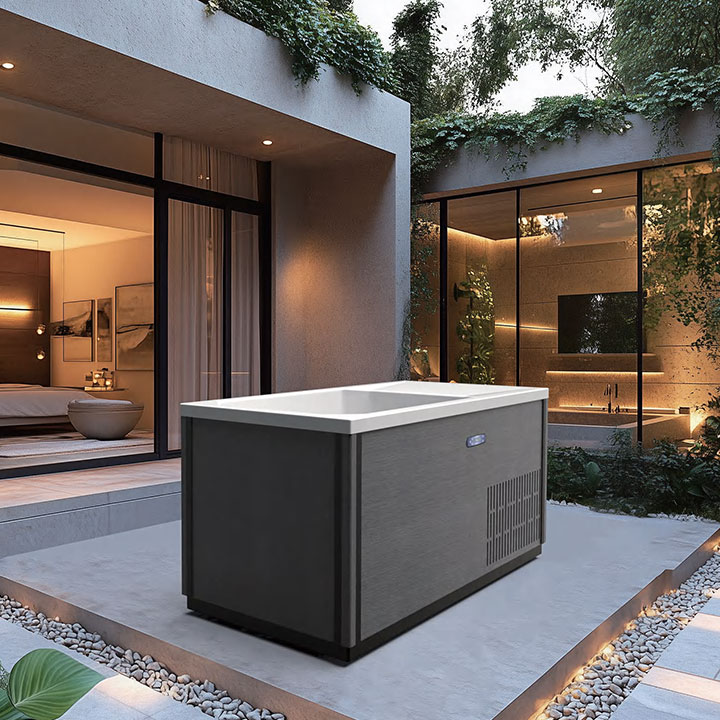
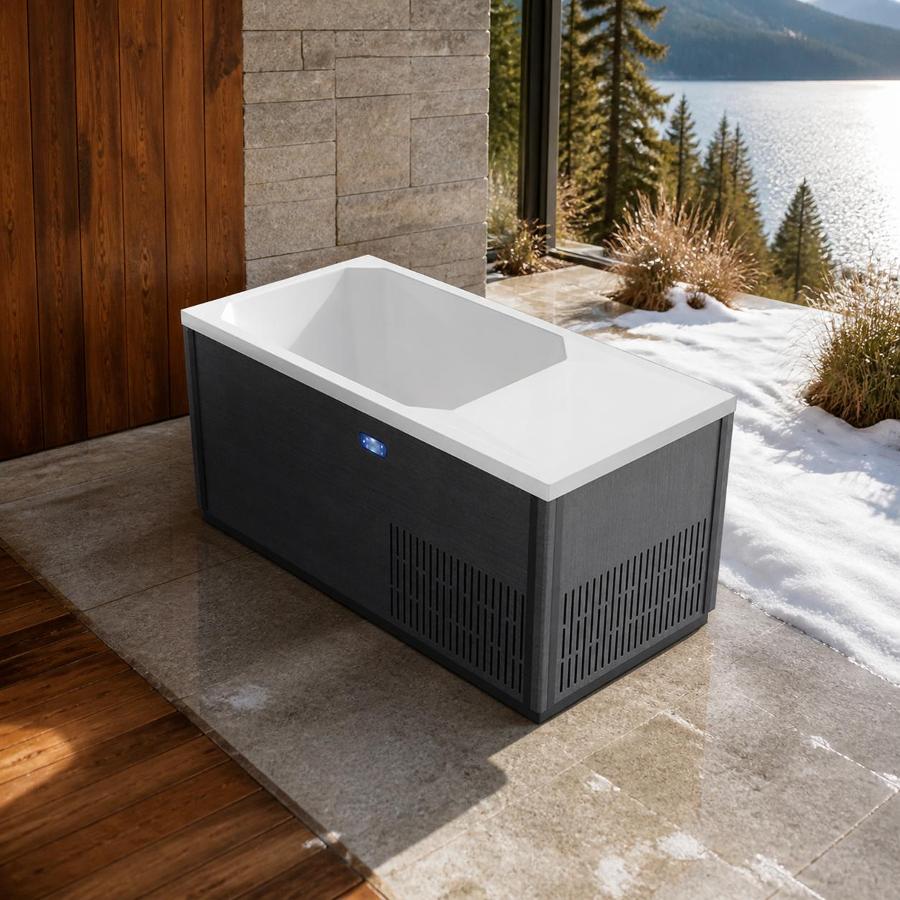
The Outdoor Cold Plunge Tub C02 is a case in point. It runs a 900W heat pump paired with a 54W brushless pump, which keeps water circulating and temperature stable without the manual maintenance a DIY setup demands. For anyone planning to use cold immersion consistently rather than as a one-off experiment, that reliability is the difference between a habit and an abandoned garage project.
Reading Technical Specs Without the Jargon
Specs sheets are where a lot of listeners tune out, but they matter more than the marketing copy around them. Here’s a breakdown of the core numbers worth knowing before buying any cold plunge tub, using the C02 as a reference point.
Spec
Detail
Water capacity
320 liters
Heater output
900 W
Pump
54 W brushless
Power draw
0.954 kW
Shell material
Porcelain acrylic
Cabinet colors
Platinum, Midnight
Dimensions
1695 mm × 830 mm × 850 mm
Net weight
140 kg
Water capacity affects how quickly the unit chills and how much thermal mass it holds once it’s at temperature. A 320-liter tub sits in a comfortable middle ground: large enough for a full-body immersion with an integrated seating step, small enough that the heat pump doesn’t have to fight an oversized volume of water.
Power draw is the number most buyers skip past, and it shouldn’t be. At 0.954 kW combined, the system is closer to running a space heater than an industrial chiller, which matters if the tub is going on a circuit shared with other outdoor equipment.
Matching the Tub to the Space, Not the Other Way Around
A recurring theme across cold plunge podcast discussions is regret over sizing. People buy based on price or aesthetics, then discover the unit doesn’t fit their patio layout or clashes with the exterior finish of their home.
Material and cabinet choice solve part of that problem. A high-grade porcelain acrylic shell handles UV exposure and temperature swings better than lower-grade plastics, and it’s the same shell material used across most professional-grade tubs sold for outdoor use. Cabinet finishes like Platinum and Midnight, with a weather-resistant composite paneling, tend to blend into a modern patio rather than standing out as obviously industrial equipment.
Placement decisions vary depending on the setting:
Private backyard patios benefit from a unit with a vented cabinet, since airflow around the heat pump matters more in enclosed courtyard spaces.
Athletic training facilities need a tub that can handle daily, multi-user cycling, which puts more emphasis on pump durability than aesthetics.
Boutique spas and wellness centers often prioritize the finish and control interface, since guests interact with the exterior as much as the water itself.
What a Typical Session Actually Looks Like
Cold plunge podcast hosts often skip the boring part: what does a session actually involve, mechanically speaking. It’s less dramatic than the editing on social clips suggests.
A user steps in using the integrated entry step, which reduces the awkward climb-and-drop motion that makes a lot of DIY tubs feel unsafe. Once seated, the ergonomic interior shape keeps the body positioned without needing to brace against smooth acrylic walls. Sessions typically run a few minutes, with the water temperature managed by the heat pump rather than melting ice.
Afterward, the insulated cover included with most cold plunge tubs keeps the water at temperature between uses, cutting down on the energy needed to re-chill the tub from scratch. That single accessory quietly solves the biggest complaint about ice bath ownership: the daily cost and hassle of getting the water cold again.
Common Questions From First-Time Users
Does cold plunging actually reduce muscle soreness, or is that overstated? The vasoconstriction effect on inflammation is a documented physiological response, and many users report reduced soreness after sessions. It’s a supportive recovery tool, not a substitute for proper training load management.
How cold does the water need to be? This varies by tolerance and goal, and it’s worth discussing with a coach or physician if you have circulatory conditions. A heat pump system, like the one in the C02, allows for temperature adjustment rather than locking users into whatever the ambient ice water happens to be.
Can a cold plunge tub be used outdoors year-round? That depends heavily on the shell and cabinet materials. A weather-resistant acrylic shell and composite paneling are designed for continuous outdoor exposure, which is why those material choices matter more than they might seem on a spec sheet.
Is a heat pump system necessary, or is ice enough? Ice works for occasional use. A heat pump system is the more practical choice for anyone using the tub several times a week, since it removes the ice-sourcing step entirely.
Where This Fits Into a Broader Wellness Routine
Cold plunging isn’t a replacement for sleep, nutrition, or training periodization. It’s a tool that layers onto an existing recovery routine, and the podcasts that frame it that way tend to age better than the ones promising transformation from a single dunk.
For homeowners building an outdoor wellness space, a tub like the C02 fits alongside a sauna or an existing spa setup, offering contrast therapy without requiring a commercial-grade installation. For athletic facilities, the same equipment scales into daily use across multiple users, provided the pump and heater specs match the expected volume.
At Victoria Star, this kind of tub reflects the broader shift in home wellness: durable, climate-controlled equipment replacing the improvised ice-and-cooler setups that dominated cold exposure a decade ago. Whether the interest comes from an athlete’s recovery plan or a weekend listen to a cold plunge podcast, the underlying decision is the same. Match the equipment to the use case, understand the specs before buying, and treat cold immersion as one part of a larger recovery strategy rather than a stand-alone fix.
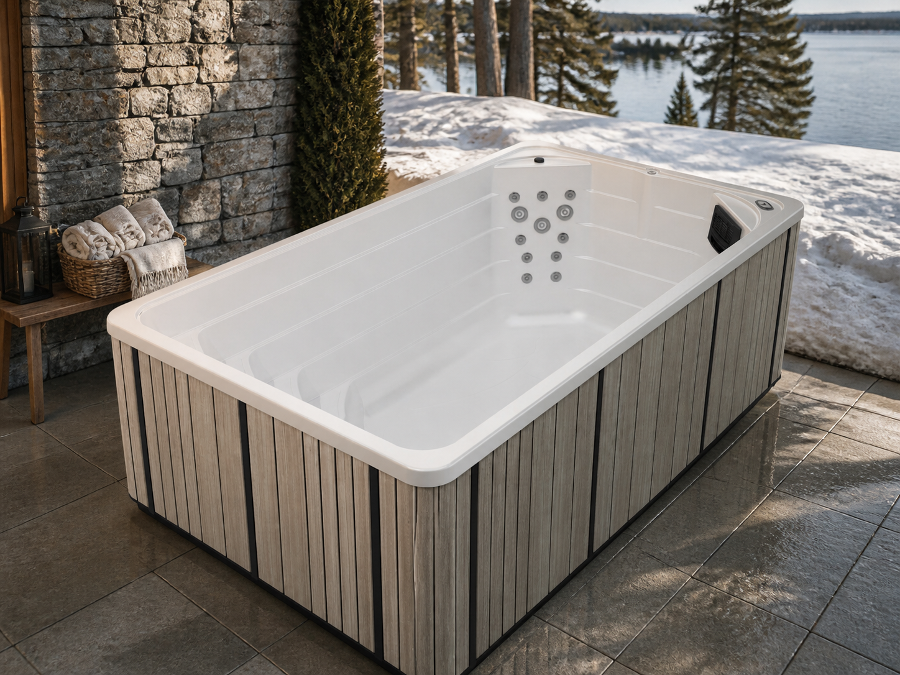
Victoria Star Swim Spa offers the perfect balance between exercise and relaxation, whether you want to swim for fitness or relax in the spacious seating.
Victoria Star Swim Spa offers the perfect balance between exercise and relaxation, whether you want to swim for fitness or relax in the spacious seating.