Home / News / What Drives the Cost of an Outdoor Hot Tub
September 30, 2026
Anyone shopping for a backyard retreat runs into the same wall fast: the cost of outdoor hot tub units varies wildly, and nobody explains why. One listing shows a basic two-seater for a fraction of what a jetted lounger model costs. The gap isn’t random. It comes down to jet count, pump horsepower, cabinet materials, and the electronics bolted onto the control panel. Understanding these variables turns a confusing price range into a straightforward decision, and it helps you avoid paying for features you’ll never use, or worse, underbuying and regretting it by the second summer.
Why Hot Tub Prices Swing So Widely
Walk into three spa showrooms and you’ll hear three different explanations for pricing, and most of them are only half right. The real answer sits in the mechanical guts of the unit, not the marketing brochure.
A hot tub is essentially a small hydrotherapy plant. It needs a heater, at least one water pump, a filtration loop, and a shell strong enough to hold hundreds of gallons without flexing. Every one of those components has a cheap version and an expensive version, and manufacturers mix and match to hit different price points. A model with a single small pump and a dozen jets will always cost less than one running dual pumps with fifty-plus jets, because the second setup demands a heavier heater, thicker wiring, and a shell engineered to handle sustained pressure.
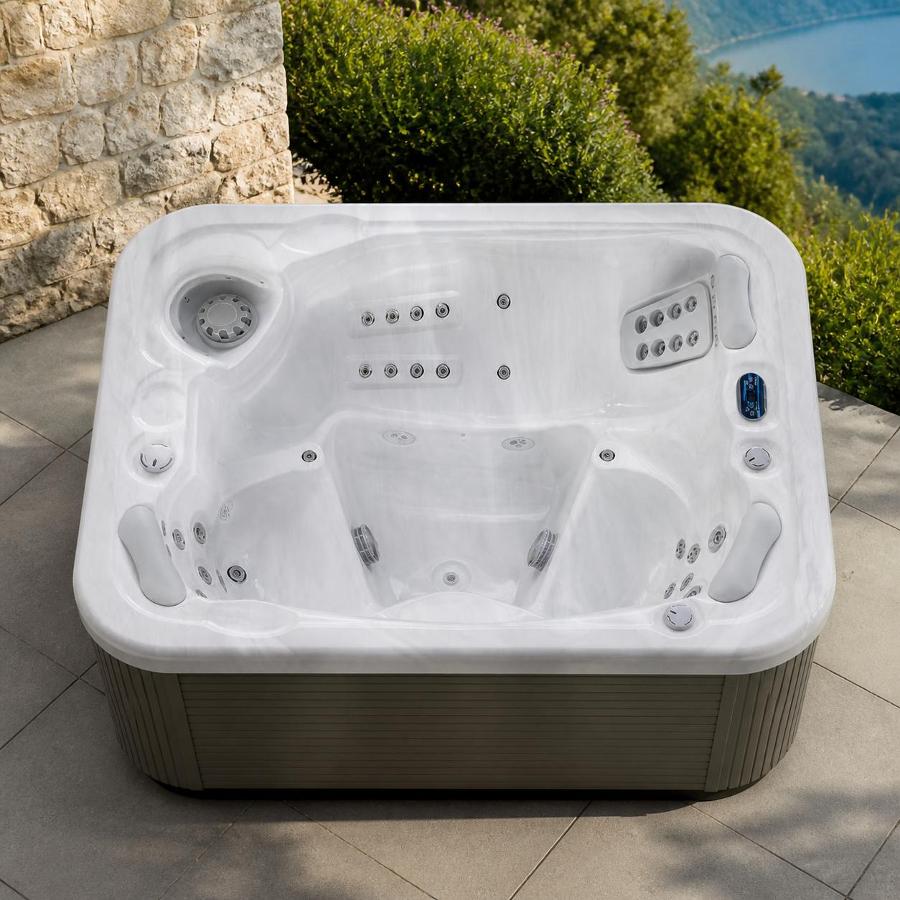
Seating capacity matters too, but not in the way most buyers assume. It’s not just about square footage. A three-person layout with an ergonomic lounger, like the kind found on the VS-302L, requires more contoured tooling in the shell mold than a flat bench design. That tooling cost gets baked into the retail price.
The Core Components That Set the Price Floor
Four things determine roughly eighty percent of what you’ll pay. Get familiar with these before comparing quotes, because sellers rarely break down pricing this way on their own.
Jet count and placement. More jets aren’t automatically better, but strategically placed jets across shoulders, back, and legs cost more to engineer and install than a generic grid pattern.
Pump horsepower. According to the VS-302L’s product specifications, a dual-pump system combining a 3 HP unit, a 2 HP unit, and a separate 0.35 HP circulation pump delivers steadier hydrotherapy pressure than a single small motor, and that redundancy shows up on the invoice.
Shell and cabinet materials. UV-resistant acrylic holds color and structural integrity longer than basic fiberglass blends, and composite skirting resists weather better than raw wood, both at a premium.
Control and lighting electronics. Smart keypad systems, multi-point LED lighting, and integrated Bluetooth audio add real manufacturing complexity, not just novelty.
None of these are wasted spend if you actually use them. The mistake is buying a unit loaded with features that don’t match your household’s habits.
Installation and Site Prep: The Hidden Half of the Budget
The unit price is only one line item. Site preparation often adds a comparable amount, and it’s the part buyers underestimate most consistently.
Outdoor placement introduces variables an indoor spa never faces. A wooden deck needs load calculations before it can safely hold a filled tub, since water alone can add over a thousand pounds. Concrete pads need to be level to within a small tolerance, or the shell can warp over time. Electrical work is non-negotiable too. A unit drawing close to 7 kW of total power, which matches the VS-302L’s rated 6.95 kW total power supply, needs a dedicated circuit sized correctly by a licensed electrician, not a household extension cord solution.
Buyers who skip a site assessment sometimes find out mid-installation that their deck needs reinforcement or their electrical panel needs an upgrade. Both of those are solvable problems, but they’re much cheaper to plan for than to fix after delivery day.
Comparing Spa Tiers: What You Actually Get at Each Price Point
Pricing tiers roughly track with mechanical complexity, not brand prestige. Here’s how the typical feature set scales across entry, mid, and premium categories.
A unit like the VS-302L sits firmly in the premium tier, running 54 jets across two seats and a full-body lounger, driven by a 3 HP and 2 HP pump combination with a separate 0.35 HP circulation pump. That’s not a coincidence of marketing. It’s what premium hydrotherapy typically requires mechanically.
Long-Term Cost Factors Beyond the Purchase Price
Sticker price is the number everyone fixates on, but running costs shape the real total over five or ten years. Energy consumption is the biggest recurring line.
Heating open water outdoors, especially in cooler climates, takes more energy than an indoor setup shielded from wind and ambient temperature swings. A well-insulated cabinet and an efficient heater, generally rated in the 3 kW range for mid-size units, reduce that draw meaningfully compared to older or poorly insulated shells. Water treatment is the second recurring cost. Manual chemical dosing eats time and money, whereas an integrated filtration and purification system, of the kind included with the VS-302L, reduces the frequency of full water changes and cuts down on chemical spend, though it doesn’t eliminate routine maintenance entirely.
Maintenance intervals also depend on materials. Acrylic shells resist staining and UV degradation better than lower-grade plastics, which means fewer refinishing costs down the line. Composite skirting shrugs off moisture and temperature swings better than untreated wood, avoiding the sanding and resealing cycle that wooden cabinets often demand.
Matching Budget to Household Needs
Choosing the right spa isn’t about maximizing features. It’s about matching mechanical capability to how your household will actually use it.
Count your regular users. A two-person household soaking occasionally doesn’t need a three-seat lounger configuration with 50-plus jets. A couple who entertains weekly might.
Assess your climate. Colder regions benefit more from efficient heating and solid insulation than from extra lighting features.
Check your electrical capacity. Confirm your home can support the total power draw, often in the 6 to 7 kW range for dual-pump premium units, before falling in love with a model.
Evaluate your outdoor space. Courtyards, rooftop terraces, and garden patios each impose different structural and access requirements that affect installation cost.
Decide how much maintenance you want to do. If minimal upkeep matters most, prioritize smart filtration systems over extra jets or audio features.
Skipping straight to price comparisons without this groundwork is how buyers end up either overspending on unused capacity or underbuying and facing an expensive upgrade cycle within a few years.
Frequently Asked Questions
Does a higher jet count always mean better hydrotherapy? Not necessarily. Jet placement targeting major muscle groups, like shoulders, back, and legs, matters more than raw count. A well-engineered 30-jet layout can outperform a poorly arranged 50-jet one.
Is dual-pump configuration worth the added cost? For households prioritizing consistent pressure across multiple seats, yes. A dedicated circulation pump alongside main jet pumps keeps water moving efficiently without overworking the primary motors.
How much does outdoor placement add to installation cost compared to indoor? It varies by site, but expect additional costs for structural assessment, weatherproof electrical work, and sometimes deck reinforcement, which indoor installations typically avoid.
Do smart controls and lighting significantly raise the price? They add cost, but they’re functional rather than purely cosmetic. Smart keypads simplify temperature and jet management, and integrated lighting extends usable hours into the evening.
Weighing all of this together, the cost of outdoor hot tub ownership isn’t just about the number on the price tag. It reflects pump configuration, shell material, electrical demands, and how well the unit matches your actual routine. For us at Victoria Star, that mechanical honesty is exactly why models like the VS-302L are built around dual pumps, UV-resistant acrylic, and efficient heating rather than surface-level extras. Buyers who understand these factors end up with a spa that fits their space, their climate, and their budget, without any expensive surprises after installation day.
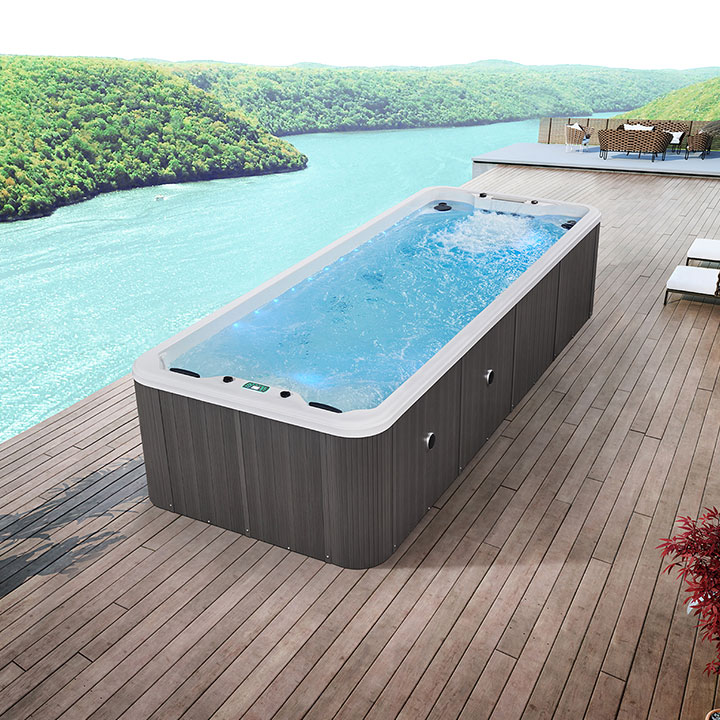
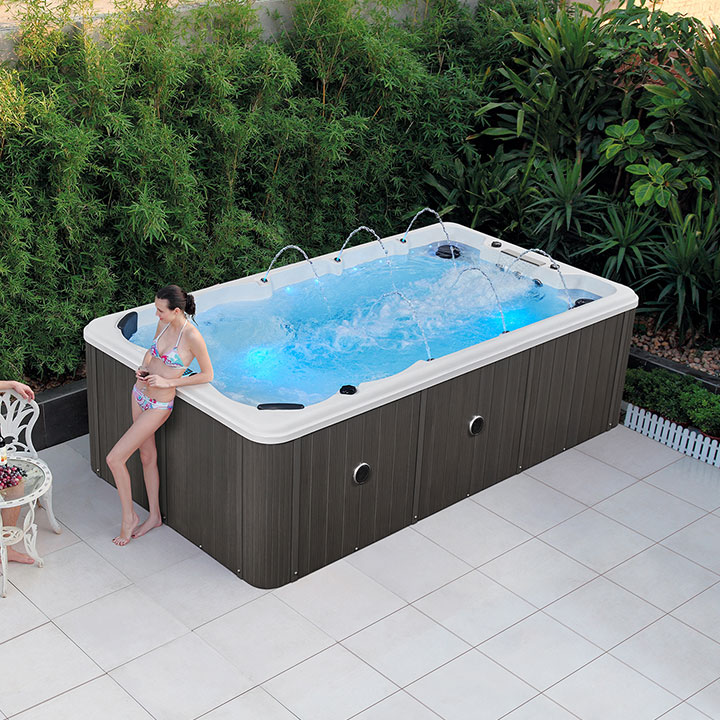
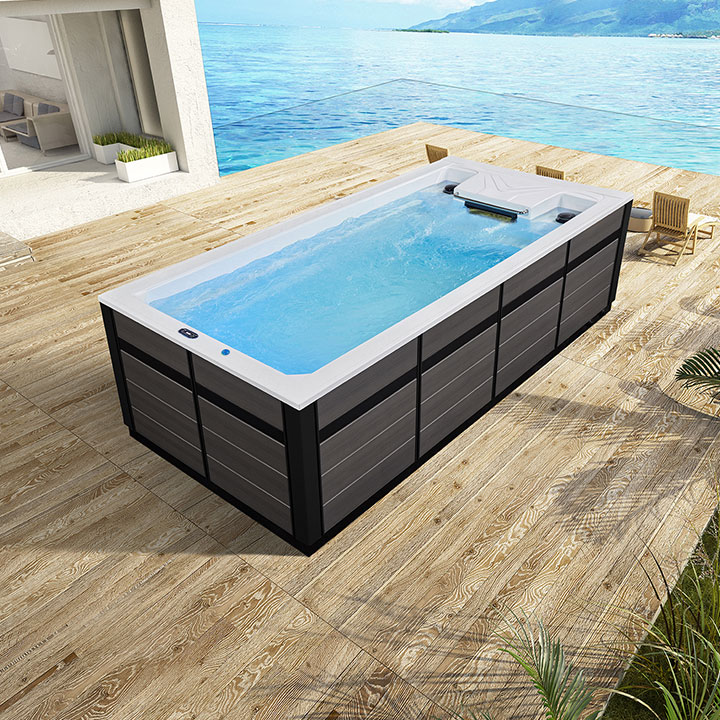
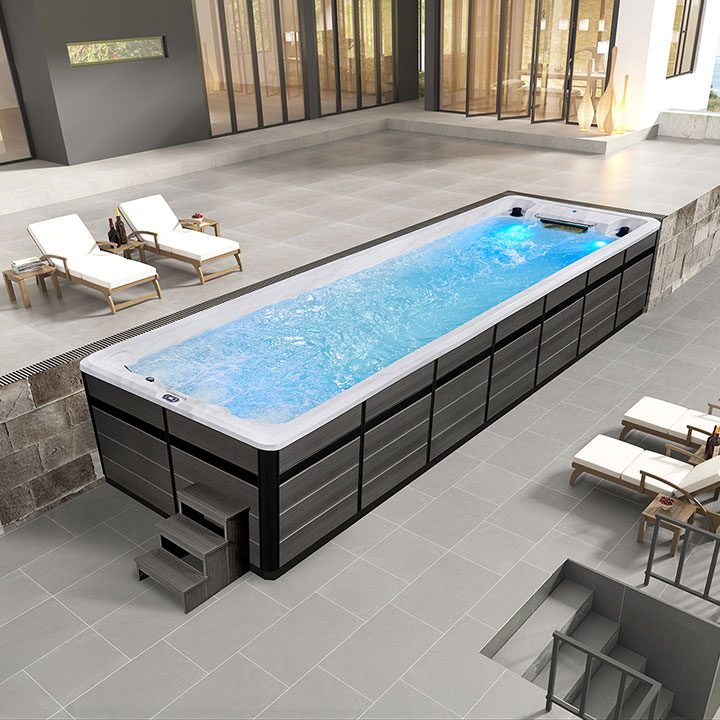
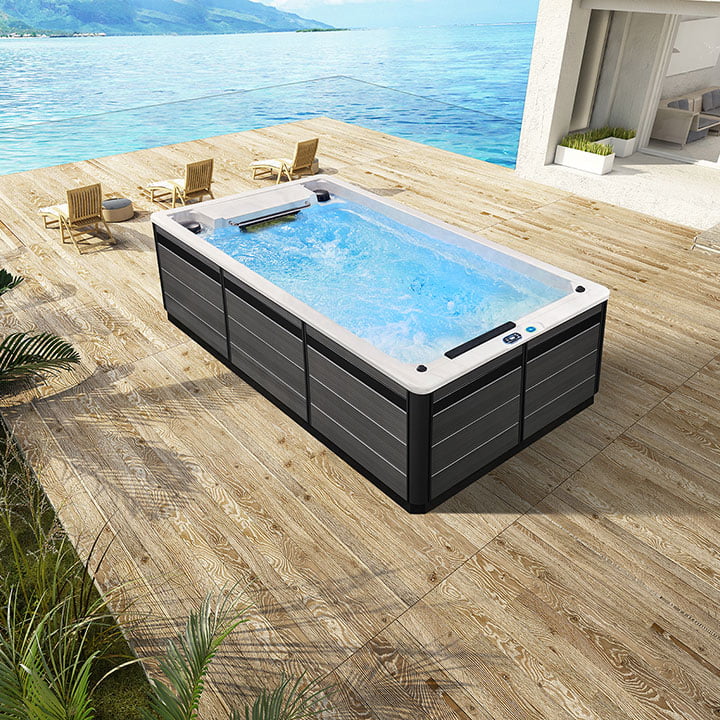
Victoria Star Swim Spa offers the perfect balance between exercise and relaxation, whether you want to swim for fitness or relax in the spacious seating.
Victoria Star Swim Spa offers the perfect balance between exercise and relaxation, whether you want to swim for fitness or relax in the spacious seating.