Home / News / What Determines the Cost of Running a Hot Tub
October 01, 2026
Anyone shopping for a spa eventually asks the same question: what will it actually cost to keep this thing running? The cost of running a hot tub depends on far more than the price tag on the box. Heater wattage, pump size, insulation quality, climate, and how often you use it all factor into the monthly bill. This guide breaks down the real numbers so you can budget with confidence instead of guessing.
Why Hot Tub Running Costs Vary So Much
Two households with identical hot tubs can see very different electric bills. The gap usually comes down to climate, water temperature settings, and how well the unit holds heat between uses. A spa in a shaded courtyard in a mild region sips less power than the same model sitting exposed on a rooftop in a cold northern winter.
Usage habits matter just as much as hardware. Someone who heats the water to 104°F daily pays more than someone who keeps it at 100°F and only heats up before weekend soaks. The heater is the single largest energy draw in almost every spa, so temperature discipline has an outsized effect on the bill.
The Main Components That Drive Electricity Use
Every hot tub has three electrical components working together: the heater, the water pump, and the circulation pump. Understanding what each one does helps explain where the money goes.
Heater: Compact two-person spas commonly use a 3 KW heating element, which runs whenever the water temperature drops below the set point.
Water pump: Powers the massage jets and is typically rated in horsepower, drawing more current when jets are active on high speed.
Circulation pump: A smaller, low-wattage pump that keeps water moving continuously for filtration, often the only motor running when the spa is idle.
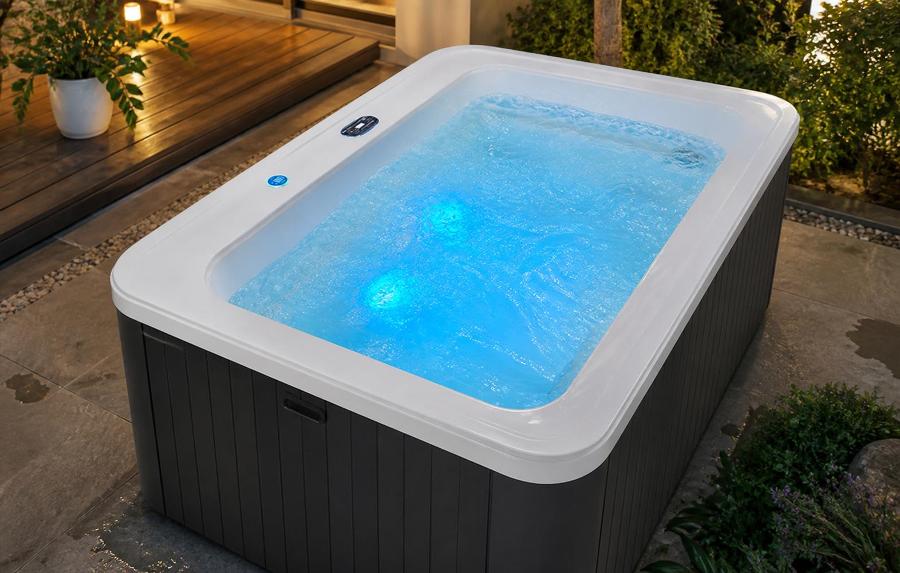
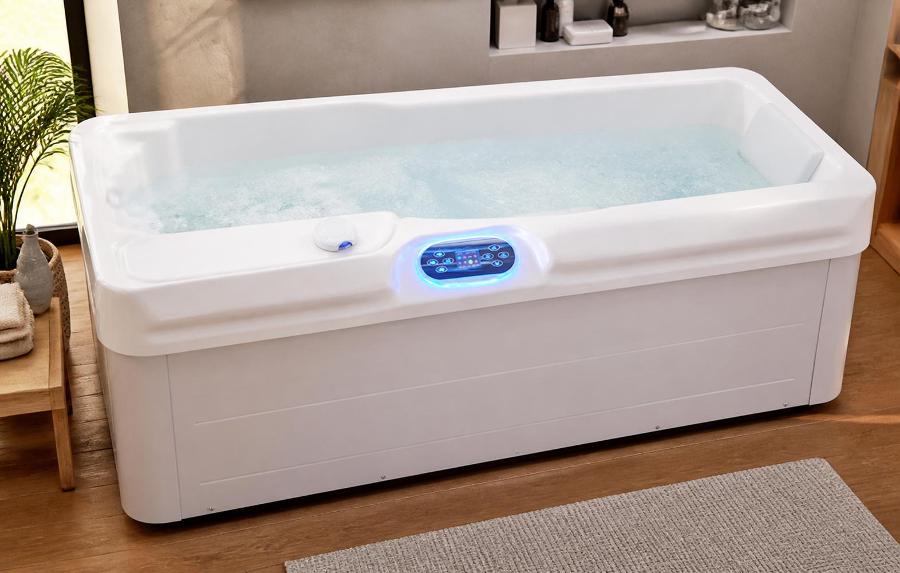
A compact model like the VS-201C, a 2-person rectangular hot tub from Victoria Star’s Comfort Series, illustrates this layout well. According to the product specifications, it pairs a single 3 KW heater with a 2 HP water pump and a separate 0.35 HP circulation pump, with a total power supply rating of 4.5 KW. Because the circulation pump runs at low draw for filtration while the heater cycles only as needed, day-to-day electricity use stays lower than the peak 4.5 KW figure would suggest.
Breaking Down Where the Money Actually Goes
Roughly speaking, heating accounts for the majority of ongoing spa electricity use, especially in colder months. Jet operation adds a noticeable but smaller bump, since most owners run massage jets for thirty minutes to an hour per session rather than continuously. Filtration draws the least power per hour but runs the longest, sometimes many hours a day, so its cumulative contribution is not trivial either.
This is why a well-insulated cabinet matters more than people expect. A tub that leaks heat forces the heater to cycle more often, quietly inflating the bill even when nobody is soaking. Cabinet material also plays a supporting role here: durable, weather-resistant skirting helps the unit maintain a stable internal environment rather than losing heat to wind and rain exposure.
Cost Comparison by Spa Size and Usage Pattern
Spa Type
Typical Heater Size
Daily Use Pattern
Relative Monthly Cost Impact
Compact 2-person spa
3 KW
Occasional evening soaks
Lower
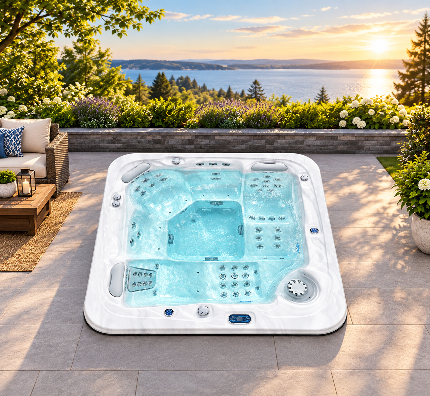
Mid-size 4-6 person spa
4–6 KW
Regular family use
Moderate
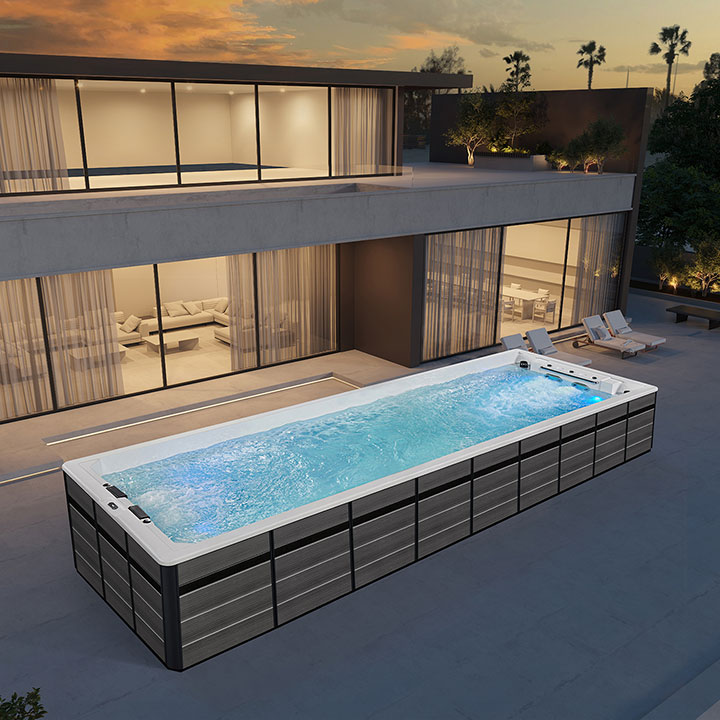
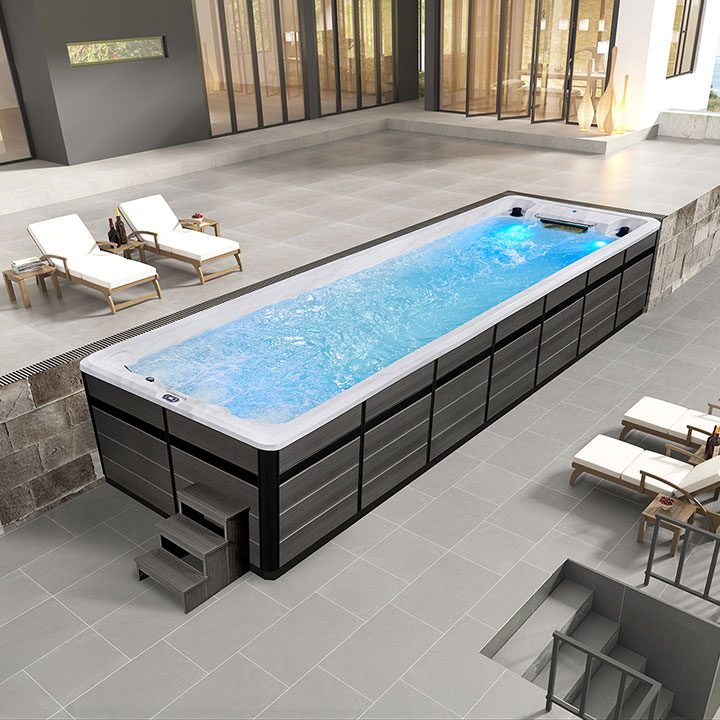
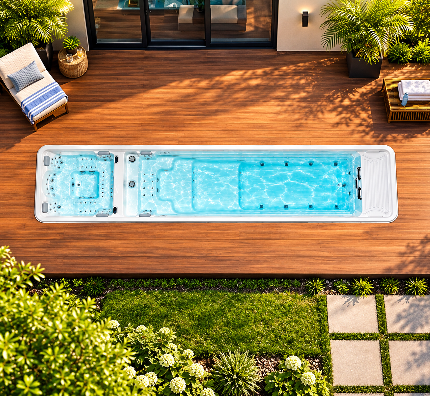
Large swim spa
6 KW+
Daily extended use
Higher
Smaller footprints have a real advantage here. Less water volume means less mass to heat, which is part of why compact rectangular units designed for balconies or private courtyards tend to run more economically than larger multi-seat spas. If you are weighing size against budget, this table is a reasonable starting point, though your actual bill will still shift with local electricity rates and climate.
Smart Controls and Their Role in Managing Costs
Digital control systems do more than adjust temperature at the touch of a button. They let owners set precise target temperatures instead of guessing, which prevents the common mistake of overheating water "just in case." According to the product specifications, the VS-201C uses a KL2022 smart keypad system to manage water temperature, jets, and lighting from one interface.
Setting a slightly lower baseline temperature, then boosting it an hour before use, is one of the simplest ways owners reduce the cost of running a hot tub without changing hardware at all. It is less about buying a fancier controller and more about using the one you already have with intention.
How Water Maintenance Affects Long-Term Cost
Water chemistry is where a lot of hidden costs sneak in. Poorly filtered water forces pumps to work harder and can shorten equipment life, while heavy reliance on chemical treatment alone tends to mean more frequent water changes. Draining and refilling a spa is not just a water cost; it is also a full reheat from tap temperature, which can spike a single month’s electricity use noticeably.
According to the product specifications, the VS-201C features a multi-stage sanitation system that combines filtration with ozone oxidation and UV treatment. Systems of this type are designed to reduce how often full drains are needed. Less frequent draining means fewer expensive reheat cycles, which folds directly back into the running cost conversation even though it starts as a maintenance topic.
Practical Steps to Lower Your Monthly Spa Bill
If you already own a hot tub, or are choosing between models, a few habits make a measurable difference over a year:
Keep the cover on whenever the spa is not in use to prevent heat loss.
Set the thermostat a few degrees lower during weeks of infrequent use.
Run jets in shorter, focused sessions rather than leaving them on for background ambiance.
Schedule filter cleaning on a consistent basis so the circulation pump does not work against clogged media.
Choose a cabinet material rated for your climate, since a poorly insulated skirt undermines even a good heater.
None of these steps require replacing equipment. They are behavioral adjustments that compound over months, and for most owners, they matter more than any single spec sheet number.
Frequently Asked Questions
Does a smaller hot tub always cost less to run than a larger one? Generally yes, because less water volume needs heating and pumps typically draw less power. A compact 2-person model like the VS-201C, built around a 3 KW heater, will usually cost less monthly than a large multi-seat swim spa with a 6 KW heater running daily.
Is it cheaper to turn the hot tub off between uses? Usually not. Letting the water cool completely and reheating from scratch typically uses more energy than maintaining a slightly reduced standby temperature, since the heater has to work harder to close a larger temperature gap.
Do Bluetooth speakers or LED lighting add much to the electric bill? These accessories draw comparatively little power next to the heater and water pump, so their contribution to overall running cost is minor.
How often should filters be cleaned to keep costs down? Following the manufacturer’s recommended schedule keeps circulation efficient. A clogged filter forces the pump to work harder, which quietly adds to energy draw over time.
Understanding the cost of running a hot tub comes down to three levers: how well the unit holds heat, how the pumps and heater are sized for the space, and how consistently the owner manages temperature and maintenance. A compact, well-insulated design like the VS-201C, from Victoria Star’s Comfort Series, is built around a modest 3 KW heater and space-saving footprint intended for balconies, courtyards, and indoor spa areas. For anyone comparing options, matching the spa’s size and features to actual usage patterns remains the most reliable way to keep monthly running costs predictable.
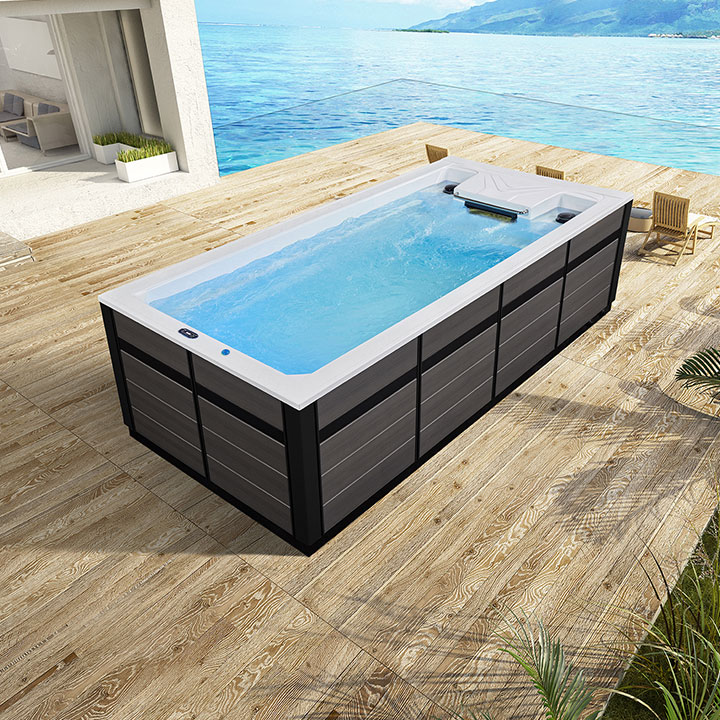
Victoria Star Swim Spa offers the perfect balance between exercise and relaxation, whether you want to swim for fitness or relax in the spacious seating.
Victoria Star Swim Spa offers the perfect balance between exercise and relaxation, whether you want to swim for fitness or relax in the spacious seating.