What Cold Shock Proteins Reveal About Cold Therapy Recovery
Home / News / What Cold Shock Proteins Reveal About Cold Therapy Recovery
September 28, 2026
Anyone who has stepped into freezing water for the first time knows the shock is real. That jolt has a biological name: cold shock proteins are a family of proteins your cells produce in response to sudden temperature drops, and they sit at the center of why cold water immersion has become a serious recovery tool rather than a fringe habit. Athletes, physical therapists, and increasingly regular gym-goers are asking the same question. Does dunking yourself in near-freezing water actually change what happens inside your body, or is it just discomfort dressed up as discipline?
The short answer is that cold exposure triggers measurable physiological responses, and cold shock proteins are one piece of that puzzle. This article breaks down what’s actually happening, what the current evidence supports, and how equipment choices like an outdoor cold plunge tub factor into making this practice sustainable at home.
What Cold Shock Proteins Actually Do
Cold shock proteins, most notably RBM3 and CIRP, are produced when cells experience a rapid drop in temperature. Research in cellular biology has linked these proteins to processes like neuroprotection and tissue preservation under stress. In simpler terms, cold exposure seems to prompt cells into a defensive, adaptive state.
This is separate from the immediate sensations you feel when you step into cold water. The gasping, the racing heart, the urge to get out. Those reactions come from your nervous system, not from protein synthesis, which happens more gradually. It’s worth separating the two because a lot of marketing around cold plunging conflates "feeling something happen" with "proving a specific molecular pathway is firing." The science on cold shock proteins in humans is still developing, and most robust data comes from animal and cell studies rather than large human trials.
That distinction matters for setting expectations. Cold immersion has documented effects on circulation and inflammation markers that are far better studied than the cold shock protein pathway specifically. Treat the protein research as a promising area of interest, not a guaranteed outcome you’ll feel after one session.
Why Athletes and Recovery Programs Use Cold Immersion
Setting aside the cellular-level research, there’s a more practical reason cold plunging has spread from elite sports facilities into home backyards: it addresses a real, common problem. Delayed onset muscle soreness after intense training limits how quickly someone can get back to full output.
Cold water immersion works on this through a fairly well-understood mechanism. Exposure to low temperatures causes blood vessels to constrict, which reduces blood flow to inflamed tissue temporarily. Once the body warms back up, vessels dilate again, and that constrict-dilate cycle helps move blood, and with it oxygen, through muscle tissue more actively than it would at rest.
Reduced perceived muscle soreness in the 24 to 48 hour window after intense exercise
Improved subjective recovery scores in athletes following repeated cold exposure
Support for mental clarity and stress reduction, tied to endorphin release during cold exposure
None of this means cold plunging replaces rest, hydration, or proper training load management. It’s a complementary tool, and it earns its place in a recovery routine because the underlying vascular response is consistent and repeatable.
Setting Up a Cold Plunge Routine Without a Guessing Game
Here’s where a lot of people run into friction. Filling a tub with ice, checking the temperature manually, and hoping it stays cold enough for a full session is inconsistent at best. Temperature drift is the enemy of a reliable cold therapy habit, because a plunge at 15°C feels and behaves very differently than one at 8°C.
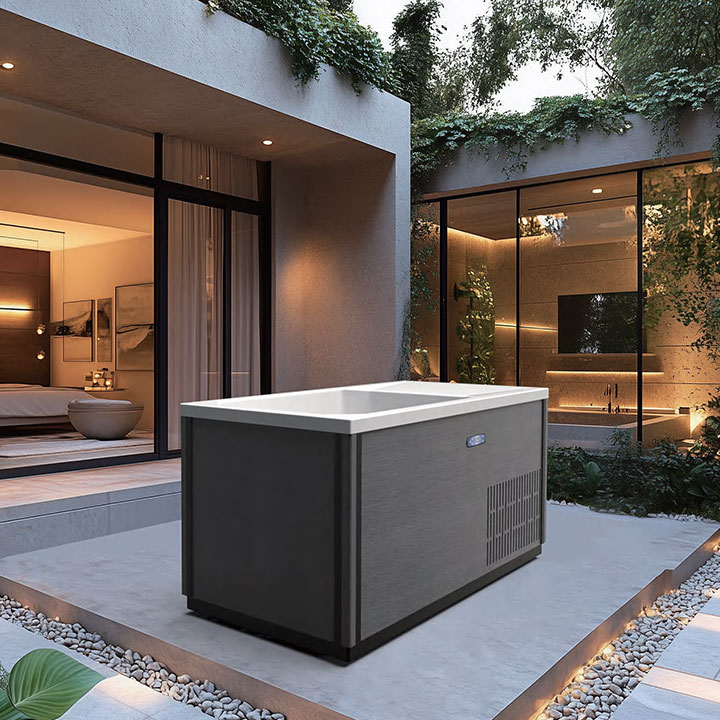
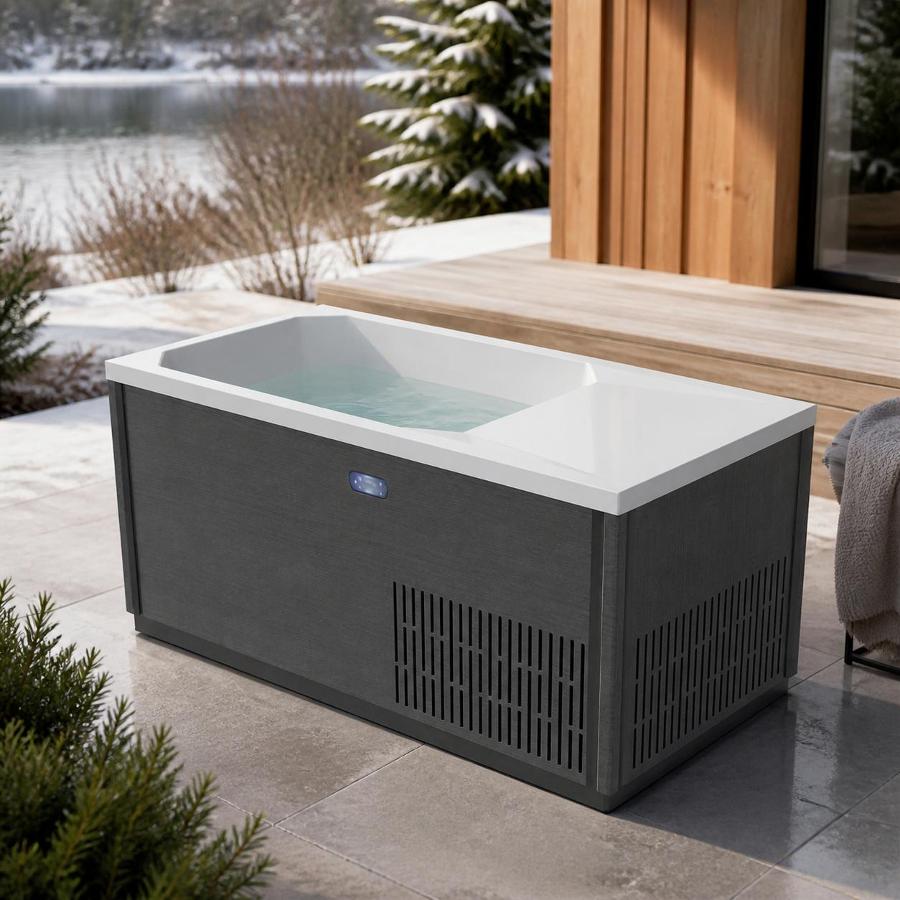
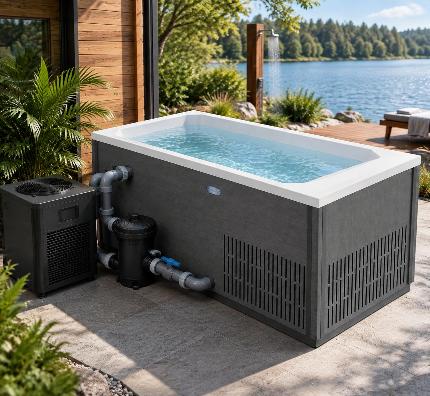
This is the practical argument for a dedicated cold plunge tub with integrated temperature control, rather than a repurposed livestock trough or a bathtub full of bagged ice. The Outdoor Cold Plunge Tub C02, for example, uses a 900W heat pump system paired with a 54W brushless pump to hold a set low temperature without the daily ice run.
A few practical questions come up repeatedly when people move from occasional ice baths to a permanent setup:
How much water does it actually need to hold? The C02 model has a 320-liter capacity, enough for full immersion up to the shoulders for most adult body types.
How is temperature maintained session to session? Through the integrated heat pump control system, which regulates output rather than relying on melting ice for cooling.
Where can it realistically be installed? Given its 1695 mm by 830 mm footprint, it fits on a standard patio, deck, or courtyard without requiring major structural changes.
Material and Build Considerations That Affect Long-Term Use
An outdoor cold plunge tub lives outside, which means UV exposure, temperature swings, and moisture are constant variables. The shell material and cabinet construction matter more here than they would for an indoor spa tucked away from weather.
The C02 uses a porcelain acrylic shell for the interior basin, a material chosen for its smooth, high-gloss finish and resistance to staining from repeated water exposure. The exterior cabinet uses vented composite panels, which allow airflow around the equipment housing rather than trapping heat and moisture against the components.
Specification
Detail
Water Capacity
320 L
Heater Output
900 W
Pump Output
54 W (brushless)
Dimensions
1695 mm x 830 mm x 850 mm
Shell Material
Porcelain acrylic
Cabinet Colors
Platinum, Midnight
Net Weight
140 KG
Power Supply
0.954 KW
Weight matters more than people expect when planning an installation. At 140 KG empty and roughly 180 KG including packaging, the unit needs a stable, level surface, whether that’s a concrete pad, reinforced deck, or paved patio area.
Comparing Backyard Use to Commercial Recovery Settings
Not everyone installing a cold plunge tub is doing it for the same reason, and the use case shapes what actually matters in a product. A homeowner adding one to a backyard patio has different priorities than a training facility running multiple sessions a day.
For residential settings, the appeal tends to center on convenience and consistency. Being able to step outside, dial in a temperature, and get a repeatable session without prep time is the whole point. The insulated cover that comes with the C02 also plays a role here, since it reduces heat gain between uses and keeps debris out when the tub sits unused on a deck or courtyard.
Commercial environments, including sports training facilities and boutique wellness studios, care about throughput and durability under heavier, more frequent use. A weather-resistant cabinet and a heat pump system built for sustained operation both become more important when a unit is running multiple sessions daily rather than once or twice a week.
Placement and Setting: Why Location Changes the Experience
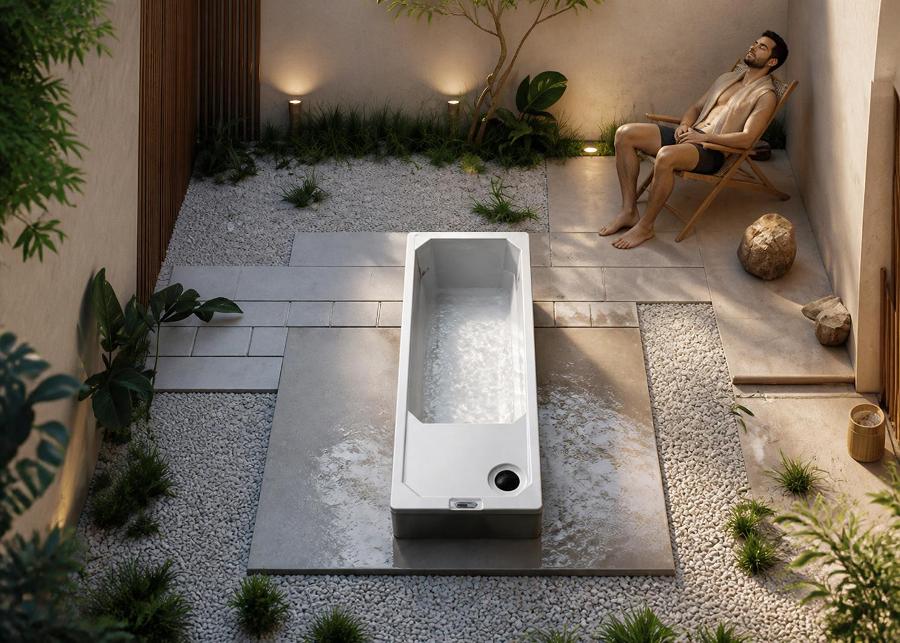
Where a cold plunge tub gets installed has more effect on daily use than most people anticipate before buying one. A unit tucked into a shaded courtyard gets used differently than one placed on an open deck facing morning sun.
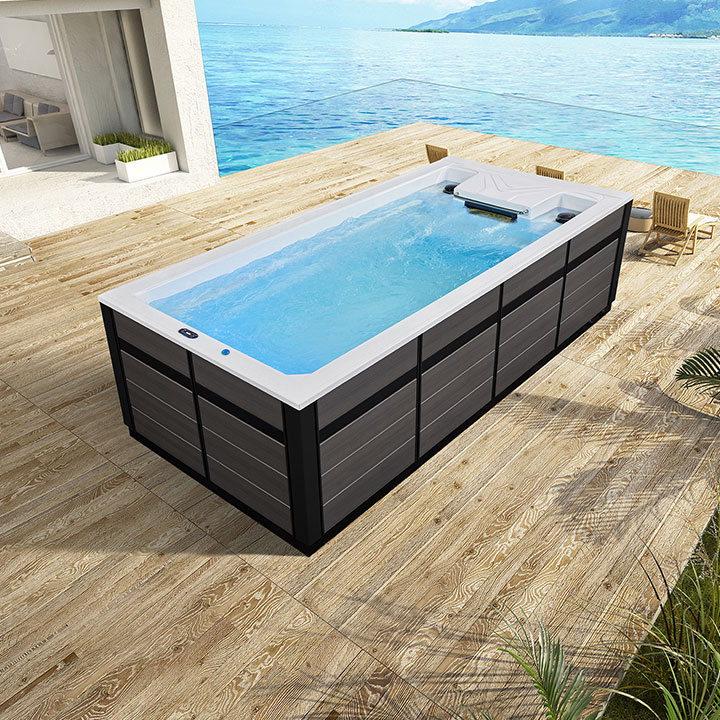
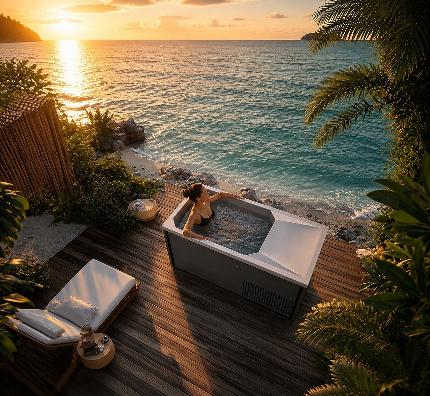
Coastal and resort-style installations often place the tub to take advantage of a view, turning what is fundamentally a recovery tool into part of a broader relaxation setting. That’s less about the cold shock proteins conversation and more about whether someone will actually use the tub consistently, which, honestly, is the bigger predictor of results than any single physiological mechanism.
Shaded courtyards suit shorter, more frequent sessions since ambient heat stays lower
Open decks with morning sun exposure work well for post-workout routines before daily heat builds
Poolside or ocean-adjacent placements pair cold immersion with existing outdoor relaxation spaces
Frequently Asked Questions
Does cold water immersion definitely activate cold shock proteins in humans the way it does in lab studies? The mechanism is plausible and supported by cellular research, but large-scale human clinical data confirming the exact pathway and dosage needed is still limited. Treat it as a contributing factor within a broader, better-documented set of circulatory and inflammatory responses to cold exposure.
What temperature is typically used for cold plunge sessions? Ranges vary by tolerance and goal, but many recovery protocols fall between 10°C and 15°C. A heat pump-controlled unit like the C02 allows for consistent, repeatable settings rather than relying on ice quantity, which changes session to session.
Can a cold plunge tub be used year-round outdoors? Yes, provided the unit is built for outdoor conditions. Weather-resistant cabinet materials and a properly rated heat pump system are what make that possible without needing to move the tub indoors seasonally.
Is a larger water capacity always better? Not necessarily. Capacity should match body size and installation space. A 320-liter tub is generally sized for full-body immersion for adult users without requiring an oversized footprint on a patio or deck.
Cold shock proteins may not be the full story behind why cold water immersion works, but they represent a genuinely interesting thread in a broader picture that includes vascular response, inflammation reduction, and mental clarity. For us at Victoria Star, the goal has been building an outdoor cold plunge tub that turns that science into a routine people can actually stick with, rather than a one-off experiment with a cooler full of ice.
Victoria Star Swim Spa offers the perfect balance between exercise and relaxation, whether you want to swim for fitness or relax in the spacious seating.
Victoria Star Swim Spa offers the perfect balance between exercise and relaxation, whether you want to swim for fitness or relax in the spacious seating.