The Strategic Guide to Timing Your Spa Purchase: When Is the Best Time to Buy a Hot Tub?
Home / News / The Strategic Guide to Timing Your Spa Purchase: When Is the Best Time to Buy a Hot Tub?
November 04, 2026
Determining the best time to buy a hot tub requires balancing seasonal retail promotions against real-world installation logistics. Many prospective owners assume that pinpointing a single calendar month guarantees the lowest overall expenditure. The true cost of owning a spa involves equipment pricing, delivery access, electrical installation, and site preparation. Understanding how dealer cycles interact with contractor availability allows you to secure substantial savings without compromising the execution of your installation.
Whether you seek a compact dual-lounge sanctuary for a private courtyard or an expansive family retreat, timing affects lead times, customization options, and total project outlays. Evaluating regional weather patterns, inventory rotation schedules, and infrastructure requirements ensures your investment delivers seamless performance from the initial soak.
Demystifying Seasonal Spa Pricing: There Is No Single Magic Calendar Date
Showroom sales representatives often claim that the current weekend presents an unbeatable purchasing window. In reality, hot tub pricing moves through predictable commercial cycles governed by inventory holding costs, regional demand spikes, and national manufacturing rotations. Uncovering these underlying cycles enables you to negotiate from a position of informed leverage.
Separating Headline Dealer Discounts from True Project Value
Promotional banners touting thousands of dollars in savings often obscure critical line items. A deep discount on a floor model can evaporate instantly if the dealership charges inflated delivery fees, excludes thermal covers, or provides no local service network. True purchasing value encompasses the full mechanical package, including functional insulation, water circulation systems, and dedicated logistical coordination.
Retailers regularly clear floor displays to make space for incoming product lines. This inventory rotation creates pricing flexibility for attentive buyers, yet these units may feature minor aesthetic wear or specific factory options that cannot be modified. Examining the complete contract protects your budget against unexpected auxiliary charges.
Aligning Your Timing Strategy with Your Primary Constraint
Every buyer approaches the market with distinct priorities. Some focus on minimizing equipment expense, while others face rigid project schedules. If your primary objective is securing the lowest price, waiting for seasonal clearance events and accepting in-stock floor models offers the clearest path to discounted pricing.
Conversely, if your spa installation is tied to an active landscape renovation, home addition, or specific deck build, flexibility must yield to contractor sequencing. Attempting to save a modest percentage on the spa shell while stalling landscape trades frequently leads to higher overall site costs. Identifying your primary constraint prevents costly scheduling bottlenecks later.
The Seasonal Buying Calendar: Window-by-Window Opportunities
Navigating dealership promotions across different seasons reveals distinct advantages and hidden operational challenges. The following possibilities represent common patterns, though local inventory, promotions, and timing vary by dealer and region. Compare itemized quotes and available stock at your local retailers.
Seasonal Window
Possible Pricing Advantage
Logistical Consideration
May Suit
Late Summer to Autumn
Some dealers clear summer inventory
Site preparation depends on local weather and conditions
Value seekers wanting immediate autumn or winter use
Winter to Early Spring
Slower traffic may prompt negotiation
Frozen or snow-covered ground may complicate site work
Patient buyers willing to store or delay setup
Spring to Early Summer
Broadest selection and latest configurations
High contractor demand and extended factory lead times
Custom project planners integrating full landscaping
Major Holiday Weekends
Some retailers advertise promotional bundles
Compressed delivery windows and high showroom traffic
Fast-acting buyers ready to take stock inventory
Late Summer into Autumn: A Possible Window for Clearance and Installation
Some dealerships reduce inventory during late summer and early autumn. Buyers entering showrooms during this phase may encounter receptive sales managers eager to move stock, though this varies by dealer and regional market conditions.
Site preparation and contractor availability depend on local weather and conditions. Coordinate with your concrete contractor and electrician to confirm feasibility and schedule foundation work and electrical trenching around equipment delivery.
Winter and Early Year-End: Negotiating Surplus and Floor Display Models
Deep winter represents a period of low showroom foot traffic for outdoor living retailers. As cold weather curtails impulse walk-in sales, dealerships may be more open to negotiation on unsold units. Shoppers visiting showrooms between December and February can explore favorable terms on remaining inventory.
Securing a low purchase price during winter requires careful planning for delivery. Frozen or snow-covered ground and icy access may complicate excavation or delivery in some locations. Confirm feasibility and any added costs with local contractors and the dealer. Buyers taking advantage of winter clearance often arrange off-site storage or schedule final pad installation for early spring.
Spring to Early Summer: Peak Selection and Backyard Integration
When warmer temperatures arrive, consumer interest in backyard enhancements rises rapidly. Dealerships receive the latest manufacturing releases, offering access to updated jet packages, shell color options, and enhanced control modules. This period is well suited for homeowners seeking tailored specifications rather than standardized warehouse stock.
High seasonal demand limits promotional discounting. Factory orders placed during peak spring often face extended production lead times, and licensed electricians maintain dense project calendars. If your objective is integrating a customized spa into a broader outdoor living space, securing your order early in the season preserves your completion timeline.
Major Promotional Holidays: When Are Event Sales Genuinely Advantageous?
Holiday weekends such as Memorial Day, Labor Day, and Black Friday prompt widespread promotional advertising across the spa industry. Some retailers advertise package incentives during these events.
To evaluate these events objectively, examine the exact contents of the promotional package. Retailers sometimes bundle high-density insulated covers, hydraulic cover lifters, composite entry steps, and initial chemical maintenance sets into the holiday price. When these ancillary necessities are included, holiday promotional pricing can provide tangible financial value.
Aligning Purchase Timing with Space, Scale, and Installation Scope
Selecting an optimal purchasing window requires understanding how physical space constraints influence delivery feasibility. A heavily discounted eight-person spa provides little value if navigating backyard access requires an expensive crane lift or your patio foundation cannot support the load.
Footprint and Structural Reality Checks Before Signing
Calculating total operating weight is essential prior to finalizing an equipment order. A filled hot tub exerts substantial downward force, combining dry acrylic weight, water mass at roughly one kilogram per liter, and the combined weight of occupants. Elevated timber decks, rooftop terraces, and suspended balconies require formal structural evaluation by a licensed engineer to prevent structural failure.
Clear pathway access represents another critical delivery hurdle. Installers transport the spa vertically on a specialized cart, requiring sufficient clearance under roof eaves, past air conditioning compressors, and through boundary gates. Factoring spatial verification into your timeline ensures the delivery team can position the unit without costly logistical disruptions.
Matching Form Factor to Urban and Intimate Spaces
For compact yards, urban townhomes, and private apartment balconies, large multi-seat shells are often impractical. Compact installations demand streamlined engineering that maximizes internal ergonomic space while preserving structural safety margins and minimizing power infrastructure requirements.
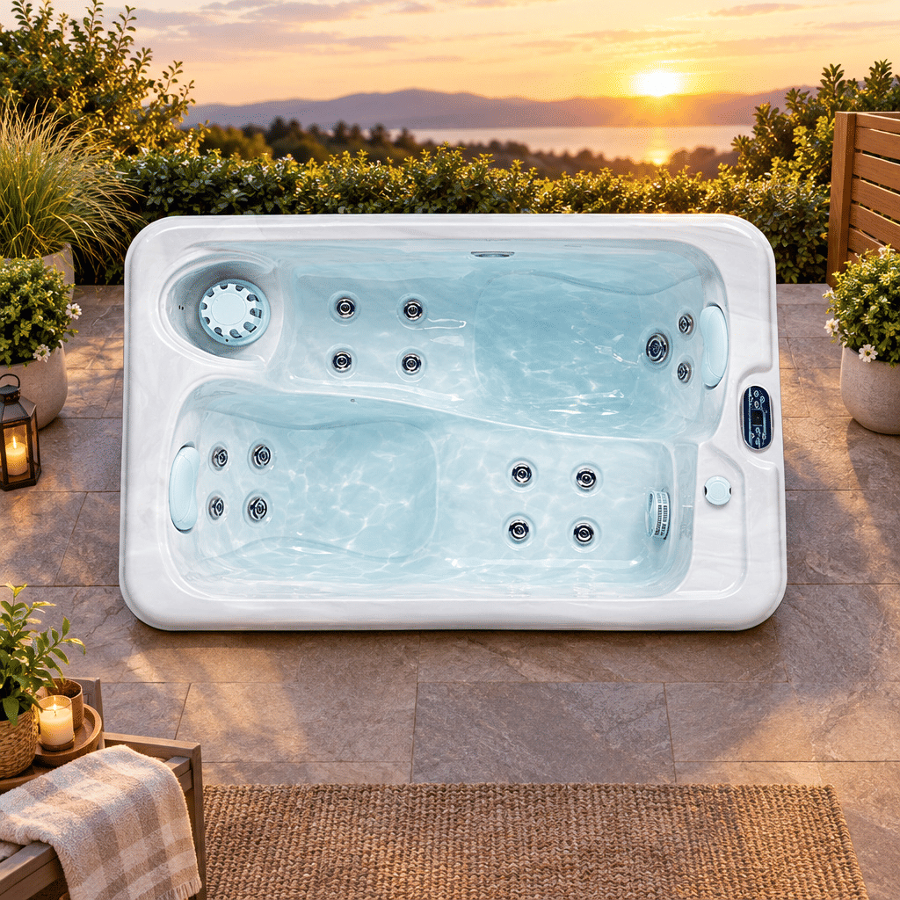
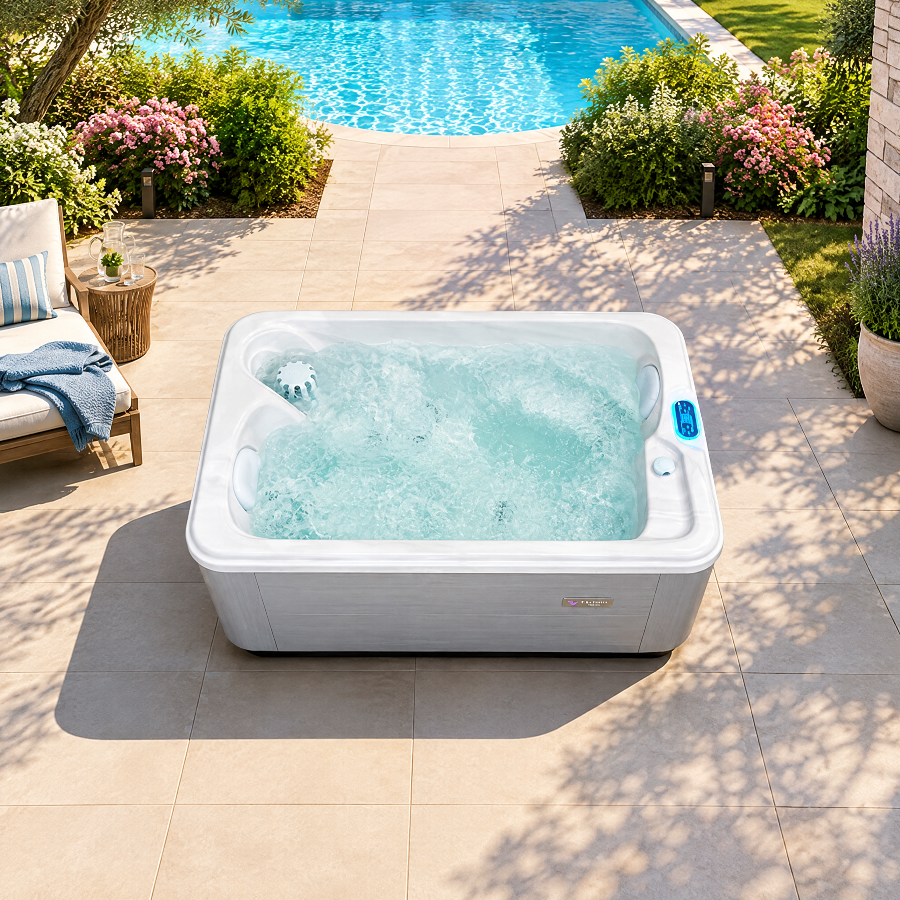
In our manufacturing operations at Victoria Star, designing targeted residential spas centers on solving these spatial challenges. The Comfort Series VS-201C exemplifies this approach: an intimate two-person rectangular configuration measuring 1750 × 1150 × 750 mm (approximately 6′ × 45″ × 30″). Equipped with two contoured loungers, 15 targeted hydrotherapy jets, a 3 kW heater, and an integrated KL2022 smart keypad control, it delivers comprehensive hydrotherapy within a minimal footprint.
The model lists a 4.5 kW power supply, a 2 HP water pump, and a 0.35 HP circulation pump. This configuration requires an electrician to verify electrical requirements against the product manual and local code. The model features an aluminum-plastic skirt, demonstrating that compact spas can combine sophisticated therapy within a space-efficient design.
Calculating True Total Cost: Beyond the Advertised Sticker Price
Evaluating hot tub pricing requires looking beyond the initial retail invoice to calculate the total installed cost. Focusing exclusively on unit discounts can obscure substantial subsequent investments required to make the spa fully operational.
The Total Installed Cost Breakdown
Before finalizing your purchase budget, review the necessary line items that accompany standard residential spa installations:
Foundation: Follow the specific spa manufacturer’s site-preparation instructions and verify the base is level and adequate for the filled spa’s load. Manufacturers may specify a reinforced concrete slab or other approved bases depending on the model and site requirements.
Dedicated electrical infrastructure: Electrical requirements vary by model and jurisdiction. Have a qualified electrician follow the spa’s installation manual and applicable local code, including required GFCI protection and disconnect placement.
Specialized delivery and pathway maneuvering: Standard curbside delivery leaves the unit in your driveway, whereas backyard placement involving tight side-yards or steps may require additional rigging crews.
Water treatment and secondary sanitization: Routine maintenance requires an effective chlorine or bromine residual and appropriate pH, following the manufacturer’s instructions. Supplementary systems such as ozone oxidation and UV do not eliminate the need to maintain and test sanitizer levels.
Negotiating Bundled Value Instead of Raw Margin Reductions
When a dealership reaches its floor limit on cash discounts, shifting negotiation toward high-margin accessories can yield valuable savings. Dealers often have greater pricing flexibility on supporting hardware than on the primary spa unit itself.
Requesting the inclusion of an upgraded marine-grade vinyl cover with reinforced vapor barriers preserves internal heat and lowers ongoing electrical draw. Securing an integrated cover lifter, an entry step set matching the cabinet skirt, and delivery directly to the prepared base can provide significant savings without compromising the dealer’s equipment margin.
A Chronological Pre-Purchase and Site-Preparation Checklist
Following a systematic sequence prevents common project missteps and eliminates unexpected post-delivery delays.
Confirm current unit availability and delivery timing: Contact the dealer to verify in-stock models or order lead times, and confirm delivery schedules.
Verify local building codes and permit rules: Consult municipal authorities regarding setback requirements, safety fence mandates, and self-closing latch requirements before committing to an equipment order.
Secure contractor quotes for electrical and masonry work: Obtain binding written estimates from licensed electricians and concrete contractors, synchronizing their availability with the dealer’s estimated delivery date.
Request an itemized dealer sales contract: Ensure the final quote explicitly lists the shell, cabinet, thermal cover, warranty terms, and designated point of drop-off.
Inspect the delivery site prior to delivery day: Confirm the foundation has cured thoroughly and electrical conduit stub-ups are placed accurately relative to the spa’s internal equipment bay.
Common Timing Pitfalls to Avoid
Navigating promotional sales requires discipline, as marketing urgency can obscure fundamental planning mistakes. Understanding common buying pitfalls ensures your purchasing timeline remains on schedule.
Delaying Site Preparation Until Delivery Day
A common mistake involves purchasing an in-stock spa during a weekend flash sale without securing trade contractors. Assuming an electrician can complete complex sub-panel wiring on short notice often leaves a newly delivered spa sitting winterized and unusable on a driveway for weeks.
Trade contractors maintain full project schedules during peak spring and early summer. Booking your foundation work and electrical installations several weeks ahead of delivery avoids frustrating delays and prevents weather-related damage during temporary curbside storage.
Sacrificing Ergonomics and Jet Placement for a Clearance Tag
Clearance sales often feature configurations that failed to sell during the primary retail season. Purchasing a spa solely for its discounted sticker price can lead to ongoing dissatisfaction if the seating depth, jet configurations, or footwell dimensions fail to fit your body comfortably.
Hydrotherapy depends directly on jet alignment and ergonomic support. Testing the lounger contours during a dry showroom test ensures the massage jets target your shoulder blades and lumbar regions effectively. A discounted hot tub that fails to provide physical comfort represents a poor investment over its operational lifespan.
Frequently Asked Questions
What is the best time of year to buy a hot tub to secure the lowest price?
The best time to buy a hot tub varies by dealer, region, and inventory. Some retailers reduce prices during late summer and early autumn to clear inventory, while others offer promotions during winter or major holidays. Compare itemized quotes from local dealers and confirm what accessories, delivery, and warranty coverage are included.
Is it cheaper to buy an ex-display floor model?
Floor-model discounts vary by retailer, model, and condition. Verify whether the unit was displayed dry or filled for wet testing, inspect the acrylic rim for surface blemishes, and confirm that the full manufacturer warranty begins on the date of final delivery. Compare the actual price, condition, included accessories, and warranty against a new unit.
How far in advance should I purchase my spa before my intended first soak?
Confirm current unit availability, delivery timing, permit requirements, and contractor schedules with the dealer and local authorities before choosing a target date. Lead times vary based on whether the unit is in stock or custom-ordered, permit processing duration, and contractor availability in your area.
Does hot tub delivery cost more in winter?
Winter delivery can carry supplemental surcharges if access paths are blocked by snow or ice, requiring extra physical labor or mechanical equipment. In regions with deep frost lines, freezing conditions may prevent ground excavation, requiring specialized site-clearing measures that raise total delivery costs.
Can a compact two-person hot tub be installed on an elevated balcony or terrace?
Compact spas can often be sited on elevated decks or balconies, provided the substructure is certified by a licensed structural engineer. The combined weight of the acrylic shell, filled water volume, and two adult bathers regularly exceeds standard domestic deck load ratings, making formal engineering verification essential.
Conclusion: Balancing Timing, Technical Specs, and Total Investment
Determining the best time to buy a hot tub ultimately depends on aligning available promotions with practical installation parameters. While some dealers offer attractive pricing during inventory transitions, securing these savings requires verifying contractor schedules, municipal permits, and structural site readiness. Thoroughly assessing total installation expenditures, choosing an ergonomic profile suited to your available space, and reviewing itemized dealer commitments will ensure your new spa provides reliable hydrotherapy and comfort for years to come.
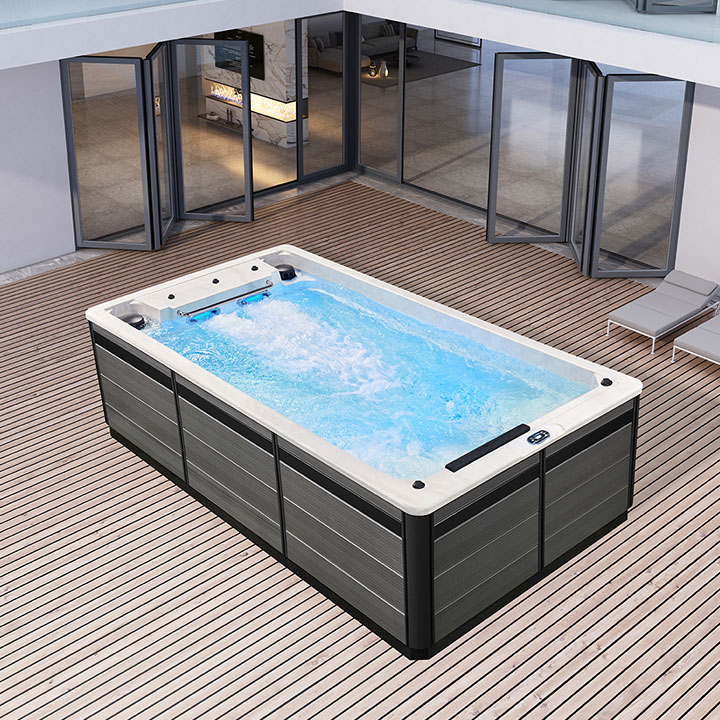
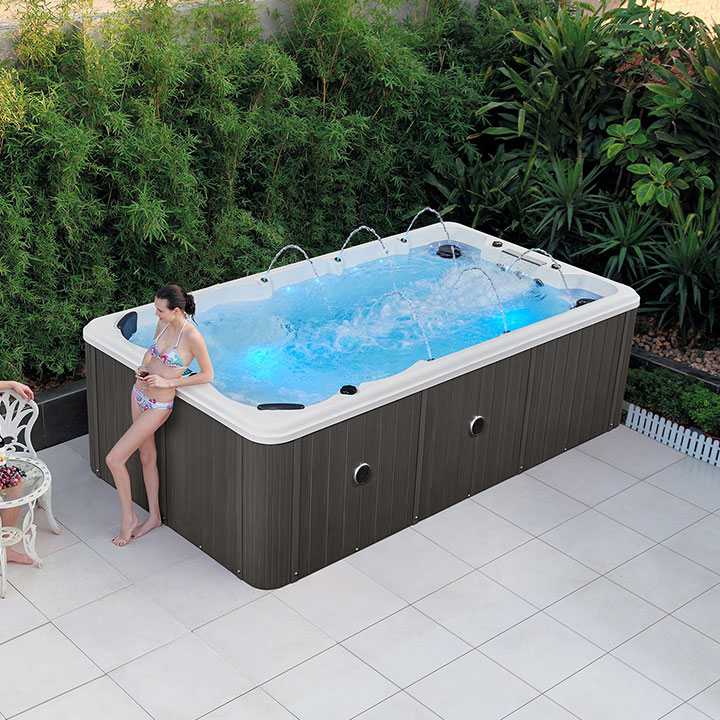
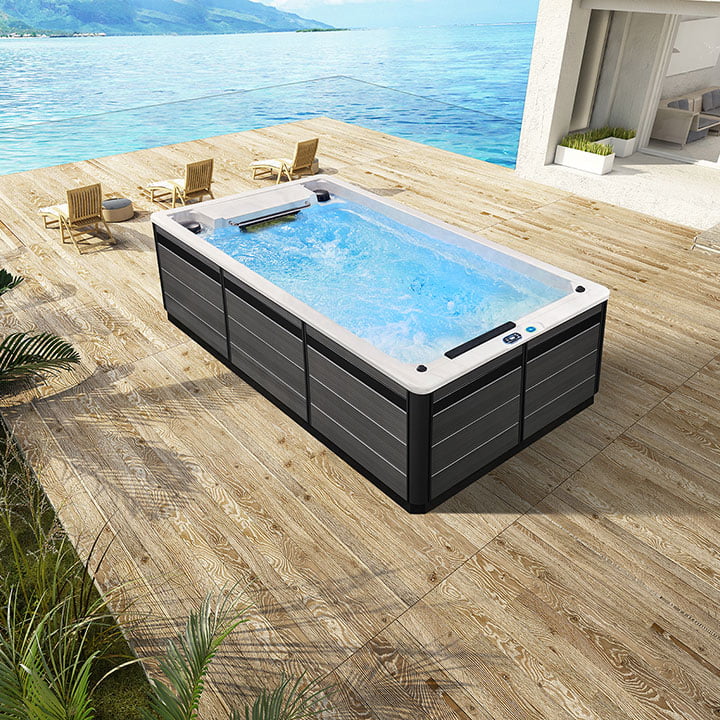
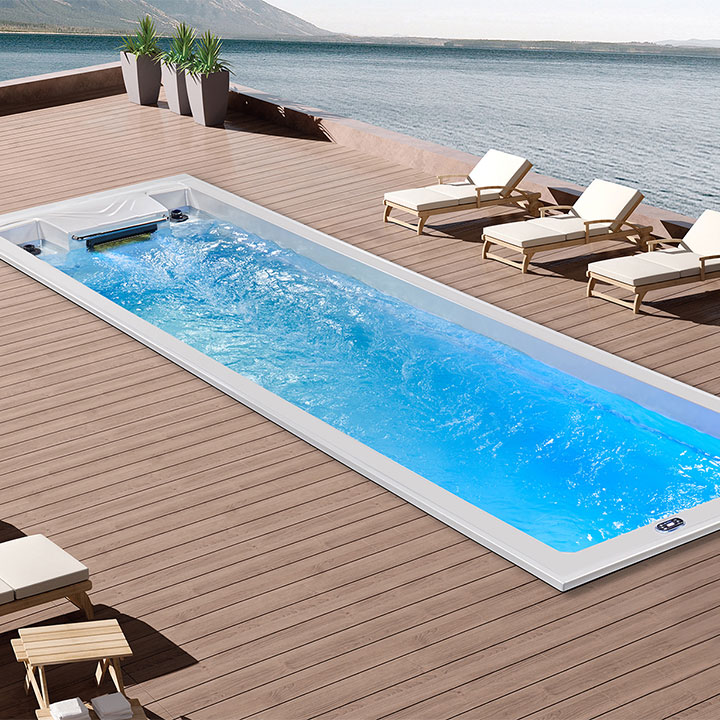
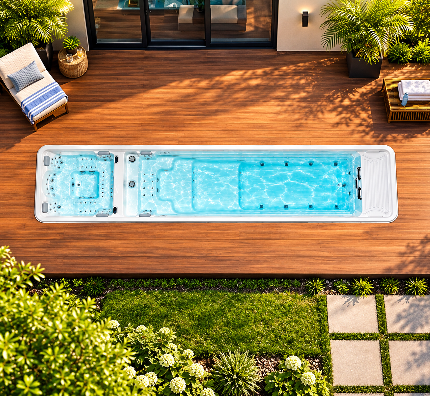
Victoria Star Swim Spa offers the perfect balance between exercise and relaxation, whether you want to swim for fitness or relax in the spacious seating.
Victoria Star Swim Spa offers the perfect balance between exercise and relaxation, whether you want to swim for fitness or relax in the spacious seating.