The Realistic Guide to Buying an Affordable Hot Tub: Costs, Engineering, and Small-Space Trade-Offs
Home / News / The Realistic Guide to Buying an Affordable Hot Tub: Costs, Engineering, and Small-Space Trade-Offs
November 02, 2026
Finding an affordable hot tub often starts with late-night browsing and ambitious backyard dreams, yet the initial retail price rarely reflects the complete financial commitment. True affordability is measured across the full operating lifespan, where thermal retention, electrical demands, and water treatment routines dictate ongoing utility costs.
For property owners working with tight budgets or constrained living footprints, selecting an entry-level or compact spa requires looking past glossy marketing claims. Every square foot of water imposes strict engineering demands on structural support, energy delivery, and routine hygiene. Understanding these trade-offs transforms what feels like a budget gamble into a predictable domestic investment.
Demystifying the Affordable Hot Tub: Initial Price vs. Total Cost of Ownership
Upfront Sticker Price vs. Hidden Delivery and Site Prep Costs
A low purchase invoice frequently conceals substantial preliminary expenses required to make the spa functional. Curbside delivery usually drops a wooden shipping crate onto the driveway, leaving the buyer responsible for backyard transit, specialized dollies, or potential crane fees.
Ground preparation demands a level, unyielding foundation capable of supporting the filled spa according to its installation manual. The base must adequately support the total weight without settling, and site conditions or load requirements may warrant professional assessment. These upfront labor and material costs add tangible expense to any affordable hot tub project.
The Electrical Infrastructure Reality Check
Some portable spas are designed to connect to standard household circuits, but voltage, circuit rating, and whether heating and jets can operate simultaneously depend entirely on the specific model and its instructions. Buyers should verify the spa’s nameplate and installation manual rather than assuming any particular configuration.
A higher-voltage configuration may allow heating and jet operation at the same time, depending on the spa’s design. Confirm the required circuit, GFCI protection, and disconnect with the manufacturer and a qualified electrician, following applicable local code.
Recurring Monthly Operating Expenses: Power, Chemicals, and Filters
Electricity bills represent the primary continuous expense in home spa ownership. Poorly insulated cabinets lose heat continuously to cold ambient air, causing electric heating elements to cycle repeatedly through the night.
Total monthly ownership cost equals base electric draw plus chemical balance products plus cartridge amortization plus water fill fees. Ongoing water chemistry supplies, including testing reagents, sanitizer granules, balancing agents, and replacement pleated filter cartridges, create a steady consumable expense. Factoring in biannual water drain-and-refill charges establishes an accurate operational budget.
Structural Types of Entry-Level and Mid-Range Spas
Inflatable Hot Tubs: Low Barrier to Entry with High Heat Loss
Inflatable PVC models represent the lowest entry cost into heated hydrotherapy. Their uninsulated vinyl walls lose thermal energy rapidly, and the ambient air blowers cool the water as soon as bubbling activates. These units are best viewed as temporary seasonal installations.
Rotomolded Polyethylene Spas: Durable Utility at Moderate Price Points
Rotomolded units are formed by melting plastic pellets inside a rotating hollow mold to yield a single solid shell. They deliver exceptional impact resistance, easy maneuverability, and straightforward plumbing at accessible price thresholds, though their textured finishes offer limited contouring.
Compact Rigid Acrylic Spas: Long-Term Ergonomics and Structural Rigidity
Rigid acrylic spas use molded acrylic sheets as the water-contact surface. Shell reinforcement methods vary by manufacturer; buyers should check the specific manufacturer’s shell specification and warranty to understand the construction and durability of each model before purchasing.
Spa Construction Type
Structural Rigidity
Relative Entry Cost
Inflatable PVC
Low (Puncturable)
Lowest
Rotomolded Polyethylene
High (Flexible Shell)
Moderate
Cast Acrylic with Cabinet
High (Fiberglass Backed)
Mid-Range
Critical Engineering Specs to Evaluate Before Buying
Jet Counts vs. Hydrodynamic Plumbing Efficiency
Marketing materials often use inflated jet numbers as a primary sales hook. High jet counts driven by undersized water pumps merely produce weak, diffused water flow across manifold orifices, failing to relieve tight muscles effectively.
Therapeutic impact relies on pump output matched to line resistance and nozzle dimensions. Compare each model’s warranty and insulation specification to understand the actual configuration and avoid relying solely on jet counts.
Heater Wattage and Recovery Time Under Cold Climates
Heater output dictates how rapidly water returns to its set temperature after the thermal cover is removed. The VS-201C is specified with a 3 kW heater. Recovery depends on the heater output, insulation, cover performance, ambient temperature, setpoint, and operating mode.
In cold conditions, a higher-rated heater may improve recovery and reduce the time needed to replace heat losses, but actual runtime depends on insulation, the cover, ambient temperature, setpoint, and operating mode.
Shell Insulation and Cabinet Construction
Heat naturally moves from warm water toward cold exterior cabinet surfaces. Rigid spa energy performance depends on the shell, cabinet, base, cover, and insulation design. Compare the manufacturer’s documented insulation specification rather than inferring performance from the acrylic shell alone.
Exterior cabinet skirts built from composite panels protect internal mechanics. The VS-201C features an aluminum-plastic skirt available in Platinum or Midnight finishes.
Case Study in Space-Saving Efficiency: Two-Person Rectangular Spas
Ergonomic Dual Loungers vs. Bench Seating
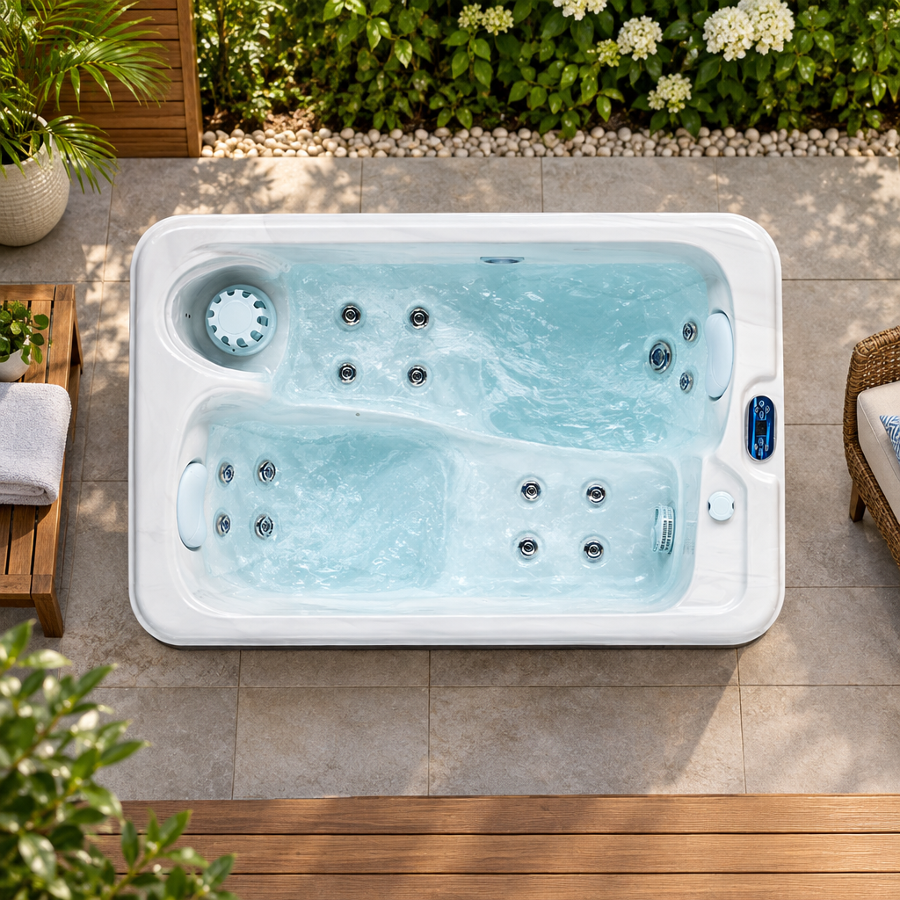
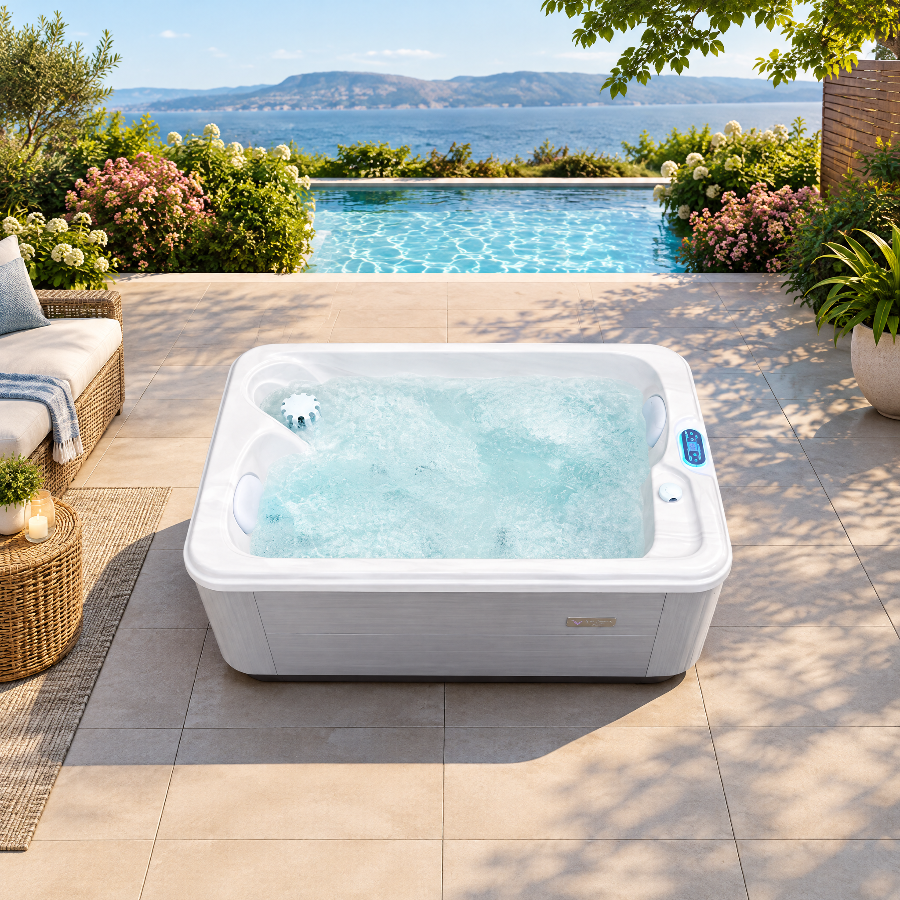
Compact two-person layouts maximize usable interior space within a minimal external footprint. The VS-201C has two ergonomically contoured loungers designed to follow the body’s curves.
The VS-201C measures 1,750 × 1,150 × 750 mm (approximately 6′ × 45″ × 30″). Before ordering, measure the complete delivery route and obtain structural approval before installing on a balcony, offering an intimate wellness sanctuary without dominating the space.
Targeted Hydrotherapy Configuration in Compact Footprints
The Comfort Series VS-201C combines two loungers, 15 jets, a 2 HP water pump, and a 0.35 HP circulation pump in a compact layout.
Dual Ergonomic Loungers: The VS-201C has two ergonomically contoured loungers designed to accommodate two bathers without crowded footwells.
Targeted Back Jetting: Strategic rotary nozzles deliver pressurized streams directly along spinal and shoulder muscle groups.
Circulation Pump: The VS-201C includes a 0.35 HP circulation pump; consult the manufacturer’s documentation for its operating schedule and filtration arrangement.
Modern Structural Cabinet: The aluminum-plastic skirt is available in Platinum or Midnight finishes.
Digital Controls and Practical Domestic Amenities
The KL2022 smart digital keypad is specified for adjusting water temperature, jets, and lighting from the spa rim. The model also includes integrated speakers and Bluetooth audio for use during relaxation.
The VS-201C lists a 4.5 kW power supply specification. Buyers should confirm operating modes and electrical requirements in the manufacturer’s documentation.
Water Care and Sanitation: Preventing Long-Term Maintenance Costs
Multi-Layer Filtration, Ozone Oxidation, and UV Sanitation
Warm water creates an environment where organic contaminants and biological films accumulate quickly. Effective water care relies on physical pleated cartridge filtration to catch suspended particles, keeping the water clear.
Some models supplement filtration with ozone oxidation and germicidal ultraviolet light sanitizers, which may reduce reliance on chemical additives. However, these systems do not guarantee sanitation or replace the need for maintaining an appropriate disinfectant residual. Owners should follow the spa manual and maintain proper chlorine or bromine levels.
The VS-201C is specified with multi-layer filtration, ozone oxidation, and UV sanitation. Owners should consult the manual for the actual flow path and service procedure.
Essential Water Chemistry: Sanitizers, pH Buffering, and Scale Prevention
Supplemental ozone and UV units do not eliminate the necessity of maintaining an active disinfectant residual. CDC guidance calls for at least 3 ppm free chlorine and pH 7.0–7.8 in hot tubs. Owners should follow the manufacturer and applicable local requirements. Core water balance parameters help prevent equipment corrosion and maintain sanitation:
Free Chlorine Residual: CDC guidance calls for at least 3 ppm for reliable, ongoing bacterial control.
Water Acidity (pH Level): CDC guidance recommends maintaining pH between 7.0 and 7.8 to protect equipment and optimize chlorine efficiency.
Total Alkalinity (TA): Stabilize between 80 and 120 ppm to buffer water against abrupt pH swings.
Calcium Hardness: Follow the manufacturer’s specified calcium-hardness target to maintain water balance.
Microbiological Safety and Aerosol Health Risks
Aerated hot water generates breathable mist and aerosols that travel into personal breathing zones. The Centers for Disease Control and Prevention notes that pathogens like Legionella flourish in unmaintained warm water between 77°F and 113°F (25°C to 45°C).
Consistently checking disinfectant residuals with test strips or photometer reagents protects bathers from respiratory irritants. Water should not exceed 104°F (40°C), consistent with CDC guidance intended to reduce scalding risk.
Site Planning and Installation Feasibility for Small Living Spaces
Structural Load Calculations: Dead Weight vs. Wet Weight
Installing a hot tub on an elevated wooden deck or balcony requires evaluating structural load limits. The dry weight of the shell represents only a minor fraction of the total applied weight.
Water weighs roughly 8.34 pounds per gallon (1 kilogram per liter). The filled operating weight can be substantial. Calculate it from the manufacturer’s dry weight, actual water capacity, and occupant load, then compare the result with the balcony or deck’s verified structural capacity.
Structural load equals dry spa tare weight plus total water weight (volume multiplied by 8.34 pounds per gallon) plus combined bather mass.
Balcony and Terrace Engineering Approvals
Before ordering an affordable hot tub for an apartment balcony or raised terrace, owners must verify condominium bylaws and municipal building codes. Local jurisdictions often demand certified load ratings and permits for elevated residential spas.
Water drainage planning is equally vital. Routine drains require a safe gravity or pump routing path that will not flood neighboring balconies or compromise waterproof membrane seals.
Indoor Spa Rooms: Humidity Control and Splash Management
Locating an acrylic spa inside an enclosed sunroom or bathroom suite demands careful interior environmental management. Open warm water evaporates continuously, raising relative humidity and risking mold growth on uninsulated drywall.
Indoor installations generally require a professionally designed ventilation and humidity-control plan. Building-envelope, vapor-control, drainage, and electrical details should be reviewed against local code by qualified professionals.
Pre-Purchase Verification Checklist
Inspect Delivery Pathway Clearances: Measure garden gates, roof eaves, stairs, and door frames to ensure the spa profile clears without obstruction.
Confirm Electrical Supply Limits: Determine if your main service panel has room for the required circuit or if it needs upgrades, following the manufacturer’s specifications.
Verify True Running Amperage: Confirm whether the heater and pump can run concurrently or if the heater shuts down when therapy jets engage by reviewing the installation manual.
Review Access to Equipment Bays: Confirm the manufacturer’s required service clearances and keep every equipment-access panel reachable after installation.
Audit Local Noise and Shielding Codes: Review boundary setbacks and operational noise ordinances regarding external pumps along shared property lines.
Frequently Asked Questions
What is the typical monthly electricity cost of running an affordable hot tub?
Electricity consumption varies with local rates, ambient climate, shell insulation quality, water temperature, cover effectiveness, and soaking frequency. Use the manufacturer’s energy data or monitor the installed spa’s consumption to estimate your monthly expense. Uninsulated inflatable models run under cold weather will draw considerably more energy than well-insulated rigid units.
Can a 2-person hot tub be safely installed on an apartment balcony?
Balcony installations are feasible only when structural load limits are formally verified and approved by a qualified structural engineer. While a compact rectangular spa has a small footprint, its filled weight and bather payload can easily exceed standard residential balcony ratings. Local building codes, HOA bylaws, and controlled floor drainage routes must also be resolved prior to purchase.
Is a higher jet count always better for therapeutic relief?
A higher jet count does not guarantee better therapeutic value. High jet counts connected to undersized water pumps reduce nozzle pressure, resulting in weak water flow. The VS-201C configuration includes 15 jets and a 2 HP water pump. Evaluate each model’s documented specifications rather than relying solely on jet counts.
How often does a compact hot tub need to be drained and refilled?
Replacement frequency depends on water quality and bather load. Follow the manufacturer’s maintenance instructions and, where applicable, a usage-based schedule. CDC guidance ties hot-tub water replacement to spa volume and average users per day rather than establishing a universal interval.
Do ozone and UV sanitation systems eliminate the need for chlorine?
Ozone and UV systems do not eliminate the need for residual sanitizers. While ozone may oxidize organic waste and UV light may disrupt bacterial DNA inside the plumbing loop, neither system provides an active disinfectant residual in the open tub water. You must still maintain an appropriate residual level of free chlorine or bromine as directed by CDC guidance and the manufacturer.
What is the difference between a 110V plug-and-play spa and a 220V hardwired model?
Some models are designed for a specific 120 V connection to a household circuit, but buyers must use the exact circuit and GFCI requirements in the manufacturer’s instructions and local code. Low-voltage configurations may limit whether the heater and high-speed pump can operate simultaneously. Higher-voltage installations, typically 220 V or 240 V with 3 kW to 4.5 kW total supply, may support concurrent heating and jet operation, depending on the spa’s electrical design.
Conclusion: Finding True Value in an Affordable Spa
Securing a truly affordable hot tub requires evaluating structural durability, thermodynamic retention, and realistic utility bills alongside the upfront retail price. Buyers who examine balanced plumbing, composite cabinetry, and multi-stage water treatment avoid common budget pitfalls.
An affordable hot tub should provide reliable hydrotherapy and steady operating costs without surprises, offering comfortable relaxation for years to come. Whether installed on a compact balcony or in a dedicated backyard space, proper planning around electrical infrastructure, water care, and structural load ensures the investment delivers lasting value.
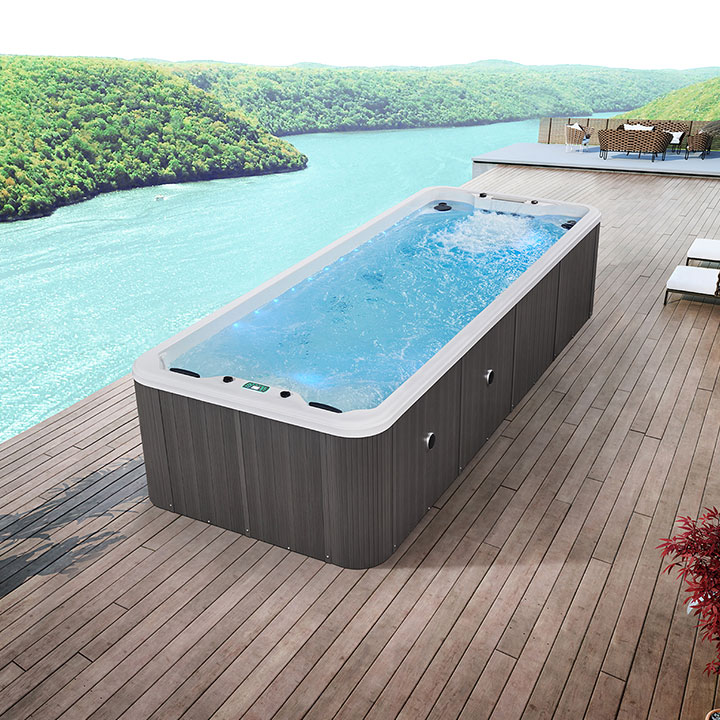
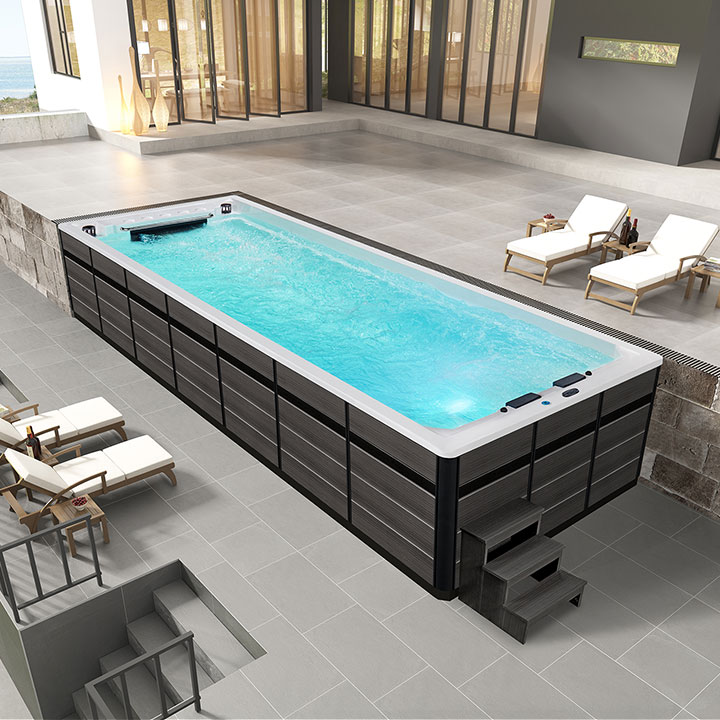
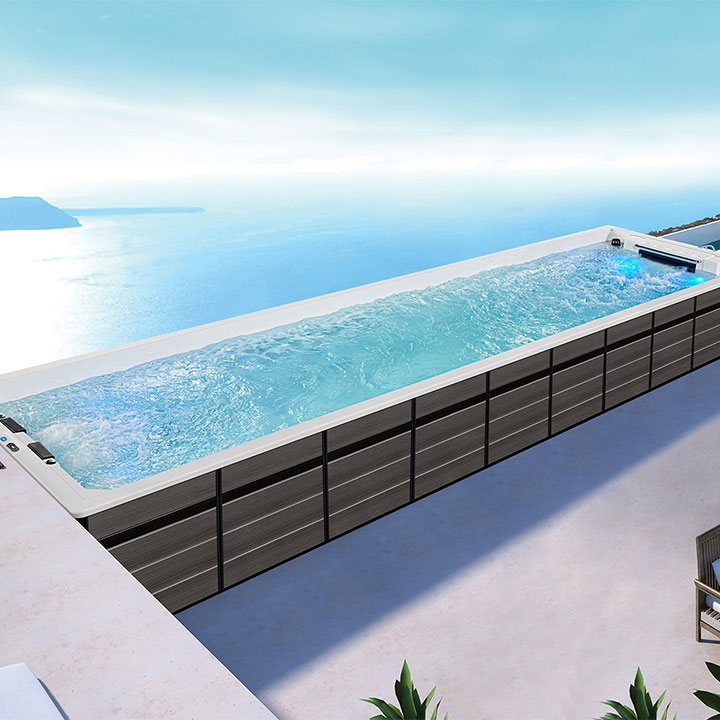
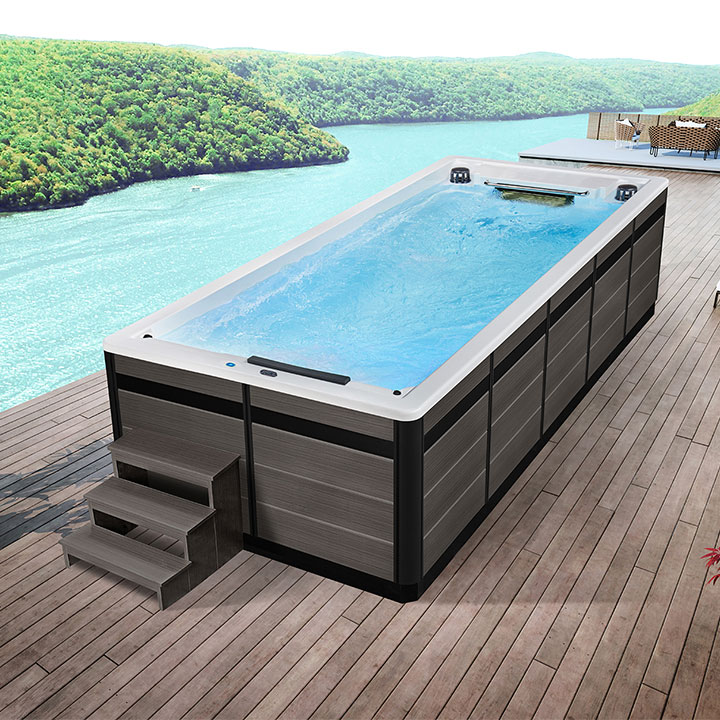
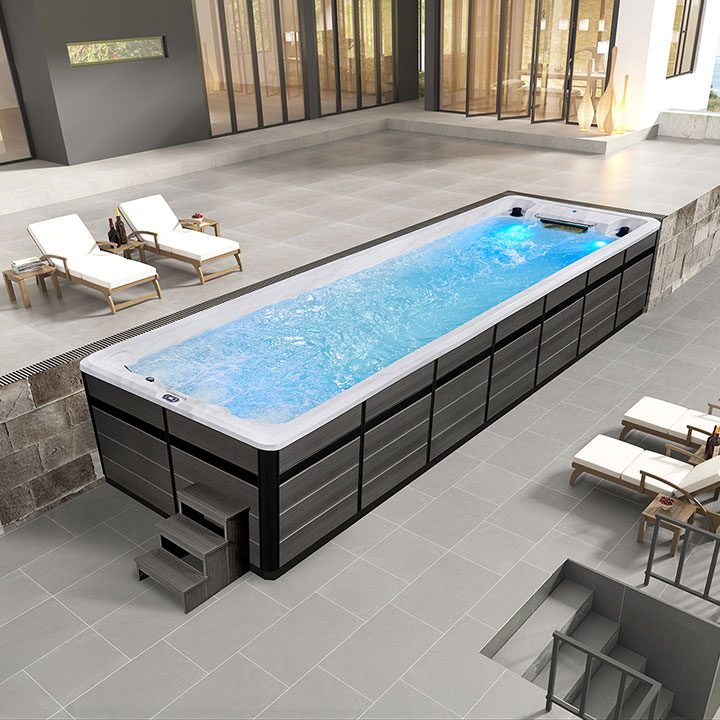
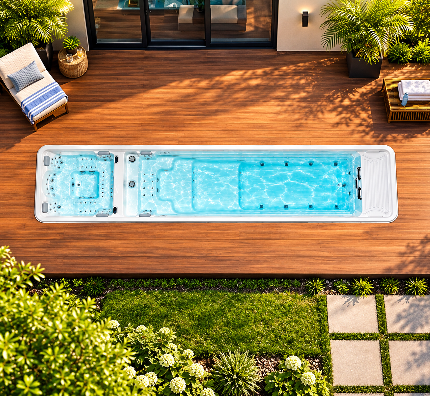
Victoria Star Swim Spa offers the perfect balance between exercise and relaxation, whether you want to swim for fitness or relax in the spacious seating.
Victoria Star Swim Spa offers the perfect balance between exercise and relaxation, whether you want to swim for fitness or relax in the spacious seating.