The Definitive Buyer’s Guide to Choosing a 6 Person Jacuzzi: Sizing, Hydrotherapy, and Engineering Essentials
Home / News / The Definitive Buyer’s Guide to Choosing a 6 Person Jacuzzi: Sizing, Hydrotherapy, and Engineering Essentials
November 05, 2026
Investing in a 6 person jacuzzi transforms an ordinary outdoor living area into a dedicated sanctuary for recuperation and social connection. Prospective buyers often seek a 6 person jacuzzi outdoor spa to balance personal hydrotherapy with enough space to entertain guests comfortably. Navigating the market requires understanding critical physical dimensions, plumbing configurations, and site preparation demands. Without careful planning, a purchase can quickly lead to crowded footwells, inadequate electrical infrastructure, or unexpectedly tedious maintenance routines.
This guide breaks down every fundamental aspect of modern multi-user spas, examining ergonomic arrangements, hydraulic pump engineering, sanitation cycles, and foundational structural considerations. By grounding these concepts in concrete specifications—such as those found in the Victoria Star VS-605L luxury hydrotherapy spa—you can make an informed, practical investment tailored precisely to your property and lifestyle.
Understanding True Capacity: Is a 6 Person Jacuzzi Right for You?
Choosing the right spa capacity involves more than matching bather numbers to catalog seating counts. Many owners discover that nominal specifications do not always translate into personal elbow room once everyone enters the water.
Nominal Capacity vs. Usable Ergonomic Space
Manufacturers frequently assign seating numbers based on the physical molds pressed into the acrylic shell. While a tub may feature contours intended for six individuals, adult shoulder widths and varying heights dramatically alter actual comfort. When six adults sit together in a compact layout, physical contact becomes inevitable.
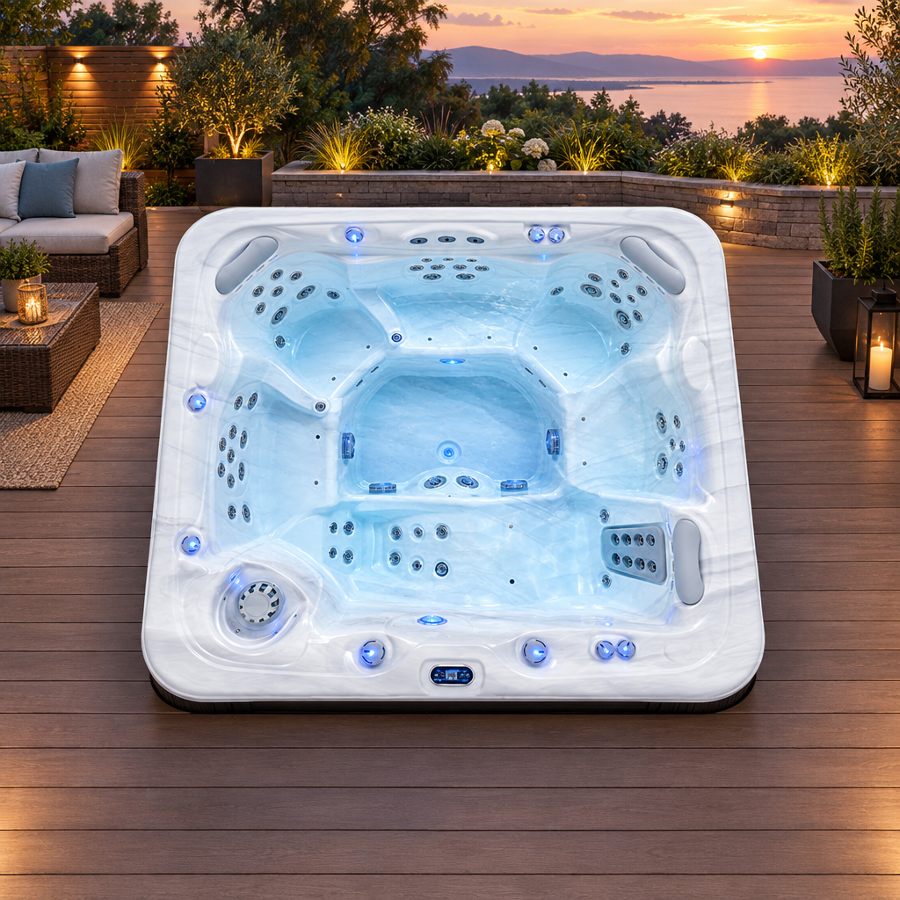
The VS-605L illustrates this distinction. The manufacturer lists a six-person capacity, yet the documented seat layout shows four seats plus one lounger—five distinct seating positions. Understanding how manufacturers count capacity and personally assessing comfort during a wet test ensures the spa truly meets your space and occupancy expectations.
Deep bucket seats offer excellent containment and targeted hydrotherapy, yet they fix the bather in a single posture. Shallow bench seating permits more fluid movement across the vessel, but it sacrifices deep muscle immersion. Evaluating the interior mold requires balancing defined physical boundaries against shared bodily space.
Footwell Dynamics and Group Comfort
In high-capacity hot tubs, the footwell represents the most common physical bottleneck. A shell may provide ample perimeter seating, but if the central floor space is constricted, bathers will find their feet clashing beneath the surface. True comfort depends heavily on footwell diameter and depth.
Well-engineered spas incorporate recessed foot dome jets or directional floor nozzles that provide massage without encroaching on resting legs. Assessing the central floor cavity ensures that full occupancy does not result in an uncomfortable game of underwater footsie among your guests.
Matching Spa Layout to Your Primary Lifestyle Scenario
Spas generally fall into two broad functional categories: socially focused party vessels and therapy-oriented personal retreats. Identifying your primary objective determines whether you should prioritize open bench perimeters or dedicated contour lounges.
If lively social gatherings define your weekends, an open seating plan maximizing perimeter bench positions proves advantageous. Conversely, if physical recovery and spinal decompression after intense exercise drive your purchase, individual therapy stations with specialized jet patterns become indispensable.
Space Planning and Physical Dimensions: Preparing the Site
Integrating a substantial hydrotherapy spa into your landscape demands precise physical planning. Overlooking structural clearances or delivery corridors can result in severe logistical headaches on installation day.
Decoding Outer Dimensions: Clearance and Footprint
Large-format units require significant surface area. For example, the VS-605L measures 2540 mm in length, 2310 mm in width, and 980 mm in height (approximately 8 feet by 91 inches by 39 inches). These exterior boundary measurements represent only the base footprint of the shell itself.
Consult the manufacturer’s installation manual for specific clearance requirements around the equipment access panel, thermal cover operation, and safe entry and exit. These dimensions vary by model based on service panel placement, cover lifter design, and recommended maintenance access.
Delivery Access and Transit Clearances
Hot tubs arrive as rigid, fully assembled structural monoliths that cannot be flexed around tight corners. Moving a unit from the transport trailer to the final foundation requires an unobstructed transit path through side gates, alleys, and garden corridors.
Carefully measure side gates, fence lines, roof eaves, exterior air conditioning units, and overhead utility lines along the delivery route. If vertical clearance along narrow pathways drops below the spa’s width when rolled on a spa dolly, professional crane lifting onto the pad becomes the only safe alternative.
Foundation Integrity and Structural Load Verification
A 6 person hot tub filled with hundreds of gallons of water and occupied by adults exerts extraordinary downward force. A standard soil lawn or unreinforced decorative stone patio will shift, crack, or settle unevenly under this massive concentrated dead load.
Follow the manufacturer’s foundation specifications for your specific model. If planning an installation on an elevated timber deck or rooftop terrace, you must obtain certified wet-weight figures from the supplier and have a licensed structural engineer verify the deck’s live-load capacity before positioning the unit.
Hydrotherapy Engineering: Beyond Raw Jet Counts
A common misconception in the spa industry is that the highest number of jets automatically guarantees superior massage quality. In hydraulic reality, jet efficacy depends entirely on water flow rates, plumbing line diameter, and pump volume balance.
Jet Architecture and Targeted Muscle Group Relief
Effective hydrotherapy relies on anatomic placement rather than indiscriminate nozzle clustering. According to the product specifications, the VS-605L features 98 hydrotherapy jets positioned to deliver targeted massage across the back, shoulders, legs, and feet.
Directional nozzles deliver a concentrated, penetrating impact on tight muscular knots, while rotating pulsating jets offer a broader, kneading sensation across larger muscle groups. Adjustable pressure settings allow users to customize the intensity of water streams to their personal comfort level.
Hydraulic Power: Balancing Water Pumps and Air Blowers
A high jet count connected to an underpowered pump produces weak, ineffective water pressure. High-performance models solve this with dual hydraulic circuits. The VS-605L product specifications list two 3 HP water pumps paired with a 0.5 HP air pump.
The water pumps generate the volume and pressure needed to drive the jet array effectively. The dedicated air pump introduces air into the water stream, creating the characteristic bubbling action associated with spa hydrotherapy.
Ergonomic Lounger vs. Upright Therapy Seats
Choosing between a layout with an integrated lounger or an all-bucket design involves distinct practical tradeoffs. The VS-605L adopts a balanced hybrid configuration, pairing four contoured upright bucket seats with one full-length ergonomic lounger.
Full-Length Ergonomic Loungers: Allow bathers to recline horizontally, receiving massage along multiple body zones simultaneously. However, they occupy substantial internal real estate.
Upright Bucket Seats: Maintain an upright seated posture that keeps the head comfortably above water, facilitating social conversation and maximizing personal space in the footwell.
Buoyancy Considerations: Shorter individuals may sometimes experience natural buoyancy floating them out of a deep lounger, making contoured upright seats preferable for prolonged soaking.
Water Management and Filtration: Keeping Maintenance Manageable
High-volume hot tubs present unique chemical and biological dynamics. A smaller body of heated water subjected to heavy bather loads accumulates organic compounds, skin oils, and perspiration much faster than a standard swimming pool.
Multi-Stage Purification: Ozone and UV Integration
Modern water management systems alleviate chemical maintenance through automated sanitation modules. According to the product specifications, the VS-605L incorporates high-efficiency filter cartridges alongside integrated ozone and ultraviolet purification technology.
Ozone acts as an oxidizer, breaking down organic contaminants in the water. UV light provides an additional layer of disinfection as water circulates through the system. These technologies supplement—but do not replace—the need for maintaining appropriate sanitizer residuals and regular water testing.
Circulation Efficiency and Daily Filtration Cycles
Relying on high-output 3 HP booster pumps for routine filtration wastes significant electricity and generates unnecessary mechanical noise. The VS-605L specifications list a dedicated 0.35 HP circulation pump to support filtration operations.
Consult the manufacturer’s manual for the recommended filtration schedule and operational settings. Proper filtration ensures that sanitizing agents remain dispersed throughout the plumbing system.
Testing Standards and Safe Operating Parameters
Even advanced ozone and UV purification modules do not eliminate the necessity of maintaining a baseline residual chemical sanitizer. Public health agencies emphasize that owners must consistently verify water chemistry using accurate test strips or digital photometric meters.
Free Chlorine Residual: Maintain at least 3.0 parts per million; consult CDC guidance or your spa manual for recommended ranges.
Bromine Alternative: Maintain an active level between 4.0 and 8.0 ppm if using bromine systems, which remain stable in high-temperature environments.
pH Equilibrium: Keep pH between 7.2 and 7.8, the range given in CDC hot tub guidance, unless your spa manufacturer specifies otherwise; water outside this range can corrode heating elements or cause mineral scaling.
Temperature Ceiling: Water temperature must never exceed 104°F (40°C), as prolonged exposure to higher heat induces hyperthermia, dizziness, and dangerous blood pressure drops.
Electrical Requirements and Infrastructure Planning
A 6 person jacuzzi requires substantial electrical service to run multiple high-output pumps and heating elements concurrently. Attempting to install such equipment without professional utility preparation compromises safety and operation.
Dedicated Electrical Service and Load Calculation
High-capacity multi-pump spas cannot operate from a standard household convenience outlet. The VS-605L product specifications list an 8.05 kW power supply requirement.
Electrical requirements including voltage, amperage, circuit breaker sizing, and wiring methods must be confirmed from the manufacturer’s installation manual and nameplate specifications. A licensed electrician should review these requirements and install the spa in strict accordance with national and local electrical codes, including proper Ground Fault Circuit Interrupter protection.
Climate Impact on Thermal Retention and Operating Costs
Monthly operating costs are governed by thermal boundary engineering rather than nominal electrical wattage alone. Spas operating in northern climates lose considerable heat through poorly insulated cabinet perimeters, forcing the heater to cycle on continuously.
High-density insulation sprayed over the acrylic shell, combined with reflective thermal wraps and durable aluminum-plastic composite exterior skirts, forms a barrier against cold temperatures. Pairing structural cabinet insulation with a tightly fitted thermal cover preserves ambient water temperature, lowering overall operating costs over years of ownership.
Architectural Highlight: The VS-605L as a Product Example
Examining the technical baseline of the Victoria Star VS-605L illustrates how modern large-format residential hydrotherapy spas balance social gathering capacity with specialized physical recovery features.
Structural Profile and Seating Matrix
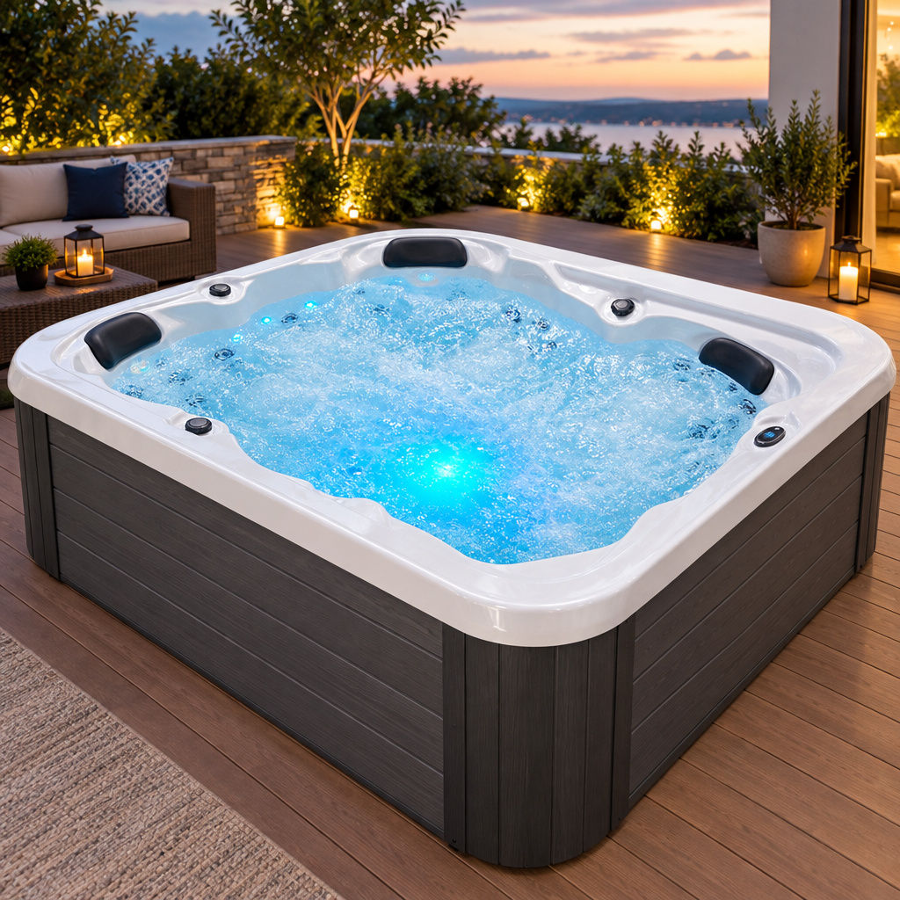
Manufactured by Foshan Gaoming Shiyi Sanitary Ware Technology Co., Ltd. under the Victoria Star brand, the VS-605L features a shell available in the Porcelain color option. The exterior skirt uses aluminum-plastic composite construction and is available in Platinum and Midnight finishes.
The manufacturer states a six-person capacity. The documented internal layout lists four deeply sculpted bucket seats alongside a single elongated therapeutic lounger—five distinct seating positions. This arrangement accommodates weekend entertainment while reserving a full-body therapy lounge for individual use.
Smart Controls and Sensory Enhancement
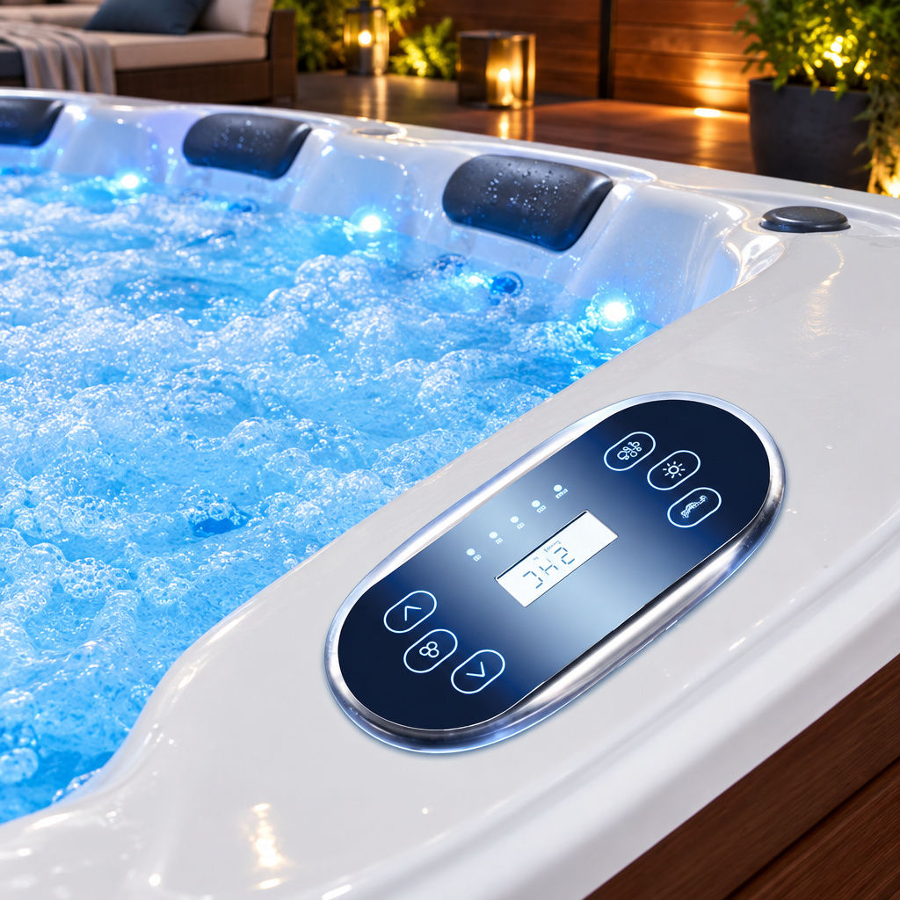
Operational control is centralized within the KL2022 smart keypad control interface, allowing management of temperature settings, pump speeds, and filtration intervals. The system maintains set water temperatures through variable seasonal conditions.
The VS-605L incorporates a four-speaker AV audio system with integrated Bluetooth connectivity, pairing audio entertainment with perimeter multi-color LED mood lighting and illuminated waterfall jets for a sensory wellness experience.
Technical Specifications Summary
The VS-605L product specifications provide the following technical details:
Specification Parameter
VS-605L Listed Value
Model
VS-605L
Series
Luxury Series
Exterior Dimensions
2540 × 2310 × 980 mm (8′ × 91″ × 39″)
Seating Capacity
6 Persons
Seat Layout
4 Seats + 1 Ergonomic Lounger
Hydrotherapy Jet Count
98 Total Jets
Water Pump
2 × 3 HP
Circulation Pump
1 × 0.35 HP
Air Pump
1 × 0.5 HP
Heater Output
1 × 3 KW
Control System
KL2022 Smart Keypad
Audio System
Bluetooth with 4 AV Speakers
Cabinet Colors
Platinum, Midnight
Shell Colors
Porcelain
Power Supply
8.05 KW
Installation Scenarios: From Sunken Decks to Rooftop Terraces
The architectural setting dramatically shapes how a 6 person jacuzzi looks, operates, and performs over decades of outdoor exposure.
Ground-Level Backyard Patios and Wellness Pavilions
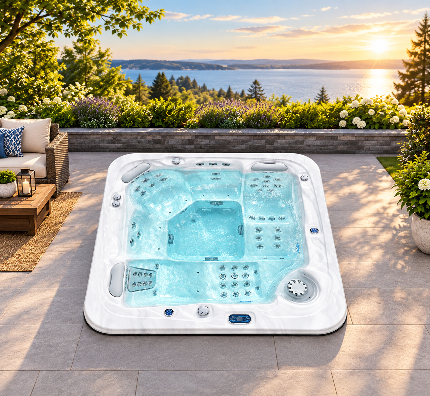
Ground-level backyard patios remain the most common and structurally straightforward installation scenario. Positioning the spa adjacent to an outdoor kitchen or integrated wellness pavilion creates a natural hub for family leisure and weekend social gatherings.
Ensure that patio pavers sit on an engineered compacted aggregate base and follow the manufacturer’s foundation recommendations. Provide perimeter surface grading sloping away from the cabinet base to prevent rainwater pooling around internal equipment service panels.
Rooftop Terraces and Elevated Decks
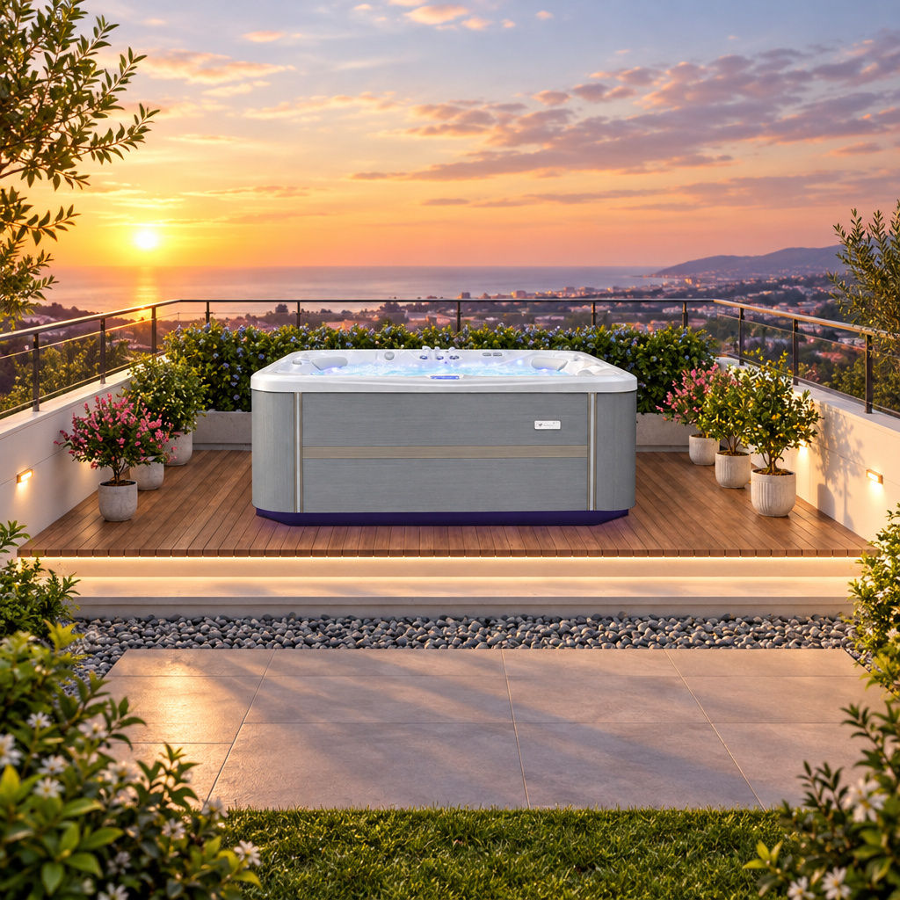
Installing a large spa on an elevated sundeck or urban rooftop terrace introduces critical structural and logistical factors. The weight of a large spa filled with water and bathers easily exceeds several thousand pounds, requiring rigorous engineering reviews.
Structural Load Engineering: Secure wet-weight engineering data directly from the manufacturer and contract a licensed structural engineer to calculate building joist reinforcement needs.
Crane Logistics: Coordinate municipal street closure permits and certified mobile crane operators to lift the spa over building parapets safely.
Wind and Exposure Considerations: Elevated locations face higher wind exposure, demanding thermal perimeter insulation and heavy-duty locking thermal covers to prevent heat loss.
Frequently Asked Questions
How Much Clearance Is Needed Around a 6 Person Jacuzzi?
Clearance requirements vary by model based on equipment panel location, cover lifter design, and service access needs. Consult your specific spa’s installation manual for recommended clearances around the equipment access panel, thermal cover operation zone, and entry and exit areas. These specifications ensure service technicians can access plumbing and electrical components and that users can operate the cover safely.
Does a Lounger Reduce the Usable Seating Capacity?
A full-length lounger occupies the physical space of two conventional upright bucket seats. If pure occupancy is your highest priority, an all-seat open configuration allows more bathers to sit upright without overlapping legs. However, if daily individual stress relief and total spinal decompression are your primary focus, the ergonomic benefits of a dedicated lounger outweigh the reduction in total upright seating.
Can Ozone or UV Replace Chlorine and Bromine Completely?
Ozone and UV systems act as supplemental purifiers, destroying organic matter and pathogens as water passes through the equipment. However, they provide no persistent residual sanitizer in the main vessel. You must maintain a baseline residual level of chlorine or bromine alongside balanced pH to safeguard bathers. Consult CDC guidance and your spa manual for recommended sanitizer levels.
What Are the Essential Power Specifications for High-Output Spas?
High-output models with multiple pumps and heating elements require dedicated electrical service. The VS-605L lists an 8.05 kW power supply requirement. Confirm the specific voltage, amperage, circuit breaker size, and wiring specifications from the manufacturer’s installation manual and nameplate. Have a licensed electrician install the spa in strict accordance with national and local electrical codes, including proper GFCI protection.
How Often Should Spa Water Be Drained and Replaced?
Water replacement frequency depends on spa volume and bather load. CDC guidance suggests calculating replacement intervals as: (spa volume in gallons ÷ 3) ÷ average daily users = days between drains. Follow the manufacturer’s maintenance instructions and adjust the schedule based on water clarity and test results. Over time, accumulated dissolved minerals, personal care residues, and treatment chemicals saturate the water, reducing sanitizer efficiency regardless of filtration run times.
Conclusion: Investing in Long-Term Comfort and Engineering Integrity
Selecting a 6 person jacuzzi requires looking past surface styling to evaluate hydraulic design, structural construction, and space requirements. Prioritizing durable materials, balanced multi-pump plumbing systems, and modern sanitization architectures ensures your new installation provides consistent relaxation rather than operational headaches. By taking time to prepare your foundation, verify electrical capacities, and select a thoughtfully laid out unit like the Victoria Star VS-605L, your private backyard retreat will deliver reliable comfort and shared enjoyment for many seasons to come.
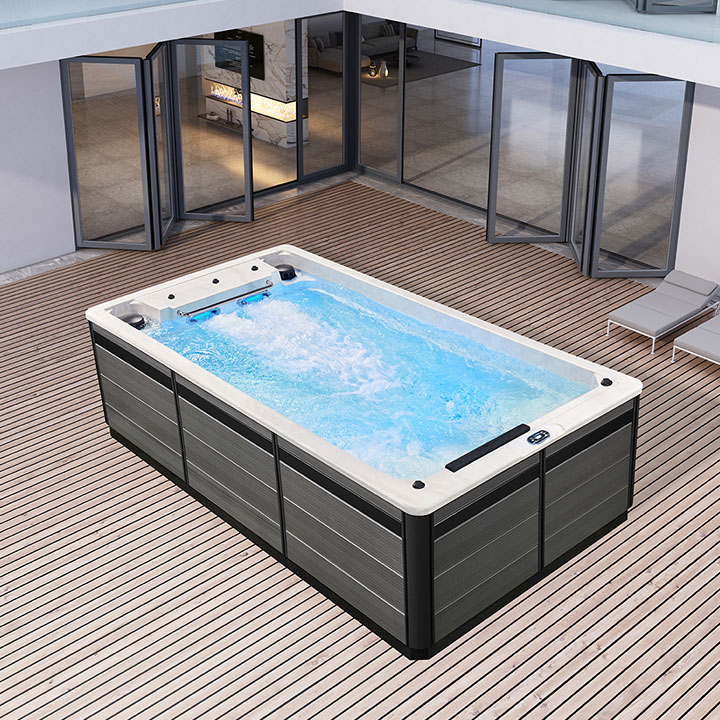
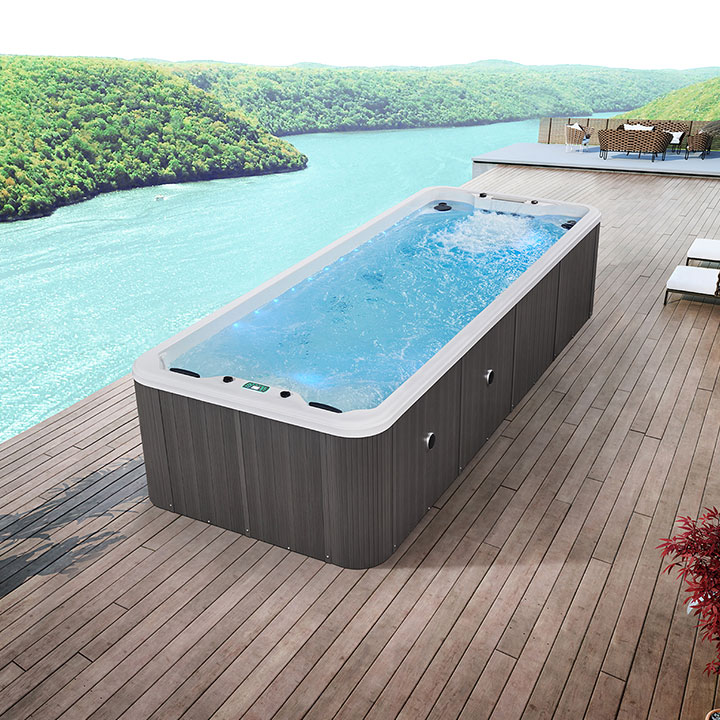
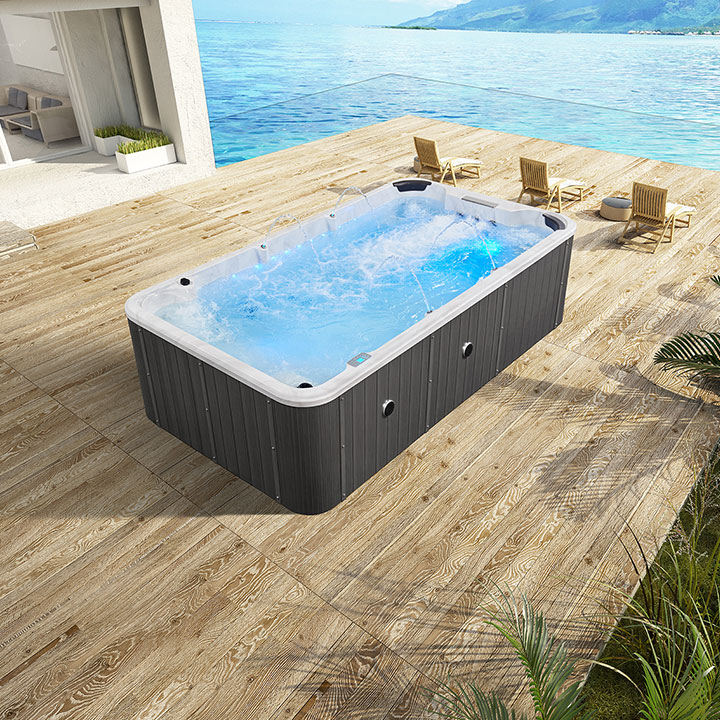
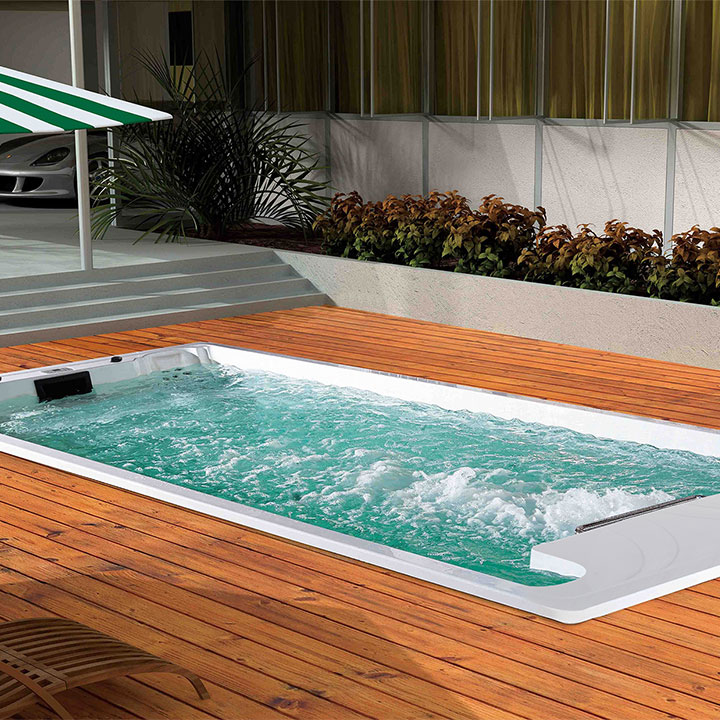
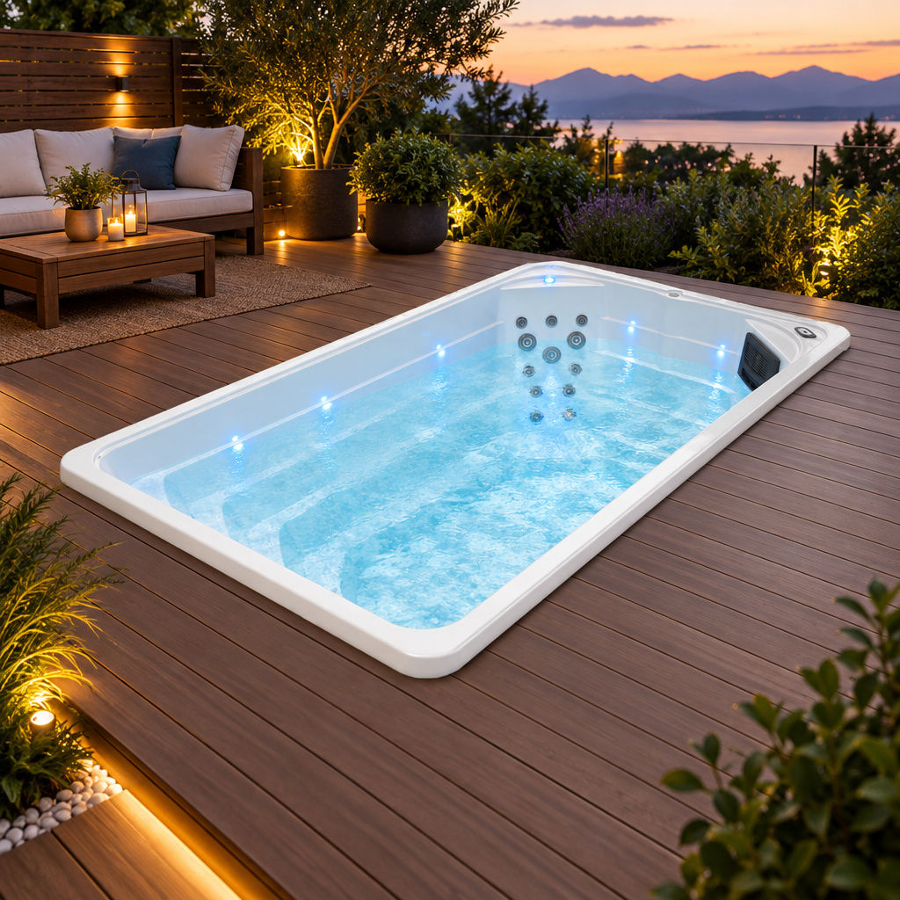
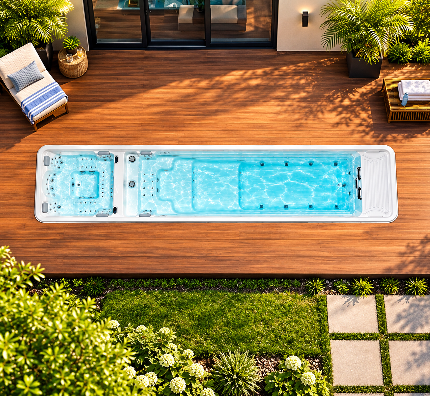
Victoria Star Swim Spa offers the perfect balance between exercise and relaxation, whether you want to swim for fitness or relax in the spacious seating.
Victoria Star Swim Spa offers the perfect balance between exercise and relaxation, whether you want to swim for fitness or relax in the spacious seating.