The Corner Hot Tub Outdoor Setup: Small-Space Solutions That Work
Home / News / The Corner Hot Tub Outdoor Setup: Small-Space Solutions That Work
September 29, 2026
A corner hot tub outdoor installation solves a problem most patio owners run into eventually: not enough square footage for a full-size spa, but plenty of desire for one. Tucking a compact unit into an unused corner of a deck or terrace turns dead space into a functional wellness spot. This approach has gained traction among homeowners with narrow yards, condo patios, and rental properties where every foot of outdoor area counts.
Why Corner Placement Makes Sense for Small Yards
Most residential decks have at least one underused corner, often near a fence line or against a wall. That spot is usually too tight for furniture groupings but works well for a spa sized under two meters across.
Corner placement also reduces the number of exposed sides that need railing, screening, or landscaping. Two sides already have natural boundaries, so you only need to finish the remaining two edges with decking, gravel, or a privacy panel. That cuts down on both material costs and installation time.
There’s a practical wiring benefit too. Electrical runs and drainage lines are shorter when the unit sits near a structural corner, since most homes route utilities along perimeter walls already. Contractors often prefer this layout because it minimizes trenching.
Sizing the Right Tub for a Corner Footprint
Before shopping, measure the corner space with a few inches of clearance on each side for maintenance access and airflow around the cabinet. A tub that fits flush against two walls with zero gap will trap moisture and make service calls harder down the line.
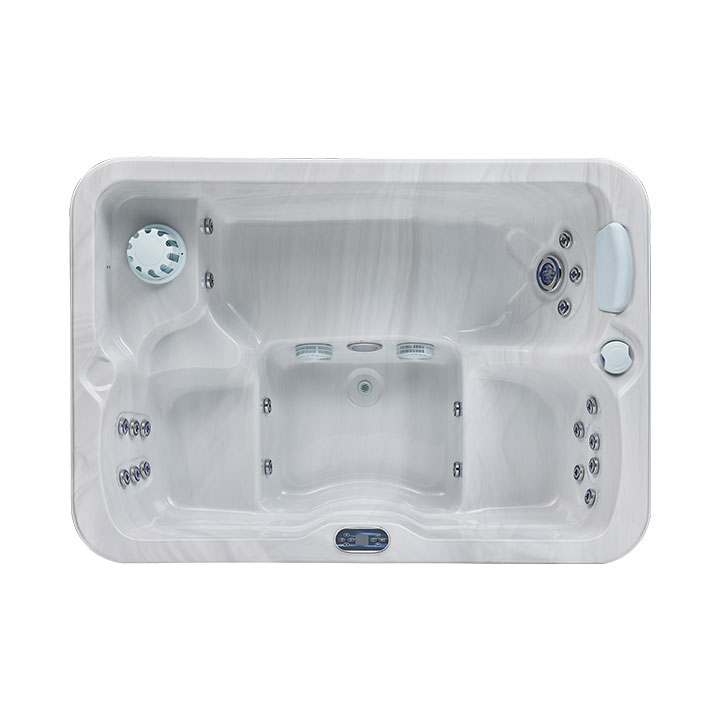
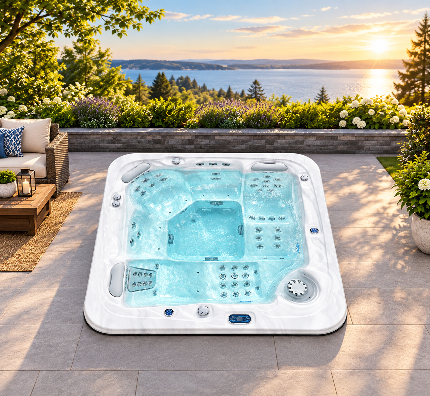
Seating capacity is where most buyers get sizing wrong. A 3-person configuration, like the VS-301C from the Comfort Series, measures 1860 mm by 1310 mm by 780 mm, roughly 6 feet by 52 inches by 31 inches. That footprint slots into a standard 7-by-6-foot corner without crowding walkways.
The seating layout matters as much as overall dimensions. This model splits its capacity between two upright seats and one full-length lounger, so two people can sit facing each other while a third stretches out. That arrangement uses the interior volume more efficiently than three identical upright seats crammed into the same shell.
Hydrotherapy Jets and What They Actually Do
Jet count gets thrown around as a marketing number, but placement determines whether a soak actually relieves tension. The VS-301C carries 22 targeted jets arranged to hit the back, waist, and legs, the areas that hold the most tension after physical work or long periods sitting.
Water is pushed through these jets by a 2 HP pump, which is a reasonable output for a 3-person unit. Larger pumps don’t automatically mean stronger massage; nozzle angle and water volume per jet matter more than raw horsepower once you’re past a certain threshold.
If you’re comparing models, ask about jet zones rather than just the total count. A tub with jets clustered only around the lounger will leave the upright seats feeling underpowered by comparison.
Water Care Without the Daily Chemical Routine
Corner installations tend to see less airflow than open-yard placements, since walls on two sides can trap humidity and reduce evaporation. That makes water clarity systems more relevant here than in a fully exposed setup.
The VS-301C uses a combined filtration, ozone, and UV system according to product specifications, designed to keep water clear while cutting down on manual chemical dosing. Ozone and UV treatment are established water-sanitizing methods used across the pool and spa industry, not unique to any single manufacturer, but their inclusion does reduce the frequency of manual balancing compared to chlorine-only systems.
This matters practically for owners who travel or don’t want a weekly maintenance chore. Less manual intervention means fewer chances to under- or over-treat the water, which is often what causes cloudy water or skin irritation in home spas.
Weatherproofing for a Tucked-In Corner
A corner spot near a wall or fence often gets less direct sun and more shade, which changes how materials age over time. Shaded corners can stay damp longer after rain, so cabinet material choice becomes more important than in a fully sun-exposed placement.
The VS-301C is enclosed in an aluminum-plastic composite skirt, a material combination chosen for weather resistance without the upkeep that solid wood cabinetry requires. Wood skirting looks appealing but needs periodic sealing or staining, especially in a shaded corner where moisture lingers.
Here’s a quick breakdown of what corner placement demands from the cabinet material:
Factor
Why It Matters in a Corner Setup
Moisture resistance
Reduced airflow near walls keeps humidity higher longer
Low maintenance
Tight corners make full cabinet access harder for refinishing
UV stability
Partial shade can still allow uneven sun exposure on visible panels
Panel seam quality
Poor seams trap water against the frame in low-airflow zones
Control Layout and Everyday Use
Space efficiency isn’t just about the shell footprint. Control placement matters when a tub sits close to a wall, since you don’t want to reach across water to adjust settings.
The VS-301C runs on a KL2022 control unit with a digital keypad positioned on the top-side edge, letting users adjust temperature and jet settings without leaning over the water. According to the product specs, it also includes built-in Bluetooth speakers for audio streaming during a soak, a feature that’s become common in mid-range residential spas.
Power draw is another practical detail worth checking before installation. This model requires a 4.75 kW supply, split between a 3 kW heater, a 2 HP main pump, and a 0.35 HP circulation pump. Confirm your home’s electrical panel and any local permitting requirements can support this load before committing to a corner placement, since rewiring after installation is disruptive.
Matching the Tub to Your Outdoor Setting
Corner spas work in more settings than just backyard decks. Compact 3-person units like this one suit:
Residential patios and wooden decking where space is limited but a spa is still wanted
Covered verandas that need weather protection from direct rain exposure
Vacation rentals and boutique properties where guest turnover favors low-maintenance systems
Dedicated home wellness corners set apart from main living or entertaining areas
Each of these settings shares a common constraint: limited footprint paired with a need for reliable, low-fuss operation. That combination is exactly what a compact corner-sized spa with automated water care is built to handle.
Frequently Asked Questions
Does a corner hot tub outdoor unit need special drainage compared to a mid-yard placement? Not necessarily special drainage, but grading matters more. Since two sides are often against structures, make sure water runoff during draining or overflow doesn’t pool against a foundation or fence line.
Can a 3-person tub still fit two adults comfortably for daily use? Yes, particularly with a lounger-plus-seats layout. Two people can use the upright seats while a third space stays open, or one person can stretch fully across the lounger for a solo soak.
Is Bluetooth audio in a hot tub actually durable long-term? Integrated speakers designed for spa use are sealed against splashing and humidity, unlike aftermarket portable speakers. Longevity still depends on avoiding full submersion and following the manufacturer’s care instructions.
How much clearance should I leave around a corner-installed spa? Most installers recommend at least 12 to 18 inches on the open sides for service access, plus room for the cabinet skirt to breathe and avoid trapped moisture against adjacent walls.
Finding the Right Fit for Your Space
Choosing a corner hot tub outdoor setup comes down to matching footprint, jet layout, and cabinet durability to the specific conditions of your yard. A compact 3-person model with a lounger configuration, like the VS-301C from Victoria Star’s Comfort Series, covers the common needs of smaller decks and patios without demanding major structural changes. Measuring your available corner carefully and checking power requirements upfront will save far more hassle than chasing the highest jet count on a spec sheet.
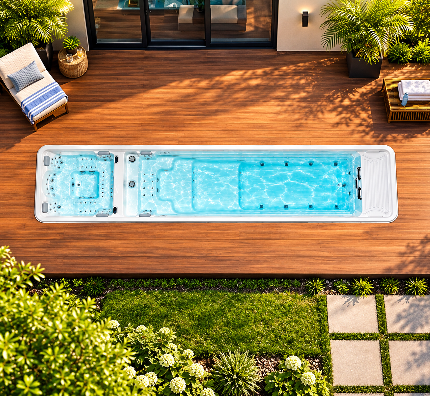
Victoria Star Swim Spa offers the perfect balance between exercise and relaxation, whether you want to swim for fitness or relax in the spacious seating.
Victoria Star Swim Spa offers the perfect balance between exercise and relaxation, whether you want to swim for fitness or relax in the spacious seating.