The Complete Guide to Choosing a 19 Foot Swim Spa: Hydrodynamics, Sizing, and Backyard Planning
Home / News / The Complete Guide to Choosing a 19 Foot Swim Spa: Hydrodynamics, Sizing, and Backyard Planning
October 27, 2026
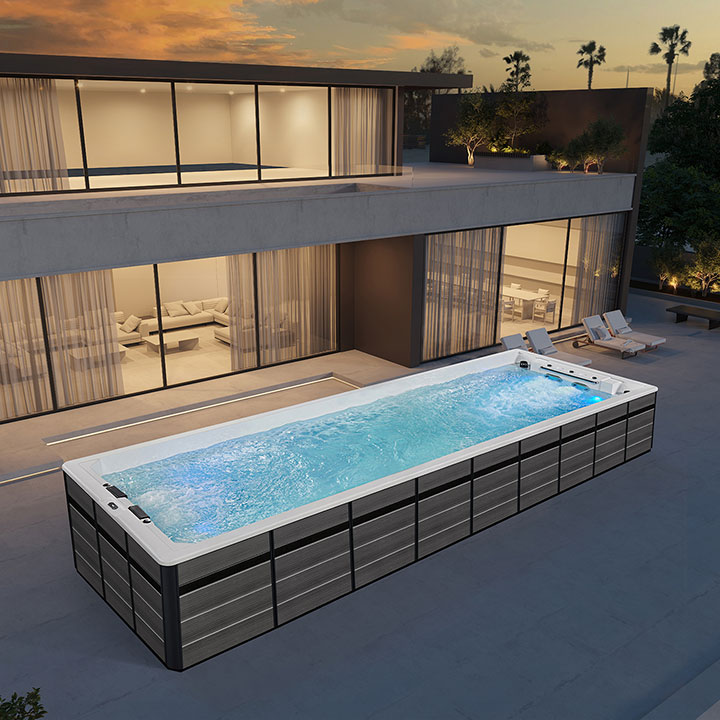
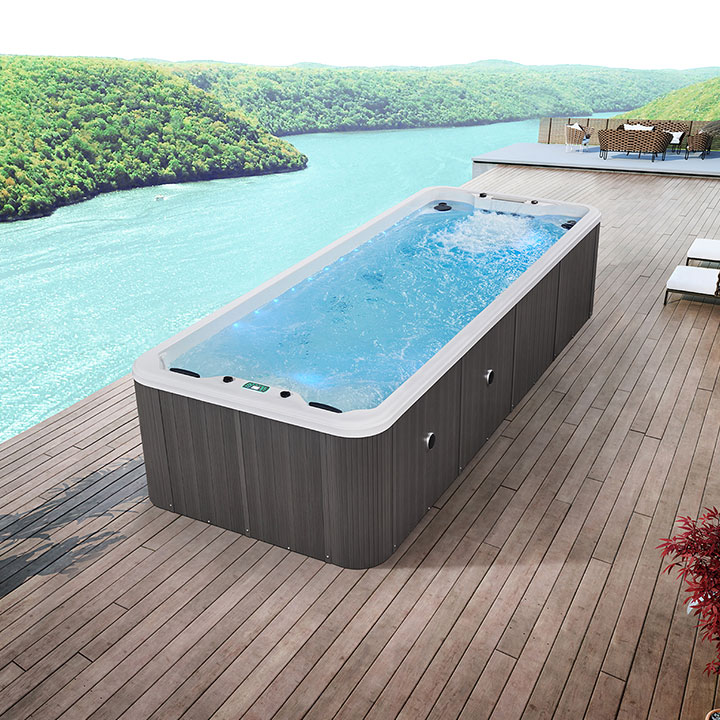
Homeowners comparing aquatic fitness options often face a difficult spatial compromise between digging a traditional forty-foot lap pool and settling for a cramped entry-level hot tub. Selecting a 19 foot swim spa resolves this dilemma by providing an adjustable counter-current system within a self-contained footprint. Whether you are evaluating a 19 foot exercise swim spa for triathlon conditioning or planning a large backyard swim spa installation for low-impact joint therapy, understanding vessel dimensions, product specifications, and site preparation will protect your property and long-term training experience.
Consequently, buyers who treat these high-volume vessels like oversized bathtubs often encounter unexpected installation delays. A 5.9-meter vessel requires careful planning. Every extra foot of overall length changes how tall athletes fit within the interior space and how concrete foundations must be engineered to bear weight.
Why Vessel Length Matters in a 19 Foot Swim Spa
Many first-time shoppers focus exclusively on motor horsepower when evaluating a counter-current swim spa. While propulsion power is important, the physical dimensions of the vessel determine available movement space and swimmer comfort. A longer overall footprint typically accommodates more interior room for full-body extension and natural movement during workouts.
Movement Space and Swimmer Comfort
In shorter swim spa models, swimmers with longer reaches may find themselves constantly adjusting position to avoid contact with the rear wall. This spatial constraint can disrupt stroke rhythm and limit the effectiveness of endurance training.
By contrast, a 19 foot swim spa with an overall exterior length of 5,900 mm offers a larger footprint that may provide more interior movement space. Swimmers should confirm the actual interior dimensions and usable swim-lane length with the manufacturer, as exterior measurements include cabinet thickness and equipment housing. Testing the adjustable current in practice will reveal whether the available space and flow pattern support full arm extensions during freestyle or breaststroke without position adjustments.
Full-Extension Stroke Mechanics for Tall Swimmers
Human anatomy imposes strict spatial requirements inside an enclosed aquatic tank. An adult who stands six feet tall easily spans more than seven feet from extended fingertips to pointed toes during the glide phase of a freestyle or breaststroke cycle. In a compact swim spa, that athlete may need to shorten their reach or adjust body position to fit within the available space.
Additionally, counter-current swimming involves natural forward and backward movement as effort levels change. When you sprint against a strong current and then slow your cadence to recover, your body may shift backward before stabilizing. A longer overall exterior length like the 19 foot measurement may correlate with more usable interior space, but buyers should verify interior dimensions and test the current to ensure adequate clearance for their height and stroke pattern.
This consideration applies equally to physical therapy and tethered resistance routines. Users performing aquatic jogging, rowing drills, or hip mobility exercises benefit from sufficient interior space to move freely through multiple planes of motion without spatial constraints from recessed jets or seating areas.
Key Specifications of the GT-507 19 Foot Swim Spa
The GT-507 represents a full-size swim spa configuration with the following manufacturer-supplied specifications:
Specification
GT-507 19 Foot Exercise Swim Spa
Exterior Dimensions
5900 × 2400 × 1470 mm (19′ × 94″ × 58″)
Water Capacity
6,450 Liters
Swimming Training System
1 Set (1 × 2,800 Watts) / 380V
Hydrotherapy Jets
6 Jets
Circulation Pump
1 × 1 HP
Heater Output
1 × 3,000 Watts
Total Power Supply
6.55 KW
Control System
KL2020BT Touchscreen
LED Lighting
Multicolor LED System
Cabinet Color Options
Platinum, Midnight
Shell Color
Porcelain
Evaluating Counter-Current Propulsion and Hydrotherapy Integration
Once you establish that the 5,900 mm exterior footprint fits your available patio space, the next step is examining the mechanical components of the vessel. A counter-current swim spa for lap swimming must generate sufficient water flow to support swimming while remaining comfortable and controllable.
Understanding the 2,800W Counter-Current System
Traditional hot tub jets push small volumes of water through narrow nozzles at high pressure, which works well for targeted massage but does not support a swimmer’s entire torso. Effective swim training requires a broader current pattern that engages the shoulders, chest, and hips simultaneously.
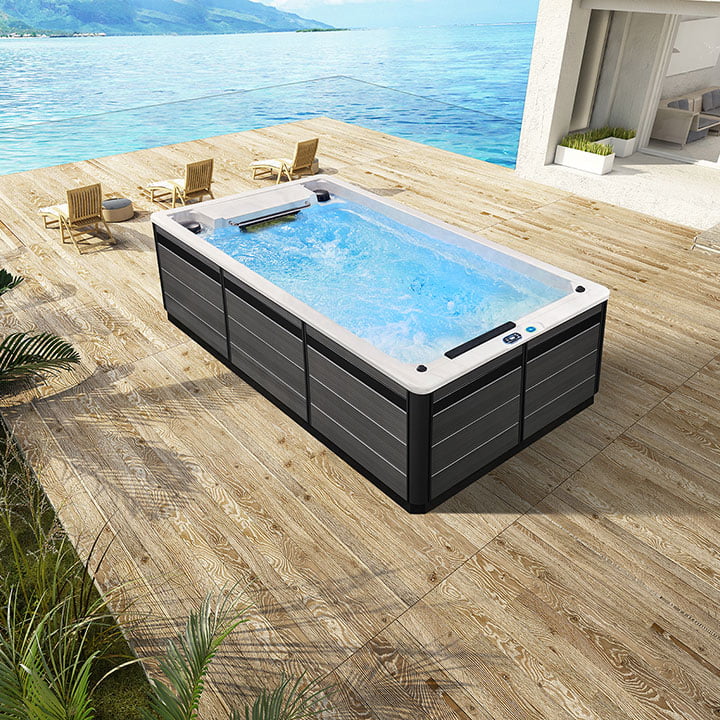
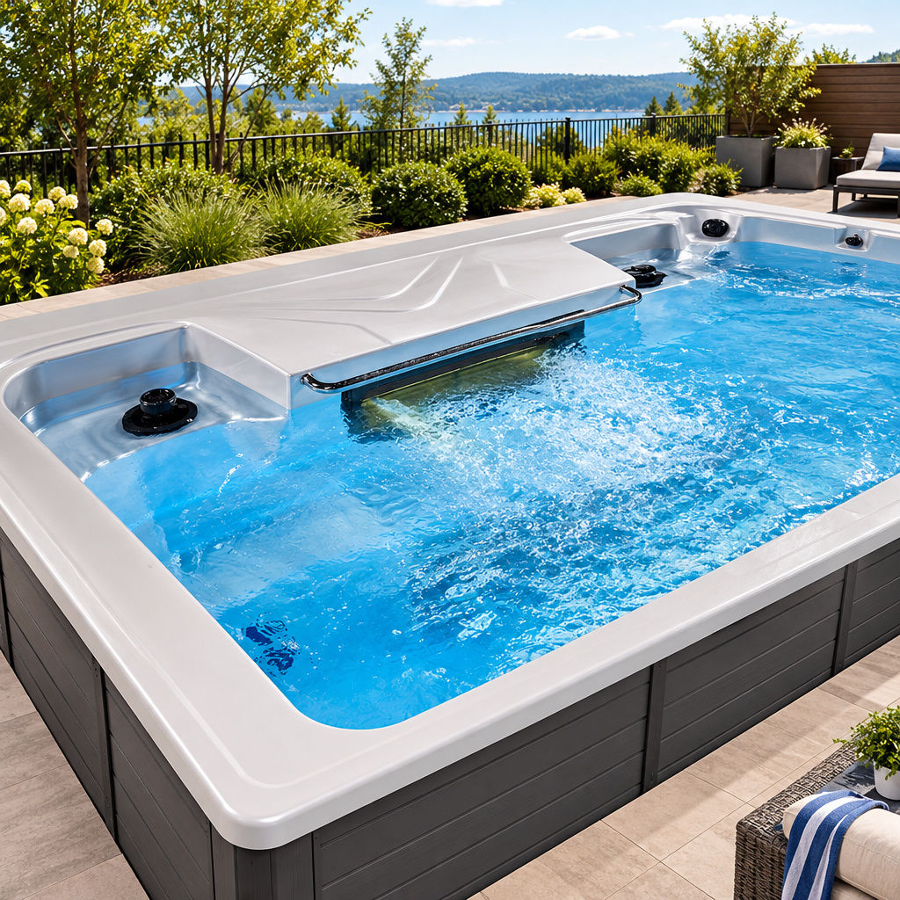
In the product engineering developed by Foshan Gaoming Shiyi Sanitary Ware Technology Co., Ltd. under our brand Victoria Star, the GT-507 19 Foot Exercise Swim Spa incorporates a dedicated 2,800-watt counter-current swimming training system operating on a 380V architecture. According to the manufacturer, this system is designed to create an adjustable water flow that simulates open-water swimming for endurance, technique, and strength training. Rather than relying on pin-point massage nozzles for propulsion, the system discharges water through a wide flow nozzle positioned directly beneath a stainless steel exercise grab bar.
Because the flow is adjustable, users should evaluate the current settings in practice to determine whether the range meets their specific training needs. A beginner or rehabilitation patient may prefer gentler settings for walking resistance or stroke correction, while an experienced swimmer can test higher outputs for conditioning work. The stainless steel grab bar provides a stable anchor point for leg-only flutter kick drills or stretched cooldowns.
Balancing Athletic Resistance with Post-Workout Hydrotherapy Jets
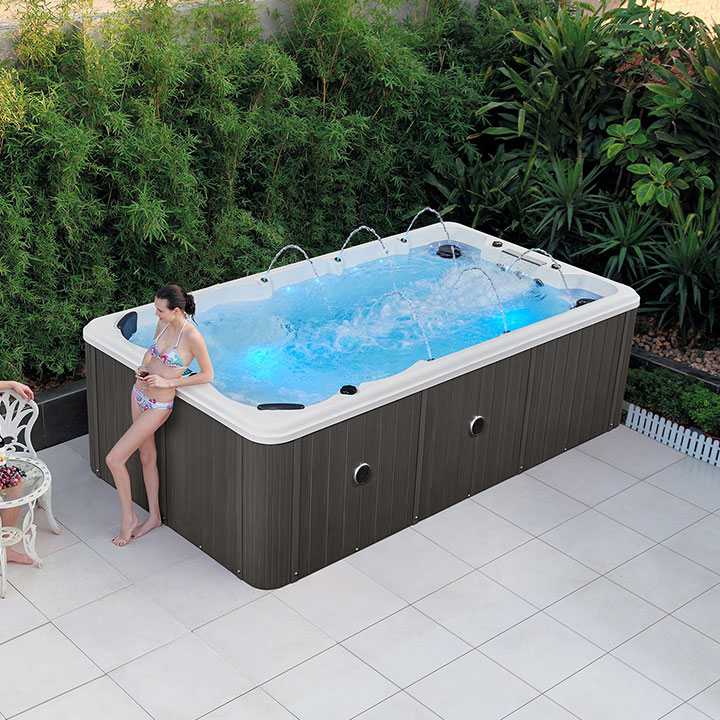
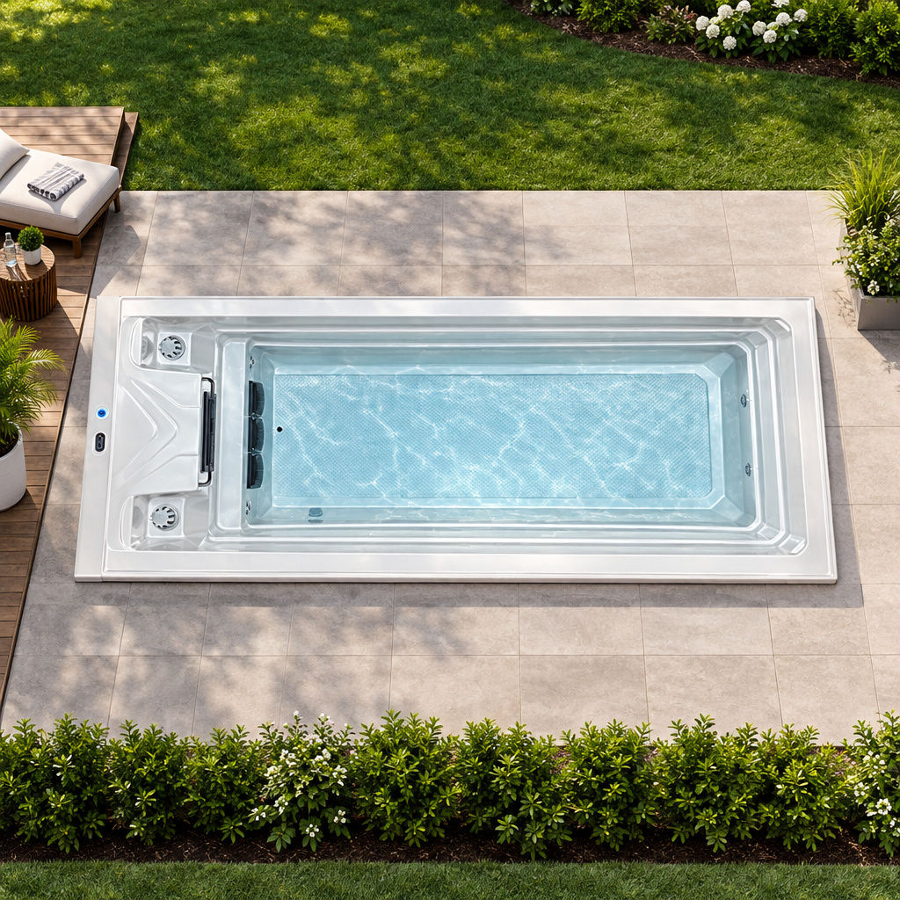
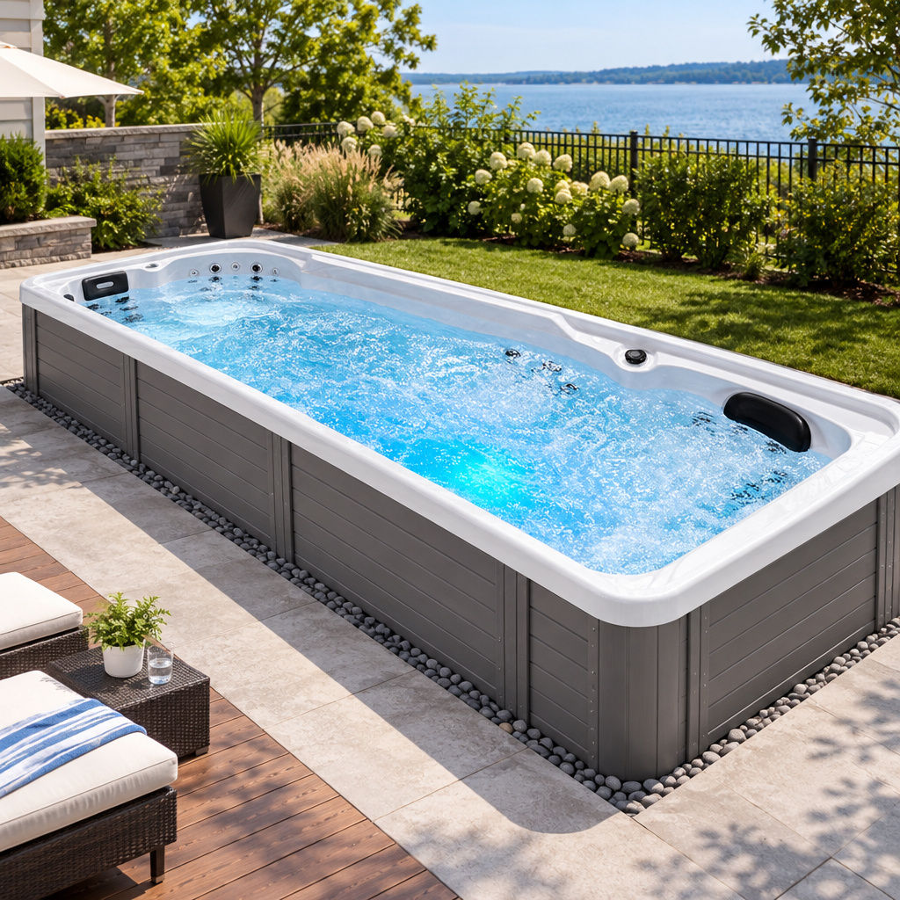
Aquatic workouts can create muscular fatigue. Many users choose to relax in warm water after exercise. In a single-zone 19 foot swim spa, the transition from athletic conditioning to evening relaxation depends on interior ergonomics and intuitive system controls. Instead of cluttering the central swim lane with bulky lounge chairs, the GT-507 layout integrates perimeter seating ledges and six targeted hydrotherapy jets.
After finishing a thirty-minute endurance set, users can move to the side seating areas where the six hydrotherapy jets deliver focused water massage to tired muscle groups. Meanwhile, the wide, flat floor with its textured non-slip pattern remains unobstructed for aquatic aerobics, stretching, or family recreation.
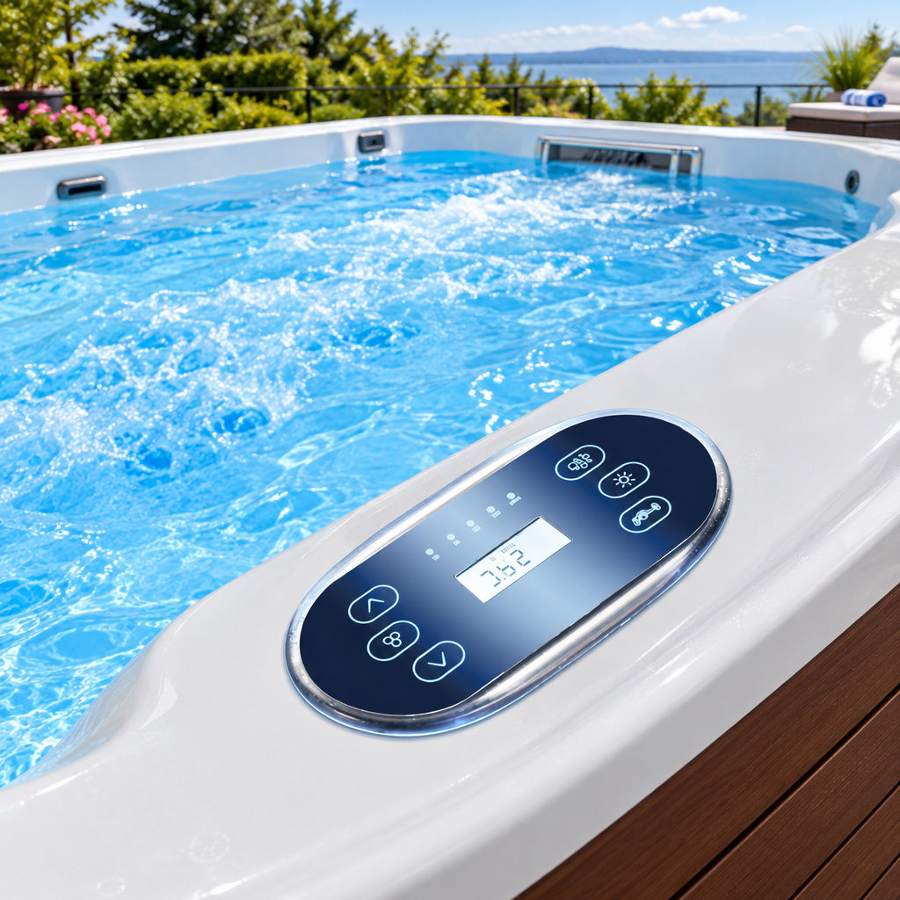
Managing the shift between active training and hydrotherapy happens directly at the water’s edge via the oval KL2020BT digital touchscreen control panel. Mounted flush into the white acrylic top rail, this backlit LCD interface allows swimmers to check water temperature at a glance, toggle the propulsion pump, adjust the heater, and cycle through multicolor LED lighting without climbing out of the basin.
Water Management and Thermal Efficiency in High-Volume Basins
A common concern among prospective buyers is whether maintaining 6,450 liters of heated water requires commercial-grade chemical expertise and excessive electricity. While a 19 foot swim spa holds substantially more water than a standard hot tub, understanding the sanitation system and thermal specifications helps set realistic maintenance expectations.
Multi-Stage Sanitation: Ozone, UV, and Dual Filtration
Warm water agitated by swimmers introduces sweat, body oils, and airborne debris that must be filtered and sanitized continuously. The GT-507 specifications list a four-tier water quality management system powered by a dedicated 1 HP circulation pump:
Filter Cartridges: Positioned in recessed circular bays flanking the propulsion head, these cartridges capture surface oils, hair, and larger organic particulates before water enters the plumbing lines.
Sand Filtration: Working alongside the cartridge bays, the sand filtration stage traps fine suspended particles.
Ozone Disinfection: The system includes ozone disinfection, which is used as part of the overall sanitation approach.
Ultraviolet (UV) Sterilization: As circulated water passes through the UV chamber, germicidal light is applied as an additional sanitation layer.
This combination of mechanical filtration (cartridges and sand) with ozone and UV represents the manufacturer’s water-quality approach. Homeowners should maintain sanitizer levels and water chemistry according to the manufacturer’s instructions and perform routine water testing to ensure safe and clear water.
Managing Heat Retention, Power Draw, and Operating Costs
Heating 6,450 liters of water requires coordination between heater output, circulation efficiency, and cabinet insulation. According to the GT-507 technical data, the unit pairs a 3,000-watt electric heater with a 1 HP circulation pump within a total system power supply rating of 6.55 kW.
The vessel includes cabinet insulation designed to help retain heat. Water temperature preferences vary by use and individual preference. Homeowners should follow the manufacturer’s operating and temperature guidance for their specific model. Adjusting temperature according to planned use is a common practice, though actual energy consumption depends on usage patterns, ambient conditions, and local climate.
For a realistic estimate of monthly operating costs, homeowners should consult their local utility rates and consider seasonal temperature variations at their installation site.
Site Preparation and Structural Engineering for a 19 Foot Swim Spa
Purchasing a 19 foot swim spa is only half the project; preparing your property to receive a 5.9-meter vessel is an engineering task that demands careful planning. Because the unit arrives as a unified structural shell measuring 5,900 mm long, 2,400 mm wide, and 1,470 mm tall, overlooking site logistics can halt delivery day before the crane even extends its boom.
Calculating Dead Load and Foundation Requirements
The most critical mistake homeowners make is underestimating the weight of a filled 19 foot swim spa. Since one liter of freshwater weighs approximately one kilogram, the 6,450-liter water capacity of the GT-507 weighs roughly 6,450 kilograms (over 14,200 pounds) by itself. The dry weight of the spa itself is not provided in the product specifications, and the total filled weight will also include occupants and equipment.
Because of this substantial load, standard residential wood decks, gravel beds, or interlocking patio pavers laid over sand may not provide adequate support without reinforcement. Uneven settling or shifting can create stress on the cabinet frame and affect water level.
Homeowners should obtain the manufacturer’s specifications for total filled weight and foundation requirements. A qualified structural engineer or contractor should assess the site conditions, soil bearing capacity, and existing structures to determine the appropriate foundation design. This may include a reinforced concrete pad with steel rebar or welded wire mesh over a compacted crushed-stone sub-base, or engineered footings if the spa will be recessed into an elevated deck.
Step-by-Step Pre-Installation Checklist for Backyard Delivery
Before scheduling factory shipment or local crane rigging for your large backyard swim spa installation, follow this sequential site preparation checklist to reduce the risk of costly surprises:
Map Delivery Access and Crane Requirements: Measure the distance from the street or driveway where the flatbed truck will park to the final installation pad. Because a 5,900 × 2,400 mm shell rarely fits through standard side-yard gates, a crane or other lifting equipment may be needed when the spa cannot reach the pad by a suitable ground route. Confirm the delivery method with the dealer after measuring access paths, gate widths, overhead clearances, and any obstacles such as utility wires or mature tree canopies.
Prepare the Foundation: Work with a qualified professional to design and construct a foundation that meets the manufacturer’s load-bearing and leveling requirements and accounts for local soil conditions. Allow adequate curing time for concrete before the spa arrives.
Reserve Perimeter Service Clearance: Leave adequate unobstructed access around all four sides of the cabinet, especially at the equipment bay housing the propulsion pump, heater, and filtration plumbing. If you recess the spa into a wooden sun deck, build removable service hatches into the decking.
Arrange Electrical Service: The GT-507 product specifications list a 380V swimming training system and a 6.55 kW power supply rating. Obtain the manufacturer’s complete electrical installation requirements, including voltage, phase, amperage, circuit protection, and disconnect location. Have a certified electrician and local building authority determine the proper supply, wiring, breaker, and disconnect for your specific site and confirm all applicable permit requirements.
Plan Drainage and Backwash Routing: Establish a clear drainage path near the pad so periodic filter maintenance or water changes flow safely away from house basements and neighboring property lines.
Exterior Aesthetics: Selecting Cabinet and Shell Finishes
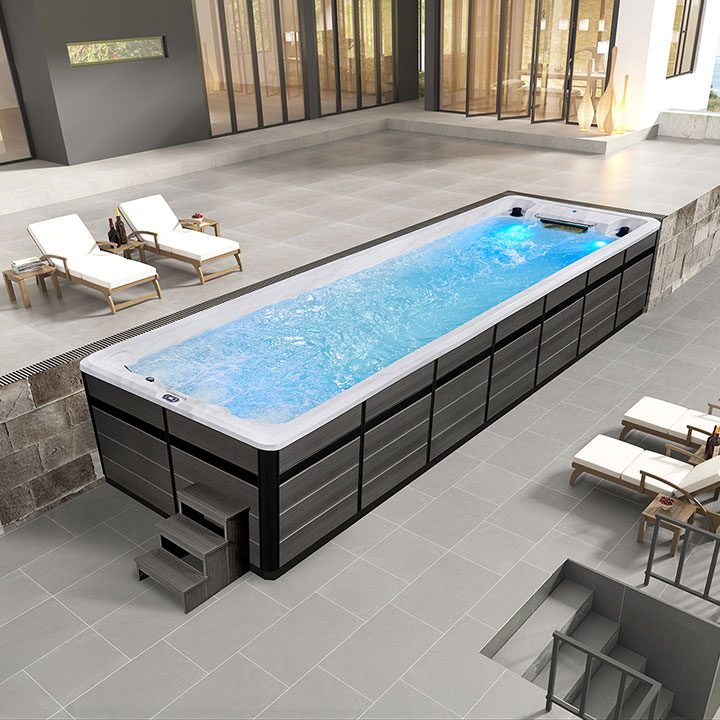
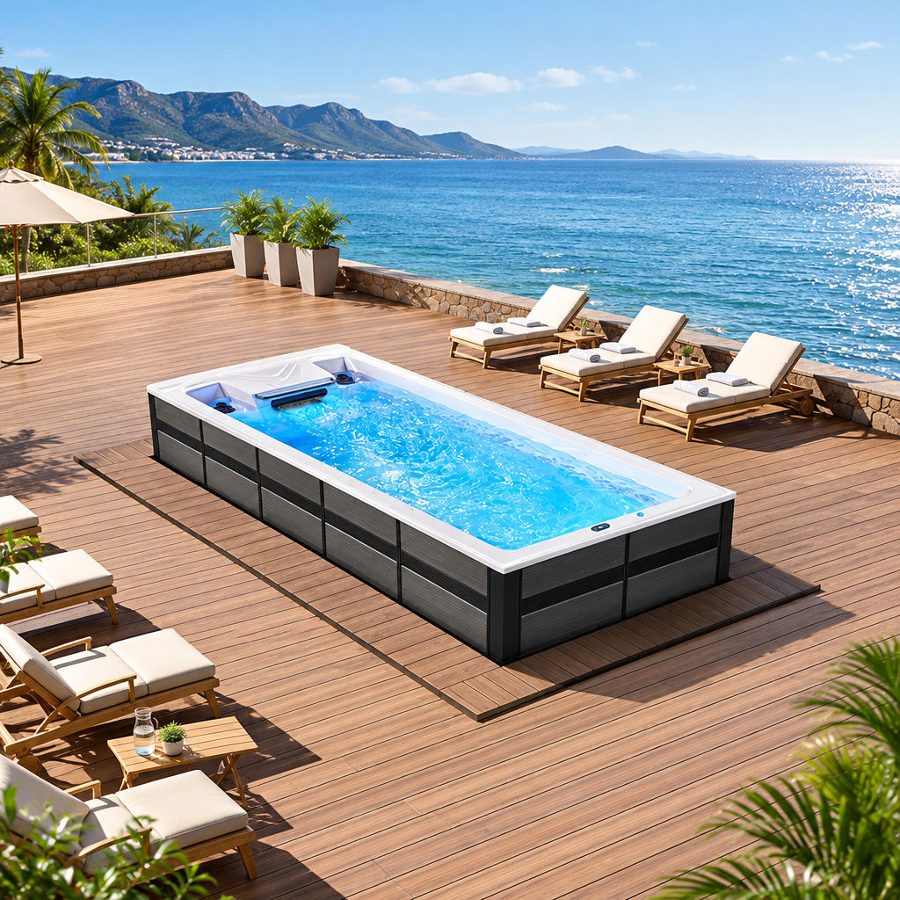
Because a 19 foot swim spa stands 58 inches (1,470 mm) tall, its visual profile plays a major role in your garden architecture. Left completely above ground without landscaping, a nearly five-foot-high enclosure can dominate a small patio. Fortunately, partial deck integration, where a portion of the lower cabinet sits below a wrap-around wooden terrace, creates a seamless, resort-style entry height while preserving step-over safety.
The GT-507 offers cabinet color options in Platinum and Midnight palettes. Inside the basin, the Porcelain shell finish is specified. Homeowners should consult with the manufacturer for detailed descriptions of these finish options and request samples if appearance coordination with existing outdoor materials is a priority.
Frequently Asked Questions About 19 Foot Swim Spas
Can two adults swim simultaneously in a 19 foot swim spa?
The GT-507 product specifications do not state a maximum occupancy or confirm whether multiple users can simultaneously swim or exercise. The central counter-current lane is designed for swimming, and the spa includes perimeter seating ledges with six hydrotherapy jets. Prospective buyers should confirm with the manufacturer whether the interior layout and current system support concurrent swimming and other aquatic activities, and what the recommended occupancy limits are for different uses.
How deep is the water in a 19 foot exercise swim spa?
The GT-507 lists an overall exterior height of 58 inches (1,470 mm). The manufacturer’s confirmed interior water depth is not provided in the supplied specifications. Prospective buyers should request the operating water depth directly from the manufacturer to ensure it meets their swimming and therapy requirements.
Is a building permit or crane required to install a 19 foot swim spa?
Permit, barrier, and fencing requirements vary by municipality. Local building authorities determine which rules apply to the specific installation. Many jurisdictions require an electrical permit for high-voltage circuits. Confirming all electrical, structural, and safety requirements with your local building authority before installation is strongly advisable.
How often do you need to drain and refill a 6,450-liter swim spa?
The GT-507 specifications list a four-stage sanitation system combining ozone disinfection, UV sterilization, filter cartridges, and sand filtration. The appropriate water-change schedule depends on usage frequency, bather load, and water chemistry maintenance. Homeowners should follow the manufacturer’s specified water-change guidance and maintain sanitizer and water chemistry as directed. Routine water testing remains essential regardless of the sanitation equipment installed.
Final Verdict: Making the Right Long-Term Investment in a 19 Foot Swim Spa
Selecting a 19 foot swim spa represents a strategic upgrade for households that prioritize movement space and training versatility. The GT-507 configuration pairs a 2,800-watt adjustable counter-current propulsion system, six hydrotherapy jets, KL2020BT touchscreen controls, and multi-stage filtration within a 5,900 mm overall exterior length. When installed on a properly engineered foundation with qualified electrical service, a 19 foot exercise swim spa can transform a private backyard into a year-round aquatic training and wellness space. Prospective buyers should verify interior dimensions, test the adjustable current, and confirm all installation requirements with the manufacturer to ensure the unit meets their specific training goals and site conditions.
Victoria Star Swim Spa offers the perfect balance between exercise and relaxation, whether you want to swim for fitness or relax in the spacious seating.
Victoria Star Swim Spa offers the perfect balance between exercise and relaxation, whether you want to swim for fitness or relax in the spacious seating.