The Complete 20 Foot Swim Spa Guide: Sizing Realities, Propulsion Physics, and Backyard Engineering
Home / News / The Complete 20 Foot Swim Spa Guide: Sizing Realities, Propulsion Physics, and Backyard Engineering
October 27, 2026
Shopping for a 20 foot swim spa usually starts with a simple dream: swimming uninterrupted laps at home without sacrificing your entire backyard to a traditional concrete pool. Yet once you start comparing spec sheets, you quickly encounter confusing shell dimensions, conflicting current ratings, and steep structural site requirements. Understanding how these large aquatic vessels are molded, shipped, and engineered saves you from costly excavation mistakes and helps you select the best layout for year-round endurance training and hydrotherapy.
Why Your Search for a 20 Foot Swim Spa Often Leads to a 19-Foot Shell
The Logistics of Global Freight and Highway Clearances
Homeowners comparing large swim spas often encounter models that fall into different size categories. The GT-507, for example, is marketed as a 19-foot unit with dimensions of 5,900 mm by 2,400 mm by 1,470 mm (19 feet by 94 inches by 58 inches). When evaluating options, buyers should compare the listed dimensions for each model rather than relying on category labels alone. Shipping considerations vary by manufacturer and destination, and larger vessels may require specialized transport equipment. Freight costs reflect the chosen shipping method, route accessibility, and distance to the installation site.
Internal Swim Lane Geometry vs. Exterior Cabinet Footprint
Exterior cabinet length tells only half the story when you are stretched out in a full freestyle stroke. What truly governs your swimming comfort is the unobstructed internal basin geometry. In many split-cabinet designs, thick acrylic dividing walls, wide perimeter coping ledges, and bulky step modules reduce usable water length. Usable swim space varies by model, so buyers should request and compare verified interior dimensions when evaluating different layouts. Simply looking at the outer footprint can be misleading if internal obstructions consume valuable swimming distance.
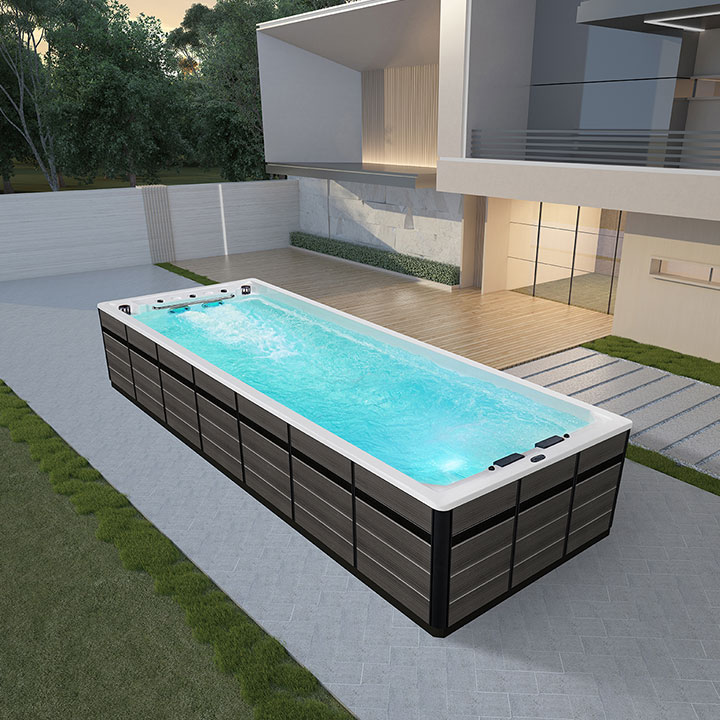
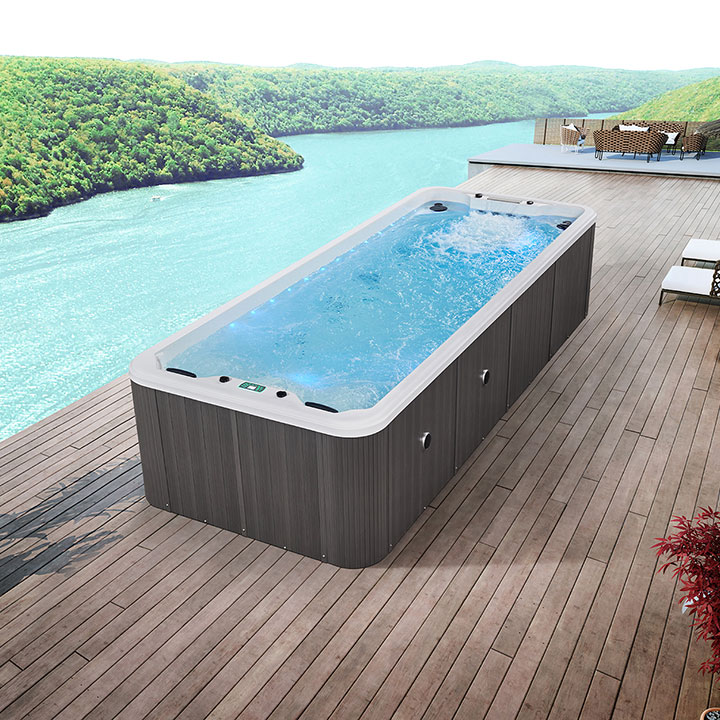
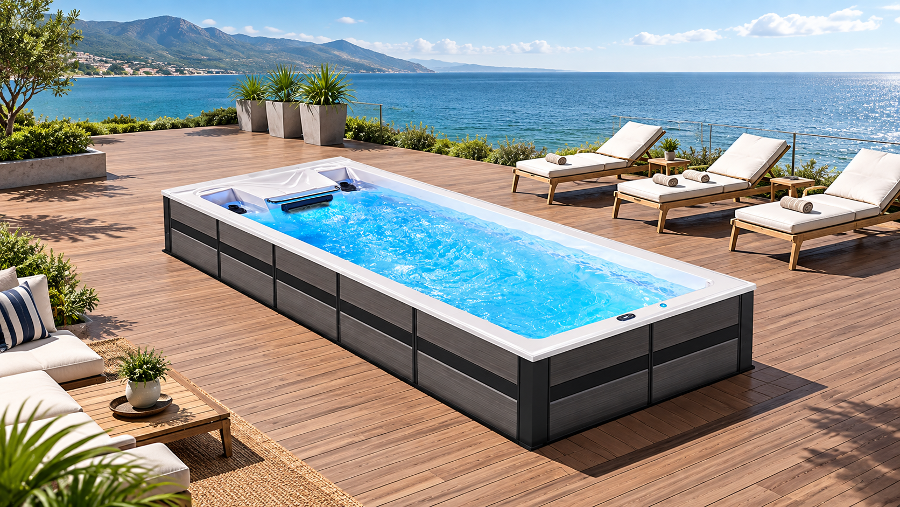
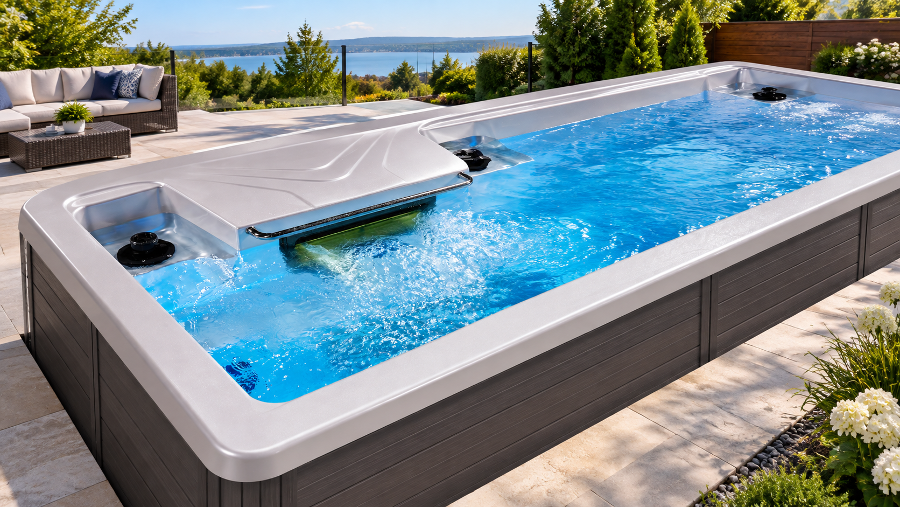
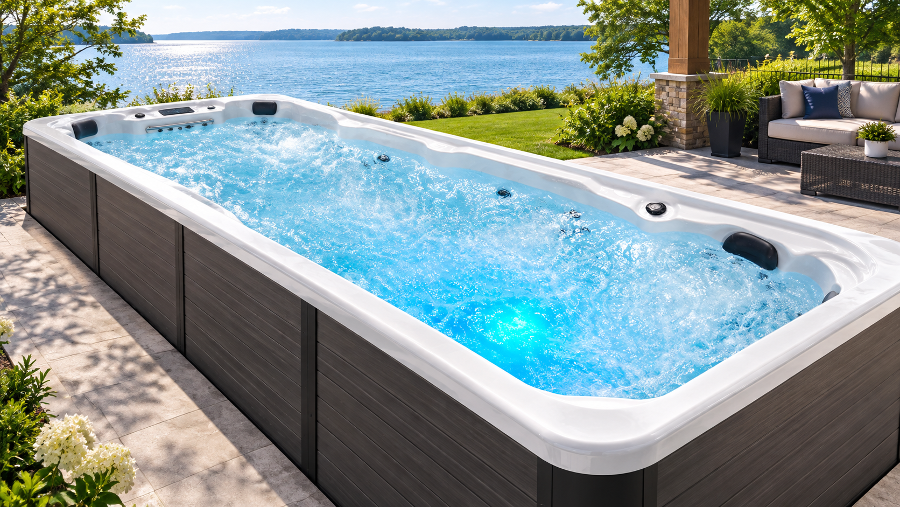
Take the GT-507 19 Foot Exercise Swim Spa as a structural example: its exterior footprint spans 5,900 mm by 2,400 mm by 1,470 mm (19 feet by 94 inches by 58 inches), with a water capacity of 6,450 liters. Its interior is molded as one continuous, open rectangular swim lane, which maximizes the available training distance within the overall shell dimensions.
Single-Zone Exercise Vessels vs. Dual-Zone Combinations
Deciding between an all-swim exercise tank and a dual-zone combination unit requires an honest audit of how your household uses water. Dual-zone models place a permanent acrylic barrier between a compact hot tub and a shortened swim area. While that setup allows two independent water temperatures, it reduces the swimming lane length by introducing a fixed partition. Serious swimmers and taller athletes often find shortened dual-zone tanks restrictive during vigorous kick sets or butterfly drills, where extended reach and leg drive demand uninterrupted space.
When you choose a single-zone design, you preserve the full internal span for athletic conditioning while retaining perimeter seating and hydrotherapy features for recovery. This configuration prioritizes swim training first and offers relaxation features as secondary benefits within the same unified water volume.
Hydraulic Engineering: What Makes a Large Swim Spa Actually Swimmable?
Counter-Current Propulsion and Turbulence Control
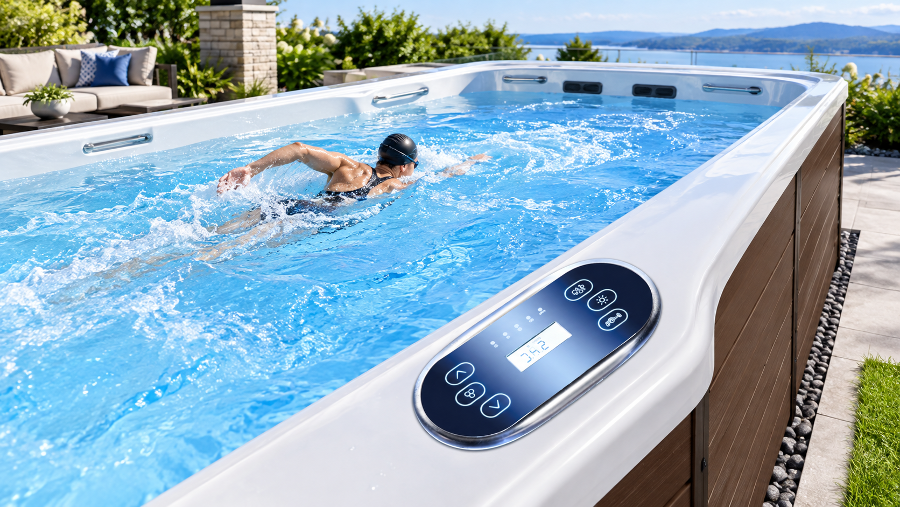
Length alone does not make a swim spa swimmable; hydraulic flow quality determines whether you glide smoothly or fight chaotic chop. According to product specifications for the GT-507, its customizable swimming training system features a dedicated 2,800-watt adjustable water flow generator running on 380V, designed to support endurance, technique, and strength training. Adjustable propulsion lets swimmers dial in the right resistance for their fitness level and training goals, from gentle recovery sessions to high-intensity interval work. The ability to fine-tune current strength means a single vessel can accommodate multiple household members with different swimming abilities and workout intensities.
Balancing Hydrotherapy Recovery with Athletic Conditioning
An effective backyard training vessel has to transition smoothly from high-heart-rate intervals to low-impact joint recovery. Mounted directly above the GT-507 propulsion housing is a heavy-duty polished stainless steel exercise grab bar. Swimmers use this anchor point for isolated flutter-kick drills or aquatic exercise routines that emphasize lower-body conditioning. Once the endurance set wraps up, the same basin serves as a thermal recovery chamber, allowing athletes to shift from aerobic conditioning to passive muscle relaxation without leaving the water.
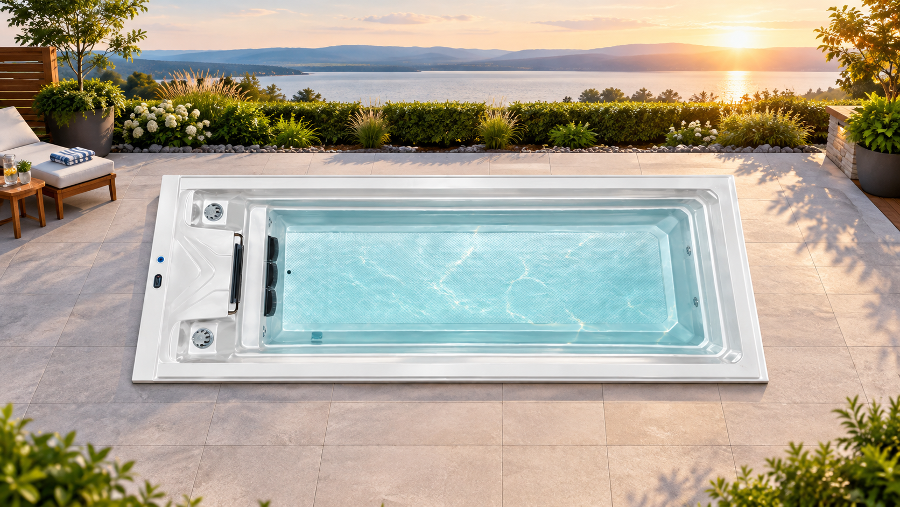
The GT-507 includes six integrated hydrotherapy jets that provide post-workout relaxation without requiring you to step out into the cold air to climb into a second tub. Moreover, the textured non-slip floor pattern across the Porcelain acrylic basin provides secure footing during underwater resistance running and aerobic routines. Individuals considering aquatic exercise for post-operative rehabilitation should consult their clinician before beginning any program to ensure the activity level and water temperature are appropriate for their recovery stage.
Smart Controls and Nighttime Swim Ergonomics
Adjusting water velocity or filtration cycles should never require climbing over the side cabinet with wet hands. Having an edge-mounted digital interface within arm’s reach of the swim lane lets you dial the current up for a sprint set or drop it down for a warm-down lap mid-session. The GT-507 integrates a sleek KL2020BT touchscreen control panel flush into the white acrylic top rail, keeping all essential controls accessible throughout your workout. Evening swimmers also face a subtle ergonomic challenge: without visual lane markers under dark skies, it is surprisingly easy to drift sideways out of the current stream.
Ambient underwater multicolor LED lighting solves this spatial disorientation by illuminating the white acrylic basin walls and the propulsion head, improving visibility within the swim area. This internal illumination helps swimmers maintain proper alignment and monitor their stroke technique during nighttime sessions. Plan separate deck lighting to ensure safe movement around the surrounding area, as the internal spa lighting is designed to enhance visibility within the basin rather than illuminate the exterior deck perimeter.
Thermal Retention and Multi-Stage Water Management in High-Volume Basins
Managing 6,450 Liters Without Skyrocketing Utility Bills
Heating a large outdoor body of water through frosty autumn mornings and winter nights is one of the biggest operational concerns for any buyer researching a 20 foot swim spa. A basin holding 6,450 liters (roughly 1,704 US gallons) carries substantial thermal mass. While a larger volume takes longer to heat initially than a small four-person hot tub, that same mass resists rapid temperature drops once properly insulated, which can work in your favor during extended cold snaps. To keep daily electricity draw predictable, the mechanical bay must separate high-output propulsion from everyday thermal maintenance, ensuring the swim jet only consumes power during active training rather than running continuously.
The GT-507 features a 2,800W swim jet system, a dedicated 1 HP circulation pump, and a 3,000-watt heater within a 6.55 KW total power system. Actual energy use depends on settings, usage patterns, outdoor temperature, insulation quality, and operating conditions. Owners in mild climates typically see lower heating costs than those in regions with prolonged freezing weather, and regular cover use between sessions dramatically reduces heat loss and energy consumption.
Multi-Stage Sanitation: Beyond Heavy Chlorine Dosing
Maintaining proper water chemistry requires balanced sanitizer levels and regular monitoring. Water imbalance or chloramine buildup can contribute to irritation and odor, making consistent chemical management essential for swimmer comfort. High-volume swim spas benefit from mechanical and physical oxidation layers that work alongside chemical sanitizers to reduce the total sanitizer demand and improve overall water clarity. The GT-507 addresses water quality by combining four distinct purification stages into one continuous circulation loop: sand filtration, dual filter cartridges, ozone disinfection, and a UV sterilization chamber.
These systems work together to capture suspended particles, oxidize organic compounds, and neutralize microorganisms, supporting clearer water between manual chemical adjustments. However, owners must still maintain sanitizer and pH levels according to the product manual and local guidance, regardless of the filtration system in place. No combination of mechanical filtration and oxidation eliminates the need for a residual chemical sanitizer to protect bathers between circulation cycles.
Site Preparation: Structural, Electrical, and Access Requirements
Calculating Dead Load and Pouring the Concrete Pad
Never place a full-sized swim spa on a standard residential wood deck or loose backyard pavers without professional structural assessment. Water weighs 1 kilogram per liter (about 8.34 pounds per gallon). When you fill a 6,450-liter basin, the water alone puts 6,450 kg (over 14,200 pounds) of static dead load onto your foundation. Once you add the dry weight of the acrylic shell, steel framing, plumbing, and occupants, total weight increases substantially, creating concentrated point loads that can exceed the capacity of standard residential deck framing or compacted gravel pads.
The base must meet the manufacturer’s support requirements and be assessed for site conditions by a qualified professional. Consult a licensed structural engineer or follow the manufacturer’s foundation specifications to determine the appropriate base material, thickness, reinforcement, and preparation for your installation. Site-specific factors such as soil type, frost depth, drainage patterns, and local building codes all influence the final foundation design, so generic recommendations cannot replace professional site evaluation.
Crane Rigging, Side-Yard Clearances, and Vault Drainage
Getting a nearly 20-foot vessel from the flatbed delivery truck onto your foundation is a choreographed rigging operation. Because a unit measuring 5,900 mm long by 2,400 mm wide (94 inches) and 1,470 mm tall (58 inches) cannot roll through standard residential fence gates, have the delivery team assess access and determine whether specialized moving equipment, a crane, or another method is needed. Some installations use crane lifts over the house, while others may employ rollers, air skates, or temporary fence removal depending on the site layout and available clearances.
Before scheduling delivery day, walk through this five-step site readiness checklist:
Measure Overhead and Side-Yard Obstructions: Verify that power lines, tree canopies, and roof eaves along the driveway allow safe equipment extension from the street to your backyard foundation.
Choose Above-Ground Decking vs. Recessed Vaults: Decide whether to place the 58-inch-tall cabinet directly on grade with wrap-around wooden steps, or sink it partially into an excavated vault for a flush, pool-like entry.
Enforce Adequate Service Access Clearances: If recessing the spa into a deck or pit, leave sufficient removable decking or crawlspace around the equipment bay so technicians can reach the pumps, heater, and filtration components for routine service and emergency repairs.
Implement Site-Specific Drainage: Work with your contractor to design a drainage plan appropriate for your site conditions, ensuring water cannot accumulate around or beneath the spa during heavy storms.
Pre-Run Underground Electrical Conduit: Coordinate with your licensed electrician to stub up waterproof conduit at the exact equipment bay corner before the foundation is poured or finished.
Electrical Load Planning and Dedicated Circuitry
High-wattage aquatic propulsion systems cannot plug into standard household outlets. According to the technical specifications for the GT-507, the system operates on a 6.55 KW power supply, with the swimming training system specified at 380V. Homeowners should confirm the complete supply voltage, phase, amperage, and wiring requirements with the manufacturer and hand the exact schematic and amperage sheet to a licensed local electrician during the planning phase. Your electrician will install a dedicated weatherproof subpanel with the required disconnecting means and ground-fault circuit interrupter (GFCI) or residual current device (RCD) protection, following the locally adopted electrical code and manufacturer’s instructions for equipment location and clearances. Electrical service upgrades may be necessary if your existing panel lacks the capacity to support the additional load.
Matching Material Craftsmanship to Long-Term Outdoor Durability
Acrylic Shell Integrity and Exterior Cabinet Weathering
A swim spa sits exposed to blistering summer ultraviolet rays, freezing winter snow, and constant internal water pressure throughout its service life. Inferior fiberglass or thin thermoformed plastics can blister or delaminate over time if the backing resin is unevenly applied or if thermal cycling causes differential expansion between layers. The GT-507 features a Porcelain shell color option and cabinet color options in Platinum or Midnight. Proper material selection and ongoing maintenance help ensure the exterior resists environmental stresses and maintains its appearance over years of outdoor exposure.
At Foshan Gaoming Shiyi Sanitary Ware Technology Co., Ltd., we built Victoria Star around strict in-house manufacturing control—from precision mold forming and woodworking to final hydraulic assembly. For us, combining structural craftsmanship with customizable hydrotherapy and wellness engineering means every vessel leaves the production floor ready for outdoor athletic training and family relaxation.
Frequently Asked Questions About Buying a 20 Foot Swim Spa
Can a tall swimmer do a full freestyle stroke and flip turn in a 19-to-20-foot swim spa?
Stroke comfort depends on the swimmer’s height, arm span, usable interior dimensions, and current setup. The counter-current propulsion system enables stationary swimming in place, which avoids the need for turns during lap training. This design allows uninterrupted swim training without the flip turns required in traditional lap pools, where swimmers must reverse direction at each wall. Instead, swimmers maintain a fixed position in the water column while the current provides forward resistance, similar to an aquatic treadmill.
How much does it cost to prepare a backyard site for a large swim spa?
Site preparation costs vary based on excavation complexity, crane or specialized equipment access, local labor rates, and permitting requirements. The factors driving costs include foundation size and construction, electrical service upgrades, equipment access from the street to the installation site, and any required grading or drainage work. Geographic location, local building codes, and seasonal demand for contractors also influence total project expenses. Obtain detailed quotes from local contractors familiar with your site conditions to develop an accurate budget that accounts for all necessary preparation work.
What is the ideal water temperature for lap swimming versus hydrotherapy soaking?
Water temperature preferences vary by individual, activity intensity, and session duration. Some swimmers prefer water between 26°C and 29°C (79°F to 84°F) for vigorous lap training to help prevent core body temperature from rising excessively during sustained cardio effort. For evening muscle recovery and leisure soaking, some users raise the thermostat to between 36°C and 38°C (97°F to 100°F) to promote relaxation and passive muscle tension release. Follow the spa manual and applicable safety guidance when setting water temperature, and note that hot tub water should not exceed 40°C (104°F) to reduce risk of heat-related illness. Pregnant individuals, children, and those with cardiovascular conditions should consult their healthcare provider before using heated water for extended periods.
How often do you need to drain and refill a 6,450-liter swim spa?
Drain and refill schedules depend on usage intensity, bather load, and water condition. The GT-507 utilizes four-stage purification including sand filtration, dual cartridges, UV sterilization, and ozone disinfection to support water quality between drain cycles. Follow the manufacturer’s recommended maintenance schedule based on your specific use pattern and water chemistry test results. Regular testing and chemical adjustments help maximize the interval between full drains by keeping dissolved solids, hardness, and contaminant levels within acceptable ranges. High-use households or those with frequent guests may need to drain more often than single-user installations with lower weekly bather loads.
Making the Final Call on Your Backyard Aquatic Center
Selecting the right vessel comes down to matching real-world physics with your daily fitness habits and available installation space. When you look past nominal brochure labels and compare verified interior dimensions, you see why an unobstructed 19-foot (5,900 mm) single-zone shell like the GT-507 can serve serious lap swimmers effectively while offering practical installation advantages. Before ordering your unit, verify equipment access paths with your delivery team, prepare a suitable foundation following manufacturer specifications and qualified structural advice, and confirm your electrical service can support the propulsion load by working with a licensed electrician. Whether you are training for an open-water triathlon or seeking low-impact joint therapy, investing in a well-engineered 20 foot swim spa alternative transforms your backyard into a private, four-season aquatic wellness sanctuary.
Victoria Star Swim Spa offers the perfect balance between exercise and relaxation, whether you want to swim for fitness or relax in the spacious seating.
Victoria Star Swim Spa offers the perfect balance between exercise and relaxation, whether you want to swim for fitness or relax in the spacious seating.