The Best 110 Volt Hot Tub Buyer’s Guide: Electrical Demands, Performance Trade-Offs, and Compact Engineering
Home / News / The Best 110 Volt Hot Tub Buyer’s Guide: Electrical Demands, Performance Trade-Offs, and Compact Engineering
November 05, 2026
Finding the best 110 volt hot tub begins with understanding practical household engineering. Many homeowners turn to plug-and-play spas because they want rapid relaxation without hiring an electrical contractor to trench heavy conduit across the yard. A standard electrical connection offers undeniable convenience, yet it introduces real thermodynamic boundaries that influence water temperature, jet pressure, and component cycles. Navigating these trade-offs requires separating practical performance from unrealistic sales promises.
Whether planning an installation for a suburban patio, a townhouse courtyard, or an intimate balcony retreat, selecting the ideal spa demands careful evaluation. Every gallon of water requires energy to heat and circulate. Knowing how standard-voltage circuits distribute that energy helps you choose a system that delivers reliable hydrotherapy without unexpected electrical headaches.
Understanding the Appeal of 110V Plug-and-Play Hot Tubs
The fundamental appeal of a standard-voltage spa lies in immediate accessibility. In North American residential construction, standard wall outlets typically provide nominal 120-volt service, supplying sufficient baseline power for everyday appliances without service upgrades.
The Definition of Plug-and-Play Hydrotherapy
In spa terminology, 110V, 115V, and 120V are often used as informal labels for North American residential service, but the equipment nameplate and installation instructions control the actual connection requirements. A plug-and-play spa is designed for cord connection to a properly rated, GFCI-protected supply, with the exact cord and protection arrangement determined by the product listing and installation instructions.
This setup may avoid a new hardwired spa circuit, but the required GFCI, receptacle, disconnect, and circuit arrangement must still comply with the applicable code and the manufacturer’s instructions. These systems are self-contained vessels where internal plumbing, filtration manifolds, and pack controllers are pre-wired at the factory. After the site, support, water-treatment setup, and electrical arrangement have been prepared in accordance with local code and the manufacturer’s instructions, the tub can be filled and connected for startup.
Cost Savings and Infrastructure Elimination
Traditional high-voltage installations often introduce unexpected contractor fees. Adding an external 50-amp subpanel, running weather-sealed conduit, and upgrading older breaker panels can easily add substantial installation costs to your initial budget. Plug-and-play models bypass this infrastructure work entirely, keeping total setup costs predictable.
This low-friction setup is particularly advantageous for tenants, seasonal cabin owners, or urban homeowners who may relocate in the future. When moving day arrives, draining the vessel, unplugging the cord, and loading the shell onto a small trailer requires far less effort than decommissioning a permanently hardwired electrical run.
The Core Engineering Trade-offs: 110V vs. 220V/240V Systems
Physics dictates that electric power equals voltage multiplied by current. Operating on a standard 15-amp or 20-amp branch circuit inherently limits the total energy available to the control board at any single moment.
Thermal Recovery and Kilowatt Output Limitations
A standard 120-volt, 15-amp breaker can safely provide up to 1,800 watts under peak conditions, with continuous operational limits capped at 80 percent, or 1,440 watts. Because of this electrical ceiling, 120-volt spas generally use lower-wattage heaters than comparable 240-volt models; the actual heater rating must be verified from the model’s nameplate and wiring documentation.
This power variance directly impacts heating speed and thermal recovery. Heating time depends on water volume, heater output, starting and target temperatures, ambient conditions, insulation quality, and cover effectiveness. Because smaller heaters generate less thermal energy per hour, these spas are typically maintained at constant set points rather than heated on demand.
Pump Load Sharing and Simultaneous Component Execution
The most tangible everyday compromise is load shedding. Many 110–120V spa control systems shed or reduce heater operation when high-speed pumps run, but the exact behavior depends on the control pack and circuit configuration. The circuit often cannot supply enough amperage to drive both a multi-horsepower motor and an electric heating element simultaneously without tripping the breaker.
In mild weather, this pause goes largely unnoticed during a standard twenty-minute soak. In sub-freezing winter weather, however, running high-speed jets can cause water temperature to drop steadily while the heater remains disabled. Homeowners in snowy climates may find that operating jets at lower speeds helps preserve warmth, though actual behavior varies by model and control system.
System Comparison Matrix
Evaluating the operational boundaries between standard voltage options clarifies which configuration aligns with your regional climate and therapy goals.
Operational Parameter
Dedicated 110V / 120V Circuit
Hardwired 220V / 240V Circuit
Typical Circuit Amperage
15A to 20A Dedicated Branch
40A to 60A Dedicated Subpanel
Simultaneous Operation
Heater often sheds or reduces during high-speed jet operation
Heater runs alongside multi-pump jet operation
Initial Electrical Setup Expense
Minimal to none; requires an outdoor GFCI outlet
Higher; involves electrician labor, trenching, and panel work
Severe winter zones, large multi-seat shells, frequent heavy use
Key Factors That Define the Best 110 Volt Hot Tub
Selecting a quality plug-and-play spa requires looking beyond cosmetic designs. Because available electrical power is restricted, structural engineering and thermal efficiency carry far greater weight in daily satisfaction.
True Dedicated Circuit Requirements and Amperage Headroom
The phrase plug-and-play leads some buyers to assume they can use any outdoor receptacle. In reality, modern spas demand an isolated, dedicated circuit that powers no other high-draw yard devices, exterior floodlights, or garage freezers. Sharing an electrical branch inevitably causes nuisance tripping when the compressor kicks on alongside the spa pump.
Safety guidelines published by consumer protection authorities emphasize that hot tubs must connect to a functional GFCI receptacle. Do not use an extension cord unless the manufacturer’s installation instructions expressly permit it and specify the required cord. A long utility cord creates resistance that drops line voltage, increases motor heat, risks fire hazards, and may violate the installation instructions or affect warranty coverage; check the written warranty. The tub’s power cord must plug directly into a weatherproof outdoor enclosure within reach.
Insulation Integrity and Heat Retention Efficiency
With only a small heating element available, preventing heat loss through the shell and cabinet becomes essential. An inadequately insulated 110–120V spa loses thermal energy faster than the element can generate it, especially when winter winds strike the skirt.
Evaluate the manufacturer’s documented shell, cabinet, plumbing, and cover insulation, because heat retention is especially important when heater output is limited. Compare the manufacturer’s documented insulation and cover construction, including how well the cover limits evaporation and heat loss.
Shell Ergonomics and Usable Seating Geometry
High jet counts often serve as a distraction in standard-voltage spa marketing. Jet count alone does not establish massage strength; compare the pump specification, jet design, plumbing layout, flow controls, and the manufacturer’s performance information. Excessive branching or restrictive plumbing can reduce flow at individual jets, so buyers should evaluate the complete hydraulic design rather than jet count alone.
The best 110 volt hot tub designs prioritize jet placement, pump capacity, flow control, and seating ergonomics rather than relying on total jet count. Contoured loungers that follow the natural curvature of the spine ensure that even moderate water flow delivers targeted muscle relief across lumbar, upper back, and shoulder zones.
Water Quality Maintenance and Sanitation Architecture
Because compact spas hold less water, the same contaminant input can produce a larger concentration change, making regular testing, filtration, and sanitation important. Relying solely on manual chemical doses can lead to fluctuating water chemistry and skin irritation.
A resilient sanitation system pairs mechanical cartridge filtration with supplementary purification modules. Supplementary ozone and UV treatment components neutralize organic contaminants and support water clarity. Working together with routine water testing and chemical treatment, these systems simplify maintenance and keep water inviting between soak sessions.
Product Evaluation: Victoria Star VS-201C
Examining specific manufacturing approaches reveals how space planning and mechanical engineering converge in real-world spas. The VS-201C, developed by Victoria Star under Foshan Gaoming Shiyi Sanitary Ware Technology Co., Ltd., offers a compelling look at the compact spa category. For us, balancing compact physical footprints with uncompromised seating posture remains an essential focus of hydrotherapy design.
Footprint, Ergonomic Contours, and Shell Architecture
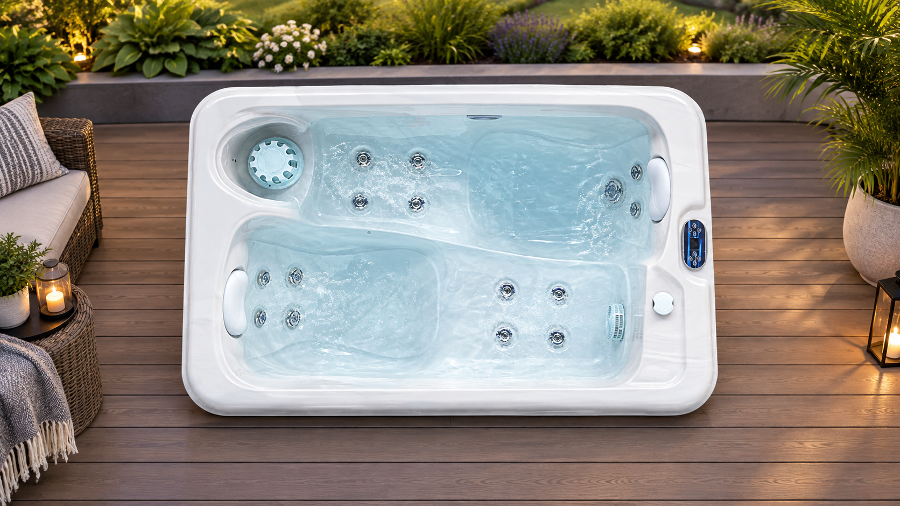
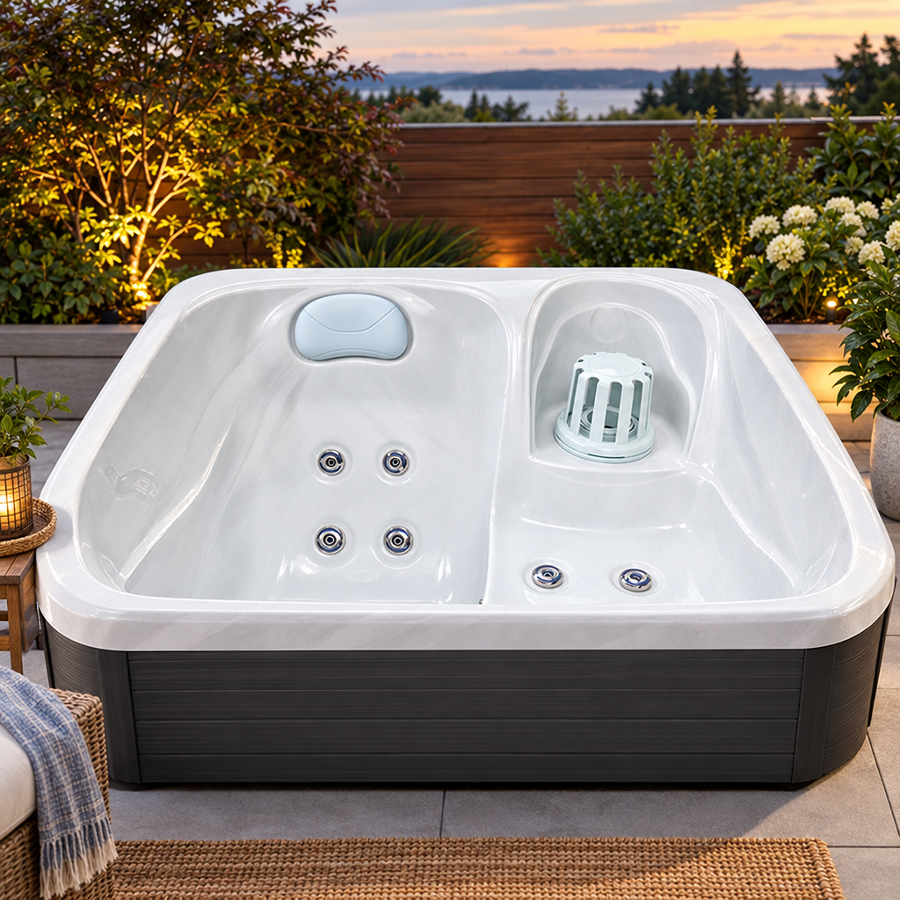
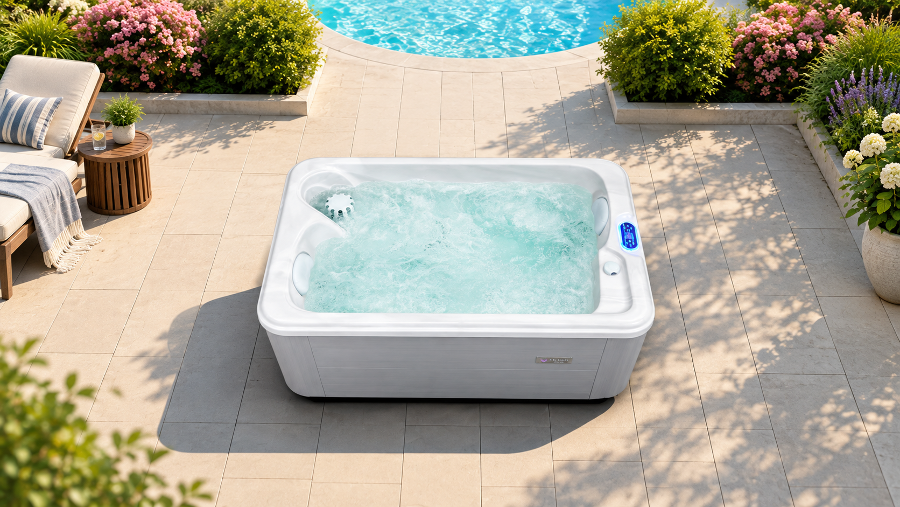
The VS-201C is a two-person rectangular spa within the Comfort Series, measuring 1,750 × 1,150 × 750 mm (approximately 6′ × 45″ × 30″). This slender layout fits neatly into tight residential locations, such as enclosed courtyards, narrow wooden decks, or condominium terraces where square tubs cannot clear structural entries.
Inside the porcelain-toned acrylic shell, the tub features two opposing full-body loungers. The two-lounger layout is intended to provide reclining space within the model’s compact rectangular footprint. The model has 15 targeted hydrotherapy jets positioned to support massage around the back and shoulder areas, according to the product description.
Power Profile and Electrical Verification Note
Prospective buyers must evaluate the electrical specifications of the VS-201C carefully before planning installation. The manufacturer lists the following mechanical specifications:
Total Power Supply: 4.5 KW
Integrated Electric Heater: 1 × 3 KW
High-Flow Water Pump: 1 × 2 HP
Dedicated Circulation Pump: 1 × 0.35 HP
Digital System Control: KL2022 Smart Keypad
The published page does not identify the supply voltage or installation amperage. The listed figures appear incompatible with a conventional 15A or 20A 110–120V receptacle if they represent simultaneous input demand. Confirm the nameplate voltage, maximum input current, breaker size, and wiring diagram with the manufacturer or a licensed electrician before installation.
Sanitation and Acoustic Comfort Controls
Water care in the VS-201C is managed by a multi-stage Hassle-Free Clean Water System that integrates multi-layer cartridge filtration, ozone oxidation, and UV sanitation. According to the manufacturer, this multi-barrier approach supports water clarity in a low-volume shell.
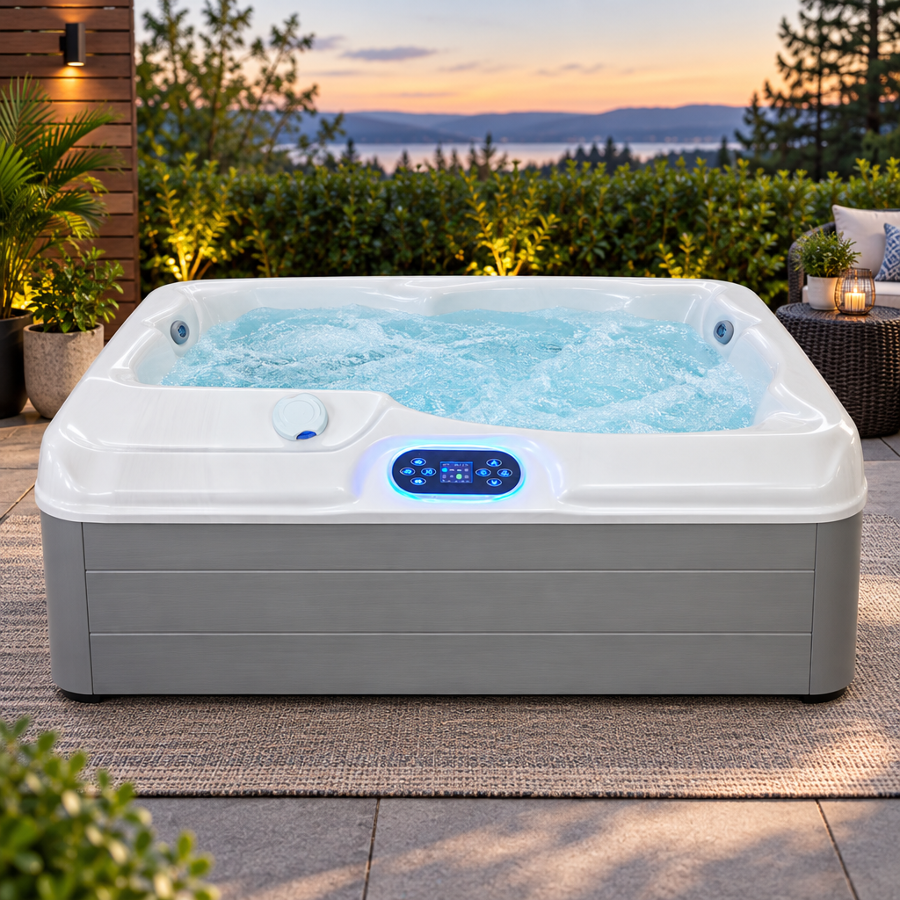
The cabinet uses an aluminum-plastic skirt available in Platinum or Midnight, paired with an integrated KL2022 digital keypad for temperature and pump cycles. Bluetooth surround speakers round out the equipment package. The 0.35 HP circulation pump is listed as part of the water-circulation system; the manufacturer does not provide a noise rating in the cited specifications.
Site Preparation, Structural Safety, and Electrical Installation Checklist
Proper site preparation prevents costly installation mistakes. Water is heavy, and supporting a filled hot tub requires careful structural planning before delivery day arrives.
Dead Load and Water Weight Calculations
Water weighs approximately 8.34 pounds per gallon (1 kilogram per liter). When planning a deck, rooftop, or balcony installation, calculating structural capacity must account for the empty shell weight, total water volume, and the combined weight of all bathers.
Obtain Dry Weight: Reference the manufacturer data tag for the empty shell and equipment weight.
Calculate Water Mass: Multiply total water capacity in gallons by 8.34 lbs (or liters by 1.0 kg).
Add Bather Allowances: Use the manufacturer’s actual filled weight and maximum occupant load rather than generic estimates.
Determine Footprint Area: Dividing total weight by footprint produces a preliminary average surface load, not a structural approval.
Secure Professional Approval: Have a licensed structural engineer inspect elevated wooden decks or balconies based on the deck or balcony’s framing, support points, and local code to confirm the structure can support concentrated dynamic loads.
Electrical Safety and GFCI Protection Standards
Outdoor spa installations must adhere to strict electrical clearance and safety codes. Moisture and electric current demand dependable ground-fault protection to prevent accidental shock hazards.
Use the separation, GFCI, receptacle, and disconnect requirements required by the applicable NEC edition, local code, and the manufacturer’s installation manual; have a qualified electrician verify the layout.
Use a dedicated circuit with no unrelated outlets, lights, or other loads, configured by a qualified electrician in accordance with the applicable code and the manufacturer’s wiring diagram.
Equip In-Use Covers: Fit the outdoor receptacle with a lockable, weatherproof enclosure that shields the plug from heavy rain.
Plan Service Access: Leave the service clearance specified by the manufacturer around removable cabinet panels, filters, controls, and equipment.
FAQs
What is the best 110 volt hot tub for a small space?
The ideal unit balances a compact external footprint with ergonomic internal seating and robust thermal insulation. For narrow patios, balconies, or courtyards, a rectangular two-person dual-lounger layout offers full-body hydrotherapy without consuming excessive yard area. Look for shells built with durable acrylic, dependable multi-stage sanitation, and equipment packs that operate efficiently on an isolated 15-amp or 20-amp branch circuit.
Can a 110V hot tub stay hot in the winter?
In cold weather, heat retention depends heavily on insulation, the cover, wind, and the control system. A well-insulated 110–120V spa with an effective cover can maintain comfortable soaking temperatures when idle. However, running high-speed massage jets may require the controller to reduce or shut down the heater, and water temperature can decline during extended sessions. Follow the model’s operating instructions; do not assume that low-speed circulation will preserve temperature on every spa.
Can I plug a 110 volt hot tub into an extension cord?
Do not use an extension cord unless the manufacturer’s installation instructions expressly permit it and specify the required cord. Long cord runs introduce electrical resistance that causes significant voltage drop, forcing the pump motor to draw excess current, run hotter, and wear out prematurely. Extension cords also degrade under outdoor exposure, increasing the risk of short circuits, tripping hazards, or fire. Using one may violate the installation instructions or affect warranty coverage; check the written warranty.
How long does it take for a 110V hot tub to heat up?
Heating time depends on the tub’s water volume, heater output, starting and target temperatures, ambient conditions, insulation quality, and cover effectiveness. Because standard 120V household lines typically restrict heating elements to lower wattages than 240-volt models, warming a newly filled tub from cold tap temperature to therapeutic heat can require extended operation with the thermal cover in place. Homeowners generally maintain their desired set point around the clock rather than attempting to heat the tub on demand.
Is the VS-201C a true 110V hot tub?
The published page does not identify the supply voltage or installation amperage. The listed figures appear incompatible with a conventional 15A or 20A 110–120V receptacle if they represent simultaneous input demand. Confirm the nameplate voltage, maximum input current, breaker size, and wiring diagram with the manufacturer or a licensed electrician before installation.
Conclusion
Choosing the best 110 volt hot tub comes down to matching realistic thermodynamic expectations with practical living needs. Plug-and-play spas provide an accessible path to hydrotherapy by eliminating costly electrical panel upgrades, making them an excellent choice for compact courtyards, rental properties, and mild climates. While standard-voltage systems require careful attention to circuit capacity, insulation, and control behavior, thoughtful seating designs deliver deeply rewarding relaxation. By evaluating structural weight capacities, verifying dedicated circuit requirements, and selecting a well-engineered shell, you can enjoy therapeutic warmth and comfort for years to come.
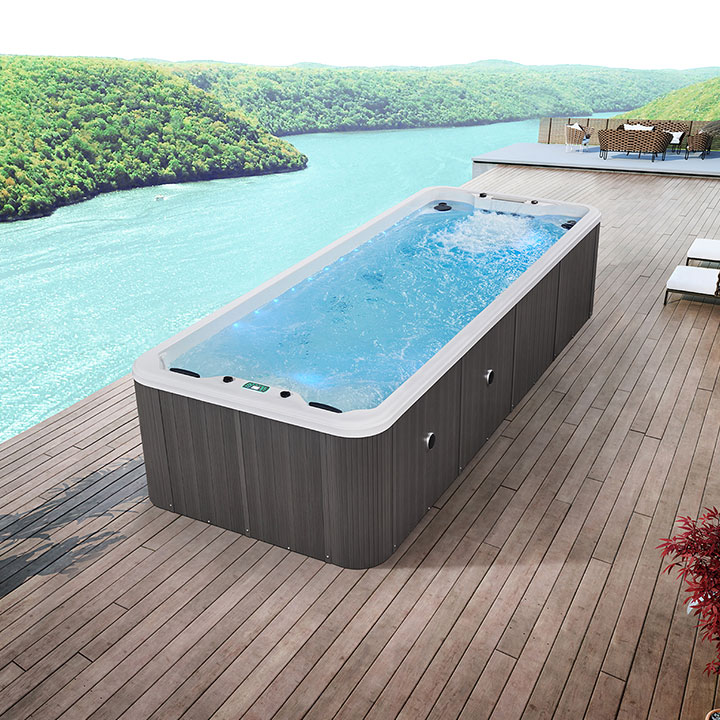
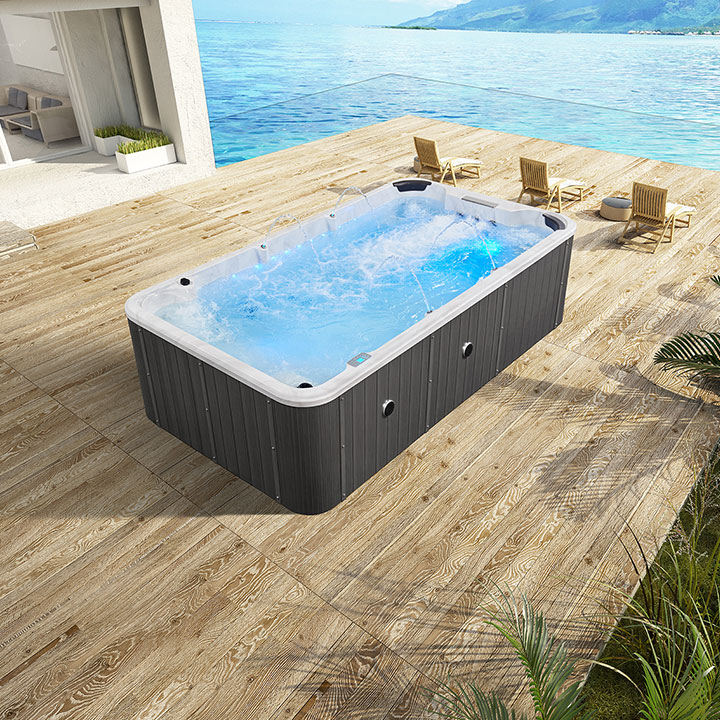
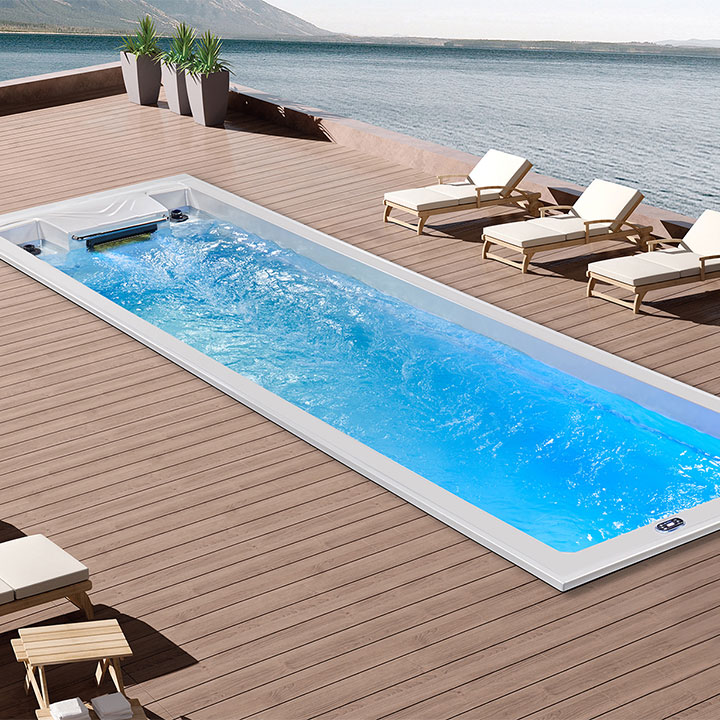
Victoria Star Swim Spa offers the perfect balance between exercise and relaxation, whether you want to swim for fitness or relax in the spacious seating.
Victoria Star Swim Spa offers the perfect balance between exercise and relaxation, whether you want to swim for fitness or relax in the spacious seating.