The 50 Degree Cold Plunge Guide: Physiology, Duration, and Equipment Selection
Home / News / The 50 Degree Cold Plunge Guide: Physiology, Duration, and Equipment Selection
October 29, 2026
Stepping into a 50 degree cold plunge sets off a quick exchange between the cold receptors in your skin and your nervous system. Many newcomers assume cold therapy only counts if the water is near freezing and crowded with ice. In practice, 50°F (10°C) sits inside the range commonly used in recovery research, and it is far easier to tolerate than water just above freezing. This guide covers the physiology, session timing, and equipment choices behind a 50 degree cold plunge, so you can build a routine you will actually keep.
Why a 50 Degree Cold Plunge Works Well for Recovery
Moderate Cold vs. Near-Freezing Water
Social media often turns cold water therapy into an endurance contest, with tubs full of floating ice at 34°F. Extreme cold can make you tense up and cut the session short before you settle into it. A 50 degree cold plunge equals 10°C, which falls within the 50°F to 59°F (10°C to 15°C) range that many post-exercise recovery studies use.
Water pulls heat from the body much faster than air at the same temperature, which is why a dip in 70°F water feels far colder than a walk in 70°F air. That is why 50°F water is cold enough to activate the cold receptors in your skin and narrow the blood vessels near the surface. The same rapid cooling explains why the experience feels intense, even when the temperature is well above freezing.
Cold water immersion at this temperature can still provoke involuntary gasping and hyperventilation, and individual tolerance varies widely. If you cannot control your breathing or start to feel unwell, exit the water immediately. The table below compares three broad temperature tiers as general reference points, not medical thresholds, because responses differ from person to person.
Hard to tolerate; higher risk of cold injury and nerve irritation
Moderate Cold Range
48°F – 52°F (9°C – 11°C)
Clear vasoconstriction, strong alertness response, but cold shock and breathing responses still occur
Responses vary; some individuals can sustain multi-minute sessions, while others cannot
Mild Cool Immersion
58°F – 65°F (14.5°C – 18°C)
Gentle cooling, smaller cold shock
Comfortable for long soaks, but the effect is milder at short durations
Vascular Constriction and Muscle Soreness
Hard resistance training or long runs create microscopic damage in muscle fibers. That damage brings swelling and the familiar ache known as delayed-onset muscle soreness (DOMS). When you use a 50 degree cold plunge for muscle recovery, the blood vessels near your skin and in the working muscles narrow. This reduces local blood flow.
After you leave the water and your body rewarms, those vessels open up again. Reviews of post-exercise studies generally report lower perceived soreness after cold water immersion than after passive rest, although results vary with temperature, duration, and the type of exercise. The mechanisms behind these findings are still being investigated, so treat cold immersion as one tool among several for managing post-exercise discomfort.
Nervous System Response at 50°F
Cold immersion also affects the autonomic nervous system. In the first seconds of a 50 degree cold plunge, skin receptors send strong signals to the brain, and research suggests cold exposure raises norepinephrine levels. Many people report feeling more alert and less mentally foggy afterward. Product materials for the C02 also describe cold exposure as stimulating natural endorphin release, which may help lower stress and improve mood.
Breathing is the lever you control. The initial cold shock pushes you toward a fight-or-flight response, but slow, deliberate exhalations help your body settle. Over several weeks, practicing this in 50°F water may improve how calmly you respond to stress. Treat that as a trainable skill rather than a guaranteed result, and remember that cold immersion does not replace medical treatment for anxiety or mood disorders.
How Long and How Often to Use a 50 Degree Cold Plunge
Session Duration by Experience Level
How long to stay in a 50 degree cold plunge depends on your cold adaptation history, body size, and weekly training load. The ranges below are illustrative examples, not validated or universally safe doses, and they should not be taken as medical recommendations. Individual cold-water immersion responses depend on the person and conditions, so shorten any session if you feel pain, numbness, or dizziness, and consider seeking individualized medical guidance before starting.
Beginner Acclimation (1 to 2 minutes): New users should concentrate on getting through the initial gasp reflex. Leave once your breathing has steadied, and add time gradually over several sessions. Some people may need to start with even shorter exposures and build up slowly.
Daily Wellness and Mental Clarity (3 to 5 minutes): Many experienced users settle in this window. Some popular protocols aim for roughly 11 minutes of total cold exposure per week, spread across several sessions, though the evidence behind specific totals is still developing. Your own tolerance and goals should guide your practice.
Post-Training Recovery (5 to 10 minutes): After a tournament, a long race, or a heavy training block, athletes often stay longer. Longer sessions are not inherently better for recovery, and the optimal duration depends on the individual and the type of exercise. Listen to your body and adjust accordingly.
Timing Your Plunge Around Training
When you plunge matters almost as much as how long you stay. If your goal is endurance conditioning, quick turnaround between events, or relief after high-impact work, a plunge soon after exercise fits well. The best timing differs from person to person, so experiment to find what supports your recovery without leaving you excessively fatigued.
Strength and muscle-growth goals call for more care. Some research suggests that cold water immersion right after resistance training may blunt long-term gains in muscle size and strength, possibly by dampening the inflammatory signals that promote muscle adaptation. On heavy lifting days, consider plunging before the workout, or waiting several hours afterward so the acute post-exercise response can proceed.
Safe Entry, Breath Control, and Rewarming
A repeatable routine makes cold immersion easier to sustain and gives you a calm structure to lean on when the cold hits. Following the same sequence each time also helps you notice how your body responds from one session to the next. Use the steps below whenever you use your tub, and adjust them to suit your own tolerance and comfort level.
Pre-Immersion Breathing: Stand beside the tub and take three slow breaths in through your nose and out through your mouth. Avoid hyperventilating beforehand, since that can leave you lightheaded and may increase the risk of losing consciousness in the water.
Controlled Entry: Step onto the internal seating step and lower yourself gradually, ideally while exhaling. A slow, steady exhale can help you get past the urge to gasp, though you may still experience an involuntary breathing response.
Early Breath Control: Rest your hands on your thighs instead of clenching your fists, and try to breathe in through your nose and out slowly through your mouth. Fast, gasping breathing can continue for some time after entry, and it is not a measure of success. Exit if your breathing remains uncontrolled, if panic develops, or if you feel unwell. Do not rely on a fixed time as your safety threshold.
Water Movement: Staying still lets a thin layer of water near your skin warm slightly, which softens the sensation. Moving your legs or using water circulation disturbs that layer and feels colder. Choose the approach that matches your session goal.
Gradual Rewarming: Step out, dry off, and put on warm clothes. Light movement helps you rewarm naturally. If you feel faint or intensely cold, take a warm shower rather than forcing it, and seek medical attention if symptoms persist.
Why Manual Ice Hauling Struggles to Hold 50°F
The Hidden Cost of Bagged Ice
Many people start with a stock tank or a bathtub filled with tap water and store-bought ice. The approach looks cheap, but tap water in warm months can come out at 70°F to 80°F. A simple heat calculation shows that cooling a 320-liter tub from about 75°F to 50°F takes roughly 100 pounds (around 45 to 50 kg) of ice, before counting heat gained from the air. That means buying, carrying, and storing ten or more standard bags of ice for a single session.
Over weeks, a restorative habit turns into a chore that is easy to skip on a busy morning. Ice also melts unevenly in an uninsulated tub, so the water temperature drifts during the session, and you end up guessing whether you are actually at 50°F. Thermal stratification compounds the problem, as warmer water rises and colder water sinks, leaving uneven cooling across the basin.
Active Circulation and Heat Pump Regulation
Stable temperatures call for controlled cooling and moving water. A circulation pump refreshes the water that touches your skin, which makes a moving 50 degree cold plunge feel colder than still water at the same reading. It also helps the whole tub stay at a more uniform temperature by reducing thermal stratification.
Pairing that circulation with an integrated heat pump control system addresses seasonal swings as well. Patio temperatures change between July and January, and automated temperature control keeps the tub close to your chosen setpoint without manual intervention. Your actual setpoint range and cooldown time will depend on the model and your local climate, so confirm those figures with the manufacturer before you buy.
Setting Up a Dedicated 50 Degree Cold Plunge: The C02 Tub
Temperature Control and Low-Energy Circulation
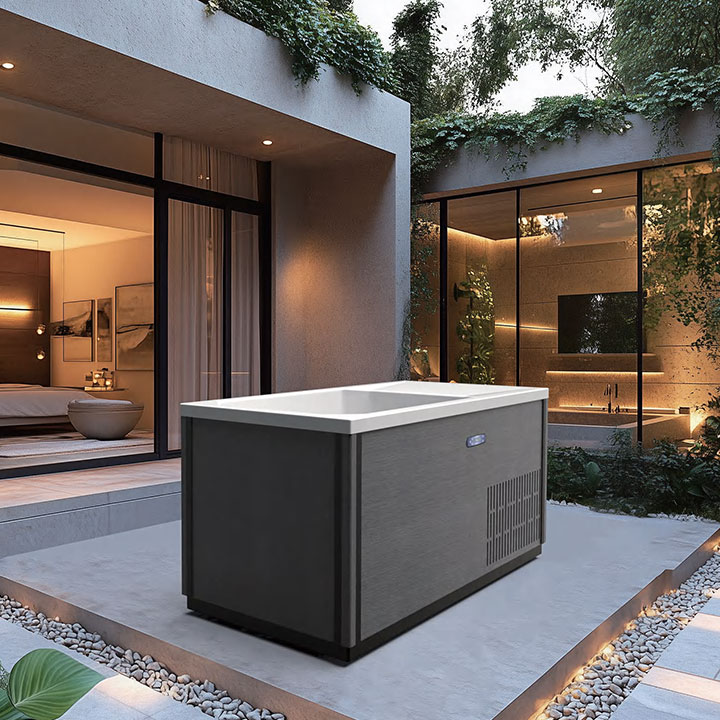
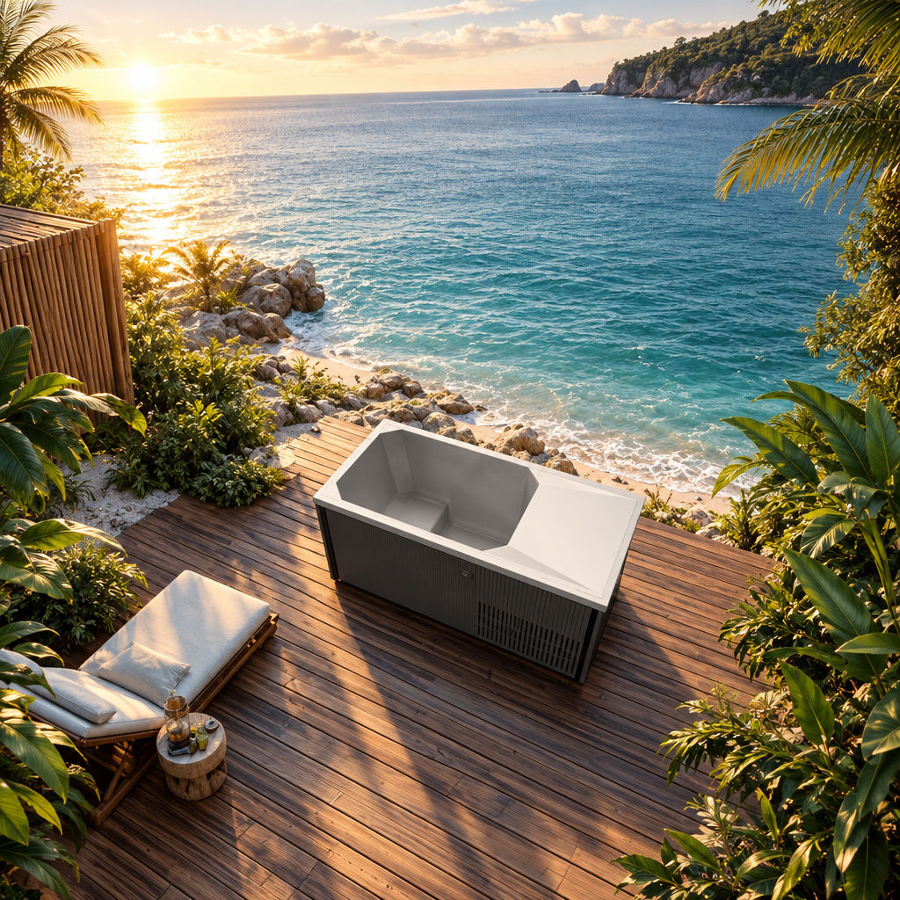
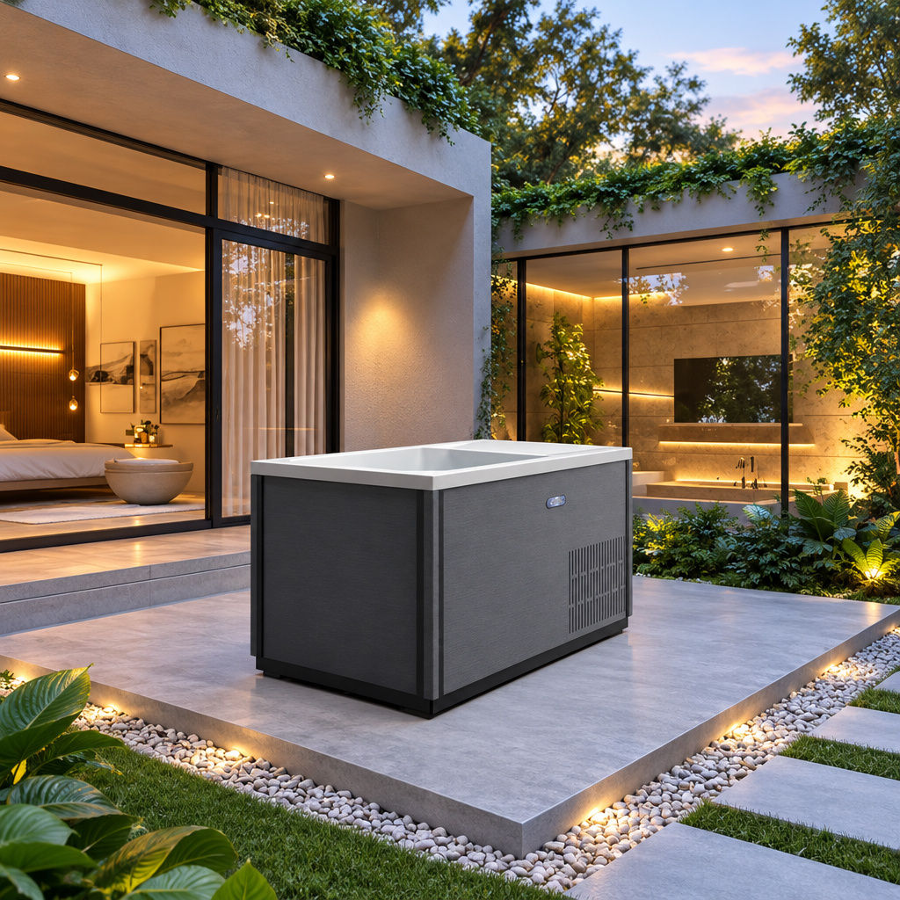
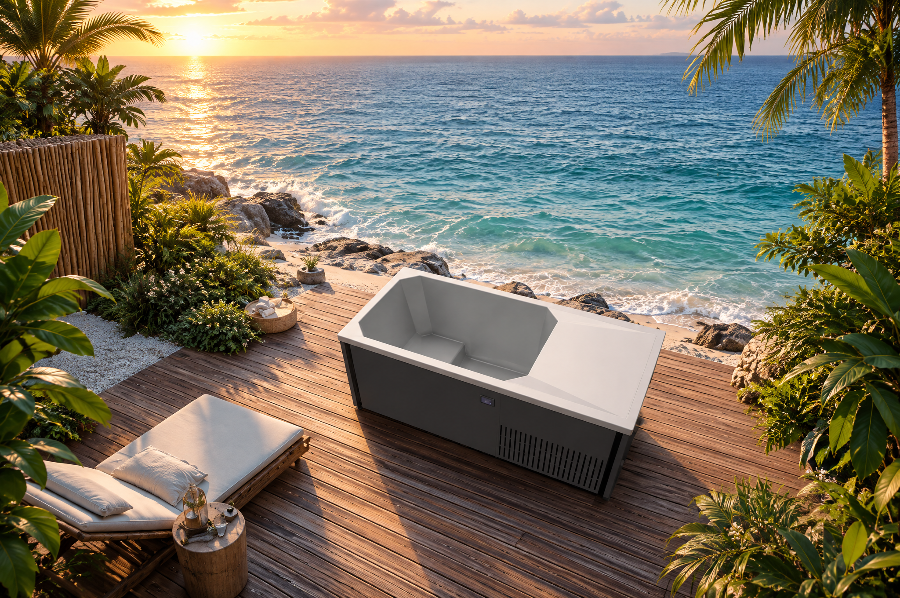
Foshan Gaoming Shiyi Sanitary Ware Technology Co., Ltd. builds hot tubs and swim spas under its own brand, Victoria Star. For us, the Outdoor Cold Plunge Tub C02 was designed to replace ice runs with a self-contained system for daily cold immersion. It pairs a heat pump, a brushless pump, and an insulated cover in one unit, and it is intended for use at home, in athletic training facilities, or in commercial wellness settings where a consistent water temperature matters.
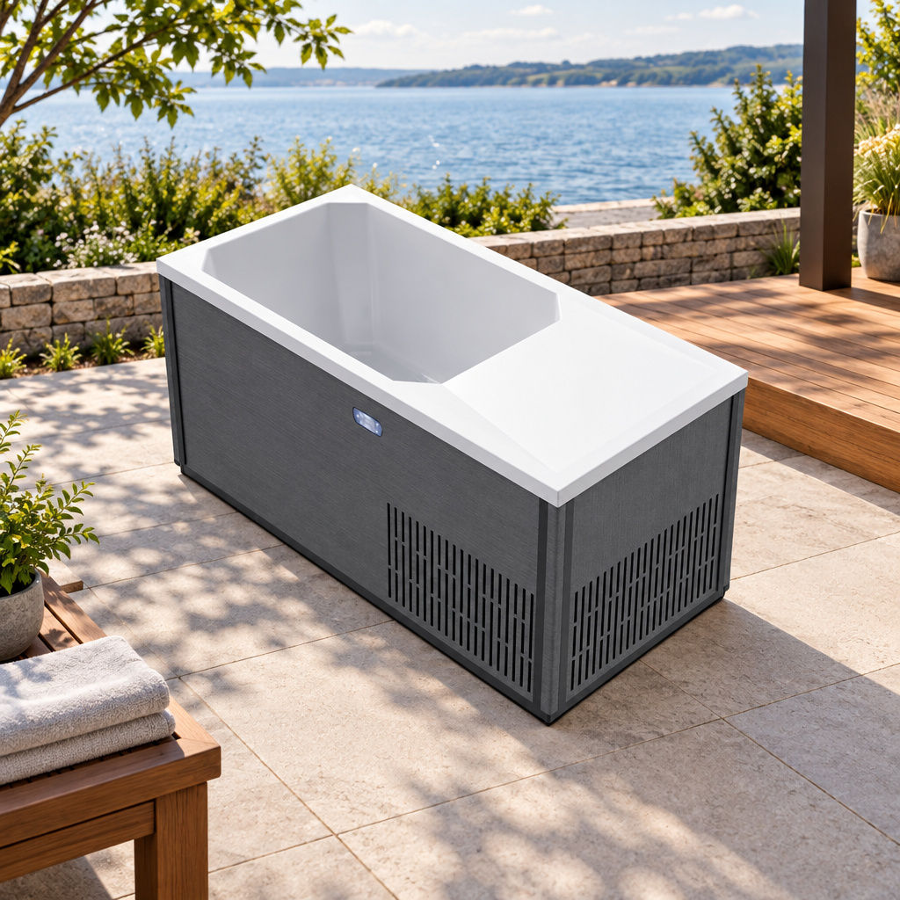
According to the C02 product data, the tub uses an integrated 900 W heat pump control system and a 54 W brushless pump, with a rated power supply of 0.954 kW. The product materials describe this setup as providing reliable temperature regulation with low energy consumption. A digital control interface on the exterior lets you adjust settings from outside the tub, and an insulated cover is included for use between sessions. The cover helps the water hold its temperature when the tub is not in use, reducing the energy required to maintain your setpoint.
Basin Design and Weather-Resistant Materials
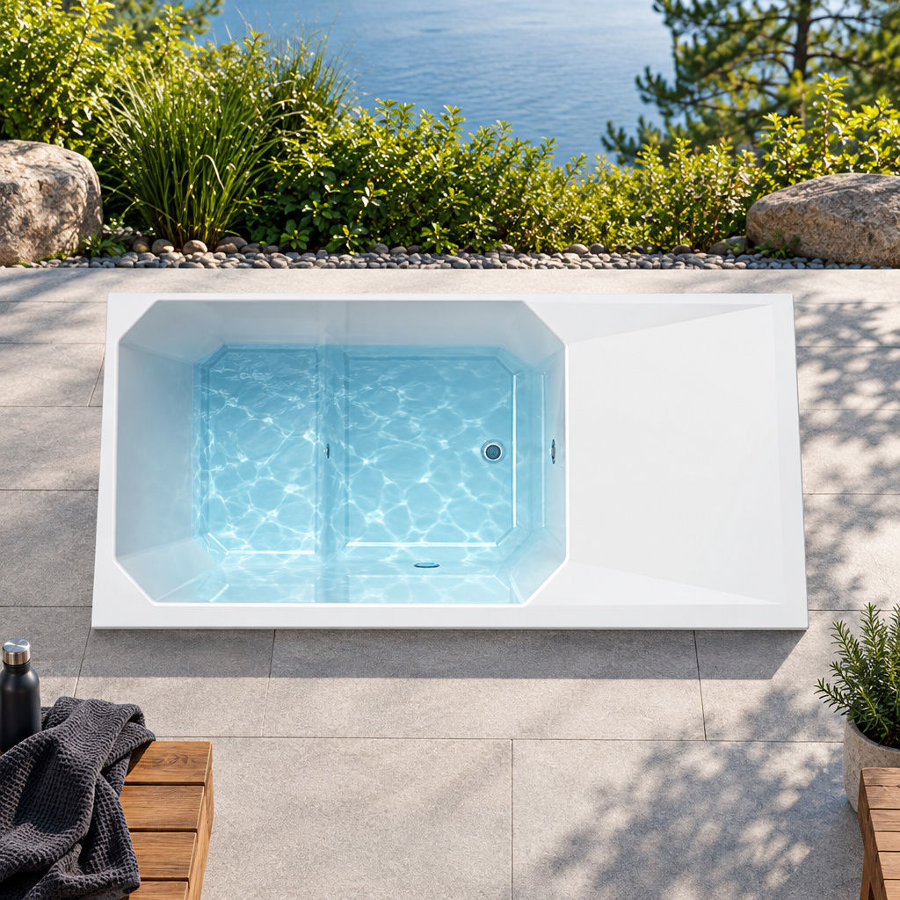
A plunge tub should fit an adult comfortably without holding more water than necessary, since every extra liter takes more energy to cool. The C02 measures 1695 mm × 830 mm × 850 mm (about 6 ft × 33 in × 34 in) and holds 320 liters. Inside, an integrated seating step makes it easier to get in and settle into position. The step also provides a stable surface for entry and exit, which is especially important when your hands and feet are cold.
A tub that lives outdoors also needs materials that suit weather exposure. The C02 uses a high-grade porcelain acrylic shell in white, with a smooth, glossy finish. Its exterior cabinet is a weather-resistant composite offered in Platinum or Midnight, with ventilation grilles along the lower panels for airflow around the heat pump components. The product data describes the exterior as a weather-resistant composite cabinet with vented panels, so confirm care and maintenance guidance with the manufacturer.
Technical Parameter
Outdoor Cold Plunge Tub C02
Model
C02
Dimensions (Metric)
1695 mm × 830 mm × 850 mm
Dimensions (Imperial)
6 ft × 33 in × 34 in
Water Capacity
320 L
Net Weight / Gross Weight
140 kg / 180 kg
Shell Material and Color
Acrylic, White / Porcelain
Cabinet Colors
Platinum, Midnight
Control System
Heat Pump
Heater Output
900 W
Brushless Pump
54 W
Power Supply
0.954 kW
Insulated Cover
1 piece included
Site Preparation for Patios, Training Centers, and Spas
The C02 is intended for backyard patios and decks, private wellness courtyards, athlete recovery centers, ice therapy studios, boutique spas, and resort villas. Whichever setting you choose, a few checks before delivery protect both the structure and the equipment. Planning the location, load, airflow, and drainage in advance makes installation smoother and helps you avoid problems once the tub is filled.
Structural Load: The tub weighs 140 kg empty, and 320 liters of water adds roughly 320 kg. With one adult inside, expect a combined load of about 550 to 600 kg. Have a qualified structural engineer or contractor confirm that your pad, courtyard, or deck can carry that weight safely, accounting for the concentrated footprint and any dynamic loads from entry and exit.
Ventilation Clearance: Heat pump systems generally need airflow to exchange heat with the surrounding air. Leave open space around the vented panels and follow the manufacturer’s installation guidance so warm exhaust air does not recirculate back into the intake. Poor ventilation can reduce efficiency.
Shade and Cover Use: Placing the tub under a pergola or roof overhang reduces direct sun on the water, which lowers the heat load the system must remove. Closing the insulated cover after each session keeps out debris, reduces evaporation, and helps the water hold its temperature between uses.
Drainage Access: Position the unit near a floor drain or a suitable runoff area, so water changes through the drain fitting stay quick and tidy. Confirm that local codes allow outdoor drainage of pool or spa water, and avoid draining onto landscaping or surfaces that could be damaged by large volumes of water.
Frequently Asked Questions About a 50 Degree Cold Plunge
Is a 50 degree cold plunge cold enough to get the benefits?
For most people, 50°F (10°C) is cold enough to narrow blood vessels near the skin and produce a strong alertness response. Many recovery studies use water between 50°F and 59°F, partly because it is easier to tolerate than near-freezing water and allows longer sessions. Some studies report reduced perceived post-exercise soreness after cold-water immersion, but results vary and the evidence does not establish benefits for most wellness goals. If you are seeking specific therapeutic outcomes, consult a sports medicine professional or physical therapist to tailor the protocol to your needs.
How long does a 50 degree cold plunge take to cool down and hold its temperature?
Cooldown time depends on your starting water temperature, the outdoor climate, and the equipment. Ask the supplier for the achievable setpoint range and typical cooldown time for your conditions. Once the water is at your setpoint, keeping the insulated cover closed helps the 900 W heat pump and 54 W brushless pump maintain it with minimal energy draw. In hot climates or during summer months, the system may run more frequently to counteract ambient heat gain, while in cooler weather the tub may hold temperature with less frequent cycling.
Should I submerge my head or just up to my neck?
Most recovery and wellness routines keep the water at neck or collarbone level. Many people find full head submersion in 50°F water very uncomfortable, and it adds cold stress that is unnecessary for most goals. Submerging your head can also cause discomfort in the ears and sinuses, and may trigger headaches or dizziness in some individuals. If you want to try it, build up slowly and stop if you feel dizzy, get a headache, or experience any unusual sensations. Always have a partner present when experimenting with full submersion.
Who should talk to a doctor before starting?
Cold immersion causes rapid narrowing of blood vessels and a temporary rise in blood pressure. People with high blood pressure, heart rhythm problems, heart disease, Raynaud’s phenomenon, or cold urticaria should speak with a physician before plunging. The same applies during pregnancy, since the cardiovascular stress from cold immersion may pose risks. Never plunge alone if you are new to it, and never after alcohol, since alcohol impairs your ability to sense cold and increases the risk of hypothermia. If you have any chronic health condition or take medications that affect circulation or heart function, seek medical clearance first.
Conclusion: Making the 50 Degree Cold Plunge a Daily Habit
Adaptation does not come from one heroic dip in freezing water. It comes from showing up several times a week for months. A 50 degree cold plunge gives you cold that is strong enough to feel, yet manageable enough to repeat for many people, which suits muscle recovery, stress management, and a sharper start to the day. Pair that routine with a thermally controlled vessel like the 320-liter C02 tub, and the daily ice runs disappear, leaving cold water immersion as a habit you can keep.
Victoria Star Swim Spa offers the perfect balance between exercise and relaxation, whether you want to swim for fitness or relax in the spacious seating.
Victoria Star Swim Spa offers the perfect balance between exercise and relaxation, whether you want to swim for fitness or relax in the spacious seating.