Designing a Custom Outdoor Spa for Small Backyards and Private Terraces
Home / News / Designing a Custom Outdoor Spa for Small Backyards and Private Terraces
September 29, 2026
Anyone shopping for a custom outdoor spa usually starts with the same constraint: limited space and a strong opinion about aesthetics. A compact hot tub has to fit a patio corner without looking like an afterthought, and it still needs enough hydrotherapy power to justify the investment. That tension between footprint and performance shapes almost every decision buyers make, from shell size to jet count to cabinet finish.
Why Compact Doesn’t Mean Compromised
Smaller outdoor spas often get dismissed as entry-level, but that assumption misses how much engineering goes into a tight footprint. A 3-person layout has to distribute weight, water volume, and jet placement within a fraction of the space a 6-person unit enjoys. Every seat position and jet angle competes for the same limited real estate.
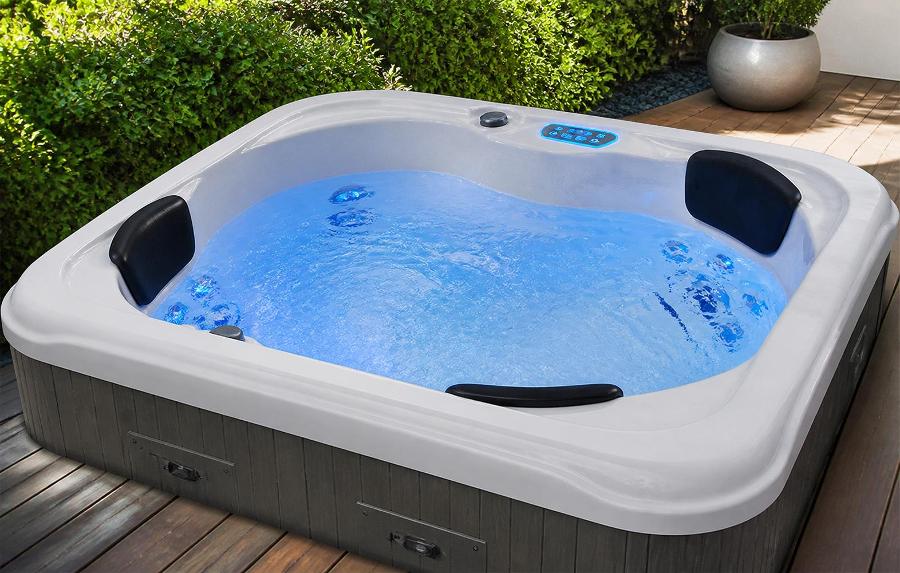
The VS-302L illustrates this balance well. At 2130 mm by 1660 mm by 800 mm, it occupies roughly the same area as a small dining table, yet it packs 54 hydrotherapy jets across two upright seats and one full-body lounger. That density matters more than the raw jet count. Jets clustered without regard to anatomy just churn water; jets mapped to shoulders, lower back, and calves actually relieve tension where people carry it.
Matching Jet Configuration to Real Muscle Groups
Hydrotherapy works because targeted water pressure increases local circulation and interrupts the pain-tension cycle in soft tissue. That’s a well-documented physiological response, not a marketing claim, but it only holds up if jet placement follows anatomy rather than symmetry for its own sake.
In a compact 3-person configuration, designers typically split the load this way:
Upright seats carry jets aimed at the shoulder blades, mid-back, and hip flexors, suited to shorter soaks after a workday.
The full-body lounger stretches jet coverage from the calves through the lower back, better for longer sessions where the user is fully reclined.
Footwell jets target plantar fascia and ankle circulation, often overlooked in smaller spas that skimp on footwell design to save space.
This is where a custom outdoor spa earns its price premium over a generic off-the-shelf tub. Buyers aren’t just choosing a bigger number of jets; they’re choosing where those jets sit relative to how they actually sit and lie down.
Pump Sizing: The Part Nobody Asks About Until It Fails
Jet count gets all the attention in showroom conversations, but pump sizing determines whether those jets deliver consistent pressure or sputter under load. A single undersized pump asked to run 54 jets simultaneously will lose pressure the moment more than one person moves in the tub.
The VS-302L addresses this with a dual-pump arrangement: a 3 HP pump and a 2 HP pump working alongside a dedicated 0.35 HP circulation pump. The circulation pump runs continuously at low draw to keep water moving through the filtration system without cycling the larger jet pumps on and off all day. That separation matters for two reasons.
It reduces wear on the high-horsepower pumps, since they only engage during active jet use rather than running around the clock.
It keeps water filtered and balanced between soaks, so the spa doesn’t need a lengthy re-circulation cycle before every use.
Total power draw for this configuration sits at 6.95 KW, which is a number worth checking against your home’s electrical panel and local circuit requirements before installation, not after delivery.
Shell Material and Weather Exposure
An outdoor spa lives outside year-round, which means UV exposure, temperature swings, and moisture cycling all act on the shell simultaneously. The VS-302L uses an acrylic shell paired with an aluminum-plastic composite skirt, a combination chosen specifically because acrylic resists UV yellowing better than many alternative shell materials while remaining smooth enough for comfortable, non-abrasive contact.
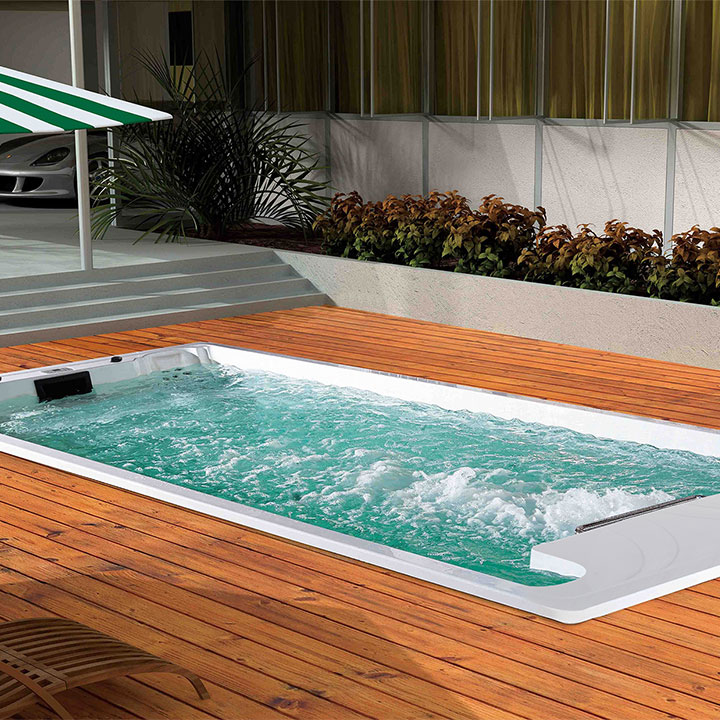
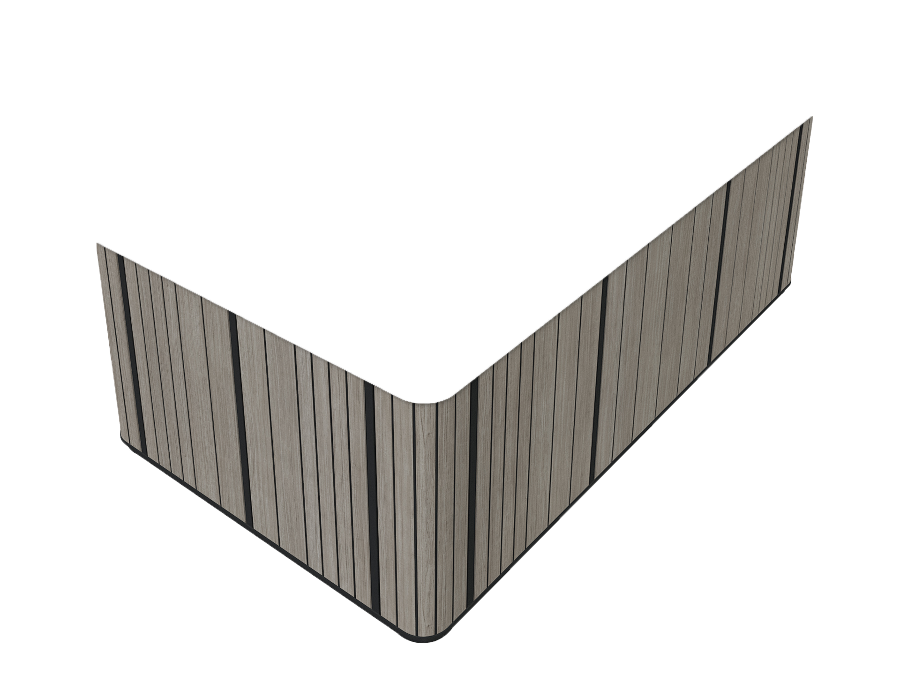
The skirting matters just as much as the shell, since it takes the brunt of rain, humidity, and direct sun on vertical surfaces. Composite skirting avoids the rot and warping that plague wood-clad spas left outdoors without a covered structure. Buyers installing near flower beds or dense landscaping, as shown in typical garden patio setups, should factor in that foliage retains moisture against the cabinet base longer than open decking does.
Cabinet Finish
Texture
Suggested Setting
Platinum
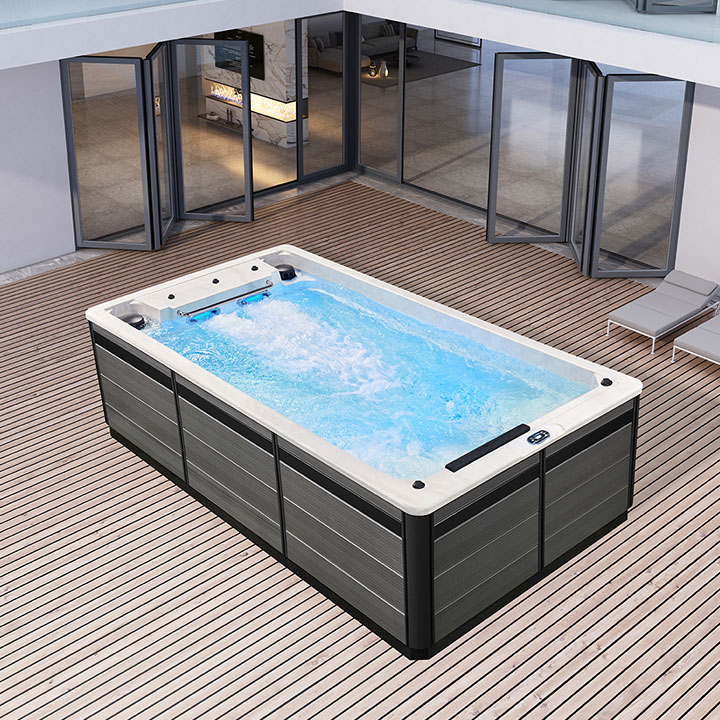
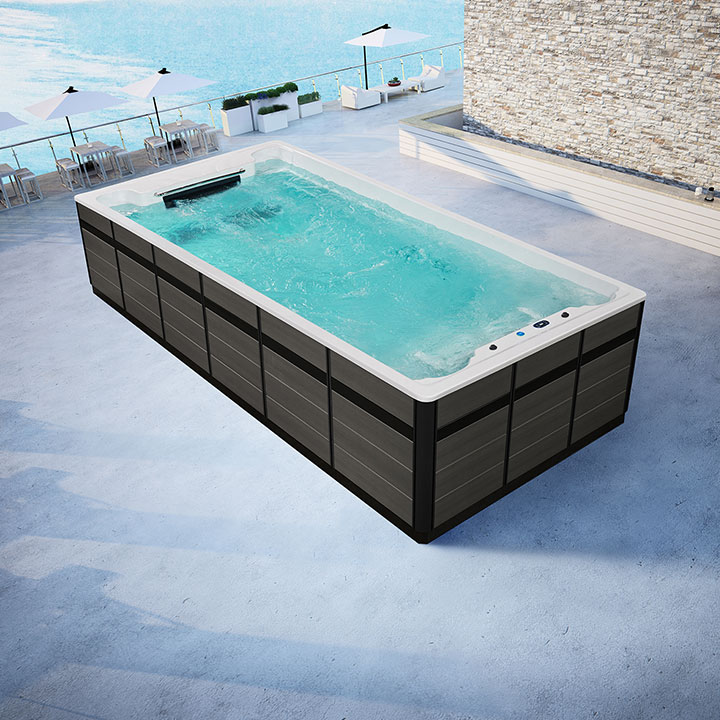
Vertical grey woodgrain composite
Modern courtyards, stone or concrete patios
Midnight
Deep charcoal-black composite slats
Minimalist decks, evening-lit terraces
Water Care Without the Daily Chore List
Ask any spa owner what they’d change after a year of ownership, and water maintenance comes up more often than jet strength. A custom outdoor spa should reduce that burden, not add to it. The VS-302L includes an intelligent filtration and purification system designed to hold water balance between manual checks, which shortens the routine to periodic monitoring rather than constant intervention.
That said, no filtration system replaces basic chemistry checks entirely. Owners still need to test pH and sanitizer levels on a regular schedule; smart filtration reduces how often adjustments are necessary, not whether they’re necessary at all.
Lighting and Audio: Function Dressed as Ambiance
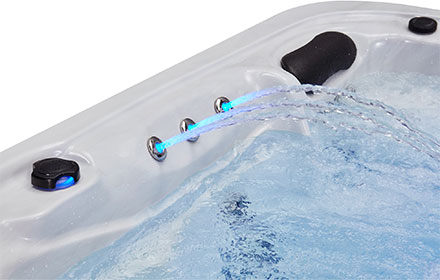
LED lighting in a hot tub isn’t purely decorative, though it’s easy to treat it that way. Underwater LEDs improve nighttime visibility of footwells and seat edges, which reduces the chance of a misplaced step in low light. The VS-302L integrates multi-point LED lighting both inside the shell and along the skirt perimeter, plus three stainless steel mini-waterfall jets lit in cyan-blue near the headrest.
Paired with a Bluetooth audio system running four AV speakers through the KL2022 smart keypad, the lighting and sound together shift the spa from a therapy appliance into something closer to an evening ritual. That distinction matters for how often people actually use the spa. A tub that only gets used after a specific injury or workout sees far less return on investment than one that becomes part of a regular wind-down routine.
Where a Compact Spa Fits Best
Not every outdoor space suits the same spa footprint. A compact 3-person unit like this tends to work best in:
Backyard wooden decks with limited square footage
Courtyard or villa wellness corners where the spa serves as a focal point rather than the centerpiece
Rooftop or private terrace installations where structural load limits favor a lighter, smaller unit
Boutique rental properties needing a premium amenity without occupying a large footprint
Larger 6- or 8-person spas make sense for households that regularly entertain groups, but they demand more structural support, more electrical capacity, and considerably more deck space. For a couple or small family prioritizing daily use over group capacity, the smaller footprint is usually the smarter long-term choice.
Frequently Asked Questions
Does a compact hot tub deliver weaker hydrotherapy than a larger one? Not necessarily. Jet count and pump horsepower matter more than shell size. A well-engineered compact spa with properly sized pumps can deliver stronger, more consistent pressure per jet than a larger spa running the same pump on more jets.
How much clearance does installation typically require around the unit? Beyond the shell’s footprint, installers generally recommend service access on at least one side for pump and equipment maintenance. Check local electrical and building code requirements before finalizing deck plans.
Can the cabinet finish be changed after purchase? Cabinet finishes like Platinum or Midnight are typically selected at the point of customization. Confirm with your supplier whether panel swaps are possible post-installation, since this varies by manufacturer.
Is the 6.95 KW power draw comparable to a home hot tub is typical range? It falls within the common range for spas of this seating capacity and jet count, though exact draw depends on how many pumps run simultaneously. Always verify against your electrician’s assessment of your home’s circuit capacity.
Making the Decision That Fits Your Space
Choosing a custom outdoor spa isn’t about finding the model with the highest jet count or the flashiest lighting package. It’s about matching pump capacity, jet placement, and shell durability to the specific space and climate the spa will actually live in. A compact 3-person configuration, done well, can outperform a larger spa that’s underpowered for its own footprint.
For households working with a patio, terrace, or villa garden rather than a sprawling backyard, a right-sized custom outdoor spa built around targeted hydrotherapy, dual-pump reliability, and weather-resistant materials tends to deliver better long-term satisfaction than chasing maximum seating capacity. The goal isn’t the biggest tub that fits. It’s the one that gets used most often.
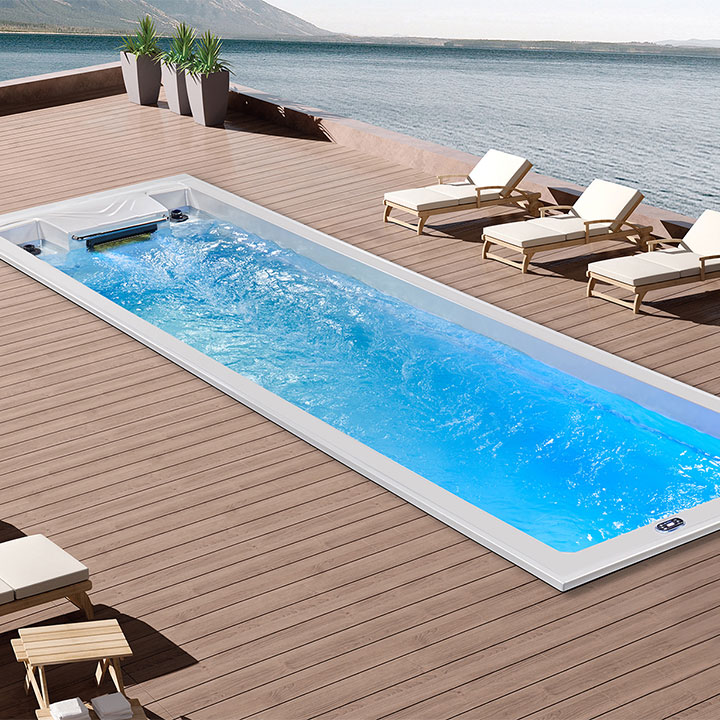
Victoria Star Swim Spa offers the perfect balance between exercise and relaxation, whether you want to swim for fitness or relax in the spacious seating.
Victoria Star Swim Spa offers the perfect balance between exercise and relaxation, whether you want to swim for fitness or relax in the spacious seating.