Designing a Corner Outdoor Spa: What Actually Matters for Recessed Installations
Home / News / Designing a Corner Outdoor Spa: What Actually Matters for Recessed Installations
September 30, 2026
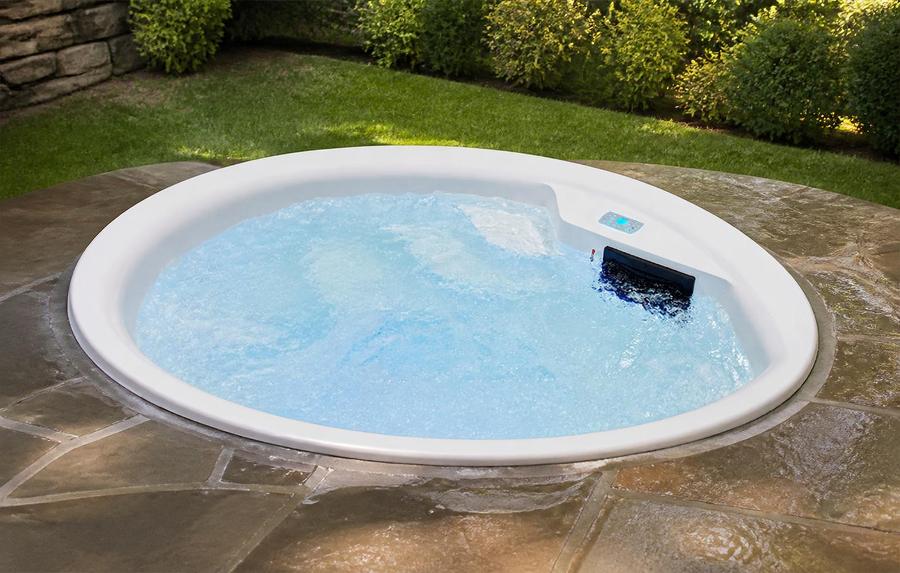
A corner outdoor spa solves a problem that most standalone hot tubs create in the first place: wasted square footage. When a spa sits above grade in a backyard corner, it eats into sightlines, blocks foot traffic, and often looks like an appliance dropped onto a patio rather than a feature built into it. Recessed, in-ground installation changes that equation. The unit sinks into the landscape instead of interrupting it, which is why corner placements have become one of the more practical layouts for compact or irregularly shaped yards.
Why Corner Placement Solves a Real Space Problem
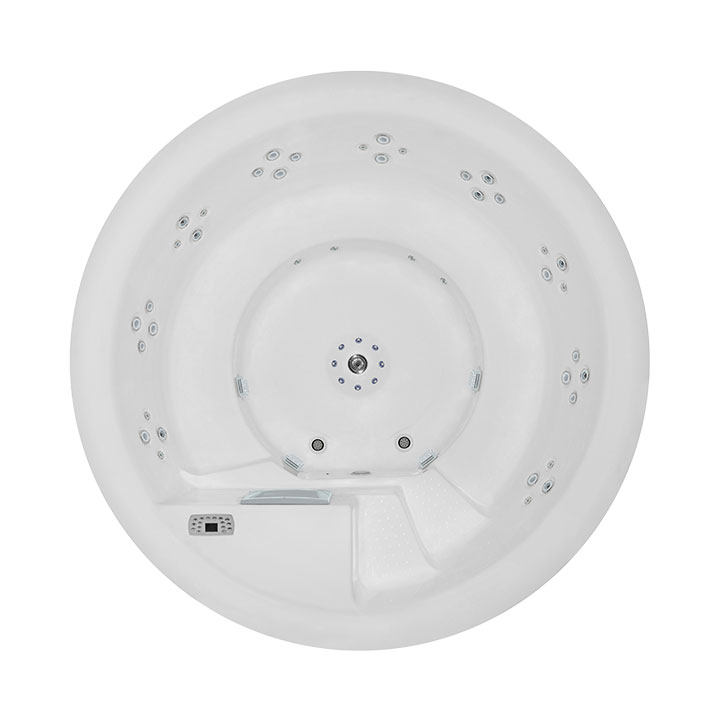
Most backyards have at least one underused corner, usually where two fence lines meet or where a patio narrows into unusable dead space. That geometry is actually well suited to a circular in-ground spa, since the round footprint tucks into the angle without requiring a rectangular carve-out. A sunken installation like the VS-PC301 uses a 3000 × 1050 mm circular shell, which fits into corner zones that a square deck box never could.
There’s also a drainage and grading reason corners work well. Corners are frequently the lowest point of a sloped yard, and in-ground spas already require excavation and a level concrete or gravel base. Builders can use that natural low point to their advantage rather than fighting it, cutting down on the fill material needed elsewhere on the property.
What "In-Ground" Really Means for a Spa Shell
In-ground doesn’t mean the acrylic shell is buried in soil. It means the shell sits inside a built structure, usually a wood, tile, or stone surround, with the rim finished flush to the deck or patio surface. The plumbing, pumps, and equipment pad live in an accessible cavity below or beside the shell, not underground in the literal sense.
This distinction matters because it affects maintenance access. A poorly planned recess with no equipment door means a technician has to cut into decking just to service a pump. Anyone planning a corner installation should confirm equipment access before pouring concrete, since retrofitting access panels afterward is expensive and disruptive.
Sizing the Spa to the Corner, Not the Other Way Around
Corner spots vary a lot in usable diameter, so sizing decisions should start with the footprint, not the seat count. A 10-foot diameter shell, such as the VS-PC301’s 3000 mm design, needs roughly a 12-foot square corner once you account for the surrounding deck lip and step access. Trying to force a large-capacity spa into a tight corner usually results in a cramped walkway or a step that overhangs a fence line.
For reference, here’s a general sense of how corner space tends to map to seating capacity in circular in-ground spas:
Shell Diameter
Approx. Corner Footprint Needed
Typical Seating
2100–2400 mm
8–9 ft square
4–5 person
2700 mm
10 ft square
6–7 person
3000 mm
12 ft square
8–9 person
A 9-person model like the VS-PC301, with its stepped bench seating and dedicated entry step, is realistic for larger corner lots, resort terraces, or family backyards where the spa doubles as a social gathering point rather than a solo soak.
Hydrotherapy Layout Matters More Than Jet Count Alone
Marketing around spas tends to fixate on total jet count, but placement matters just as much as quantity. In a corner unit, jets need to be distributed around the full perimeter, since bathers will be seated on multiple sides rather than facing one direction like in a rectangular tub. According to the VS-PC301’s product specifications, 53 jets are spread across the perimeter backrests and base footwell, targeting the neck, shoulders, back, and waist regardless of which seat someone chooses.
That radial jet distribution is a direct consequence of the circular shell shape. A round spa doesn’t have a "front" seat and "back" seat the way a rectangular one does, so every position needs comparable hydro-massage coverage to avoid some seats feeling like an afterthought.
Power and Plumbing Considerations Before You Dig
Because in-ground installation involves permanent plumbing runs and often longer cable paths from the electrical panel to a corner location, power planning deserves attention early, not after the hole is dug. A multi-pump system draws meaningfully more current than a simple single-pump portable spa, so an electrician needs to confirm panel capacity before construction begins.
The VS-PC301, as an example of what a full-featured system draws, is specified with:
A 7.15 kW total power supply across all components
Two 2 HP water pumps for the massage jet circuit
One 1 HP circulation pump for filtration
One 0.5 HP air pump for the air-injection jets
A 3 kW heater for temperature maintenance
Corner locations are sometimes the farthest point on the property from the main panel, so voltage drop over a long cable run is worth checking with an electrician rather than assuming the same wire gauge used for a closer installation will work.
Water Quality Is Harder to Ignore in a Fixed Installation
Unlike a portable spa that can be drained and moved, an in-ground unit is a long-term fixture, so water chemistry and filtration matter more, not less. The multi-stage purification system used in the VS-PC301, described in its product specifications as reducing impurities, bacteria, and odor buildup, can lessen how often the full water volume needs draining and refilling, a task that’s more involved in a recessed installation than in a freestanding one.
Routine upkeep still applies regardless of filtration quality. Owners should expect to:
Test and balance sanitizer levels weekly
Clean or replace filter cartridges on a regular schedule
Inspect the skimmer intake for debris buildup
Drain and refill the full water volume a few times a year
Control Systems and Ambiance Features Worth Understanding
Modern in-ground spas usually pair a digital keypad with the pump and heater system, letting users adjust temperature and jet zones without opening an equipment panel. The KL2022 keypad used in the VS-PC301 is positioned directly on the shell rim, which keeps controls within reach of anyone seated in the tub rather than requiring a walk to a separate control box.
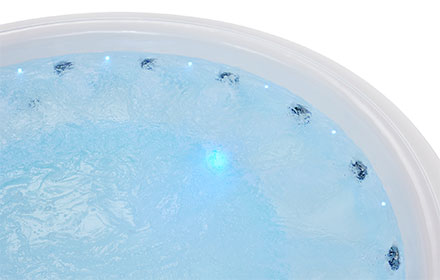
Ambiance features like integrated Bluetooth audio and multi-color LED lighting are common additions on higher-end models, and they matter more in a fixed corner installation than they might on a portable spa. Since the unit isn’t going anywhere, the lighting and sound setup becomes a permanent part of how that corner of the yard functions after dark.
Where Corner In-Ground Spas Get Used Beyond the Backyard
While backyard gardens are the most common setting, the same recessed circular format shows up in a few other contexts:
Sunken hardwood pool decks on luxury residential properties
Boutique hotel and resort wellness terraces
Vacation villa outdoor living spaces
Post-workout recovery areas for athletic or fitness-focused properties
In resort and villa settings, corner or edge placement often takes advantage of a view, positioning the spa where it won’t block sightlines to a pool or landscape feature while still integrating into the deck structure.
FAQ: Common Questions About Corner In-Ground Spas
Does an in-ground corner spa cost more to install than a portable one? Generally yes, because it requires excavation, a structural base, and permanent plumbing and electrical connections, unlike a portable spa that only needs a pad and a power outlet.
Can an existing corner deck be retrofitted for a recessed spa? Sometimes, but it depends on whether the existing structure can support the excavation and whether equipment access can be built in without major demolition. A contractor should assess this before committing to a design.
Is a round shell better than a square one for corners? Not universally better, but a round shell like the VS-PC301’s 3000 × 1050 mm design tends to fit corner geometry more efficiently since it doesn’t need a full rectangular cutout.
How much maintenance access is needed around the shell? At minimum, a serviceable panel or removable deck section near the pump and heater equipment, positioned so a technician doesn’t need to disturb the surrounding hardscape.
Getting the Planning Right Before Construction Starts
A corner outdoor spa works best when the decision starts with the physical constraints of the yard, not with a product listing. Corner shape, drainage, electrical distance, and equipment access all need to be settled before anyone picks a shell diameter or jet configuration. Once those constraints are clear, features like seating capacity, hydrotherapy layout, and control systems become a matter of matching the space rather than guessing at it. For us at Victoria Star, that planning-first approach is what separates a corner outdoor spa that gets used daily from one that becomes an expensive fixture nobody quite figured out how to fit.
Victoria Star Swim Spa offers the perfect balance between exercise and relaxation, whether you want to swim for fitness or relax in the spacious seating.
Victoria Star Swim Spa offers the perfect balance between exercise and relaxation, whether you want to swim for fitness or relax in the spacious seating.