Cyanuric Acid in Hot Tub Water: What Owners Actually Need to Know
Home / News / Cyanuric Acid in Hot Tub Water: What Owners Actually Need to Know
September 30, 2026
Anyone researching cyanuric acid in a hot tub is usually chasing one thing: why does the sanitizer disappear so fast, or why does the water still look cloudy despite regular dosing? Cyanuric acid, often shortened to CYA, is a stabilizer compound most people associate with outdoor swimming pools. Its role in a hot tub is far more limited, and in many cases, downright unnecessary. Understanding why changes how you approach water care entirely.
What Cyanuric Acid Actually Does
Cyanuric acid is a chlorine stabilizer. It binds loosely to free chlorine molecules and slows the rate at which sunlight breaks them down through UV exposure. In an outdoor pool, that matters enormously. Sunlight degrades unprotected chlorine within a couple of hours, so pool owners add CYA to extend its working life.
A hot tub operates under different conditions. Most residential spas are used indoors, under a cover, or only briefly exposed to direct sun during a soak. UV degradation simply isn’t the dominant problem. That single distinction is why so many spa manufacturers and water treatment guides recommend against adding cyanuric acid to hot tub water at all.
There’s also a volume issue. A typical spa holds somewhere between 300 and 500 liters, compared to tens of thousands of liters in a backyard pool. Chemical concentrations that seem trivial in pool math become disproportionately strong in a spa’s small water volume, and cyanuric acid is no exception.
Why It Becomes a Problem Faster in Small Volumes
Chlorine lock is the term most commonly used to describe what happens when CYA levels climb too high. The stabilizer binds free chlorine so tightly that sanitizing power drops, even though a test strip might still show chlorine present in the water. You end up adding more sanitizer to compensate, which only raises CYA further.
In a small hot tub, this spiral happens quickly. A spa filled with tap water that already contains trace cyanuric acid, combined with stabilized chlorine tablets or dichlor granules, can reach problematic CYA levels within a few weeks. Pool owners rarely notice this because their water volume dilutes the buildup. Spa owners feel it almost immediately.
The practical result is a hot tub that still grows biofilm or cloudiness because the chlorine present isn’t actually doing its job, even though skin and eye irritation are more directly tied to pH or bromamine imbalance than to CYA itself. It’s a frustrating pattern, because the instinct when water looks off is to add more sanitizer, not less.
Recommended Sanitizer Choices for Spa Water
Given the volume and usage pattern of a hot tub, most manufacturers and water care specialists point owners toward sanitizers that don’t carry stabilizer along with them.
Non-chlorine shock (potassium monopersulfate) for oxidizing organic waste without adding chlorine or CYA.
Bromine tablets, which don’t rely on cyanuric acid stabilization and remain effective at the warmer temperatures typical of spa water.
Unstabilized chlorine (calcium hypochlorite or liquid chlorine), dosed in small amounts appropriate to the tub’s actual volume.
Ozone or UV-assisted systems, which reduce how much chemical sanitizer is needed in the first place.
Choosing among these usually comes down to how the tub is used. Frequent bathers, especially in warmer indoor settings, tend to do better with bromine because it holds up under heat without the same stabilizer complications that chlorine tablets introduce.
How to Test and Correct High Cyanuric Acid Levels
Testing for CYA requires a dedicated test kit, since standard chlorine or pH strips won’t detect it. Turbidity-based CYA test kits, where a marker becomes obscured at a certain dilution point, are the most accessible option for home use.
If a test reveals elevated cyanuric acid, there’s no chemical additive that removes it. The only reliable fix is a partial or full water drain and refill. This is actually one of the advantages of a smaller spa: where draining a pool is a major undertaking, a hot tub can be drained, rinsed, and refilled in an afternoon.
Situation
Recommended Action
CYA above 100 ppm
Full drain and refill required
CYA 50–100 ppm
Partial drain, dilute with fresh water
Chlorine present but sanitizing poorly
Suspect chlorine lock, test CYA before adding more chlorine
Using stabilized chlorine tablets regularly
Consider switching to bromine or unstabilized chlorine
Why Smaller Spas Make Water Management Easier
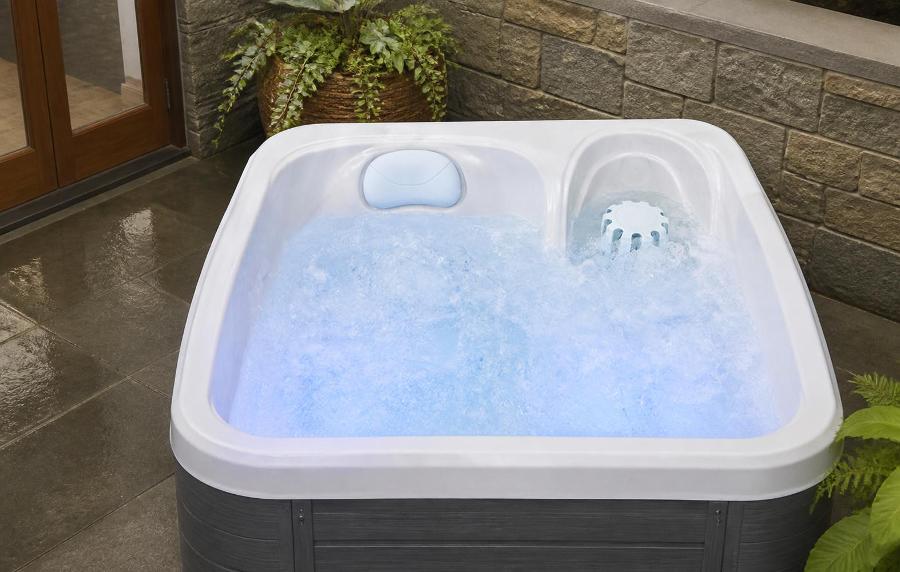
This is where the physical design of the tub itself starts to matter as much as the chemistry. A compact two-person spa like the VS-201C, part of the Comfort Series, holds a manageable water volume that makes both dosing and full water changes far less labor-intensive than with a larger multi-seat spa.
According to the product’s specifications, the unit’s hassle-free clean water system combines multi-layer filtration, ozone oxidation, and UV sanitation, which is designed to reduce how hard the chemical sanitizer has to work in the first place. Leaning on ozone and UV lowers overall chlorine demand, and lower demand means less risk of ever needing stabilized products that introduce cyanuric acid into the water.
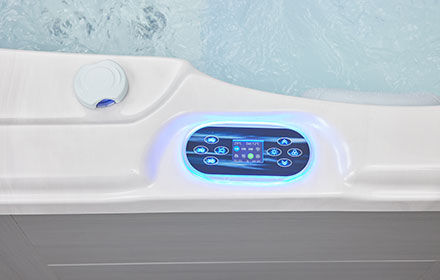
Smart control also plays a quieter but useful role here. The KL2022 digital keypad system lets owners keep water temperature consistent, which matters because sanitizer efficiency swings with temperature. Stable, predictable heat means more predictable chemical behavior, and fewer surprises when testing water chemistry.
Balancing Comfort Features With Water Care Routines
None of this water chemistry discussion should overshadow why people buy a hot tub in the first place: the actual soaking experience. The VS-201C pairs two ergonomically contoured loungers with 15 targeted hydrotherapy jets, several of which are positioned specifically for what the product line describes as Comfort Back Massage, aimed at the spine and shoulder area where daily tension tends to concentrate.
A well-maintained tub is the only kind that gets used consistently, and consistent use is where the wellness value actually shows up. Sitting in cloudy or chemically imbalanced water undermines the entire point of hydrotherapy, no matter how well the jets are engineered. That’s a strong argument for keeping sanitizer chemistry simple, avoiding CYA buildup, and letting supporting systems like ozone and UV carry more of the load.
The compact rectangular footprint, at 1750 × 1150 × 750 mm, also suits owners who want spa benefits without committing a large area of a balcony, courtyard, or indoor wellness room. Less water to manage translates directly into simpler, faster maintenance cycles.
Common Questions About Cyanuric Acid in Hot Tub Water
Does tap water already contain cyanuric acid? In some municipal water supplies, trace CYA can be present, particularly in areas where source water has been treated with stabilized chlorine upstream. It’s usually low enough not to matter on its own, but it does mean starting CYA levels aren’t always zero.
Can I use pool shock in my hot tub instead of spa-specific products? Many pool shock products are formulated with stabilized chlorine, which reintroduces the same CYA accumulation problem. Non-chlorine shock formulated for spas is the safer choice for oxidizing waste without stabilizer buildup.
Will a higher-quality filter reduce cyanuric acid? No. Filtration removes particulate and organic debris, but cyanuric acid is dissolved in the water and passes through standard filter media. Dilution through draining remains the only correction.
Is bromine better than chlorine for a small spa? Bromine tends to perform more consistently at higher water temperatures and doesn’t come bundled with a stabilizer, which is why it’s a common recommendation for spas that run warmer than typical pool temperatures.
Cyanuric acid isn’t inherently dangerous, but it belongs in outdoor pool water management far more than it belongs in a hot tub’s routine. Recognizing that distinction early, choosing sanitizers that skip the stabilizer, and pairing that choice with a spa designed to lighten the chemical load overall is what actually keeps water inviting soak after soak. For anyone weighing water care against convenience, understanding cyanuric acid in hot tub systems is less about chemistry trivia and more about protecting the relaxation experience the tub was bought for in the first place.
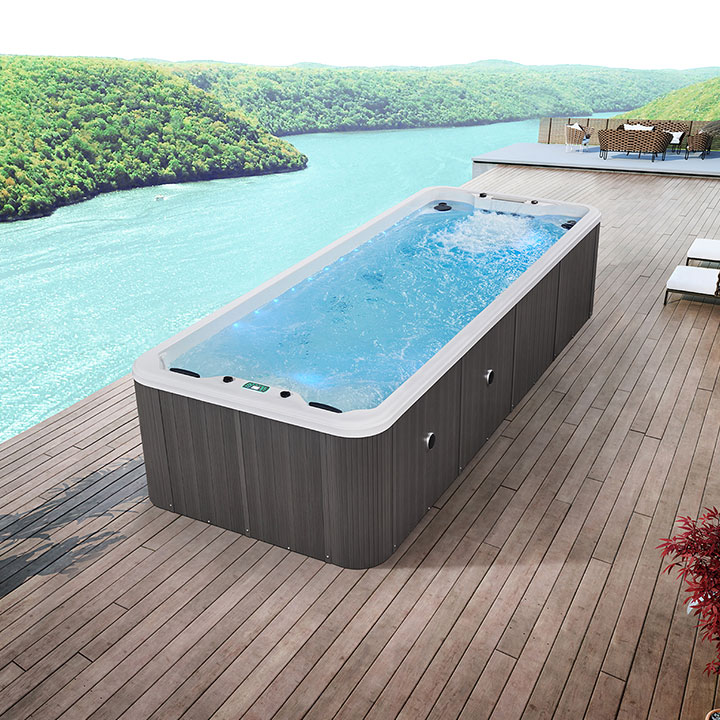
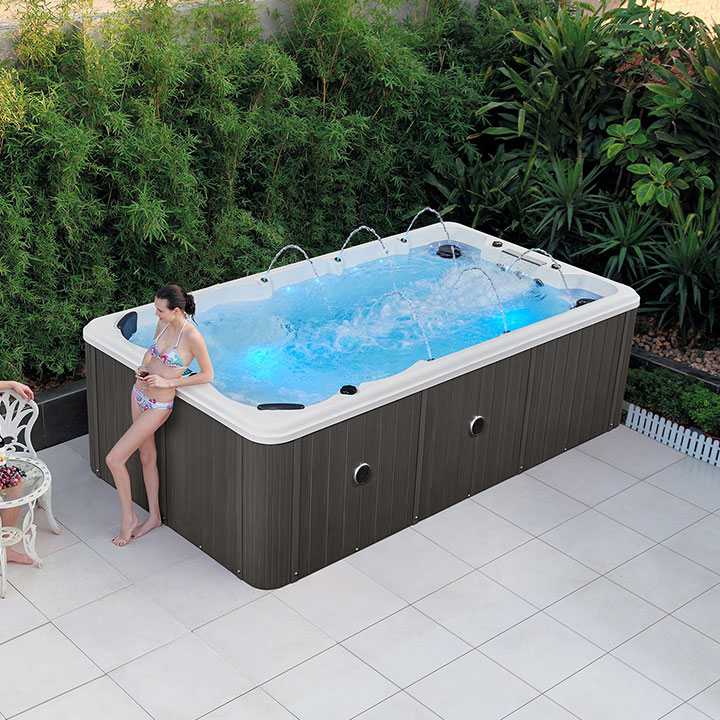
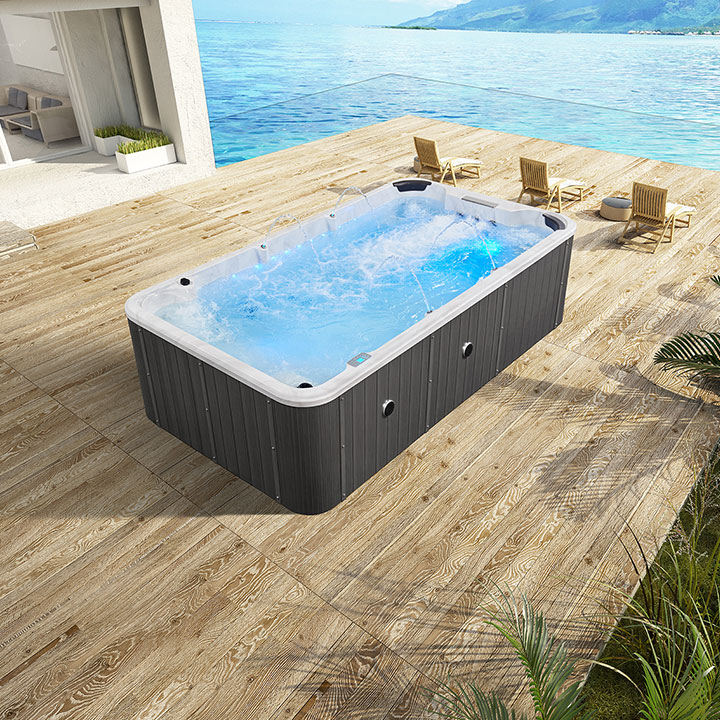
Victoria Star Swim Spa offers the perfect balance between exercise and relaxation, whether you want to swim for fitness or relax in the spacious seating.
Victoria Star Swim Spa offers the perfect balance between exercise and relaxation, whether you want to swim for fitness or relax in the spacious seating.