Corner Hot Tub Ideas: How to Fit a Square Spa Into Any Yard
Home / News / Corner Hot Tub Ideas: How to Fit a Square Spa Into Any Yard
September 28, 2026
A corner hot tub isn’t a shape, exactly. It’s a placement strategy. Homeowners with narrow patios, oddly angled decks, or small backyards often assume a spa needs a wide open stretch of ground. That assumption costs them square footage they didn’t need to give up. A square-shaped tub tucked against two intersecting walls or a fence line can reclaim a corner that would otherwise sit empty, holding a potted plant or nothing at all.
This matters more than it sounds. Outdoor living space is finite, and every hot tub competes with a dining set, a grill, or a walkway for the same few square meters. Square models solve that geometry problem better than round or kidney-shaped units, because their straight edges align flush against perpendicular surfaces instead of leaving wasted gaps.
Why Shape Determines Placement
Round spas look soft, but they’re inefficient in tight spaces. A circle inscribed in a corner leaves two curved slivers of unused deck on either side. A square unit, by contrast, can sit with two sides flush against a railing or wall, using nearly all the available footprint.
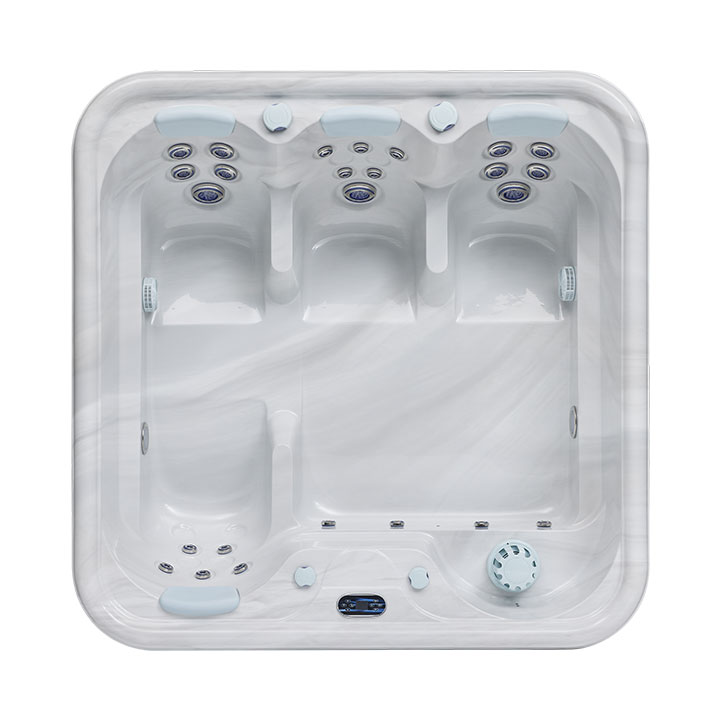
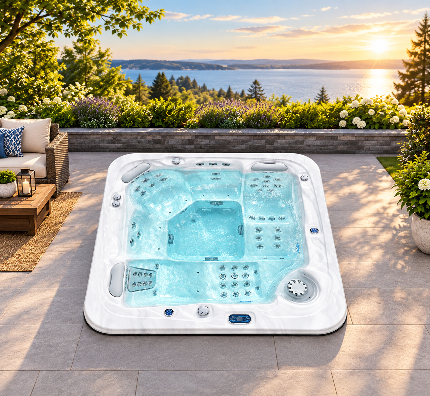
The VS-403C from Victoria Star illustrates this well. At 2080 mm by 2080 mm, roughly seven feet square, it’s compact enough for a balcony corner but still seats four adults. Two upright seats and two full-body loungers are arranged inside that footprint, which is a tighter packaging job than most round four-person spas manage.
Measuring Before You Commit
Before shopping for a corner hot tub, walk the intended spot with a tape measure and a piece of chalk. A few dimensions matter more than others:
Clear footprint width and depth, including at least 12 inches of service access on one side for panel removal
Overhead clearance if the corner sits under a roof overhang or pergola beam
Door and gate widths along the delivery path, since square tubs don’t flex diagonally the way flexible packaging might
Structural load rating of the deck or balcony, since a filled spa this size can weigh well over a ton
That last point trips people up. A 4-person unit holding water, plus the acrylic shell and equipment, can exceed 1,500 kg once occupants are added. Balconies and raised decks should be checked by a structural engineer, not estimated by eye.
What a Square Layout Actually Gains You
Square hot tubs aren’t just about fitting corners. The straight-wall interior geometry also changes how seating and jets get arranged. Round tubs waste center volume because the middle of a circle is hard to reach with a contoured seat. Square shells let designers place loungers along one full straight wall and upright seats along another, without curved transitions eating into legroom.
In the VS-403C, that translates into 25 hydrotherapy jets distributed across two loungers and two seats, positioned according to the manufacturer’s layout to relieve back muscle tension and stimulate circulation. Jet placement like this rewards a longer soak differently than a jet field spread thin across a round basin. It’s less about jet count and more about where those jets land on the body.
Corner Installation Scenarios That Work
Not every corner is created equal. Some common setups where a square footprint earns its keep:
Garden courtyard corners — where two hedge lines or fence panels meet, a square tub nestles in without a landscaper needing to reshape planting beds around a curve.
Patio and terrace corners — against a house wall and a low retaining wall, square edges follow the existing hardscape lines instead of cutting across them.
Balcony corners — where floor space is at a premium, a compact square footprint like the VS-403C’s leaves room for a chair or side table along the open edge.
Indoor spa rooms — corner placement against two interior walls keeps plumbing and electrical runs short, which matters for retrofits in finished basements.
A lifestyle example worth noting: the VS-403C has been shown installed on a terrace corner, positioned against stone paving with a sea view opening on the unobstructed side. That’s the practical logic of corner placement, not a design flourish. The enclosed sides handle wind and privacy, while the open side keeps the view.
Weatherproofing Matters More in a Corner
Corner installations often mean less airflow around two sides of the unit, since walls or fencing block ventilation there. That raises the bar for shell and cabinet materials. Acrylic shells resist UV fading and moisture better than painted alternatives, and the VS-403C pairs a UV- and corrosion-resistant acrylic shell with an aluminum plastic skirt rather than a wood cabinet that would trap moisture against a wall.
This is a case where material choice directly answers a placement problem. A wood-skirted spa jammed into a shaded, poorly ventilated corner is more prone to rot over time. Aluminum plastic skirting sidesteps that specific failure mode, which is worth weighing if your corner sits under an overhang with limited sun exposure.
Comparing Corner-Friendly Configurations
Consideration
Round Spa in a Corner
Square Spa in a Corner
Wasted floor space
Two curved gaps left unused
Minimal, edges align to walls
Seating efficiency
Central area often underused
Straight walls allow full-length loungers
Visual fit with rectangular decking
Often looks misaligned
Follows existing deck lines
Service access
Usually needs full perimeter clearance
Often needs access on one open side only
This table isn’t a verdict that square always wins. Round spas still suit open, unobstructed patios where nothing constrains the shape. But once two sides of your install site are fixed by walls or railings, square geometry stops being a style preference and becomes the more efficient choice.
Water Care in a Fixed, Enclosed Spot
Corners near walls sometimes get less direct sunlight, which changes how algae and bacteria behave in untreated water. A spa that leans on ozone and UV purification alongside filtration, as the VS-403C does according to its product specifications, reduces how often chemical shock treatments are needed. That’s a meaningful convenience for owners who don’t want to test water chemistry weekly, particularly in a shaded corner where organic buildup can go unnoticed longer.
Frequently Asked Questions
Does a square hot tub fit differently than a round one for the same number of seats? Yes. A square shell with the same seating capacity typically has a smaller overall footprint than a round shell, because straight walls avoid the wasted curved space at the corners of a circle.
Can a corner hot tub go on an upper-floor balcony? Sometimes, but only after a structural assessment. Filled weight, plus occupants, easily exceeds a ton for a 4-person model, and older balconies aren’t always rated for that load.
Do I need extra clearance if the tub sits between two walls? Yes, at least one side should remain open for filter changes, panel access, and service work. Fully enclosing a spa on all four sides makes routine maintenance difficult.
Does jet placement matter more than jet count? For targeted relief, placement matters more. A model with 25 jets concentrated on back and leg zones, as in the VS-403C’s lounger design, is built for specific muscle relief rather than generalized bubbling.
Choosing the Right Fit for Your Space
If you’re weighing a corner hot tub against a freestanding round model, start with the site, not the catalog. Measure the corner, confirm structural load, check the sun and shade pattern, and only then compare seating layouts and jet configurations against that footprint. A well-matched square spa, sized correctly for a garden, terrace, or balcony corner, gives back usable outdoor space instead of demanding more of it. For homeowners for us who’ve walked clients through tight courtyard installs, that’s usually the deciding factor over any single feature on a spec sheet.
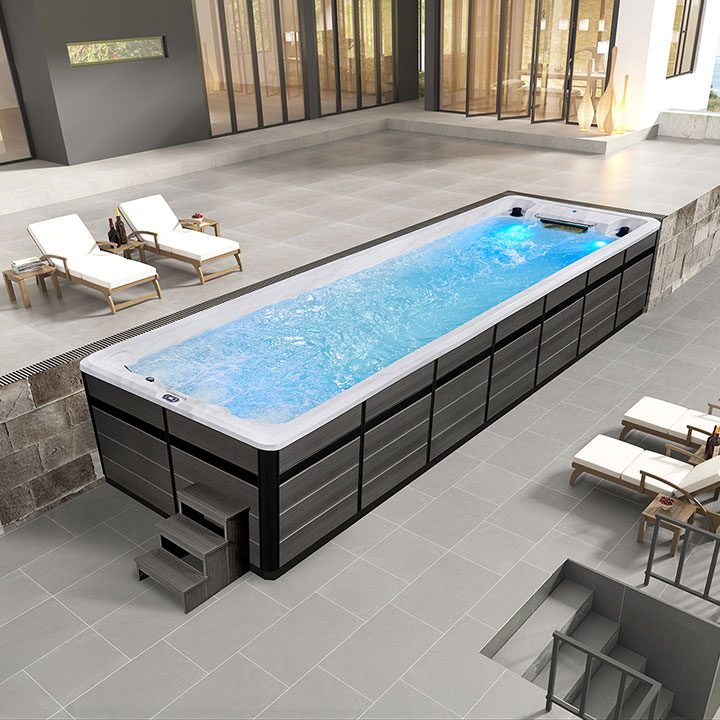
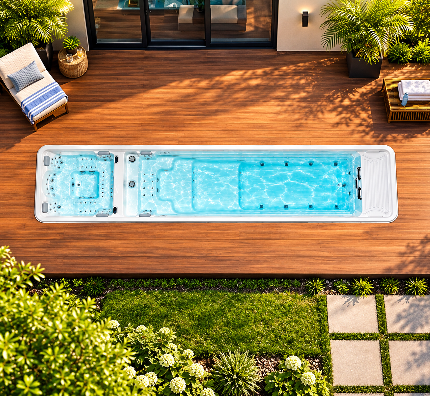
Victoria Star Swim Spa offers the perfect balance between exercise and relaxation, whether you want to swim for fitness or relax in the spacious seating.
Victoria Star Swim Spa offers the perfect balance between exercise and relaxation, whether you want to swim for fitness or relax in the spacious seating.