Contrast Cold Plunge: The Science Behind Temperature Extremity in Recovery Protocols
Home / News / Contrast Cold Plunge: The Science Behind Temperature Extremity in Recovery Protocols
September 25, 2026
The human body responds to temperature shifts with remarkable precision. When exposed to cold water after heat, blood vessels constrict and dilate in rapid succession, creating a cascade of physiological responses that athletes and wellness practitioners have leveraged for centuries. This alternating exposure, often called contrast therapy, has evolved from ancient bathhouse rituals into a calculated recovery method supported by modern physiology research.
A contrast cold plunge combines intentional heat exposure with controlled cold immersion. The practice typically involves transitioning between a hot environment—such as a sauna or hot tub—and a dedicated cold plunge pool within a short timeframe. The temperature differential triggers vascular pumping: heat opens blood vessels, cold closes them, and the cycle repeats. This mechanical action may help flush metabolic waste from muscle tissue while delivering oxygenated blood to recovering areas.
Why Temperature Contrast Matters for Tissue Recovery
Cold water immersion alone reduces inflammation by limiting blood flow to affected areas. Heat does the opposite, promoting circulation and relaxing tight muscle fibers. When these two stimuli alternate, the body experiences what some physiologists describe as a "vascular workout." Blood moves more aggressively through tissue than it would under resting conditions, potentially accelerating the removal of exercise byproducts like lactic acid.
The contrast cold plunge method doesn’t rely on a single mechanism. Instead, it stacks several:
Rapid vasoconstriction reduces swelling and limits secondary tissue damage after intense training
Subsequent vasodilation brings nutrient-rich blood back into cooled areas
Nervous system activation shifts from sympathetic stress response during cold exposure to parasympathetic recovery during warmth
This layered effect distinguishes contrast therapy from static cold or heat alone. A single cold plunge session may reduce muscle soreness, but alternating between extremes can create a more dynamic recovery environment.
Designing a Functional Cold Plunge Setup
Most contrast protocols require two separate vessels: one for heat and one for cold. The cold component must maintain water temperatures between 10°C and 15°C to produce the desired vascular response without causing undue shock. Portable units often struggle with consistent temperature control, especially in outdoor environments where ambient heat can raise water temperature by several degrees within an hour.
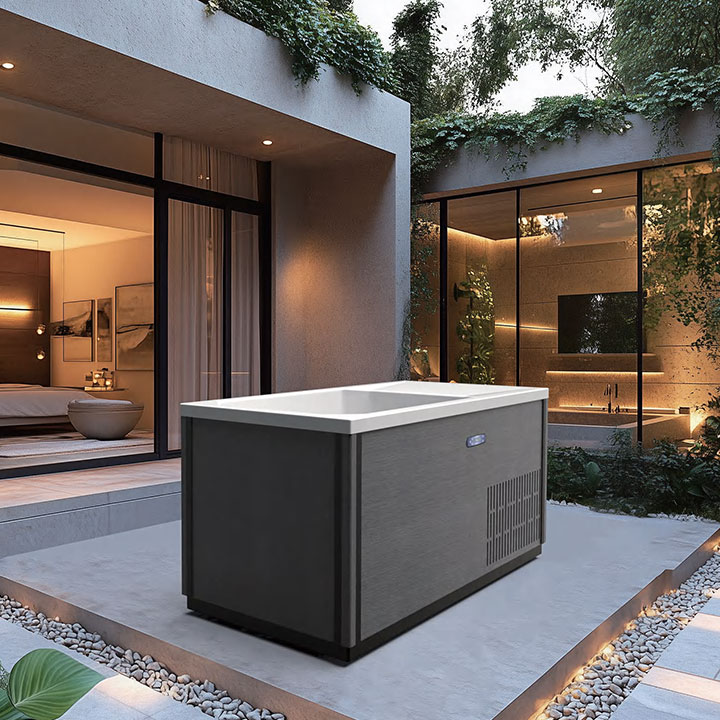
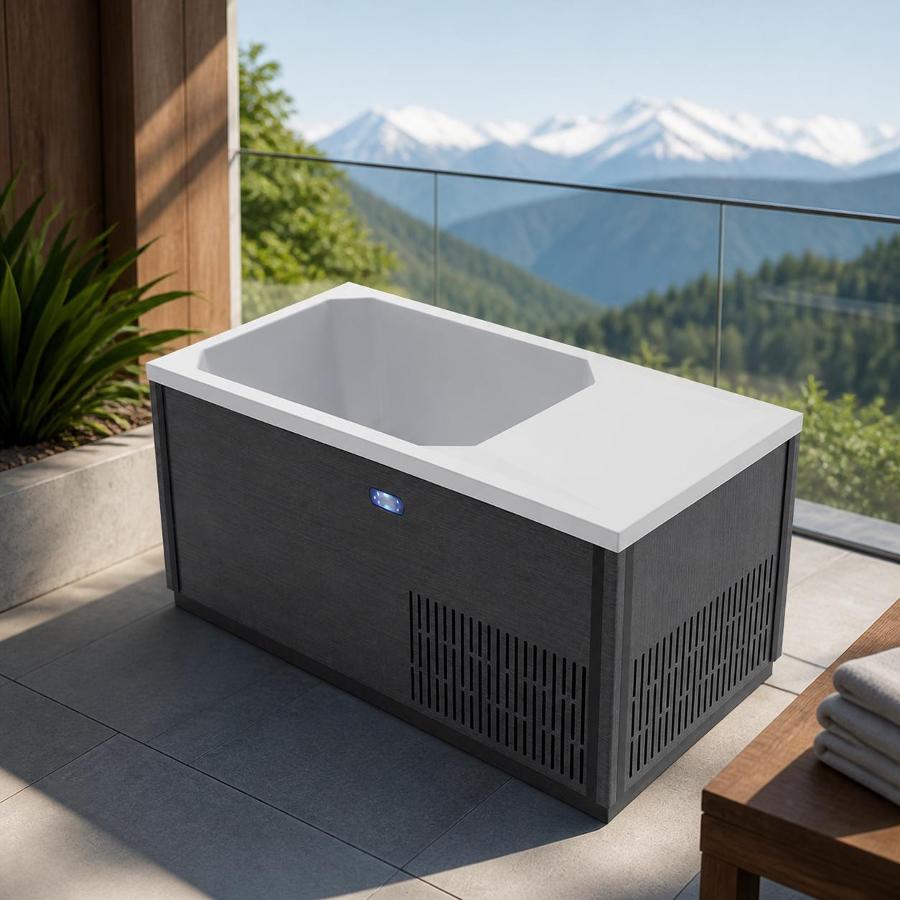
Dedicated cold plunge systems address this by integrating heat pump technology. A 900W heat pump paired with a brushless circulation pump can pull heat from the water continuously, maintaining stable low temperatures even during extended use. For us, the challenge was designing a unit compact enough for residential installation but robust enough to handle multiple users without temperature drift. The result is a 320-liter tub with dimensions of 1695 mm × 830 mm × 850 mm, sized to allow full immersion while fitting within standard patio layouts.
Material choice affects both durability and user experience. Acrylic shells resist cracking in freezing conditions better than fiberglass, and their smooth surface prevents bacterial buildup in standing water. The exterior cabinet uses composite panels with ventilation slots to prevent moisture accumulation while maintaining structural integrity across temperature swings.
Structuring an Effective Contrast Protocol
Timing drives the effectiveness of contrast cold plunge sessions. Too little time in each phase and the vascular response remains incomplete. Too much time and the body begins to normalize, reducing the contrast effect.
A practical starting protocol:
Begin with 10-15 minutes in a hot environment at 38°C to 40°C
Transition immediately to cold water at 10°C to 12°C for 3-5 minutes
Return to heat for another 10 minutes
Finish with a final cold immersion of 2-3 minutes
The initial heat phase prepares the body by dilating blood vessels and raising core temperature. The first cold plunge creates the strongest vascular response because the temperature differential is greatest. Subsequent cycles may feel less intense, but they continue to drive circulation through repeated constriction and dilation.
Individual tolerance varies significantly. Athletes accustomed to cold exposure often extend cold phases beyond five minutes, while beginners may need to build up gradually from 90-second intervals. The goal is not endurance but sufficient exposure to trigger the physiological response.
Physiological Markers of Effective Cold Exposure
Not all cold plunges produce the same results. Water temperature, immersion depth, and exposure duration each influence outcomes. Research on cold water immersion typically examines temperatures below 15°C, with most studies using ranges between 10°C and 12°C. At these temperatures, skin temperature drops rapidly while core temperature changes more slowly, creating the conditions for beneficial stress adaptation without hypothermic risk.
Heart rate increases initially during cold immersion as the sympathetic nervous system activates. Within 30 to 60 seconds, most individuals experience a stabilization as the body adjusts. This acute stress response stimulates catecholamine release—hormones like norepinephrine that heighten alertness and may contribute to the mood-enhancing effects reported by regular practitioners.
Blood pressure also rises temporarily during cold exposure due to peripheral vasoconstriction. This isn’t inherently dangerous for healthy individuals, but those with cardiovascular conditions should approach contrast therapy cautiously and consult medical guidance before starting.
The subjective experience matters too. Effective cold exposure should feel challenging but manageable. If someone exits the plunge with uncontrollable shivering or prolonged numbness, the exposure was likely too severe or too long. A slight tingling sensation and heightened alertness indicate an appropriate stimulus.
Integration with Athletic Training Cycles
Contrast cold plunge therapy fits differently into training depending on the phase and intensity. During high-volume training blocks, daily or near-daily contrast sessions may help manage accumulated fatigue. During taper periods before competition, athletes often reduce frequency to avoid blunting training adaptations.
The timing relative to workouts also matters. Immediate post-exercise cold immersion can reduce inflammation markers, but some research suggests this may also dampen the muscle-building signals triggered by resistance training. For strength-focused athletes, delaying cold therapy by several hours after lifting may preserve anabolic responses while still providing recovery benefits later in the day.
Endurance athletes face fewer concerns about blunting adaptation, since their training stress comes more from volume than from the mechanical damage that drives muscle growth. Cyclists, runners, and swimmers often use contrast therapy immediately after hard sessions without apparent negative effects on performance.
Training Goal
Optimal Timing
Typical Frequency
Muscle hypertrophy
4-6 hours post-workout
2-3 times per week
Endurance performance
Immediately after session
4-6 times per week
General recovery
Evening, separate from training
3-4 times per week
Injury rehabilitation
As directed by therapist
Variable
Practical Considerations for Home Installation
Installing a cold plunge system at home requires attention to several practical factors. Water weight adds substantial load—a 320-liter tub filled weighs over 300 kg before accounting for user weight. Decks and patios must have adequate structural support, particularly for elevated installations.
Electrical requirements vary by model. A 900W heat pump system typically draws around 1 kW, falling within standard residential circuit capacity. However, the unit should connect to a dedicated circuit with appropriate ground fault protection, especially for outdoor installations where water and electricity proximity creates safety concerns.
Drainage becomes relevant during maintenance. Cold plunge tubs require periodic draining and cleaning to prevent biofilm accumulation. Positioning the unit near a floor drain or with access to a drainage pathway simplifies this process. Some users install permanent drain lines; others use submersible pumps for occasional emptying.
Water chemistry differs from hot tubs because cold water inhibits bacterial growth naturally. Still, basic sanitization prevents algae and maintains water clarity. Low-dose chlorine or mineral systems work well, though chemical demand is significantly lower than in heated spas.
The Intersection of Cold Therapy and Mental Resilience
Beyond physical recovery, contrast cold plunge practice builds psychological adaptation. The discomfort of cold immersion triggers an acute stress response, and repeated exposure trains the nervous system to manage that stress more efficiently. This adaptation may transfer to other high-stress situations, though research on this cross-over effect remains limited.
The mental challenge of voluntarily entering cold water creates what some psychologists call "controlled suffering." Unlike unpredictable stressors, a cold plunge offers a known duration and intensity. This predictability allows practitioners to develop specific coping strategies—focused breathing, mental reframing, or body scanning—that may prove useful in other contexts.
Regular practitioners often report improved mood lasting several hours after sessions. This likely relates to endorphin release triggered by cold exposure. Cold water stimulates the sympathetic nervous system more intensely than many other stimuli, producing a neurochemical response that can feel invigorating or euphoric.
The practice also demands presence. Cold water commands attention in a way that few other experiences do, making distraction difficult. This forced mindfulness may contribute to the psychological benefits independent of any physiological mechanisms.
Common Implementation Mistakes
First-time users often make predictable errors that reduce effectiveness or create unnecessary discomfort. Entering cold water without adequate heat exposure beforehand eliminates the contrast effect, turning the session into simple cold immersion. The temperature differential drives the vascular response, so skipping the heat phase means missing the primary mechanism.
Another common mistake involves staying in cold water too long. Extended immersion doesn’t necessarily produce better results and may lead to excessive core temperature drop. Most benefits occur within the first three to five minutes, and extending beyond this rarely adds value for recreational users.
Poor timing also undermines results. Using contrast therapy immediately before sleep may disrupt rest for some individuals due to the alertness-promoting effects of cold exposure. Morning or afternoon sessions typically work better for most schedules.
Inadequate temperature control represents a fourth issue. If the cold plunge water rises above 15°C, the stimulus weakens substantially. Heat pump systems maintain consistent temperatures, but passive cooling methods often fail to achieve therapeutic ranges, particularly in warm climates.
Long-Term Adaptation and Protocol Progression
The body adapts to repeated cold exposure over weeks and months. Initial sessions that felt overwhelming become manageable, and eventually routine. This adaptation reflects genuine physiological changes: improved cold tolerance, more efficient vasoconstriction response, and potentially enhanced brown fat activation.
As adaptation occurs, practitioners can adjust protocols to maintain stimulus:
Lowering water temperature by one to two degrees
Extending cold phase duration by 30-60 seconds
Reducing rest time between heat and cold transitions
Increasing total cycle count from two to three or four
These progressions should happen gradually. Jumping too quickly to more extreme protocols risks excessive stress without proportional benefit. The goal remains providing sufficient stimulus to drive adaptation, not maximizing suffering.
Some practitioners eventually shift away from contrast protocols toward cold exposure alone, finding that their heat tolerance has decreased while cold tolerance improved. Others maintain the alternating approach indefinitely, valuing the distinct sensations and comprehensive circulatory stimulus.
Evidence Base and Research Limitations
While contrast therapy has widespread practitioner support, the research base contains gaps. Most studies examine cold water immersion or contrast baths after specific types of exercise, typically in small sample sizes over short durations. Long-term studies tracking regular contrast therapy use across months or years remain rare.
The mechanisms behind observed benefits are better understood than the optimal protocols. We know cold exposure triggers vasoconstriction and that alternating temperatures drives circulation changes, but determining the ideal temperature differentials, timing intervals, and frequency for specific goals requires more investigation.
Individual variability further complicates generalization. Factors like body composition, baseline fitness, cold adaptation history, and genetic differences in vasoactive response all influence outcomes. A protocol that works well for one person may prove less effective for another even when both follow identical procedures.
Despite these limitations, the practice continues gaining adoption because experiential evidence aligns with theoretical mechanisms. Athletes report reduced soreness, faster recovery, and improved training capacity. These subjective benefits, combined with plausible physiological explanations, sustain interest even where randomized controlled trials remain incomplete.
The contrast cold plunge approach represents a meeting point between traditional practice and modern understanding of human physiology. Temperature extremes challenge the body in ways that trigger adaptation, and the oscillation between heat and cold creates a unique recovery environment distinct from either stimulus alone. As with most recovery methods, individual experimentation within established safety parameters remains the most reliable path to determining personal effectiveness.
Victoria Star Swim Spa offers the perfect balance between exercise and relaxation, whether you want to swim for fitness or relax in the spacious seating.
Victoria Star Swim Spa offers the perfect balance between exercise and relaxation, whether you want to swim for fitness or relax in the spacious seating.