Cold Water Therapy: What It Does and How to Practice It Safely
Home / News / Cold Water Therapy: What It Does and How to Practice It Safely
October 01, 2026
Cold water therapy has moved from niche athletic recovery rooms into everyday backyards. The practice involves submerging the body in water typically between 50°F and 59°F for a short, controlled period. People turn to it for muscle recovery, mental clarity, and a jolt of alertness that coffee simply can’t replicate. But before jumping in, it helps to understand what actually happens to the body, and why the setup matters as much as the willpower.
What Happens to the Body During Cold Immersion
The moment cold water touches skin, blood vessels near the surface constrict. This is called vasoconstriction, and it’s the body’s automatic response to conserve core heat. Blood gets redirected toward vital organs, away from the limbs and extremities.
That redirection has a practical benefit for anyone who trains hard. Constricted vessels slow the buildup of fluid in tissue, which is part of why athletes have leaned on ice baths for decades to blunt post-exercise soreness. Once you exit the water and begin to warm up, vessels dilate again. That constrict-dilate cycle pushes blood back through tissue with more force than at rest, which is thought to support circulation and oxygen delivery over time.
There’s also a neurological piece to this. Cold exposure triggers a spike in norepinephrine and endorphins, the same chemicals tied to improved mood and reduced perception of pain. Some people describe the feeling afterward as calm alertness, a strange but real combination that’s hard to get from other recovery methods.
Why Athletes and Everyday Users Both Rely On It
Not everyone stepping into a cold tub is training for a marathon. The appeal has broadened for a few distinct reasons, and they don’t always overlap.
Muscle recovery: Reduced inflammation and soreness after resistance training or endurance work, driven by vasoconstriction limiting swelling in overworked tissue.
Stress regulation: The endorphin release that follows cold shock can lower perceived stress and sharpen focus for the rest of the day.
Sleep and mood support: Many users report better sleep quality on days they’ve done a cold session, likely tied to lowered cortisol and a calmer nervous system.
Cardiovascular stimulation: The repeated vessel constriction and dilation is a mild cardiovascular workout in itself, distinct from strength or cardio training.
Each of these benefits comes from the same core mechanism, but the reason someone steps into cold water on a Tuesday morning is rarely just one thing. It’s usually a mix of physical maintenance and mental reset.
How Long and How Cold Is Actually Necessary
This is where most people overcorrect. There’s a tendency to think colder and longer means better results, but that’s not how the body responds. Diminishing returns set in fast, and past a certain point you’re just risking hypothermia for no additional benefit.
A reasonable starting point looks like this:
Experience Level
Water Temperature
Session Length
First-time users
59°F (15°C)
1–2 minutes
Regular practitioners
50–55°F (10–13°C)
3–5 minutes
Experienced cold plungers
39–50°F (4–10°C)
5–10 minutes
Anything beyond ten minutes rarely adds value and increases risk, particularly for people with cardiovascular conditions. The goal is controlled stress, not endurance testing.
Setting Up Cold Water Therapy at Home
The biggest barrier to consistent practice isn’t motivation, it’s logistics. Filling a bathtub with ice bags every session gets old fast, and most people abandon the habit within a few weeks because of the friction involved. This is exactly the gap that dedicated cold plunge equipment is built to close.
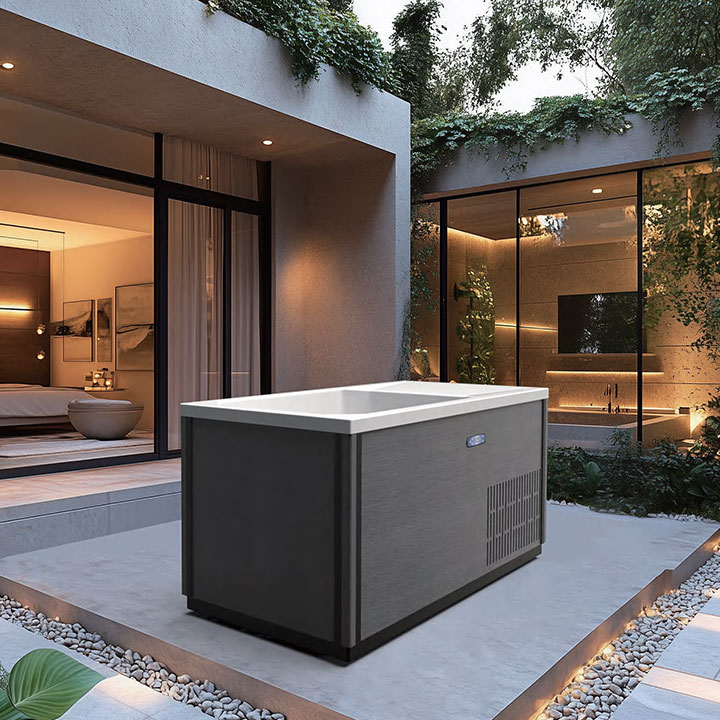
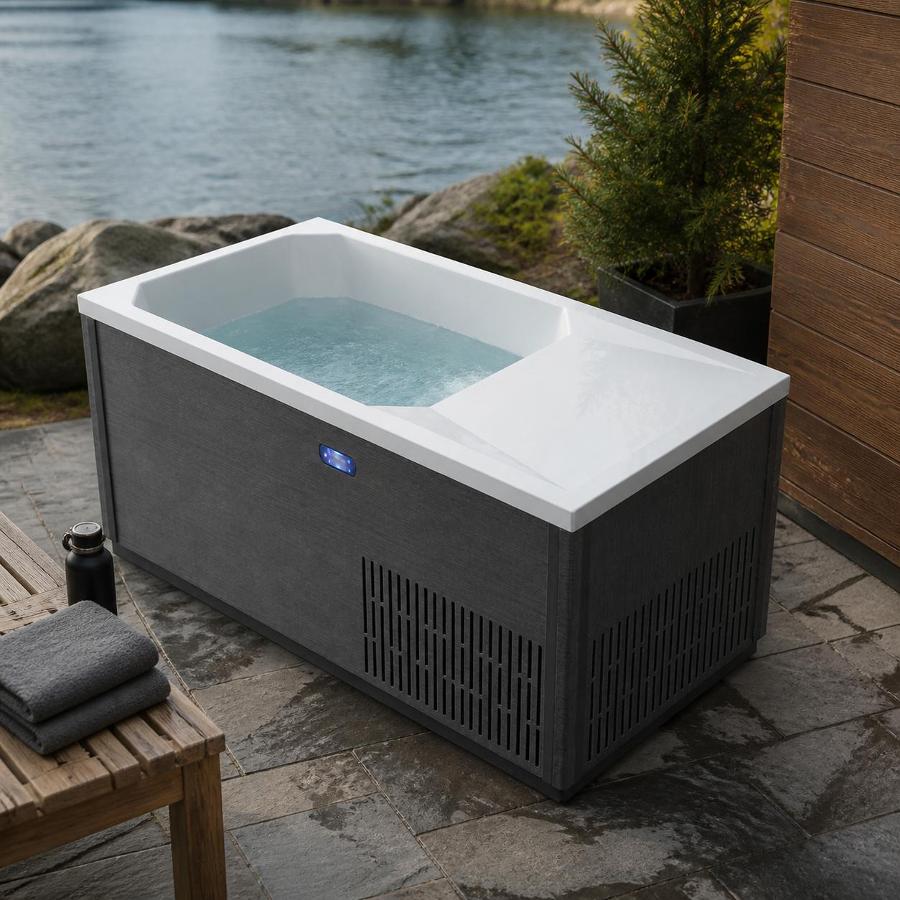
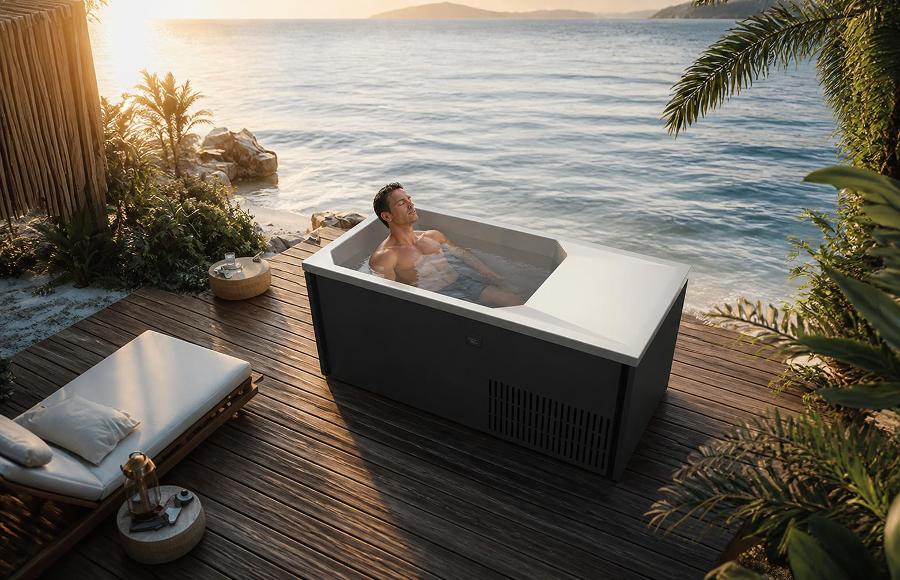
A purpose-built unit removes the guesswork. Take the Outdoor Cold Plunge Tub C02 as an example of how this is engineered in practice. It runs on an integrated 900W heat pump system paired with a 54W brushless pump, which regulates water temperature automatically instead of relying on manual ice refills. That means the water is ready at a consistent, chosen temperature every time you want to use it, rather than being a project you have to plan around.
The interior holds 320 liters, enough for a full seated immersion, and includes a built-in entry step so getting in and out doesn’t become its own hazard, especially once your hands and feet start to numb from the cold. The shell is a high-grade porcelain acrylic, chosen for its smooth, non-porous surface that’s easier to keep clean than raw plastic or metal basins.
Reading the Control Interface and Understanding the Build
Consistency matters more than intensity when it comes to cold therapy, and that’s largely a function of the equipment rather than personal discipline. A digital control interface on the front panel lets users set and monitor water temperature without opening the unit or checking manually.
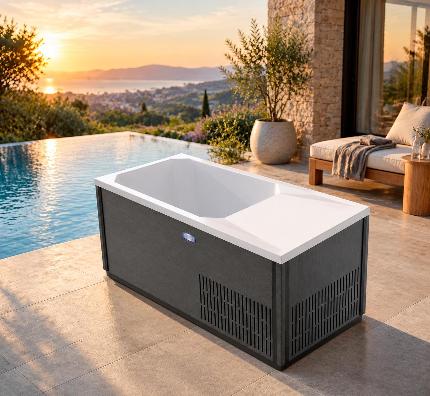
Underneath the digital display, the mechanical side of the build matters just as much. The tub draws a combined 0.954 KW of power across its heater and pump system, which is a modest load for something that replaces a routine of buying and hauling ice. The exterior cabinet uses vented composite panels, a detail that’s easy to overlook but important, since ventilation prevents heat and moisture buildup around the pump housing during continuous operation.
Cabinet finishes come in Platinum or Midnight, both with a brushed wood-grain composite texture that holds up better against UV exposure than painted wood alternatives typically do outdoors.
Where Outdoor Cold Plunge Setups Make the Most Sense
Placement affects how often a tub actually gets used. A unit tucked away in a garage rarely gets touched, while one visible from a back door becomes part of a daily rhythm almost by accident.
Backyard patios and decks: The most common setup for personal use, positioned near a home gym or bathroom for easy access post-workout.
Athletic training facilities: Recovery rooms where multiple athletes need scheduled cold immersion sessions between training blocks.
Wellness centers and boutique spas: Standalone ice therapy offerings where consistent, precise temperature control is part of the service quality.
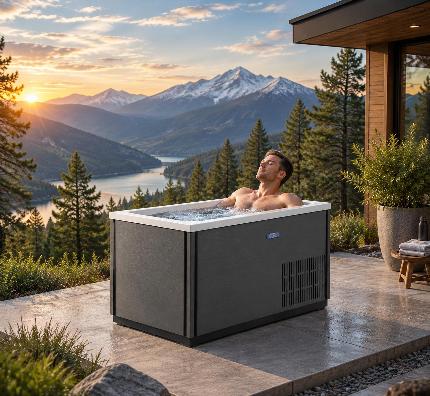
Resort and hospitality settings: Contrast therapy zones paired with saunas or hot tubs, often positioned to take advantage of scenic outdoor views.
That last category is worth pausing on. Contrast therapy, alternating between hot and cold exposure, is one of the more compelling reasons resorts and private homes alike are installing plunge tubs alongside existing hot tub setups rather than as a standalone purchase.
Common Questions About Cold Water Therapy
Is it safe to do cold water therapy every day? Most healthy adults can tolerate daily short sessions of a few minutes, but anyone with heart conditions, high blood pressure, or Raynaud’s syndrome should talk to a doctor first. Cold shock does place real stress on the cardiovascular system.
Do you need ice for a cold plunge tub? Not if the unit has a built-in cooling system. A heat pump-based tub like the C02 regulates temperature mechanically, which removes the need for bagged ice entirely and keeps the water at a set point continuously.
What’s the difference between a cold plunge and a regular pool at low temperature? Purpose-built plunge tubs are designed for a much lower target temperature range than a typical pool, and they include insulated construction and covers to hold that temperature efficiently rather than losing it to ambient air.
How soon after exercise should you do cold immersion? Many people wait 15 to 20 minutes after intense training, since immediate immersion can occasionally blunt some of the muscle adaptation signals you’re trying to build through exercise itself.
Choosing Equipment That Fits the Habit, Not Just the Trend
Cold water therapy only delivers value if it’s practiced consistently, and consistency depends heavily on how much friction stands between deciding to plunge and actually doing it. A tub that requires ice runs, temperature guesswork, and awkward entry steps will get used a handful of times before it’s abandoned.
That’s the practical case for a system with an integrated heater, digital controls, and a properly insulated cover included, all present in the C02’s design. It’s built for the outdoor realities of backyard patios, training facilities, and spa environments where reliability matters more than novelty. For us, that combination of engineering and daily usability is what separates a passing wellness trend from something people actually stick with, which is really the entire point of cold water therapy in the first place.
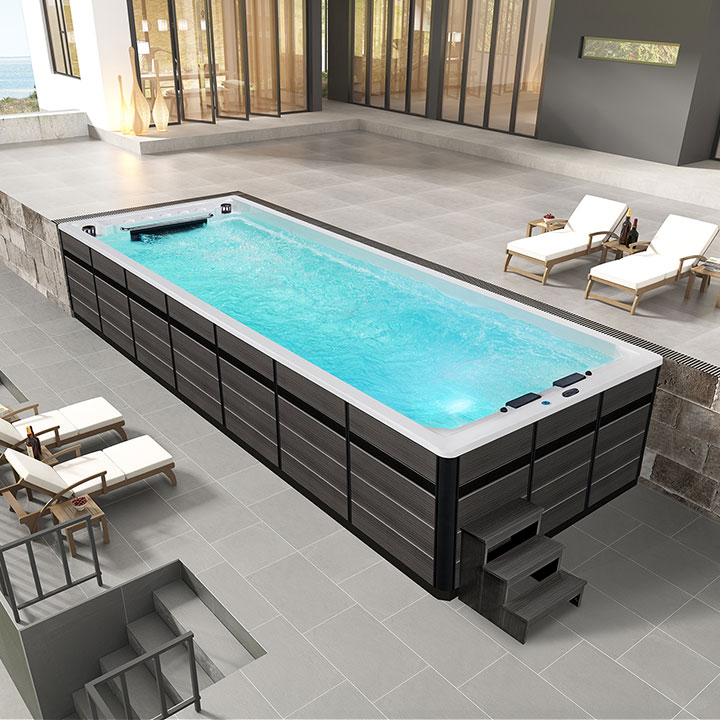
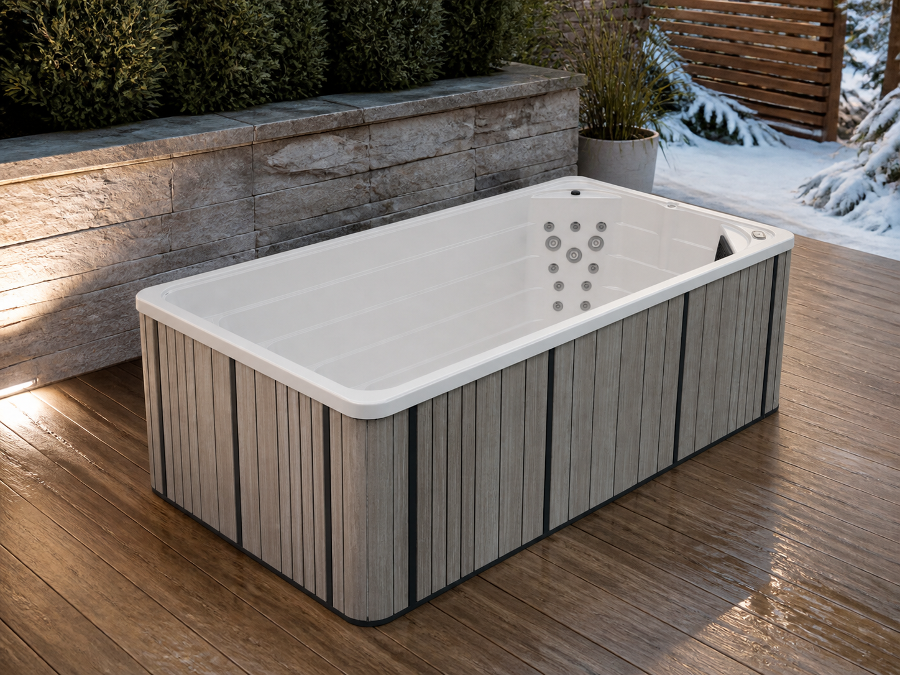
Victoria Star Swim Spa offers the perfect balance between exercise and relaxation, whether you want to swim for fitness or relax in the spacious seating.
Victoria Star Swim Spa offers the perfect balance between exercise and relaxation, whether you want to swim for fitness or relax in the spacious seating.