Home / News / Cold Plunge Prices: What Actually Drives the Cost
October 01, 2026
What Determines Cold Plunge Prices
Anyone shopping around quickly notices that cold plunge prices swing wildly between a few hundred dollars and well over ten thousand. That range confuses buyers who expect a simple product to have a simple price tag. The truth is that a cold plunge is really a small refrigeration and filtration system wrapped in a tub shell, and every one of those components carries its own cost.
The biggest single factor is temperature control. Passive units that rely on bags of ice cost less upfront but demand constant manual refilling. Tubs with a built-in heat pump or chiller, like the kind used to hold water in the 50°F range automatically, cost more because they include compressors, refrigerant lines, and digital controls. That mechanical complexity is where most of the price difference actually lives.
Material choice matters too. A rotomolded plastic shell is cheaper to produce than an acrylic basin reinforced with a composite cabinet. Acrylic holds its finish longer, resists cracking in freeze-thaw cycles, and looks more like a finished piece of furniture than a cooler. Buyers paying a premium are often paying for that longevity, not just aesthetics.
Entry-Level vs Premium Cold Plunge Costs
It helps to think of the market in three rough tiers rather than one continuous price line. Each tier solves a different problem, and matching your use case to the right tier avoids both overspending and buyer’s remorse.
Basic ice bath tubs (roughly $200–$800): No chiller, no pump, just an insulated vessel you fill with ice and water manually. Good for occasional use but labor-intensive over time.
Mid-range chilled units ($1,500–$4,000): Include a compressor-based chiller, basic filtration, and sometimes an app or digital display. Suited to regular home use.
Full-featured outdoor systems ($4,000–$10,000+): Combine heating and cooling, weather-resistant cabinetry, ergonomic seating, and insulated covers built for year-round outdoor exposure.
The jump between tiers usually corresponds to how much manual labor you’re willing to trade for automation. Someone using a plunge twice a year might be fine hauling ice. Someone plunging four times a week will burn out on that routine fast, and the mid or upper tier starts to make financial sense through time saved alone.
Why Heat Pump Systems Change the Equation
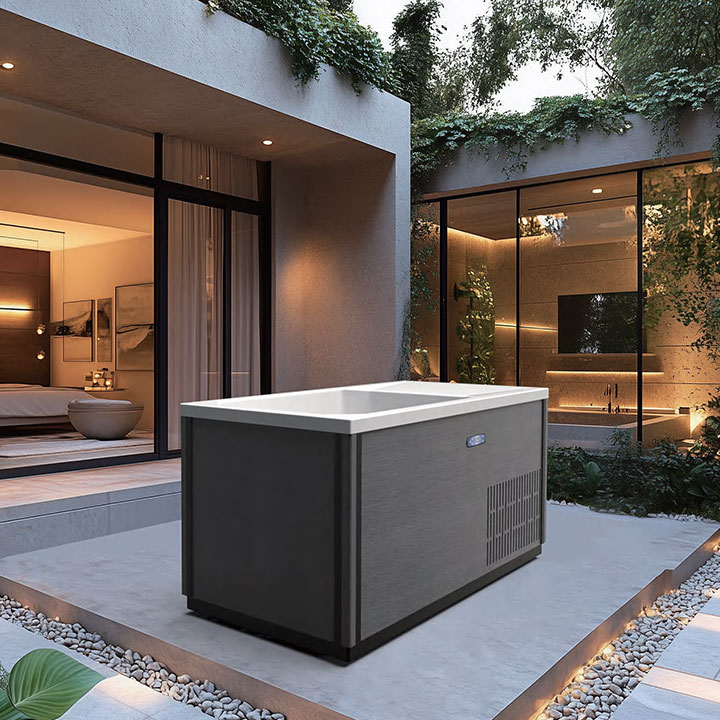
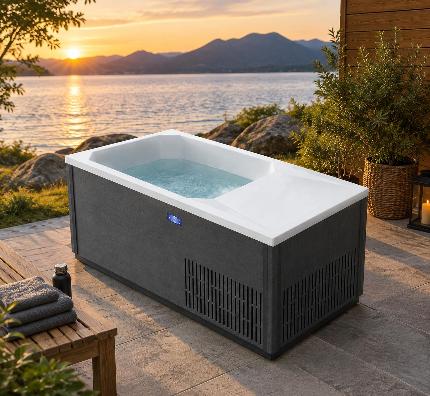
A dedicated heat pump control system is the single feature that separates a glorified cooler from an appliance you can rely on daily. The Outdoor Cold Plunge Tub C02, for instance, runs a 900W heat pump alongside a 54W brushless pump to keep water temperature consistent without the owner babysitting an ice supply.
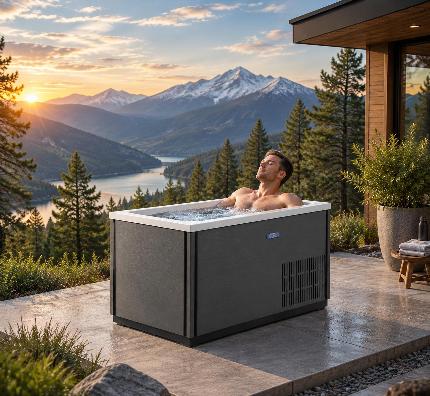
That combination matters for a specific reason: cold water immersion therapy works by triggering vasoconstriction, the narrowing of blood vessels in response to cold. This is thought to help reduce inflammation and ease post-exercise muscle soreness. If the water warms up unevenly or drifts out of range, the physiological trigger weakens. Consistent temperature isn’t a luxury feature here, it’s the mechanism the whole practice depends on.
There’s also a mental health angle worth noting honestly rather than oversold. Cold exposure is associated with a release of endorphins, which many users report as a mood lift or a sense of mental clarity afterward. It’s not a medical treatment, but it’s a documented enough response that it’s part of why cold plunging moved from athlete training rooms into ordinary backyards.
Installation and Space Considerations
Where a tub sits changes what it costs to own, even if the sticker price stays the same. Outdoor installations need a stable, level surface, usually concrete or reinforced decking, since a filled 320-liter tub with its cabinet can weigh close to 180 kg gross. That’s not something you set on a wobbly deck board and forget about.
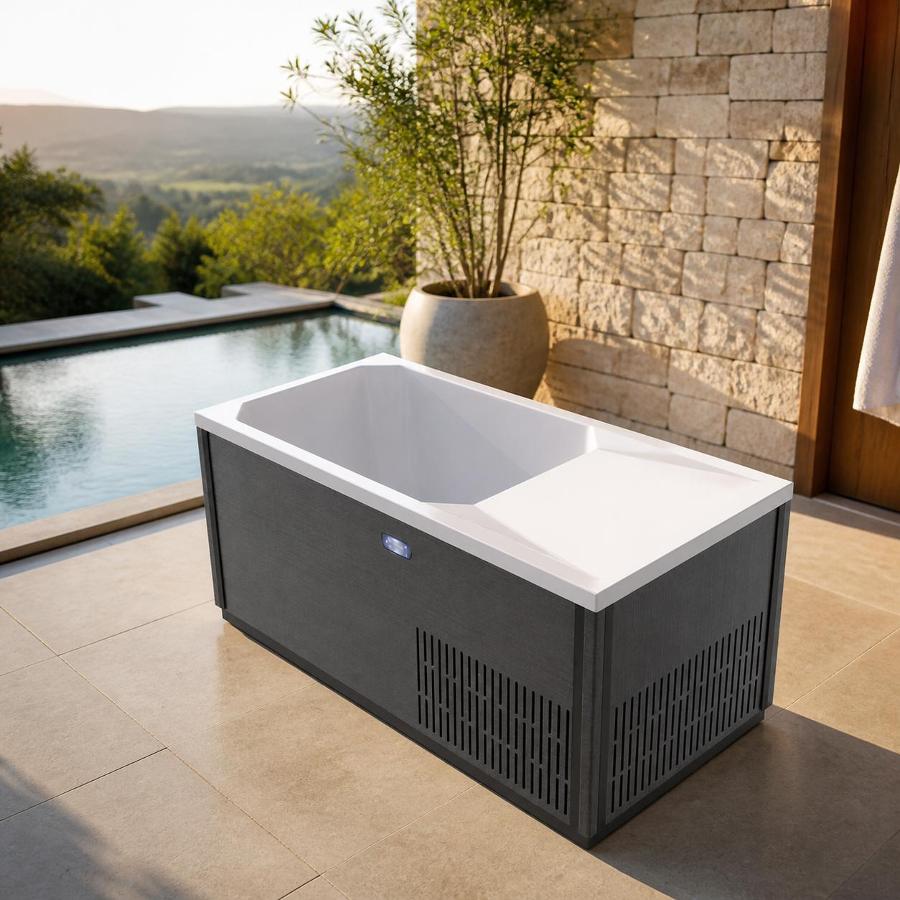
Ventilation is another detail people overlook until installation day. Heat pump systems generate warm exhaust air, so cabinets need vented panels rather than a fully sealed box. A tub with slatted ventilation grilles on the front and side, for example, keeps the compressor from overheating during long runs, which in turn protects the equipment’s lifespan.
Climate plays a role as well. In colder regions, exterior cabinet materials need to handle freeze-thaw cycling without warping. Composite wood-textured panels in weather-resistant finishes tend to hold up better outdoors than raw wood, which swells and splits under repeated moisture exposure.
Comparing Core Specifications
When you’re lining up options, it helps to compare on hard numbers rather than marketing copy. Here’s how the specifications of a full-featured outdoor unit typically break down.
Specification
Detail
Water Capacity
320 L
Heater Output
900 W (heat pump)
Pump Output
54 W, brushless
Net Weight (empty)
140 KG
Gross Weight (filled/equipped)
180 KG
Shell Material
Acrylic (Porcelain / White)
Cabinet Options
Platinum, Midnight
Cover
Insulated cover included
A brushless pump deserves a quick note since it’s easy to skim past. Brushless motors last longer than brushed ones because there’s no physical contact wearing down internal components, which translates to less maintenance over the tub’s lifespan. It’s a small line item on a spec sheet that quietly affects how many service calls you’ll need down the road.
How to Choose Based on Actual Use
Rather than chasing the lowest cold plunge price you can find, it’s worth reverse-engineering the decision from how often you’ll actually use the thing. A tub that’s cheap but annoying to operate tends to end up in storage within a season.
Estimate weekly frequency. Daily or near-daily users justify the cost of an automated heat pump system through time saved alone.
Check your outdoor space. Confirm you have a level, load-bearing surface before comparing tub dimensions, since retrofitting a patio afterward adds hidden cost.
Decide indoor vs outdoor. Outdoor units need weather-rated cabinets; indoor placement can sometimes use lighter-duty exteriors, though drainage and ventilation still matter.
Factor in commercial vs residential use. Training facilities and spas cycling multiple users daily need more durable seating steps and drain fittings than a single household.
Add running costs, not just purchase price. A 900W heater running intermittently costs less over a year than most people assume, but it’s still worth budgeting for.
Where These Tubs Get Used
The application often shapes which features actually matter. A backyard patio owner cares about aesthetics and noise, while a training facility cares about turnover speed between users. Common settings include:
Home backyard patios, decks, and private wellness courtyards
Professional sports training facilities and athlete recovery centers
Commercial wellness centers, ice therapy studios, and boutique day spas
Luxury resort villas and coastal hospitality relaxation zones
Each of these settings pushes the buyer toward a different point on the price spectrum. A boutique spa running the tub for multiple clients daily will get more value from the durability of an acrylic shell and integrated step than a homeowner using it twice a week, even though both might be looking at the same model.
Frequently Asked Questions
Does a higher price always mean better cold therapy results? Not necessarily. Price reflects build quality, automation, and materials more than the physiological effect of cold water itself. A well-maintained basic ice bath and an automated heat pump tub can both reach effective temperatures; the difference is convenience and consistency, not the core therapy.
Why do outdoor cold plunge tubs cost more than indoor-only models? Outdoor units need weather-resistant cabinetry, proper drainage, and ventilation for the heat pump system, all of which add manufacturing cost compared to a simpler indoor-only design.
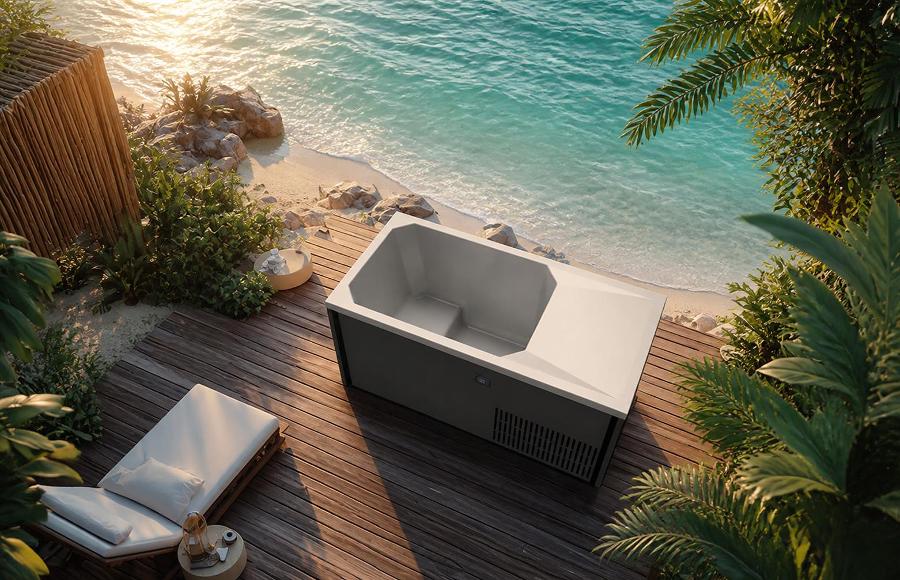
Is a 320-liter tub big enough for full-body immersion? Yes, a 320L capacity with an integrated seating step is generally sized for adults to sit with water covering the torso and shoulders, which is the depth most cold immersion routines call for.
How much does it cost to run a heat pump cold plunge? Running costs depend on ambient temperature, usage frequency, and local electricity rates, but a 900W heat pump cycling intermittently to maintain a set temperature is generally more efficient than continuously replenishing ice.
Final Thoughts on Budgeting for a Cold Plunge
Working out cold plunge prices really comes down to matching mechanical features, like heat pump control and brushless pump systems, to how seriously you plan to use the tub. Buyers focused only on the sticker number often end up paying twice, once for a cheap unit and again for the upgrade they should have bought first. For us at Victoria Star, the goal with a unit like the Outdoor Cold Plunge Tub C02 has been building something that holds its temperature reliably enough that the price makes sense over years of use, not just the first season.
Victoria Star Swim Spa offers the perfect balance between exercise and relaxation, whether you want to swim for fitness or relax in the spacious seating.
Victoria Star Swim Spa offers the perfect balance between exercise and relaxation, whether you want to swim for fitness or relax in the spacious seating.