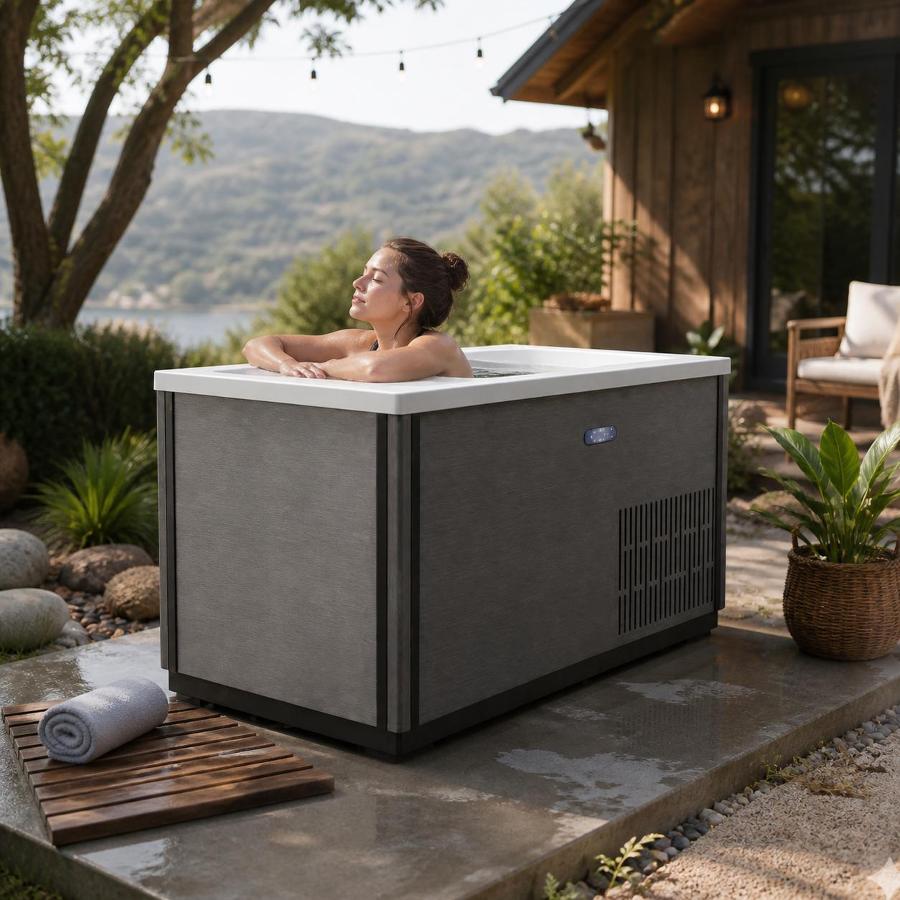
Cold Plunge Tub Market: What Buyers Should Know Before Investing
Home / News / Cold Plunge Tub Market: What Buyers Should Know Before Investing
September 30, 2026
The cold plunge tub market has grown well beyond a niche corner of athletic training. What used to be exclusive to physical therapy clinics and pro locker rooms now shows up in backyards, boutique gyms, and coastal resort patios. That shift raises a practical question for anyone browsing options: what actually separates a well-built unit from a glorified stock tank with a bolted-on chiller?
Understanding this market means looking past marketing photos and into the mechanics of temperature control, water capacity, and daily usability. Buyers researching the cold plunge tub market are usually trying to solve one of two problems. Either they want structured recovery after training or a calmer nervous system without turning their yard into a construction project.
Why Interest in Cold Plunge Tubs Keeps Rising
Cold water immersion isn’t new. Athletes have used ice baths for decades, often improvised with garbage cans and bagged ice. What changed is accessibility. Heat pump systems now regulate temperature automatically, eliminating guesswork and constant ice runs.
This matters because consistency is what makes cold exposure useful in the first place. A tub that drifts 5 degrees warmer each session doesn’t provide a reliable stimulus. Home units with integrated temperature control solve a logistics problem, not just a comfort one.
There’s also a mental health angle worth separating from the recovery angle. Cold exposure triggers a distinct physiological response, including a release of endorphins, that many users report as calming rather than jarring once the initial shock passes. That’s a different value proposition than sore-muscle relief, and it’s part of why demand has spread from gyms into residential wellness routines.
What Actually Happens During Cold Water Immersion
It helps to separate the marketing language from the physiology. Cold water immersion causes blood vessels near the skin to constrict, a response called vasoconstriction. When you exit the water and warm back up, those vessels dilate again.
This constrict-and-dilate cycle is the mechanism behind two commonly cited benefits:
Reduced inflammation: Vasoconstriction limits blood flow to inflamed tissue temporarily, which can ease the sensation of post-exercise soreness.
Circulation stimulation: The dilation phase after immersion pushes oxygenated blood back into tissue, which some users associate with feeling refreshed rather than sluggish.
Stress response shift: The initial cold shock activates the sympathetic nervous system, and the calm that follows is often described as mental clarity rather than pure physical relief.
None of this replaces medical treatment, and people with cardiovascular conditions should talk to a doctor before starting cold immersion. But for generally healthy adults managing training loads, the physiology behind cold plunge use is discussed in sports recovery literature, and individual responses can vary.
Key Specifications to Compare Before Buying
Once someone decides a cold plunge tub fits their routine, the real decision-making starts. Not all tubs are engineered the same way, and the differences show up in daily use, not on a spec sheet skimmed once.
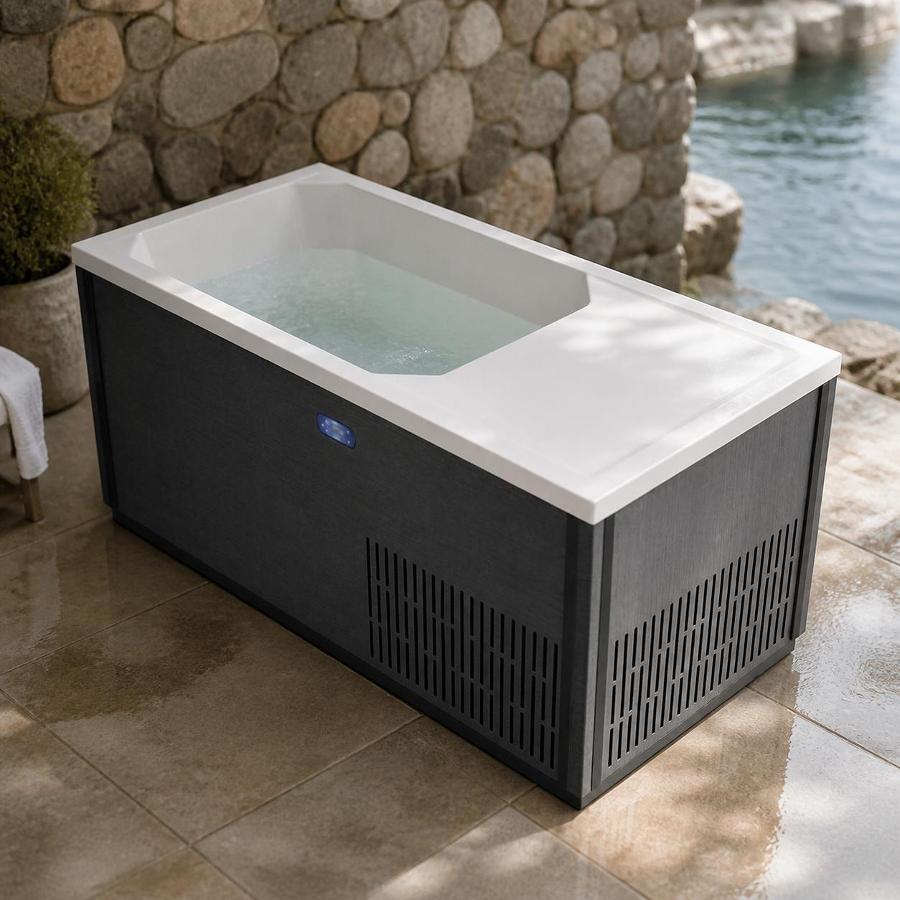
Water capacity affects how quickly the unit chills and how stable the temperature stays once you’re submerged. A tub that’s too small forces awkward positioning; one that’s oversized takes longer to cool and costs more to run. The Outdoor Cold Plunge Tub C02, for example, holds 320 liters, sized for a full seated immersion without excess water volume the heat pump has to fight against.
Here’s a breakdown of the specifications that matter most when comparing units:
Specification
C02 Cold Plunge Tub
Water Capacity
320 L
Dimensions
1695 mm × 830 mm × 850 mm
Heater Output
900 W heat pump
Pump
54 W brushless
Power Supply
0.954 kW
Shell Material
Porcelain acrylic
Net Weight
140 KG
Insulated Cover
Included
The 900W heat pump control system is worth pausing on. Heat pump regulation, as opposed to a simple chiller-only setup, is what allows the water to hold a consistent low temperature without the operator manually adding ice or monitoring a thermometer. Pair that with a 54W brushless pump, and the system circulates water while keeping electricity draw modest for daily use, based on the manufacturer’s specifications.
Shell Material and Why It Affects Long-Term Value
The interior shell isn’t just cosmetic. A porcelain acrylic surface, like the one used on the C02, resists staining and holds a smooth, high-gloss finish that’s easier to keep sanitary than rougher composite alternatives. For a vessel that holds standing water for extended periods, surface quality directly affects maintenance time.
Exterior cabinet material tells a different story. Weather-resistant composite paneling with vented grilles, available in finishes like platinum or midnight on this model, needs to survive rain, UV exposure, and temperature swings if the tub lives outdoors year-round. Vented panels also matter functionally, since they allow the heat pump system underneath to exhaust properly instead of trapping heat against internal components.
Choosing Between Home Use and Commercial Installation
Not every buyer in the cold plunge tub market has the same use case. A homeowner adding one unit to a patio has different priorities than a training facility running multiple tubs through daily athlete rotations.
For residential buyers, the decision usually comes down to three factors:
Available outdoor space — the unit needs clearance for the cabinet’s ventilation and easy access to a step or entry point.
Power supply compatibility — confirm the electrical circuit can handle the unit’s draw, roughly under 1 kW for a heat pump model like the C02.
Daily versus occasional use — frequent use justifies the higher upfront cost of a heat pump system over a manual ice-and-fill approach.
Commercial buyers, including sports training centers and boutique spas, tend to weigh throughput instead. How fast can the water re-chill between sessions, and how much floor or deck space does the unit’s footprint require? A 320-liter capacity with a dedicated 900W system is built more for single-user turnover than continuous group use, which matters when planning a facility layout.
Where These Tubs Actually Get Installed
Application context shapes expectations. A backyard patio installation prioritizes aesthetics and quiet operation, since it sits near living spaces. A resort or hospitality setting prioritizes visual appeal for guests alongside durability against constant use.
Coastal and resort properties in particular have adopted cold plunge tubs as a contrast therapy pairing alongside pools or hot tubs, positioning them on decks with ocean views where the visual setting reinforces the relaxation experience. That pairing, alternating hot and cold immersion, is a common protocol in spa environments precisely because the vasoconstriction-dilation cycle discussed earlier is more pronounced when temperatures shift dramatically between sessions.
Common Questions About Cold Plunge Tubs
Do I need a special electrical setup to run a heat pump cold plunge tub? Most residential units, including the 900W heat pump system on the C02, run on a standard household circuit rated for around 1 kW draw. It’s still worth confirming with an electrician before installation, especially for outdoor wiring that needs proper weatherproofing.
How long does it take for the water to reach a cold temperature? This depends on ambient temperature, water capacity, and heat pump output. Larger volumes take longer to chill initially, but a properly sized heat pump maintains temperature efficiently once the target is reached, which is why matching pump wattage to tub volume matters during selection.
Can a cold plunge tub be used outdoors year-round? Units built with weather-resistant cabinet materials and vented panels are designed for continuous outdoor exposure, though performance in extreme cold climates depends on the specific heat pump’s operating range, which buyers should confirm with the manufacturer.
Is a bigger tub always better? Not necessarily. A larger tub increases water volume the heat pump needs to cool, which can mean longer chill times and higher energy use per session. Sizing should match how many people use it and how often.
Making Sense of the Market Before You Buy
The cold plunge tub market rewards buyers who look past surface-level features and into how a unit actually performs day to day. Heat pump reliability, shell material, and cabinet durability matter more over a year of ownership than color options or styling.
For us at Victoria Star, that’s the reasoning behind engineering choices like the porcelain acrylic shell and integrated heat pump control on the Outdoor Cold Plunge Tub C02. Whether the setting is a private backyard, a training facility, or a resort deck, the fundamentals of the cold plunge tub market stay the same: consistent temperature control, durable materials, and a design that fits how the space will actually be used.
Victoria Star Swim Spa offers the perfect balance between exercise and relaxation, whether you want to swim for fitness or relax in the spacious seating.
Victoria Star Swim Spa offers the perfect balance between exercise and relaxation, whether you want to swim for fitness or relax in the spacious seating.