Cold Plunge Temperature: What Range Actually Works
Home / News / Cold Plunge Temperature: What Range Actually Works
September 25, 2026
Why Temperature Is the First Question to Answer
Most people who buy a cold plunge tub obsess over the shell material or the footprint. That’s backwards. Cold plunge temperature is the variable that decides whether the session does anything at all, and it’s also the one most buyers get wrong on day one.
Set the water too warm and you get a chilly bath with no physiological payoff. Set it too cold, too fast, and you risk shocking a body that hasn’t adapted yet. The sweet spot exists, but it’s narrower than most marketing copy suggests, and it shifts depending on what you’re actually trying to achieve.
This isn’t a niche concern reserved for elite athletes. Anyone shopping for a home unit, a recovery tool for a training facility, or a spa amenity needs to understand the temperature range before they even look at pump specs or cabinet colors.
The Temperature Range That Matters
Cold water immersion research and clinical practice generally point to a working range of roughly 50°F to 59°F (10°C to 15°C) for most recovery-focused sessions. Some seasoned users push toward the low end, near 39°F to 50°F (4°C to 10°C), but that territory demands experience and shorter exposure times.
Here’s a rough breakdown of how temperature bands tend to map to intended use:
Temperature Range
Typical Use Case
Session Length
59°F–65°F (15°C–18°C)
Beginners, mild circulation boost
5–10 minutes
50°F–59°F (10°C–15°C)
Standard post-workout recovery
3–8 minutes
39°F–50°F (4°C–10°C)
Advanced cold exposure, seasoned users
1–4 minutes
Notice the inverse relationship. Colder water always means shorter time in the tub. Ignoring that trade-off is where most first-time users run into trouble, either quitting too early because the shock feels unbearable, or staying in too long and feeling worse the next day instead of better.
Why Consistent Temperature Beats Extreme Cold
There’s a common misconception that colder is always better, as if the recovery benefit scales linearly with how much the water hurts. It doesn’t work that way. What matters more than hitting an extreme low number is holding a consistent, repeatable temperature session after session.
Muscle recovery through cold water immersion relies on a fairly simple vascular response. Cold exposure causes blood vessels to constrict, and rewarming afterward causes them to dilate again. That constriction-dilation cycle is what’s believed to help move inflammatory byproducts out of tissue and encourage fresh blood flow back in. A tub that swings ten degrees between sessions makes that response unpredictable, which undercuts the whole point of building a routine.
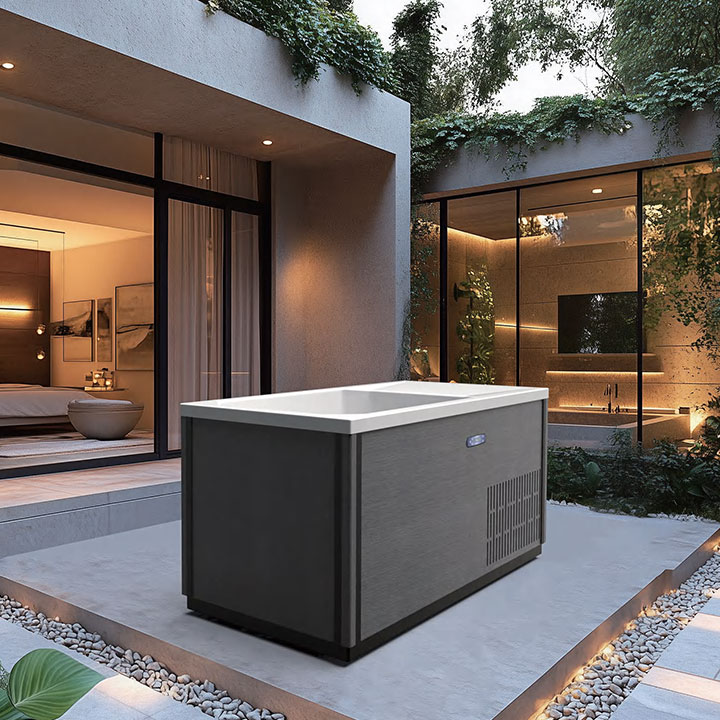
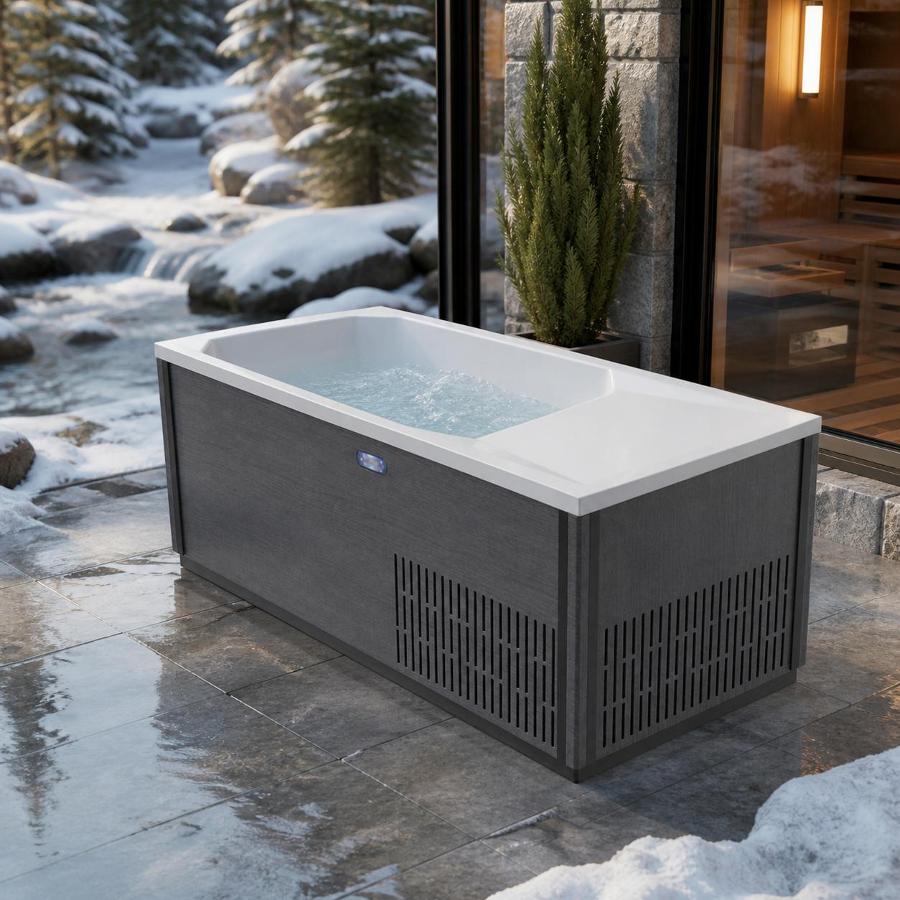
This is exactly why an integrated heat pump system matters more than people expect when they’re shopping. The Outdoor Cold Plunge Tub C02, for example, runs on a dedicated 900W heat pump control system paired with a 54W brushless pump, which is built specifically to hold a stable low temperature rather than just chilling water once and letting it drift. For anyone plunging three or four times a week, that stability is the difference between a repeatable protocol and guesswork.
What Happens in the Body at These Temperatures
It helps to separate the two things people usually lump together: physical recovery and mental state. They respond to cold differently, and understanding both helps explain why the temperature question matters so much.
On the physical side, cold immersion in the 50°F to 59°F range is associated with:
Vasoconstriction that limits swelling — narrowed blood vessels reduce fluid buildup around stressed muscle tissue after intense training.
Reduced perceived soreness — many users report less next-day stiffness following a plunge, though this varies by individual and training load.
A circulation "pump" effect — the cycle of constriction followed by rewarming dilation is thought to encourage renewed blood flow and oxygen delivery to tissue.
On the mental side, cold exposure tends to trigger a fairly immediate endorphin release. That’s not a subtle effect. Most people describe a sharp jolt followed by a settling calm within a few minutes of getting out, which is part of why cold plunging has become as much a stress-management tool as a fitness one.
Matching Temperature to Your Goal
Not every plunge session should target the same number on the dial. The right cold plunge temperature depends heavily on what you’re solving for, and treating every session identically wastes the tool’s flexibility.
Consider these three scenarios:
Post-workout recovery for a weekend athlete. A moderate range around 55°F to 59°F for five to eight minutes is usually enough to get the circulation benefit without turning the session into an endurance test.
Daily stress management and mental reset. Shorter dips, sometimes under three minutes, at a slightly milder temperature can deliver the mood benefit without the physical strain of prolonged exposure.
Advanced training block recovery. Athletes managing heavy training loads sometimes push toward 50°F or slightly below, but this should be built up to gradually rather than attempted on day one.
Choosing where to sit within that range isn’t a one-time decision either. It’s worth adjusting based on season, training intensity that week, and honestly, how your body responds the morning after. A journal of temperature and session length, even a rough one, tends to reveal patterns faster than guessing.
Why Equipment Design Affects the Numbers You Can Actually Hit
A tub’s ability to hold a target cold plunge temperature isn’t just about the chiller’s wattage on a spec sheet. Insulation, water volume, and ambient exposure all pull against the heat pump’s work.
The C02 unit holds 320 liters of water, which is a meaningful volume to cool and maintain compared to smaller inflatable options that lose temperature stability quickly once opened to outdoor air. Pairing that volume with an included insulated cover matters more than it sounds. A cover isn’t just for keeping debris out between uses. It slows heat gain from ambient air and sun exposure, which directly reduces how hard the heat pump has to work to hold a set temperature.
Spec
Detail
Water Capacity
320 L
Heater Output
900 W
Pump
54 W brushless
Power Supply
0.954 kW
Insulated Cover
Included, 1 piece
For anyone installing a unit outdoors, whether on a coastal deck or a shaded backyard patio, that combination of volume and insulation is what keeps the actual water temperature close to the number set on the control panel, rather than drifting five or ten degrees warmer by midafternoon.
Outdoor Placement and Its Effect on Temperature Stability
Where the tub sits physically changes how easy it is to maintain a target temperature. Direct afternoon sun, wind exposure, and ambient humidity all add thermal load that the heat pump has to counteract continuously.
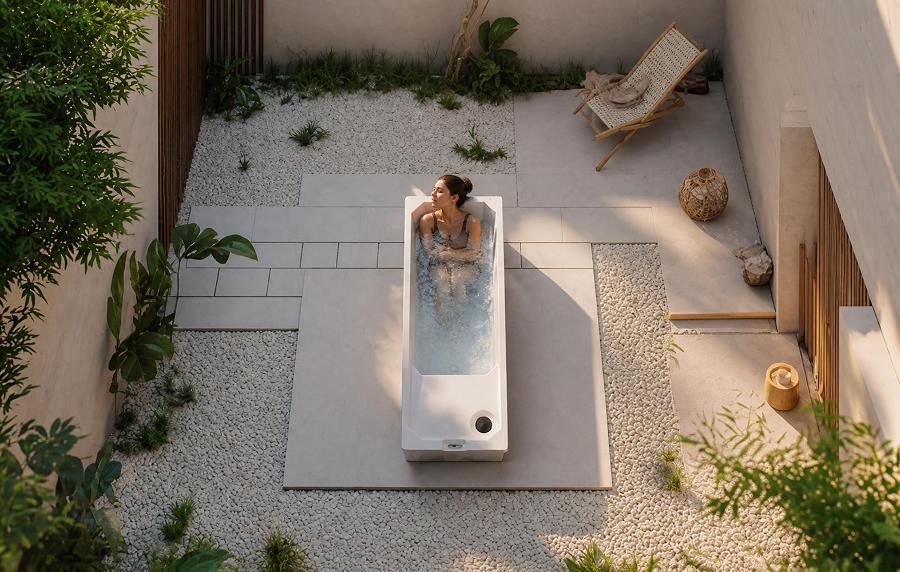
A tub tucked into a shaded courtyard or positioned under a pergola holds its set point with less strain on the equipment than one sitting in open, unshaded sun for six hours a day. This isn’t a dealbreaker for most installations, but it’s worth factoring into placement decisions rather than treating the patio spot purely as an aesthetic choice.
Commercial settings face this even more acutely. A recovery center running the tub multiple times daily for different clients needs temperature recovery between sessions to be fast and predictable, which again comes back to heat pump capacity and insulation working together rather than either alone.
Common Questions About Cold Plunge Temperature
Is there one "correct" cold plunge temperature for everyone? No single number works universally. Body composition, cold tolerance, and the goal of the session (physical recovery versus mental reset) all shift the ideal range. Starting milder and adjusting over several sessions is safer than guessing at an aggressive low temperature immediately.
How long does it take a tub to reach a cold target temperature from tap water? This depends on starting water temperature, ambient conditions, and the unit’s heat pump output. Units built with a dedicated heat pump system, like the 900W unit in the C02, are designed for consistent regulation rather than a one-time chill, so expect maintenance of a set point to be more reliable than the initial cool-down speed.
Does colder water always mean better recovery results? Not necessarily. Consistency of exposure and appropriate session length within the 50°F to 59°F band tend to matter more than pushing toward extreme lows, especially for people newer to cold immersion practice.
Can outdoor placement affect how well a tub holds its temperature? Yes. Sun exposure, wind, and ambient air temperature all add thermal load. An insulated cover and a shaded or partially sheltered placement help the system maintain a stable set point with less strain.
Bringing the Right Setup Together
Getting cold plunge temperature right isn’t about finding the coldest possible number and gritting through it. It’s a matter of matching a stable, repeatable range to your actual goal, whether that’s faster muscle recovery, a mental reset, or a structured part of an athletic training block.
Equipment plays a real role here too. A tub built with a dependable heat pump system, adequate water volume, and proper insulation, like the design behind the Outdoor Cold Plunge Tub C02 from Victoria Star, makes it far easier to hit and hold a target range session after session, rather than fighting temperature drift every time you step in. That reliability is ultimately what turns cold plunge temperature from a guessing game into a routine you can actually trust.
Victoria Star Swim Spa offers the perfect balance between exercise and relaxation, whether you want to swim for fitness or relax in the spacious seating.
Victoria Star Swim Spa offers the perfect balance between exercise and relaxation, whether you want to swim for fitness or relax in the spacious seating.