Cold Plunge Recovery: How Ice Baths Support Muscle and Mind
Home / News / Cold Plunge Recovery: How Ice Baths Support Muscle and Mind
September 30, 2026
Cold plunge recovery has moved from elite locker rooms into ordinary backyards, and the shift makes sense. Athletes have used cold water immersion for decades, but the appeal now reaches anyone who trains hard, sits at a desk all day, or just wants a sharper mental reset. Understanding how cold exposure actually works, and where it fits into a recovery routine, helps separate genuine benefit from wellness noise.
Why Muscles Need More Than Rest Alone
Intense exercise creates microscopic tears in muscle fibers, and the body responds with inflammation to begin repair. That inflammation is necessary, but too much of it can leave joints stiff and muscles sore for days. Passive rest works, yet it’s slow, and many people can’t afford a week of reduced mobility between training sessions.
This is where cold water immersion earns its reputation. Submerging the body in cold water causes blood vessels near the skin to constrict, a response the body uses to conserve core heat. When someone exits the water and warms up again, those vessels dilate, pushing a fresh wave of blood through the tissue that was just cooled. That contract-and-release cycle is the mechanism most closely associated with cold plunge recovery, and it’s the reason so many training facilities now treat ice baths as standard equipment rather than a novelty.
The Physiology Behind the Chill
Vascular constriction and dilation don’t just move blood around, they change what’s delivered to the tissue. As circulation ramps back up post-plunge, oxygen and nutrients reach fatigued areas more readily, which is part of why users report feeling less sore the next day. It’s a bit like clearing a traffic jam right before rush hour peaks.
There’s also a psychological layer that’s easy to underestimate. Cold exposure triggers a natural release of endorphins, the same class of compounds tied to a "runner’s high." That’s why a two-minute plunge can leave someone feeling alert and calm at once. This dual effect on the body and the nervous system is part of why cold plunge recovery routines have stuck around long after the initial trend cycle faded.
What a Well-Built Cold Plunge Tub Actually Needs
Not every tub delivers a consistent experience. Temperature stability, water capacity, and build quality all affect whether a cold plunge session is genuinely therapeutic or just uncomfortable. Anyone shopping for a home unit should weigh a few practical factors before committing.
Reliable temperature control. A dedicated heat pump system, rather than ice bags or a garden hose, keeps water in a consistent low-temperature range session after session.
Adequate water volume. A tub that’s too shallow or narrow limits submersion and reduces the physiological benefit of full-body cold exposure.
Durable, weather-resistant construction. Outdoor units face sun, rain, and temperature swings, so cabinet materials matter as much as the basin itself.
Ergonomic entry and seating. A built-in step and a shaped interior make it easier to get in, sit comfortably, and stay in the water long enough for the immersion to matter.
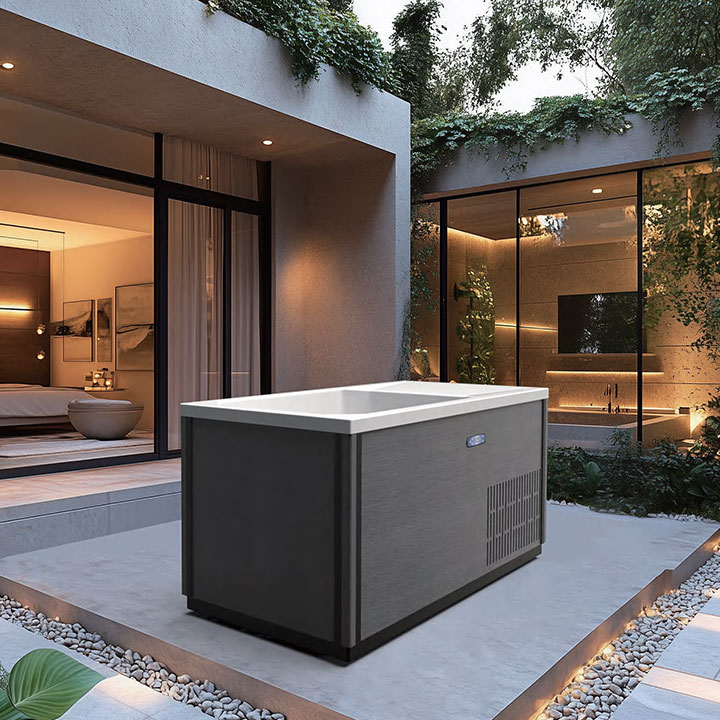
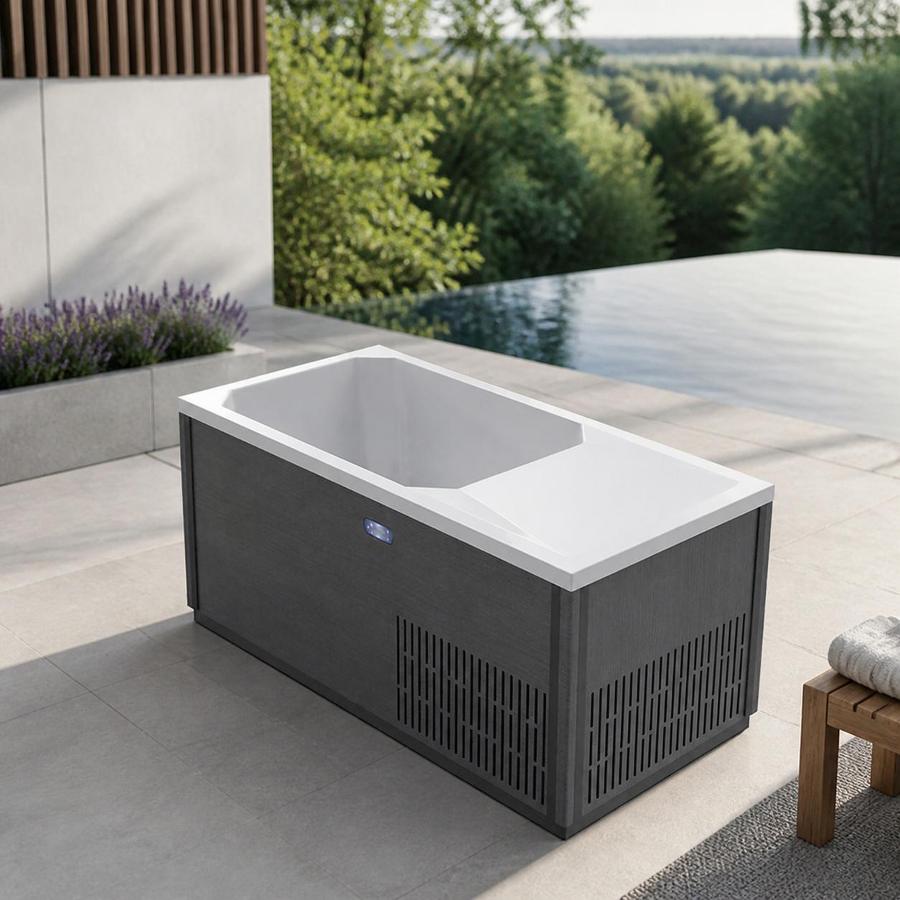
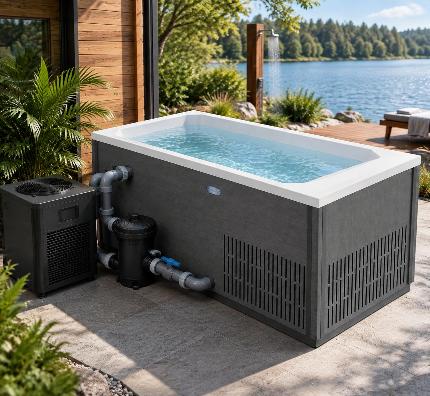
The Outdoor Cold Plunge Tub C02 from Victoria Star was engineered around exactly these priorities. It pairs a 900W heat pump with a 54W brushless pump to maintain precise low-temperature immersion, rather than relying on manual ice refills that fade within an hour.
Technical Specifications at a Glance
Specification
Detail
Model
C02
Water Capacity
320 L
Dimensions
1695 mm × 830 mm × 850 mm
Heater Output
900 W (integrated heat pump)
Pump
54 W brushless
Power Supply
0.954 KW
Shell Material
Porcelain acrylic
Cabinet Colors
Platinum, Midnight
Net / Gross Weight
140 KG / 180 KG
Cover
1 insulated cover included
A 320-liter capacity is generous enough for full submersion up to shoulder height for most adults, which matters because partial immersion limits the circulatory response described earlier. The porcelain acrylic shell resists staining and holds a smooth finish that’s comfortable against skin during extended sessions.
Where People Actually Use These Tubs
Application context shapes what features matter most. A tub installed at a coastal resort has different demands than one tucked into a suburban backyard corner.
Private backyards and patios. Homeowners use cold plunge recovery as a standalone wellness habit, often paired with sauna sessions for contrast therapy.
Athletic training facilities. Coaches and trainers rely on consistent, repeatable cold exposure across multiple athletes per day, which makes heat pump reliability non-negotiable.
Boutique spas and ice therapy studios. Commercial settings need durable cabinetry that withstands frequent use and cleaning.
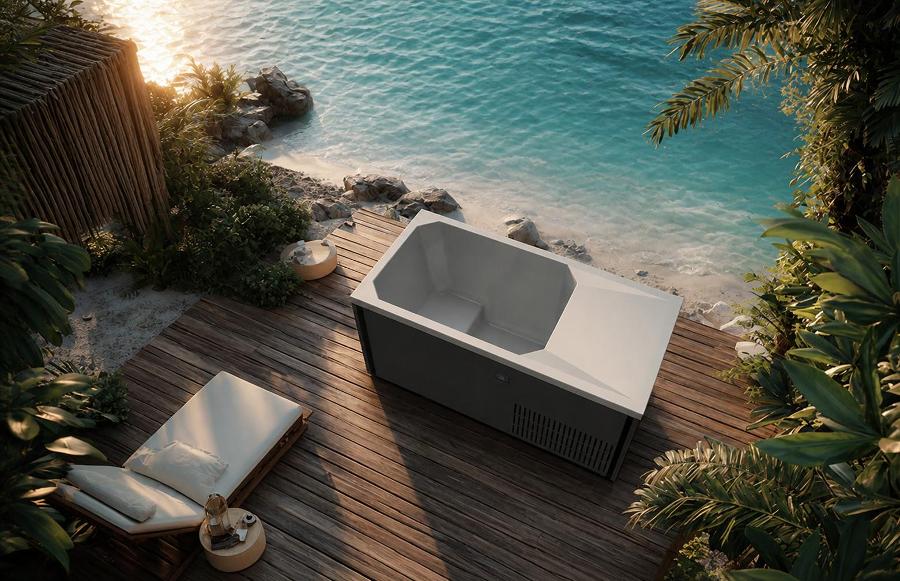
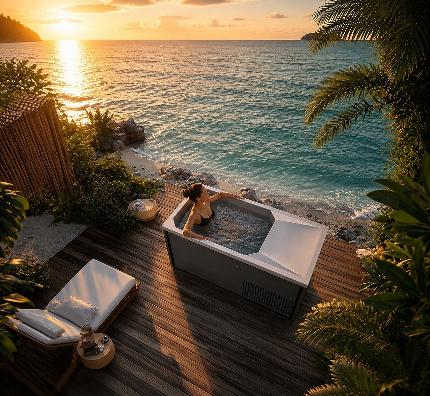
Resort villas and hospitality settings. Outdoor placement near ocean views or garden courtyards turns recovery into part of the guest experience rather than a clinical add-on.
The C02’s vented composite cabinet panels and weather-resistant exterior were built with outdoor placement in mind, whether that’s a gravel-lined terrace or a stone courtyard.
Building a Sustainable Cold Plunge Routine
Consistency matters more than intensity when it comes to cold plunge recovery. Jumping into freezing water for ten minutes on day one, then avoiding the tub for weeks, won’t produce meaningful results. A gradual approach works better for most people.
Start with shorter sessions, around one to three minutes, and gradually extend the duration as tolerance builds. Timing also matters: many athletes plunge within an hour after intense training, while others prefer using it as a morning routine to sharpen focus before the day begins. Either approach can work, since the underlying vascular and endocrine responses don’t depend heavily on time of day.
Pairing cold immersion with proper hydration and a brief warm-up afterward helps the body transition smoothly. Cold plunge recovery isn’t meant to replace stretching or mobility work, it’s a complement to an existing recovery routine, not a substitute for one.
Frequently Asked Questions
How cold does the water need to be for cold plunge recovery to work? Most cold water immersion research and practice centers on temperatures well below room temperature, often in a range that feels genuinely uncomfortable at first. A heat pump system allows precise, repeatable temperature settings rather than guesswork with ice.
Is a home cold plunge tub as effective as ice baths used by professional athletes? The underlying physiological response, vascular constriction followed by dilation, is the same regardless of setting. What changes is convenience and consistency, which is exactly what a dedicated tub with integrated temperature control provides.
Can cold plunge recovery help with something other than muscle soreness? Many users report improved mental clarity and reduced stress after regular sessions, which aligns with the endorphin response triggered by cold exposure. It’s a mental health benefit that runs alongside the physical one.
How much space does an outdoor cold plunge tub need? A unit like the C02, at roughly 1695 mm by 830 mm, fits comfortably on a standard patio or deck without requiring major structural changes.
Making Cold Plunge Recovery Part of Daily Life
Cold plunge recovery works because it taps into a physiological response that’s been documented for years, not because of any single miracle mechanism. The vascular cycling, the endorphin release, and the disciplined structure of a regular routine all combine to produce something that feels almost meditative once the initial shock passes.
For anyone considering a home setup, the tub itself matters just as much as the practice. A well-insulated, properly heated unit like the Outdoor Cold Plunge Tub C02 removes the friction of ice runs and inconsistent temperatures, letting the routine actually stick. Whether it’s placed on a backyard deck, inside a training facility, or beside a spa’s relaxation lounge, consistent access is what turns cold plunge recovery from an occasional experiment into a lasting wellness habit.
Victoria Star Swim Spa offers the perfect balance between exercise and relaxation, whether you want to swim for fitness or relax in the spacious seating.
Victoria Star Swim Spa offers the perfect balance between exercise and relaxation, whether you want to swim for fitness or relax in the spacious seating.