Cold Plunge Pool Benefits and How to Choose the Right Setup
Home / News / Cold Plunge Pool Benefits and How to Choose the Right Setup
September 25, 2026
A cold plunge pool used to be something you’d only find in elite training facilities or Nordic spas. Now it sits on backyard patios next to the grill. That shift says something about how people think about recovery today. Athletes were early adopters, but the audience has widened to anyone dealing with sore joints, poor sleep, or a stress load that never quite lifts.
The appeal isn’t mysterious once you look at what cold exposure actually does to the body. Cold water triggers vasoconstriction, the narrowing of blood vessels near the skin. When you get out and warm up again, those vessels dilate. That contraction-and-release cycle is the mechanical basis for most of the recovery claims tied to cold immersion.
Why Muscle Recovery Depends on Water Temperature, Not Willpower
Post-workout soreness comes from microtrauma in muscle fibers and the inflammatory response that follows. Cold water immersion constricts blood vessels, which limits swelling around damaged tissue. Less swelling generally means less pressure on nerve endings, and that translates to less soreness the next day.
This is why serious training programs schedule plunges within an hour after heavy lifting or long runs, not the next morning. Timing matters here more than most people expect. The inflammatory cascade starts fast, so intervening early gives the vasoconstriction response something meaningful to work against.
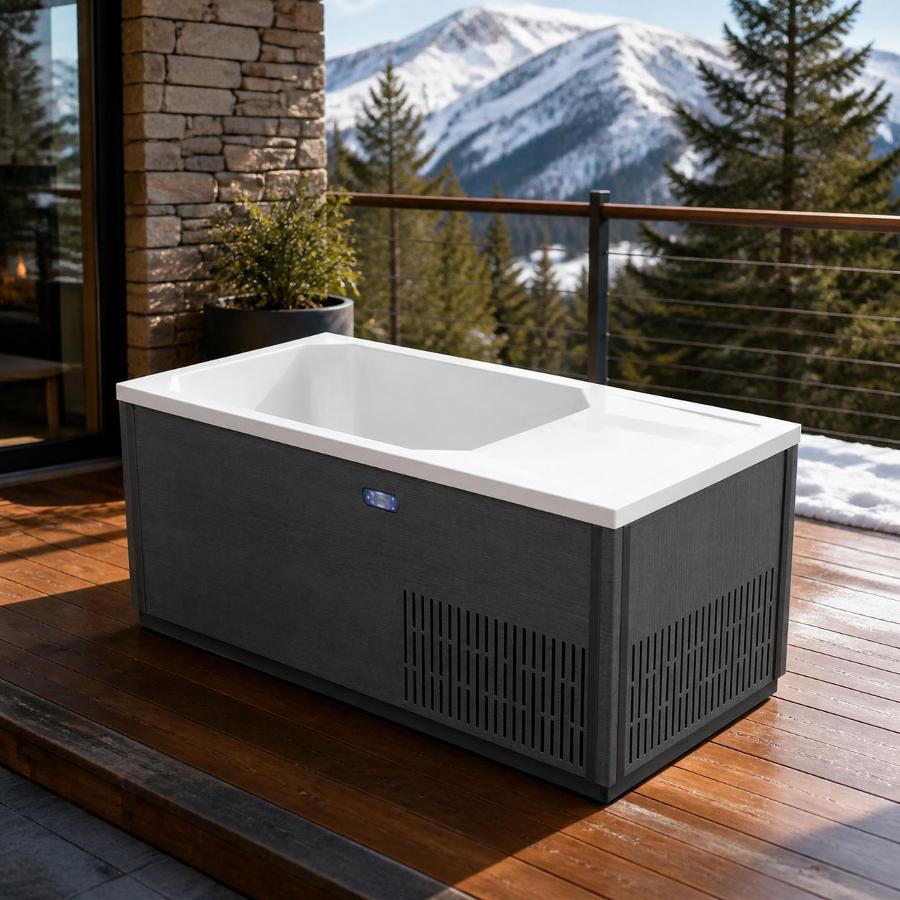
A unit like the Outdoor Cold Plunge Tub C02 is built around this exact use case. Its 900W heat pump system holds water at consistent low temperatures, so the immersion stays predictable rather than drifting warm after a few uses. Consistency is the part that’s easy to overlook but hard to live without once you’re doing this regularly.
The Mental Health Angle Nobody Explains Well
Cold exposure isn’t only a physical intervention. The shock of cold water is known to stimulate endorphin release, which is part of why people describe post-plunge states as calm or even mildly euphoric. It’s not relaxation in the traditional sense, more like a reset switch.
For people managing chronic stress, this matters because the nervous system needs a strong enough stimulus to interrupt rumination. A lukewarm bath rarely does that. Cold water forces attention onto breath and body, which crowds out the mental noise, at least for a few minutes.
None of this replaces therapy or medical treatment for anxiety or depression. Think of it as a tool, not a cure, and the expectations stay realistic.
Circulation Benefits That Extend Beyond the Plunge Itself
The vasoconstriction-dilation cycle mentioned earlier does more than reduce swelling. Repeated cycles are associated with improved oxygen delivery to tissue, since the body is essentially exercising its vascular response the way you’d train a muscle.
Constriction phase: blood is pushed toward the core, protecting vital organs from heat loss.
Dilation phase: once out of the water, vessels reopen and blood flow to extremities increases.
Net effect: circulation gets a repeated stimulus that some people find helps with the sensation of cold hands or feet over time.
This is a physiological response, not a guaranteed clinical outcome for every user. People with cardiovascular conditions should talk to a doctor before starting cold immersion, since the sudden constriction can raise blood pressure briefly.
What Actually Separates a Good Cold Plunge Tub From a Bad One
Buying a plunge tub isn’t like buying a cooler with a fancy lid. The mechanical system matters as much as the shell. Here’s what tends to separate a tub that gets used daily from one that becomes expensive storage:
Temperature control precision. A dedicated heat pump system, rather than relying purely on ice, keeps water at a stable target temperature without constant refilling.
Pump reliability. A brushless pump design reduces wear over years of use and tends to run quieter than brushed alternatives.
Shell material. Acrylic shells resist staining and hold their finish better than fiberglass alternatives exposed to sun and chemicals.
Entry and exit safety. An integrated step matters more than people think, especially when your legs are half-numb from cold water.
Cabinet weatherproofing. Outdoor units need ventilated panels that survive rain and UV without warping.
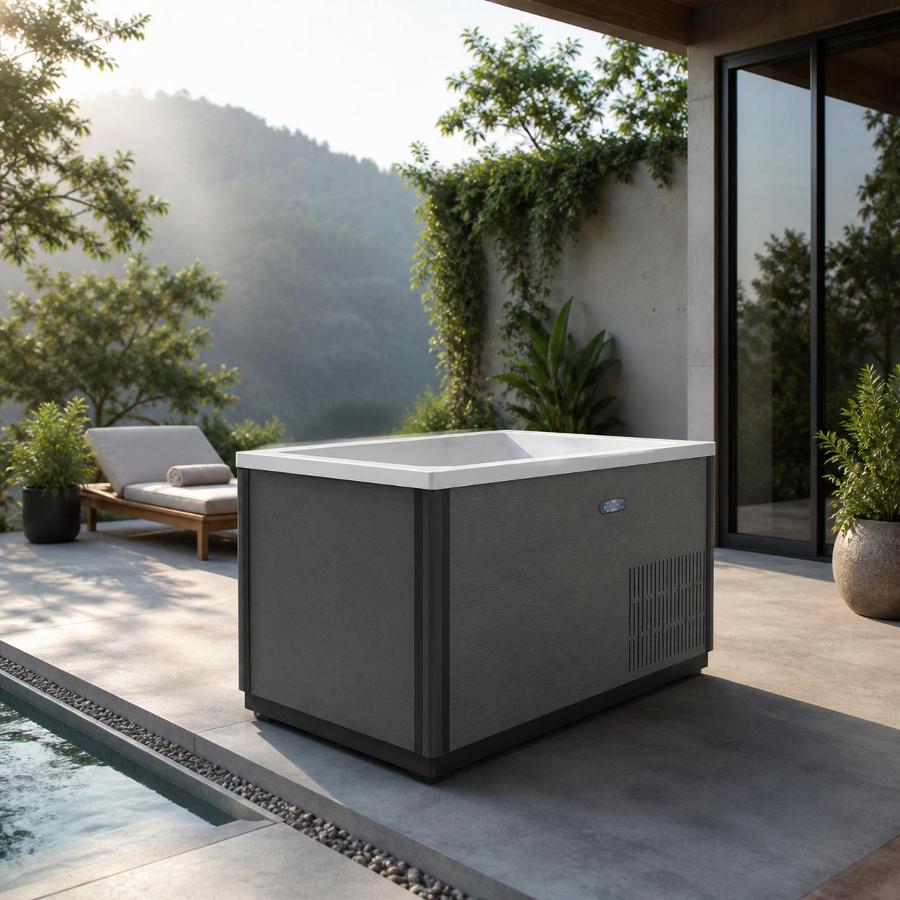
The C02 model addresses most of these directly. It runs on a 900W heat pump paired with a 54W brushless pump, and the exterior cabinet uses vented composite panels designed to hold up outdoors. The interior uses a high-grade porcelain acrylic shell with a built-in seating step, which solves the entry problem without needing a separate ladder.
Technical Specifications Worth Comparing Before You Buy
Specs rarely tell the whole story, but they’re the fastest way to compare options without relying on marketing language. Here’s what to check on any cold plunge tub you’re considering.
Specification
Outdoor Cold Plunge Tub C02
Water Capacity
320 L
Dimensions (Metric)
1695 mm × 830 mm × 850 mm
Net Weight
140 KG
Gross Weight
180 KG
Shell Material
Acrylic (White / Porcelain)
Heater Output
900 W
Pump
54 W Brushless
Total Power Draw
0.954 KW
Cabinet Colors
Platinum, Midnight
Included Accessories
Insulated Cover (1 PC)
Power draw is worth paying attention to if you’re running this off a standard outdoor circuit. At under 1 KW total, the C02 doesn’t demand the kind of dedicated wiring that some larger swim spa systems require, which simplifies installation for a backyard setup.
Where a Cold Plunge Tub Actually Fits in Real Life
Not every buyer has the same use case, and the right setup depends heavily on where and how often it’ll be used. A few common scenarios illustrate the range:
Home backyard patios and decks. Most residential buyers want something compact enough for a patio corner but still deep enough for full immersion.
Athletic training facilities. Recovery centers need durable units that can handle multiple sessions a day without temperature drift.
Boutique spas and wellness studios. Commercial settings often prioritize aesthetics and consistent operation over raw capacity.
Resort and villa relaxation zones. Coastal or luxury properties tend to favor units that photograph well and integrate into outdoor architecture.
A 320-liter tub like the C02 sits comfortably in the middle of this range. It’s large enough for full-body immersion but doesn’t demand the footprint or plumbing complexity of a full swim spa.
Common Questions About Cold Plunge Pools
How cold does the water need to be for recovery benefits? Most cold immersion protocols cited in sports recovery literature fall between roughly 50–59°F (10–15°C). Exact targets vary by individual tolerance and intended use, so it’s worth adjusting gradually rather than jumping straight to the lowest setting.
Can a heat pump system make water cold, or only warm? A heat pump control system regulates temperature in both directions depending on design, maintaining a set target rather than only heating. In the C02’s case, the system is built to hold precise low-temperature immersion levels consistently.
Do I need a separate chiller unit? Not necessarily, if the tub already includes an integrated heat pump system designed for cold-water regulation, as the C02 does. Some standalone tubs without built-in temperature control do require an external chiller.
How long should a cold plunge session last? Common guidance in recovery contexts suggests short sessions, often a few minutes, are sufficient to trigger the vasoconstriction response. Longer isn’t automatically better, and extended exposure raises risk for people with certain health conditions.
Is an outdoor installation harder to maintain than an indoor one? Outdoor units face more weather exposure, which is why cabinet material matters. Weather-resistant composite panels and a proper insulated cover reduce maintenance compared to units without that protection.
Choosing a Setup That Matches How You’ll Actually Use It
The right cold plunge pool comes down to matching the mechanical system to your routine, not chasing the biggest tub on the market. Someone doing quick daily sessions after training has different needs than a spa running back-to-back client bookings.
For us at Victoria Star, the goal with the Outdoor Cold Plunge Tub C02 was building a unit where the temperature system, shell durability, and cabinet construction all support daily use without extra maintenance overhead. Whether it’s a backyard recovery routine or a small wellness studio setup, a cold plunge pool works best when the equipment behind it is dependable enough to disappear into the background of your routine.
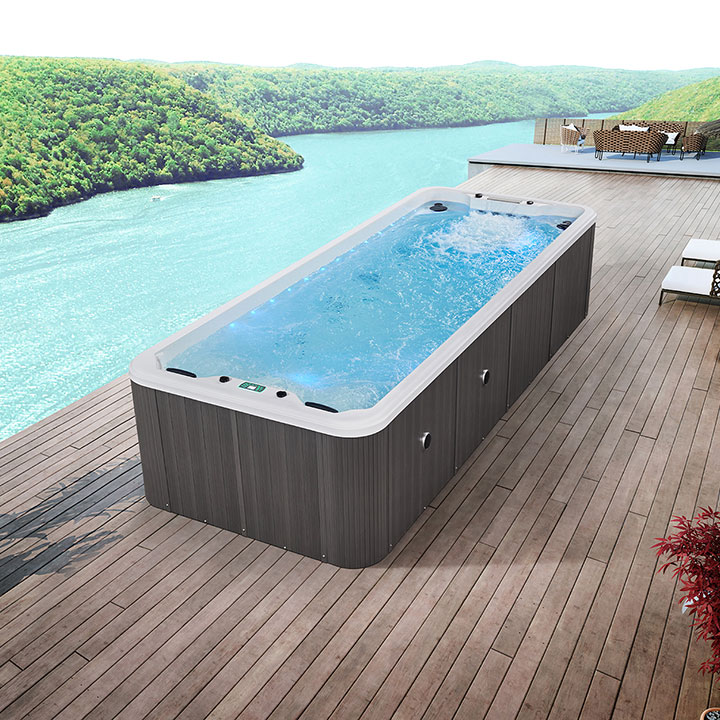
Victoria Star Swim Spa offers the perfect balance between exercise and relaxation, whether you want to swim for fitness or relax in the spacious seating.
Victoria Star Swim Spa offers the perfect balance between exercise and relaxation, whether you want to swim for fitness or relax in the spacious seating.