Cold Plunge or Hot Tub First: How to Order Your Contrast Therapy
Home / News / Cold Plunge or Hot Tub First: How to Order Your Contrast Therapy
September 27, 2026
Anyone who has stood between a steaming hot tub and an ice-cold plunge pool has faced the same question. Cold plunge or hot tub first isn’t just a matter of preference, it changes what your body actually does with the heat and cold you’re about to give it.
Contrast therapy, the practice of alternating hot and cold exposure, has been used by athletes and physical therapists for decades. But the order matters more than most people assume. Get the sequence wrong and you might undercut the recovery benefits you’re chasing, or worse, catch a chill that ruins the rest of your evening.
Why Sequence Changes the Physiological Response
Heat and cold do opposite things to your circulatory system. Hot water dilates blood vessels, pulling blood toward the skin and relaxing muscle tissue. Cold water does the reverse, constricting vessels and pushing blood back toward the body’s core.
That push and pull is the entire mechanism behind contrast therapy. Alternating between vascular dilation and constriction creates a pumping action in the bloodstream. This cycle is believed to help clear metabolic waste from tired muscles and improve circulation to tissue that needs oxygen.
The order you choose determines which state your body ends up in. Finish on cold, and vessels stay constricted, which many people find sharpens alertness. Finish on heat, and vessels stay relaxed, which tends to favor sleep and general looseness.
Cold Plunge First: When It Makes Sense
Starting with cold water suits a specific goal. Athletes who just finished an intense training session often plunge first to blunt acute inflammation before it fully sets in.
Cold water immersion constricts blood vessels almost immediately, which can help limit the swelling response that follows hard exercise. Following that with a hot tub session afterward brings blood flow back to the surface, which some people describe as a wave of relief through fatigued muscles.
This order tends to work well for:
Post-workout recovery, where reducing early inflammation is the priority
Athletes with a training session scheduled later the same day, since finishing warm keeps muscles loose
Anyone who finds a cold start too jarring on tense, unwarmed muscles
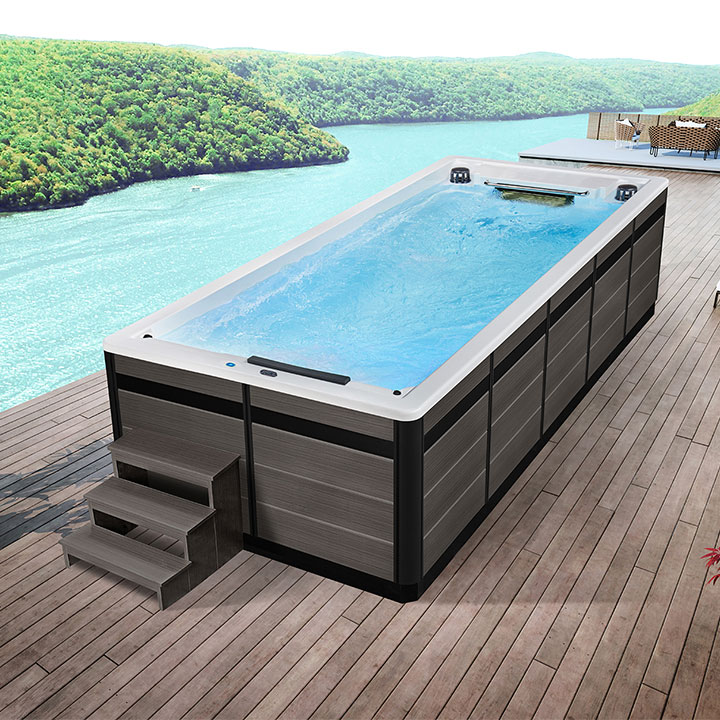
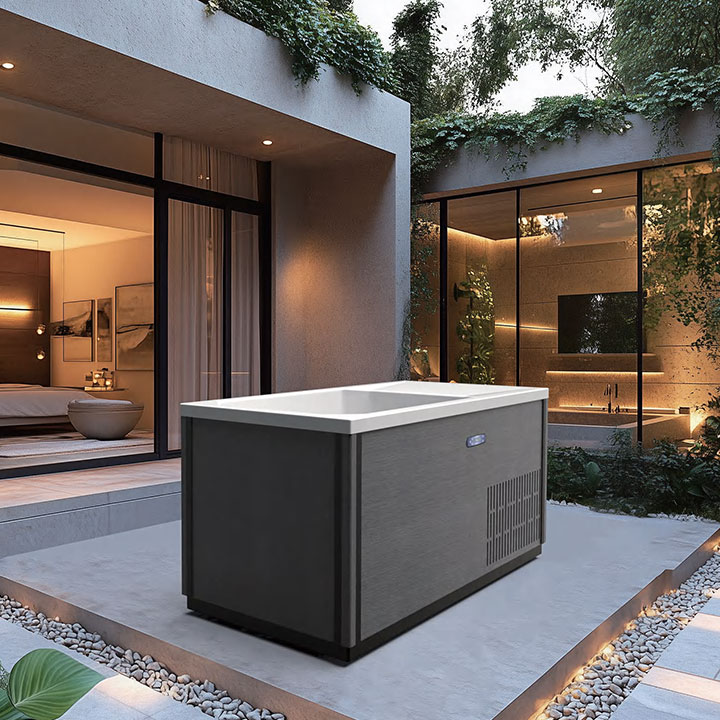
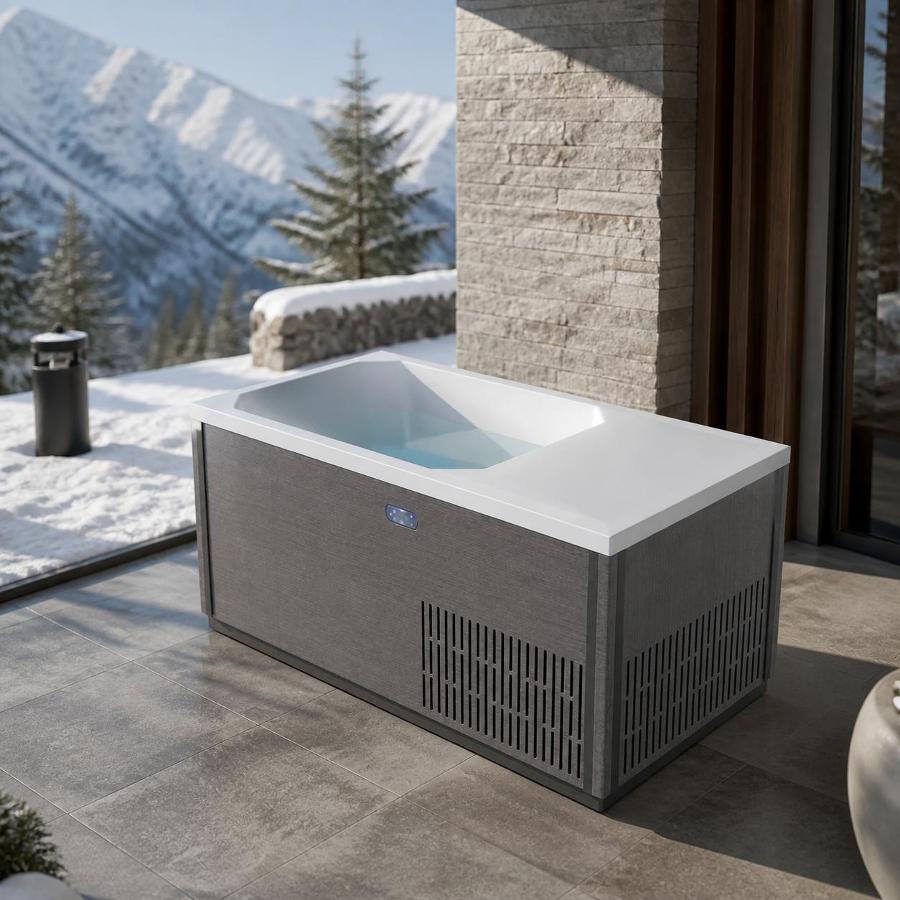
There’s a practical reason this sequence appeals to serious trainers. A 320-liter cold plunge tub like the Outdoor Cold Plunge Tub C02 is built specifically for this kind of targeted, short-duration immersion, with an integrated entry step that makes getting in and out fast and controlled rather than a slow, awkward process.
Hot Tub First: The More Common Choice
For most people using contrast therapy at home, starting with heat is the easier entry point. Warm water relaxes muscle fibers and increases flexibility before the cold shock arrives, which makes the plunge feel less abrupt.
This sequence also mirrors how sauna-and-cold-plunge circuits are traditionally structured in Scandinavian and Northern European bathing culture, where heat exposure always precedes the cold. The logic is straightforward: loosen the body first, then use cold to close the session and reset the nervous system.
Hot tub first tends to suit:
Evening wellness routines, where the goal is relaxation rather than acute recovery
Beginners easing into cold exposure for the first time
People managing stiff joints or chronic tightness that responds better to gradual warming
Ending on cold water also has a mental clarity effect that many users report anecdotally, tied to the surge of alertness that follows sudden cold exposure. That’s part of why some people treat the plunge as a morning ritual rather than a nighttime one.
A Quick Comparison Table
Factor
Cold First, Then Hot
Hot First, Then Cold
Best for
Immediate post-exercise recovery
General relaxation and evening routines
Effect on inflammation
Limits early swelling response
Less targeted for acute inflammation
Muscle feel afterward
Warm, loose, relaxed
Alert, invigorated
Beginner friendly
Less so, cold start is more jarring
Yes, eases into cold exposure
Traditional use case
Sports recovery protocols
Sauna and spa bathing culture
What the Water Temperature Actually Needs to Be
Order aside, the contrast only works if both ends of the spectrum are far enough apart. A cold plunge that’s merely cool won’t trigger meaningful vasoconstriction, and a hot tub that’s lukewarm won’t dilate vessels enough to matter.
This is where equipment design becomes relevant rather than incidental. The Outdoor Cold Plunge Tub C02 uses an integrated 900W heat pump system paired with a 54W brushless pump to hold precise low temperatures, rather than relying on ice alone, which drifts and needs constant topping off.
That kind of consistent temperature control matters because contrast therapy depends on repeatability. If your plunge temperature varies by several degrees between sessions, you can’t reliably compare how your body responds over time.
Duration Matters as Much as Order
Time spent in each stage shapes the outcome just as much as which one comes first. Most contrast protocols keep cold exposure brief, often just one to three minutes, since the goal is a physiological jolt, not prolonged exposure that risks discomfort or excessive cooling of the core.
Hot tub sessions can run longer, typically ten to fifteen minutes, since the risk profile is different and the goal is deeper muscle relaxation rather than a quick vascular response. Some people cycle through two or three rounds of hot and cold rather than a single pass, particularly when using it as a structured recovery session after training.
Regardless of the pattern, moderation applies at both ends. Extended cold exposure beyond a few minutes offers diminishing returns and increases risk of excessive core cooling, especially outdoors in cold climates.
Setting Up Both at Home
Having both a plunge tub and a hot tub in the same outdoor space makes contrast therapy far more practical than driving to a facility that offers one or the other. A private setup also removes the guesswork of scheduling around gym hours or shared equipment.
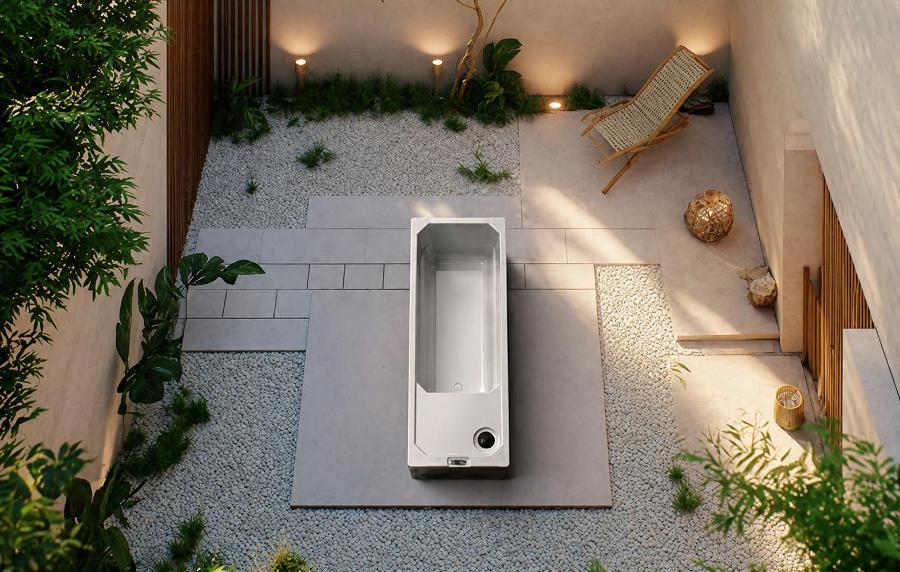
The C02’s compact footprint, at roughly 1695 mm by 830 mm, fits comfortably alongside a hot tub on most patios, decks, or courtyards without requiring a dedicated wellness room. Its weather-resistant composite cabinet, available in Platinum or Midnight, is built to sit outdoors year-round next to a spa setup.
Placement matters for the experience, too. Positioning both units close together shortens the transition time between hot and cold, which keeps the temperature shock effect sharp rather than dulled by a slow walk between them.
Common Questions About Sequencing
Does starting with cold burn more calories than starting with hot? There isn’t reliable evidence that sequence order changes caloric expenditure meaningfully. The main differences lie in how you feel afterward, not metabolic output.
Is it safe to do cold plunge and hot tub in the same session every day? Many people incorporate contrast therapy several times a week without issue, but anyone with cardiovascular conditions should check with a doctor first, since rapid temperature shifts do stress the heart and blood vessels.
Can I use cold water immersion without a hot tub at all? Yes. Cold plunging alone is a complete practice on its own, commonly used for recovery and mental clarity even without a hot follow-up.
How cold should the plunge actually be? Most cold therapy protocols fall somewhere between 50 and 59 degrees Fahrenheit, though personal tolerance varies and beginners often start on the warmer end of that range.
Choosing What’s Right for Your Routine
There isn’t a universal answer to whether cold plunge or hot tub first is the better order, because the right choice depends entirely on what you’re using the session for. Recovery-focused athletes tend to favor cold first, while those chasing relaxation and better sleep usually do better starting warm.
What matters more than the debate itself is consistency and equipment that actually holds its temperature. A dedicated cold plunge tub with proper heat pump regulation, like the Outdoor Cold Plunge Tub C02 from Victoria Star, removes the guesswork of ice-based cooling and lets you focus on finding the sequence that fits your body. Whichever order you settle on, cold plunge or hot tub first, the goal stays the same: a controlled, repeatable contrast that your body can adapt to over time.
Victoria Star Swim Spa offers the perfect balance between exercise and relaxation, whether you want to swim for fitness or relax in the spacious seating.
Victoria Star Swim Spa offers the perfect balance between exercise and relaxation, whether you want to swim for fitness or relax in the spacious seating.