Cold Plunge on Period: What Actually Happens to Your Body
Home / News / Cold Plunge on Period: What Actually Happens to Your Body
September 25, 2026
Cold plunge on period is one of those topics that gets debated a lot in recovery and wellness circles, usually without much nuance. Some people swear cold immersion eases cramps, while others feel worse after a few minutes in icy water during their cycle. The truth sits somewhere in between, shaped by hormones, pain tolerance, and how your body reacts to sudden temperature shifts.
Understanding what’s happening physiologically during menstruation helps explain why cold exposure feels different depending on the day of your cycle. It also helps you decide whether a cold plunge session is worth trying this month or better saved for later.
Why Your Body Responds Differently to Cold During Menstruation
Hormone levels shift dramatically across a menstrual cycle, and estrogen and progesterone both influence how your nervous system processes temperature and pain. During the luteal phase, right before your period starts, progesterone tends to raise your core body temperature slightly. That’s why some people feel more sensitive to cold water once bleeding begins.
Prostaglandins also spike during menstruation. These lipid compounds trigger uterine contractions, which is what causes cramping in the first place. Cold water immersion constricts blood vessels near the skin’s surface, a response called vasoconstriction. This is the same mechanism athletes rely on for reducing swelling after intense training.
The question is whether that vasoconstriction helps or hinders period pain. Cramps originate deep in the uterine muscle, not in surface tissue, so the relationship between cold exposure and menstrual pain relief isn’t as direct as it is for a sprained ankle.
Does Cold Water Help or Worsen Period Cramps
There’s no single answer here, and that’s frustrating if you’re looking for a clean yes or no. Some people report real relief, others notice their cramps intensify temporarily during the plunge itself.
A few patterns tend to show up consistently:
Cold exposure can trigger a temporary tightening sensation in the abdomen, which may feel like it’s amplifying cramps for the first 30 to 60 seconds.
Once the initial shock passes, some people experience a numbing effect that dulls the perception of pain, similar to how ice packs are used for localized muscle soreness.
The endorphin release associated with cold water immersion may help offset the mood dips and irritability that often accompany the luteal and menstrual phases.
Poor circulation or already-low body temperature during your period can make the cold feel more intense than it would on a non-period day.
None of this means cold plunging is a substitute for medical treatment of severe menstrual pain. If cramps are debilitating, that’s a conversation for a doctor, not a wellness routine.
The Mental Health Angle Nobody Talks About Enough
Period-related mood changes are real, driven by the same hormonal fluctuations that cause physical symptoms. Cold water immersion has a well-documented association with endorphin release, the body’s natural mood-lifting chemicals that activate in response to cold stress.
This matters during menstruation because irritability, anxiety, and low mood are common complaints, sometimes more disruptive than the cramps themselves. A short, controlled cold exposure session might not fix hormonal mood swings, but the mental clarity many people report afterward can make the rest of the day easier to manage.
It’s worth separating the physical recovery benefits from the psychological ones. The muscle recovery angle gets more attention in fitness circles, but the calming, reset-like feeling after a plunge is often what keeps people coming back, period or not.
Practical Guidelines for Cold Plunging During Your Cycle
If you’re going to try a cold plunge on period days, a few adjustments make the experience more manageable than just diving in the way you would on any other day.
Start with shorter sessions, somewhere around one to two minutes, rather than pushing toward the longer durations some cold plunge routines recommend.
Pay attention to flow and cramping intensity before getting in. Heavy flow days with severe cramping are not the time to test your cold tolerance.
Warm up gradually afterward instead of jumping straight into a hot shower, since rapid temperature swings can feel jarring on a day when your body is already working hard.
Skip the plunge entirely if you’re experiencing dizziness, nausea, or unusually heavy bleeding, since cold exposure can sometimes intensify those symptoms.
Track how your body responds over a few cycles rather than judging the practice off one session, since hormonal patterns vary month to month even for the same person.
Hydration also plays a bigger role than people expect. Blood loss during menstruation already puts some strain on fluid balance, and cold immersion adds a mild diuretic effect for some people, so drinking water before and after a session isn’t just a wellness cliché, it’s practical.
Setting Up a Cold Plunge Routine That Works Year-Round
For people who plunge regularly regardless of cycle timing, having a dedicated setup at home removes a lot of the friction that comes with driving to a facility or scheduling around business hours. This is where equipment choice starts to matter.
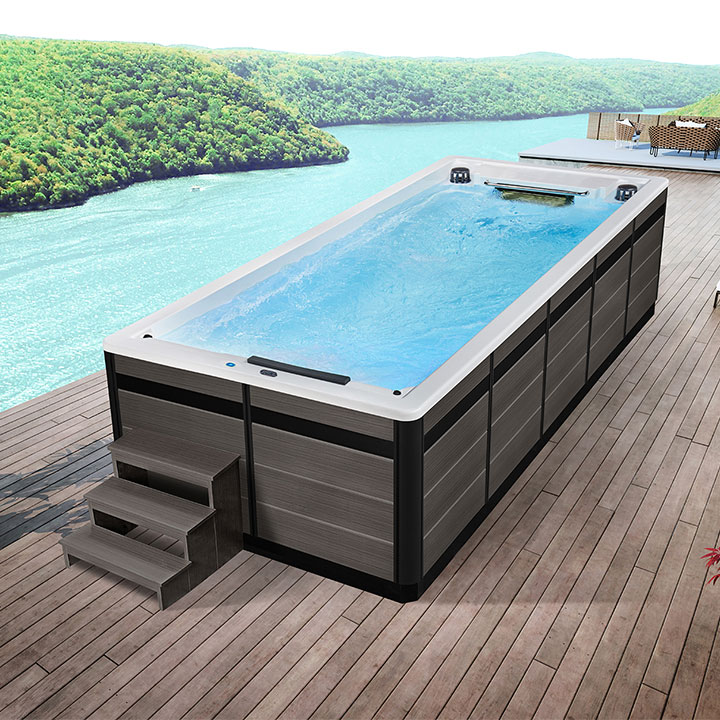
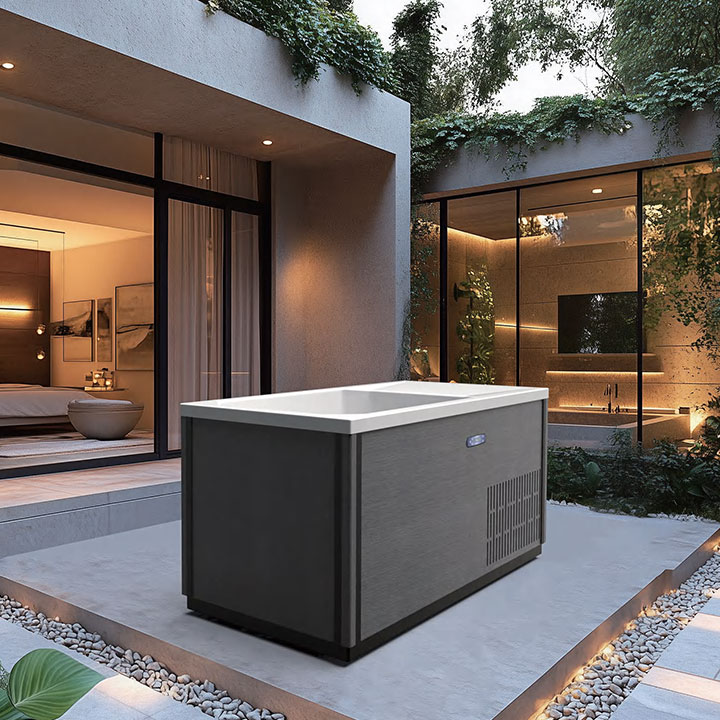
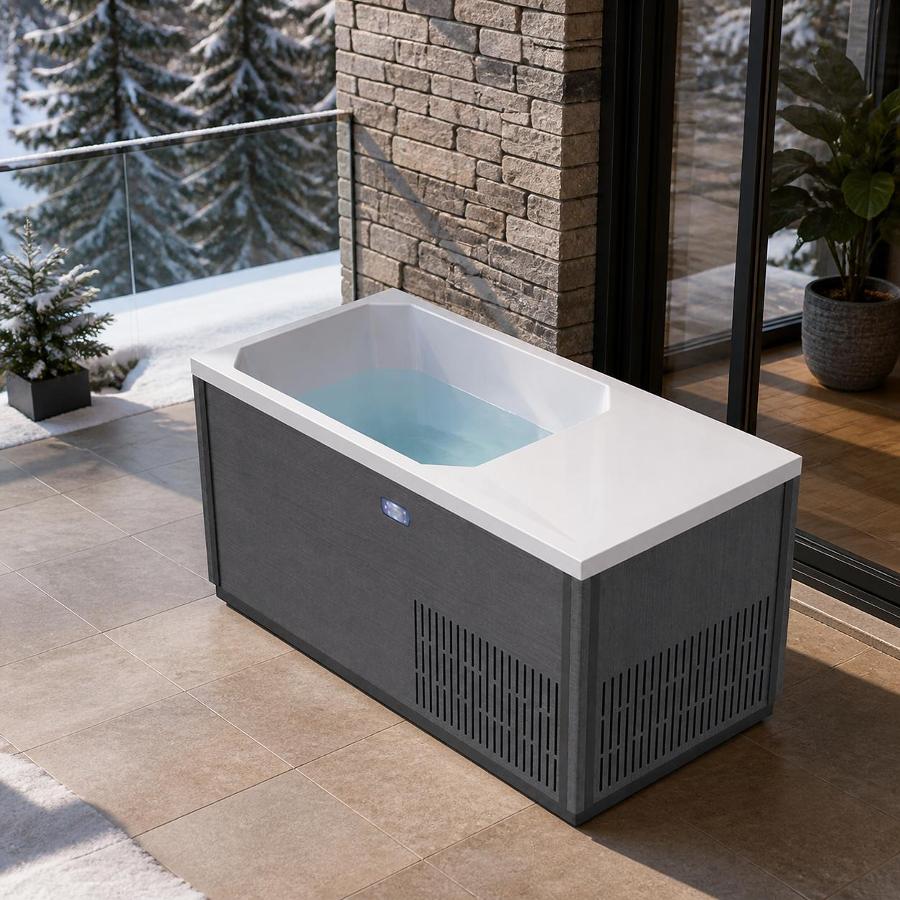
The Outdoor Cold Plunge Tub C02, for example, is built around a 320-liter basin with an integrated entry step, which makes getting in and out easier on days when cramping already affects mobility and balance. It uses a 900W heat pump system paired with a 54W brushless pump to regulate water temperature, so you’re not relying on bagged ice or unpredictable ambient conditions.
The porcelain acrylic shell resists staining and holds up under repeated exposure to both cold water and outdoor weather, which matters if the tub lives on a patio or deck year-round. A weather-resistant cabinet with vented composite panels helps protect the internal components from moisture buildup, something worth checking on any outdoor unit before committing to it.
Specification
Detail
Water Capacity
320 L
Dimensions
1695 mm × 830 mm × 850 mm
Heater Output
900 W
Pump
54 W brushless
Shell Material
Porcelain acrylic
Cabinet Colors
Platinum, Midnight
Included Cover
1 insulated cover
Having a heat pump control system also means you can adjust the water temperature based on where you are in your cycle. Slightly less extreme cold on a heavy period day, colder settings for a standard recovery session on other days. That flexibility is part of why dedicated tubs have become more common in home recovery setups compared to relying solely on ice baths filled by hand.
Common Questions About Cold Plunging and Menstruation
Is it safe to cold plunge on the first day of your period? For most people, yes, as long as symptoms like dizziness or fainting aren’t present. Heavy flow alone isn’t necessarily a reason to avoid it, but it’s worth listening to how your body feels that specific day.
Can cold plunging make cramps worse? Temporarily, the initial cold shock can create a tightening sensation that feels similar to cramping. This usually fades within the first minute as the body adjusts.
How cold should the water be during your period? There’s no universal number, but many people find slightly warmer settings, in the higher end of typical cold plunge ranges, more tolerable during menstruation without losing much of the recovery benefit.
Does cold plunging affect period flow or cycle length? There’s no strong evidence linking short-term cold water exposure to changes in menstrual flow or cycle timing. Hormonal cycles are influenced by far more persistent and long-term factors.
Should I avoid cold plunging entirely during my period? Not necessarily. Many people continue their regular routine with minor adjustments, like shorter sessions or slightly warmer water, rather than skipping it altogether.
Listening to Your Body Instead of Following a Rigid Rule
The honest answer to whether you should cold plunge on period days is that it depends on your symptoms, your tolerance, and how your body has responded in the past. There isn’t a universal rule that applies to everyone, and that’s fine. Wellness practices work best when they flex around real physical signals rather than a fixed schedule.
For those who plunge regularly, having reliable equipment at home, like the Outdoor Cold Plunge Tub C02 with its heat pump temperature control and ergonomic step design, makes it easier to adapt sessions to how you’re feeling that day instead of committing to an all-or-nothing approach. Whether you’re managing post-workout soreness or simply trying to feel more like yourself during your cycle, treating cold plunge on period days as a flexible tool, not a strict rule, tends to produce the best results.
Victoria Star Swim Spa offers the perfect balance between exercise and relaxation, whether you want to swim for fitness or relax in the spacious seating.
Victoria Star Swim Spa offers the perfect balance between exercise and relaxation, whether you want to swim for fitness or relax in the spacious seating.