Cold Plunge Nervous System Effects: What Happens When Cold Water Hits Your Body
Home / News / Cold Plunge Nervous System Effects: What Happens When Cold Water Hits Your Body
September 26, 2026
Why Cold Exposure Feels So Intense at First
Anyone who has stepped into a cold plunge tub knows the first ten seconds are brutal. Breath shortens, skin tightens, and the mind scrambles for control. That reaction is not random. It is your nervous system responding to a sudden drop in temperature, and understanding it changes how people approach cold therapy altogether.
The cold plunge nervous system response starts the moment skin receptors detect the temperature shift. These thermoreceptors send rapid signals to the brain, triggering an involuntary gasp reflex and a spike in heart rate. This is the body’s alarm system doing exactly what it evolved to do.
For people new to cold water immersion, this initial shock can feel alarming. But the intensity fades within seconds as the body adjusts. Recognizing this pattern helps users push past the discomfort instead of abandoning the practice too early.
How the Autonomic Nervous System Reacts to Cold Water
The autonomic nervous system splits into two branches: sympathetic and parasympathetic. Cold immersion activates the sympathetic branch first, the one responsible for fight-or-flight responses. Blood vessels constrict near the skin, redirecting blood toward the body’s core.
This vasoconstriction is a protective measure. It limits heat loss and shields vital organs during sudden cold exposure. As the body adapts over repeated sessions, many users report the transition to a calmer parasympathetic state happens faster and feels less jarring.
That shift toward calm is where most of the reported nervous system benefits come from. Once the initial stress response passes, the body settles, breathing slows, and a sense of clarity often follows.
The Link Between Cold Plunge Sessions and Endorphin Release
According to the product documentation for the Outdoor Cold Plunge Tub C02, cold exposure stimulates natural endorphin secretion. This is one of the more discussed mechanisms behind why people feel mentally lighter after a plunge.
Endorphins are the body’s natural mood regulators. Their release during cold stress is thought to contribute to lower perceived stress and improved mental clarity, according to the manufacturer’s product information. This is not a promise of instant euphoria, but a documented pattern many regular users describe.
Consistency matters here. A single plunge might feel like a jolt. Repeated sessions, spaced a few times a week, tend to produce more noticeable shifts in mood stability over time.
Blood Circulation Changes During Cold Immersion
Cold water immersion triggers a cycle of vasoconstriction followed by vasodilation once the body warms back up. This contrast cycle is central to how cold plunge tubs are marketed for circulation support.
Per the product specifications, this vascular constriction and dilation process is intended to stimulate blood flow and improve oxygen delivery to body tissues. Athletes often use this cycle deliberately, alternating cold immersion with warm recovery periods to encourage circulation.
This is why cold plunge tubs are frequently installed near training facilities and recovery centers, where circulation support directly ties into faster turnaround between training sessions.
Muscle Recovery and the Role of Cold Therapy
Post-exercise soreness is largely driven by micro-inflammation in muscle tissue. Cold water immersion is widely used to blunt that inflammatory response before it peaks.
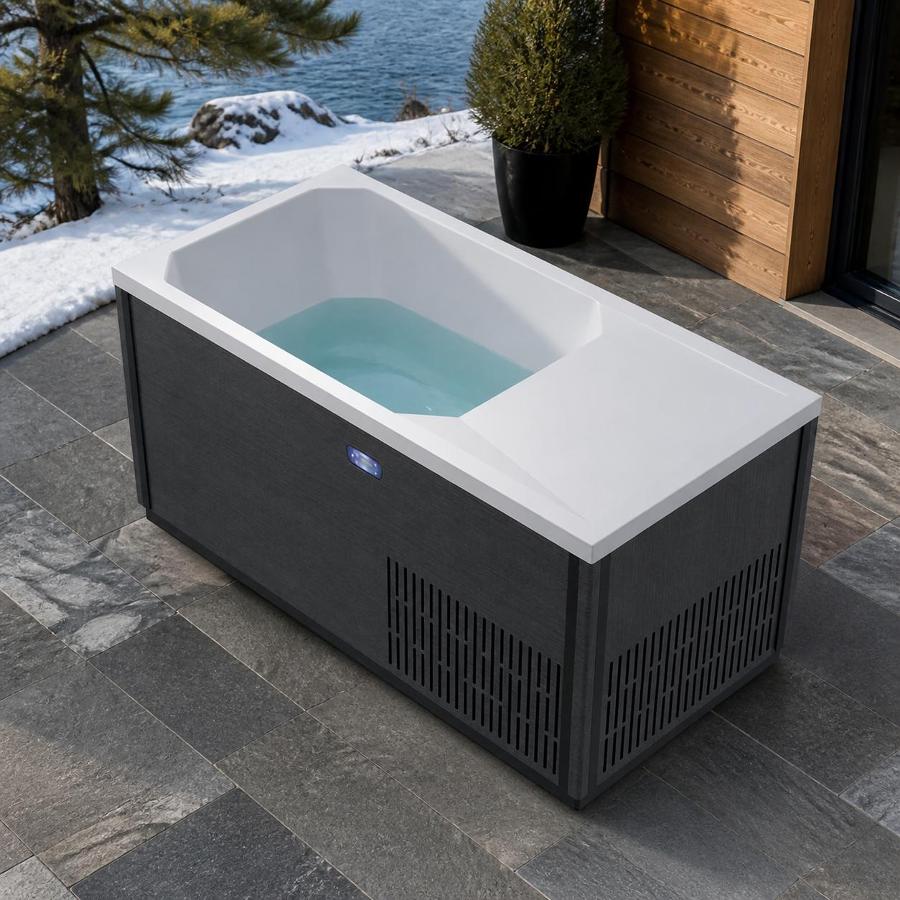
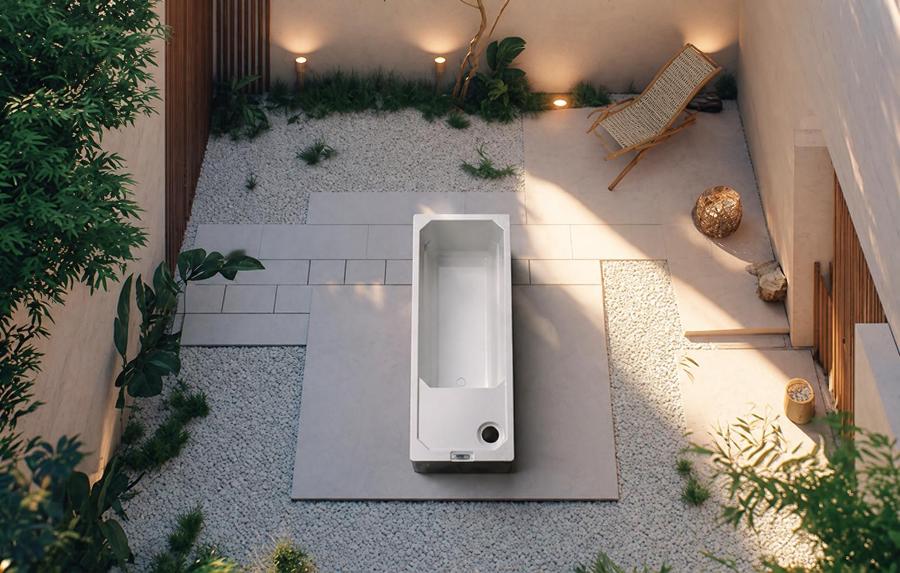
The Outdoor Cold Plunge Tub C02 is built specifically around this use case. Its 320-liter basin and integrated 900W heat pump system allow for consistent low-temperature immersion, which the manufacturer states helps constrict blood vessels, reduce inflammation, and ease post-exercise muscle soreness.
Athletes have used variations of cold immersion for recovery for decades, long before dedicated tubs existed. What has changed is convenience. A dedicated unit at home removes the need for makeshift ice baths in bathtubs or coolers, which were never designed for repeated, controlled use.
Choosing a Cold Plunge Tub Built for Consistent Use
Not every cold plunge setup holds up to regular use. Temperature stability, water capacity, and build durability all affect whether a tub becomes a daily habit or a forgotten backyard fixture.
When evaluating a cold plunge tub, consider these factors:
Temperature control reliability — a dedicated heat pump system, rather than manual ice refills, keeps sessions consistent without constant maintenance.
Water capacity — enough volume to fully submerge the torso and legs matters more than tub size alone.
Build materials — weather-resistant cabinets and durable acrylic shells hold up better against outdoor exposure over years of use.
Ease of entry — an integrated step reduces strain getting in and out, especially after intense training.
The C02 model addresses these points directly, with a 320L capacity, a 900W heat pump paired with a 54W brushless pump, and a porcelain acrylic shell designed for durability.
Technical Specifications at a Glance
Specification
Detail
Water Capacity
320 L
Heater Output
900 W (heat pump)
Pump Power
54 W brushless
Dimensions
1695 mm × 830 mm × 850 mm
Net Weight
140 KG
Shell Material
Porcelain acrylic
Cabinet Colors
Platinum, Midnight
Power Supply
0.954 KW
These figures matter more than they might seem at first glance. A 900W heat pump, for instance, is what separates a tub that maintains consistent low temperatures from one that relies entirely on manual ice, which fluctuates and degrades the experience.
Where Cold Plunge Tubs Fit in Different Settings
Cold plunge tubs are not exclusive to elite athletes. Their application spans several environments, each with different priorities.
Home backyards and patios — daily wellness routines integrated into everyday life.
Sports training facilities — structured recovery protocols between training blocks.
Wellness centers and spas — guided cold therapy sessions for clients.
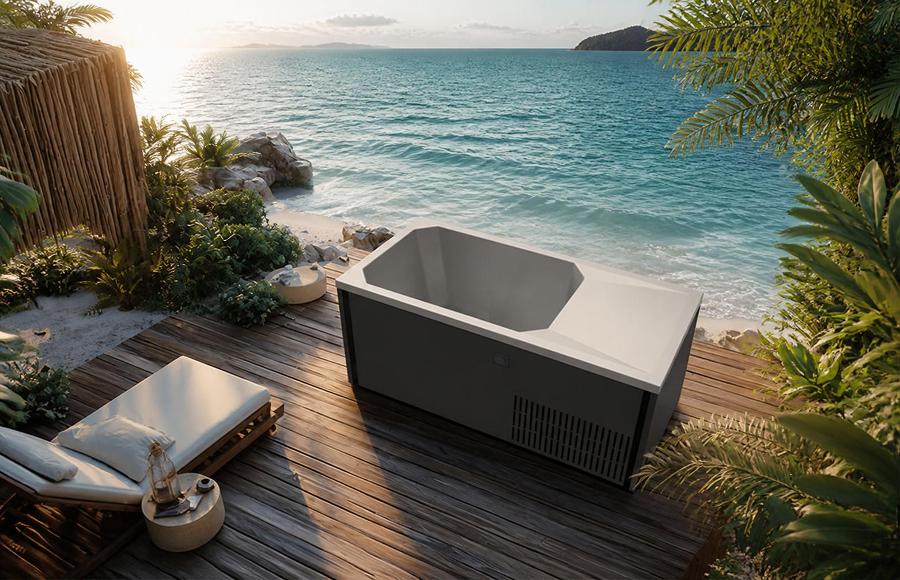
Resort and hospitality settings — relaxation amenities paired with scenic outdoor placement.
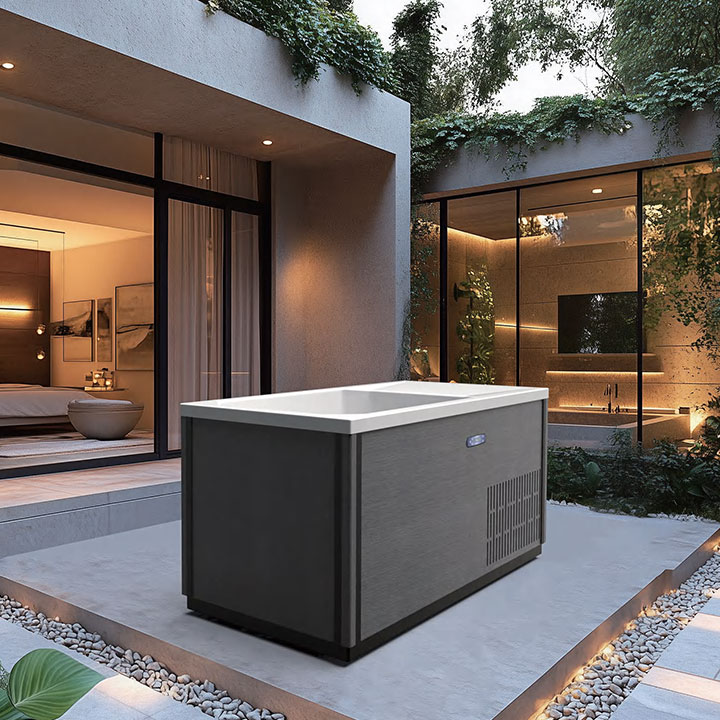
The exterior cabinet design, available in Platinum or Midnight with a weather-resistant composite finish, is built to handle outdoor placement across these varied settings without frequent upkeep.
Common Questions About Cold Plunge and the Nervous System
Does cold plunge therapy actually calm the nervous system, or does it just feel that way? The calming sensation reported after cold immersion is tied to the shift from sympathetic activation to parasympathetic recovery once the body adjusts. This transition is a recognized physiological pattern, though individual experiences vary.
How long should a cold plunge session last? Most users start with shorter sessions, gradually increasing duration as tolerance builds. There is no universal standard duration, and beginners should prioritize comfort over pushing for extended time.
Is a heat pump system better than ice-based cooling? A heat pump system, like the one integrated into the C02, offers more consistent temperature regulation without the need for repeated ice purchases or manual monitoring.
Can cold plunge tubs be used year-round outdoors? Yes, when built with weather-resistant cabinet materials and durable acrylic shells designed for outdoor exposure across seasons.
Building Cold Exposure Into a Sustainable Routine
The nervous system does not adapt overnight. Repeated, moderate exposure teaches the body to recover from stress more efficiently, which is the underlying goal behind most cold plunge routines.
For us at Victoria Star, this is the principle behind designing tubs like the C02, built to support consistent, reliable cold plunge nervous system routines rather than one-off novelty use. A tub that maintains stable temperatures and fits naturally into a backyard or training facility is far more likely to become part of a lasting recovery habit than one that requires constant manual effort. That consistency, more than any single session, is what actually shapes how the nervous system adapts over time.
Victoria Star Swim Spa offers the perfect balance between exercise and relaxation, whether you want to swim for fitness or relax in the spacious seating.
Victoria Star Swim Spa offers the perfect balance between exercise and relaxation, whether you want to swim for fitness or relax in the spacious seating.