Cold Plunge Ice: What It Actually Does to Your Body and How to Choose a Tub
Home / News / Cold Plunge Ice: What It Actually Does to Your Body and How to Choose a Tub
September 29, 2026
Cold plunge ice has moved from athlete locker rooms into ordinary backyards, and the shift makes sense once you understand what cold water actually does. Dropping your body into water near freezing triggers a chain of vascular responses that athletes have chased for decades. This guide breaks down the mechanism, the practical setup choices, and what separates a reliable tub from a glorified stock tank.
Why Cold Water Affects the Body This Way
Submerging in cold water forces blood vessels near the skin to constrict, a response called vasoconstriction. Blood gets pushed toward the body’s core to protect internal organs from heat loss. When you step out and warm back up, those vessels dilate again, and blood rushes back through the tissue that just endured the cold.
That contraction-and-release cycle is the entire point. It’s not about punishing yourself in ice water for the sake of discomfort. The cycling itself is what many people report as helpful for circulation and post-exercise soreness, since fresh, oxygenated blood moves through fatigued muscle tissue once the vessels reopen.
There’s also a mental component worth naming honestly. Cold exposure triggers a stress response, and the body counters it with endorphin release. People often describe a sense of clarity or calm right after getting out, which lines up with what’s documented about acute cold stress and mood regulation. It’s a real effect, though it varies person to person and isn’t a substitute for treating chronic stress or clinical depression.
The Difference Between Ice Buckets and an Actual Cold Plunge Tub
Throwing bags of ice into a stock tank works, technically. It also means constant trips to the store, water that swings in temperature as ice melts, and no way to hold a set point for a training block. This is where a dedicated cold plunge ice system changes the equation.
A tub with a built-in chiller maintains a stable target temperature without manual ice refills. That consistency matters more than people expect. Cold therapy protocols generally rely on staying within a defined range for a defined duration, and a system that drifts by several degrees mid-session makes that hard to replicate session after session.
What to Look For in a Cold Plunge Tub
Not every plunge tub is built the same way, and the differences show up in daily use rather than on a spec sheet at first glance. A few questions narrow the decision quickly:
Does it use a heat pump or chiller to hold temperature automatically, or does it rely on ice and ambient cooling alone?
Is the pump strong enough to circulate the full water volume without leaving dead zones near the bottom?
Is the shell material rated for continuous outdoor exposure, including UV and temperature swings?
Does the seating step suit your height, or will you be crouched uncomfortably at the bottom?
Is there an insulated cover to reduce heat pump load and cut down on debris between sessions?
Skipping any of these usually shows up later as a maintenance headache or an inconsistent soak.
A Practical Example: The Outdoor Cold Plunge Tub C02
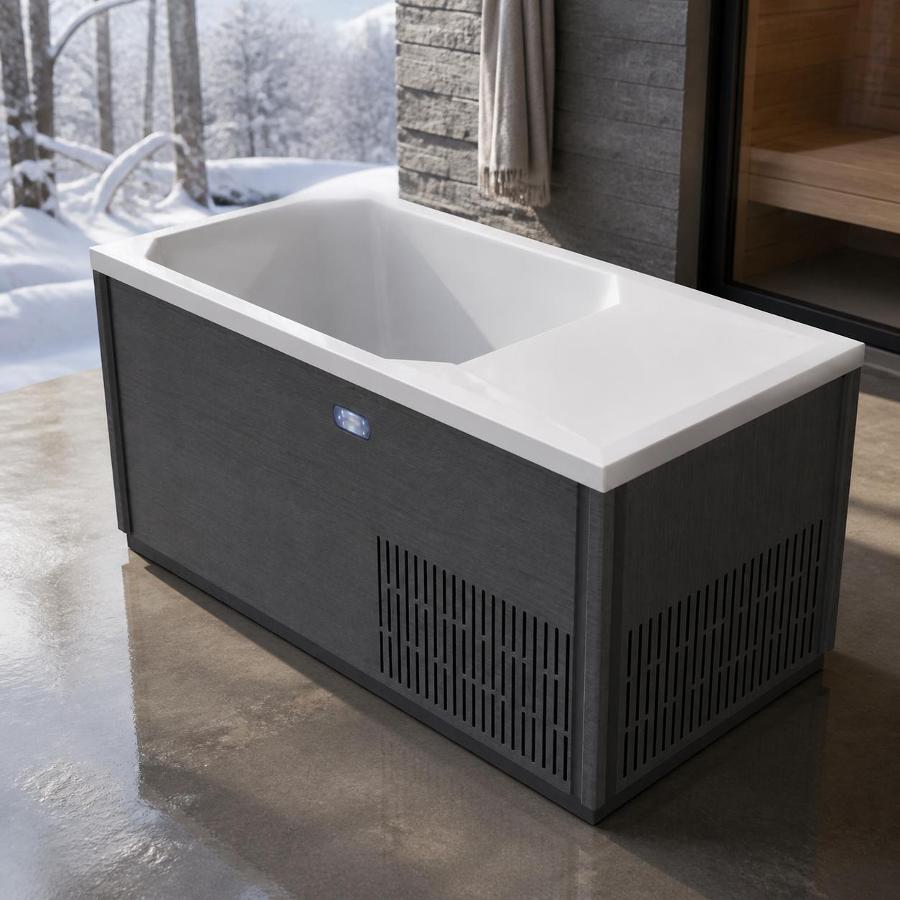
For us, one product that reflects these priorities directly is the Outdoor Cold Plunge Tub C02, built as a dedicated ice bath for post-workout recovery and daily cold therapy rather than a converted container. It holds 320 liters, which is enough for full immersion without excessive water to chill.
The tub runs on an integrated 900W heat pump system paired with a 54W brushless pump. That combination is what keeps the water at a consistent low temperature instead of relying on ice that melts unevenly over the course of a session. The pump’s job is circulation, moving water so the temperature stays even from the surface to the base rather than forming cold and warm pockets.
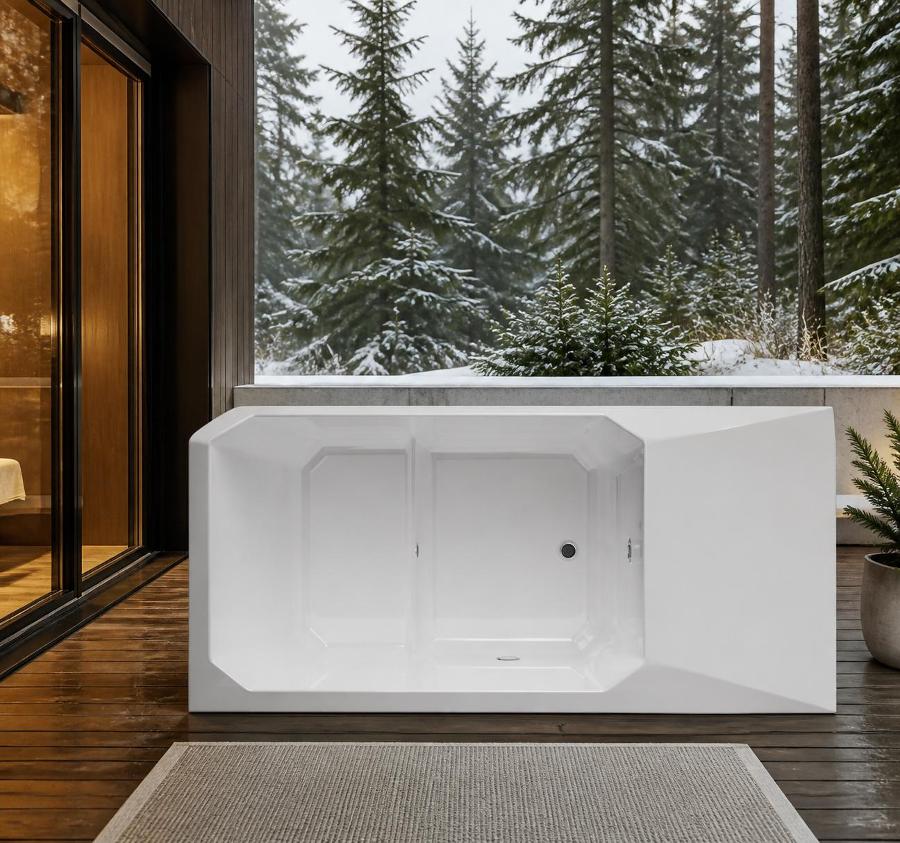
Inside, the shell is a high-grade porcelain acrylic finish, chosen for its smooth surface and resistance to staining from prolonged water contact. The interior includes a built-in seating step, which matters more than it sounds. Cold plunge sessions typically run a few minutes at a time, and having a stable, ergonomic place to sit changes whether people actually stick with the routine.
On the outside, the cabinet is finished in either Platinum or Midnight, with vented composite panels that allow airflow around the mechanical components. This ventilation is a small but important detail, since heat pump systems generate warmth that needs somewhere to dissipate. A digital control interface on the front panel lets users adjust settings without opening the unit.
Technical Specifications
Specification
Detail
Model
C02
Dimensions (Metric)
1695 mm × 830 mm × 850 mm
Water Capacity
320 L
Net Weight
140 KG
Gross Weight
180 KG
Shell Material
Porcelain Acrylic (White)
Cabinet Colors
Platinum, Midnight
Heater Output
900 W
Pump Output
54 W (Brushless)
Power Supply
0.954 KW
Included Cover
1 Insulated Cover
The insulated cover included with the unit reduces heat loss between sessions, which lowers the load on the heat pump and, in turn, reduces running costs over time. It also keeps debris out, which matters for anyone placing the tub outdoors under open sky.
Where These Tubs Actually Get Used
Cold plunge tubs aren’t confined to elite training centers anymore, though that’s still one of the primary settings. Application patterns tend to fall into a few categories:
Home backyard patios and private courtyards, where consistency and low maintenance matter more than commercial-grade throughput.
Athletic training facilities and recovery centers, where multiple sessions per day demand a stable heat pump and durable shell.
Boutique wellness centers and day spas, where guests expect a controlled, repeatable experience.
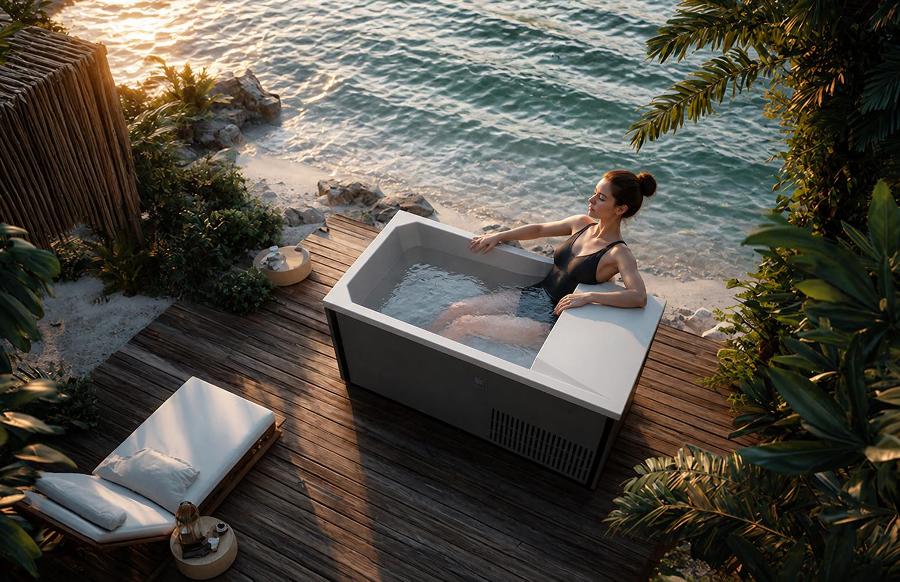
Resort villas and coastal hospitality settings, where outdoor placement next to natural scenery is part of the appeal.
That range says something about how the category has matured. What used to require improvised setups with bagged ice and a cooler now has purpose-built equipment designed for repeated, low-effort use.
Common Questions About Cold Plunge Ice
Do I need actual ice, or does a chiller-based tub work the same way? A chiller or heat pump system replicates the cold exposure without requiring bags of ice. The water reaches and holds a low temperature mechanically, which tends to be more consistent than ice melting at variable rates.
How cold does the water need to be for cold plunge therapy to have an effect? Protocols vary, and specific temperature and duration targets are often personalized based on tolerance and goals. Anyone with cardiovascular conditions or other health concerns should consult a physician before starting cold immersion.
Can a cold plunge tub be used outdoors year-round? It depends on the shell material and cabinet construction. Look for acrylic shells and weather-resistant cabinet panels rated for continuous outdoor exposure, since not all consumer-grade tubs are built for that.
Is a bigger tub always better? Not necessarily. A larger tub takes longer to chill and costs more to run. Matching capacity to actual use, whether that’s one person or a small training group, tends to be more practical than maximizing size.
Making the Decision
Choosing a cold plunge ice setup comes down to how often you’ll actually use it. Occasional use might justify a simpler ice-and-tub approach. Regular, structured cold therapy, whether for athletic recovery or a daily wellness habit, generally justifies the investment in a heat pump system that holds temperature without manual refilling.
The Outdoor Cold Plunge Tub C02 fits into that second category, built around a heat pump, a circulation pump, and a shell designed to hold up outdoors over repeated use. For anyone weighing whether to commit to a real cold plunge ice routine, the equipment matters just as much as the discipline to step in.
Victoria Star Swim Spa offers the perfect balance between exercise and relaxation, whether you want to swim for fitness or relax in the spacious seating.
Victoria Star Swim Spa offers the perfect balance between exercise and relaxation, whether you want to swim for fitness or relax in the spacious seating.