Cold Plunge Heater Guide: How Temperature Control Powers Effective Ice Baths
Home / News / Cold Plunge Heater Guide: How Temperature Control Powers Effective Ice Baths
September 25, 2026
Cold plunge therapy has moved from elite locker rooms into backyards, and the piece of equipment that makes it practical is the cold plunge heater. Without reliable temperature control, an ice bath is just a barrel of water that warms up within hours and loses its therapeutic value. Anyone shopping for a cold plunge heater is really asking one question: how do I keep water cold and consistent without babysitting a cooler full of ice every single day?
This guide breaks down how these systems work, what separates a heat pump unit from a basic chiller, and how to match a setup to your recovery routine.
Why Temperature Consistency Matters More Than Raw Cold
Cold water immersion works through a fairly simple physiological chain. Cold exposure triggers vasoconstriction, which narrows blood vessels near the skin, then vasodilation once you’re out and warming back up. That cycle is what athletes chase for reduced inflammation and muscle soreness after hard training sessions.
The catch is that the benefit depends on hitting a target temperature range and holding it there for the duration of the session. Water that starts at 50°F and creeps up to 65°F halfway through a ten-minute soak isn’t delivering the same stimulus. That drift is exactly what a cold plunge heater, paired with a proper chilling or heat pump system, is designed to prevent.
Beyond muscle recovery, consistent cold exposure has a mental health angle worth mentioning. Cold immersion prompts a release of endorphins, which many users describe as a mood lift and a sense of mental clarity after the initial shock passes. That effect is well documented anecdotally among cold plunge users, though individual responses vary.
Heat Pump Systems vs Basic Ice and Chillers
There are really three ways people maintain plunge temperature, and each comes with different tradeoffs in cost, effort, and consistency.
Method
Temperature Control
Daily Effort
Ongoing Cost
Bagged or block ice
Poor, drifts quickly
High, refill daily
Moderate, recurring
Standalone chiller only
Good, cooling only
Low
Moderate electricity
Integrated heat pump system
Precise, heats and cools
Very low
Lower long term
Ice works, but it’s labor intensive and inconsistent. You’re guessing at ratios and the water temperature keeps sliding upward the moment you step in. A dedicated chiller solves the cooling half of the equation, but many climates and use cases actually need mild heating too, particularly for maintaining a stable baseline temperature overnight or during cooler months.
This is where a heat pump based system earns its place. It regulates in both directions, which matters if you live somewhere with real seasonal swings. A unit like the one built into the Outdoor Cold Plunge Tub C02, rated at 900W, is designed specifically to hold a set temperature rather than just blasting cold once and letting it fade.
What an Integrated Heater and Pump Setup Actually Does
A cold plunge heater rarely works alone. It’s paired with a circulation pump that moves water past the heating or cooling element so the entire tub reaches an even temperature, not just the water closest to the unit.
In the C02 model, that pairing looks like a 900W heat pump control system working alongside a 54W brushless pump. The brushless design matters for longevity since these pumps typically run with less friction and heat buildup than brushed motor alternatives, translating to quieter operation and a longer service life under frequent use.
Total power draw for the system sits at 0.954 kW, which is a reasonable figure to know if you’re planning circuit capacity for an outdoor installation. It’s a detail that gets overlooked until an electrician asks for it during setup.
The control interface itself is where you’ll interact with the system daily. A digital front panel lets you set and monitor target temperature without opening the unit or guessing based on feel, which is a meaningful step up from ice-based setups where you’re constantly checking a floating thermometer.
Sizing and Material Considerations for Outdoor Use
Capacity is another factor that shapes how well a heater can do its job. A smaller volume of water is faster to chill and easier to keep stable, but it also means less room to move or stretch during a session.
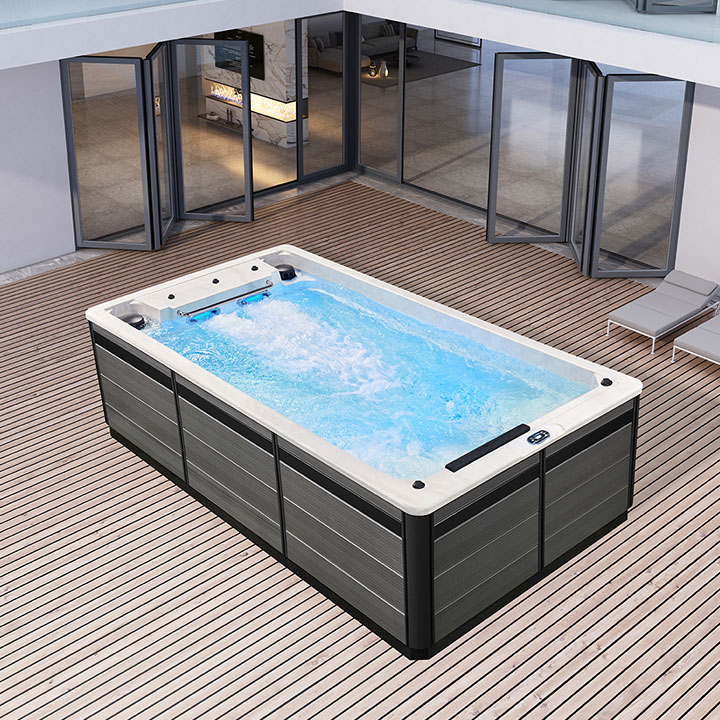
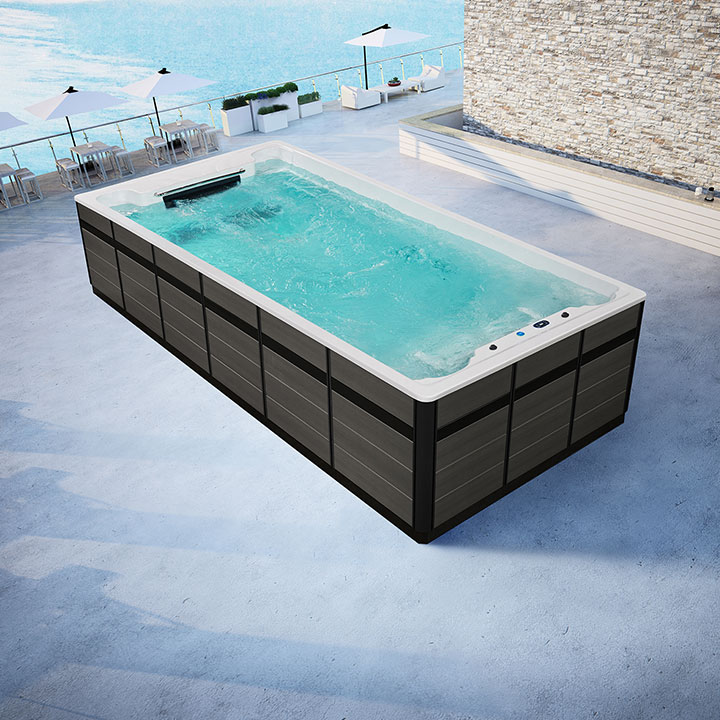
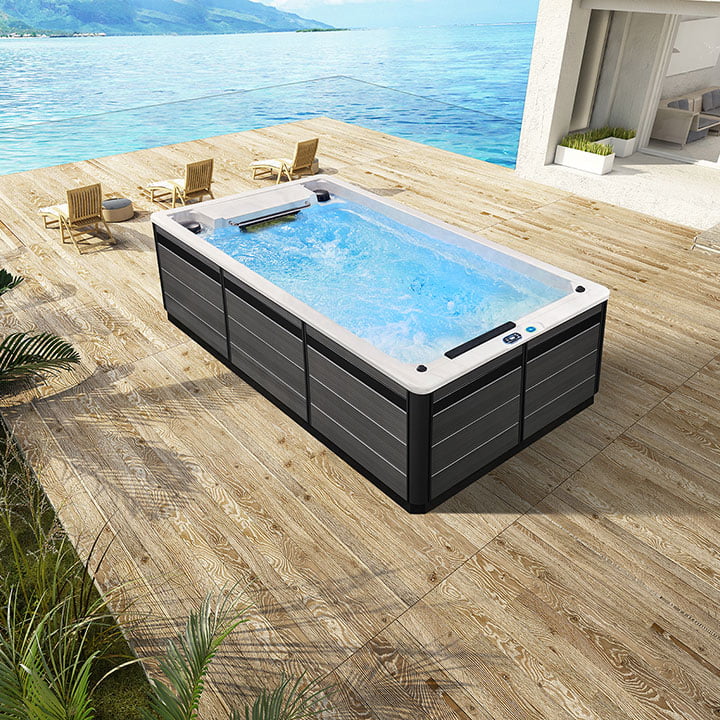
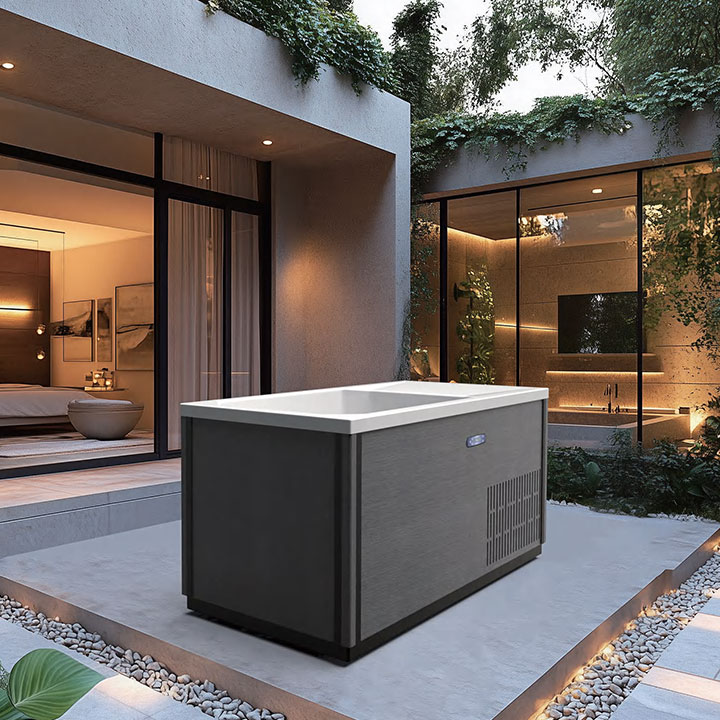
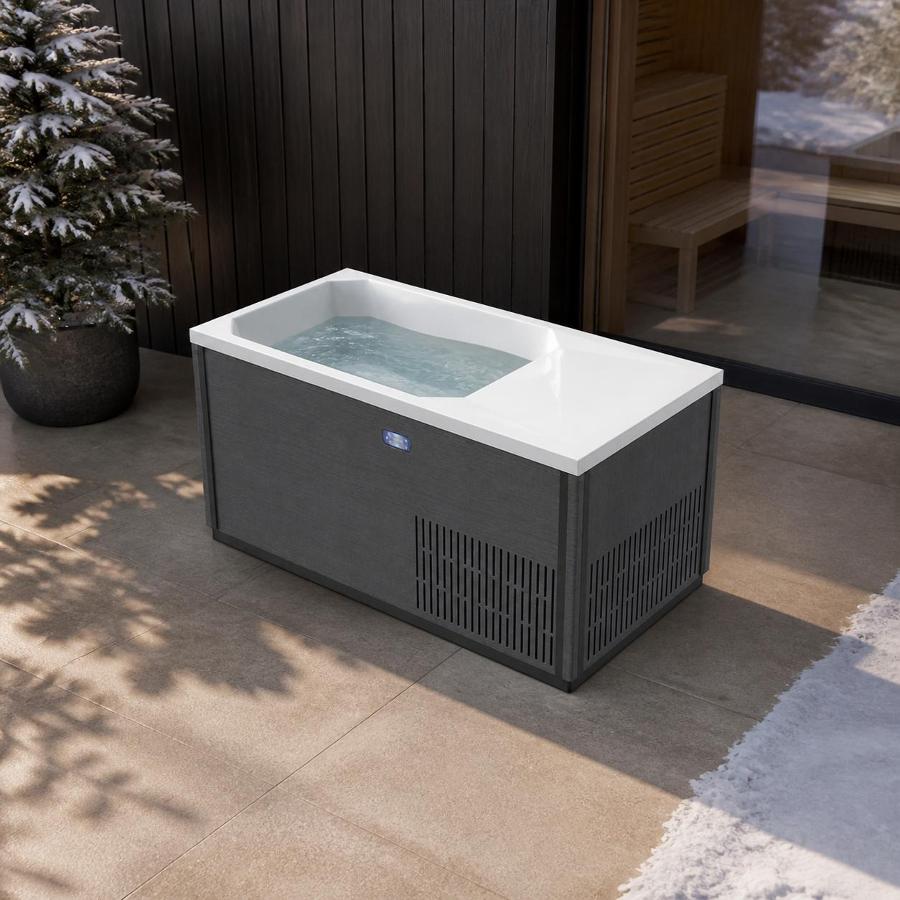
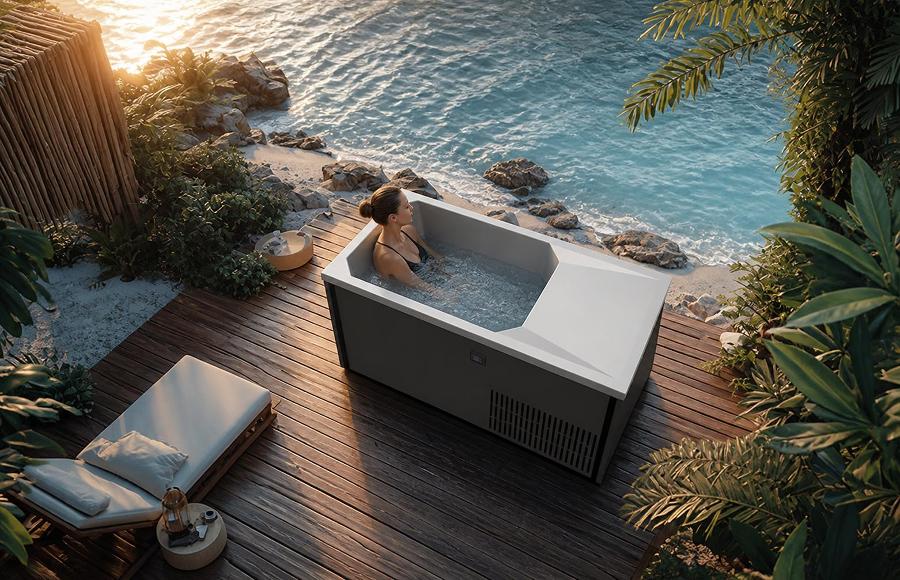
The C02 holds 320 liters, sized with an integrated seating step so you can settle into a stable position rather than fighting for balance on a slick tub floor. At 1695 mm by 830 mm by 850 mm, it’s built for one person at a time, which is typical for residential cold plunge tubs designed for backyard patios or private courtyards.
Shell material affects both durability and how the tub handles outdoor exposure over time. The interior basin uses a porcelain acrylic finish, which gives a smooth, non-porous surface that resists staining and is straightforward to clean between uses. The exterior cabinet, available in Platinum or Midnight tones, uses a weather-resistant composite with vented panels that help the heat pump system dissipate heat during operation.
Weight is worth checking before installation too. The unit comes in at 140 KG net and 180 KG filled with hardware, with gross shipping weight around 180 KG. That’s manageable for a deck or patio with standard load capacity, but multi-story installations or elevated decks warrant a quick structural check first.
Choosing the Right Setup for Your Space
Not every cold plunge heater setup suits every environment. A few questions help narrow down what actually fits your situation.
Where will it live? Outdoor installations need weather-resistant cabinetry and a heat pump rated for ambient temperature swings, while indoor setups have more forgiving conditions but need attention to ventilation and drainage.
How often will it run? Daily users benefit most from an integrated heat pump system since the energy cost of maintaining temperature is lower than repeatedly cooling from scratch with ice.
What’s the power situation? Confirm your circuit can handle the combined draw of the heater and pump, especially if the plunge shares a circuit with other outdoor equipment like lighting or a spa.
Who’s using it? Athletic facilities and commercial spas cycling multiple users per day need faster recovery time between sessions than a single household user would.
For a private backyard or a small training facility, a self-contained unit with its own heat pump avoids the plumbing complexity of tying into a separate chiller system. For larger commercial installations, some operators still prefer external chiller units that can serve multiple tubs at once.
Placement Ideas That Support the Recovery Routine
Where the tub sits affects how consistently people actually use it, which matters more than any spec sheet. A plunge tucked into an inconvenient corner gets used twice and forgotten.
Outdoor decks with ocean or garden views tend to encourage regular use because the setting itself becomes part of the recovery ritual rather than a chore. Some owners position the tub near a lounge chair so the transition from cold water to rest happens in the same physical space, reinforcing the contrast therapy effect athletes are after.
Commercial wellness centers and ice therapy studios often place multiple units in a row for efficient turnover between clients, while resort villas tend to favor a single tub positioned for privacy and view. Either way, proximity to a power source and drainage point should factor into placement decisions early, before the concrete or decking goes in.
Common Questions About Cold Plunge Heaters
Does a cold plunge heater actually cool the water, or only heat it? In most integrated systems, including heat pump based units, the same component handles both functions. It can pull heat out of the water to chill it and add heat back in when a warmer baseline is needed, which is more efficient than running two separate systems.
How long does it take to reach a stable temperature? This depends on tub volume, ambient temperature, and heater output. Smaller volumes like a 320L tub generally stabilize faster than larger multi-person spas, though exact timing depends on starting water temperature and outdoor conditions.
Is a brushless pump actually better than a standard pump? Brushless motors typically generate less internal friction and heat during operation, which tends to extend service life and reduce noise. That’s a meaningful consideration for anyone placing a plunge tub near a bedroom window or a quiet outdoor seating area.
Can these systems run through winter? That depends on the specific unit’s rated operating range and local climate. Heat pump systems generally perform best within a moderate ambient temperature band, so checking manufacturer specifications against your regional winter lows is worth doing before committing to year-round outdoor use.
Making the Investment Worth It
A cold plunge heater is really an investment in consistency. The physiological and mental benefits of cold immersion only show up with regular practice, and regular practice only happens when the setup is convenient enough that you don’t dread stepping outside to deal with ice buckets.
For us at Victoria Star, that thinking shaped how the C02 tub pairs its heat pump and pump system with practical details like a seating step, a digital interface, and a durable acrylic shell. Whether the goal is faster muscle recovery after training, a mental reset during a stressful week, or better circulation as part of a broader wellness routine, the right cold plunge heater setup turns a good intention into an actual daily habit.
Victoria Star Swim Spa offers the perfect balance between exercise and relaxation, whether you want to swim for fitness or relax in the spacious seating.
Victoria Star Swim Spa offers the perfect balance between exercise and relaxation, whether you want to swim for fitness or relax in the spacious seating.