Home / News / Cold Plunge Booties: Why Foot Protection Matters for Ice Bath Recovery
September 30, 2026
Anyone who has stepped into a cold plunge tub knows the first shock rarely hits the chest. It hits the feet. Cold plunge booties exist to soften that impact and keep circulation intact during immersion, which is exactly why so many regular cold water users add them to their routine before they add anything else.
The feet and hands lose heat faster than almost any other part of the body. Blood vessels there sit close to the skin, and in cold water they constrict hard and fast. That’s the mechanism behind cold-induced numbness, and it’s the reason experienced plungers treat foot coverage as a practical necessity rather than an accessory.
What Cold Plunge Booties Actually Do
Cold plunge booties are neoprene or rubber-soled coverings worn on the feet during ice bath sessions. Their job isn’t glamorous. They trap a thin layer of water against the skin, which the body warms slightly, creating a buffer against the surrounding cold.
This buffer matters more than it sounds. Bare feet on a chilled acrylic or metal tub floor lose grip fast, and numb toes make standing up after a session surprisingly risky. A textured rubber sole gives traction on wet, slick surfaces, which lowers the chance of a slip during entry or exit.
There’s also a comfort threshold at play here. Some people can tolerate 50°F water on their torso for two minutes but can’t stand more than thirty seconds of direct cold on bare feet. Booties extend tolerance time without changing the water temperature itself, which lets users get the full benefit of the session instead of cutting it short.
Why Foot Temperature Regulation Is a Real Physiological Concern
Skin temperature drops fastest at the extremities because of how blood flow prioritizes the body’s core. When cold receptors in the feet fire rapidly, the nervous system redirects blood inward to protect vital organs, a response sometimes called peripheral vasoconstriction. It’s protective, but it also means feet can go from cold to painfully cold in a matter of seconds.
For people with circulatory sensitivities, this isn’t just discomfort. Individuals managing Raynaud’s phenomenon, diabetes-related neuropathy, or general poor circulation face a higher risk of frostbite-like skin damage during prolonged cold exposure. Booties don’t eliminate that risk, but they reduce direct thermal contact, which slows the rate of heat loss at the foot.
Athletes who plunge daily also report that unprotected feet fatigue the session itself. If the mind is focused on foot pain, it’s harder to control breathing and stay in the water for the intended duration. Removing that distraction is often the simplest reason people keep a pair by the tub.
Choosing the Right Pair: What to Look For
Not all cold plunge booties perform the same way, and picking one comes down to matching material and fit to how often someone plunges and in what conditions.
Neoprene thickness — Thicker neoprene (5mm or more) insulates better for outdoor winter plunges, while 2-3mm options suit milder indoor tubs.
Sole grip — A textured rubber sole is non-negotiable for wet acrylic or composite tub floors, especially with a raised entry step.
Fit and seams — Booties that fit snugly around the ankle keep water from flushing in and out, which is what actually retains warmth.
Drying time — Neoprene with a smooth interior lining dries faster between sessions than plush-lined alternatives.
For anyone plunging several times a week, investing in a slightly thicker, better-sealed pair pays off in comfort more than it does in price difference.
How Booties Fit Into a Complete Cold Plunge Setup
Foot protection is one piece of a larger recovery routine, and it works best alongside a tub designed with safety and consistency in mind. A stable, well-insulated cold plunge tub matters just as much as what’s worn inside it.
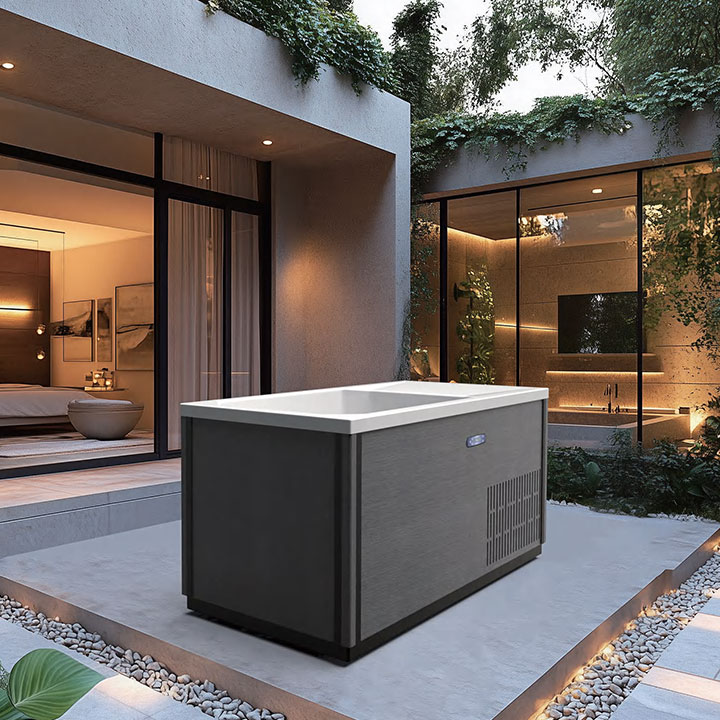
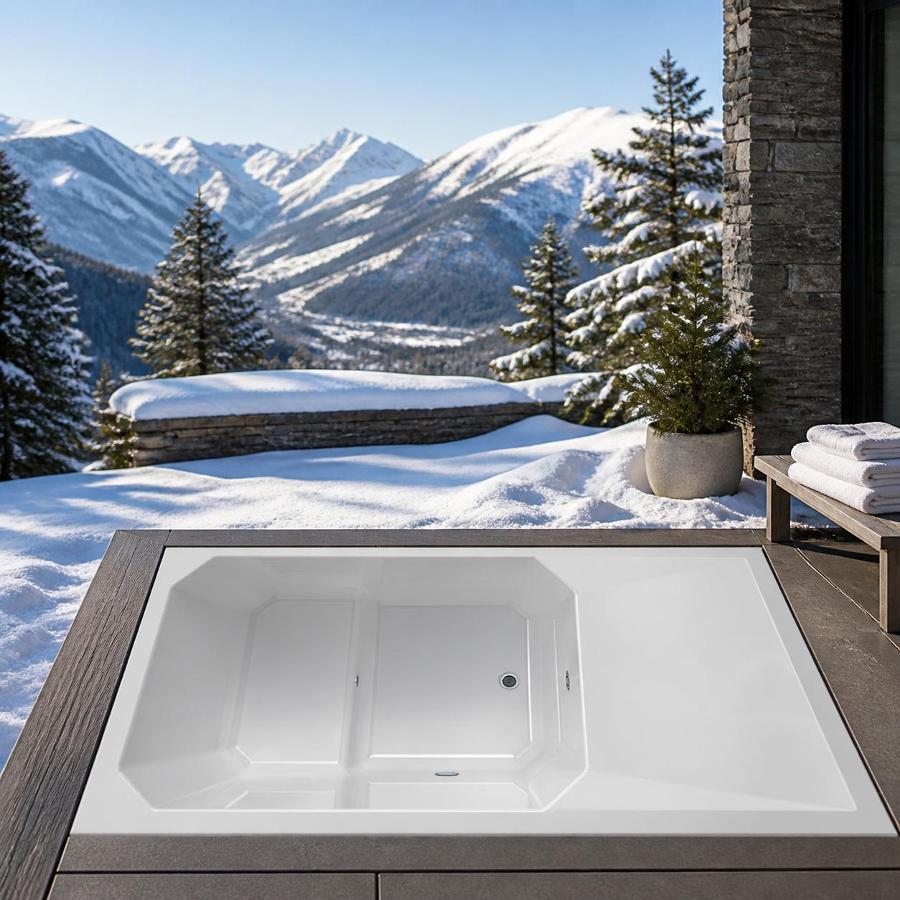
Take the Outdoor Cold Plunge Tub C02 as an example of how the physical design of a tub interacts with user comfort. It’s built with an ergonomic interior seating step and a spacious 320-liter porcelain acrylic basin, which gives users a stable surface to stand on before sitting down, something that matters even more when wearing booties with a slightly thicker sole.
The tub’s integrated 900W heat pump system and 54W brushless pump maintain consistent low-temperature immersion, according to the product’s technical specifications. Consistent temperature control matters for foot safety specifically, because fluctuating water temperature makes it harder to judge how long booties or bare skin can tolerate exposure.
Cold Water Immersion and Circulatory Recovery
The broader appeal of cold plunge therapy centers on its effect on circulation and muscle recovery. Cold water immersion is commonly used to constrict blood vessels temporarily, which may help reduce inflammation and ease post-exercise muscle soreness. As the body warms afterward, blood vessels dilate again, a cycle some practitioners describe as a natural pump for circulation.
This vasoconstriction-dilation pattern is also linked to the endorphin response many users describe after a session. Cold exposure triggers a mild stress reaction that, for many people, resolves into a sense of calm and mental clarity once the body warms back up. None of this depends on foot coverage directly, but comfortable feet make it far more likely someone completes the full immersion time needed to feel these effects.
Feature
Purpose
Why It Matters
Neoprene bootie shell
Insulates feet from direct cold contact
Extends comfortable immersion time
Textured rubber sole
Improves grip on wet tub surfaces
Reduces slip risk during entry/exit
Heat pump system (e.g., 900W unit)
Maintains stable low-temperature water
Consistent conditions for safer sessions
Ergonomic entry step
Provides stable footing before sitting
Complements bootie traction
Common Questions About Cold Plunge Booties
Do cold plunge booties actually keep feet warm, or just protect skin? They do both to a degree. The neoprene traps a thin layer of water that warms slightly against body heat, which slows heat loss, while the material itself cushions the skin from direct contact with cold surfaces.
Can I use regular wetsuit booties for cold plunging? Yes, in most cases. Surfing or diving booties work fine as long as the sole has enough grip for a wet tub floor. Thickness is the main variable to match to your typical water temperature.
Are booties necessary for short cold plunge sessions? Not strictly, but they help. Even a two-minute plunge can feel much longer if foot pain sets in early, so booties often let people complete their intended session time comfortably.
Will booties reduce the health benefits of cold immersion? No. The core circulatory and recovery effects come from full-body cold exposure, particularly around the torso and legs. Covering the feet doesn’t meaningfully change that response.
Bringing It All Together for a Better Plunge Routine
Cold plunge booties solve a specific, practical problem: they keep feet functional and comfortable long enough for the rest of the cold immersion benefits to take hold. Paired with a well-built tub, they turn what could be a rushed, uncomfortable dip into a session someone can actually stick with.
For those setting up a home or facility recovery space, thinking about accessories like cold plunge booties alongside the tub itself, whether that’s a compact indoor unit or an outdoor setup like the C02 with its insulated cover and weather-resistant cabinet, makes the entire routine more sustainable over time. Comfort at the extremities, it turns out, often determines whether cold therapy becomes a habit or a one-time experiment.
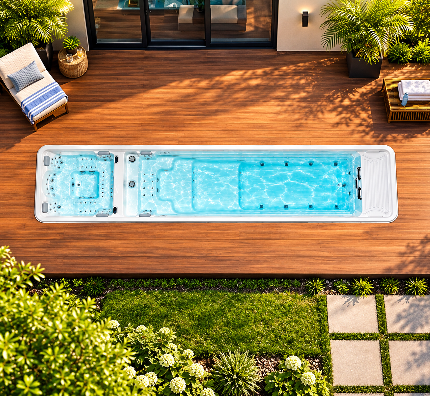
Victoria Star Swim Spa offers the perfect balance between exercise and relaxation, whether you want to swim for fitness or relax in the spacious seating.
Victoria Star Swim Spa offers the perfect balance between exercise and relaxation, whether you want to swim for fitness or relax in the spacious seating.