Cold Plunge Benefits for Women: What the Research and Real Use Actually Show
Home / News / Cold Plunge Benefits for Women: What the Research and Real Use Actually Show
September 30, 2026
Cold plunge benefits for women have moved past the athlete-only conversation. Women juggling training cycles, hormonal shifts, and daily stress are turning to cold water immersion as a practical recovery tool rather than a trend. The appeal isn’t mysterious once you understand what cold exposure actually does to circulation, inflammation, and mood regulation.
This guide breaks down the physiological reasoning behind cold plunging, the specific considerations that matter for women’s bodies, and how to choose equipment that fits a home wellness routine without turning your backyard into a science experiment.
Why Cold Water Immersion Works on Muscle Recovery
When skin temperature drops rapidly, blood vessels near the surface constrict. This vasoconstriction limits blood flow to inflamed tissue, which is why cold immersion has been used for decades to manage post-exercise soreness. Once you exit the water, vessels dilate again, pushing fresh oxygenated blood back into the muscles.
That cycle of constriction and dilation is the mechanism most researchers point to when explaining reduced muscle inflammation after intense training. It’s not a mystery cure. It’s basic vascular physiology, and it’s consistent across genders.
For women who train in strength sports, running, or high-intensity interval formats, the soreness pattern often shows up 24 to 48 hours after a session. A cold plunge session in that window can shorten the discomfort curve, though it won’t eliminate the need for proper rest and nutrition.
Hormonal Cycles and Cold Exposure Timing
Here’s where things diverge from generic recovery advice. Women’s tolerance to cold and perceived recovery benefit can shift across the menstrual cycle. Core body temperature naturally rises slightly during the luteal phase, which means cold immersion may feel more intense and less immediately comfortable during that window.
During menstruation itself, some women report that gentle cold exposure helps with the dull ache associated with cramping, likely tied to the same vasoconstriction effect that eases muscle soreness elsewhere. This isn’t a substitute for medical treatment of severe menstrual pain, but it’s a reasonable complementary practice worth noting.
The practical takeaway: track how your body responds across a full cycle before locking into a fixed plunge schedule. What works in week two may feel harsher in week four.
Mental Clarity and Stress Regulation
Cold exposure triggers a rapid release of endorphins and norepinephrine. This is the physiological basis behind the "mental reset" feeling many people describe after a plunge. It’s not relaxation in the traditional spa sense. It’s closer to a controlled stress response that your nervous system learns to regulate over repeated exposure.
For women managing high cognitive loads, whether from demanding careers, caregiving responsibilities, or both, this controlled stress exposure can function as a short, structured break from rumination. Three minutes of intense physical sensation tends to interrupt anxious thought loops more effectively than passive rest.
Repeated exposure also appears to build a kind of stress tolerance. Users often report that the mental unease before a plunge fades after a few weeks of consistent practice, replaced by something closer to anticipation. That shift in response is the real long-term value, more than any single session.
Repeated vascular constriction and dilation cycles don’t just help sore muscles. They also serve as a form of passive cardiovascular conditioning, increasing oxygen delivery to tissue over time. This is one of the more consistent findings across cold immersion research, and it applies regardless of sex.
Women with naturally lower baseline core temperatures, a physiological trait tied to differences in body fat distribution and metabolic rate, sometimes need shorter initial exposure times to get the same circulatory benefit without excessive discomfort. Building tolerance gradually matters more here than pushing for the coldest possible water on day one.
Immersion Duration
Typical Use Case
Considerations for Beginners
1-2 minutes
First-time users, mental adaptation
Focus on breath control, not depth of cold
3-5 minutes
Post-workout recovery
Most common range cited in recovery routines
6-10 minutes
Experienced users, deeper circulation focus
Requires prior conditioning and supervision
Choosing Equipment That Fits Your Space and Routine
Not every cold plunge setup suits every backyard or budget. The decision usually comes down to three factors: water capacity, temperature control method, and how the unit handles year-round outdoor exposure.
Determine whether you need active chilling (a heat pump or chiller system) or plan to rely on ice and ambient temperature alone.
Measure your available outdoor or indoor space, factoring in clearance for maintenance access and drainage.
Decide whether you’re prioritizing a private home setup or something durable enough for shared or semi-commercial use, like a training facility.
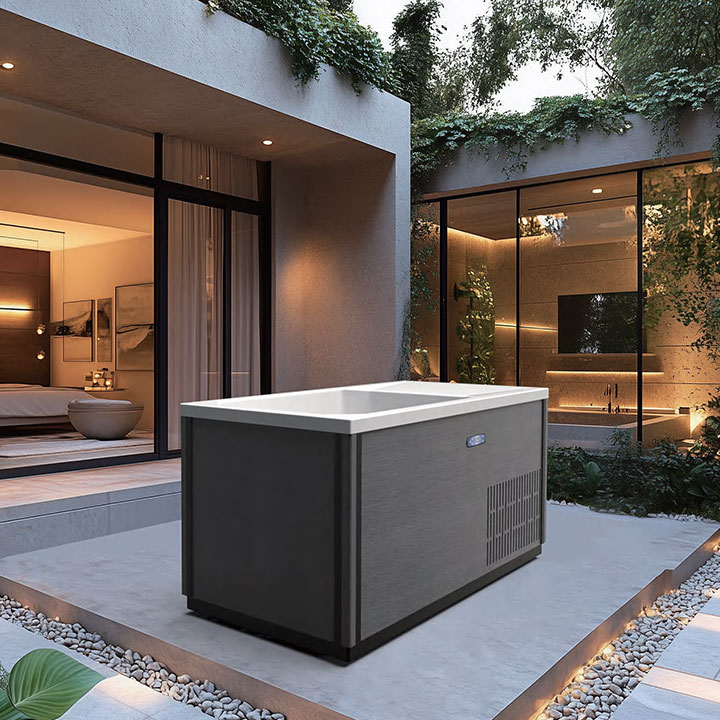
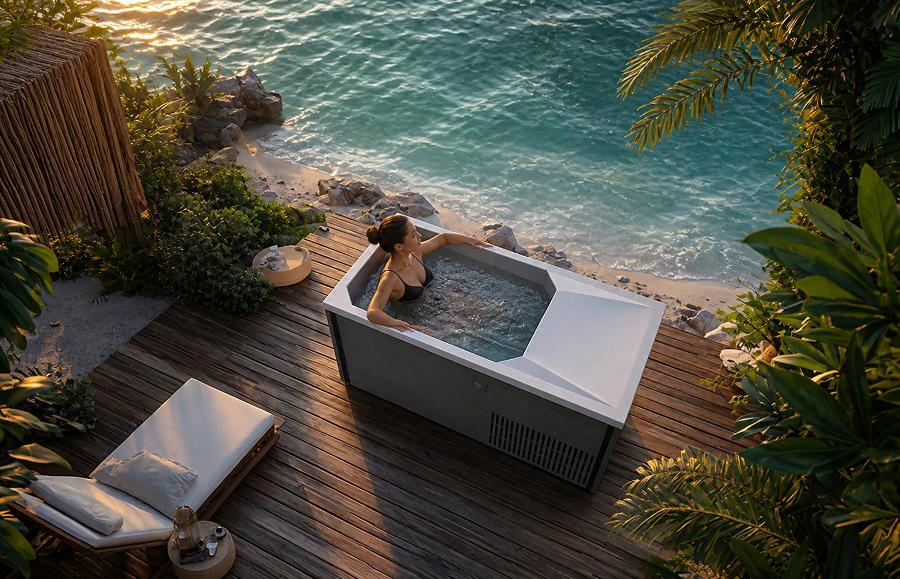
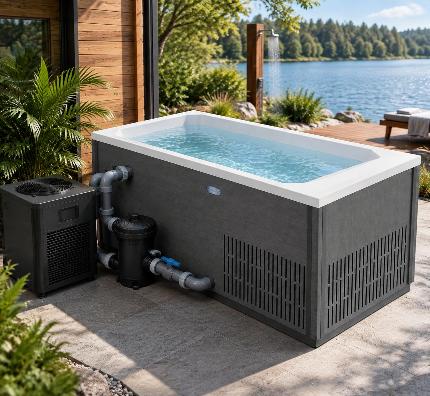
A unit like the Outdoor Cold Plunge Tub C02, for example, uses an integrated 900W heat pump system paired with a 54W brushless pump, according to its product specifications. This kind of setup allows for consistent low-temperature immersion without the daily hassle of ice delivery, which matters if you’re trying to build a sustainable habit rather than an occasional novelty.
What to Look for in a Home Cold Plunge Tub
Material and build quality affect both longevity and comfort. A porcelain acrylic interior shell, as found in several premium models, offers a smooth, non-abrasive surface that holds up under repeated cold-to-ambient temperature cycling. Exterior cabinetry matters too, particularly for outdoor installations exposed to sun, rain, or coastal humidity.
Key specifications worth comparing before purchase:
Water capacity: Larger capacity tubs, such as the 320-liter volume of the C02 model, accommodate a fuller immersion for taller users.
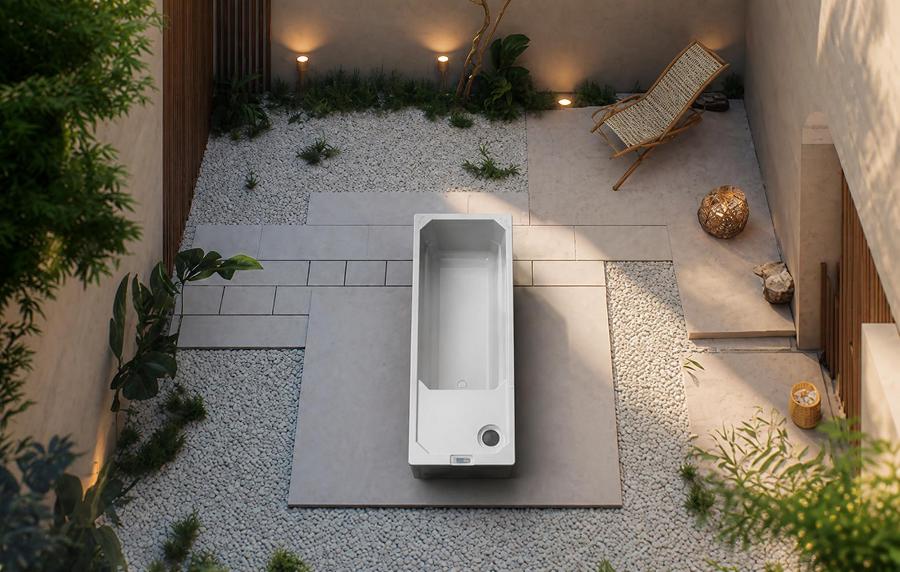
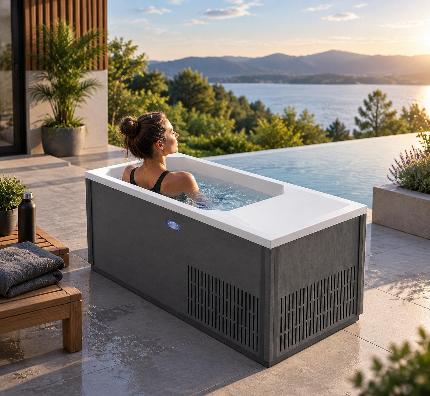
Ergonomic seating: An integrated interior step, like the one built into the C02, makes entry and exit safer, especially relevant for daily solo use.
Insulated cover: Included covers reduce heat pump workload and improve energy efficiency between sessions.
Cabinet finish: Weather-resistant composite panels with ventilation slots help manage moisture buildup around the pump housing.
Setting Realistic Expectations for Results
Cold plunging is not a substitute for sleep, nutrition, or medical care. It’s a supplementary tool that works best layered onto an already sound recovery routine. Women who see the most consistent benefit tend to treat it as a scheduled habit, two to four times a week, rather than an occasional emergency remedy after a hard workout.
Temperature preference also varies more than marketing materials suggest. Some women find noticeable benefit at 50-55°F, while others need colder water to trigger the same subjective response. There’s no universal number, and chasing the coldest possible setting isn’t inherently better for the mechanisms described earlier.
Frequently Asked Questions
Is cold plunging safe during pregnancy? This requires direct guidance from an OB-GYN. Core body temperature regulation changes significantly during pregnancy, and general cold immersion advice doesn’t account for those shifts.
How cold does the water need to be to see benefits? Most commonly cited ranges fall between 50-59°F for recovery-focused sessions. Exact optimal temperature varies by individual tolerance and goal.
Can I use a cold plunge tub every day? Many users do, particularly those using it for stress regulation rather than intense post-workout recovery. Daily use for muscle recovery specifically should be balanced against your training load.
Do I need a heat pump system, or is ice enough? Ice works for occasional use but becomes impractical for daily habits. Integrated heat pump systems, like the 900W unit in the C02 model, maintain consistent temperature without manual refilling.
Final Thoughts on Building a Cold Plunge Habit
The cold plunge benefits for women most worth paying attention to are the ones grounded in vascular physiology and stress response, not the ones dressed up as miracle recovery. Reduced muscle inflammation, improved circulation, and a structured mental reset are real, measurable outcomes when the practice is done consistently and with attention to individual tolerance, including hormonal cycle timing.
Whether you’re setting up a home unit or visiting a recovery-focused facility, the equipment matters less than the consistency of the habit. A well-built tub, whether a compact home model or a facility-grade setup, simply removes the friction that stops people from doing it regularly. For us, that’s the entire point of designing equipment around real recovery needs rather than novelty. Start slow, track your response across a full cycle, and let the data from your own body guide how deep and how often you go.
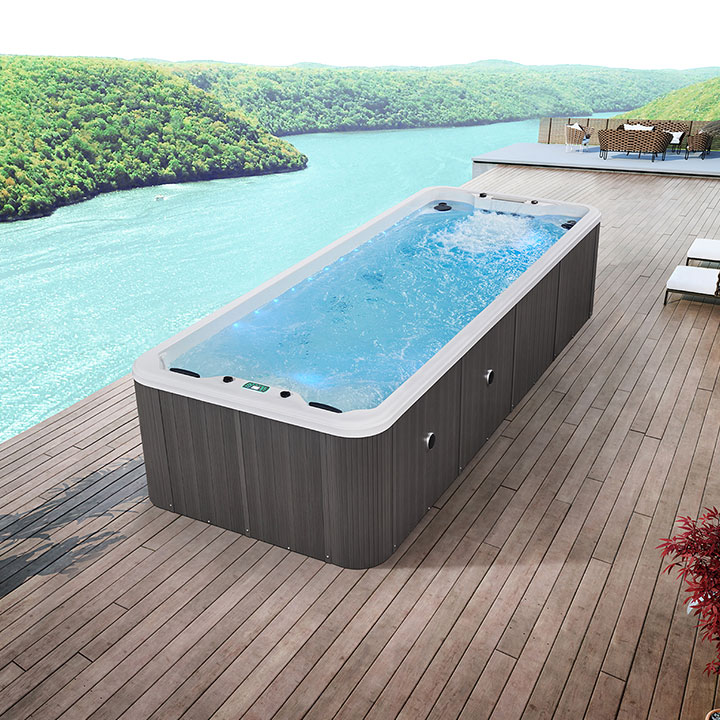
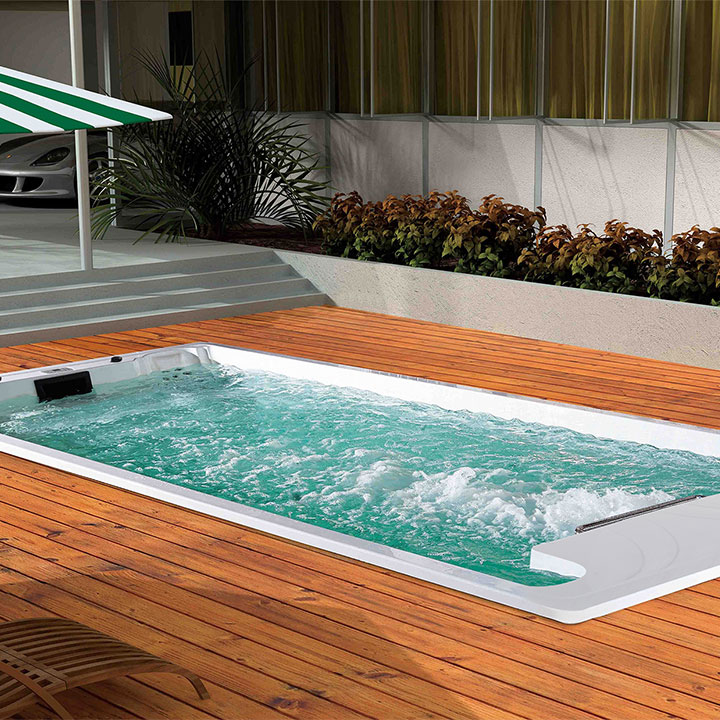
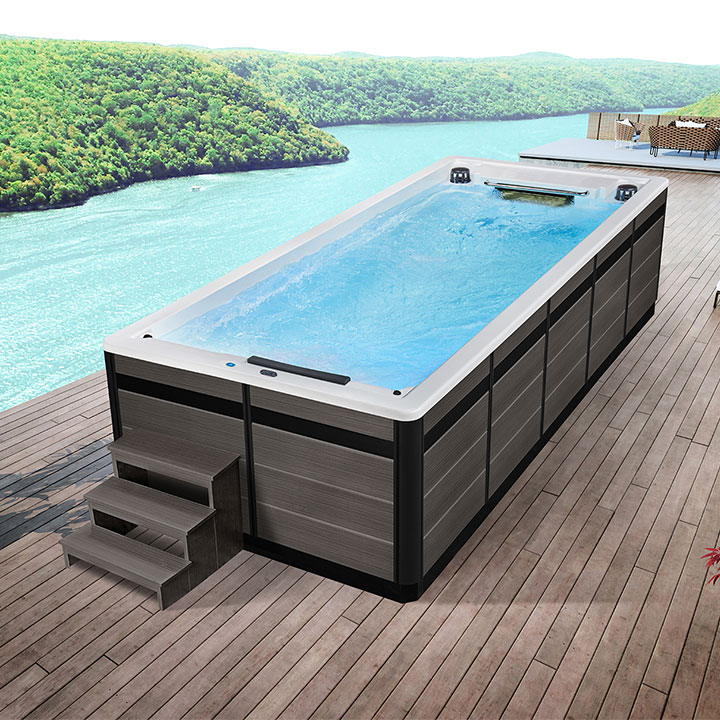
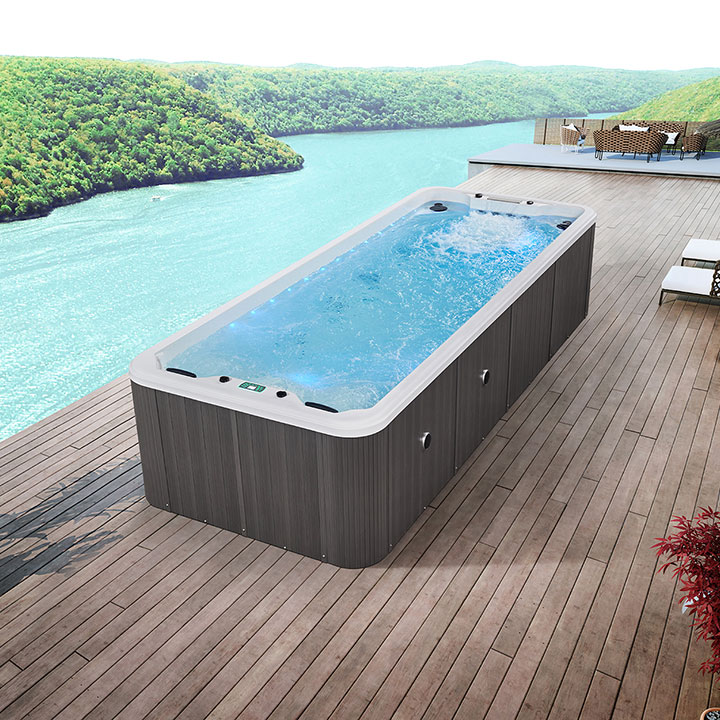
Victoria Star Swim Spa offers the perfect balance between exercise and relaxation, whether you want to swim for fitness or relax in the spacious seating.
Victoria Star Swim Spa offers the perfect balance between exercise and relaxation, whether you want to swim for fitness or relax in the spacious seating.