Building Your Own Cold Plunge: What a DIY Cold Plunge Really Takes
Home / News / Building Your Own Cold Plunge: What a DIY Cold Plunge Really Takes
September 29, 2026
Cold water therapy has moved from niche training rooms into ordinary backyards, and the search for a diy cold plunge setup reflects that shift. People want the recovery benefits without the gym membership or the spa bill. But building one from scratch involves more variables than most first-timers expect, from insulation to water chemistry to the sheer physics of keeping water cold in a hot climate.
This guide walks through the real decisions behind a diy cold plunge project, and where a manufactured unit like the Outdoor Cold Plunge Tub C02 fits into that decision.
Why People Attempt a DIY Cold Plunge in the First Place
Cost is the obvious driver. A livestock trough and a bag of ice feels cheaper than any finished product, at least on day one. There’s also a control impulse at play here. Builders want to size the tub to their own body, pick their own insulation, and avoid paying for features they think they won’t use.
That instinct isn’t wrong. It’s just incomplete. A trough holds water, but it doesn’t hold temperature, and temperature stability is the entire point of cold immersion therapy.
The Hidden Problem: Temperature Isn’t a One-Time Setting
Most DIY builds solve for "cold enough once." They rarely solve for "cold enough every day, at 6am, in July." Ice melts. Ambient heat creeps in through thin plastic walls. Without active cooling, the water warms within hours, especially outdoors.
This is where the math gets uncomfortable for a pure DIY approach:
A typical backyard stock tank needs a substantial amount of ice per session to hit therapeutic temperatures below 59°F, often estimated in the range of several dozen pounds depending on ambient conditions.
Ice costs and sourcing become a recurring weekly expense, not a one-time purchase.
Manual refilling means the tub is rarely ready on demand, which quietly kills consistency.
Consistency matters more than raw cold. Athletes and clinicians generally agree that repeated, predictable exposure drives adaptation, not one dramatic freezing session followed by two weeks of lukewarm neglect.
Why Cold Immersion Works on the Body
Before comparing build methods, it helps to understand what the cold is actually doing. Cold water immersion triggers vasoconstriction, a narrowing of blood vessels near the skin and muscle tissue. This response is believed to reduce localized inflammation and swelling after intense exercise.
When the body rewarms afterward, vessels dilate again. That constriction-dilation cycle is thought to support circulation and improve oxygen delivery to recovering tissue. There’s also a mental component worth naming honestly: the shock of cold exposure tends to trigger a burst of endorphins, which many users describe as mental clarity or reduced stress rather than pure physical relief.
None of this requires a fancy tub. It requires cold water, held at a stable temperature, for a repeatable duration. The question is really about how you get there.
Three Paths to a Cold Plunge, Compared Honestly
There isn’t one correct answer here. Budget, frequency of use, and climate all push the decision in different directions.
Approach
Upfront Cost
Ongoing Effort
Temperature Stability
Lifespan
Stock tank + ice
Low
High (daily ice runs)
Poor, drifts within hours
Shorter, plastic degrades outdoors
DIY chiller build
Medium
Medium (maintenance, wiring)
Moderate, depends on skill
Variable, DIY parts wear differently
Purpose-built tub with heat pump
Higher
Low
Consistent, thermostatically controlled
Long-term, built for outdoor exposure
The middle option, a DIY chiller build, appeals to people with plumbing or electrical experience. It usually means sourcing a standalone chiller unit, plumbing it into an insulated container, and wiring a controller. It can work. It also introduces failure points: seals that leak, chillers rated for aquariums rather than continuous outdoor duty, and warranty gaps when something breaks at 2am before a training session.
Where a Manufactured Tub Actually Saves You Work
This is the part DIY guides tend to skip. A stock tank plus a separate chiller isn’t actually simpler than a finished unit, it’s just cheaper on paper. The complexity doesn’t disappear, it just moves onto your workbench.
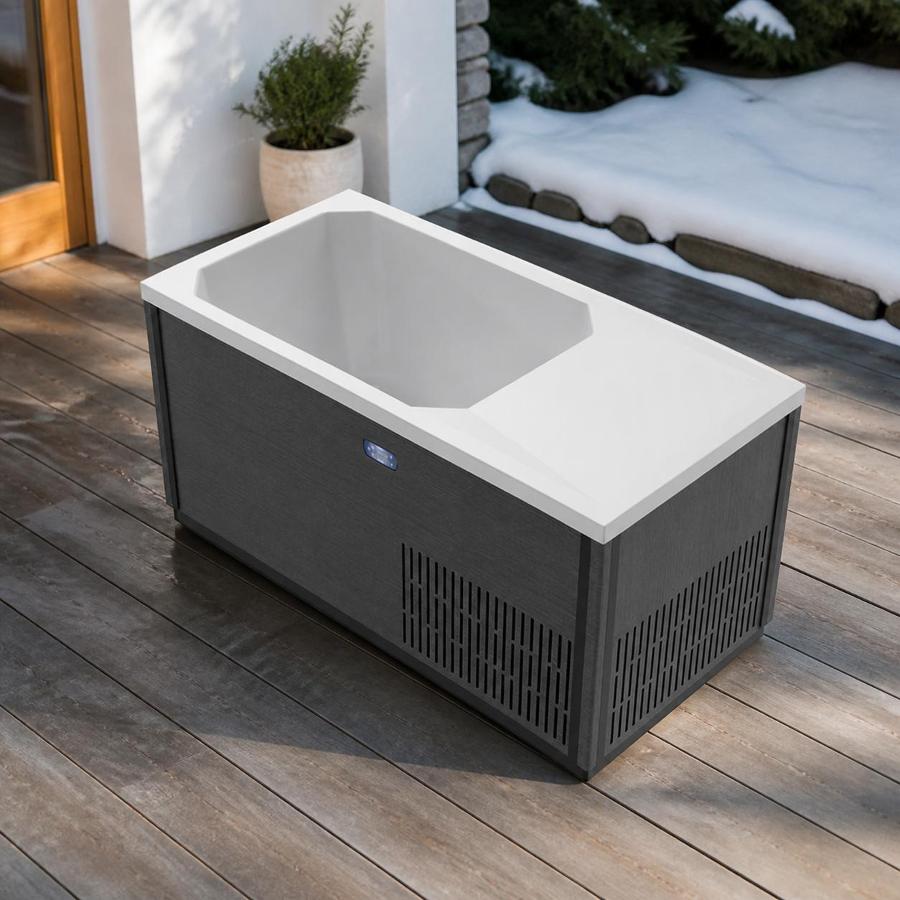
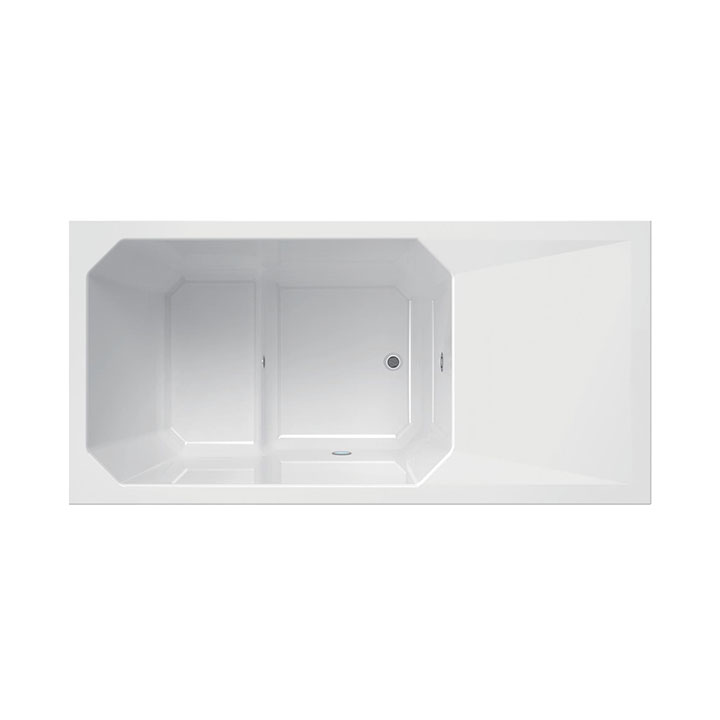
A unit like the Outdoor Cold Plunge Tub C02 integrates the parts that DIY builders usually cobble together separately: a 900W heat pump system paired with a 54W brushless pump, built into a 320-liter acrylic shell designed for continuous outdoor use. According to the manufacturer’s specifications, the heat pump handles the exact problem stock tanks can’t solve on their own, which is holding temperature without a daily ice supply.
The shell itself matters more than people assume when they’re shopping. Porcelain acrylic resists the scratching and yellowing that lower-grade plastics develop after months of sun exposure. That matters if the tub is sitting on an uncovered patio through a full summer, not tucked in a garage.
Insulation and Cabinet Design: The Part Nobody Photographs
DIY builds usually focus on the water. Cabinet insulation gets an afterthought, if it gets considered at all. But an exposed pump or heater in a hot climate backyard in peak summer is fighting a losing battle against ambient heat.
Weather-resistant cabinet panels with proper ventilation serve two functions at once. They protect the mechanical components from rain and UV degradation, and the venting allows the heat pump to exhaust properly without trapping heat inside the housing. The C02’s composite cabinet, available in Platinum or Midnight, is built around that dual requirement rather than treating it as decoration.
Sizing the Tub to the Space You Actually Have
One place DIY builders get real freedom is footprint, since a stock tank can be any size. But most manufactured tubs are sized deliberately, not arbitrarily. The C02 measures 1695 mm by 830 mm by 850 mm, which comfortably fits one adult with room to extend the legs, without ballooning into a footprint that demands a dedicated deck rebuild.
Consider these placement factors before committing to a size:
Measure the intended spot with the insulated cover open, not just the tub’s footprint, since lids need clearance to swing or lift.
Confirm the patio or deck surface is rated for roughly 180 kg gross weight once filled, since water adds significant load.
Check proximity to a power outlet, since the 0.954 kW power draw needs a stable, ideally dedicated circuit.
Leave drainage access clear, since the recessed drain fitting needs room for hose connection during water changes.
Where People Actually Install These Tubs
Application context shapes the decision as much as the tub itself. A backyard patio setup has different priorities than a training facility running multiple sessions a day.
Private backyard installations tend to prioritize quiet operation and a cabinet finish that blends with existing outdoor furniture.
Athletic training facilities push the pump and heater harder, since back-to-back athlete sessions demand faster recovery to target temperature.
Boutique spas and wellness studios often care most about the interior finish and step design, since client experience is part of the service.
Maintenance Reality: DIY vs Integrated Systems
Water doesn’t stay clean on its own, regardless of which build path you choose. Stagnant cold water without filtration can develop odor and cloudiness within days, and DIY builds often skip filtration entirely to save cost. That’s a mistake that shows up quickly and only gets worse with time.
An integrated pump system keeps water circulating between uses, which meaningfully slows that buildup. It doesn’t replace routine cleaning, but it removes one more manual task from a daily recovery habit that people are already tempted to skip when they’re tired.
Frequently Asked Questions
Is a DIY cold plunge actually cheaper long-term? Often not, once ice costs, replacement parts, and the labor of daily refilling are factored in over a year or two. The upfront number looks smaller, but the ongoing effort and consumables add up.
What temperature should a cold plunge maintain? Most cold therapy protocols target roughly 50-59°F, though individual tolerance varies. Consistency at a chosen temperature matters more than chasing the lowest possible number.
Can a heat pump system get water too cold for comfort? A thermostatically controlled system like the one in the C02 is designed to hold a set target rather than drift lower, which is part of why manufactured units offer more predictable sessions than an ice-and-cooler setup.
Do these tubs work in cold climates during winter? According to the manufacturer, the heat pump system is built for regulation rather than one-directional cooling, so it is intended to manage temperature across varying ambient conditions rather than only in warm weather.
Making the Decision That Fits Your Routine
There’s no universal winner between building your own setup and buying a finished tub. A once-a-month cold dip after a long hike doesn’t need the same infrastructure as a daily post-training recovery habit. The honest question is how often you’ll actually use it, and whether you’re willing to manage ice, chillers, and filtration by hand each time.
For people who’ve already tried the stock-tank-and-ice-bag route and found the inconsistency frustrating, a purpose-built option removes the daily maintenance loop entirely. Victoria Star designed the Outdoor Cold Plunge Tub C02 around that exact frustration, pairing a 900W heat pump with a durable acrylic shell so temperature control stops being a chore. Whether you build your own diy cold plunge or move to an integrated system later, the goal stays the same: reliable, repeatable cold exposure without the guesswork.
Victoria Star Swim Spa offers the perfect balance between exercise and relaxation, whether you want to swim for fitness or relax in the spacious seating.
Victoria Star Swim Spa offers the perfect balance between exercise and relaxation, whether you want to swim for fitness or relax in the spacious seating.