Building the Right Cold Plunge Kit for Home Recovery
Home / News / Building the Right Cold Plunge Kit for Home Recovery
September 25, 2026
A cold plunge kit used to mean a stock tank, a few bags of ice, and a lot of guesswork. That approach still works if you enjoy hauling ice every other day. Most people don’t. As cold water immersion has moved from niche athletic circles into everyday wellness routines, the equipment has caught up, and a proper kit now means a tub, a temperature control system, and the plumbing to keep both running without babysitting.
The appeal is straightforward. Cold exposure narrows blood vessels, and when the body warms back up, those vessels widen again. That contraction and dilation cycle is the mechanism behind most of the recovery claims tied to cold plunging, including reduced muscle soreness after hard training and a mental reset that a lot of users describe as clarity rather than relief. None of this requires a spa-grade setup to work in principle, but the setup determines whether you’ll actually use it in six months.
What Counts as a Cold Plunge Kit
The term gets used loosely, so it helps to define it before shopping. A functional kit has three parts working together, and skipping any one of them turns a wellness tool into a chore.
A tub or basin sized for full-body immersion, built from a material that won’t degrade from constant water exposure and temperature swings.
A cooling or heating system that brings water to a target range and holds it there, rather than relying on ice refills.
A filtration or circulation component that keeps water from stagnating between uses, since standing cold water is still water and still needs turnover.
A DIY stock tank handles the first item and ignores the other two. That’s fine for occasional use. It becomes a maintenance headache for anyone plunging three or four times a week.
Why Temperature Control Changes the Experience
Ice-based cooling has a ceiling problem. You can get water cold once, but maintaining a consistent range through repeated sessions means constant restocking, and ice quality varies enough that your 50°F session one day might land closer to 45°F the next. That inconsistency matters more than it sounds like it should, because cold tolerance is built gradually, and unpredictable temperatures make it harder to track progress or stay safe.
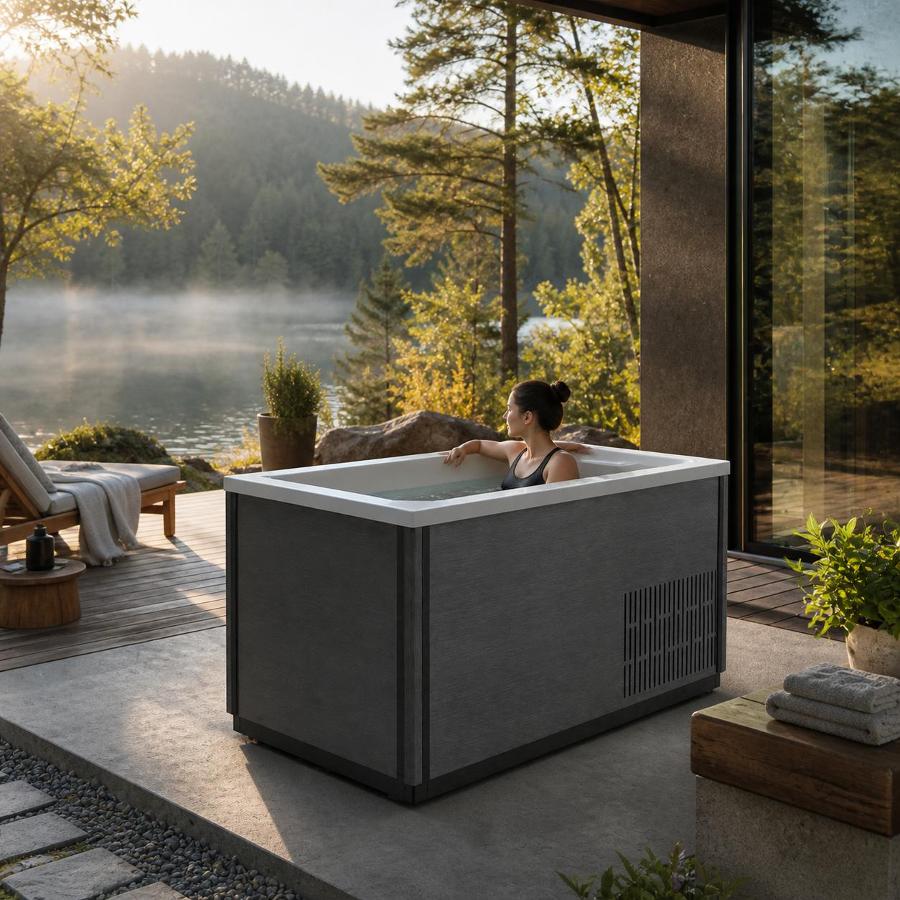
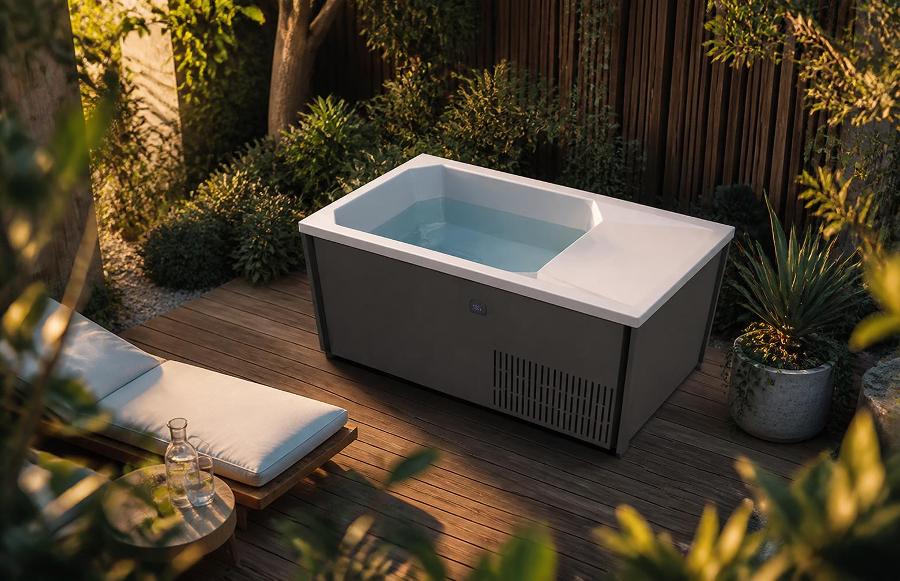
This is the gap that integrated heat pump systems close. The Outdoor Cold Plunge Tub C02, for instance, pairs a 900W heat pump with a 54W brushless pump to regulate temperature directly, without ice as an intermediary. The practical difference is repeatability. You set a target, the system holds it, and the next session starts where the last one left off instead of at the mercy of how much ice survived the drive home from the store.
There’s a secondary benefit that gets overlooked: total power draw. The C02’s combined system runs at roughly 0.954 kW, which is a manageable figure for a dedicated 220V circuit and far less than running a standalone chiller alongside a separate ice machine.
Sizing and Placement Considerations
Where the tub goes affects both what you buy and how you use it. A plunge tub tucked into a covered patio behaves differently than one exposed to direct sun and wind, and that changes insulation needs and material choice.
Consider these factors before finalizing a spot:
Drainage access – cold plunge tubs need periodic full or partial drains, so proximity to a drain point or a hose bib saves real effort.
Power supply – heat pump systems require dedicated electrical service; confirm circuit capacity before installation day, not after.
Surface stability – a filled 320L tub carries significant weight once water is added, so a level concrete pad or reinforced deck matters more than aesthetics.
Weather exposure – direct sun accelerates surface wear on cabinetry, while coastal salt air affects metal fittings faster than inland climates.
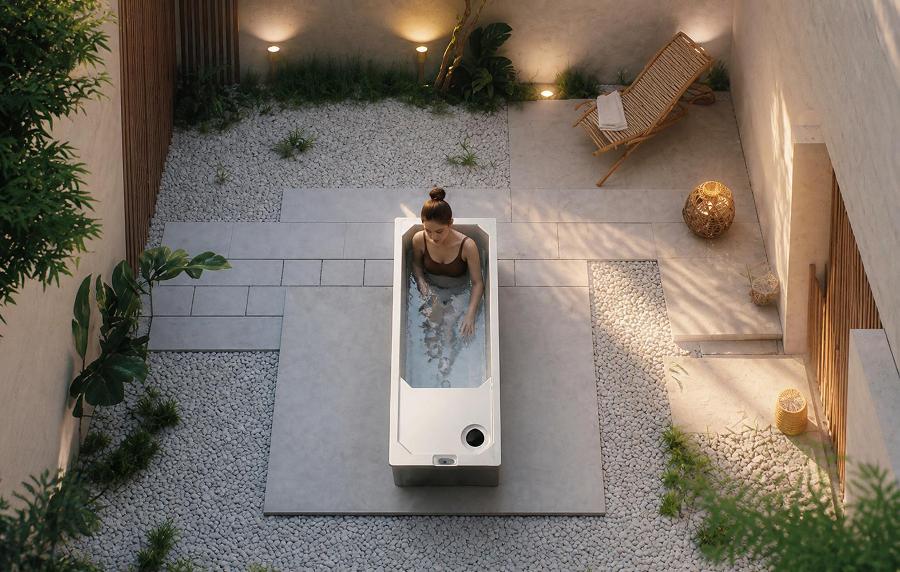
Backyard installations tend to favor a corner near an existing patio door, both for convenience and because it shortens the walk between a warm shower and a cold session, which matters more at 6 a.m. in January than it does in a product brochure.
Material and Build Quality Comparison
Not all tub shells age the same way, and this is where a lot of budget kits fall apart within a season. The table below breaks down common approaches.
Feature
Basic Stock Tank
Standard DIY Kit
Integrated Cold Plunge Tub (e.g., C02)
Shell Material
Galvanized steel or plastic
Fiberglass or plastic
Porcelain acrylic
Temperature Control
None (ice only)
Add-on chiller, separate unit
Integrated 900W heat pump
Water Circulation
None
Aftermarket pump
Built-in 54W brushless pump
Weather Resistance
Low to moderate
Moderate
Weather-resistant composite cabinet
Typical Capacity
Varies widely
150–250 L
320 L
Insulated Cover
Rarely included
Sometimes optional
Included
Porcelain acrylic shells resist staining and scratching better than raw fiberglass, and they hold a smoother finish over years of use, which matters both for comfort against skin and for how easy the surface is to clean between sessions.
Ergonomics Matter More Than People Expect
First-time plungers underestimate how much entry and exit design affects whether they stick with the habit. Climbing over a tall, slick rim while your body is already tensing up from cold shock is a bad first impression, and it’s a common reason people abandon a cold plunge kit within weeks.
An integrated seating step, like the one built into the C02’s 320-liter basin, changes the entry sequence entirely. Instead of lowering yourself over an edge, you step down gradually, which keeps the transition controlled. That kind of detail doesn’t show up in a spec sheet comparison, but it shows up in whether the tub gets used on a cold Tuesday morning.
Application Scenarios Beyond the Backyard
Home use gets most of the attention, but cold plunge equipment serves distinctly different purposes depending on setting.
Private residential use favors compact footprints and quiet operation, since these units often sit near living spaces.
Athletic training facilities prioritize durability under heavy, repeated use and faster turnover between athletes.
Boutique wellness centers and spas often pair cold plunge stations with contrast therapy setups, alternating cold immersion with sauna or hot tub sessions.
Resort and hospitality settings treat the tub as a design feature as much as a functional one, which is why cabinet finish options matter for these buyers.
The C02 model’s Platinum and Midnight cabinet finishes, with a brushed wood-grain composite texture, reflect this crossover between function and setting, since the same unit that works in a training facility also needs to look intentional on a resort deck.
Common Questions About Cold Plunge Kits
How cold does the water need to be for cold plunging to work? Most users work within a range that feels genuinely uncomfortable but tolerable, generally somewhere in the low-to-mid 50s Fahrenheit, though tolerance builds over time. A heat pump-based system makes it easier to dial in and repeat a specific number rather than guessing based on how much ice melted.
Do I need filtration if I’m the only one using the tub? Yes. Even single-user setups accumulate skin oils, sweat, and airborne debris between sessions. A circulation pump, like the 54W brushless unit in the C02, keeps water moving and supports filtration rather than letting it sit static.
Can a cold plunge kit double as a warm soak? Some heat pump systems can raise temperature as well as lower it, though this depends on the specific unit’s design. Check the control system specifications before assuming dual functionality.
How much maintenance does an integrated system need compared to an ice bath? Less day-to-day effort, since there’s no ice to source or haul, but periodic filter checks, water treatment, and occasional draining are still necessary regardless of which system you choose.
Choosing Based on How You’ll Actually Use It
The right kit depends less on impressive specs and more on honest use patterns. Someone plunging occasionally after long runs has different needs than someone building a daily habit around morning cold exposure.
Occasional users may find a basic ice-and-tub setup sufficient, accepting the tradeoff of manual temperature management.
Frequent or daily users benefit significantly from integrated heating and circulation, since consistency removes a major point of friction.
Facilities serving multiple people need higher-capacity systems with dependable filtration to handle turnover between sessions.
Design-conscious buyers should weigh cabinet material and finish options alongside functional specs, since the tub often sits in visible outdoor space.
A 320-liter capacity, like that of the C02, comfortably accommodates full-body immersion for most adults while keeping the footprint manageable for a patio corner or deck section, at a net weight of 140 KG empty and 180 KG filled and ready.
Cold plunging works because of a simple physiological response, but the equipment determines whether that response is something you access reliably or something you fight for every time. A well-built cold plunge kit, with proper temperature regulation, circulation, and thoughtful ergonomics, turns a genuinely effective recovery tool into a routine rather than a project. For us at Victoria Star, that distinction between novelty and routine is exactly why the engineering behind a cold plunge kit deserves as much attention as the wellness claims built on top of it.
Victoria Star Swim Spa offers the perfect balance between exercise and relaxation, whether you want to swim for fitness or relax in the spacious seating.
Victoria Star Swim Spa offers the perfect balance between exercise and relaxation, whether you want to swim for fitness or relax in the spacious seating.