Building a DIY Ice Bath at Home: What You Actually Need to Know
Home / News / Building a DIY Ice Bath at Home: What You Actually Need to Know
September 30, 2026
Cold plunging has moved from elite training rooms into backyards, and the search for a diy ice bath setup reflects that shift. People want the recovery benefits without the gym membership or the awkward trip to a physical therapy clinic. But building one from scratch, or buying a purpose-made tub, involves more physics and plumbing than most guides admit.
This article breaks down what a real ice bath setup requires, where homemade versions fall short, and how a dedicated cold plunge tub compares on cost, maintenance, and safety.
Why People Build Their Own Cold Plunge Setup
The appeal is straightforward. A stock tank, a few bags of ice, and a garden hose seem like a fast way to get the same vasoconstriction effects athletes talk about. Reddit threads and fitness forums are full of these builds, often costing under two hundred dollars.
The problem shows up after week two. Ice runs out fast, water temperature swings wildly, and stagnant water without filtration turns cloudy within days. A diy ice bath built purely around ice bags is really a once-a-week novelty, not a sustainable recovery tool.
The Physics Problem Nobody Mentions
Water holds heat far more efficiently than air. Dropping a few bags of ice into 300 liters of water barely moves the needle on temperature, especially outdoors where ambient heat keeps working against you. This is the same reason a cooler full of ice melts slower than you’d expect, just inverted.
To hold water consistently between 3°C and 10°C, you need continuous refrigeration, not a one-time cold shock. That’s the gap between casual ice bath experiments and something built for daily use.
What a DIY Setup Actually Costs Over Time
Sticker price on a stock tank looks cheap. Recurring costs tell a different story once you factor in ice deliveries, chlorine or bromine treatment, and the drain-and-refill cycle needed to keep bacteria from building up in stagnant water.
Cost Factor
Stock Tank + Ice
Chiller-Equipped Tub
Upfront cost
Low
Moderate to high
Ice/refill cost
Recurring, weekly
None (closed-loop)
Temperature stability
Poor, swings fast
Consistent
Water treatment
Manual, frequent
Filtered, less frequent
Lifespan outdoors
1-2 seasons
Multi-year, weather-rated
Over a year, ice purchases alone often exceed the price difference between a stock tank and a proper insulated tub with a heat pump.
Where an Engineered Cold Plunge Tub Changes the Equation
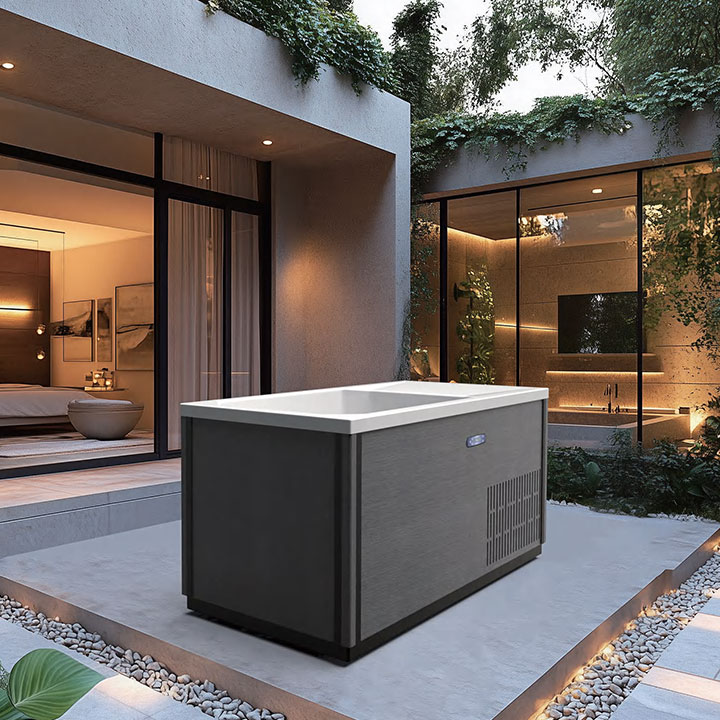
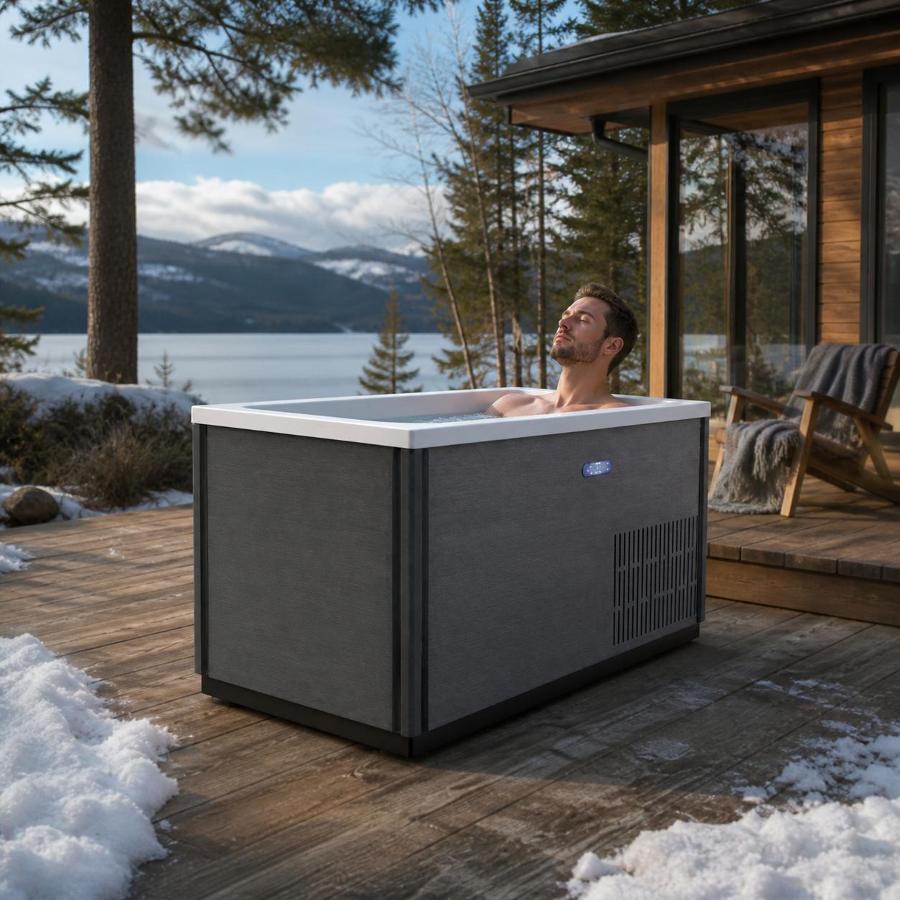
This is where products like the Outdoor Cold Plunge Tub C02 fit into the conversation, not as a replacement for the DIY spirit, but as a solution to the physics problem a stock tank can’t solve. It runs on an integrated 900W heat pump paired with a 54W brushless pump, so the water holds a set low temperature without ice deliveries or manual monitoring.
The 320-liter basin is sized for full-body immersion, with an ergonomic step built into the shell so getting in and out doesn’t turn into a slippery hazard. That detail matters more than it sounds. A stock tank has no step, no seating contour, and often a rough interior surface that isn’t meant for repeated skin contact.
Materials Matter More Than People Expect
Stock tanks are galvanized steel, built for livestock water, not sustained cold exposure with a human body inside. Over time, exposure to pool chemicals or standing water can corrode the coating and roughen the interior surface.
A tub built specifically for cold immersion uses a porcelain acrylic shell instead, which stays smooth against skin and resists staining better than raw metal. The exterior cabinet on the C02, available in Platinum or Midnight composite paneling, is also designed to handle direct outdoor weather exposure rather than rusting through after a wet winter.
Temperature Control: The Real Differentiator
Ask anyone who has tried a homemade ice bath for more than a month, and the same complaint comes up: the water never stays cold enough for long enough. Ice melts, the tub warms toward ambient temperature, and the session that started at 5°C is closer to 15°C twenty minutes later.
A heat pump system solves this by actively removing heat from the water in a continuous loop, rather than relying on a finite block of ice to absorb it. According to the product specifications, the C02’s 900W heat pump control system is paired with a digital interface on the front panel, letting users set and hold a target temperature instead of guessing.
Choosing Between DIY and a Dedicated Tub
The right choice depends on how often you actually plan to use cold immersion, and what your outdoor space can support long-term.
Occasional use, low budget: A stock tank with bagged ice can work for occasional weekend sessions, as long as you accept the temperature inconsistency and manual refill labor.
Weekly training recovery: If cold plunging is part of a regular training block, the ice cost and inconsistent temperature of a DIY setup become a real limitation.
Daily or year-round use: A closed-loop system with active refrigeration, like a heat pump tub, is the only realistic way to maintain consistent low temperatures without daily ice runs.
Outdoor, unsheltered installation: Weather-resistant cabinet materials matter more here than in a garage setup, since sun and rain exposure will degrade untreated wood or bare metal faster.
Where These Tubs Get Installed
Outdoor cold plunge setups aren’t limited to backyard patios anymore. Based on how these tubs are typically deployed, common placements include:
Private backyard decks and courtyards, often positioned near a covered patio for easy access after a workout
Athletic training facilities using cold immersion as part of a structured recovery program
Resort and villa settings where guests want a scenic, low-maintenance recovery option
The Recovery Science Behind the Cold
Cold water immersion works through a fairly well-documented mechanism. Cold exposure causes blood vessels near the skin to constrict, which reduces blood flow to inflamed tissue and can ease the sensation of post-exercise soreness. When you exit the water and vessels dilate again, circulation increases, helping deliver oxygen back to recovering muscle tissue.
There’s also a mental health angle that gets less attention than the muscle recovery story. Cold exposure triggers a release of endorphins, which is part of why people describe a noticeable mood lift and mental clarity after a session, separate from any physical soreness relief.
Common Questions About Building or Buying a Cold Plunge
Is a stock tank ice bath actually cold enough for real cold therapy? It can reach cold temperatures briefly, but without active refrigeration, the water warms quickly and requires constant ice replenishment to stay in a therapeutic range.
How much water capacity do I actually need? A 320-liter tub, like the C02, is sized for full-body immersion for most adults, with enough depth and width to sit comfortably on an integrated step.
Do I need a filtration or heating system, or just cold water? Beyond a certain point of regular use, both matter. A heat pump keeps temperature consistent, while filtration and periodic water treatment prevent the stagnant water issues common in unfiltered DIY tanks.
Can these tubs handle outdoor weather year-round? The C02’s cabinet is built with weather-resistant composite paneling specifically for outdoor placement, unlike untreated wood or bare metal stock tanks.
Making the Decision That Fits Your Space
Building a diy ice bath from a stock tank is a reasonable way to test whether cold immersion fits your routine, and plenty of people start there. But once the ice runs, the temperature swings, and the water maintenance become a weekly chore, the case for a dedicated tub with built-in refrigeration gets a lot stronger. Whether you land on a simple tank or an engineered tub like the C02 with its heat pump and ergonomic shell, the goal stays the same: consistent, safe access to cold therapy without turning every session into a logistics project.
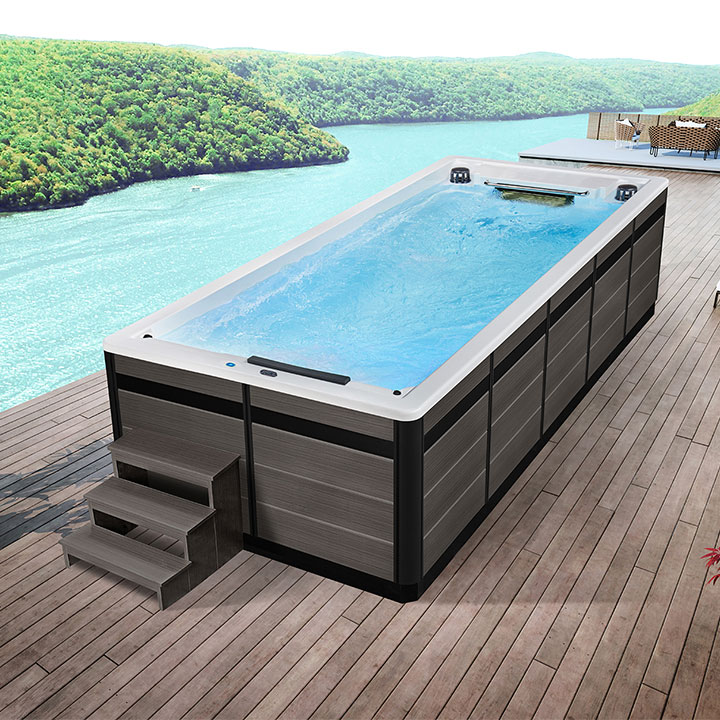
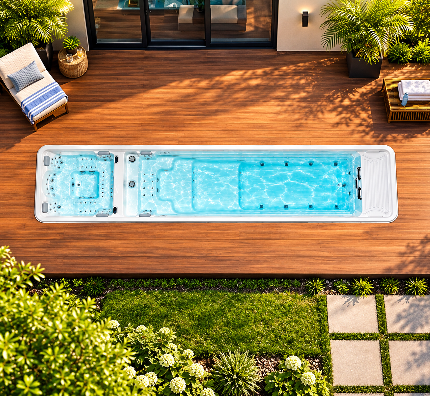
Victoria Star Swim Spa offers the perfect balance between exercise and relaxation, whether you want to swim for fitness or relax in the spacious seating.
Victoria Star Swim Spa offers the perfect balance between exercise and relaxation, whether you want to swim for fitness or relax in the spacious seating.