Building a DIY Cold Plunge Stock Tank: What Works and What You’ll Trade Off
Home / News / Building a DIY Cold Plunge Stock Tank: What Works and What You’ll Trade Off
September 30, 2026
Searching for "diy cold plunge stock tank" usually means one thing: you want cold therapy without spending a fortune. A galvanized stock tank from a farm supply store costs a fraction of a purpose-built tub, and thousands of people have turned one into a backyard ice bath. But before you buy a 100-gallon tank and a bag of ice, it helps to understand what you’re actually getting into, and what the alternative looks like.
Why the Stock Tank Route Became So Popular
Stock tanks were never designed for humans. They’re livestock watering troughs, made of galvanized steel, sold at agricultural retailers for a few hundred dollars. Someone figured out that a round tank holds enough water for a seated adult, and the trend spread through fitness forums and social media.
The appeal is straightforward. A tank plus a bag of ice costs less upfront than most dedicated cold plunge products. For someone who wants to try cold exposure a handful of times before committing further, that low barrier matters. It’s the same logic as renting gear before buying it outright.
The Real Costs Hiding Behind the Low Price Tag
Here’s where the math gets less flattering. A stock tank has no insulation and no cooling system. Every session means buying, hauling, and dumping bags of ice, which adds up fast if you plunge more than once or twice a week. Over a few months, ice purchases alone can rival what a proper chiller would have cost.
There’s also the labor. Galvanized steel conducts heat efficiently, so the water warms quickly in direct sun or on a mild day. You’re refilling ice constantly, and you’re doing manual water changes because stock tanks have no filtration. Standing water without circulation grows bacteria and algae within days, especially outdoors.
Consider the ongoing demands of a DIY setup:
Ice sourcing and storage, often multiple bags per session
Manual draining and refilling every few days to keep water sanitary
No temperature consistency, since ambient conditions dictate how fast the water warms
No cover in most builds, leaving the tank exposed to debris and UV degradation
Galvanized coating that can flake or rust over time with constant water exposure
None of this makes a stock tank a bad starting point. It makes it a short-term experiment rather than a long-term wellness fixture.
How Cold Exposure Actually Helps the Body
Regardless of the vessel, the physiological logic behind cold water immersion is consistent. Cold exposure causes blood vessels near the skin to constrict, a response called vasoconstriction. When you exit the cold and warm back up, those vessels dilate again. That constrict-and-dilate cycle is widely associated with improved circulation and better oxygen delivery to tissue, which is why athletes lean on cold immersion after hard training sessions.
Cold water also appears to reduce localized inflammation tied to muscle soreness following intense exercise. That’s the primary reason cold plunges became a fixture in training facilities before they migrated into home wellness routines. Beyond the physical response, many users report a mental lift from cold exposure, likely tied to natural endorphin release that follows the initial shock of cold water.
None of this requires expensive equipment. It requires consistent access to genuinely cold water, ideally somewhere in the low-to-mid 50s Fahrenheit, sustained for several minutes. The question isn’t whether cold works. It’s whether your setup can deliver that temperature reliably, week after week, without becoming a chore.
Where the Stock Tank Approach Starts to Break Down
The honest answer is that ice-based cooling can’t hold a steady temperature. You dump ice in, the water gets cold, and then it warms up again over the next hour or two. If you plunge on a schedule, that inconsistency becomes a real obstacle. You either over-ice to compensate or accept a warmer soak than intended.
There’s also a durability question. Galvanized stock tanks are built for outdoor farm use, not for sustained contact with treated or heavily used water. Some owners report rust spots forming within a year, particularly in humid climates or coastal areas where salt air accelerates corrosion.
This is the point where a lot of people start looking at purpose-built alternatives, not because the stock tank failed outright, but because the maintenance burden outweighs the initial savings.
What a Purpose-Built Cold Plunge Changes
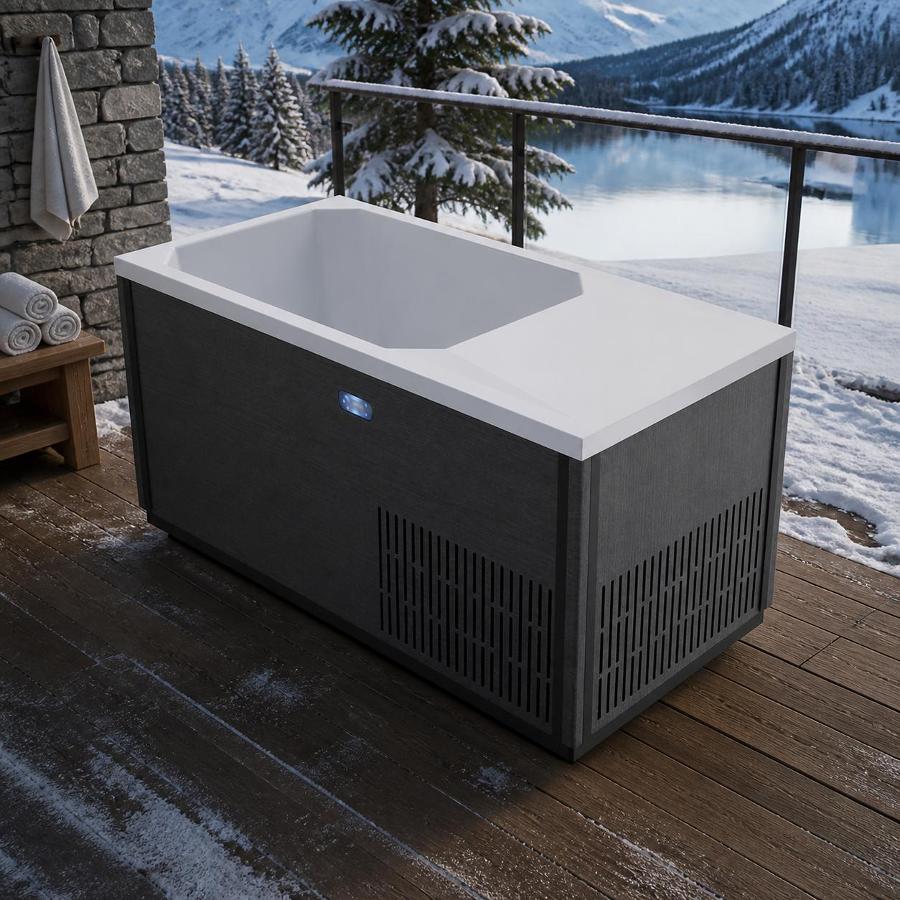
A dedicated cold plunge tub, like the Outdoor Cold Plunge Tub C02 we build for us, addresses the exact pain points that make stock tanks frustrating over time. Instead of ice, it uses an integrated 900W heat pump system paired with a 54W brushless pump to maintain a set low temperature automatically. No ice runs, no guessing whether the water is cold enough.
The shell is a high-grade porcelain acrylic, chosen because it resists staining and holds up to repeated water exposure far better than galvanized steel. The 320-liter capacity is close to what many stock tank setups use, but the interior includes an ergonomic seating step, so entry and exit feel less like climbing over a trough wall.
Feature
DIY Stock Tank
Outdoor Cold Plunge Tub C02
Cooling method
Ice, manual
900W integrated heat pump
Temperature consistency
Fluctuates hourly
Maintained automatically
Water capacity
Varies, often 100-150 gal
320 L (approx. 85 gal)
Shell material
Galvanized steel
Porcelain acrylic
Filtration
None
Circulation via brushless pump
Insulated cover
Rarely included
1 included
Cabinet finish
None, exposed steel
Weather-resistant composite (Platinum or Midnight)
The exterior cabinet panels are vented composite, built to handle outdoor exposure without the rust concerns that come with galvanized metal. That matters if the tub is going to sit on a patio or deck year-round rather than getting stored away between sessions.
Matching the Setup to How Often You’ll Actually Use It
The decision between a stock tank and a dedicated unit really comes down to frequency and tolerance for maintenance. If you’re testing whether cold exposure fits your routine at all, a stock tank is a reasonable way to find out without a large commitment.
If you already know cold plunging is part of your week, the calculation shifts. Consider these factors before deciding:
How many sessions per week do you realistically expect? Two or more per week makes ice logistics tedious fast.
Do you have consistent outdoor access, or will the tub need to handle temperature swings across seasons?
Is water sanitation a concern? Stock tanks require full manual drains; a system with circulation reduces that burden.
What’s your tolerance for equipment upkeep versus a plug-in system that regulates itself?
Will the setup live outdoors permanently, where UV and moisture resistance start to matter?
Athletic training facilities and boutique wellness centers tend to skip the DIY phase entirely, since consistent, reliable temperature control is part of what clients are paying for. Home users often start with improvised setups and migrate toward integrated systems once the novelty wears off and the routine sticks.
Common Questions About Cold Plunge Setups
Is a stock tank safe to use as a cold plunge? Structurally, yes, for casual use. The concern isn’t safety in the moment, it’s long-term water quality and corrosion, since these tanks lack filtration and aren’t coated for constant human contact.
How cold does the water need to be for cold therapy to work? Most cold immersion routines target water in the low-to-mid 50s Fahrenheit, sustained for several minutes. Ice-based cooling can reach this but struggles to hold it consistently.
Can I install a heat pump chiller on a stock tank? Some DIYers retrofit chillers onto tanks, but stock tanks weren’t engineered for integrated plumbing or insulation, so results vary and leaks are a common complaint.
What’s the real lifespan of a galvanized stock tank used for plunging? Reports vary widely, but rust and coating degradation within one to three years are common, especially with frequent water changes and outdoor exposure.
Does a heat pump system use much electricity? The C02’s system runs on a 0.954 KW power supply, which is modest compared to running a standalone chiller or constantly buying ice for equivalent cooling.
A diy cold plunge stock tank build will always be the cheaper entry point, and for short-term experimentation, that’s a fair trade. But once cold exposure becomes a habit rather than a trial, the maintenance, inconsistent temperatures, and corrosion risk tend to push people toward a system built specifically for the job, one where the cooling, insulation, and shell material are matched to what sustained cold water immersion actually demands.
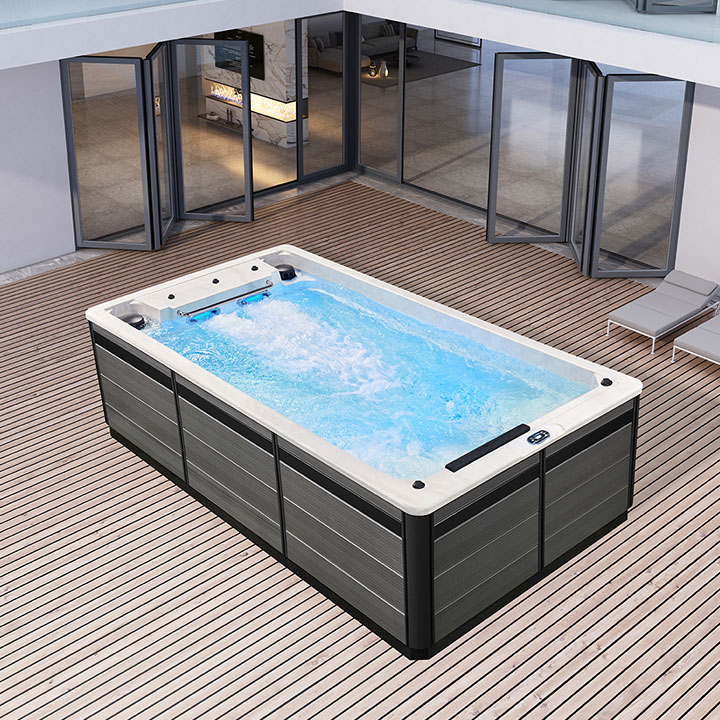
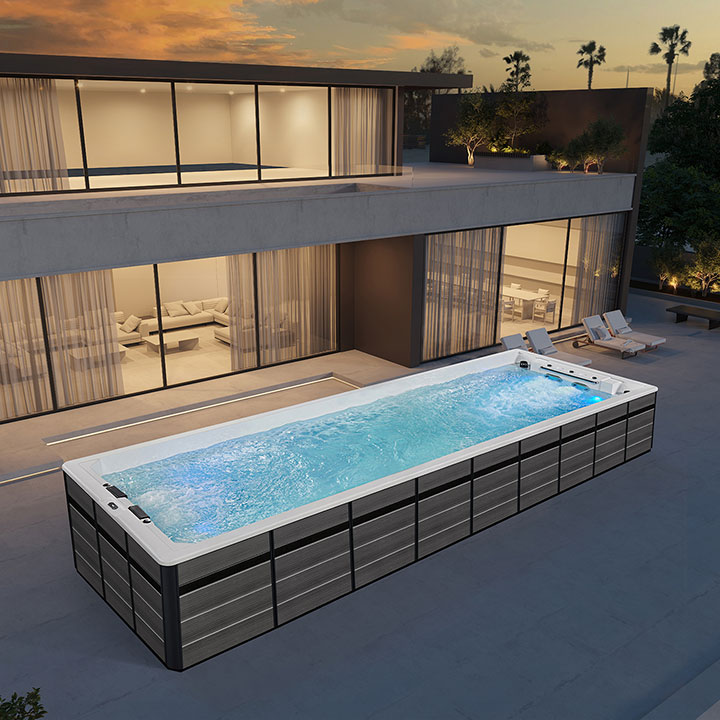
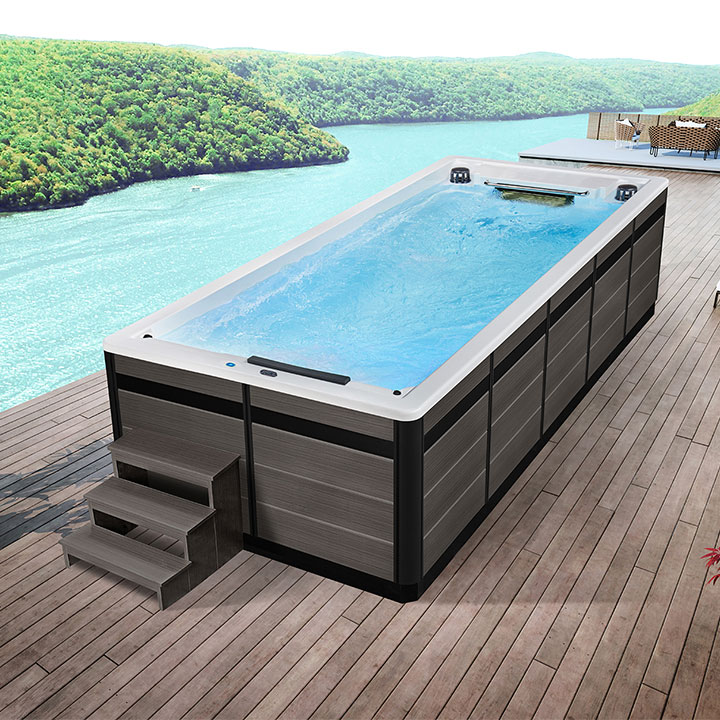
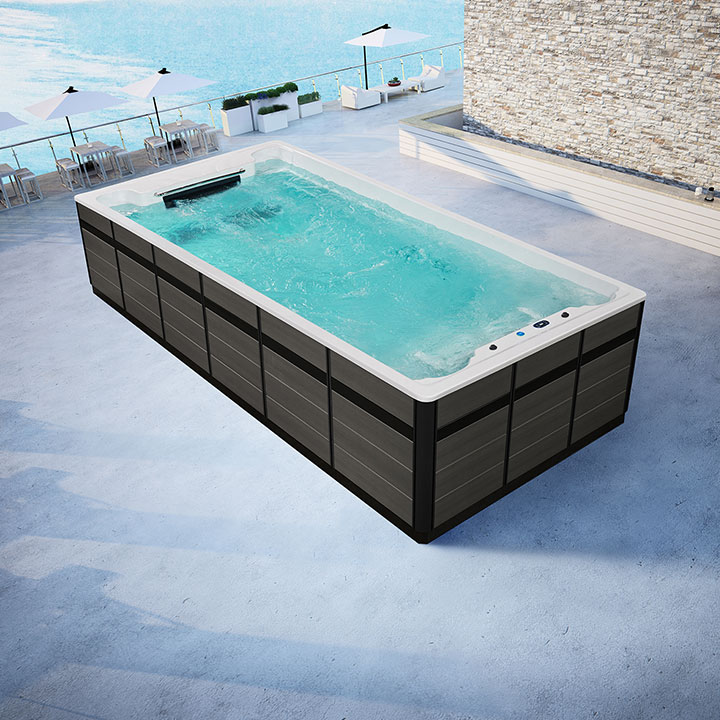
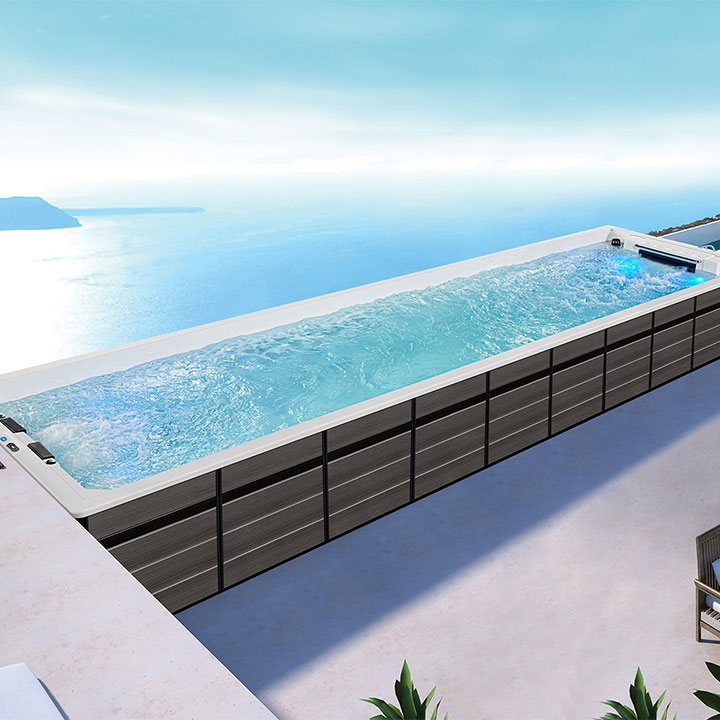
Victoria Star Swim Spa offers the perfect balance between exercise and relaxation, whether you want to swim for fitness or relax in the spacious seating.
Victoria Star Swim Spa offers the perfect balance between exercise and relaxation, whether you want to swim for fitness or relax in the spacious seating.