Bleach in Hot Tub: Safe Use, Water Chemistry, and Practical Alternatives
Home / News / Bleach in Hot Tub: Safe Use, Water Chemistry, and Practical Alternatives
November 05, 2026
Searching for whether you can put bleach in hot tub water usually stems from a sudden maintenance pinch or curiosity about lowering chemical expenses. The immediate concern is whether ordinary household bleach can sanitize warm spa water without damaging internal plumbing or irritating human skin. While sodium hypochlorite serves as an active sanitizing agent in many treated water systems, pouring arbitrary laundry bleach into a spa introduces distinct mechanical and chemical hazards. Understanding product labeling, accurate dosage parameters, and equipment limitations helps you make safe water-care decisions without jeopardizing bather health or equipment longevity.
Can You Put Bleach in a Hot Tub?
Household Bleach vs. Registered Spa Chlorine
Many homeowners assume that liquid laundry bleach and professional spa sanitizers represent identical chemicals in different packaging. Both formulas rely on sodium hypochlorite as their primary disinfectant, yet their similarities often end with the active compound. Products vary widely in concentration and formulation regardless of whether they are marketed for laundry, pools, or spas.
Household bleach products differ in formulation. Some may contain fragrances or other additives not intended for spa use. These additives can create foam when introduced to hydrotherapy jets or leave residue in filter cartridges. Always check the specific product ingredient list, label directions, and your spa manufacturer’s approved chemical list rather than inferring suitability from product branding or marketing alone. Use a product for spa sanitation only when its label permits that use and your spa manual approves it.
Check the Label and Spa Manufacturer Warranty First
Do not use a product for spa sanitation unless its label explicitly permits that use for hot tubs or spas. EPA-registered sanitizers must be used consistently with their labels, and chemical packaging for approved spa products provides detailed calculations based on gallon capacity, helping bathers avoid toxic dosing errors. If a product does not include directions for hot tub or spa water disinfection, do not apply it to your tub.
Warranty coverage represents another pragmatic reason to inspect manufacturer documentation before adding non-traditional chemicals to your spa. Many hot tub warranties explicitly state that damages resulting from unapproved chemicals void repair coverage for heaters and pump seals. Reviewing the owner manual and following the spa manufacturer’s approved sanitizer list safeguards both your financial investment and mechanical reliability.
Step-by-Step Guide: How to Use Bleach Safely When Permitted
1. Calculate Exact Tub Volume and Product Concentration
Accurate dosing begins with establishing the precise water volume of your tub rather than relying on exterior dimensional estimates. Internal seating contours, footwells, and variable fill lines significantly alter true water capacity compared to raw structural measurements. Review your product manual to locate the exact fluid volume in gallons or liters before opening any sanitizer container.
Check the sodium hypochlorite concentration printed on your specific product label. Sodium hypochlorite products vary in active percentage depending on the manufacturer and intended use. Never attempt to dose water without verifying the active percentage on your specific product, as concentration does not indicate whether a product is approved for spa use. Follow the product label dosing instructions for the application it permits.
2. Pre-Test and Balance pH and Total Alkalinity
Introducing sodium hypochlorite into spa water may shift your baseline balance. Sodium hypochlorite products are typically alkaline and can affect water pH depending on the product, dosage, and existing water conditions. Testing baseline chemistry with dependable strips or liquid reagents before adding chemicals helps prevent compounding existing water problems.
CDC guidance gives a free-chlorine range of 3 to 10 ppm for hot tubs, with a pH range of 7.0 to 7.8 for proper sanitation. Many spa manufacturers and product labels recommend maintaining pH between 7.2 and 7.6 for optimal equipment performance and bather comfort. When water pH climbs past 8.0, the germicidal efficacy of free available chlorine drops substantially, rendering the sanitizer less effective against waterborne pathogens. Test and adjust pH according to your product label and spa manual before and after adding sanitizer.
3. Dilute and Distribute with Jets Running
Pouring concentrated liquid sanitizer directly onto acrylic surfaces or headrests can induce localized discoloration and accelerate plastic deterioration. Follow the specific product label and your spa manual for proper measurement, dilution, and addition procedures. Do not mix or dilute products unless the label explicitly directs you to do so.
Activate your circulation pump or primary jet stream to disperse the sanitizer evenly across the entire water column. Distributing chemicals across moving currents prevents concentrated pockets of sanitizer from settling into stationary pipe junctions or around pump components. Follow your spa manual and sanitizer product label for proper distribution procedures.
4. Wait, Retest Free Chlorine, and Confirm Safe Re-Entry
Never permit bathers to enter a hot tub immediately after dispensing liquid chlorine or unbuffered sanitizer solutions. Allow the pump to circulate the water according to the sanitizer product label and your spa manual to ensure homogeneous chemical distribution. High-temperature water accelerates sanitizing reactions, demanding a settling period before anyone steps into the vessel.
Before bather re-entry, use a fresh test method to verify that free available chlorine levels meet the recommended standards. CDC guidance gives a free-chlorine range of 3 to 10 ppm for hot tubs, with a pH range of 7.0 to 7.8. Follow the sanitizer product label, your spa manufacturer’s instructions, and any applicable local regulations for safe re-entry procedures. If your chlorine reading exceeds the range specified by your product or spa manual, keep bathers out and retest before allowing use.
What Can Go Wrong? Risks, Overdosing, and Common Pitfalls
Overdosing Risks and False Chlorine Readings
Accidentally adding too much sanitizer to a spa creates uncomfortable and potentially hazardous bathing conditions. Water outside the manufacturer’s recommended chemical ranges can irritate skin and respiratory passages. If you experience strong chemical odors or physical discomfort, exit the water immediately and follow your spa manual and product label for corrective procedures.
Severe chemical overdoses can also induce deceptive water testing phenomena. When free chlorine exceeds 10 ppm, a DPD test may bleach out and give a falsely low or zero result. An unwary owner might look at a colorless test vial, assume the tub lacks sanitizer, and mistakenly add more chemical to an already elevated condition. Always follow manufacturer test-kit instructions and retest with appropriate methods if results seem inconsistent with recent chemical additions.
Accelerated Wear on Acrylic Shells, Headrests, and Seals
Maintaining water chemistry within the ranges specified by your spa manufacturer helps preserve internal components and aesthetic finishes. Operating a spa outside the manufacturer’s recommended chemical parameters may affect equipment longevity over time. Follow your spa manual’s water quality requirements to support proper equipment function.
Soft foam headrests and acrylic surfaces require proper water balance for long-term performance. Excessive free chlorine or pH imbalance can affect material integrity over extended periods. Sustaining the chemical balance recommended by your spa manufacturer supports equipment maintenance and helps avoid premature component replacement.
Dangerous Chemical Reactions: Never Mix with Acids or Specialty Cleaners
Combining liquid chlorine with acidic chemicals represents one of the most hazardous mistakes a spa owner can commit in a domestic setting. Dry acid products containing sodium bisulfate or liquid muriatic acid react with sodium hypochlorite solutions to generate toxic chlorine gas. Inhaling these concentrated vapors can cause rapid chemical burns to respiratory membranes and requires immediate emergency medical care.
Safe chemical storage and handling protocols demand strict physical separation between all water treatment products inside your storage area:
Store sanitizers and acid reducers in distinct, labeled containers on separate shelving tiers away from direct sunlight.
Never use identical measuring scoops or mixing containers interchangeably between oxidizers, dry acids, and enzyme treatments.
Rinse measuring cylinders thoroughly with clean fresh tap water between individual chemical additions to prevent accidental contact.
Secure lids tightly immediately following product extraction to eliminate vapor interactions inside enclosed pool houses or utility sheds.
Bleach vs. Other Hot Tub Sanitizers: A Practical Comparison
Comparing Cost, Convenience, and Water Stability
Selecting the right sanitizing strategy involves balancing recurring financial costs against long-term water balance stability and operational convenience. Traditional granular chlorine formulations, such as sodium dichlor, incorporate cyanuric acid to protect active molecules from ultraviolet degradation. In contrast, unstabilized liquid chlorine introduces no cyanuric acid, preventing the persistent stabilization buildup that can complicate spa maintenance.
Sanitizer Option
Active Chemical Base
Cyanuric Acid Addition
Impact on Water pH
Primary Practical Advantage
Unstabilized Liquid Chlorine
Sodium Hypochlorite
None
Typically Increases
Prevents stabilizer accumulation in residential spa water
Granular Dichlor
Sodium Dichloroisocyanurate
Adds Cyanuric Acid
Near Neutral
Convenient storage, precise measurements, and rapid solubility
Bromine Products
Various Brominating Compounds
Varies
Varies
Another sanitizer option used in hot tubs
Non-Chlorine Shock
Potassium Peroxymonosulfate
None
Neutral to Slightly Acidic
Optional oxidizer where product label and spa manual call for it
CDC advises against cyanuric acid or stabilized chlorine products in hot tubs because they slow disinfection. Follow local regulations and your spa manufacturer’s approved sanitizer instructions when selecting water treatment products. Always use products according to their label directions and your spa manual’s requirements.
Why Secondary Oxidation Matters: Ozone and UV Systems
Relying exclusively on chemical additions to neutralize daily biological contamination places substantial demand on your water chemistry. Heavy bather loads deposit sweat, skin oils, cosmetics, and organic matter that rapidly deplete free halogen reserves. When chemical sanitizers tackle these complex organics alone, unpleasant combined chloramines can accumulate, causing strong odors and mucosal irritation.
Integrating supplemental oxidation hardware may relieve some burden from chemical sanitizers. Secondary systems such as ozone and UV units work on contaminants as circulating water passes through dedicated chambers. Effectiveness depends on the specific system, installation, and maintenance. These systems do not eliminate the need for a measurable residual chemical sanitizer in the main bathing water.
Integrating Modern Spa Design with Reliable Water Care
Multi-Stage Filtration and Ozone Integration in Compact Spas
Modern residential spa engineering optimizes water circulation geometry to complement supplemental sanitation technologies. When internal circulation systems channel fluid through multi-density filter cartridges, suspended debris is extracted before it can chemically react with active sanitizers. Keeping particulate matter trapped in dedicated filters helps preserve dissolved sanitizer effectiveness.
Ozone oxidizes some contaminants as water passes through the treatment system, while germicidal ultraviolet light exposes circulating water to short-wavelength radiation that disrupts microbial structures. Working together with filtration, these automated defenses may reduce some manual chemical handling, though they do not replace the need for a residual chemical sanitizer. Performance depends on the specific equipment, proper installation, and regular maintenance.
Product Profile: Ergonomics and Integrated Sanitation of the VS-201C
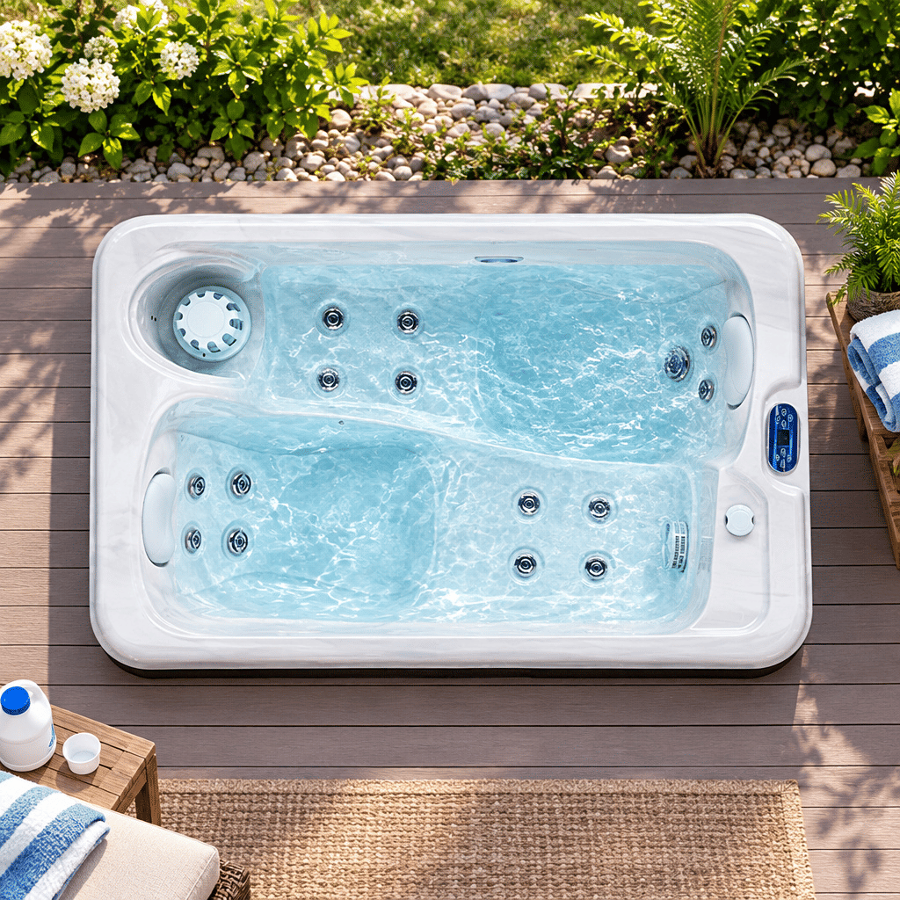
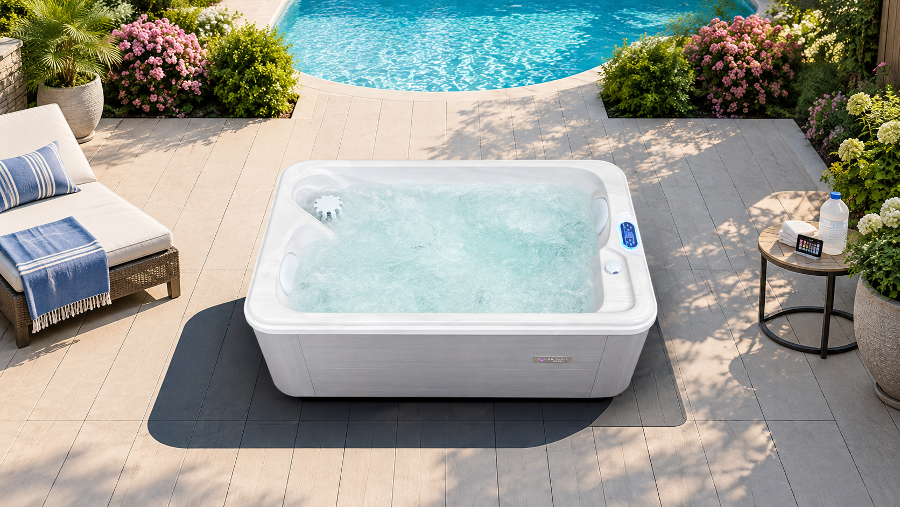
Engineered by Victoria Star, the 2 Person Rectangular Hot Tub VS-201C demonstrates how compact design merges with multi-stage water treatment architecture. Designed specifically for tight footprints, this model measures 1750 × 1150 × 750 mm, making it suitable for urban balconies, private courtyards, and indoor wellness areas. Its two opposing ergonomic loungers accommodate bathers reclining against 15 hydrotherapy massage jets positioned to deliver targeted water streams.
The VS-201C incorporates an aluminum-plastic composite exterior skirt with a shell available in the porcelain color option. According to the supplied specifications, water treatment is supported by the Hassle-Free Clean Water System combining multi-layer filtration, ozone oxidation, and UV sanitation. A 0.35 HP circulation pump moves water through the sanitizing loop, while a 2 HP water pump and a 3 KW heater maintain warmth and hydrotherapy pressure.
Operational control is managed via the KL2022 smart digital keypad, which features intuitive touch controls and an illuminated display for adjustments to water temperature, jets, and underwater lighting. The model includes supplemental oxidation systems that work alongside chemical sanitizers, though a residual sanitizer remains necessary for comprehensive water treatment. Follow the manufacturer’s water care instructions for proper chemical balance and system maintenance.
Routine Water Maintenance Checklist
Daily and Weekly Testing Protocols
Consistent chemical monitoring represents the most reliable defense against sudden algae blooms, cloudiness, and equipment issues. Testing the water before each soak ensures that bather comfort remains uncompromised and prevents unexpected exposure to water outside recommended chemical ranges. Logging chemical readings helps identify gradual pH drift before it affects equipment.
Following a systematic maintenance protocol supports stable water parameters and equipment longevity:
Use a test strip or liquid test kit according to the manufacturer’s package directions for proper sampling depth, contact time, and reading procedure.
Confirm free available chlorine and pH remain within the ranges recommended by CDC guidance, your sanitizer product label, and your spa manual.
Measure total alkalinity regularly according to your spa manual, seeking a balanced baseline to prevent erratic pH swings.
Apply water treatment products only as directed by their labels and your spa manufacturer’s instructions.
Remove and rinse the filter cartridge according to your spa manual’s recommended schedule.
Water Replacement Intervals and Deep System Purging
Even when owners maintain careful chemical balance, hot tub water accumulates dissolved solids, minerals, and unoxidized organic compounds over time. As total dissolved solids climb substantially above initial tap water levels, chemical efficiency diminishes and water clarity may decline. Draining and refilling your spa according to the manufacturer’s recommended schedule resets chemical equilibrium.
One reference method for estimating drain intervals divides total tub volume in gallons by three, then divides that result by average daily bather count; however, your spa manufacturer’s recommendations and local requirements take precedence. Prior to draining, circulate a plumbing purge cleaner through the lines for the duration specified by the cleaner’s instructions to remove hidden biofilm from interior pipe walls. Refilling with fresh water through the filter compartment eliminates trapped air pockets around the circulation pump.
FAQs
Can I use scented or splash-less household bleach in my hot tub?
You should never add scented or splash-less laundry bleach to a hot tub. These formulas may contain thickening agents, fragrances, or surfactants not intended for spa use. These additives can create dense foam when introduced to hydrotherapy jets or leave residue in filter systems. Use a product for spa sanitation only when its label explicitly permits hot tub or spa use and your spa manual approves it. Follow the product label directions and your spa manufacturer’s approved chemical list.
What should I do immediately if I accidentally added too much bleach?
If you accidentally overdose your spa with sanitizer, immediately prohibit anyone from entering the water. Remove the thermal cover to allow ventilation. Run the circulation pump to maintain water movement while following the sanitizer product label and your spa manual for guidance on handling elevated readings. Retest chlorine levels periodically using an appropriate test method. In some cases, partially draining the vessel and refilling with fresh tap water helps dilute excess chemical concentrations. If you experience strong chemical odors or irritation, exit the area and seek fresh air.
What are the target free chlorine and pH ranges according to health guidelines?
CDC guidance gives a free-chlorine range of 3 to 10 ppm for hot tubs, with a pH range of 7.0 to 7.8 for proper sanitation. Many spa manufacturers and sanitizer product labels recommend maintaining pH between 7.2 and 7.6 for optimal equipment performance and bather comfort. Sustaining these parameters supports pathogen neutralization while protecting equipment. Always follow the sanitizer product label, your spa manufacturer’s instructions, and any applicable local regulations for proper water chemistry maintenance.
Does bleach leave cyanuric acid buildup in the water?
Plain sodium hypochlorite contains no cyanuric acid, meaning its application will not contribute to stabilizer accumulation inside your hot tub. Unlike stabilized granular dichlor products that add cyanuric acid with each dose, unstabilized liquid chlorine sanitizes without elevating stabilizer levels. CDC advises against cyanuric acid or stabilized chlorine products in hot tubs because they slow disinfection. Follow local regulations and your spa manufacturer’s approved sanitizer list when selecting water treatment products.
Can a built-in ozone or UV system completely replace bleach and chlorine?
Supplemental purification systems like ozone and ultraviolet units cannot completely eliminate the requirement for a measurable residual chemical sanitizer in the main bathing water. While ozone and UV may work on bacteria, viruses, and organic contaminants circulating through their treatment chambers, they provide no lingering protection in the spa itself. Adding an approved chlorine or bromine sanitizer maintains an active residual barrier throughout the water volume. Follow your spa manufacturer’s instructions for proper use of supplemental systems alongside chemical sanitizers.
Conclusion
Evaluating the appropriateness of bleach in hot tub maintenance requires careful attention to product labeling, water chemistry, and manufacturer instructions. While sodium hypochlorite provides disinfection, ordinary laundry bleach may contain fragrances, thickening agents, or other additives not intended for spa use. Use a sanitizer for spa application only when its label explicitly permits that use and your spa manual approves it. By following product labels, spa manufacturer guidelines, and CDC recommendations for water chemistry, maintaining clean, safe spa water becomes a manageable routine that protects both bathers and equipment.
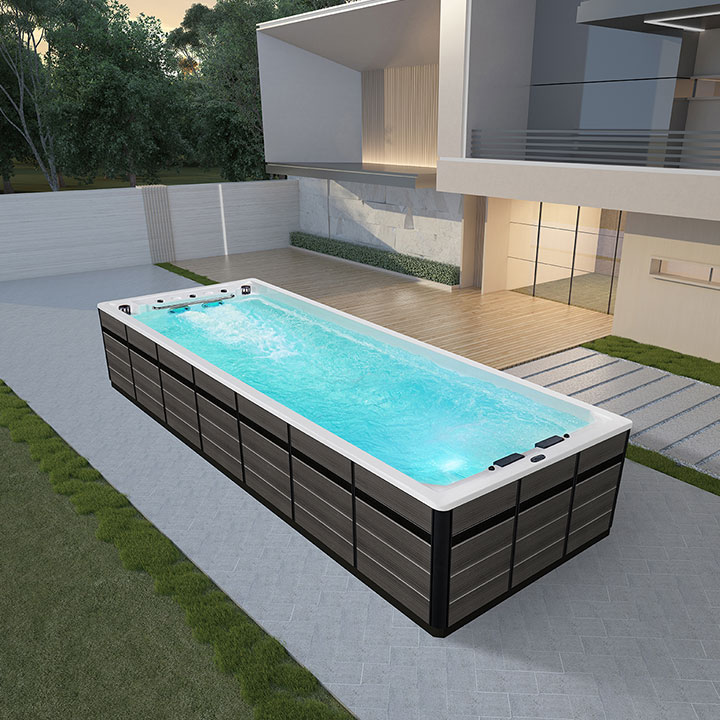
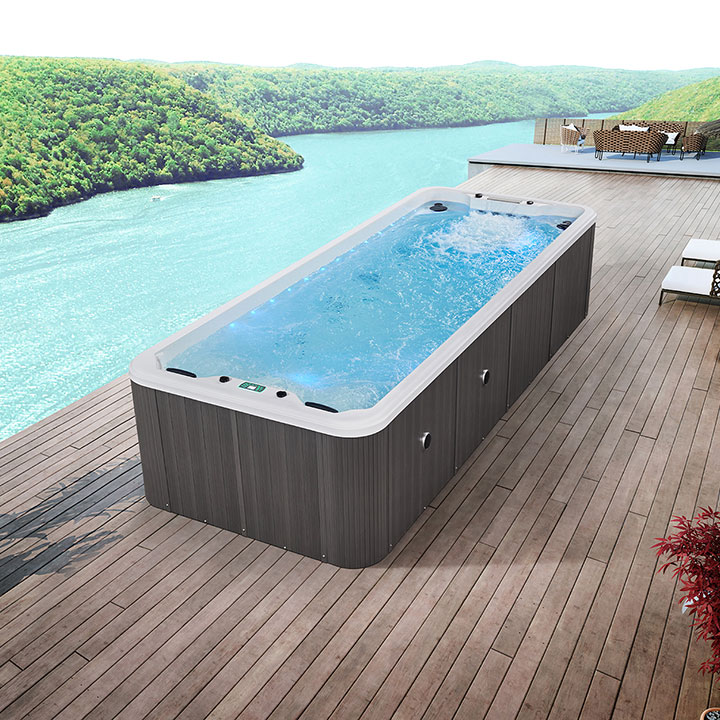
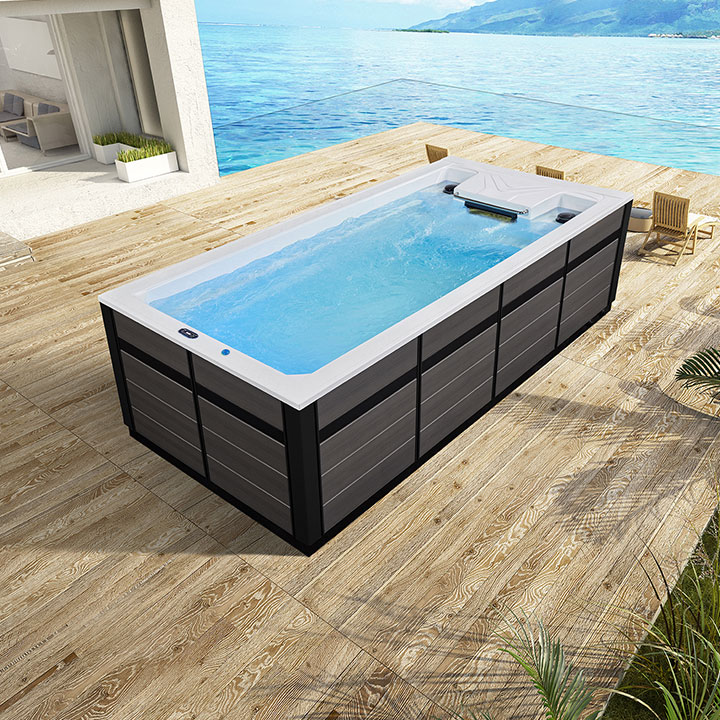
Victoria Star Swim Spa offers the perfect balance between exercise and relaxation, whether you want to swim for fitness or relax in the spacious seating.
Victoria Star Swim Spa offers the perfect balance between exercise and relaxation, whether you want to swim for fitness or relax in the spacious seating.