Best Time to Cold Plunge: Complete Timing Guide for Recovery, Training, and Energy
Home / News / Best Time to Cold Plunge: Complete Timing Guide for Recovery, Training, and Energy
November 04, 2026
Stepping into chilled water forces an immediate physiological recalibration that few wellness habits can replicate. Many newcomers quickly ask about the best time to cold plunge to secure peak recovery benefits and avoid physical pitfalls. While finding the best time to cold plunge daily depends heavily on your lifestyle, biological timing shapes systemic vascular response, neurological alertness, and muscular remodeling. This guide examines how immersion timing alters your physiological outcomes across circadian rhythms and athletic schedules.
The Short Answer: When Is the Best Time to Cold Plunge?
The Reality of Circadian Timing: Why There Is No Universal Hour
Clinical exercise science does not support the idea of a single universally optimal hour for deliberate cold exposure. Systematic reviews evaluating cold water immersion show that physiological responses depend on your baseline state, physical workload, and current autonomic demands rather than the movement of clock hands.
Different individuals have different scheduling preferences and personal goals. A marathon runner may use cold immersion to address acute discomfort during intense training blocks, while an office worker may incorporate morning cold exposure as part of a personal routine. Effects and usefulness vary across contexts and individuals.
Your body does not operate on a universal biological clock that dictates when cold exposure will yield optimal benefits. Hormonal rhythms, training status, sleep quality, and daily stress loads all interact to determine how you respond to thermal stress at any given hour.
Aligning Immersion with Core Goals: Routine, Alertness, or Recovery
To determine your personal cold water therapy schedule, you must first isolate the primary outcome you expect from each session. Some individuals find that immersing themselves after dawn may increase alertness, though responses vary.
Conversely, plunging later in the day is often intended to mitigate perceived muscle stiffness or facilitate post-exercise comfort. Establishing a clear functional target ensures that deliberate cold exposure serves your routine rather than introducing unnecessary thermal stress.
Think of timing selection as a practical exercise in self-assessment rather than a search for a scientifically validated optimal window. Ask yourself whether you are seeking a routine anchor, a post-workout comfort intervention, or a daily energy reset.
Clarifying the Crucial Distinction: Time of Day vs. Workout Proximity
Many practitioners confuse chronological timing with metabolic timing when organizing their plunge sessions. Plunging at 7:00 AM on a non-training day presents an entirely different physiological challenge than plunging at 7:00 AM immediately following heavy resistance exercise.
The primary concern with workout timing centers on repeated or immediate post-resistance-training immersion, which may modestly attenuate hypertrophy gains. However, an optimal delay interval is not firmly established in the current evidence.
This distinction matters because the metabolic state of your muscles and nervous system at the moment of immersion can influence how your body responds to the thermal stress. A fatigued, glycogen-depleted muscle operates under different constraints than a rested one.
How Cold Water Immersion Affects Recovery Physiology
What Clinical Research Demonstrates About Perceived Muscle Soreness
Immersion in chilled water induces pronounced peripheral vasoconstriction, driving blood away from superficial extremities toward your core organs. Meta-analyses investigating cold water therapy indicate that this thermal intervention may reduce perceived delayed-onset muscle soreness in the short term.
Users often exit the basin feeling lighter and less restricted, which explains why athletes sometimes prioritize immersion during demanding multi-day competitions. The mechanisms underlying this subjective relief remain an area of ongoing investigation.
The reduction in perceived soreness does not necessarily correspond to faster tissue repair or improved functional capacity. It represents a shift in subjective comfort that can help athletes manage discomfort during compressed competition schedules.
Why Reduced Soreness Does Not Equal Complete Physiological Recovery
Subjective relief can create a misleading perception of complete neuromuscular recovery. Systematic literature reviews indicate that while subjective muscle pain may drop following immersion, objective functional markers such as maximal voluntary contraction, joint power output, and systemic inflammation markers do not recover at identical rates.
Numbing muscular discomfort does not instantly repair micro-tears within myofibrils or replenish depleted intramuscular glycogen stores. Cold plunging may help manage comfort, but it does not replace nutritional replenishment or adequate sleep.
This gap between how you feel and how your body functions highlights a central challenge in recovery planning. Comfort is valuable, but it should not be mistaken for complete readiness to perform at peak capacity.
Impact of Immersion Variables: Temperature, Water Depth, and Duration
Achieving consistent physiological outcomes requires balancing the primary physical parameters of cold exposure. The rate of internal cooling depends heavily on ambient water temperature, total body surface immersion, and exposure duration.
Sitting submerged to clavicle depth induces far greater hydrostatic pressure and systemic cardiovascular shifts than soaking merely to your waistline. Immersion protocols and study conditions vary widely, and a given temperature-duration combination does not guarantee a specific outcome.
The following table presents illustrative examples from varied practice and research. These are not universal prescriptions or validated protocols, and individual tolerance and safety considerations vary significantly:
Immersion Approach
Typical Water Temperature
Exposure Duration
Context of Use
Conservative Beginner
12°C to 15°C (54°F to 59°F)
1 to 2 minutes
Initial cold habituation
Standard Wellness
10°C to 13°C (50°F to 55°F)
2 to 4 minutes
General wellness routines
Athletic Relief
10°C to 12°C (50°F to 54°F)
5 to 10 minutes
Short-term comfort during competition periods
Best Time to Cold Plunge Around Workouts
Post-Endurance and High-Intensity Training: Managing Short-Term Fatigue
Endurance athletes who log high mileage or engage in grueling interval training sometimes use post-workout cold water immersion as a possible option in specific situations, such as managing heat or addressing short-term recovery demands. Prolonged running, cycling, or rowing elevates deep core temperatures and triggers significant systemic thermal stress.
Entering a cold plunge tub shortly after completing an endurance session may assist in rapid core cooling and reduce localized discomfort. When an athlete must perform multiple exhaustive sessions across consecutive days, addressing acute fatigue through prompt cold exposure is one approach, though it is not necessary or universally beneficial.
The decision to plunge after endurance training often reflects practical scheduling constraints and personal preference rather than a universally validated recovery prescription. Some athletes report subjective benefits, while others find the ritual unnecessary or uncomfortable.
Post-Resistance Training: Balancing Soreness Relief Against Hypertrophy Attenuation
If your primary athletic objective is developing skeletal muscle mass or maximal strength, immediate post-workout cold water immersion requires extreme caution. Recent systematic reviews and meta-analyses demonstrate that repeated or immediate post-lifting immersion may reduce muscle-growth adaptations over time.
The exact mechanisms remain under investigation, but the practical concern is clear. Strength athletes should implement the following decision logic around lifting days:
If your main goal is hypertrophy, favor non-lifting days for cold immersion or avoid immediate post-lifting exposure.
When prioritizing rapid comfort during intense competition weeks, short immersion is permissible despite potential minor compromises in long-term muscular adaptations.
An effective delay interval, if any, has not been established by research.
This timing consideration carries significant weight for recreational lifters who want to maximize their muscle-building efforts. Short-term comfort should not come at the expense of long-term structural gains when hypertrophy is the central goal.
Pre-Workout Cold Plunges: Potential Applications and Practical Caveats
Plunging before physical training is an emerging practice, but its utility depends strictly on environmental conditions and individual response. In hot, humid conditions, a brief pre-cooling immersion can lower core body temperature, effectively expanding your thermal safety margin before cardiovascular exertion.
However, pre-workout immersion may not suit everyone, and responses can vary. Some individuals report feeling less prepared for explosive movements or heavy lifting after cold exposure, though the mechanisms underlying this perception are uncertain.
If you experiment with pre-workout cold plunging, observe how your body responds across several sessions before making it a regular practice. Personal trial is more informative than theoretical predictions.
Rest Days and Active Recovery Days: Low-Stress Timing Strategies
Rest days can make scheduling easier and reduce the likelihood of immediate post-lifting immersion. Immersing yourself on non-training days allows you to incorporate cold exposure into your routine while minimizing concerns about interfering with training adaptations.
This makes scheduled rest days a flexible entry point for recreational lifters who want to try cold exposure without timing concerns around resistance training. The absence of acute training stress means the cold stimulus does not compete with other recovery priorities.
Rest-day immersion also offers a psychological benefit: it allows you to maintain a consistent wellness ritual without worrying about whether the timing undermines your primary athletic objectives.
Morning vs. Afternoon vs. Evening Cold Plunges
Morning Sessions: Promoting Wakefulness and Establishing Daily Routine
Morning immersion is a scheduling choice that some people find alerting, though a reliable benefit is not established and responses vary. Exposure to cold stimulates cutaneous thermoreceptors, which some individuals report sharpens focus and prepares the central nervous system for daily occupational demands.
Making an early plunge part of your morning protocol creates a sustainable routine element. Individual responses vary, and the consistency of the habit may matter as much as the physiological stimulus itself.
The ritual aspect of morning cold exposure should not be underestimated. For many practitioners, the discipline required to step into cold water first thing in the morning carries psychological benefits that extend beyond the immediate sensory experience.
Afternoon Sessions: Midday Reset and Training Integration
For professionals facing mid-afternoon cognitive fatigue, a brief cold plunge is a routine some people find refreshing, though effects vary by individual. Individuals who schedule their main physical training during lunch breaks find the early afternoon a convenient transition period.
An afternoon session can serve both as a post-workout element and a midday routine break, depending on your training schedule and personal preferences. The flexibility of afternoon timing allows you to experiment with both chronological and workout-proximity variables.
Afternoon plunging also fits well into workplaces or home offices where a midday break is feasible. The transition from work to cold exposure and back to work can create a mental reset that some individuals find valuable.
Evening Sessions: Sleep Latency, Core Cooling, and Individual Sensitivity
Evening cold plunging is a polarized subject within recovery science due to conflicting physiological mechanisms and limited evidence. Some individuals find that evening immersion affects their sleep onset, while others tolerate it well.
If you experiment with evening immersion, monitor your personal sleep response carefully. Individual sensitivity to evening cold exposure varies widely, so observation matters more than following a rigid rule.
The lack of clear evidence on evening cold plunging and sleep means that personal experimentation is the only reliable way to determine whether this timing works for you. Track your sleep latency, night-time awakenings, and morning alertness for at least two weeks before drawing conclusions.
Choosing a Sustainable Daily Cadence
Establishing an effective immersion schedule requires evaluating your lifestyle constraints rather than chasing unrealistic wellness ideals. Use this practical framework to evaluate your day:
Daily Energy Needs: Morning sessions may fit well if your primary challenge is low morning motivation or prolonged sleep inertia.
Athletic Priority: If maximizing hypertrophy is your goal, prioritize rest-day cold exposure or avoid immediate post-lifting immersion.
Sleep Sensitivity: Choose morning or early afternoon sessions if you notice evening cold exposure affects your sleep quality.
Schedule Feasibility: Select a dedicated time window that you can realistically maintain five to six days per week without inducing personal stress.
Consistency in timing matters more than perfection in timing. A sustainable schedule you can maintain for months outperforms an optimal schedule you abandon after two weeks.
How to Plan a Conservative Cold Plunge Protocol
Establishing Safe Starting Temperatures and Immersion Durations
Acclimatizing to cold water immersion requires a disciplined, conservative progression rather than rapid exposure to extreme freezing points. Beginners entering very cold water may experience severe panic and abandon the habit altogether.
A cautious example for initial sessions is water temperatures between 12°C and 15°C (54°F to 59°F), keeping initial immersion times under two minutes. This is not a proven safe or optimal starting protocol, and people should stop if they feel unwell.
Once you have adapted to brief exposures, you can consider gradually decreasing temperature or extending duration in small increments. Do not progress on a fixed timetable. Stop or reduce exposure if breathing is uncontrolled or you feel unwell.
The goal during early sessions is to enter gradually, avoid breath-holding, and observe how your body responds. Breathing techniques do not eliminate cold-shock risk, so proceed cautiously and stop if breathing is difficult to control or you feel unwell.
Systematic Rewarming Protocols and Post-Plunge Procedures
How you exit the basin and rewarm your body dictates a significant portion of the physiological outcome. To safely restore internal thermal balance, follow this standard rewarming procedure:
Step out of the basin deliberately and dry your skin thoroughly with a clean towel.
Move to a warm environment and put on dry, warm layers, focusing on your head, feet, and core to prevent continued evaporative heat loss.
Allow your body to rewarm gradually in a warm, sheltered location.
Consume a warm beverage to support internal rewarming.
If you feel faint, confused, or persistently unwell, stop and seek help immediately rather than attempting to exercise or move to rewarm. Cold-related symptoms can escalate quickly, and seeking assistance early is always the safer choice.
The rewarming phase is not merely a recovery detail. How you manage the transition from cold exposure back to normal body temperature can determine whether the session feels invigorating or leaves you feeling drained.
Maintaining an Objective Immersion and Recovery Log
Because physiological responses to cold exposure vary significantly across individuals, maintaining an objective tracking log can be useful. If you choose to track sessions, document your water temperature, duration, time of entry, and subsequent sleep quality or muscle soreness ratings over time.
Reviewing objective feedback prevents guesswork and clarifies whether an early morning plunge or an afternoon session yields superior performance markers for your personal biology. Tracking also helps you identify patterns that might not be immediately obvious.
Consider recording not just the immersion parameters, but also your subjective energy levels, mood, and any notable physical sensations in the hours following the session. This qualitative data often reveals insights that raw numbers cannot capture.
Cold Plunge Safety: Physiological Constraints and Contraindications
Understanding the Cold-Shock Response and Cardiovascular Dynamics
Sudden immersion in cold water triggers an immediate, involuntary survival reaction known as the cold-shock response. The sudden cooling of skin receptors produces a sharp respiratory gasp reflex, uncontrollable hyperventilation, and an immediate spike in heart rate and mean arterial blood pressure.
This response can be hazardous, especially with sudden immersion. Enter cautiously, avoid breath-holding, and stop if symptoms occur. Controlled breathing does not eliminate cold-shock risk, so proceed carefully and stop if breathing or symptoms become difficult to manage.
The cold-shock response is not something you can train your body to eliminate entirely. Even experienced cold-water swimmers experience the initial gasp reflex when entering unexpectedly cold water. Respect this response rather than trying to suppress it.
Medical Pre-Conditions Requiring Professional Clearance
Deliberate cold exposure places substantial demands on vascular integrity and cardiac workload. Individuals with cardiovascular disease, uncontrolled hypertension, peripheral vascular conditions, Raynaud’s syndrome, or other relevant risks face significant clinical concerns during sudden immersion.
Cold-induced vasoconstriction dramatically increases cardiac afterload, which can provoke adverse events in compromised circulatory systems. Anyone with these or other relevant medical conditions should discuss cold immersion with a qualified clinician before starting.
Do not assume that feeling healthy means you are cleared for cold exposure. Some cardiovascular conditions present few symptoms during normal daily activities but become dangerous under the acute stress of cold immersion.
Environmental and Situational Safety Rules
Personal safety during cold water therapy requires strict adherence to environmental controls. Never engage in deliberate cold immersion alone in unmonitored open-water settings where uncontrolled cold incapacitation could lead to drowning.
Avoid cold plunges entirely following alcohol consumption or sedative use, as these substances severely impair normal thermoregulatory mechanisms and blunt sensory reflexes. Ensure your plunge tub features stable footing, non-slip base surfaces, and unobstructed exit routes so you can leave the water immediately if dizziness occurs.
The risk of cold-water accidents increases dramatically when basic safety protocols are ignored. Treat every immersion as a potentially hazardous activity, and maintain the same vigilance you would apply to any high-risk physical practice.
Choosing Equipment for a Consistent Cold Plunge Routine
Evaluating Residential and Facility Immersion Setups
Maintaining a disciplined cold exposure schedule is difficult if you rely entirely on manual ice bags or makeshift stock tanks. Lugging heavy ice bags every morning quickly turns a restorative recovery ritual into an exhausting chore, leading to poor routine adherence.
Dedicated immersion tubs with integrated cooling systems maintain water temperatures day and night, ensuring that your tub is ready whenever your personal schedule dictates. Investing in dependable hardware removes logistical friction, allowing you to focus entirely on breathwork and physical adaptation.
The convenience factor should not be dismissed as a luxury. If preparing for a cold plunge requires thirty minutes of ice hauling and water mixing, you are far less likely to maintain the habit over months and years.
Key Mechanical and Engineering Criteria for Reliable Plunge Tubs
Selecting hardware for private residences or athletic recovery centers requires careful evaluation of structural durability and mechanical efficiency. Buyer considerations to verify with the manufacturer include temperature-holding performance under varying weather, bacterial resistance of shell materials, and electrical operating costs.
Durable shell materials support long-term hygienic use, and pump specifications indicate the cooling and circulation systems available. When evaluating products, ask manufacturers for documentation of these performance characteristics rather than relying on marketing descriptions.
The upfront cost of a reliable plunge tub can be substantial, but the long-term convenience and consistency it provides often justify the investment for serious practitioners.
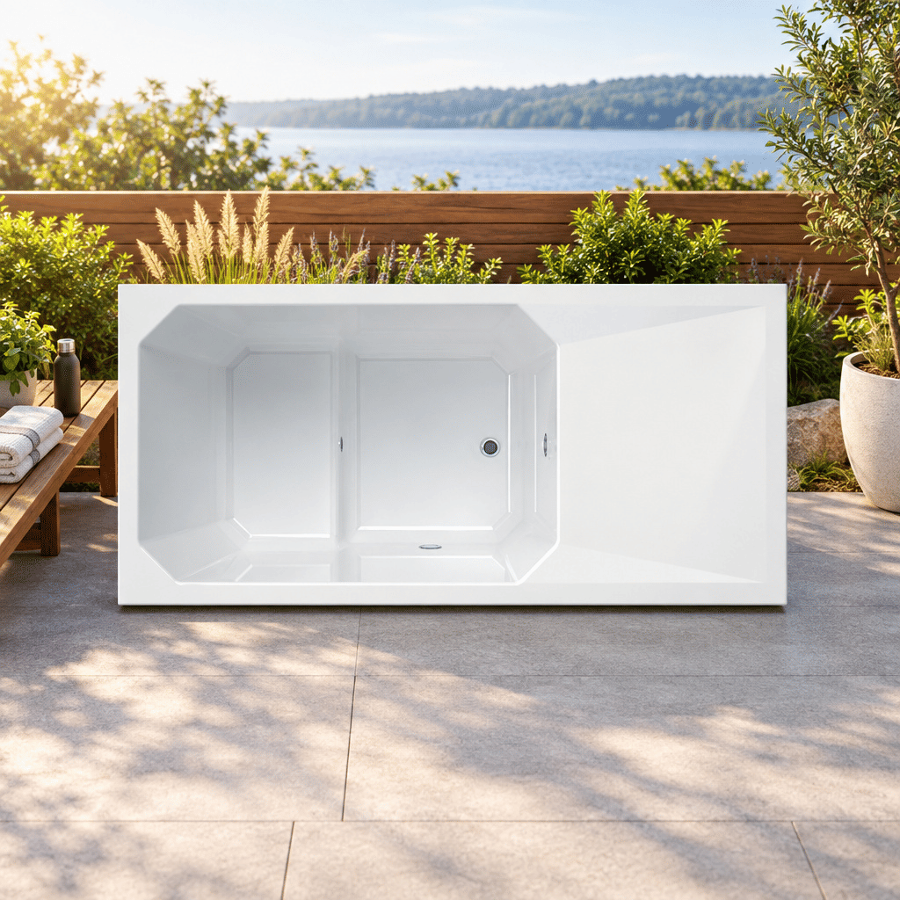
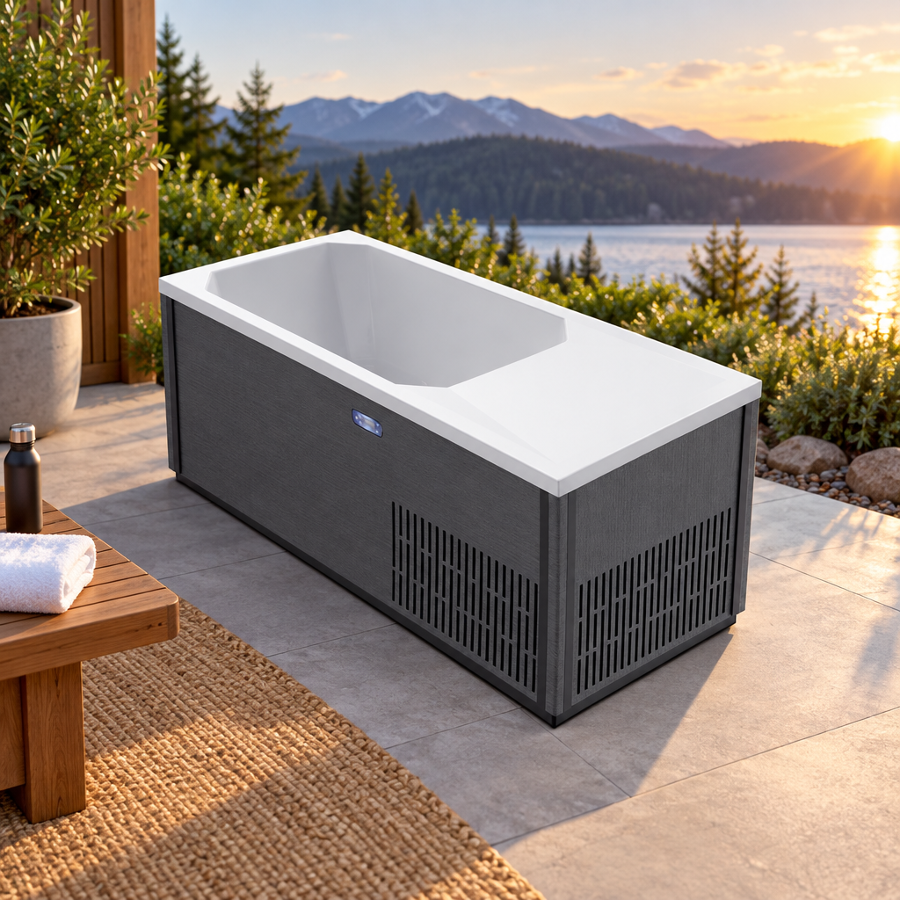
Technical Profile: Victoria Star Outdoor Cold Plunge Tub C02
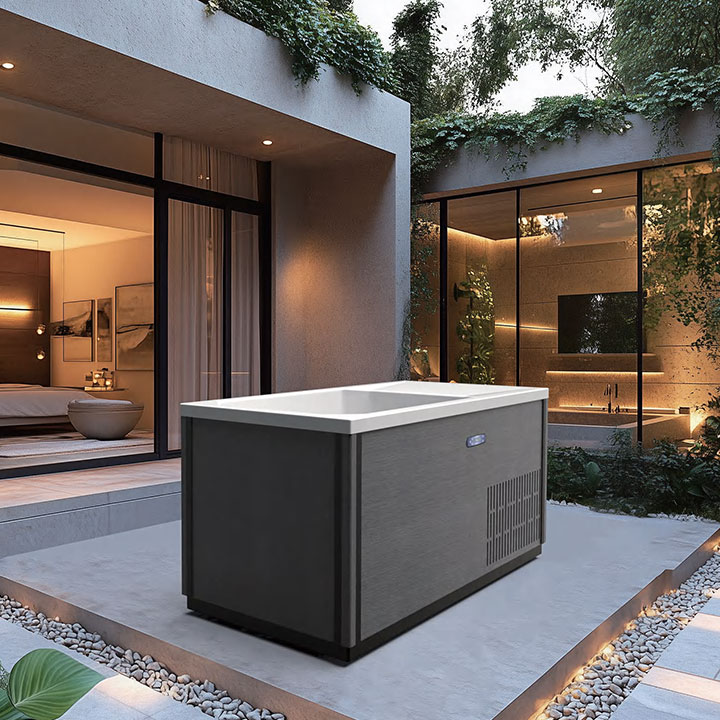
For facilities and homeowners seeking dedicated hydrotherapy solutions, we at Victoria Star manufacture the Outdoor Cold Plunge Tub C02. Designed to support structured recovery routines, the C02 features the following manufacturer-specified components:
Basin Capacity: 320-liter interior basin measuring 1695 mm × 830 mm × 850 mm (approximately 6′ × 33" × 34").
Integrated Cooling System: Powered by a 900W heat pump control system and a 54W brushless pump, with a listed power supply rating of 0.954 KW.
Shell Material: Constructed from porcelain white acrylic interior paired with an integrated resting step.
Exterior Cabinetry: Available in Platinum and Midnight cabinet colors.
Insulation Cover: Includes one insulated cover as standard equipment.
The C02 is designed for outdoor installation in home backyard patios, professional sports training facilities, commercial wellness centers, and luxury resort villas. Verify specific performance characteristics, including temperature-holding capacity and operating costs, directly with us before purchase.
Separating Hardware Reliability from Biological Timing
While advanced chillers and reliable heat pump systems make thermal management more convenient, equipment cannot override human recovery physiology. Owning a dedicated basin ensures that water remains chilled to your exact preference, but structuring session timing around your workouts remains essential.
Use dependable engineering to eliminate logistical friction, and apply sound recovery principles to govern when you step into the water. The best equipment in the world cannot compensate for poor timing decisions that undermine your training adaptations.
Think of your plunge tub as an enabler of consistency rather than a magic recovery device. The hardware makes the practice sustainable, but the wisdom of your timing decisions determines whether the practice supports or hinders your goals.
Frequently Asked Questions (FAQs)
Is morning the best time to cold plunge?
Morning immersion is a scheduling choice that some people find alerting, though a reliable benefit is not established and responses vary. Some individuals report that cold exposure in the morning naturally elevates heart rate and core focus without relying solely on caffeine.
However, if your morning involves heavy resistance training, plunging immediately beforehand may cause joint stiffness, while plunging directly afterward could potentially affect muscular hypertrophy. Tailor your morning plunge to match your morning workout demands.
Is it better to cold plunge before or after a workout?
Workout sequencing depends entirely on the nature of your training session. For endurance running or high-intensity conditioning, some athletes use plunging after exercise as a possible option to address acute discomfort, though it is not necessary or universally beneficial.
Conversely, plunging immediately before resistance training may not suit everyone, and responses can vary. When strength and hypertrophy are your primary objectives, favor non-lifting days for cold immersion or avoid immediate post-lifting exposure.
Should I cold plunge immediately after lifting weights?
Research indicates that repeated or immediate post-lifting immersion may reduce muscle-growth adaptations over time. The exact mechanisms remain under investigation, but the practical concern for strength athletes is clear.
If your priority is muscle growth, favor non-lifting days for cold sessions or avoid immediate post-lifting exposure. An effective delay interval, if any, has not been established by research.
Can an evening cold plunge disrupt sleep?
Individual responses to evening cold plunging vary widely. Some individuals find evening cold exposure affects their rest, while others tolerate it well. The evidence on evening cold immersion and sleep is limited.
If you experiment with evening immersion, monitor your personal sleep onset and quality carefully. Personal observation is more reliable than following a rigid rule.
Does cold water immersion actually eliminate delayed-onset muscle soreness?
Cold water immersion may reduce the perception of muscle soreness in the short term. However, subjective pain relief does not prove complete recovery.
Short-term soreness relief does not mean muscle fibers are fully repaired, and cold immersion does not replace rest, nutrition, and hydration.
How long should a beginner stay in a cold plunge?
A cautious example for initial sessions is one to two minutes at moderate temperatures ranging from 12°C to 15°C (54°F to 59°F). This is not a proven safe or optimal starting protocol, and people should stop if they feel unwell.
Enter gradually and avoid breath-holding. Breathing techniques do not eliminate cold-shock risk, so stop if breathing is difficult to control or you feel unwell. As you adapt over time, you can consider gradually progressing, always respecting individual tolerance and safety.
What temperature should I set my cold plunge tub to?
There is no single universally optimal temperature for cold plunging. Commonly reported ranges in research and practice fall between 10°C and 15°C (50°F to 59°F), but individual tolerance, experience level, and goals vary significantly.
Begin with milder temperatures if you are new to cold exposure, and adjust based on your personal response. Always prioritize safety and stop if you feel unwell.
How often should I do cold plunge sessions per week?
The optimal frequency depends on your training load, recovery needs, and personal goals. Some athletes incorporate cold immersion multiple times per week during intense training blocks, while others use it occasionally or only on rest days.
If you are prioritizing muscle hypertrophy, favor rest-day sessions. For general wellness routines, consistency matters more than rigid frequency, so choose a schedule you can maintain without adding stress.
Conclusion: Crafting Your Objective Immersion Schedule
Core Principles of Goal-Based Cold Exposure
Pinpointing the best time to cold plunge ultimately requires balancing your individual athletic schedule, personal energy requirements, and circadian sensitivity. There is no universal hour that fits every athlete, desk worker, and weekend warrior alike.
If morning focus is your objective, early immersion may fit your routine and personal preferences. If you are an endurance athlete managing grueling training blocks, post-workout cooling is one approach to address acute discomfort, though effects and usefulness vary.
The key insight is that timing decisions should reflect your goals rather than a one-size-fits-all prescription. Personal experimentation and careful observation will reveal more about your optimal cold plunge timing than any generalized guideline.
Prioritizing Consistency, Safe Acclimation, and Measured Adaptation
Regardless of which time slot you select, consistency and safety must always take precedence over extreme thermal stress. Start conservatively, manage controlled breathing during the initial cold shock, and monitor your body’s response over time.
By aligning your deliberate cold water immersion with your personal goals and observing how you respond, you can evaluate whether the routine fits your needs and supports your wellness objectives. The best time to cold plunge is the time that you can sustain safely and consistently within the context of your broader training and recovery strategy.
Victoria Star Swim Spa offers the perfect balance between exercise and relaxation, whether you want to swim for fitness or relax in the spacious seating.
Victoria Star Swim Spa offers the perfect balance between exercise and relaxation, whether you want to swim for fitness or relax in the spacious seating.