Best Swim Spa: Engineering, Architecture, and Buyer Guide for Home Aquatic Training
Home / News / Best Swim Spa: Engineering, Architecture, and Buyer Guide for Home Aquatic Training
November 07, 2026
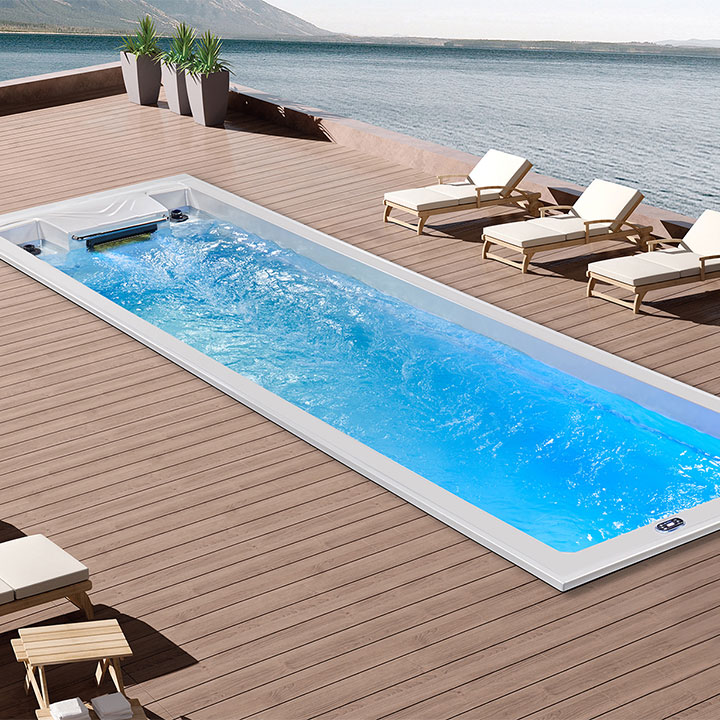
Finding the best swim spa requires looking past glossy promotional imagery and examining the mechanical reality beneath the shell. Many homeowners purchase an exercise vessel anticipating the functional equivalent of an endless lap pool, only to encounter turbulent water currents that push them into side walls, or heating configurations incapable of balancing vigorous cardiovascular exercise with deep muscular recovery. An authentic high-performance swim spa is an integrated hydraulic system designed to deliver continuous counter-current resistance while accommodating warm-water relaxation. Understanding the physical interplay between fluid mechanics, chamber architecture, and electrical requirements is essential to choosing the best swim spa for long-term athletic training and domestic recovery.
Defining the Best Swim Spa: Fluid Mechanics and Usable Dimensions
Counter-Current Dynamics and Water Displacement
A persistent misconception in aquatic design is that larger pump horsepower ratings automatically yield a better swimming experience. When high-volume pumps force water through narrow, conventional spa jets, the resulting discharge resembles a high-velocity stream. Swimmers attempting to navigate this concentrated thrust often encounter surface chop and localized water velocity that destabilize body position during active strokes.
When evaluating what constitutes the best swim spa, buyers should investigate how counter-current discharge is shaped across the frontal swimming area. Equipment setups that diffuse water volume across wider outlets tend to reduce localized shearing forces. Prospective purchasers should examine whether the vessel incorporates return suctions that manage displaced water volume, preventing excess turbulence from disrupting stroke rhythm.
Stroke Clearance, Shell Height, and Internal Depth
External shell height is frequently confused with true internal water depth, leading to costly assumptions during site selection. Product specifications typically list external dimensions; for example, a unit with an external height of 44 inches (approximately 1,110 mm) will have an internal water depth that sits noticeably lower once accounting for the floor substructure, shell thickness, and normal operating fill line.
Swimmers executing a full freestyle catch, breaststroke kick, or backstroke pull need sufficient vertical depth to keep their hands and feet from making accidental contact with the shell floor. Channel width is just as critical. While overall cabinet widths may measure 87 inches (2,220 mm) or more, internal steps, molded contours, and handrail fittings reduce the usable swimming corridor. Prospective buyers should verify internal clearance dimensions and, where possible, wet-test the vessel to ensure unobstructed arm recovery.
Architecture Comparison: Single-Zone vs. Dual-Zone Systems
The Thermal Dilemma in Shared Water Volumes
The most significant operational obstacle in single-chamber swim spas involves water temperature management. Strenuous swimming demands cooler water to prevent early overheating, rapid dehydration, and unnecessary cardiovascular fatigue. Public health guidance, such as the Model Aquatic Health Code annex published by the U.S. Centers for Disease Control and Prevention (CDC), observes that suitable water temperatures vary by activity level and user, noting that 79°F to 86°F (26°C to 30°C) is comfortable for moderate exertion, while competitive training often benefits from cooler settings.
Conversely, therapeutic hydrotherapy requires warmer water to promote relaxation and soothe muscles, though public health standards emphasize that hot tub water temperatures should never exceed 104°F (40°C) to safeguard bather health. In a single-zone unit sharing one water volume, users must settle on an awkward middle ground. Changing the temperature of a large shared water volume can require significant time and energy, depending on the system and ambient conditions, which limits spontaneous family use.
Chamber Partitioning and Operational Versatility
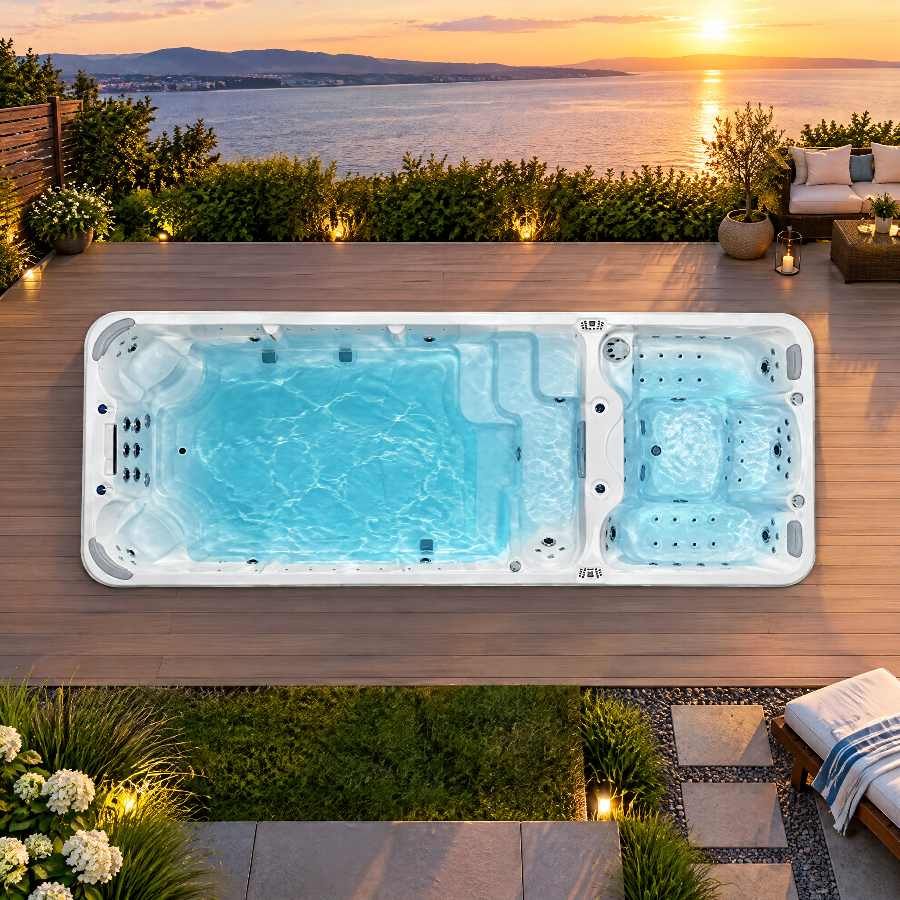
Dual-zone swim spas address this thermal challenge by incorporating a physical partition separating the swim and hydrotherapy zones. This barrier creates two separate water environments within a single outer footprint, reducing the need for temperature compromises between active exercise and hydrotherapy.
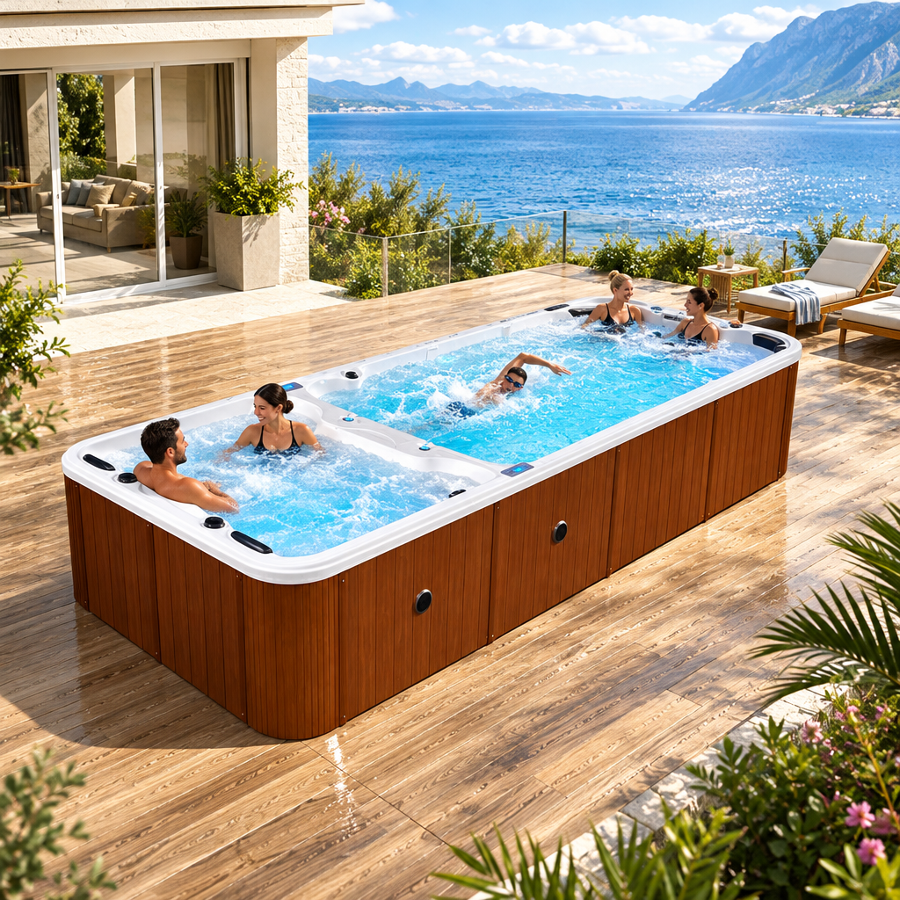
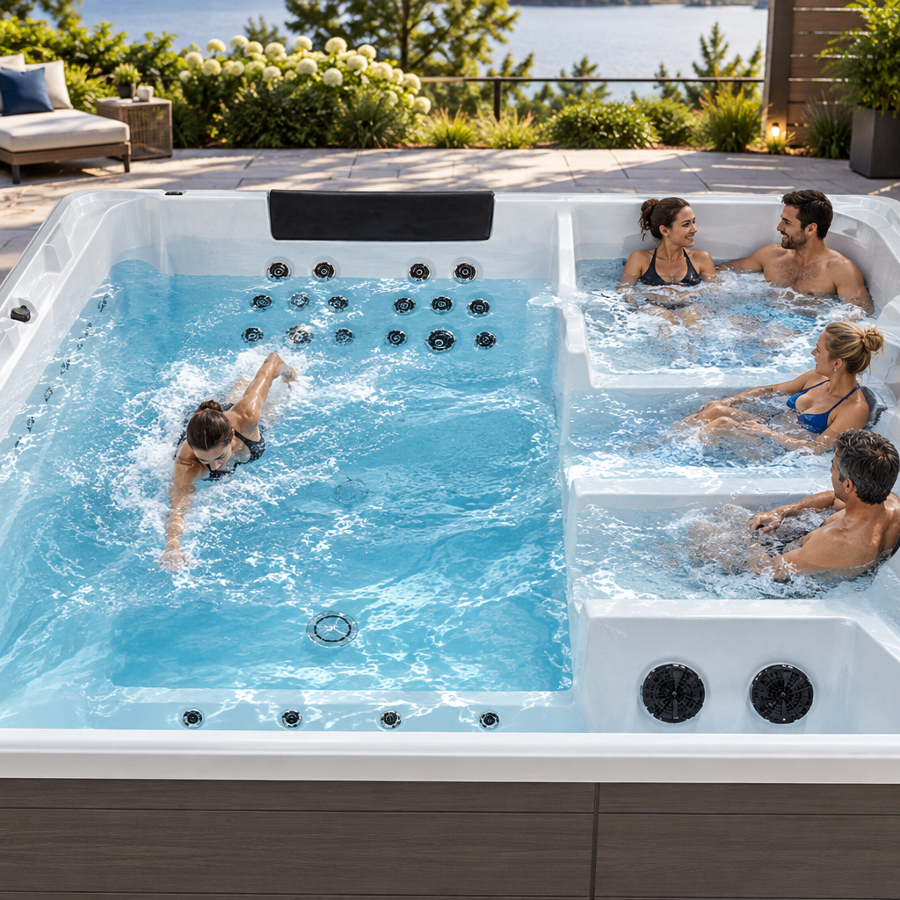
This structural separation allows the swim lane to remain set to an invigorating temperature suitable for endurance swimming, while the adjoining hydrotherapy basin can be heated independently up to the safe 104°F (40°C) limit. Family members can engage in water exercise, stroke training, or relaxation during the same session without conflicting thermal preferences or space constraints.
Architectural Comparison Matrix
Engineering Feature
Single-Zone Standard Swim Spa
Dual-Zone Split-Chamber Swim Spa
Temperature Management
Single shared setpoint requiring operational compromise
Separate temperature controls that reduce the need for compromise
Swim Environment
Shared water volume often kept warmer than athletic preference
Independent chamber configured for active exercise temperatures
Hydrotherapy Environment
Water limited to training setpoint or requires heating delay
Dedicated spa basin heated up to the health-regulated 104°F ceiling
Equipment Layout
Shared pump and filtration circuit serving both ends
Independent temperature controls, multiple pumps, and dual heaters
Simultaneous Activities
Restricted to a single primary activity at any given time
Concurrent lap swimming and hot water hydrotherapy relaxation
Heater Hardware
Typically one primary heating assembly
Dual dedicated heaters (such as 2 × 3,000 W configurations)
Engineering Breakdown: The M-505 Dual-Zone Platform
Multi-Pump Distribution and Propulsion Components
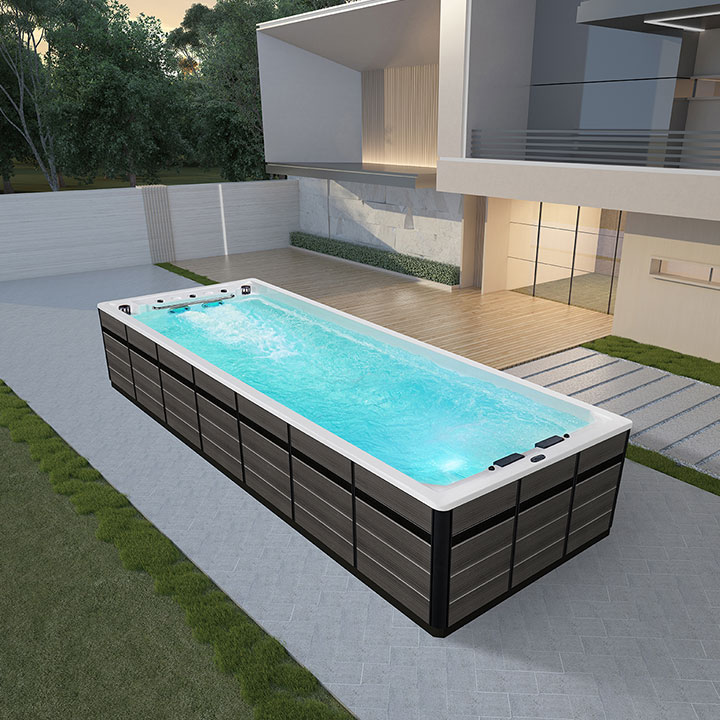
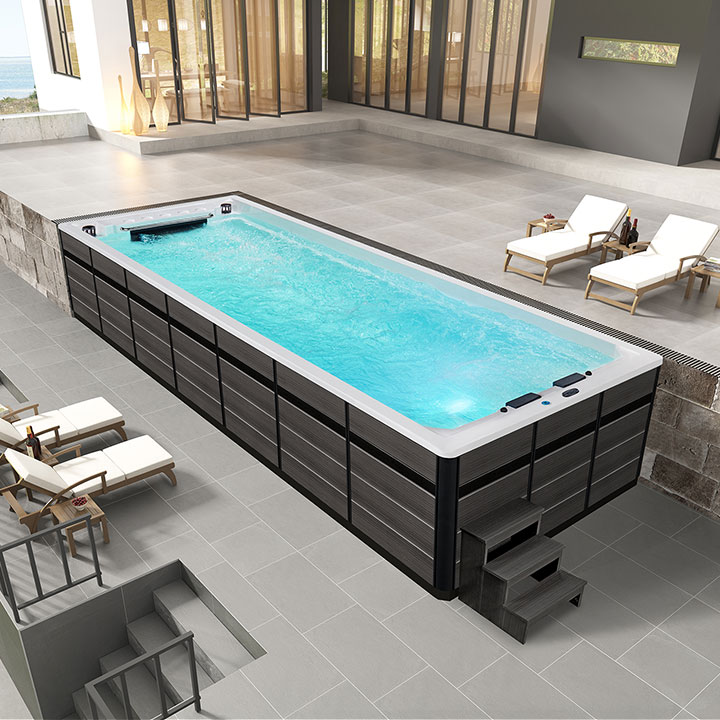
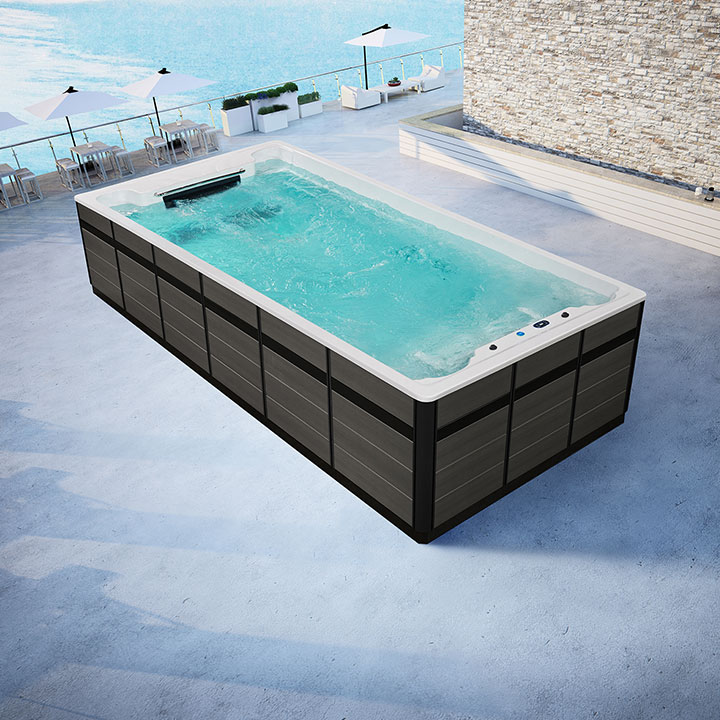
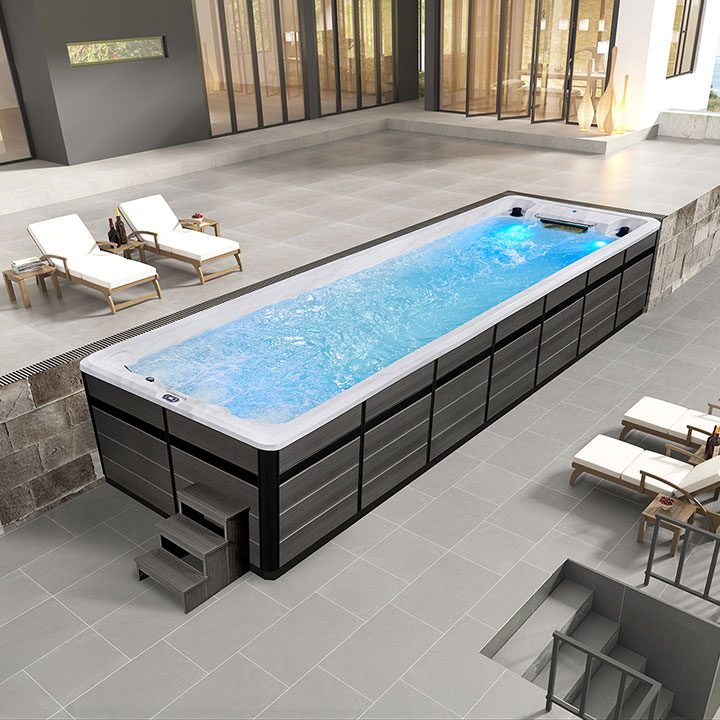
Balancing swim resistance and localized hydrotherapy requires careful allocation of mechanical power. Manufactured by Foshan Gaoming Shiyi Sanitary Ware Technology Co., Ltd. under the Victoria Star brand, the M-505 dual-zone swim spa is marketed with dual zones, multiple pumps, and separate controls for swimming and hydrotherapy across a 19-foot chassis. For us, providing robust equipment specifications is essential to supporting diverse domestic wellness needs.
The M-505 includes six total pumps to manage water movement across its 5,816-liter total capacity:
Water Pumps: The model specifies one 3.0 HP pump, two 2.0 HP pumps, and one 1.5 HP pump to deliver water volume across the swim resistance system and massage stations.
Circulation Pumps: The specification includes one 1.0 HP pump and one 0.35 HP circulation pump to support water movement and filtration cycles.
Hydraulic Planning: Because individual installations and plumbing schematics vary, buyers should request the manufacturer’s hydraulic diagram to confirm how circulation, filtration, and pump flows are routed to each zone.
Hydrotherapy Seating and Jet Geometry
The hydrotherapy section of the M-505 provides dedicated seating for up to six individuals, utilizing molded contours designed to support bathers comfortably in seated positions. Rather than relying on simple perimeter benches, the spa area integrates 79 precision hydrotherapy jets arranged across the seating stations.
According to manufacturer specifications, these hydrotherapy jets target key muscle groups across the back, lumbar area, and legs to relieve soreness and assist post-exercise recovery. Prospective buyers should consult seating diagrams and evaluate nozzle configurations with their dealer to confirm that the seating contours and jet placements align with their personal physical requirements.
Dual KL2020BT Digital Touchscreen Controls
Operating two distinct water bodies requires accessible and responsive digital controls. The M-505 features two KL2020BT touchscreen controls specified for independent operation of the zones.
The two KL2020BT touchscreen controls are specified for independent temperature, pump, and jet operation in the two zones. This dual-interface architecture is intended to allow independent settings for the two zones, enabling users to adjust settings for either the swim area or the hydrotherapy lounge. The platform also lists two 3,000 W heaters intended to support independent thermal management across both water chambers.
Water Accents, Cabinet Options, and Visual Details
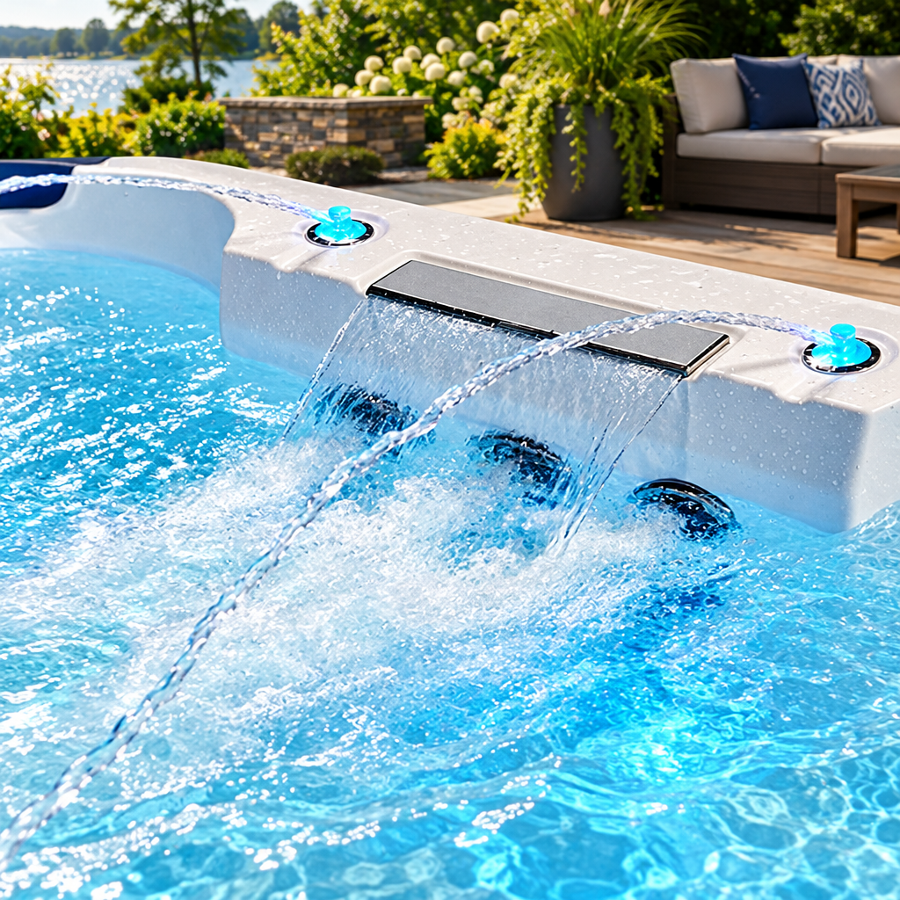
Visual and acoustic elements contribute significantly to outdoor relaxation, particularly during evening use. The M-505 includes a stainless steel sheet waterfall weir and two illuminated fountain jets that spray water arcs into the vessel.
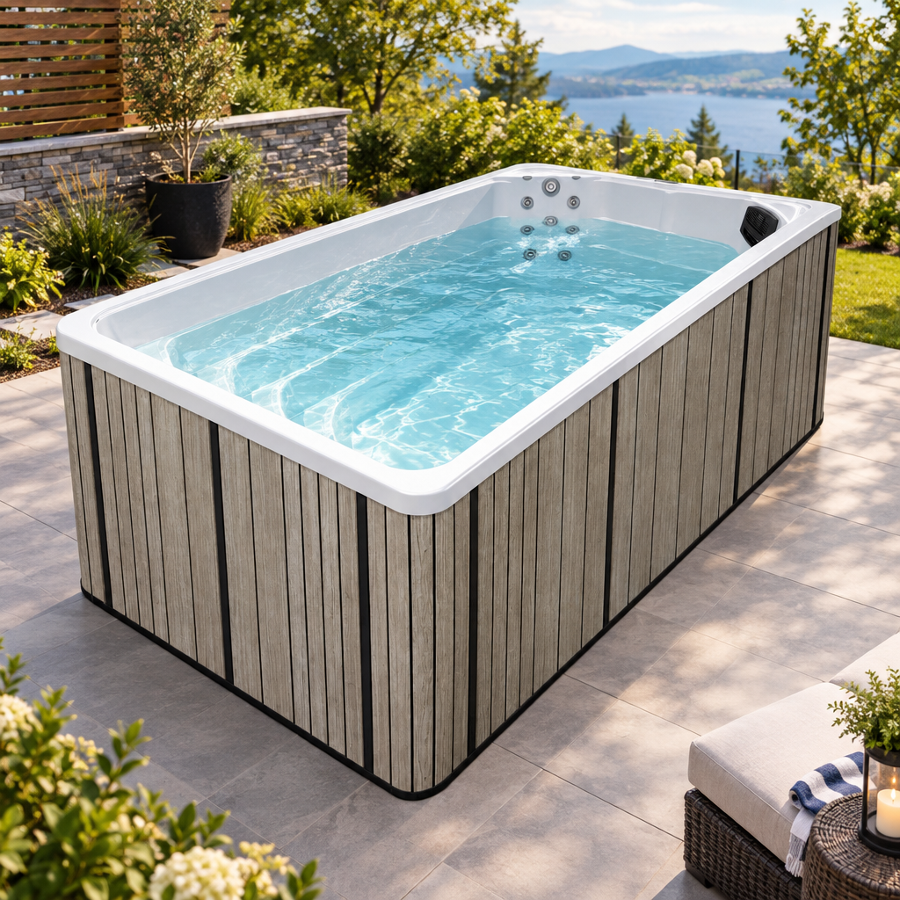
Integrated LED lighting illuminates the interior of the Porcelain-colored shell, enhancing nighttime visibility and adding visual warmth to the water. The exterior cabinet is available in Platinum and Midnight color options, providing neutral aesthetic choices designed to complement standard outdoor decking and patio materials.
Shell Construction, Foundation Design, and Site Logistics
Multi-Layer Shell Construction and Structural Support
A 19-foot swim spa holding 5,816 liters of water represents a substantial physical installation that places constant load on its supporting materials. Manufacturer technical assets illustrate the multi-layer construction and internal fitting layout of the swim spa shell, highlighting structural layering beneath the finished surface.
Because shell fabrication techniques vary across the industry, prospective purchasers should request detailed technical specifications regarding shell thickness, reinforcement materials, and substructure framing. Verifying that the internal structure adequately supports the plumbing manifolds and shell floor is an essential step in evaluating long-term equipment reliability.
Structural Foundation and Substrate Engineering
Accurately calculating the total operating weight of an aquatic installation is critical before scheduling delivery. Water alone accounts for a substantial load; for the M-505, 5,816 liters translates to approximately 5,816 kg (12,822 lbs) of static water weight. The complete load must also account for the dry weight of the shell, internal plumbing, equipment packages, and up to six bathers.
Because the water volume alone imposes an approximately 5,816 kg load, the complete load must be assessed against the specific deck or base by a qualified structural professional to prevent settlement or framing damage. Buyers should follow fundamental site-planning practices:
Subgrade Assessment: Excavate unstable organic soil and prepare a well-drained, compacted crushed aggregate sub-base.
Engineered Support Base: A suitably engineered base is required; many installations use a concrete pad, but the appropriate support depends on site conditions, local requirements, and the manufacturer’s installation instructions.
Professional Site Review: Retain a licensed structural engineer or qualified contractor to verify soil bearing capacity, pad thickness, and structural reinforcement prior to delivery.
Perimeter Drainage: Ensure the surrounding grade slopes away from the foundation pad to prevent surface water runoff from pooling around cabinet panels or entering the equipment compartments.
Electrical Service Demands and Infrastructure Planning
Powering multiple water pumps and dual 3,000 W heating systems requires substantial electrical capacity. The manufacturer lists a 13.8 kW power-supply specification for the M-505 platform. Homeowners must not assume that an existing residential electrical panel can support this additional load without a dedicated assessment.
Safe and compliant electrical planning requires adhering to local regulatory standards:
Panel Load Calculation: A licensed electrician must evaluate the main distribution panel to determine whether the utility service drop and main breaker provide sufficient capacity for the 13.8 kW specification.
Dedicated Circuit and Wiring: The electrician must consult the manufacturer’s specific electrical wiring diagram to determine the required circuit, conductor wire gauges, conduit sizing, grounding pathways, and connection method under applicable local codes.
Safety Disconnects and Ground-Fault Protection: In the United States, installations require ground-fault circuit interrupter (GFCI) protection and an accessible disconnect switch compliant with applicable National Electrical Code rules and local amendments.
Permits and Inspections: Trenching, conduit installation, and final equipment connections may require electrical and building permits, which should be confirmed with the local authority having jurisdiction.
Systematic Evaluation Protocol: Selecting Your Unit
1. Establish Your Primary Health and Training Objectives
Begin by defining how the vessel will be utilized across weekly training and family routines. If high-intensity swimming, stroke improvement, or aquatic aerobics represent the primary objective, verify that the swim chamber provides sufficient open length and an adjustable current that matches your athletic goals. If family socialization and joint therapy are equally important, a dual-zone system helps avoid temperature compromises between users.
2. Verify Internal Dimensions and Conduct a Wet Test
Never evaluate a swim spa based entirely on external catalog dimensions. Request engineering drawings that clearly indicate true water depth at the recommended fill level, usable length along the floor, and clear width between internal steps or grab handles. Where feasible, arrange a wet test with an authorized dealer to verify that the swim current provides comfortable body position without causing you to drift into walls.
3. Review Mechanical Specifications and Pumping Layouts
Examine the manufacturer’s published mechanical specifications, noting pump counts, horsepower ratings, heater capacities, and circulation loops. Inquire about how pumps, circulation systems, filtration cycles, and heating controls are configured between the exercise lane and the hydrotherapy seats. Understanding these equipment assignments clarifies how the unit operates during simultaneous swimming and soaking sessions.
4. Review Thermal Protection and Equipment Bay Access
Insulation and cover design can affect heat loss and operating cost, so buyers should request the manufacturer’s insulation details and energy information. Examine the thickness, density, and vapor barrier construction of the included thermal covers. Furthermore, ensure the installation plan provides adequate clearance around the cabinet perimeter so technicians can easily access equipment compartments, valves, and control boxes for routine maintenance.
5. Confirm Manufacturer Documentation, Care Protocols, and Warranties
Review the manufacturer’s written warranty documentation, paying close attention to coverage periods for the structural shell, interior surface finish, plumbing assemblies, and electronic components. Determine whether replacement parts and certified service technicians are accessible in your geographic area. A reputable manufacturer should provide comprehensive manuals explaining routine chemical balancing, water replacement schedules, and seasonal maintenance.
Frequently Asked Questions (FAQ)
What makes a dual-zone system the best swim spa for multi-user households?
A dual-zone configuration incorporates an internal partition that creates two separate water chambers. This allows the exercise lane to be maintained at a cooler temperature suitable for active swimming (such as 79°F to 86°F, depending on swimmer preference and exertion level), while the hydrotherapy area can be heated independently up to the safe 104°F (40°C) limit. Both areas can be used at the same time by different individuals without requiring thermal compromise.
How should an owner handle electrical planning for a 13.8 kW swim spa?
A swim spa with a 13.8 kW power-supply specification requires a licensed electrician to evaluate the installation requirements. Homeowners should provide the manufacturer’s wiring documentation to the electrician, who will determine the appropriate supply, circuit rating, wire gauge, grounding, ground-fault circuit interrupter (GFCI) protection, disconnect placement, and connection method in compliance with applicable local electrical codes.
Can a large dual-zone swim spa be safely installed on an existing backyard deck?
A filled swim spa of this scale should not be installed on an existing timber or composite deck without a professional structural assessment. The water volume alone contributes approximately 5,816 kg (12,822 lbs), and when combined with the weight of the spa and bathers, the total load requires an engineered base. A suitably engineered base is required; many installations use a concrete pad, but the appropriate support depends on site conditions, local requirements, and the manufacturer’s installation instructions.
What water care routines are needed to maintain clear water in a dual-zone spa?
Water maintenance routines should follow the specific guidelines outlined in the product’s owner manual. Because dual-zone swim spas feature two distinct bodies of water operating at different temperatures, each chamber must be tested and balanced independently. Regular testing should monitor pH, total alkalinity, and sanitizer levels, alongside periodic filter cleaning and water replacement schedules recommended by the manufacturer.
What should prospective buyers verify regarding cold-weather performance?
Prospective buyers in cold climates should review insulation specifications, cabinet sealing, and thermal cover ratings with the manufacturer or dealer. In dual-zone systems, the ability to control temperatures independently allows owners to set the larger swim volume to a lower, energy-efficient temperature while maintaining warmth in the spa chamber, but overall performance depends on site-specific insulation quality and local weather conditions.
Summary: Selecting the Best Swim Spa for Long-Term Ownership
Investing in the best swim spa requires aligning your personal fitness and relaxation goals with sound hydraulic design, quality structural construction, and thorough site preparation. Platforms featuring dual-zone architecture, such as the 19-foot M-505, provide a practical way to balance vigorous swimming workouts with restorative warm-water hydrotherapy. By examining pump specifications, verifying usable internal clearances, consulting qualified professionals for foundation and electrical planning, and following manufacturer care guidelines, homeowners can select the best swim spa to support their wellness and enhance their outdoor living space for years to come.
Victoria Star Swim Spa offers the perfect balance between exercise and relaxation, whether you want to swim for fitness or relax in the spacious seating.
Victoria Star Swim Spa offers the perfect balance between exercise and relaxation, whether you want to swim for fitness or relax in the spacious seating.