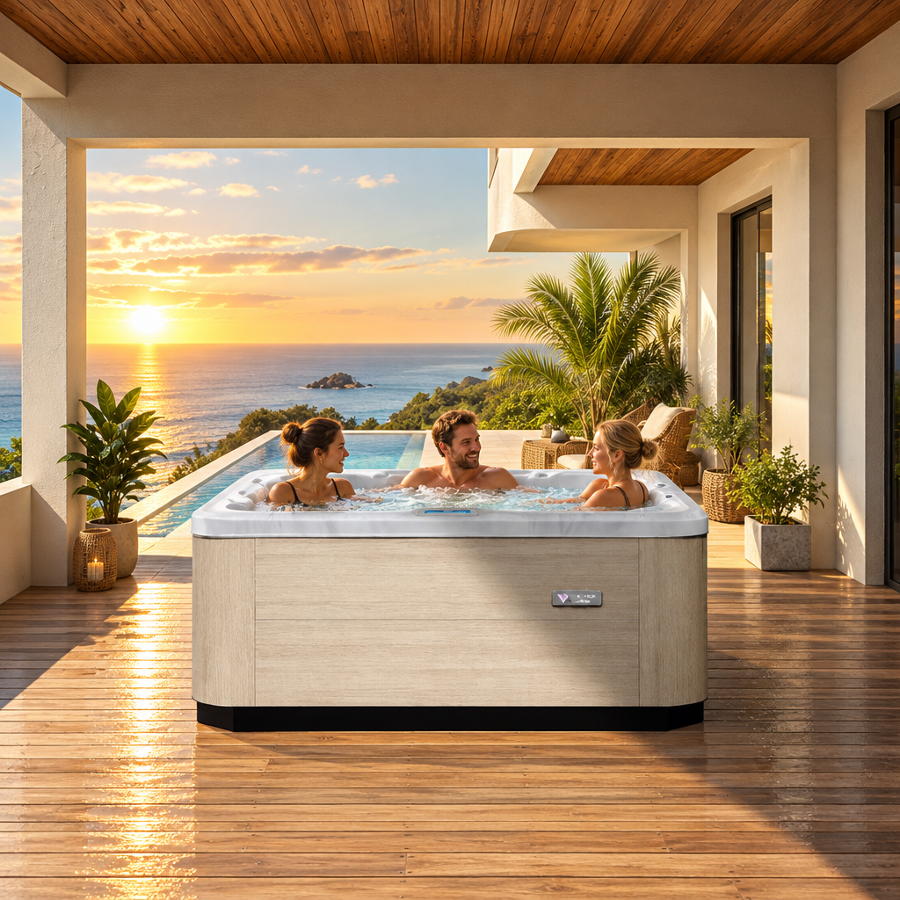
Best Small Outdoor Hot Tubs: How to Choose the Right Compact Spa
Home / News / Best Small Outdoor Hot Tubs: How to Choose the Right Compact Spa
November 06, 2026
Finding the best small outdoor hot tubs requires balancing tight spatial boundaries with true hydronic performance. Compact yards, urban verandas, and quiet patio corners create unique installation challenges that oversized spas cannot accommodate. A smaller footprint should never mean accepting weak hydrotherapy or poor water hygiene.
Navigating the compact spa market means looking beyond simple exterior measurements. Every structural millimeter, pump rating, and plumbing loop determines whether a tub delivers lasting comfort or constant frustration. This guide examines the engineering benchmarks, seating ergonomics, and site requirements essential for identifying top-performing small outdoor spas.
Understanding Space and Footprint Constraints
Calculating Usable Dimensions vs. Exterior Hull Measurements
A common oversight among first-time spa buyers is confusing exterior acrylic borders with the actual soaking basin. The outer shell dimensions establish the spatial boundary, but structural framing and cabinet insulation swallow internal volume. When evaluating compact models, buyers frequently encounter dimensions around 1800 mm to 2000 mm in length and 1200 mm to 1500 mm in width, though actual measurements must be checked against the specific site.
Installation boundaries must also account for dynamic operating clearances rather than static hull edges. Cover lifter mechanisms require dedicated clearance behind the spa shell, with specific buffer distances determined by the chosen lifter design. Failing to account for cover rotation and service panel clearance can force the cover against exterior walls or prevent technician access to internal plumbing.
Delivery logistics demand equal attention before ordering a compact spa. Modest outdoor spas often navigate side pathways, garden gates, or basement walkouts during placement. Carefully measuring fence clearances, gate widths, gas meter projections, and low roof overhangs ensures smooth transport to the designated pad without unexpected obstacles.
Structural Foundation and Subfloor Weight Allowances
Water weighs exactly one kilogram per liter, quickly transforming an empty acrylic shell into a heavy concentrated mass. A small three-person tub holds hundreds of liters of water, creating an active footprint load exceeding a metric ton once bathers settle inside. Placing this weight directly on soft turf or poorly compacted ground risks uneven settling and structural stress.
Ground installations function best on an engineered, level concrete slab capable of bearing the complete filled load. The base must remain uniformly flat to prevent localized pressure points across the lower spa chassis. Setting a spa on uncompacted pavers or unreinforced dirt can cause gradual sub-base displacement, leading to cabinet racking or stress on pipe joints over time.
Elevated timber decking demands careful structural verification from a qualified engineer. Standard residential decks are built for dispersed foot traffic rather than concentrated hydrotherapy loads. Reinforcing ledger boards, adding sistered joists, and setting dedicated support piers beneath the spa area prevents deck deflection and ensures long-term safety.
Ergonomic Interior Architecture: Loungers vs. Bench Seating
Evaluating Lounger Reclining Geometry in Compact Shells
Full-body loungers represent a popular option for targeted hydronic therapy, yet they occupy substantial interior space. In smaller shells, a dedicated lounger claims a significant share of the total floor area. Selecting a lounger configuration means prioritizing personal reclining comfort over broader open seating space for multiple bathers.
Body buoyancy introduces another mechanical consideration inside a reclined lounger. When the body floats freely in warm water, seating angles must keep the bather stabilized in front of massage jets. Thoughtfully contoured loungers incorporate tailored knee bends and textured foot wells to help the bather stay comfortably anchored during operation.
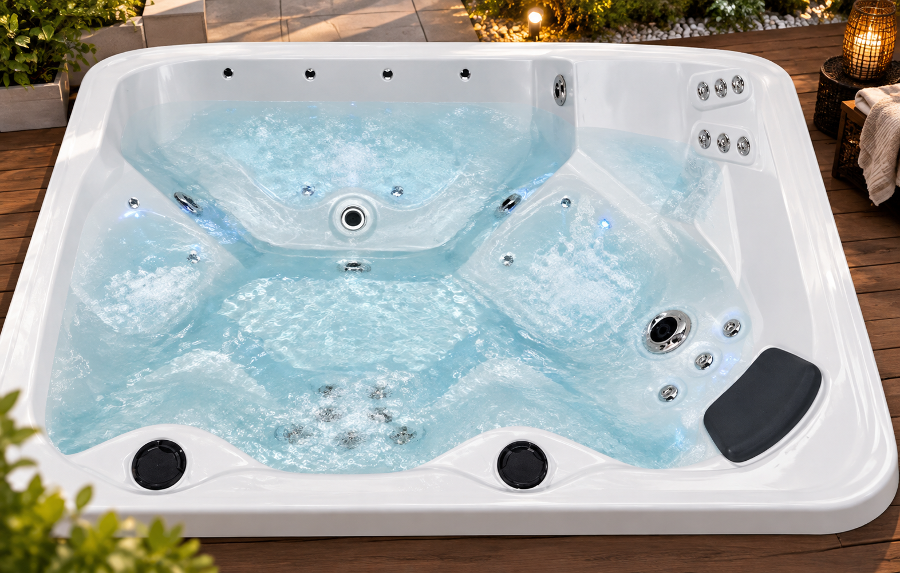
For layouts that balance privacy with companion seating, mixed floor plans offer notable versatility. Incorporating two upright bucket seats alongside one full-length lounger provides distinct seating postures. This arrangement accommodates both reclined hydrotherapy and upright social soaking without overcrowding the shared footwell.
Assessing Effective Immersion and Usable Water Depth
Exterior wall height does not translate directly to chest-level water immersion. A cabinet standing 780 mm high provides an internal depth determined by seat base height, shell curvature, and recommended fill lines. Submerging your shoulders during cold-weather outdoor soaks depends on deep interior seat contouring rather than raw exterior cabinet height.
Tiered seating platforms resolve this height dilemma for households with bathers of varying stature. Deeper bucket corners accommodate taller individuals needing full torso immersion, while elevated secondary positions suit shorter bathers or serve as cool-down seats. These sculpted elevations preserve posture without forcing bathers to adjust awkwardly to stay covered.
Water displacement behaves dynamically inside smaller basins. Two or three adults entering a compact water volume displace a noticeable amount of water. Checking the manufacturer’s specified fill lines and skimmer intake capacities helps ensure the spa operates without dry-running pumps or spilling excess water during entry.
Hydrotherapy Engineering and Plumbing Architecture
Jet Count Context: Orifice Size and Hydronic Pressure Distribution
Marketing materials frequently promote high jet counts, but raw numbers do not tell the whole story. Dividing a pump’s output across dozens of tiny orifices can dilute water volume into weak pressure streams. Effective hydrotherapy relies on balancing pump output, line diameter, and targeted nozzle placement.
For example, pairing a 2 HP water pump with 22 strategically arranged jets allows efficient water delivery across primary muscle groups. Placing nozzles near the cervical spine, mid-back, and calves targets common tension areas without overextending pump performance. Buyers should review hydraulic arrangements rather than assuming more jets automatically yield superior massage.
Plumbing geometry behind the shell requires smooth, curved flexible pipework to minimize friction losses. Sharp right-angle fittings create flow resistance, forcing the motor to work harder while lowering outlet pressure. Efficient manifold distribution provides balanced fluid delivery across both upright bucket seats and reclined loungers.
Dedicated Circulation versus Dual-Speed Pump Configurations
Water movement mechanics separate low-maintenance hot tubs from noisy, inefficient models. Many compact tubs use a single large pump running at low speed for periodic filtration cycles. However, cycling a high-horsepower pump on and off creates noticeable background noise and subjects internal motor windings to regular thermal cycling.
Certain compact spas incorporate dual-pump engineering, pairing a dedicated 0.35 HP circulation pump with a primary 2 HP water pump. Rather than relying solely on a large single pump to cycle between low-speed filtration and high-output massage modes, the separate circulation pump provides a distinct mechanical pathway for routine water movement as configured by the control system.
This two-pump mechanical layout divides primary water tasks between two distinct motors. The primary 2 HP water pump powers the hydrotherapy jet arrays during active soaking sessions, while the smaller 0.35 HP pump is specified to manage circulation through the spa’s internal filtration and heating pathways.
Water Sanitation Technologies and Routine Maintenance
Multi-Stage Sanitation: Ozone, UV, and Physical Cartridge Filtration
Compact hot tubs hold modest water volumes, meaning organic matter from bather skin and cosmetics concentrates rapidly. Effective water management demands a proactive multi-barrier defense. Relying solely on manual chemical doses leads to unstable water balance and sharp, pungent odors.
Modern water care combines physical cartridge filtration with inline sanitation components:
Pleated Micro-Filtration: High-surface-area fabric cartridges capture hair, skin flakes, and suspended fine silt down to nominal micron thresholds before debris enters the pump impellers.
Corona Discharge Ozone Generation: Inline ozone generators introduce ozone into the circulating plumbing line, assisting in the oxidation of bather waste and organic matter as water passes through.
Ultraviolet (UV-C) Light: In-line germicidal UV lamps expose circulating water to targeted light waves, disrupting microbial cellular material within the treatment chamber.
These automated sanitation technologies provide continuous supplemental water treatment along the circulation loop. By actively aiding oxidation and microbial control, they help keep water clear while reducing the volume of manual chemical additions required between soaks.
Practical Chemistry Management in Small-Volume Spas
Automated sanitation aids routine water care, but maintaining a residual chemical baseline remains essential for hygiene. The Centers for Disease Control and Prevention (CDC) recommends maintaining free chlorine levels between 3 and 10 ppm, or bromine levels between 4 and 8 ppm, in residential hot tubs. In tandem, water pH must stay balanced between 7.2 and 7.8 to prevent eye irritation and equipment corrosion.
Because smaller water volumes react quickly to bather loads, following CDC testing guidance is essential for water safety. The CDC advises testing hot tub water for free chlorine and pH at least twice daily, and more frequently when the spa experiences heavy bather use. CDC guidance also notes that DPD test kits provide greater accuracy than test strips for monitoring these disinfectant concentrations. Regular purging and refilling according to manufacturer guidelines cleans plumbing lines and restores baseline water balance.
Thermal boundaries demand sensible regulation alongside chemical balances. The CDC specifically advises that hot tub water temperatures should never exceed 104°F (40°C) to prevent scalding. Operating your tub between 100°F and 102°F provides comfortable soaking while maintaining safe personal temperature limits.
Electrical Planning, Heating Efficiency, and Exterior Cabinetry
Power Supply Assessment and Dedicated Circuit Provisioning
Electrical preparation is a crucial step in preparing your outdoor spa location. Many budget tubs market basic 120V plug-and-play convenience, but lower-voltage configurations often cannot run heating elements and jet pumps at the same time. This limitation can lead to noticeable water cooling during extended winter hydrotherapy sessions.
Selecting a dedicated power supply configuration, such as a 4.75 kW total connected rating paired with a 3 kW heater, provides greater thermal stability during cold weather. The heater works to offset ambient thermal losses while the pumps circulate water. Actual heating rates will vary depending on ambient air temperatures, cover insulation, and installation shielding.
Safety regulations require all permanent outdoor spa installations to incorporate certified Ground-Fault Circuit-Interrupter (GFCI) protection. A licensed electrician must assess the home’s service panel, determine conductor sizing, and install a dedicated disconnect switch that complies with applicable National Electrical Code editions and municipal safety bylaws.
Shell Thermal Retention and Exterior Weather Resistance
Thermal insulation accounts for a major share of ongoing energy management in an outdoor hot tub. Heat escapes through the acrylic shell, uninsulated plumbing lines, and open cabinet spaces. Backing the shell structure with dense polyurethane foam insulation traps heat within the cabinet, helping protect internal pipework during sudden cold snaps.
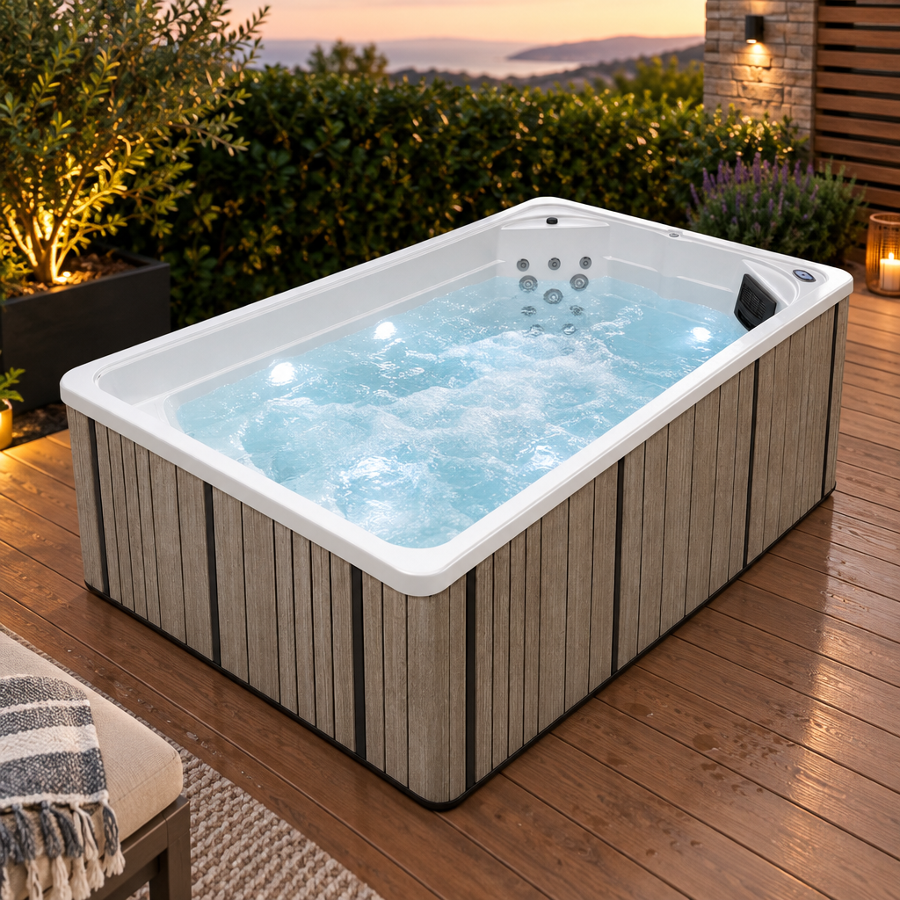
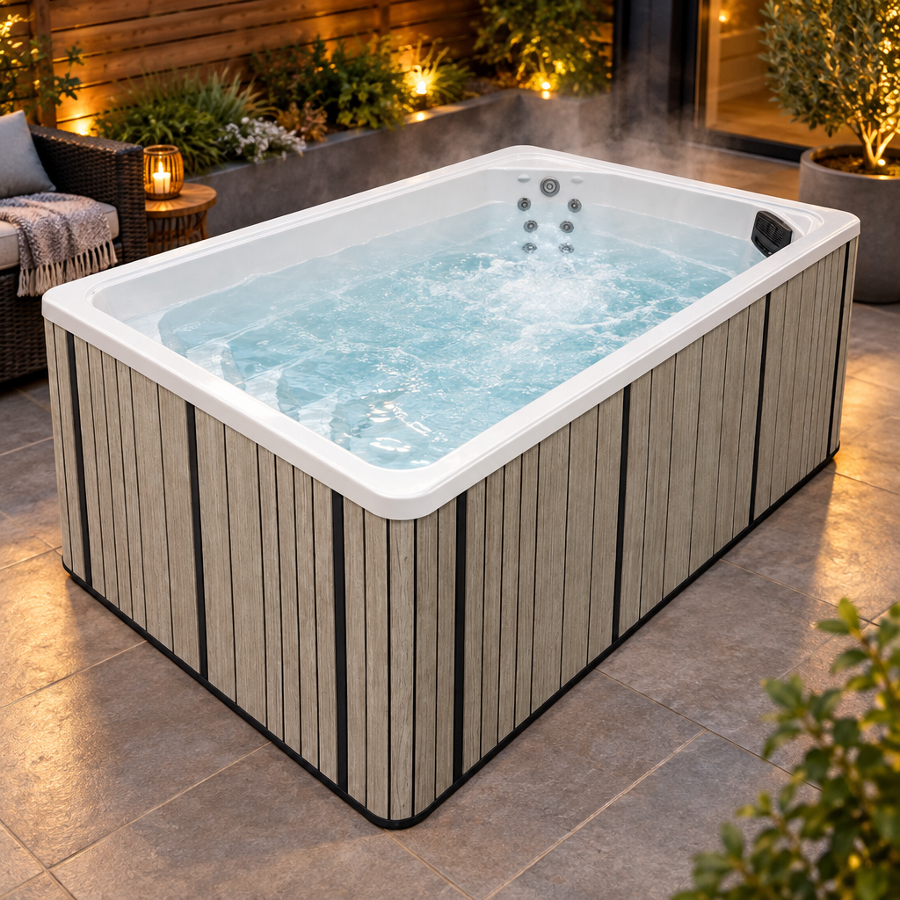
Exterior cabinetry materials face year-round moisture, sun exposure, and temperature swings. Traditional timber skirts can dry out, warp, and require regular sealing to prevent moisture rot. Modern aluminum-plastic composite paneling offers superior outdoor resilience, resisting moisture absorption and environmental weathering while maintaining clean exterior seams.
A heavy-duty thermal cover completes the heat-retention envelope. Tapered foam cores allow rain and snow runoff, while a durable marine-grade outer vinyl skin retains rising heat. Maintaining a tight perimeter seal over the shell rim minimizes heat loss and lowers regular heating demands in cooler months.
Compact Spa Specification Profile: Victoria Star VS-301C
Engineering and Dimensional Data Summary
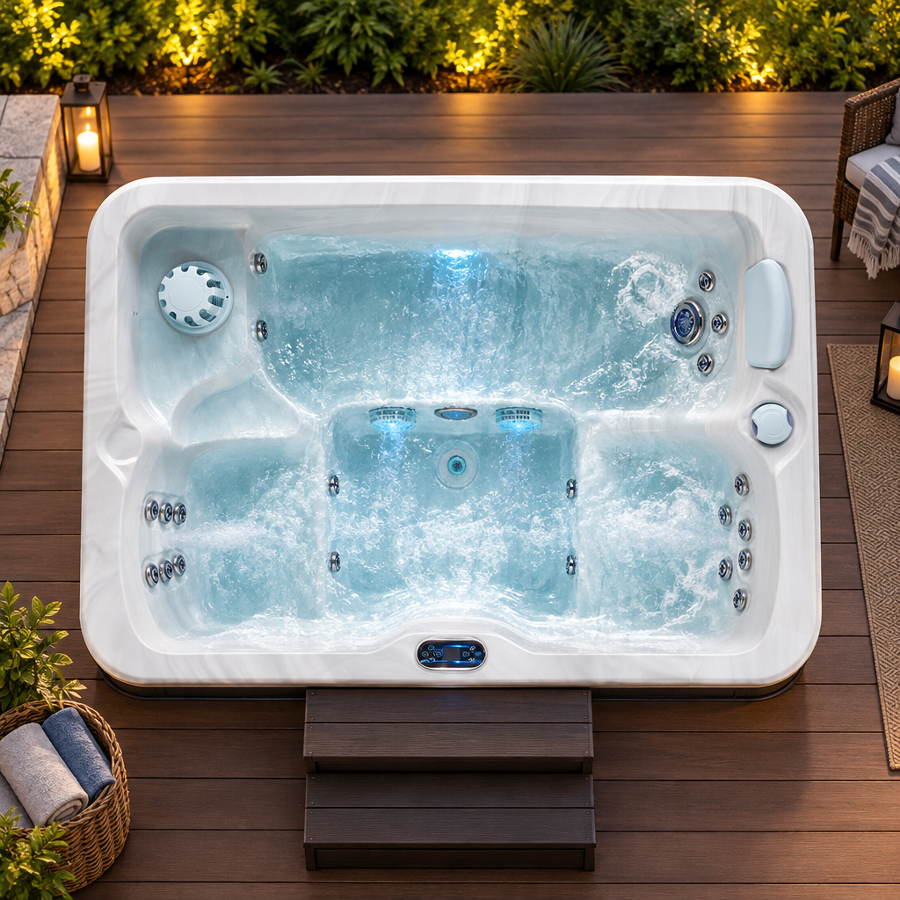
Understanding how structural, hydronic, and electrical elements combine is straightforward when examining a purpose-built compact spa. For us at Victoria Star, manufactured by Foshan Gaoming Shiyi Sanitary Ware Technology Co., Ltd., purposeful engineering means maximizing every centimeter of usable space. The VS-301C Comfort Series illustrates how verified factory specifications come together in a compact three-person spa layout.
Specification Category
Factory Parameter
Functional Profile
Exterior Footprint
1860 mm × 1310 mm × 780 mm (6′ × 52″ × 31″)
Fits narrow backyard patios, timber decks, and terrace verandas.
Internal Seating Capacity
3 Seats (2 Seats + 1 Lounger)
Combines full-body recline hydrotherapy with upright companion seating.
Hydrotherapy Propulsion
22 Targeted Jets / 1 × 2 HP Water Pump
Configures 22 massage jets powered by a dedicated 2 HP water pump.
Filtration & Circulation
1 × 0.35 HP Dedicated Circulation Pump
Dedicated circulation pump motor handling secondary water flow loops.
Heating Unit
1 × 3 kW Heater
Provides consistent water heating supported by a 4.75 kW power supply.
Cabinet Construction
Aluminum-Plastic Skirt
Weather-resistant exterior cabinetry available in Platinum or Midnight.
Interior Shell
Porcelain Shell Finish
Smooth, non-porous acrylic basin designed for regular hydrotherapy.
Digital Control Suite
KL2022 Interface + Integrated Bluetooth Audio
Responsive digital keypad control paired with wireless media streaming.
Power Supply Rating
4.75 kW Connected Load
Dedicated electrical supply supporting simultaneous pump and heating loads.
Practical Fit Assessment for Urban and Hospitality Settings
The VS-301C’s proportions fit diverse residential yards and boutique hospitality projects. Its 1860 mm length makes it well suited for narrow terraces, compact gardens, and urban verandas. Because delivery pathways differ widely, buyers should verify all access widths, gates, and turning clearances with their delivery team before dispatch.
Modern digital features elevate everyday use. The KL2022 topside controller offers an intuitive keypad interface, letting bathers adjust temperature, set filtration cycles, and engage massage jets easily. Integrated Bluetooth speakers connect quickly to mobile devices, providing personal audio entertainment without risking phones near the water.
For boutique vacation rentals and private holiday villas, this compact layout balances hydrotherapy with manageable maintenance requirements. The automated filtration, ozone, and UV sanitation setup assists in routine water care between guest turnovers, while the aluminum-plastic skirt panels resist wear from changing weather conditions.
Practical Buyer’s Selection Checklist
Step-by-Step Selection Workflow
Choosing the ideal compact spa involves methodical evaluation across structural, mechanical, and logistical factors. This four-step workflow helps guide an informed, confident purchase:
Verify Site Dimensions and Access Clearances: Measure the installation pad and ensure adequate perimeter clearance for your cover lifter and service panels. Verify that your delivery path—including gate widths, roof overhangs, and turns—accommodates the boxed spa.
Review Foundation and Electrical Requirements: Confirm that your installation base is flat, level, and engineered to support the full filled weight of the tub. Consult a licensed electrician to verify panel capacity and install dedicated GFCI disconnect wiring in line with local codes.
Evaluate Pump Capacity and Hydraulic Layout: Review pump horsepower against total jet count and plumbing layout. Ensure the propulsion system matches your hydrotherapy preferences rather than judging performance solely by high jet numbers.
Inspect Insulation and Cabinet Durability: Check that the shell features high-density insulation to limit thermal loss. Select durable exterior materials, such as aluminum-plastic composite skirts, that withstand moisture and UV exposure without demanding constant maintenance.
Frequently Asked Questions (FAQs)
What is considered a practical dimension for a compact outdoor hot tub?
Compact outdoor hot tubs often measure between 1800 mm and 2000 mm in length and 1200 mm to 1500 mm in width. These footprints fit comfortably onto standard patios, small timber decks, and courtyard alcoves. However, buyers should always verify their exact yard space and measure their required cover lifter clearance rather than relying on generic size categories.
Can a three-person hot tub comfortably seat three adults at the same time?
A three-person hot tub with two upright bucket seats and one full-length lounger can seat three adults during casual soaking. However, sharing the footwell requires natural spatial awareness. When personal space and full stretching are the primary goals, these compact configurations function exceptionally well as generous retreats for one or two people.
Do ozone generators and UV sanitizers eliminate the need for hot tub chemicals?
Ozone generators and ultraviolet lights greatly reduce the amount of chemical additives you need, but they do not eliminate them entirely. These systems sanitize water inside internal plumbing loops, but they do not provide a lingering chemical residual in the main basin. You must still maintain a sanitizer residual, such as 3–10 ppm free chlorine or 4–8 ppm bromine, alongside a balanced pH of 7.2–7.8 to meet CDC public health recommendations.
What are the standard electrical requirements for installing a compact outdoor hot tub?
Electrical requirements depend on the specific spa model and local regulatory codes. Compact models with integrated heaters and pumps often specify total connected power supplies, such as 4.75 kW ratings, that require dedicated circuits. Homeowners should consult the manufacturer’s technical specifications and hire a licensed electrician to evaluate voltage, amperage, and mandatory GFCI disconnect requirements for their specific installation.
What is the maximum safe operating temperature for an outdoor hot tub?
Health agencies, including the CDC, establish 104°F (40°C) as the maximum safe water temperature for hot tubs specifically to prevent scalding. Prolonged exposure to excessive water temperatures can cause drowsiness or heat exhaustion. Most bathers choose to operate their spas between 100°F and 102°F to enjoy comfortable, restorative soaking within safe thermal thresholds.
Final Considerations for Compact Outdoor Living
Selecting the best small outdoor hot tubs comes down to reconciling real yard dimensions with solid engineering specifications. Prioritize functional seat depth, balanced jet pressures, dedicated circulation pumps, and weather-tough composite cabinet materials over flashy accessories. Investing in a thoughtfully engineered compact spa transforms modest backyard corners, timber verandas, and stone terraces into private, restorative wellness retreats for years to come.
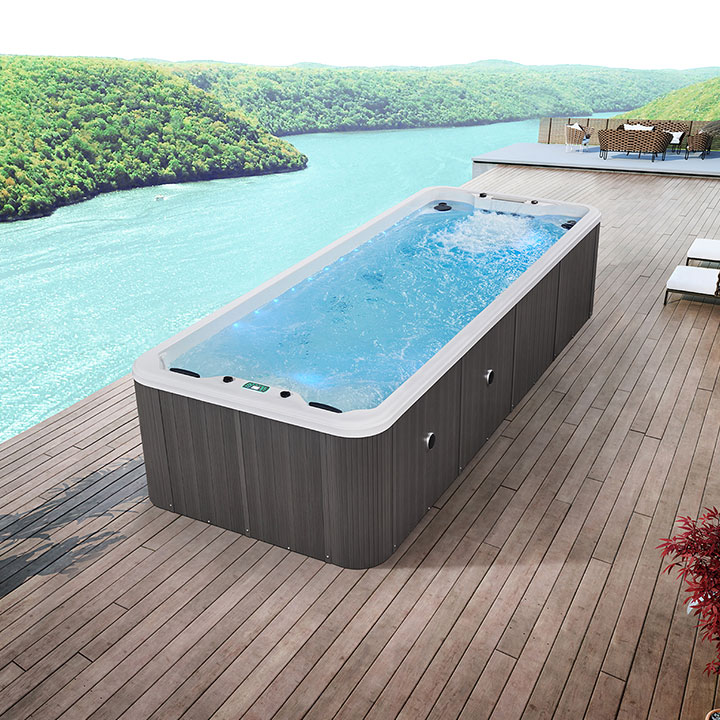
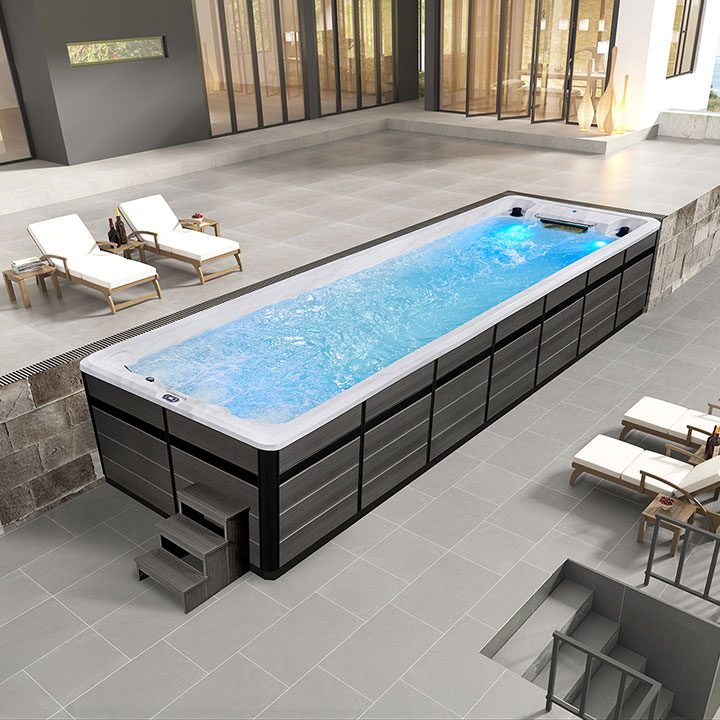
Victoria Star Swim Spa offers the perfect balance between exercise and relaxation, whether you want to swim for fitness or relax in the spacious seating.
Victoria Star Swim Spa offers the perfect balance between exercise and relaxation, whether you want to swim for fitness or relax in the spacious seating.