Best Outdoor Hot Tubs: An Engineering, Spatial, and Practical Buying Guide
Home / News / Best Outdoor Hot Tubs: An Engineering, Spatial, and Practical Buying Guide
November 07, 2026
Finding the best outdoor hot tubs requires looking past surface-level luxury and examining how water, structural loads, and electrical infrastructure interact over years of exposure. Many buyers assume that an outdoor spa is a self-contained appliance that requires little site preparation. The reality involves substantial structural weight, balanced hydraulic flow, and steady electrical supply.
Selecting the best outdoor hot tubs for your home demands an honest evaluation of available square footage, local climate extremes, and intended soaking habits. A poorly matched spa can become an unexpected maintenance challenge, while a well-engineered installation offers a durable retreat for daily hydrotherapy and recovery.
1. What Defines the Best Outdoor Hot Tubs for Real Homes?
1.1 Beyond Jet Counts: The Balance of Ergonomics, Plumbing, and Thermal Efficiency
A persistent myth in hot tub retail suggests that a higher jet count automatically provides superior therapy. Jet performance depends on the pump and plumbing design as well as jet count; compare model-specific specifications rather than judging a spa by nozzle totals alone. Matching dedicated water pump capacity to targeted plumbing lines and orifice dimensions determines how the water feels on the body.
Thoughtfully arranged spas direct water toward specific muscle groups rather than scattering superficial nozzles across non-contact zones. By distributing flow through balanced branch lines, the water creates focused pressure across the lumbar region, shoulders, and legs. Buyers should evaluate jet placement, mechanical ratings, and plumbing layouts together before committing to an investment.
1.2 Defining Household Needs Before Shopping
Homeowners often overestimate how many seats they truly need on a daily basis. Purchasing an oversized seven-person spa for an empty-nest household means heating, chemically treating, and filtering hundreds of gallons of water that may rarely be utilized. Matching tub capacity to typical household occupancy can lead to more practical ownership.
Intimate layouts provide dedicated loungers and upright bucket seats that cradle the body rather than forcing bathers into awkward bench positions. Evaluating regular family use versus occasional entertaining helps avoid conditioning unnecessary water volume, though buyers should always compare model-specific energy ratings, thermal insulation designs, and cover specifications.
2. Structural and Siting Realities for Outdoor Spas
2.1 Weight Loads, Foundations, and Structural Engineering
Water is heavy, weighing approximately 8.34 pounds per gallon (1 kilogram per liter). When an empty acrylic shell weighing hundreds of pounds is filled with water and occupied by adult bathers, total ground loads routinely exceed several thousand pounds. Placing a spa onto standard lawn turf or uncompacted pavers invariably causes subsidence, plumbing stress, and cosmetic damage.
The installation base must be entirely flat, level, and engineered to support the total dynamic load of the filled spa and its occupants. Consult your spa manufacturer documentation or a qualified local contractor regarding site-specific slab designs and soil conditions. If you intend to install an outdoor spa on an elevated wooden deck or rooftop terrace, you must consult a licensed structural engineer to calculate dead and live loads before delivery.
2.2 Clearance, Access, and Mechanical Serviceability
An outdoor spa cannot simply be placed against an exterior wall without planning for subsequent maintenance access. Internal mechanical packs, gate valves, and pump unions require clear service panels. If a plumbing fitting requires inspection, having unobstructed access saves substantial repair labor compared to draining and unseating the entire vessel.
Delivery paths require careful spatial audits before the unit arrives on site. Standard domestic gates, overhead eaves, downspouts, and air conditioner compressors can block passage. Review the manufacturer’s shipping dimensions and check your perimeter path to determine whether crane lifting is needed for tight backyard enclosures.
3. Power, Heating, and Hydraulic Infrastructure
3.1 Electrical Requirements and Safety Mandates
While smaller entry-level models use standard low-amperage plug-and-play connections, single-phase cords often cannot support simultaneous high-demand pumping and high-wattage heating. In colder climates, an entry-level unit may lose water temperature more quickly during extended winter use as cold ambient air hits the water surface.
Dedicated hardwired electrical systems provide higher overall kilowatt capacity to run larger pumps and heating elements concurrently. The spa electrical supply must incorporate required Ground-Fault Circuit-Interrupter (GFCI) protection, and the disconnecting means and its placement must comply with locally adopted electrical codes. Always hire a licensed, qualified electrician to review panel capacity and complete site wiring.
3.2 Dual-Pump and Dedicated Circulation Architectures
Spas equipped with a single two-speed pump rely on that primary motor to handle both high-pressure jetting and routine low-speed filtration. This architecture alternates motor speeds between high-pressure hydrotherapy and background water filtration.
Other designs separate these functions across distinct components. In such systems, a low-wattage circulation pump handles routine filtration and heating circulation, while dedicated high-output booster pumps activate specifically for hydrotherapy jets. This functional division assigns continuous duty to a smaller motor while reserving larger pump displacement for massage seating.
4. Materials, Weather Durability, and Thermal Retention
4.1 Shell Construction and UV-Resistant Synthetics
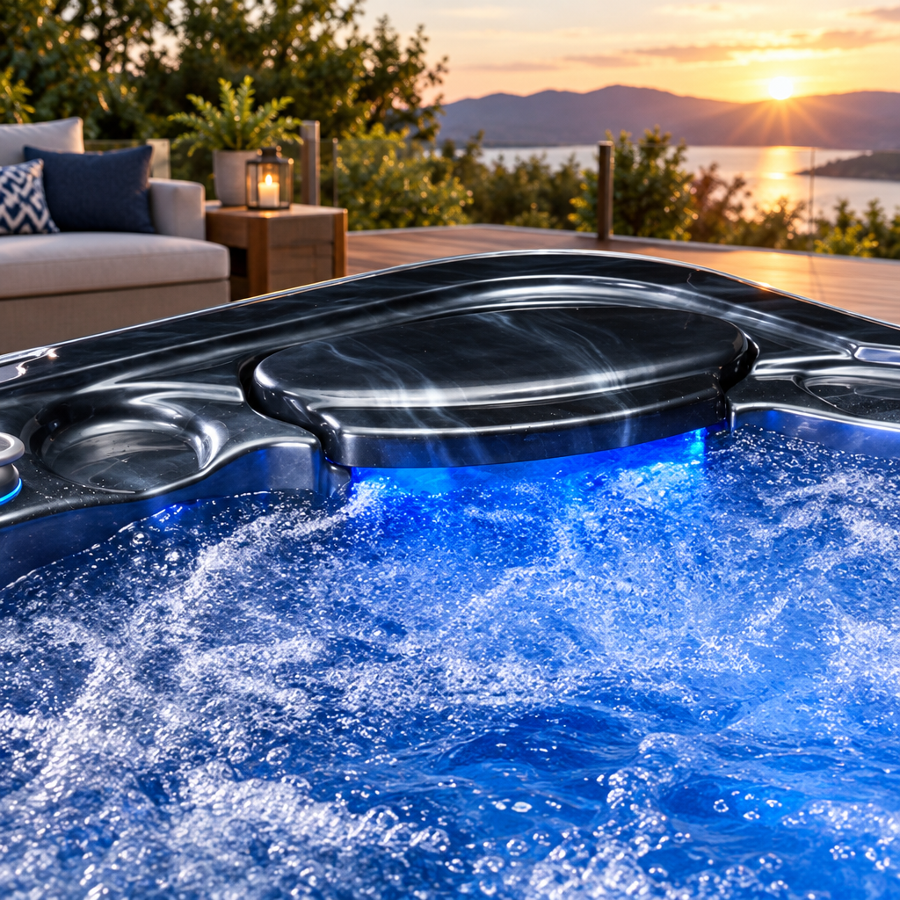
Outdoor spa shells endure continuous ultraviolet radiation, chemical oxidation, and seasonal temperature swings. UV- and weather-resistant acrylic shells provide a robust surface layer that helps resist surface degradation and sun exposure over years of outdoor operation.
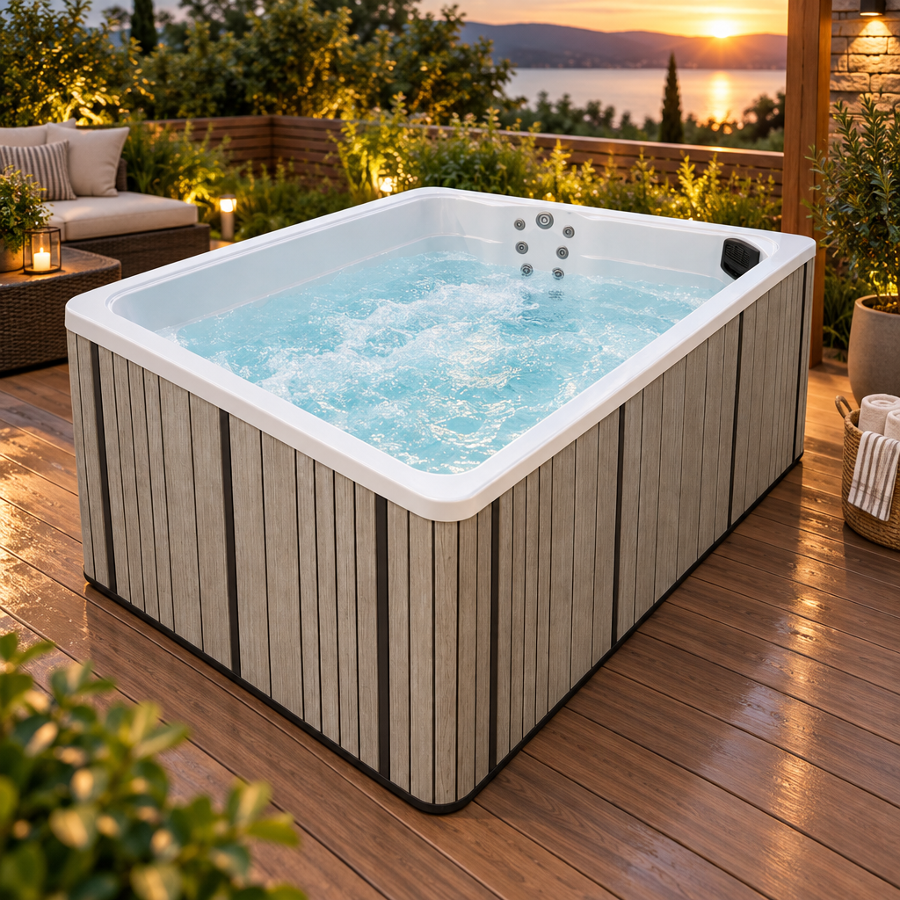
Exterior cabinet siding requires similar resilience. Traditional natural wood requires annual stripping, sanding, and chemical staining to prevent rot and insect damage. Synthetic composite paneling and aluminum-plastic skirts resist rain, freeze-thaw cycles, and direct sunlight without demanding constant surface refinishing.
4.2 Thermal Covers, Insulation, and Operating in Changing Climates
Evaporative surface exposure represents a major pathway for heat loss in any outdoor vessel. Even an efficient heating system will consume excessive electricity if the top surface is sealed with an uninsulated or ill-fitting lid. A dense, well-fitting thermal cover with a durable vapor barrier is essential for cold-weather performance.
When comparing different spas, examine the cabinet insulation methodology, such as perimeter foil barriers or expandable insulation. Proper cabinet insulation helps retain ambient heat within the plumbing bay, while owners should always review manufacturer-specific cold-weather instructions to safeguard equipment against freeze damage in winter.
5. Water Sanitation, Safety, and Ownership Workload
5.1 Routine Disinfection and Chemistry Baselines
Warm water creates an ideal environment for bacterial colonization, algae growth, and pathogen spread. While physical filters strain out suspended hair, skin cells, and silt, they do not neutralize microorganisms. Chemical sanitizers remain mandatory for safe bather immersion.
Public health authorities, such as the CDC, establish clear baseline guidelines for residential hot tubs: maintain a free chlorine residual of at least 3.0 parts per million (or 4.0 to 8.0 ppm for bromine), paired with a balanced pH between 7.0 and 7.8. Maintaining proper pH protects bathers from skin irritation while preventing internal heating elements from developing scale.
5.2 Operating Temperatures and Bather Safety
Health authorities advise setting maximum spa water temperatures to 104°F (40°C). Prolonged soaking at elevated temperatures can induce dizziness, overheating, and sudden blood pressure changes, particularly among bathers with underlying medical conditions.
Soakers should follow the duration guidelines detailed in their spa manual, stay hydrated with fresh water, and leave the water immediately if feeling lightheaded or unwell. Anyone with cardiovascular conditions or other medical concerns should consult a qualified physician before using a heated spa.
5.3 Ongoing Maintenance Cadence
Keeping hot tub water clear requires establishing a disciplined, recurring schedule rather than performing reactive chemical dumps after water turns cloudy. Adhering to structured preventative routines keeps your spa clean and mechanically sound.
Rinse reusable cartridge filters weekly using clean tap water to dislodge loose debris and surface particles from the pleats.
Test disinfectant concentration and water pH at least twice daily per CDC guidance, and more frequently during periods of heavy bather use, following manufacturer instructions.
Soak filter cartridges monthly in an approved degreasing cleaner to break down embedded body oils and mineral residues.
Drain, flush, and refill the spa periodically as recommended by the manufacturer to manage total dissolved solids (TDS) accumulation.
6. Engineering Spotlight: The Victoria Star VS-302L Compact Luxury Spa
6.1 Architectural Overview and Spatial Profile
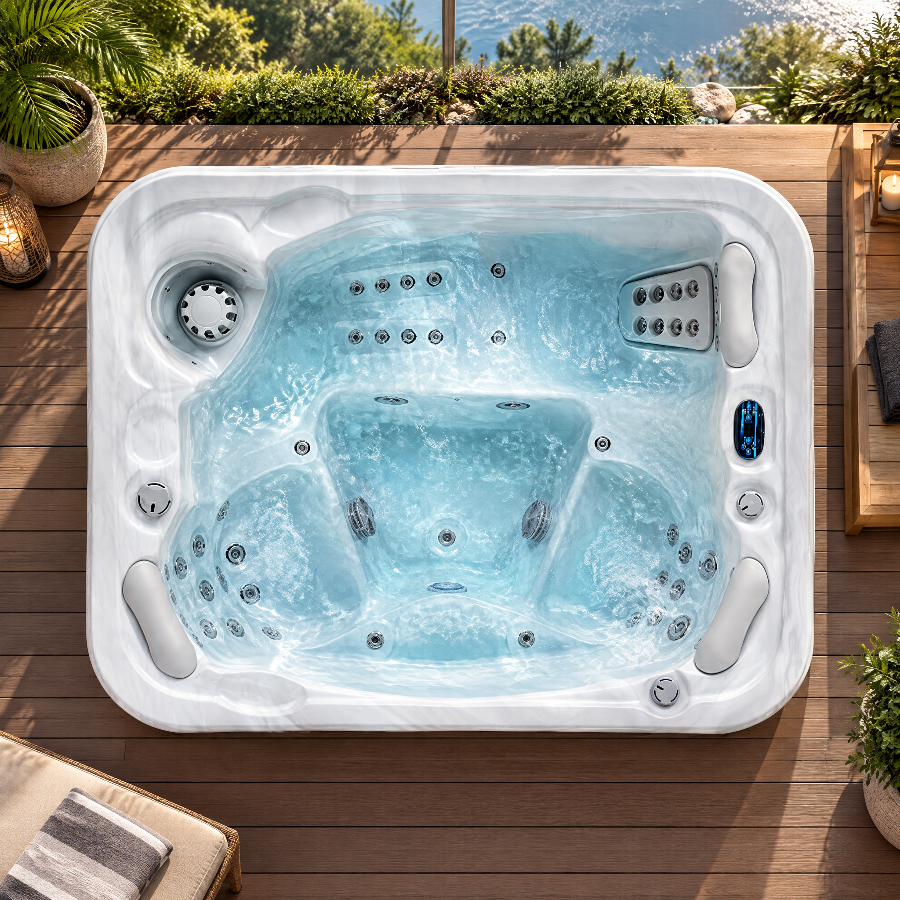
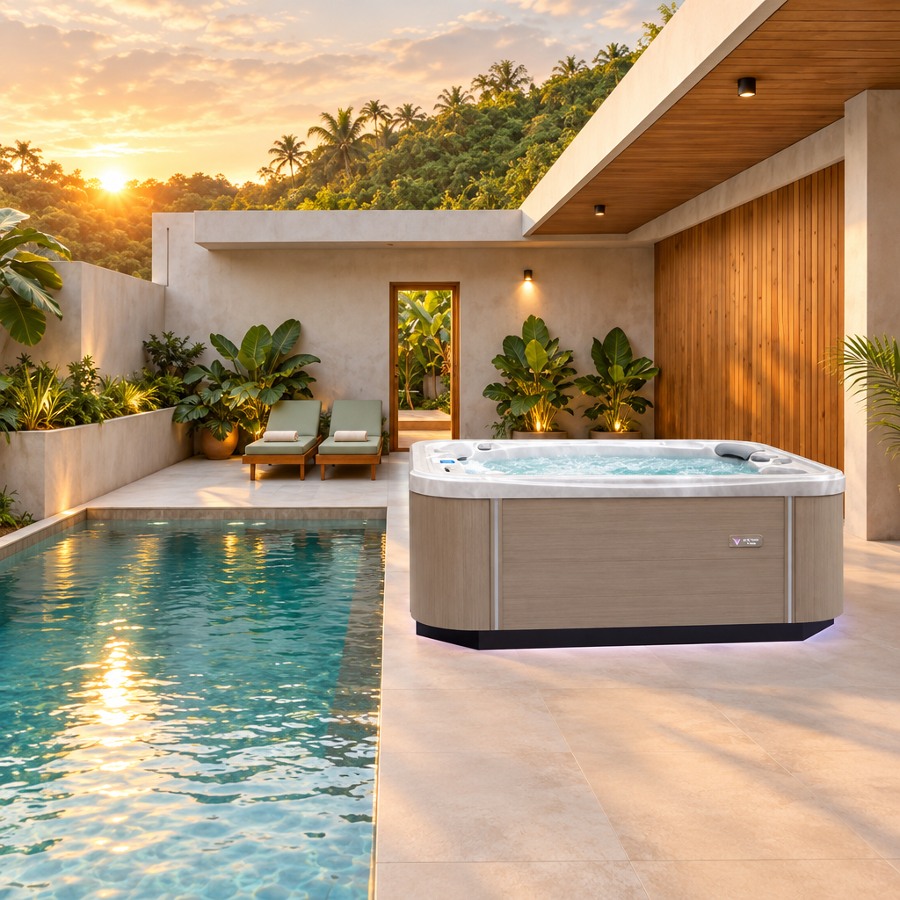
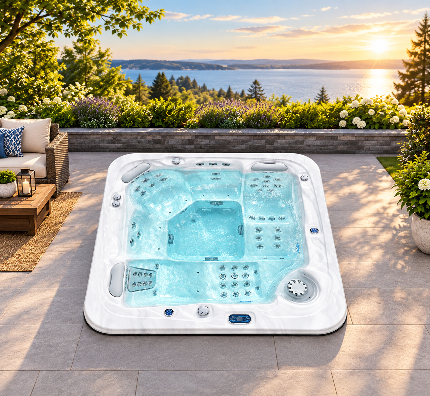
For compact patios, suburban courtyards, and boutique hospitality terraces, large multi-tier spas can overwhelm outdoor living areas. The Victoria Star VS-302L Luxury Outdoor Hot Tub delivers hydrotherapy performance within an efficient spatial envelope.
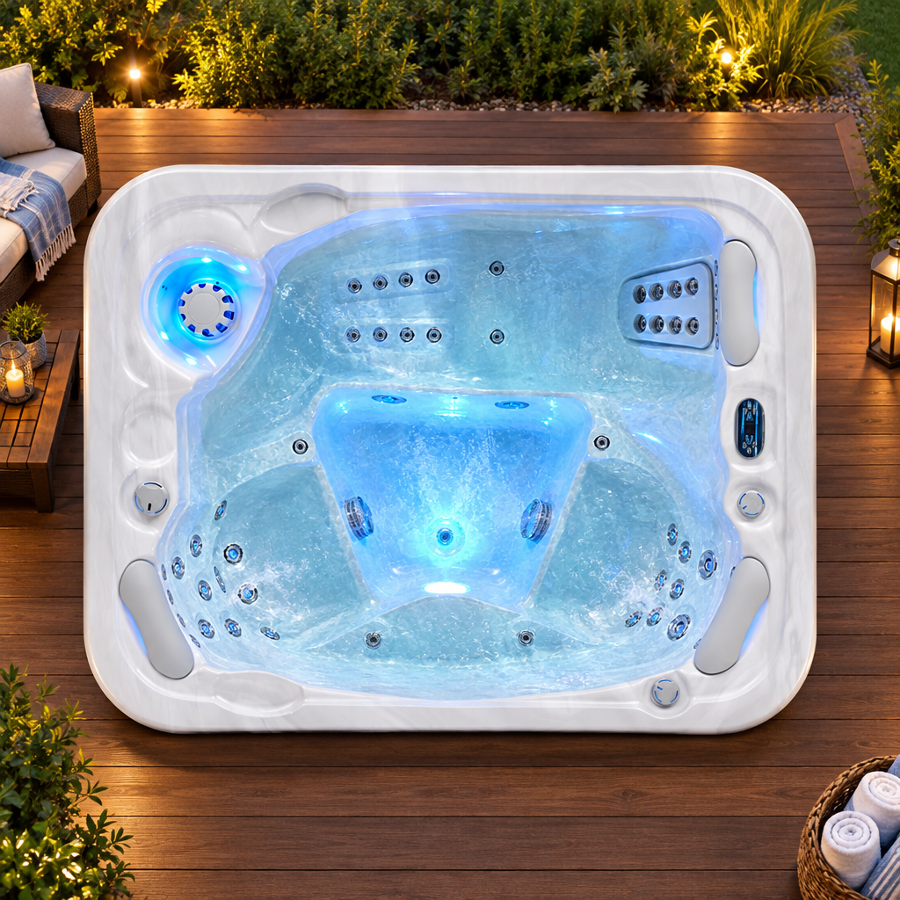
Manufactured by Foshan Gaoming Shiyi Sanitary Ware Technology Co., Ltd., which describes its production capabilities as including mold forming, product assembly, and a wood-products workshop, the VS-302L is engineered to maximize therapy density. The model pairs two deep upright hydrotherapy bucket seats with a sculpted full-body lounger, accommodating three adults without creating crowded footwell collisions.
6.2 Technical Specifications and Component Allocation
The VS-302L uses an intelligent plumbing and power distribution architecture. Driven by an integrated 6.95 kW total power configuration, it incorporates dedicated pumps to supply steady water volume directly to its 54 targeted hydrotherapy jets.
UV- and Weather-Resistant Acrylic Shell (Porcelain Color)
Dividing water movement between a 3 HP pump and an independent 2 HP pump allows the system to direct targeted volume across different seating banks. Concurrently, the dedicated 0.35 HP circulation pump handles filtration and circulation duty through the 3 kW heater assembly, isolating daily filtration movement from the main hydrotherapy pumps.
6.3 Ideal Installation Scenarios for the VS-302L
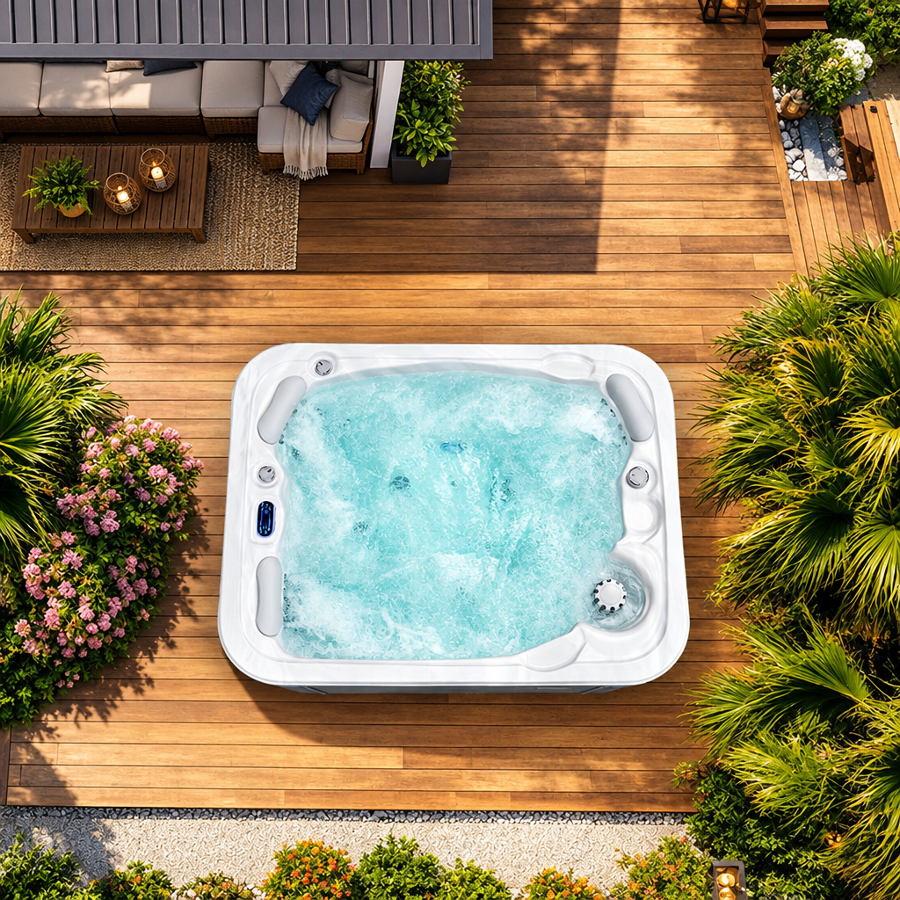
Measuring 2130 mm by 1660 mm with an 800 mm rim height, the VS-302L integrates well into constrained outdoor areas where larger spas cannot physically fit or safely operate.
Backyard Wooden Decks & Garden Patios: Fits smoothly into exterior deck additions without blocking sliding door pathways or garden walkways.
Courtyard & Villa Wellness Areas: Provides an understated focal point for private courtyard retreats without dominating the masonry footprint.
Private Terraces & Rooftops: Offers a controlled structural footprint suited for professionally engineered outdoor pads.
Boutique Hospitality & Luxury Rentals: Delivers multi-pump hydrotherapy and straightforward KL2022 keypad controls for guest recreation.
Evaluating the best outdoor hot tubs requires comparing equipment configurations across structural footprint, electrical demands, and therapeutic capability. The matrix below benchmarks key technical verification points across common market product classes alongside the compact luxury configuration of the VS-302L.
Assessment Factor
Entry-Level Plug-and-Play Units
Compact Luxury Spa (e.g., VS-302L)
Oversized Multi-Seat Spas
Dimensions & Site Footprint
Verify site clearance against compact crate dimensions
Specified dimensions: 2130 × 1660 × 800 mm
Verify site clearance against large square dimensions
Electrical Supply Demands
Confirm outlet rating (typically standard 15A/20A corded)
6.95 kW total power; confirm voltage and wiring with manufacturer
Confirm whether pump is shared two-speed or dedicated
Dedicated low-watt circulation pump (0.35 HP)
Confirm whether circulation is shared or dedicated
Massage Propulsion Array
Verify single pump horsepower and shared jet diversion
Multi-pump configuration (1 × 3 HP + 1 × 2 HP pumps)
Verify count and horsepower of multiple primary pumps
Foundation Verification
Confirm manufacturer load specs against base surface
Review model filled load against pad or framing capacity
Calculate substantial wet mass against reinforced base
7.2 Decision Logic Checklist Before Ordering
Navigating your final purchasing decision involves confirming technical specifications and site preparations in a logical order to prevent installation bottlenecks.
Measure your outdoor installation zone, confirming an uninterrupted path from the delivery driveway to the final resting pad based on the specific spa crate dimensions.
Consult a qualified electrician to inspect your residential panel and confirm service capacity for the spa’s total connected electrical load.
Prepare a flat, level base capable of bearing the spa’s filled weight, consulting local contractors or structural engineers for elevated decks.
Examine the balance between total jet count and total pump horsepower to ensure sufficient water displacement for your chosen seating layout.
Confirm that replacement filter cartridges, control components, and routine water care supplies are readily available.
8. Frequently Asked Questions
How many jets should the best outdoor hot tub have?
Jet count alone does not determine massage performance. Fifty well-engineered hydrotherapy jets powered by balanced pumps will deliver far more muscle relief than eighty jets plumbed into an undersized, shared pump system. Focus on water pump horsepower, flow distribution, and ergonomic alignment rather than total nozzle counts.
Can I install an outdoor hot tub on an existing wooden deck?
You can only install an outdoor hot tub on a deck if the framing was specifically engineered to bear substantial dynamic mass. An average spa filled with water and bathers produces loads well beyond standard domestic deck framing ratings. A licensed structural engineer must review and reinforce your joists before delivery.
What is the advantage of a dedicated circulation pump over a two-speed pump?
A dedicated circulation pump operates at a low, continuous wattage to quietly push water through filters and the heater tube. Two-speed pumps, by contrast, must cycle a primary motor at lower revolutions, which alternates duties between background filtration and full hydrotherapy operation.
How often must hot tub water be tested and treated?
CDC guidance advises testing disinfectant levels and water pH at least twice daily, and more frequently during periods of heavy bather use. Spa owners should also consult the manufacturer’s manual for model-specific care instructions to maintain free chlorine at or above 3.0 ppm (or bromine between 4.0 and 8.0 ppm) and keep pH balanced between 7.0 and 7.8.
Is a 3-person hot tub like the VS-302L sufficient for daily home hydrotherapy?
A compact three-person spa is well-suited for daily domestic therapy. It supplies deep bucket seating and a full-body lounger while requiring less total water treatment than oversized six-person units. This format offers a practical balance of high massage power and efficient spatial footprint for private patios and gardens.
Conclusion
Investing in the best outdoor hot tubs comes down to engineering balance, site preparation, and proper equipment sizing. Rather than chasing superficial features, prioritize durable UV-resistant shells, synthetic weather-resistant skirting, and dedicated multi-pump hydraulic systems that deliver reliable therapy across all four seasons. A thoughtfully planned installation provides years of reliable recovery and relaxation.
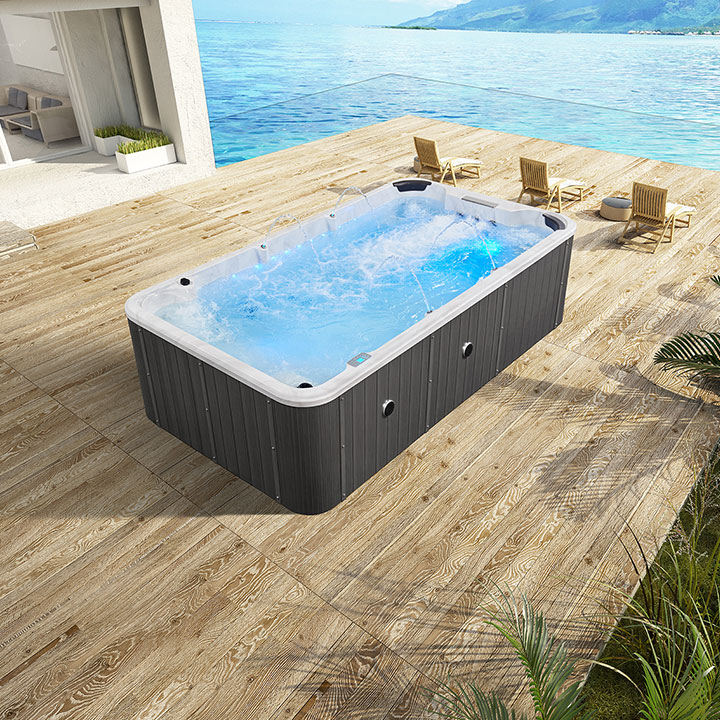
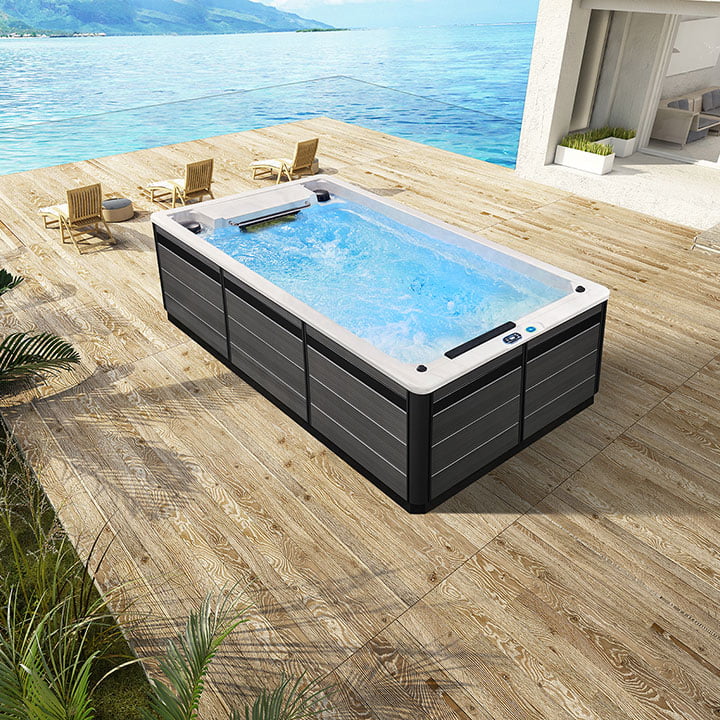
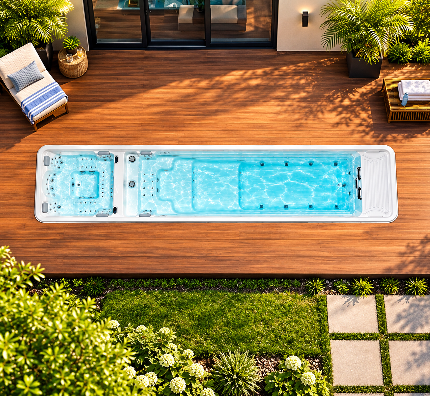
Victoria Star Swim Spa offers the perfect balance between exercise and relaxation, whether you want to swim for fitness or relax in the spacious seating.
Victoria Star Swim Spa offers the perfect balance between exercise and relaxation, whether you want to swim for fitness or relax in the spacious seating.