Best Inflatable Cold Plunge: How to Choose the Right Setup for Recovery
Home / News / Best Inflatable Cold Plunge: How to Choose the Right Setup for Recovery
November 06, 2026
Finding the best inflatable cold plunge requires balancing physical convenience against long-term engineering reality. When people search for the best portable ice bath or inflatable plunge tub, they usually envision a low-cost, space-saving basin that sets up in minutes. Yet cold-water immersion quickly exposes weak seams, poor thermal insulation, and the logistical burden of handling hundreds of liters of water. A dependable recovery tub must hold steady temperatures, support body weight safely, and resist daily outdoor wear. While an inflatable cold plunge tub can serve mobile athletes or temporary rental spaces, understanding its mechanical limits helps buyers decide whether portable PVC or a permanent rigid-shell system better serves their wellness routine.
What Searchers Mean by the Best Inflatable Cold Plunge
Core Buyer Priorities: Portability, Cost, and Storage Convenience
Most buyers searching for an inflatable setup prioritize immediate accessibility. They want a basin that arrives in a compact cardboard box, inflates with a standard manual pump, and stows away in an apartment closet or garage corner when empty. Budget plays a major role in this initial decision, as entry-level inflatables offer an inexpensive gateway into deliberate cold exposure without requiring site excavation, dedicated plumbing, or substantial electrical alterations.
Inflatable Drop-Stitch Basins vs. Permanent Rigid Plunge Tubs
Inflatable tubs rely primarily on drop-stitch fabric or multi-layered PVC, the same structural material used in inflatable stand-up paddleboards. Thousands of fine polyester threads link the inner and outer walls to maintain basin geometry under internal air pressure. Rigid plunge tubs, in contrast, utilize acrylic shells supported by structural composite cabinetry and mechanical refrigeration systems, trading temporary mobility for weather-resistant construction, rigid ergonomics, and a stationary footprint.
Essential Questions to Answer Before Investing in Cold Therapy
Before picking a recovery tub, every prospective buyer must resolve three fundamental logistical questions:
Footprint Stability: Where will the tub rest permanently once it holds water, and can that surface support the combined mass of the basin, water, and user?
Cooling Methodology: Will you manually haul commercial ice bags several times a week, or will you invest in a continuous mechanical chiller?
Usage Frequency: Is cold immersion a temporary experiment, or a daily recovery ritual requiring dependable water sanitation and ready-to-use temperatures?
How Inflatable Cold Plunge Tubs Function
Passive Insulation and Manual Ice Loading
Basic inflatable plunge basins operate passively without integrated mechanical components. Users fill the cavity with standard tap water and add an amount of ice determined by the tub volume, starting water temperature, ambient conditions, and desired target temperature. Because thin PVC walls offer limited thermal resistance compared to polyurethane-insulated structures, the surrounding air temperature quickly warms the water, causing ice to melt and demanding continuous replenishment during warm summer months.
Pairing Inflatable Tubs with External Water Chillers
To bypass manual ice management, many users attach an external mechanical chiller via flexible rubber hoses and quick-connect barb fittings. Water circulates from the tub basin through a particulate filter, across a heat exchanger, and back into the plunge. External chiller hoses introduce potential leak points, trip hazards, and thermal dissipation along exposed tubing, while the external compressor and auxiliary pump also require dedicated floor clearance and protection from rain, sun exposure, and freezing temperatures.
Structural Realities: Weight, Deflation, and Long-Term Portability
Water weighs approximately 1 kg per liter, so filling a 300-liter tub adds about 300 kg before accounting for the tub basin itself or the bather. This transforms what was a portable, lightweight bundle into a heavy, immobile mass that cannot be repositioned without complete drainage. Frequent deflation and inflation cycles place repeated mechanical strain on air valves and glued structural seams, and micro-abrasions from outdoor ground grit and repeated folding can compromise structural airtightness over months of regular use.
Key Factors When Choosing an Inflatable Cold Plunge
Basin Volume, Ergonomics, and Full-Body Submersion
Many users seek torso immersion during cold therapy, but depth should always be selected according to the protocol, the tub dimensions, and individual safety considerations. Depending on the model, barrel-style inflatables often require an upright seated posture, whereas elongated trough-style basins permit extended leg positions but require a larger footprint. Prospective buyers should check internal basin dimensions, usable water depth, and manufacturer weight limits to ensure they can submerge comfortably without feeling cramped.
Drop-Stitch Construction, Seam Integrity, and Thermal Covers
Drop-stitch density directly dictates wall rigidity and structural lifespan. Some drop-stitch models publish operating-pressure limits, but buyers should follow the specific manufacturer inflation instructions rather than assuming a universal pressure rating. An insulated cover is essential to minimize thermal transfer from the atmosphere, as a tight-fitting cover keeps dirt, insects, and airborne debris out of the water column while helping to limit passive heat exchange when the tub is unused.
Filtration Systems, Water Hygiene, and Ongoing Drainage
Standing cold water creates an environment vulnerable to bacterial accumulation, skin oils, and biofilm formation. Inflatables without filtration or sanitation require more frequent water changes and manual cleaning, following the specific manufacturer maintenance instructions. Drainage must be planned carefully to prevent backyard flooding or foundation erosion, as standard bottom drain plugs work slowly, whereas active external drainage pumps accelerate water evacuation but introduce additional equipment to store and manage.
Outdoor Durability and Weather Vulnerability
Direct ultraviolet radiation degrades flexible PVC, causing surface chalking, brittleness, and valve seal failure over prolonged seasons. Sharp patio stones, pet claws, and shifting timber decking also present continual puncture risks for air-filled chambers. Leaving an inflatable basin outdoors during winter presents distinct risks, as freezing standing water expands and damages flexible walls and external plastic connectors, requiring owners to monitor freezing conditions diligently or store the deflated unit indoors.
Inflatable Tubs vs. Rigid-Shell Systems: A Direct Comparison
Portability and Daily Convenience
Inflatables offer superior short-term transportability for seasonal use, camping trips, or temporary residential rentals, packing down into a vehicle trunk when completely dry and clean. Rigid tubs eliminate the labor of periodic inflation checks and air chamber maintenance, resting permanently on a prepared base or patio, though installation procedures and any plumbing or electrical connections depend strictly on the specific model.
Structural Lifespan, Insulation Efficiency, and Maintenance Overhead
A rigid acrylic shell avoids the puncture risk of inflatable PVC, but its service life depends on installation, chemical maintenance, weather exposure, and manufacturer support. Its rigid construction allows insulated cabinet walls that help mitigate ambient thermal loss. Inflatable models lose temperature rapidly through their thin drop-stitch perimeter, forcing external chillers to cycle continuously, and buyers must use only sanitation products and chemical concentrations approved by the specific tub manufacturer to prevent material degradation.
Comparing Upfront Inflatable Costs Against Long-Term Rigid Systems
While an inflatable tub requires lower initial capital, ice and external-chiller costs depend on local prices, usage, climate, and equipment selection, so buyers should compare total ownership costs rather than purchase price alone. Dedicated rigid systems involve higher initial procurement and delivery planning, but deliver integrated component packaging, structural stability, and a dedicated hydrotherapy basin built for permanent outdoor placement.
Operational Feature
Portable Inflatable Cold Plunge
Dedicated Rigid-Shell Cold Plunge
Core Material
High-pressure drop-stitch PVC
Porcelain acrylic shell with composite cabinet
Structural Rigidity
Air-supported drop-stitch chamber
Solid structural composite
Cooling Integration
Manual ice or external hooked hoses
Model-dependent integrated heat pump system
Puncture Vulnerability
High (sharp objects, pets, gravel)
Low exposure to ordinary punctures; still vulnerable to impact
Thermal Retention
Low to moderate passive air insulation
Insulated cabinet architecture with included cover
Relocation Ease
High when empty and fully deflated
Requires planned moving equipment (140 kg listed net weight)
Typical Service Life
Subject to PVC wear and valve fatigue
Multi-year operation dependent on care and climate
When to Upgrade from an Inflatable to a Dedicated Acrylic Plunge
Inflatable tubs serve well as an introductory benchmark to establish whether cold therapy fits your lifestyle. If you find yourself plunging several times a week, the constant inflation checks, hose connections, and drainage routines become noticeable friction points. Upgrading to an integrated rigid unit removes those daily barriers, transforming cold therapy from a high-maintenance chore into an immediate routine integrated into your home wellness space.
Dedicated Rigid Cold Plunges: The Outdoor Cold Plunge Tub C02
Technical Specifications and Built-In Ergonomics
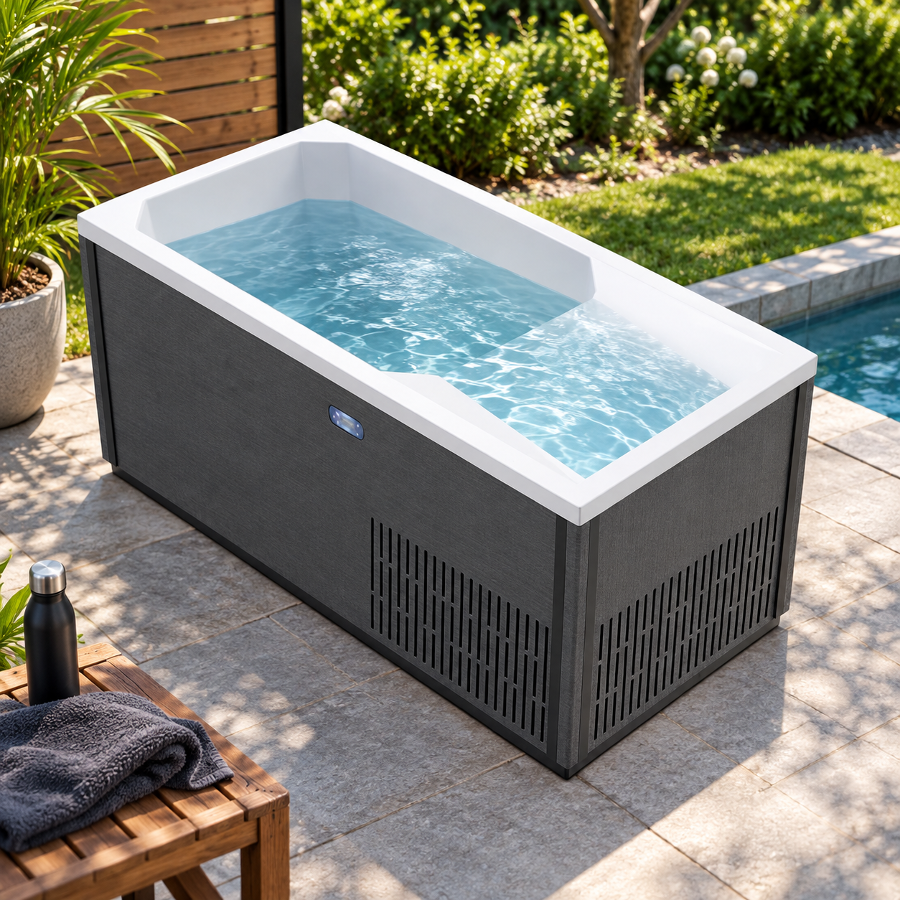
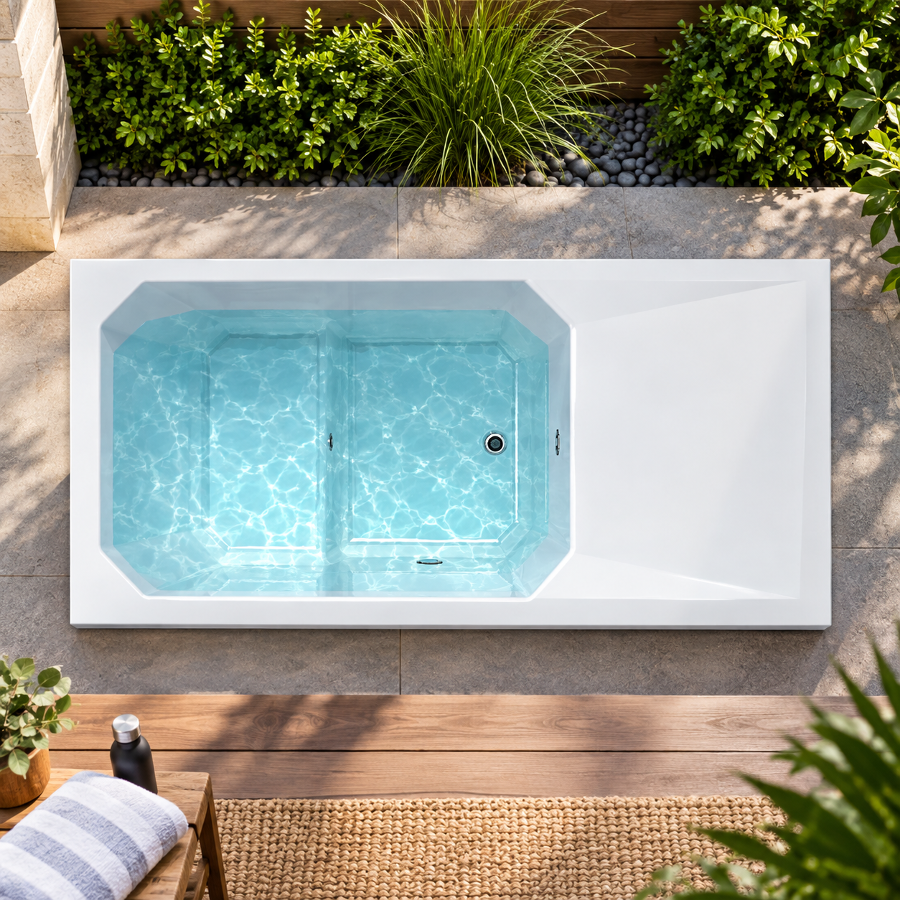
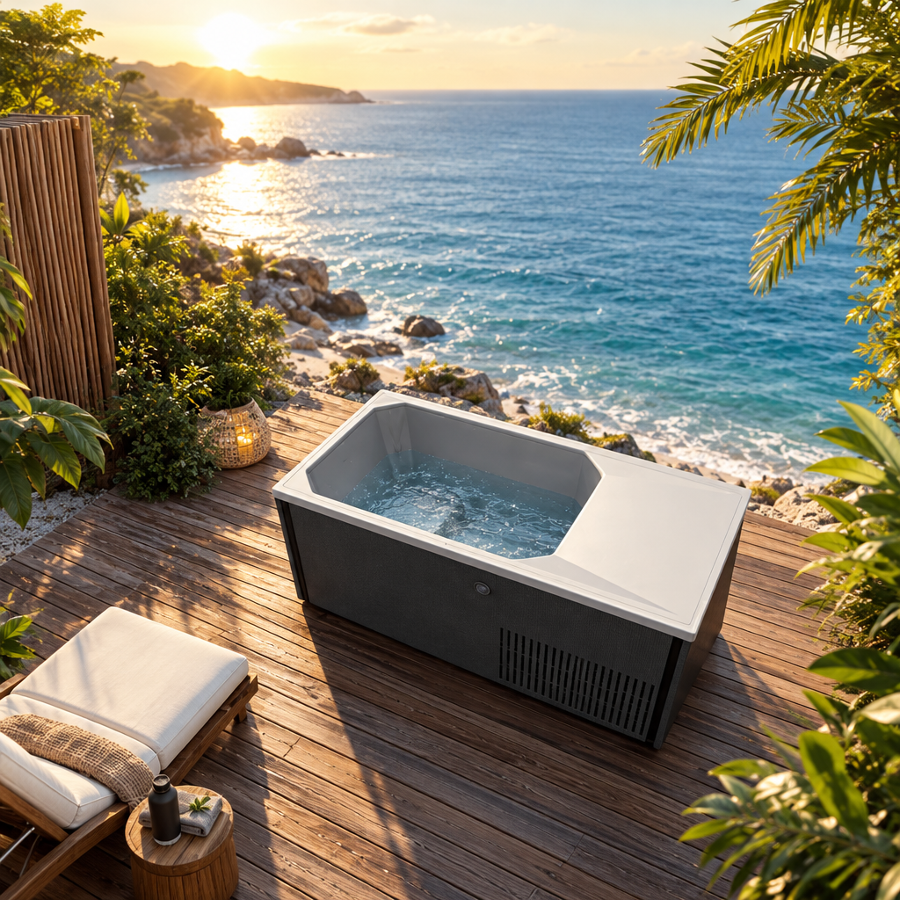
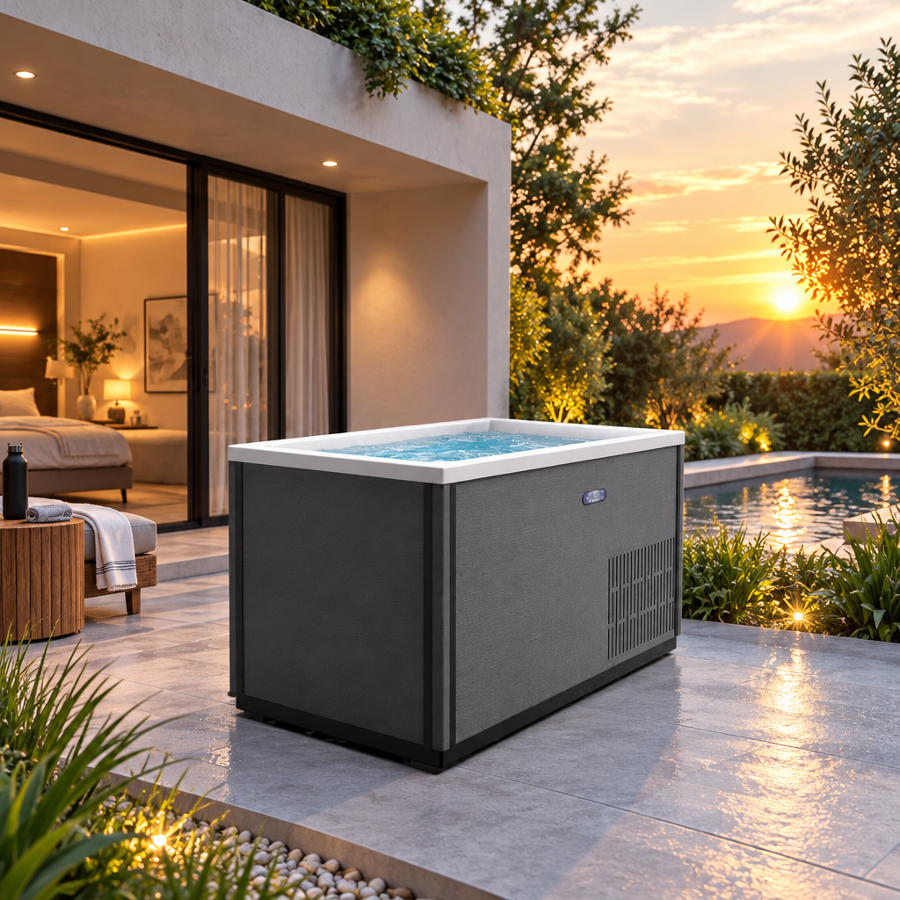
For homeowners, commercial studios, and athletic centers seeking a permanent solution, the Outdoor Cold Plunge Tub C02 provides a dedicated alternative to flexible inflatables. Manufactured under Victoria Star, an established brand created by Foshan Gaoming Shiyi Sanitary Ware Technology Co., Ltd., this unit pairs modern hydrotherapy engineering with robust structural materials. The C02 measures 1695 mm in length, 830 mm in width, and 850 mm in height according to manufacturer-listed metric dimensions, while the manufacturer product listing also notes an approximate 6′ × 33" × 34" imperial figure that buyers should verify for precise framing. The interior is listed at 320 L and includes an integrated step intended to assist entry and positioning, though users should always enter carefully.
Integrated 900W Heat Pump and Circulation Engineering
Unlike inflatable setups that clutter patio spaces with external chillers and exposed plumbing loops, the C02 is specified with an integrated 900 W heat-pump system. The listed power supply is 0.954 kW, comprising a 900 W heat-pump specification and a 54 W brushless-pump specification for water circulation, though actual operating electrical consumption may vary with ambient conditions and control cycles. The product specifications list a 54 W brushless pump for water circulation, and an exterior digital control interface is listed on the front panel, allowing bathers to adjust settings without opening service compartments or balancing auxiliary pumps.
Materials and Architecture: Porcelain Acrylic and Composite Cabinetry
The interior shell is crafted from smooth, high-gloss white porcelain acrylic, encased in a vented exterior cabinet available in Platinum and Midnight horizontal brushed wood-grain composite finishes to complement contemporary architectural settings. An insulated cover is included with the unit to help limit debris entry and heat exchange when the tub is not in use, shielding the acrylic basin from falling outdoor debris.
To ensure proper thermal regulation, the cabinet panels incorporate vented slatted grilles. These openings support normal air exchange during heat pump operation, preserving functional reliability across diverse outdoor installations without requiring detached utility enclosures.
Ideal Environments: Residential Patios, Training Facilities, and Wellness Centers
The C02 adapts across diverse residential and commercial recovery applications, featuring a listed dry weight of 140 kg net and 180 kg gross packaging. The installation surface must be level and verified by a qualified professional to support the fully loaded unit. Its integrated heat-pump system makes it suitable for boutique spas, sports training facilities, and outdoor coastal retreats where exposed auxiliary hoses and detached refrigeration units would disrupt space utility.
Practical Installation Checks: Power Draw, Footprint, and Base Preparation
Installing a permanent acrylic plunge requires deliberate site preparation before delivery. At the listed 320 L capacity, the water weighs approximately 320 kg; adding the listed 140 kg net weight gives an estimated 460 kg before the bather, subject to actual fill level and installation configuration, meaning the final operating load regularly exceeds 500 kg and must be confirmed by a qualified contractor or structural engineer against the site load-bearing capacity.
Foundation Integrity: Verify that the concrete pad or timber substructure is engineered to support the combined mass of the equipment, full water volume, and multiple bathers safely.
Power Availability: Have a qualified electrician verify the voltage, circuit capacity, grounding, and required GFCI or equivalent protection from the manufacturer’s installation instructions and local electrical code.
Ventilation Clearance: Keep the cabinet’s ventilation openings unobstructed and follow the manufacturer’s required clearance instructions to ensure proper airflow across internal components.
Drainage Pathway: Verify that an exterior drain or gravel soak-away is accessible for routine water changes and seasonal maintenance.
The Science of Cold-Water Immersion: Realistic Benefits and Limits
Documented Physiological Responses to Post-Exercise Immersion
Stepping into cold water initiates immediate peripheral vasoconstriction, shunting blood flow from outer extremities toward core internal organs. This vascular compression helps reduce acute tissue swelling and dulls nerve conduction velocity, providing noticeable relief from perceived delayed-onset muscle soreness (DOMS). Rewarming changes blood flow and sensation as surface tissues adjust to ambient conditions, but the clinical significance of these vascular shifts varies, with evidence being strongest for a possible short-term reduction in perceived muscle soreness rather than guaranteed systemic recovery.
Scientific literature demonstrates that cold-water immersion outcomes depend heavily on timing, water temperature, and individual athletic goals. Systematic reviews suggest that cold-water immersion may reduce perceived muscle soreness, while effects on fatigue and performance are mixed and protocol-dependent. People prioritizing muscle hypertrophy may wish to avoid routine immediate post-lifting immersion, as cold exposure can attenuate structural adaptations, and evidence does not establish a specific delay that eliminates the concern. Conversely, those prioritizing quick turnaround between multi-bout competition days benefit from the acute anti-inflammatory sensations of immersion protocols.
Avoiding Exaggerated Marketing Claims and Wellness Myths
Cold exposure is often marketed online as an absolute remedy for chronic conditions, fat loss, and instant metabolic transformation. While immersion can trigger temporary subjective alertness and invigorated mood, it remains an auxiliary recovery modality rather than a standalone medical cure. Protocols vary across clinical studies, and no single temperature or duration is established as universally optimal. Beginners should use a conservative setting, avoid breath-holding, and seek professional guidance when medically indicated rather than pursuing extreme endurance challenges.
Safety Protocols and Structural Site Preparation
Managing Cold Shock and Acclimation Guidelines
Submerging in cold water can trigger an involuntary gasp reflex and rapid hyperventilation known as the cold shock response. Entering a plunge tub carelessly increases the risk of accidental water aspiration and elevated cardiovascular strain, making controlled breathing and gradual submersion essential safety practices.
Control Breathing: Stand beside the tub, take three slow diaphragmatic breaths, and lower yourself calmly into the water without splashing.
Submerge Gradually: Keep your head above water and submerge comfortably, resting your hands securely on the tub rim or interior step.
Set a Conservative Timer: Limit initial exposures to brief intervals, gradually adjusting duration only as personal cold tolerance allows.
Warm Up Passively: Exit the tub steadily, dry off immediately with a warm towel, and allow natural movement to restore baseline core body temperature.
When to Seek Medical Guidance Before Cold Immersion
Cold-water immersion can cause sudden elevations in arterial blood pressure, peripheral vascular resistance, and cardiac workload, as the rapid constriction of blood vessels places acute demands on heart muscle function. People with cardiovascular disease, uncontrolled hypertension, arrhythmias, Raynaud phenomenon, peripheral neuropathy, pregnancy, or other relevant health conditions should obtain individualized medical advice before cold immersion.
Foundation Load Bearing, Electrical Safety, and Drainage Planning
Whether installing an inflatable basin or a dedicated porcelain acrylic plunge like the C02, structural safety requires careful site planning. Never place a filled cold plunge on an unverified residential balcony or an unreinforced indoor suspended wooden floor. Electrical connections must be handled according to local safety codes and manufacturer guidance, positioning power points away from splash zones, while planning a dedicated drainage pathway ensures that discharging water does not pool near building foundations or damage sub-deck landscaping.
A Practical Buyer Checklist for Cold Plunge Setups
Matching Equipment to Daily Routines and Available Footprint
Choosing the best recovery system begins with a clear assessment of your physical space and weekly schedule. If your living situation requires complete seasonal pack-down, an inflatable basin fits that transient constraint. If you own your property, maintain a permanent outdoor deck, and seek daily therapeutic immersion without constant setup friction, a dedicated rigid unit provides a far more dependable long-term wellness environment.
Verifying Chiller Compatibility, Power Requirements, and Warranty Coverage
When evaluating complete plunge systems, review the mechanical specifications rather than relying on promotional lifestyle photos. Ensure any external cooling unit is engineered specifically for outdoor environmental duty cycles. Verify that replacement mechanical parts, circulation pumps, and digital controllers are backed by reputable manufacturer warranties, and confirm that the tub operational power consumption aligns with standard residential outdoor circuit limits.
Ensuring Consistent Specifications When Evaluating Competing Units
Comparing recovery tubs requires standardizing metrics across volume, materials, and power output. Look past subjective marketing slogans and compare documented engineering figures directly:
Internal Basin Capacity: Compare actual liter volume to ensure your frame can submerge comfortably without spilling water over the rim.
Structural Shell Composition: Differentiate between unsupported PVC fabric, drop-stitch air cores, and rigid acrylic supported by structural composite framing.
Cooling Methodology: Distinguish between passive ice basins requiring ongoing ice purchases, split external chillers with exposed hoses, and integrated heat pump units.
Total Mass Calculations: Calculate the fully flooded weight (net tub weight + water capacity + bather mass) to verify site load-bearing safety with a professional before installation.
Frequently Asked Questions
What should I look for in the best inflatable cold plunge?
Look for reinforced drop-stitch PVC construction, durable bonded seams, an insulated thermal cover, and standard connection ports compatible with external water chillers.
Does an inflatable cold plunge require a mechanical chiller?
An inflatable tub can operate passively using bagged ice, but maintaining low temperatures throughout warm weather demands large ice volumes. Connecting a compatible mechanical chiller eliminates recurring ice purchases.
How heavy does an inflatable cold plunge get when filled with water?
Water weighs approximately 1 kg per liter, so filling a 300-liter tub adds about 300 kg of water weight alone. The total operating weight will depend on the specific model’s empty mass and the weight of the bather inside.
Can an inflatable cold plunge be left outside year-round?
Prolonged exposure to solar ultraviolet radiation, seasonal temperature swings, and winter freezing degrades PVC membranes, valve seals, and adhesive seams over time. Rigid-shell units are far better equipped for permanent outdoor weather exposure.
Is the Outdoor Cold Plunge Tub C02 an inflatable model?
No. The Outdoor Cold Plunge Tub C02 is not an inflatable model. It is a rigid acrylic plunge tub featuring a porcelain acrylic shell, an exterior composite cabinet, an integrated 900W heat pump system, and a 54W brushless circulation pump.
What are the main advantages of a rigid acrylic plunge over an inflatable tub?
Rigid acrylic plunge tubs eliminate ordinary puncture risks, offer molded entry and resting steps, and provide lasting structural stability without continuous air top-ups. The C02 model specifically includes an integrated 900W heat-pump system, whereas equipment configurations for other rigid tubs remain model-dependent.
Who should exercise caution before using cold-water immersion?
People with cardiovascular disease, uncontrolled hypertension, cardiac arrhythmias, Raynaud phenomenon, peripheral neuropathy, or pregnancy should obtain individualized medical clearance before undertaking cold immersion due to sudden vascular constriction.
Choosing the Right Cold Plunge for Long-Term Recovery
Aligning Investment with Long-Term Lifestyle and Space Demands
Evaluating the best inflatable cold plunge ultimately highlights the trade-off between temporary portability and permanent structural performance. An inflatable basin offers an accessible entry point for renters, mobile athletes, and anyone experimenting with cold exposure for the first time. It proves whether deliberate cold immersion is a passing interest or an essential recovery habit.
The Outdoor Cold Plunge Tub C02 is not an inflatable cold plunge; it is a rigid alternative for buyers who have decided that permanent installation and integrated temperature control matter more than packability. For users whose recovery habits require a durable, fixed installation on a private patio or training facility, choosing a rigid acrylic unit delivers dependable construction and reliable daily immersion whenever you are ready to plunge.
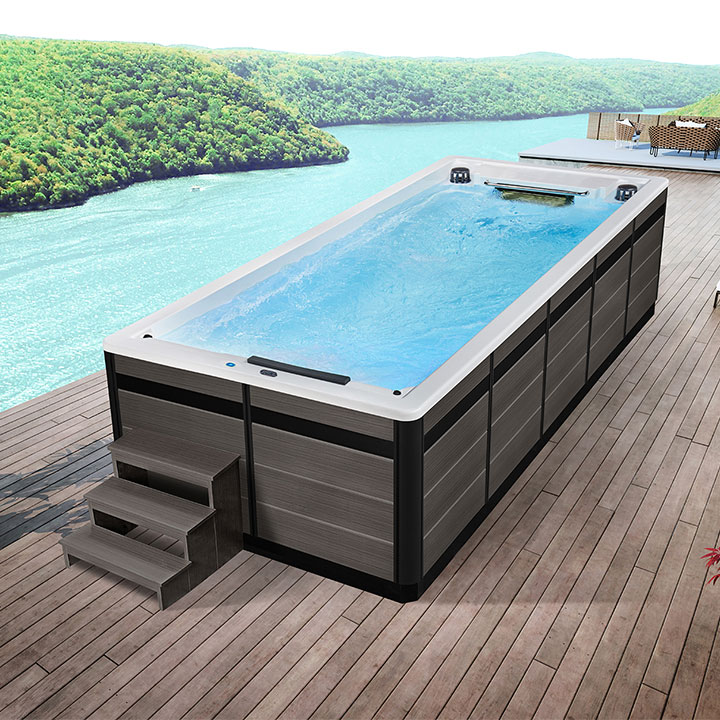
Victoria Star Swim Spa offers the perfect balance between exercise and relaxation, whether you want to swim for fitness or relax in the spacious seating.
Victoria Star Swim Spa offers the perfect balance between exercise and relaxation, whether you want to swim for fitness or relax in the spacious seating.