Best Hot Tub Brand: How to Evaluate Spas, Compare Features, and Choose the Right Model
Home / News / Best Hot Tub Brand: How to Evaluate Spas, Compare Features, and Choose the Right Model
November 06, 2026
Finding the best hot tub brand requires looking past polished showroom displays and examining engineering integrity. Marketing brochures often highlight jet counts and glowing underwater lights, but daily ownership centers on thermal retention, pump hydraulics, water care, and structural durability. Whether you want hydrotherapy recovery or a quiet evening soak, choosing the right manufacturer demands an objective look at physical construction and operating costs.
A hot tub is a major home investment that combines structural shells, high-current electrical systems, plumbing networks, and constant outdoor exposure. Brand prestige alone cannot prevent freeze damage or pump cavitation if the internal engineering is compromised. This guide breaks down the core criteria that define top-tier hot tub engineering, highlights real-world physical requirements, and reviews practical design choices through a detailed look at modern multi-pump spa architecture.
1. Defining the "Best Hot Tub Brand" for Real-World Ownership
Why Brand Rankings Can Be Misleading
Online lists comparing hot tubs frequently place entry-level rotational-molded models alongside heavy acrylic spas without clarifying their mechanical differences. A manufacturer known for lightweight 110V plug-and-play tubs uses different materials, heaters, and pump designs than one building permanent multi-pump spas. Comparing them purely on brand reputation confuses two completely different product categories.
Evaluating a spa brand requires looking at how its specific models handle hydraulic resistance, regional cold snaps, and regular water changes. An expansive party tub built for eight bathers creates different structural and electrical demands than a compact model built for couples. The best hot tub brand is always the one whose engineering targets your specific climate and installation site.
Brand Reputation vs. Model Suitability
Shoppers often favor familiar names, assuming broad market visibility guarantees long-term reliability. However, specialized component engineering and prompt access to replacement parts matter far more than corporate size. A spa that uses non-standard plumbing fittings or closed-source electronic controllers can leave you waiting weeks for simple repairs.
Suitability also depends on internal ergonomics. For instance, open-bench seating promotes social conversation and easy movement, while deep recliners provide dedicated full-body hydrotherapy. If a well-known brand does not offer the physical seating depth or lounge contours your body requires, its market prestige provides little practical value.
Essential Questions Before Selecting Any Spa
Before browsing dealer lots or ordering online, assess the practical realities of owning and maintaining a hot tub:
Physical Delivery Clearance: Can a rigid spa shell clear your roof eaves, narrow side gates, gas meters, and air conditioner compressors without requiring a costly crane lift?
Electrical Panel Reserves: Does your primary home breaker panel have adequate spare capacity and circuit space available to support a dedicated spa equipment circuit?
Structural Foundation Capacity: Is your installation site an engineered, level foundation capable of supporting the combined weight of the spa, water volume, and bathers under local building guidelines?
Routine Maintenance Access: Will the equipment-bay and service panels remain accessible after installation, or will surrounding deck boards trap the plumbing and pumps inside?
2. Core Engineering Criteria for Comparing Hot Tub Manufacturers
Structural Shell Materials and Frame Construction
A spa shell must be selected for compatibility with hot water, sanitizer exposure, and the installation environment; verify the manufacturer’s material, care, and warranty documentation. Acrylic sheets formed to precise structural contours provide a non-porous, smooth surface that resists staining and makes surface wiping straightforward. By contrast, basic polyethylene roto-molded tubs resist blunt impact but lack the deep contouring and finish options of rigid acrylic.
Supporting this shell requires a stable cabinet structure. Traditional dimensional wood framing can require regular staining to resist moisture degradation, warping, or insect damage when exposed to outdoor dampness. Modern synthetic composite paneling and aluminum-plastic skirts provide clean exterior lines, helping to minimize routine exterior cabinet refinishing.
Hydraulic Design: Pump Architecture Beyond Raw Jet Counts
A common marketing tactic suggests that a higher jet count automatically provides a superior massage. In hydrotherapy, total water volume and dynamic pressure matter far more than the number of plumbing holes. Splitting pump output across dozens of tiny orifices often results in weak, pinprick water streams rather than deep muscle relief.
Balancing water delivery requires a coordinated pump architecture. Premium spas pair dedicated high-flow massage pumps with a separate, low-wattage circulation pump. The compact circulation pump moves water through filtration systems quietly during routine cycles, reducing operating duty cycles on the primary high-horsepower booster pumps.
Energy Efficiency, Thermal Insulation, and Cover Integrity
Heating several hundred gallons of water in freezing conditions requires smart thermal management. ANSI/APSP/ICC-14 provides a repeatable procedure for measuring standby energy consumption and calculating standby power demand for portable electric spas. Spas with minimal thermal insulation force electric heaters to run frequently, driving up monthly utility bills.
Insulation methods vary from full-foam applications that encapsulate the plumbing to perimeter barrier systems that reflect radiant heat back toward the shell. Regardless of internal cabinet insulation, the majority of thermal loss occurs at the open water surface. A properly fitted, well-sealed insulated cover is an important way to reduce evaporation and heat loss. Compare the manufacturer’s cover construction, fit, and replacement specifications.
Digital Control Systems and Water Care Integration
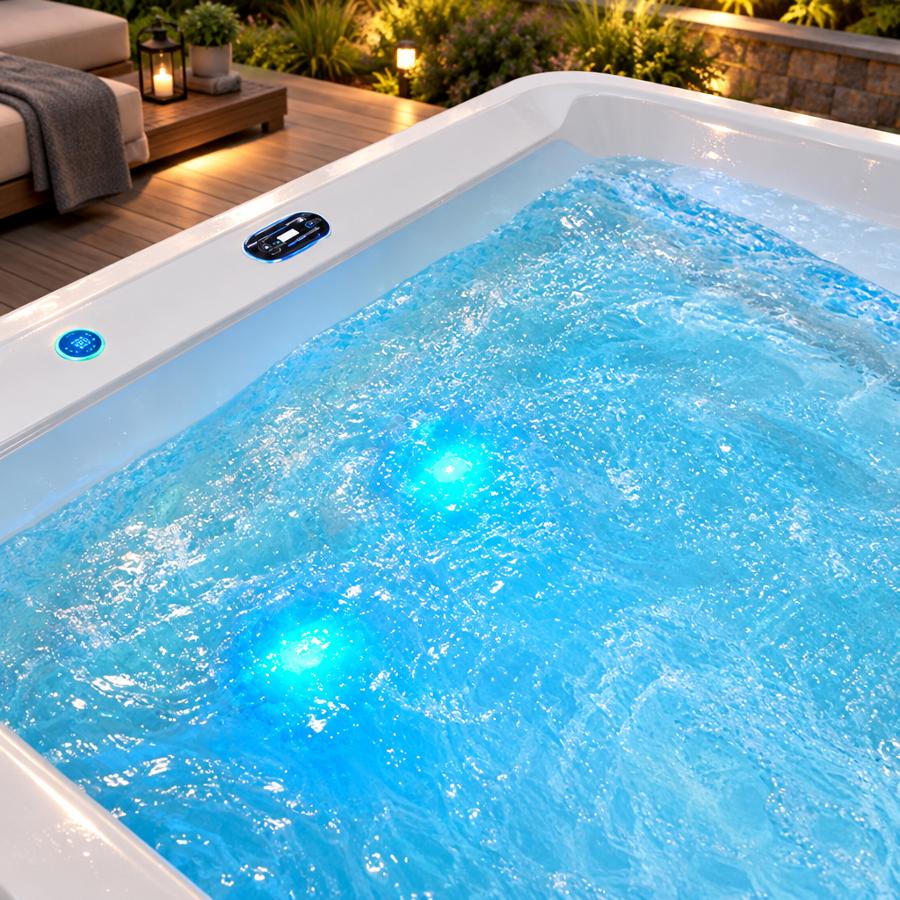
The central electronic control pack directs the heater, cycling pumps, diagnostic temperature sensors, and filtration schedules. Standardized keypad platforms, such as Balboa, Gecko, or modern integrated systems like the KL2022 smart keypad, provide clear error readouts and intuitive temperature programming. Proprietary, unbranded micro-controllers often prove difficult to troubleshoot when a temperature sensor drifts out of calibration.
Many spas use a skimmer and cartridge filter to remove suspended debris, but filtration and heater-flow arrangements vary by model. Confirm the VS-303L flow path in the manufacturer’s manual. Ozone or UV-C systems may supplement the primary sanitizer, but they do not replace routine disinfectant and pH testing. Their functions and effectiveness depend on the specific equipment and operating conditions.
Warranty Realities and After-Sales Support
When reviewing hot tub warranties, watch out for tiered and prorated coverage terms. A manufacturer might advertise an extended warranty term, but reading the fine print often reveals that only the bare acrylic shell structure is covered for that full period. Plumbing unions, electric heaters, and mechanical pump seals typically carry shorter warranties of one to three years.
Verify whether warranty labor must be performed by a certified dealer or if the manufacturer works with third-party service networks. Clear access to replacement jet inserts, circuit boards, and custom-fit covers matters long after the initial factory warranty expires.
3. Practical Pre-Purchase Checklist: Measuring Your Space and Infrastructure
Site Clearance, Delivery Pathways, and Load Calculations
Moving a rigid acrylic tub from a flatbed delivery truck into a backyard requires careful advance planning. Hot tubs travel on their sides using specialized dollies, meaning a spa measuring 35 inches deep requires sufficient continuous lateral clearance through gates and around building corners.
Calculating total load capacity is essential when placing a spa on elevated decks or suspended timber platforms. Water weighs roughly 8.34 pounds per gallon (1 kilogram per liter). Combining the dry weight of the hot tub, a full water basin, and adult occupants quickly yields substantial surface loads, requiring an engineer or licensed builder to assess elevated structural integrity.
Map the Delivery Path: Walk the entire route from the driveway to the foundation, measuring narrow passages between walls, gas meters, downspouts, and low-hanging tree branches.
Verify Vertical Headroom: Check that overhanging roof eaves, rain gutters, and building soffits provide sufficient clearance along stairs and tight turning points.
Ensure a Proper Base: Provide a level, adequately supported foundation that strictly meets the spa manufacturer’s installation guidelines and local building rules.
Audit Deck Joist Spacing: Have any elevated deck or suspended platform structurally evaluated by a qualified professional before delivery to confirm load-bearing capacity.
Electrical Supply and Dedicated Breaker Planning
Multi-pump hydrotherapy spas require a dedicated electrical connection configured according to the equipment listing and local electrical codes. Connecting a spa to an existing general household circuit risks overloading breakers and damaging sensitive electronic components. Electrical protection, conduit routing, and disconnect placement must strictly comply with local building regulations and the manufacturer’s installation manual.
Operating dual high-output pumps alongside an electric heating element creates significant peak current draw. The electrical supply must support this total load without dangerous voltage drops that could overheat motor windings. Always hire a certified, licensed electrician to inspect your main service panel, install appropriate GFCI or RCD protection, and certify the connection.
+------------------------------------+       +-------------------------------------+
|      Main Service Panel (Home)     | ----> |   Dedicated Disconnect / GFCI Box   |
| Sized to National & Local Code     |       | Placed per Local Code & Listing     |
+------------------------------------+       +-------------------------------------+
                                                                |
                                                                v
                                             +-------------------------------------+
                                             |       Spa Equipment Pack (Tub)      |
                                             | Controls Heater, Pumps, & Keypad    |
                                             +-------------------------------------+
Drainage, Ventilation, and Environmental Placement
Hot tubs require periodic draining and refilling based on water volume, daily bather load, and ongoing chemical water balance. Gravity drain spigots built into lower cabinet corners empty water slowly and must route safely away from home foundations, basement window wells, and sensitive landscape plantings. A submersible pump can speed up this process, draining a medium-sized spa basin efficiently.
Spas placed in enclosed sunrooms or sunken deck pits require dedicated mechanical ventilation and drainage sumps. Trapped moisture accelerates wood rot, rusts hardware, and damages nearby structural framing. Leaving open clearance around the equipment bay panel ensures technicians can access pumps and union fittings without having to dismantle surrounding decking.
4. Case Evaluation: Engineering Analysis of the Victoria Star VS-303L
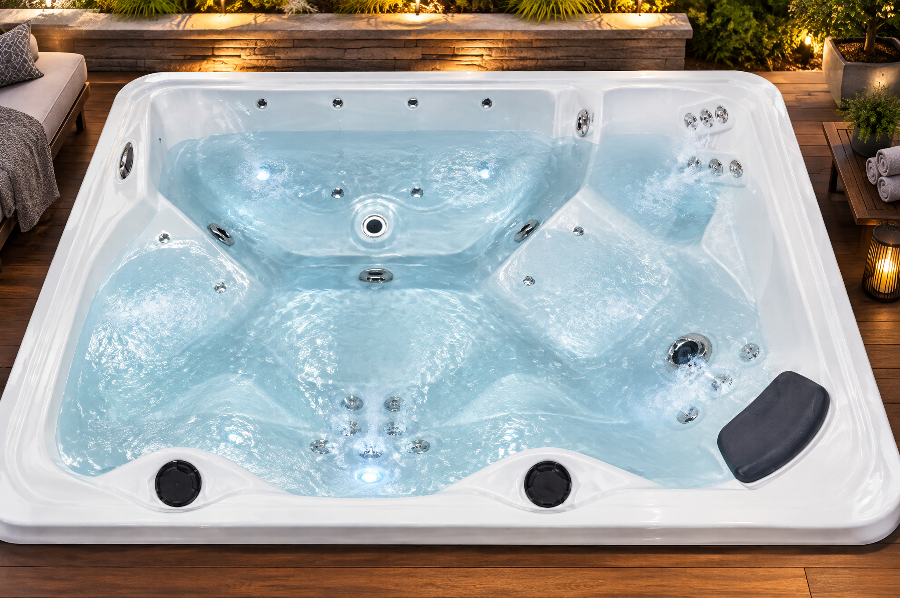
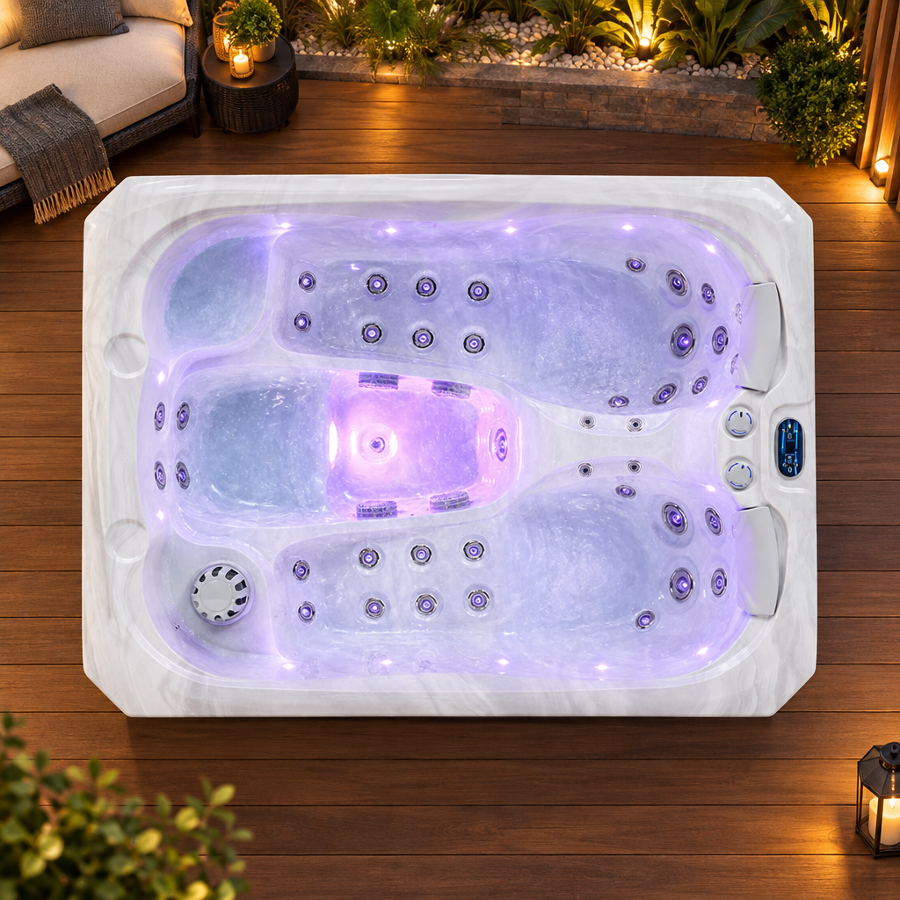
For us at Victoria Star, manufactured under Foshan Gaoming Shiyi Sanitary Ware Technology Co., Ltd., designing high-performance spas means focusing directly on real-world engineering and functional layout. The VS-303L model illustrates how balanced dimensions, modern cabinetry, and strategic pump sizing work together to provide targeted hydrotherapy within a compact footprint.
Physical Dimensions and Ergonomic Layout
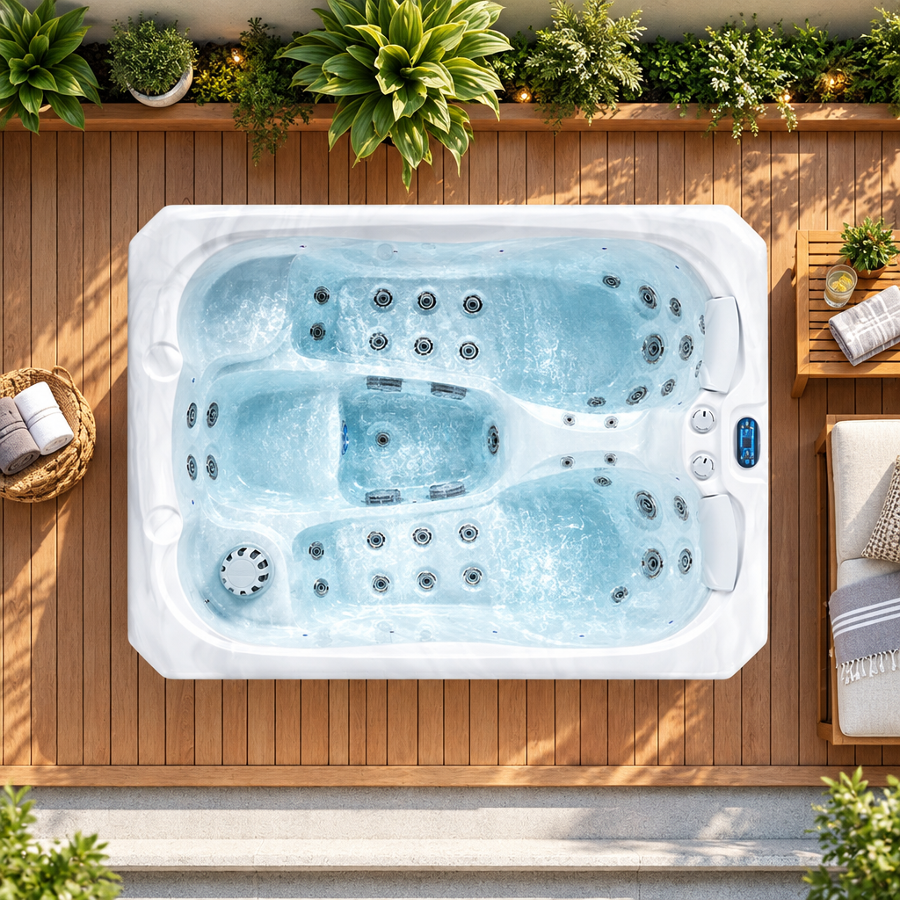
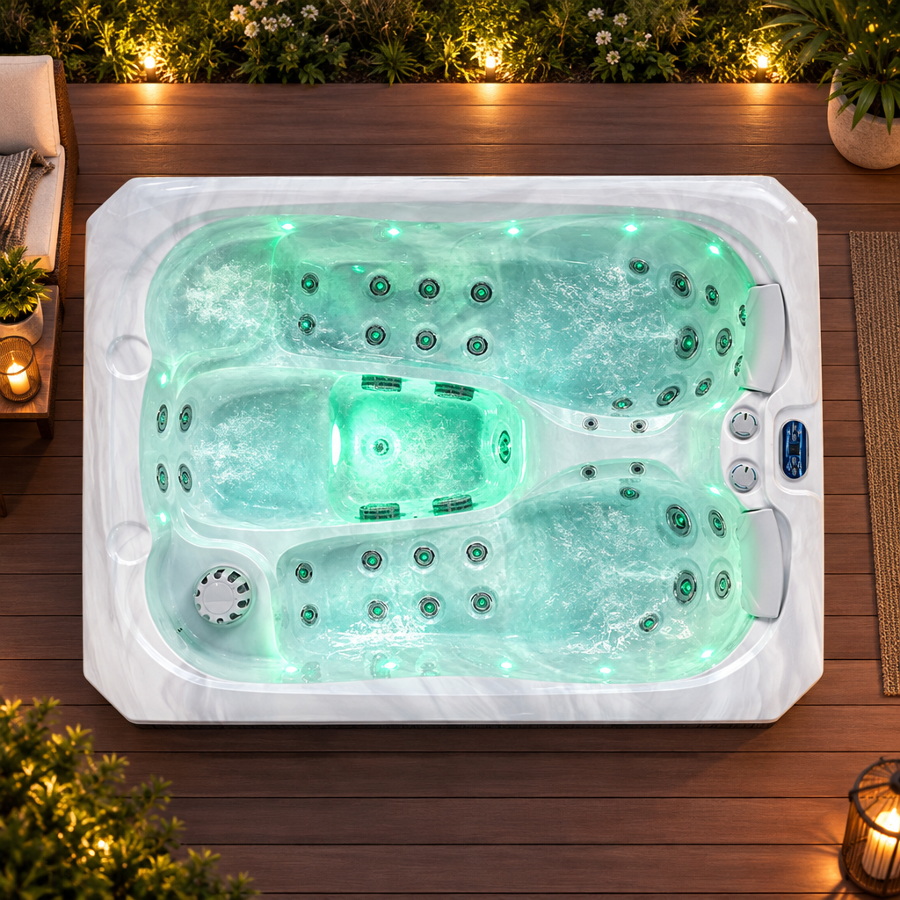
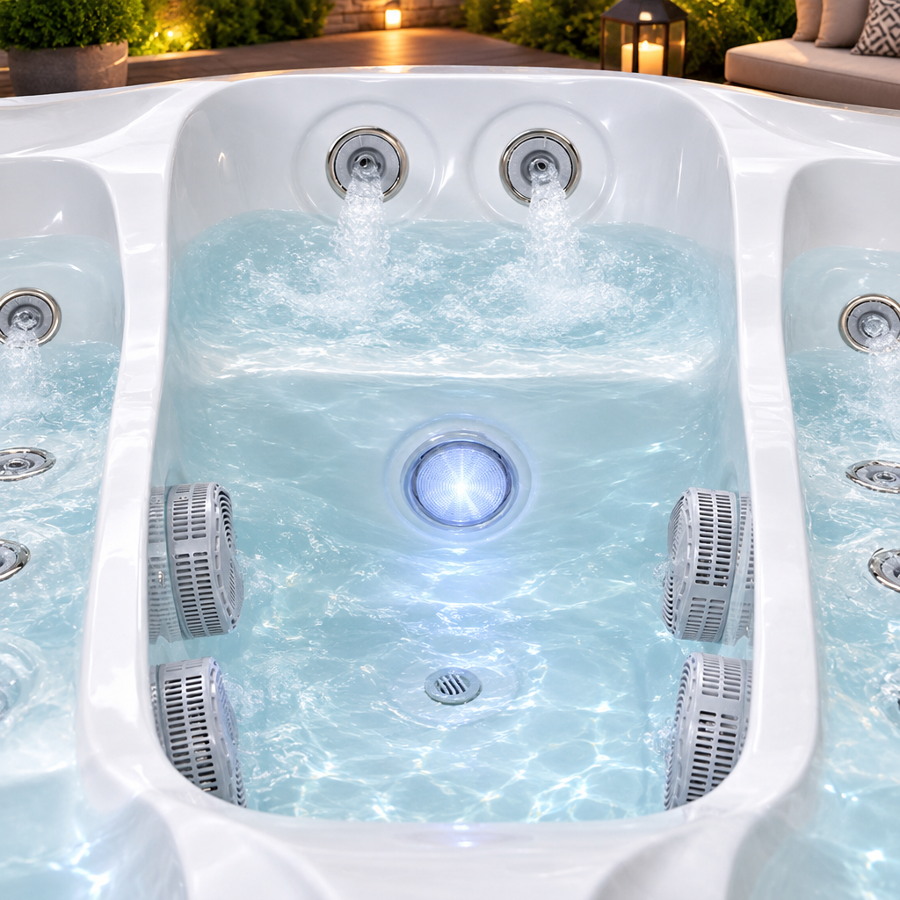
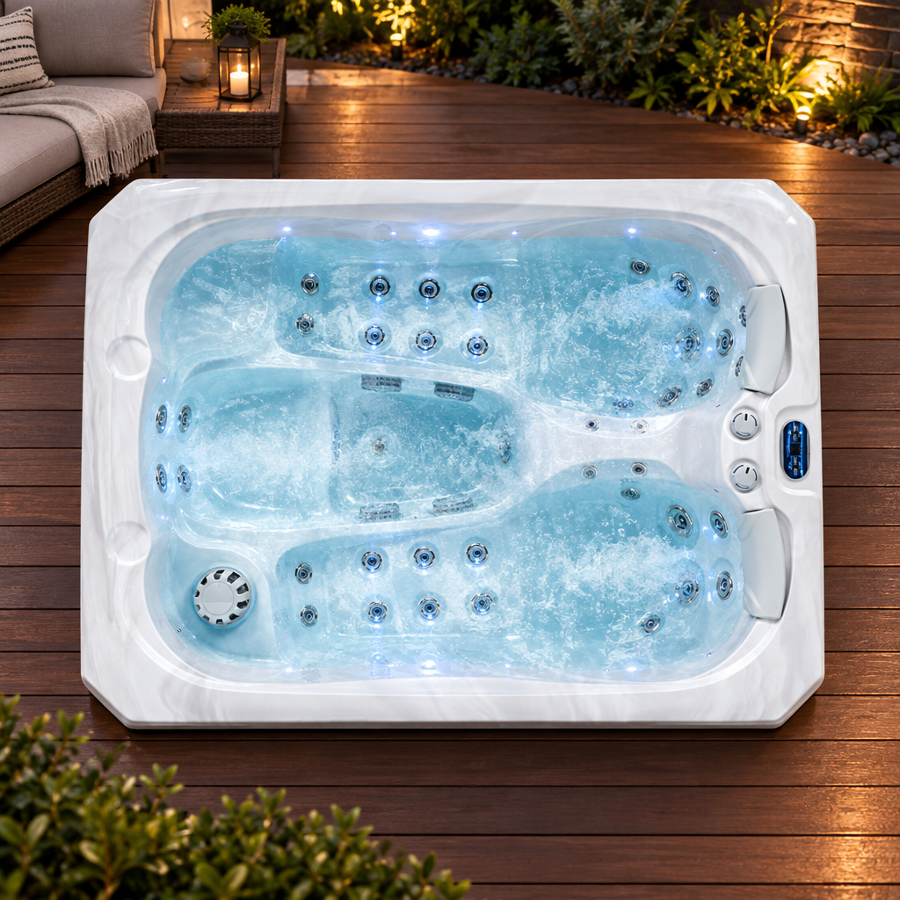
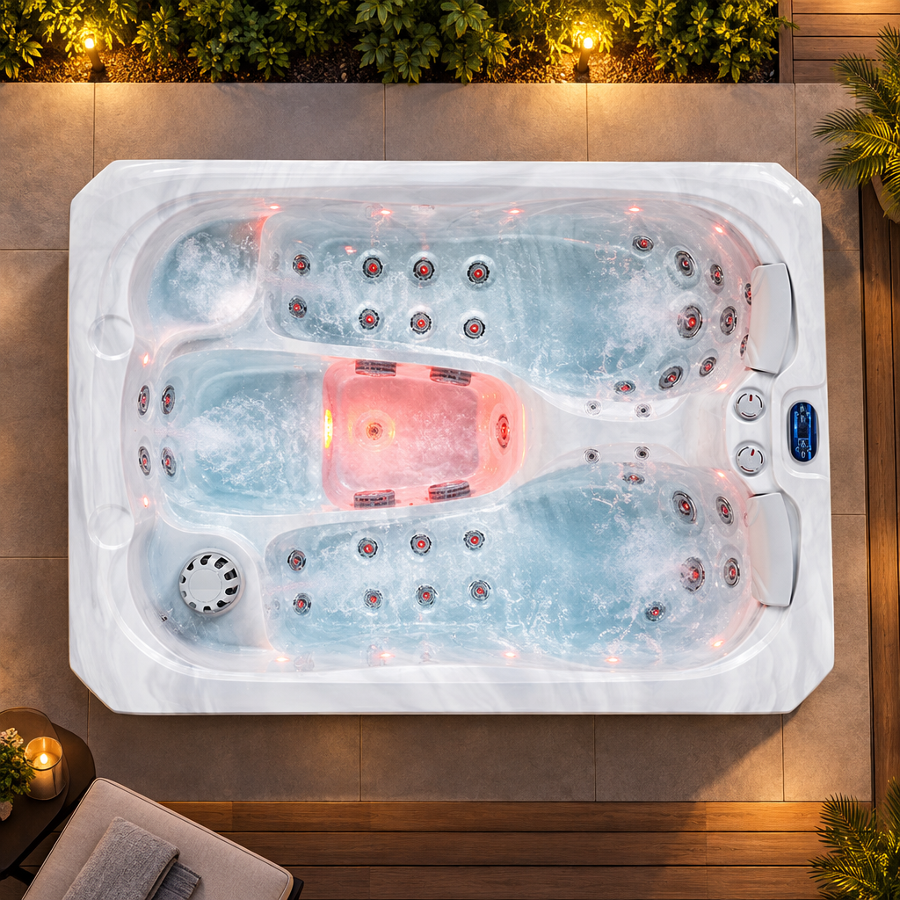
The VS-303L measures 2,150 mm in length, 1,600 mm in width, and 900 mm in depth (approximately 7′ × 63″ × 35″). Rather than cramming four or five shallow seats into this footprint, the design focuses on an ergonomic layout built around two full-length hydrotherapy loungers and one deep bucket seat.
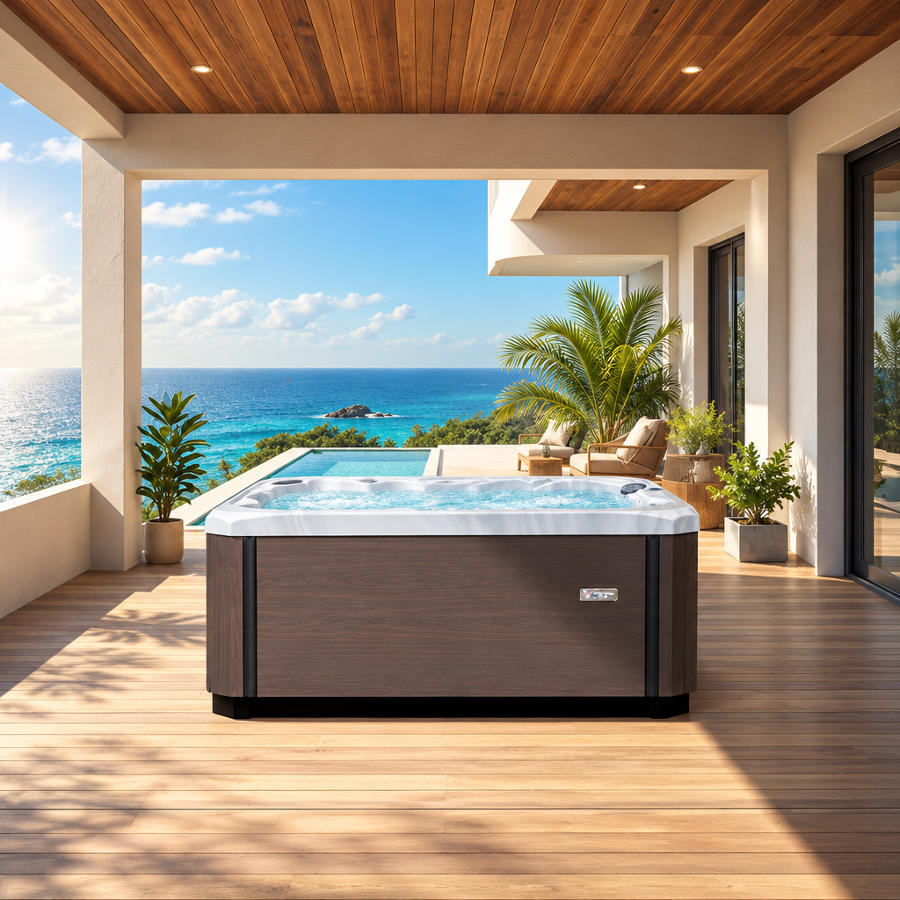
This configuration provides two loungers and one contoured seat within a three-person layout; users should verify legroom and body fit before purchase. According to manufacturer specifications, the unit features an acrylic shell in the Porcelain color option, enclosed within an aluminum-plastic cabinet skirt. Cabinet color options are Platinum and Midnight, designed to integrate cleanly with modern patio designs.
Technical Specifications and Component Breakdown
The table below details the published technical specifications and hardware components of the Victoria Star VS-303L as reported by the manufacturer:
Engineering Parameter
Manufacturer Specification Details
Model Designation
VS-303L Luxury 3 Seater Hot Tub
Exterior Dimensions
2,150 mm × 1,600 mm × 900 mm (approx. 7′ × 63″ × 35″)
Seating Configuration
3 Persons (1 Contoured Deep Bucket Seat + 2 Full Loungers)
Hydrotherapy Jet Count
43 Hydrotherapy Jets
Massage Water Pumps
2 × 2.0 Horsepower
Dedicated Circulation
1 × 0.35 Horsepower Pump
Heater Assembly
1 × 3.0 kW Heater
Total Power Supply
6.25 kW (Verify voltage/breaker with licensed electrician)
Electronic Control
KL2022 with Smart Keypad Control
Sanitation Architecture
Advanced Water Management System
Audio Integration
Bluetooth System with 4 AV Speakers
Cabinet Skirt Finishes
Aluminum-Plastic Skirt in Platinum or Midnight
Shell Color Option
Porcelain
Hydraulic and Thermal Balancing
The mechanical layout of the VS-303L addresses hydraulic distribution across multiple seating positions. Rather than running a single pump across all 43 jets, the manufacturer equips the unit with two separate 2.0 HP massage pumps. This setup directs water flow through ergonomic seating zones.
The supplied specifications list a dedicated 0.35 HP circulation pump for circulation and filtration. Actual operating schedules and noise performance should be confirmed in the model manual. The 3.0 kW heater works alongside circulation flow to maintain desired water temperatures as water circulates through the filtration system.
Ideal Application Scenarios
The VS-303L fits into private garden patios, compact residential decks, and luxury hospitality retreats where space efficiency is prioritized. With its published 6.25 kW total power supply, owners should verify specific input voltage, circuit ampacity, and local disconnect requirements with a certified electrician prior to final placement.
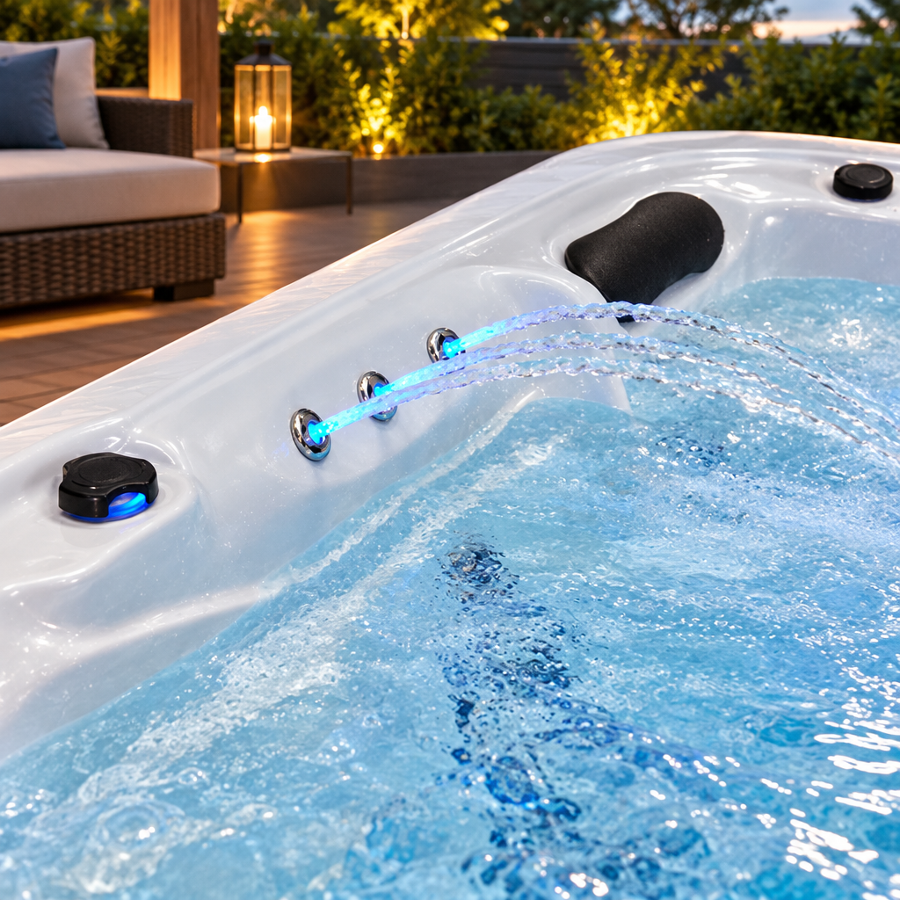
For vacation rental owners and private hosts, the smooth acrylic shell in the Porcelain color option and integrated perimeter LED lighting create an inviting evening atmosphere. The built-in four-speaker Bluetooth audio system lets bathers stream music directly from mobile devices, turning small outdoor spaces into private wellness retreats.
5. Debunking Common Marketing Claims in Spa Shopping
Jet Count Inflation vs. Dynamic Hydrodynamic Performance
High jet counts are an easy marketing metric to advertise, but cramming 80 or 90 jets onto an undersized pump leads to disappointing water pressure. Water takes the path of least resistance. Without proper diverter valves and balanced manifold tubing, jets closest to the pump surge while distant footwell nozzles barely trickle.
A properly engineered spa uses varied jet nozzle sizes matched to targeted muscle areas. Directional jets relieve localized neck tension, while wider-orifice swirling jets work larger muscle groups. Quality hydrotherapy relies on high flow volume (gallons per minute) and balanced line pressure rather than simply maximizing the number of jet faces.
"Maintenance-Free" and "Whisper-Quiet" Assertions
No hot tub is entirely maintenance-free or completely silent. Rotating impellers, moving water, and electric heating elements are bound by the laws of physics. Noise depends on pump design, flow rate, installation, and cabinet construction. The manufacturer describes the VS-303L circulation system as low-noise, but no decibel measurement is provided.
Claims of "zero-chemical, maintenance-free water care" should also be viewed with skepticism. Modern multi-stage filtration, ozone systems, and UV lamps sanitize water effectively, but they do not replace standard chemical testing. You still need to monitor sanitizer levels, balance pH, and regularly clean filter cartridges to keep your spa water safe and balanced.
Wellness vs. Medical Claims: Setting Realistic Expectations
Relaxing in warm, buoyant water offers clear physical and mental benefits. Immersion in heated water promotes peripheral vasodilation, temporarily relieves joint stiffness, and eases tight muscles after intense workouts. These comfort benefits are why many homeowners add hot tubs to their evening wellness routines.
However, hydrotherapy is not a cure for chronic medical illnesses. Be wary of manufacturers who claim their spas can cure arthritis, permanently eliminate chronic insomnia, or treat metabolic disorders. Quality hot tubs offer soothing, temporary relief and everyday relaxation, but they are not certified medical devices.
6. Water Chemistry, Thermal Safety, and Operational Best Practices
Sanitation and Water Balance Fundamentals
Keeping hot tub water balanced protects both bathers and internal equipment. Maintaining warm water temperatures creates an environment where bacteria can multiply rapidly if sanitizer levels fall. According to CDC guidance for hot tub water safety, free chlorine should be maintained between 3.0 and 10.0 ppm, or bromine between 4.0 and 8.0 ppm, while always adhering to local health regulations and manufacturer instructions.
Water pH directly affects sanitizer efficacy and prevents surface scale accumulation. Keeping your pH between 7.2 and 7.8 protects skin comfort, preserves acrylic surfaces, and shields heating elements from corrosive scale. Rinse pleated filter cartridges regularly with clean water, and treat them periodically with a dedicated filter degreaser according to manufacturer maintenance schedules.
Public Health and Safe Operating Temperature Guidelines
According to public health guidelines from the U.S. Centers for Disease Control and Prevention (CDC), hot tub water temperatures should never exceed 104°F (40°C). Prolonged soaking in excessive heat can lead to hyperthermia, dizziness, fainting, or heat exhaustion.
Follow Conservative Soaking Guidance: Users should follow posted safety instructions, leave the water immediately if feeling dizzy or overheated, and consult a healthcare professional when medical conditions, pregnancy, or medication may affect hot-tub use.
Keep Sanitizer Active: Never enter water with zero detectable sanitizer residual, as this increases the risk of waterborne pathogens such as Legionella or Pseudomonas.
Maintain Hydration: Drink plenty of cool water before and after soaking, and avoid combining high-temperature hydrotherapy with heavy alcohol consumption.
Keep the Cover Latched: Fasten child-safety tie-down straps whenever the tub is not in use to retain heat and prevent unattended entry.
+-------------------------------------------------------------------------+
|               RECOMMENDED WATER CHEMISTRY OPERATING RANGES              |
+------------------------------------+------------------------------------+
| Parameter                          | Target Operating Range             |
+------------------------------------+------------------------------------+
| Free Chlorine Residual (CDC)       | 3.0 - 10.0 ppm                     |
| Bromine Residual (CDC)             | 4.0 - 8.0 ppm                      |
| Water pH Level (CDC)               | 7.2 - 7.8                          |
| Total Alkalinity (General Example) | 80 - 120 ppm (verify per manual)   |
| Calcium Hardness (General Example) | 150 - 250 ppm (verify per manual)  |
| Maximum Water Temperature (CDC)    | 104°F (40°C)                       |
+------------------------------------+------------------------------------+
7. Step-by-Step Framework for Choosing Your Spa
Follow this structured evaluation process to choose the ideal spa for your home:
Define Realistic Budget Boundaries: Calculate the total project cost upfront. Include the base hot tub price, professional electrical installation, foundation preparation, delivery logistics, and anticipated monthly heating costs.
Select the Right Seating Layout: Decide between an open-bench social design and a hydrotherapy-focused lounger layout. If you prioritize targeted massage over hosting large groups, choose an ergonomic dual-lounger design like the VS-303L.
Audit Your Home Utility Infrastructure: Check your main home breaker panel to confirm spare electrical capacity. Consult a licensed electrician to verify the circuit ampacity, local code rules, and safety disconnect requirements.
Inspect Mechanical Components: Look for standard, field-serviceable components. Ensure the spa uses recognized control systems (such as the KL2022 platform), standard plumbing fittings, and durable exterior cabinet skirting.
Review Written Warranty Terms: Ask the dealer or manufacturer for full, unedited warranty documentation. Pay close attention to exclusions, freight charges on warranty replacement parts, and local technician labor coverage.
FAQs (Frequently Asked Questions)
What makes a brand the best hot tub brand for small spaces?
The best hot tub brand for small spaces uses an efficient internal layout that optimizes every square inch of the footprint. Look for deep contoured seats, integrated vertical plumbing, and high-performance multi-pump setups within a sub-8-foot frame. Efficient designs avoid shallow, cramped seating while maintaining robust electrical configurations for reliable year-round heating.
How do dual loungers compare to traditional bucket seating?
Dual loungers provide dedicated, full-body ergonomic support from neck to calves, allowing two bathers to recline simultaneously without bumping knees. In contrast, traditional bucket seats prioritize upright posture, easier entry and exit, and more flexible legroom for groups. Choose loungers if your primary goal is muscle recovery, or opt for bucket benches if you prioritize open, social seating.
What electrical setup is required for a 6.25 kW multi-pump spa?
A spa with a 6.25 kW total power rating requires an electrical supply verified by a licensed electrician. Exact circuit requirements, including operational voltage, wire gauge, and breaker ampacity, must be determined directly from the model’s technical nameplate, manufacturer manual, and locally adopted electrical codes.
Does a high jet count directly translate to stronger massage pressure?
No, jet count alone does not determine massage intensity. True hydrotherapy pressure depends on the ratio of pump flow capacity to the total number, size, and layout of jet orifices. The VS-303L is specified with 43 jets and two 2.0 HP massage pumps, but delivered massage intensity depends on the complete hydraulic design, controls, and operating conditions.
How often should spa water be tested and completely drained?
Test disinfectant residual and pH at least twice daily, and more often when the spa is heavily used, while following the manufacturer’s instructions and local requirements. Complete drain and refill intervals depend directly on total spa volume, average bather load, and water balance indicators. Always follow the manufacturer’s recommended maintenance schedule and public health replacement formulas.
What maintenance is required for composite and aluminum-plastic skirts?
Composite and aluminum-plastic skirts require far less maintenance than natural wood cabinets. They do not require periodic chemical sanding, staining, or sealing. Simply wash down the exterior panels periodically using mild soap and clean water to remove airborne dust, pollen, and mud splatters, keeping the cabinet looking clean with minimal effort.
Conclusion: Making an Evidence-Based Choice
Finding the best hot tub brand comes down to looking beyond marketing buzzwords and evaluating real engineering. Focus on solid shell construction, durable weather-resistant composite cabinetry, balanced multi-pump hydraulics, and service-accessible electrical controls. Taking the time to audit your available site space, foundation strength, and breaker panel capacity ensures a smooth, trouble-free installation.
By comparing physical specifications—such as the ergonomic dual-lounger layout, dedicated circulation pump, and 43-jet hydraulic balance seen in models like the Victoria Star VS-303L—you can make a more informed choice about hydrotherapy layout, installation requirements, maintenance, and potential operating costs. Long-term durability and energy performance should be confirmed through the manufacturer’s warranty, service documentation, insulation details, and tested energy data.
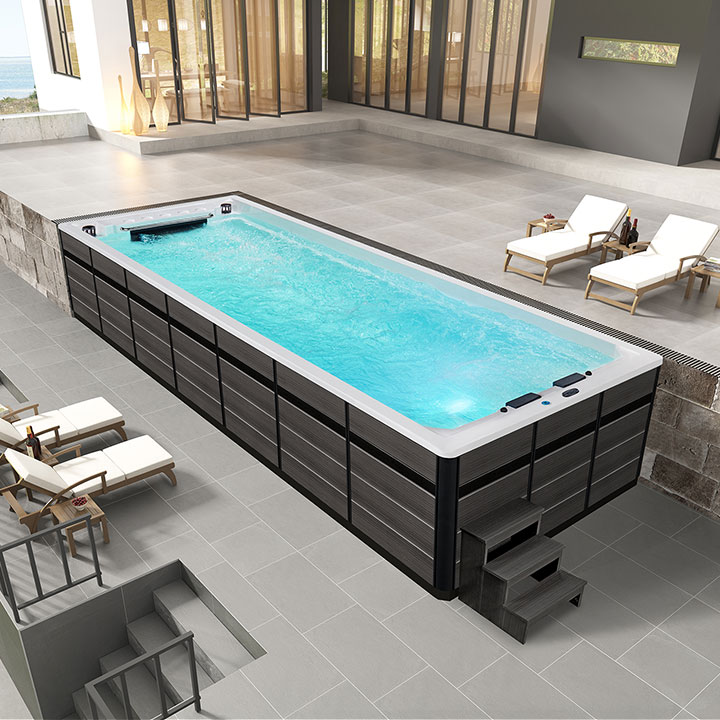
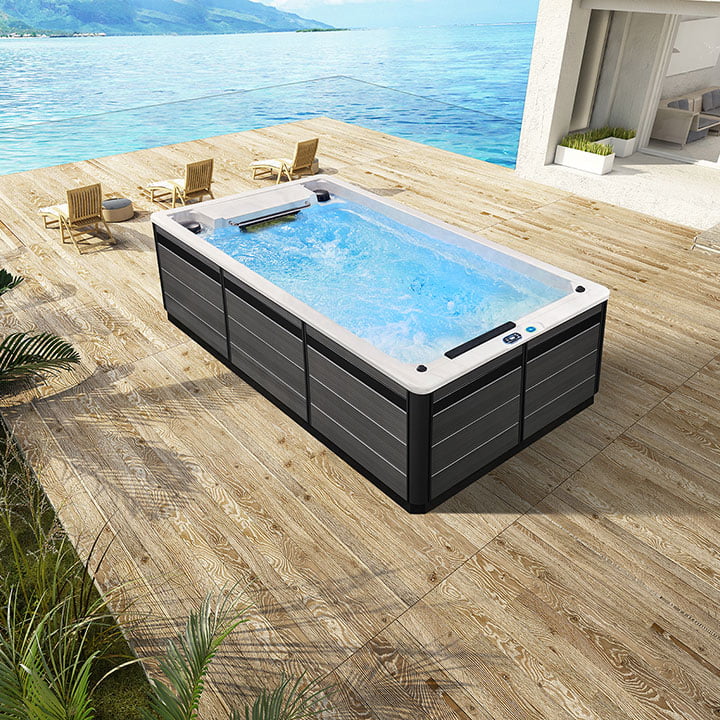
Victoria Star Swim Spa offers the perfect balance between exercise and relaxation, whether you want to swim for fitness or relax in the spacious seating.
Victoria Star Swim Spa offers the perfect balance between exercise and relaxation, whether you want to swim for fitness or relax in the spacious seating.