Benefits of a Swim Spa: Fitness, Recovery, and Everyday Living
Home / News / Benefits of a Swim Spa: Fitness, Recovery, and Everyday Living
November 07, 2026
Exploring the tangible benefits of a swim spa reveals why compact aquatic systems have become a practical alternative to full-sized inground swimming pools. Modern homeowners frequently encounter space constraints, high excavation expenses, and limited seasonal utility when planning residential installations. By combining adjustable counter-current swimming with ergonomic hydrotherapy seating, a swim spa delivers continuous exercise, targeted muscular relief, and year-round recreation within a manageable footprint.
Water-based training removes the mechanical impact typical of road running and weightlifting, making daily activity accessible to individuals recovering from joint strain or seeking balanced cardiovascular conditioning. A swim spa functions as an aquatic treadmill, allowing continuous swimming strokes without interruption from turns or shallow boundaries.
What Is a Swim Spa and How Does It Function?
The Mechanics of Continuous Counter-Current Swimming
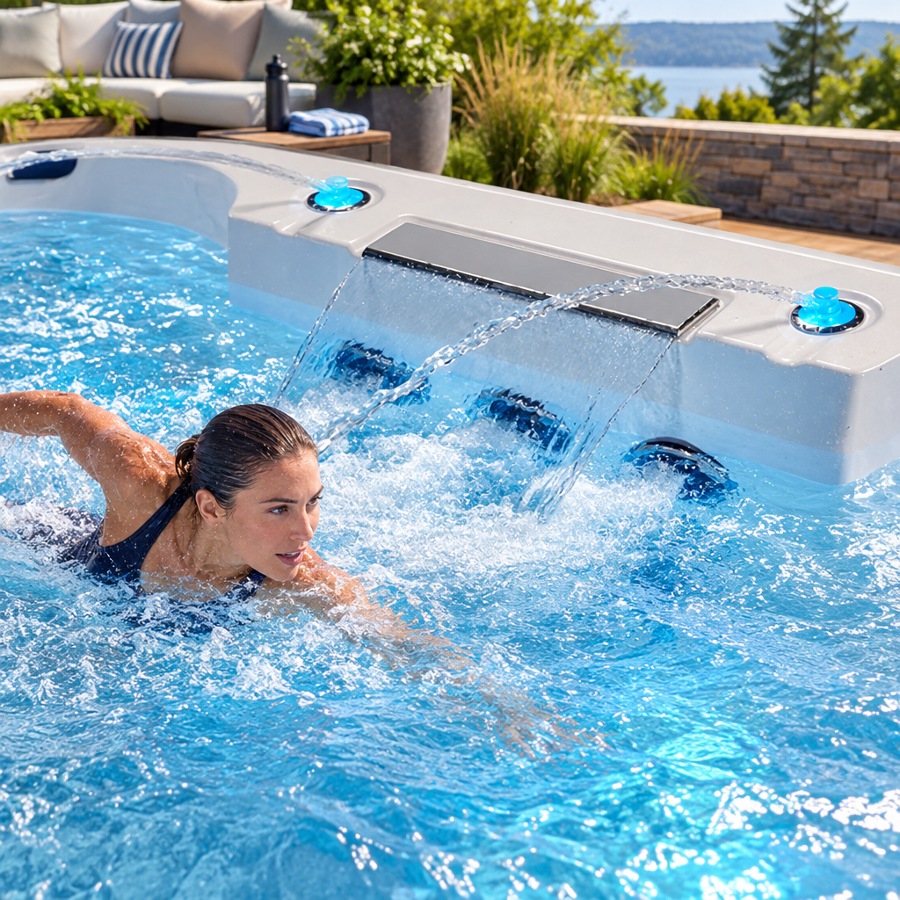
A swim spa generates a focused volume of moving water against which a swimmer strokes continuously. Rather than traveling down a pool lane, the swimmer remains stationary while the water moves beneath and around the body. This continuous flow is produced by specialized pumps and high-volume nozzles designed to minimize excessive surface turbulence.
By adjusting the pump output and nozzle direction, users can tailor the speed to match steady endurance training, interval sprints, or gentle recovery drills. Because the swimmer never touches a wall, stroke rhythm and breathing cadence remain uninterrupted throughout the entire session.
Dual-Zone Architecture: Bridging Athletic Training and Hydrotherapy
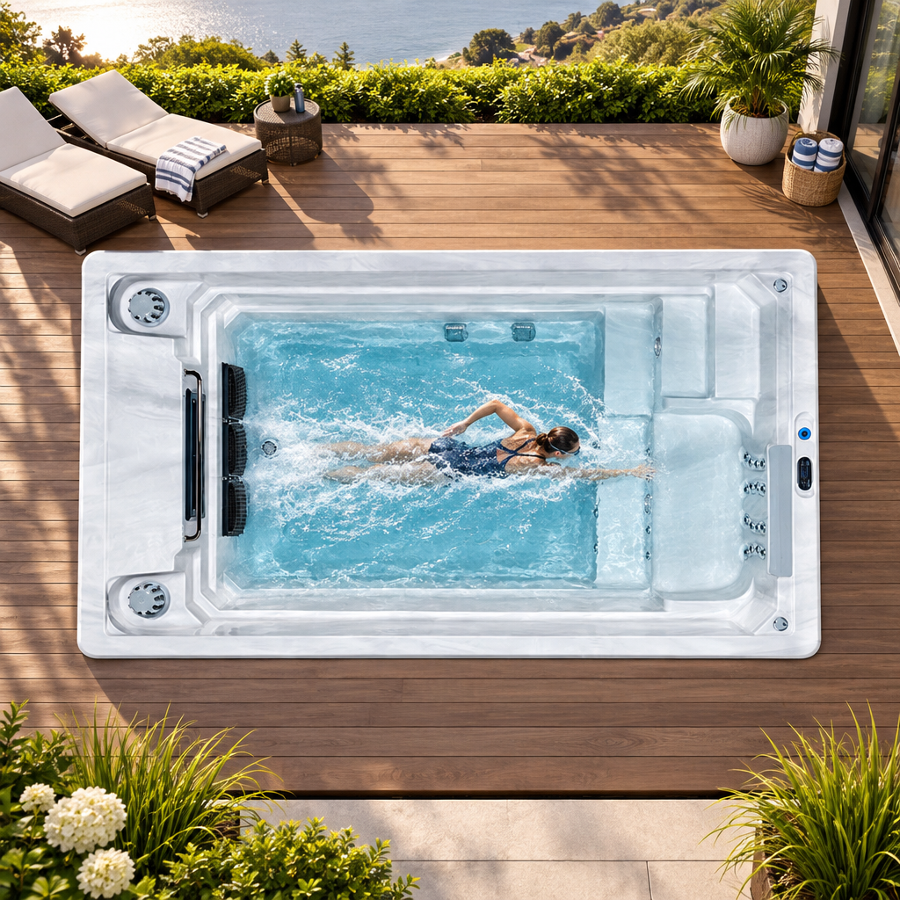
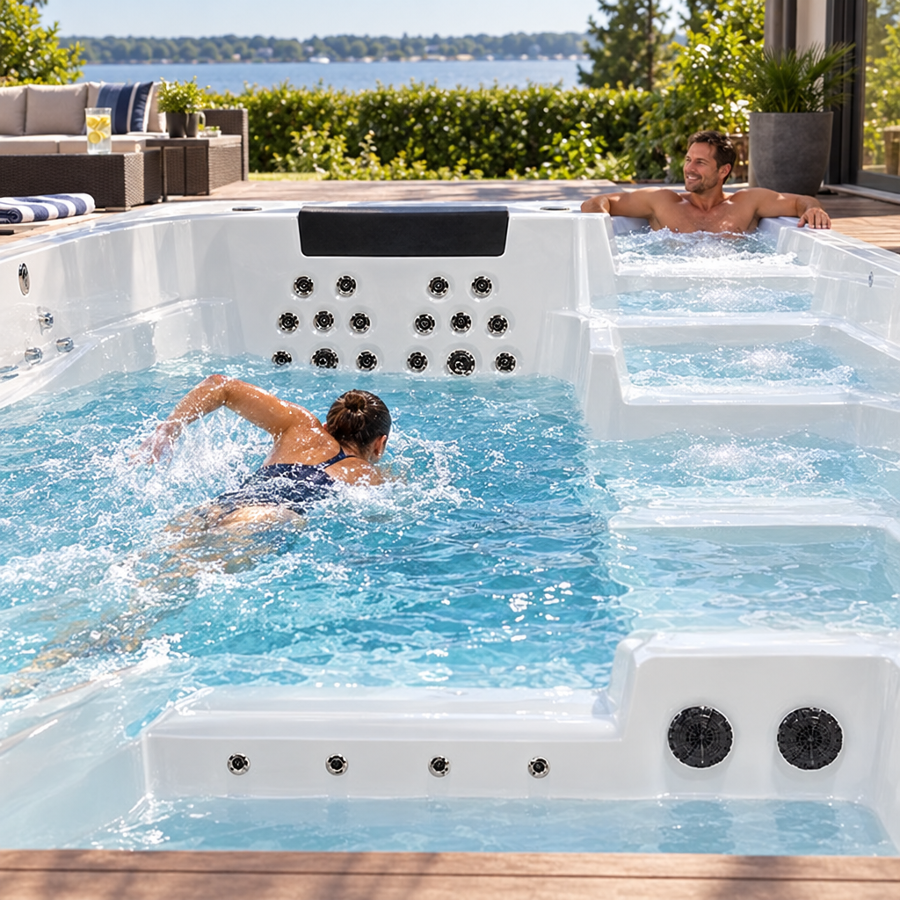
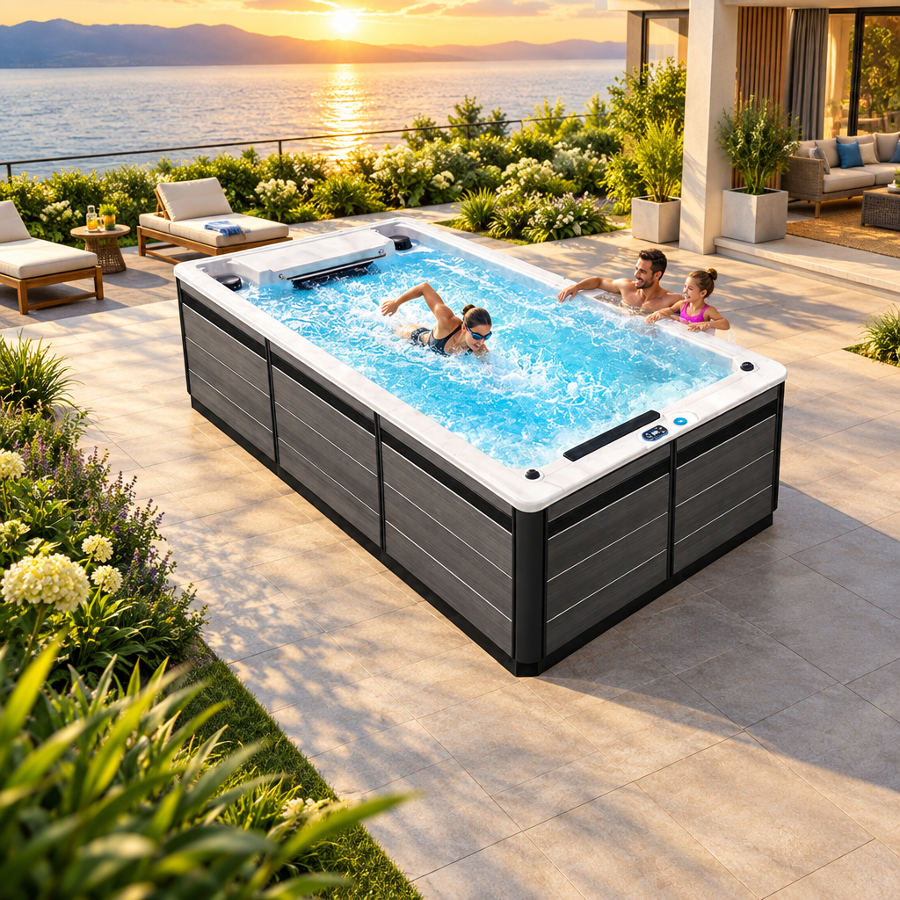
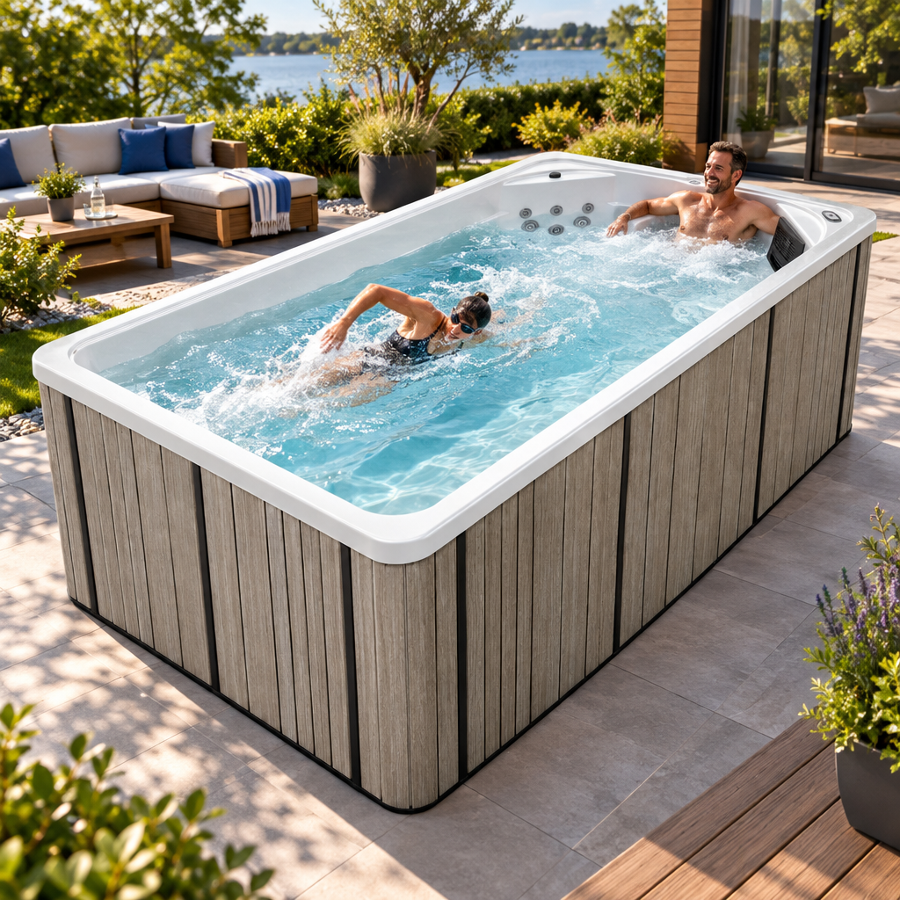
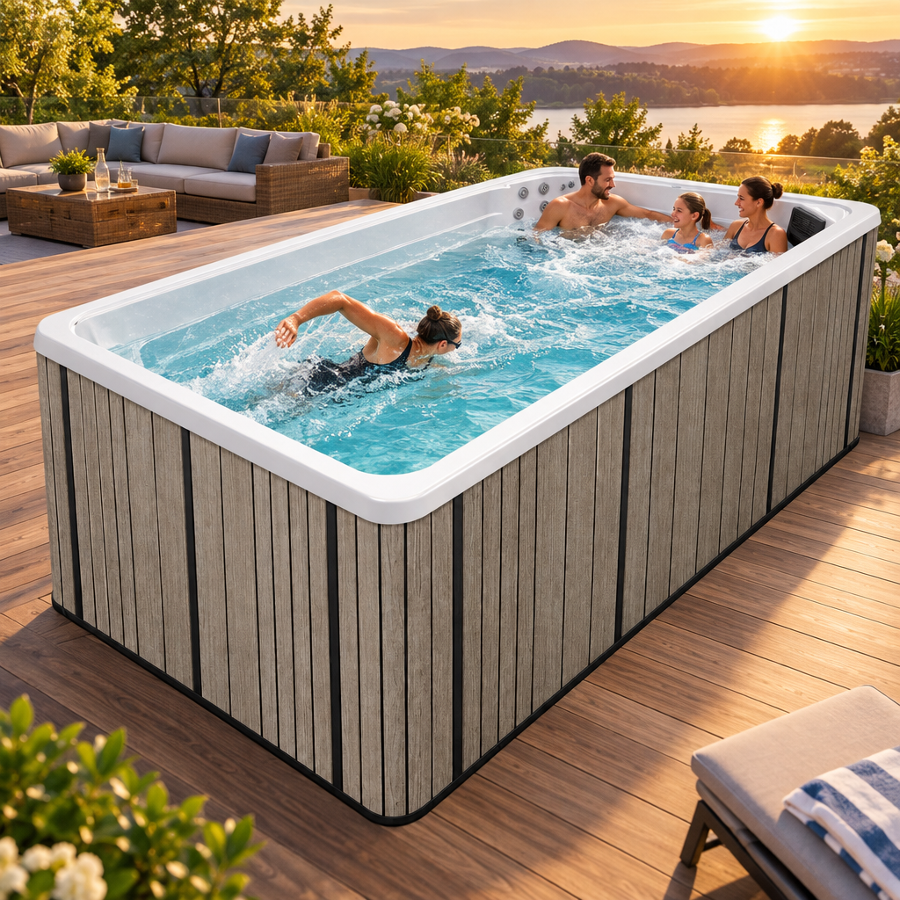
Unlike dedicated lap tanks that serve only athletic conditioning, many swim spa designs integrate partitioned or tiered zones dedicated to recovery. One end of the vessel houses the current-generating swim machinery and an open swim corridor. The opposing end frequently features contoured seating fitted with hydrotherapy jets.
This architectural arrangement transforms the unit into an exercise tank and a restorative spa in a single footprint. Users can transition immediately from aerobic swimming to passive warm-water massage without switching equipment or adjusting separate water bodies.
Primary Distinctions Between Swim Spas, Plunge Pools, and Traditional Lap Pools
Traditional swimming pools demand substantial yard space, often requiring considerable continuous clearance for standard lap workouts. Compact plunge pools fit smaller yards but generally serve for dipping or relaxation rather than stroke exercise. Swim spas resolve this dilemma by using hydrodynamic currents to provide continuous swimming in place within a self-contained structure.
The functional profile and spatial requirements vary across these aquatic installations, as outlined in this direct comparative overview:
Feature
Traditional Lap Pool
Plunge Pool
Residential Swim Spa
Installation Type
Extended on-site civil excavation
Compact on-site or preformed basin
Self-contained modular vessel
Continuous Swimming
Yes (relies on laps and wall turns)
Typically no; depends on design and installed equipment
Yes (stationary counter-current flow)
Hydrotherapy Jets
Rare / Separate plumbing installation
Occasional / Varies by model
Integrated seating in many models
Cold-Climate Usability
Commonly seasonal in cold regions
Commonly seasonal in cold regions
Some models may support year-round use; performance depends on insulation, cover, weather, and power
Relative Water Volume
High volume across full vessel length
Low to moderate basin volume
Compact engineered reservoir (e.g., 4,500 L in the GT-300 model)
Core Benefits of a Swim Spa for Daily Fitness
Stationary Lap Swimming Without Flip Turns
Turning at a pool wall interrupts the kinetic chain of a stroke and alters pacing. For open-water swimmers and everyday fitness enthusiasts, uninterrupted swimming builds muscular endurance across the shoulders, lats, and core. A stationary swim current demands continuous stabilization, preventing the momentary coasting that occurs after a wall push-off.
Swimmers can concentrate fully on technical form, such as hand entry angle and body roll, because the fixed visual reference points along the spa floor keep the body centered. This focused positioning enables deliberate stroke correction that is difficult to sustain over long public pool laps.
Hydrodynamic Buoyancy and Low-Impact Joint Conditioning
Buoyancy reduces weight-bearing stress on the body, with the exact degree of relief depending directly on immersion depth. Mayo Clinic notes that standing in waist-deep water reduces effective body weight by about 50 percent, while neck-deep immersion can offset approximately 90 percent of body weight. This buoyant unloading provides noticeable relief for joints and bones during movement.
Muscles engage against water resistance without the abrupt mechanical shocks generated by pavement or treadmills. For individuals managing excess weight or physical rehabilitation, this buoyant environment fosters consistent movement routines without excessive joint irritation.
Resistance Training Beyond Swimming: Water Walking and Aquatic Aerobics
A swim spa is not restricted to standard freestyle or breaststroke routines. The continuous current serves as an adjustable resistance wall for low-impact water walking, jogging, and lateral lunges. Walking against a gentle current activates core stabilizers, glutes, and hip flexors without requiring heavy free weights.
Using basic aquatic dumbbells or resistance bands anchored to spa handrails expands the functional versatility of the basin. The natural viscosity of water provides accommodating resistance, meaning the harder a user pushes, the greater the resistance encountered, ensuring smooth, self-regulated exertion.
Supporting Established Aerobic Activity Benchmarks at Home
Public health agencies, including the CDC, recommend that adults complete at least 150 minutes of moderate-intensity aerobic physical activity per week alongside regular muscle-strengthening exercises. Having immediate, private backyard access eliminates travel barriers, crowded public lanes, and restrictive facility schedules.
A 20-minute daily session can contribute toward the weekly target; adults generally need at least 150 minutes of moderate-intensity aerobic activity per week, and the session must reach the relevant intensity to count. Because water temperature can be adjusted to balance metabolic output with personal comfort, users maintain higher exercise consistency throughout the seasons.
Hydrotherapy and Post-Workout Recovery
Targeted Hydrodynamic Massage via Ergonomic Jet Placement
Muscle tissue undergoes fatigue during rigorous cardiovascular or resistance training. The hydrotherapy section of a swim spa utilizes water jets mixed with air to deliver mechanical stimulation to tension-bearing muscle groups across the upper back, lumbar region, hamstrings, and calves.
Ergonomically contoured seats help keep the body comfortably positioned while water streams target common areas of physical tightness. This mechanical massage can promote localized comfort and ease postural stiffness accumulated during hours of desk work or demanding physical labor.
Warm-Water Immersion for Easing Daily Muscular Fatigue
Warm-water hydrotherapy has long been utilized to encourage relaxation and relieve transient muscular tension. Immersing the body in heated water can provide soothing comfort to stiff limbs, promoting systemic relaxation and helping down-regulate the nervous system after a demanding day.
This gentle thermal soaking encourages tissue flexibility and temporarily eases everyday stiffness. When incorporated into an evening routine, warm-water immersion can contribute to an overall feeling of physical calm, though individual effects on relaxation and sleep quality vary.
Distinguishing Comfort Features from Medical Treatments
While warm-water soaking and water-based movement provide noticeable comfort, it is essential to distinguish mechanical relief from clinical medical cures. Hydrotherapy jets and buoyancy soothe tight muscles and reduce joint load during activity, but they do not reverse structural joint degeneration or cure underlying spinal pathologies.
Users experiencing severe musculoskeletal disorders, cardiovascular conditions, or acute inflammation should treat swim spa sessions as supportive wellness activities rather than primary medical treatments. Consulting a licensed physician ensures that water temperature and exercise intensity align safely with individual health profiles.
Lifestyle, Usability, and Space Efficiency
Maximizing Backyard Utility Within a Compact Footprint
Traditional swimming pool construction often claims substantial backyard real estate, requiring perimeter setbacks and dedicated landscape restructuring. Swim spas, measuring between 12 and 19 feet in length, occupy a fraction of that area while preserving space for patios, gardens, and outdoor seating.
This compact envelope makes them suitable for contemporary suburban lots where property lines limit oversized civil works. The self-contained structure requires no extensive underground plumbing runs across the yard, preserving lawn integrity and outdoor layout flexibility.
Thermal Insulation, Hard Covers, and Four-Season Accessibility
In cold climates, unheated inground pools often have a brief operational window limited to a few summer months. Closing, winterizing, and reopening an unheated inground pool demands recurring seasonal effort and expenditure.
Many swim spa models incorporate insulated cabinets and heavy-duty thermal locking covers designed to retain water temperature efficiently. Year-round use depends on the specific spa model, cover quality, regional weather conditions, and uninterrupted electrical service.
Shared Household Utility: Multi-User Fitness and Soaking Zones
A household rarely shares identical wellness goals simultaneously. One family member may want an aerobic cardio workout, another might prefer a quiet warm-water soak, and children often seek a safe, splash-friendly aquatic environment.
A swim spa accommodates these diverse interests without requiring separate installations. While the current generator provides an athletic challenge at one end, the adjacent bench or lounge seating allows family members to sit comfortably in the same water body.
Comparative Assessment: Swim Spa vs. Traditional Inground Pool vs. Hot Tub
Installation Footprint, Structural Groundwork, and Site Preparation
Installing an inground swimming pool involves on-site excavation, ground reinforcement, structural framing or shotcrete application, and finishing work. The duration of this process depends heavily on weather conditions, site access, and local municipal permitting schedules.
A swim spa arrives on site as a factory-assembled, pre-plumbed modular vessel. Groundwork focuses on creating a stable, level load-bearing foundation pad, followed by crane or slide placement onto the prepared surface according to engineering specifications.
Water Volume, Chemical Balancing, and Fill-Cycle Considerations
A full-size residential swimming pool contains a substantial body of water, frequently requiring significant maintenance time and chemical volumes. Balancing chemicals across such large volumes requires corresponding quantities of sanitizer and balancing agents, along with regular maintenance cycles.
Swim spas contain significantly less water, with specific capacities determined by product design. This smaller reservoir simplifies sanitation cycles, requires lower total chemical mass, and makes periodic draining and refilling a manageable project that can be completed in a few hours.
Year-Round Temperature Regulation and Energy Management Factors
Attempting to maintain a large pool volume at comfortable swimming temperatures during cold seasons consumes substantial fuel or electricity, which often leads owners to shut systems down as temperatures fall.
Swim spas leverage compact water volumes, enclosed structural cabinets, and fitted thermal covers to manage heat loss. Thermostatically controlled electric heaters can maintain chosen water temperatures across varying seasonal ambient conditions, though actual efficiency and heating capacity depend on ambient weather, cabinet engineering, and cover integrity.
Real-World Engineering Example: The Family Fitness Swim Spa GT-300
Structural Envelope, Dual Seating, and 4,500-Liter Water Capacity
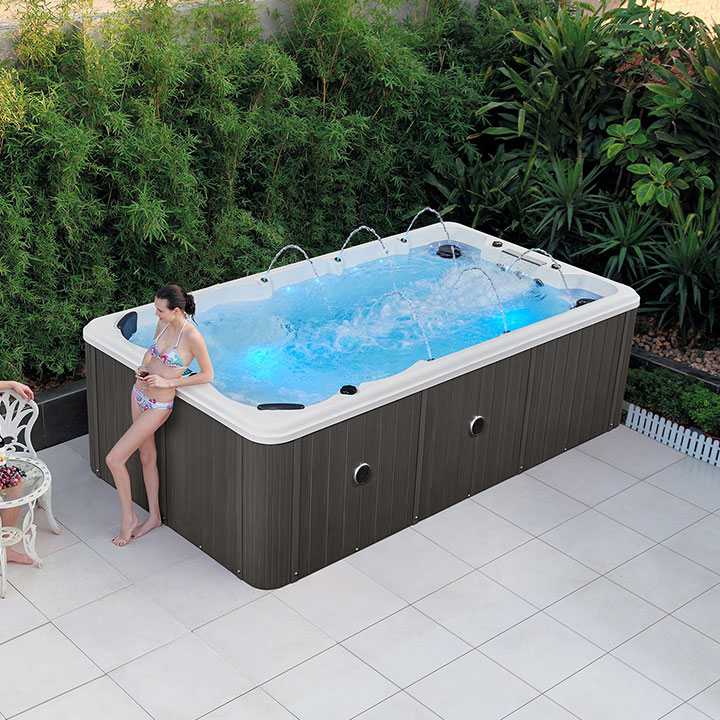
To understand how these principles function in an engineered residential model, examine the Family Fitness Swim Spa GT-300 manufactured by Victoria Star, our brand at Foshan Gaoming Shiyi Sanitary Ware Technology Co., Ltd. The GT-300 is built with overall dimensions of 3880 mm × 2200 mm × 1250 mm (13′ × 87″ × 49″) and holds a manufacturer-rated water capacity of 4,500 liters.
This specific envelope balances swimming stroke clearance with manageable water volume. The manufacturer describes the GT-300 as having a Porcelain marble-textured acrylic shell, featuring two dedicated hydrotherapy seats with dark padded headrests opposite the swim channel, allowing multiple users to relax or train simultaneously.
Current Generation: 2800W Motor and Directional Resistance Flow
At the core of the GT-300 training corridor is a dedicated swimming training system powered by a 2800-watt motor operating on a 380V electrical configuration. The manufacturer lists this system with an adjustable, multi-speed water current designed to accommodate users ranging from beginners to advanced fitness enthusiasts.
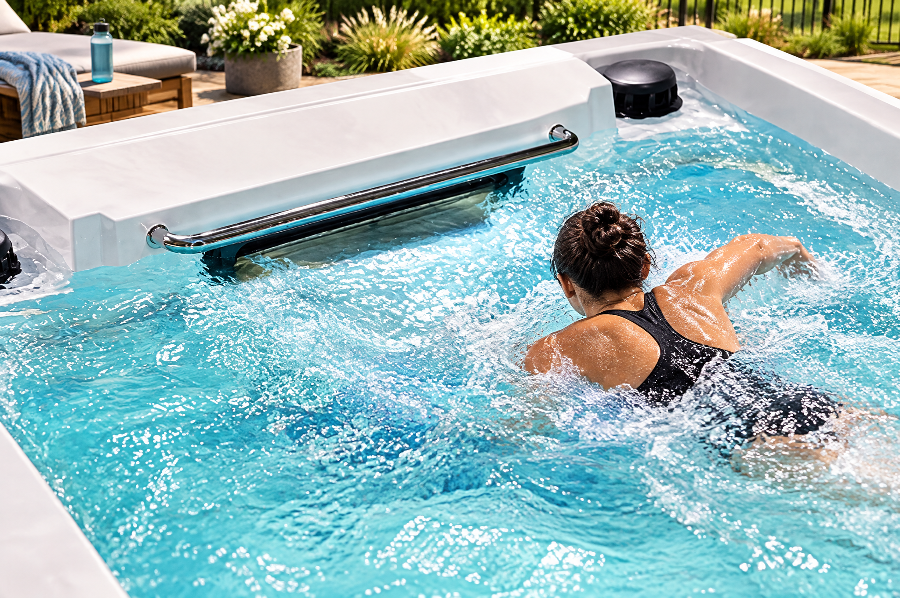
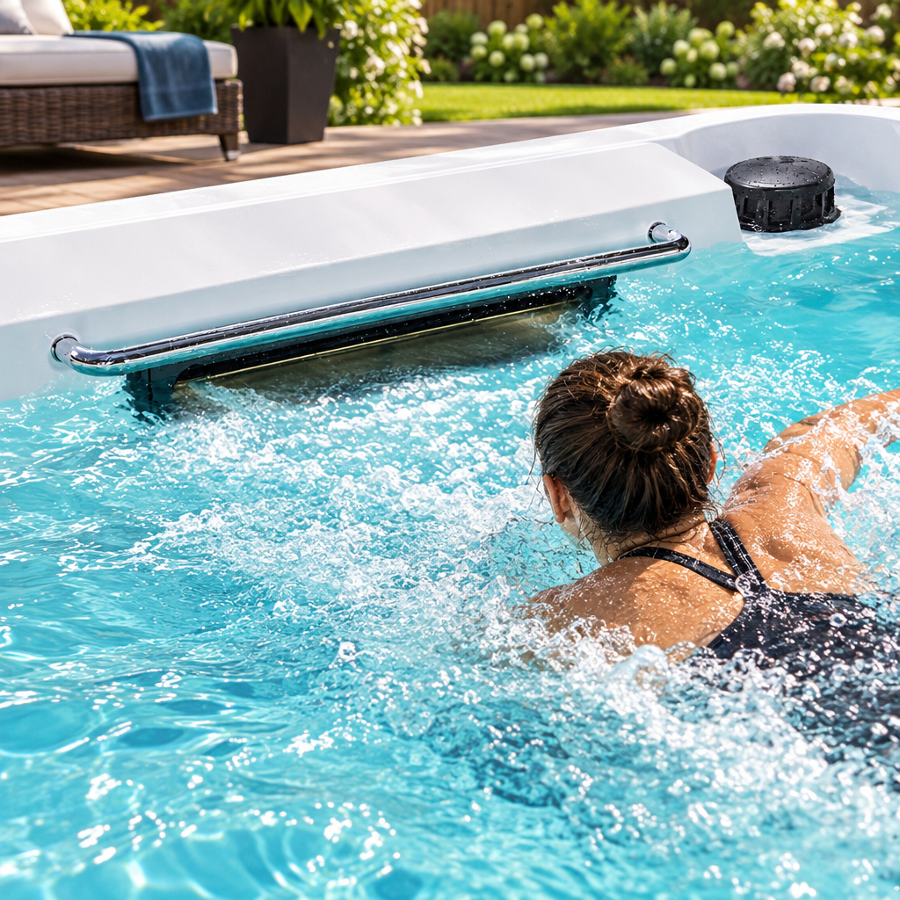
A polished stainless steel grab bar mounted directly above the current discharge assists swimmers during warm-ups, kicking drills, and resistance balance exercises. The actual challenge provided by the current depends on the selected speed setting and the swimmer’s individual conditioning and stroke mechanics.
Hydrotherapy Array: 24 Precision Jets Across Dedicated Seating
For muscle recovery, the GT-300 incorporates 24 total hydrotherapy jets arranged in targeted anatomical clusters. Driven by a 2 HP water pump and supported by a continuous 1 HP circulation pump, the jets deliver direct hydro-massage to the lower back, mid-thoracic region, waist, and thighs.
The ergonomic contours of each seat cradle the body against jet pressure, allowing buoyant immersion while water streams relieve tension. Cascading ribbon waterfalls and illuminated mini fountain jets contribute soothing acoustic elements that enhance post-workout relaxation.
Digital Controls, Thermal Management, and Shell Architecture
System management on the GT-300 is governed by a KL2020BT touchscreen interface that provides centralized control over water temperature, pump operation, and jet systems. Multicolor LED lighting is integrated into the spa design to illuminate water features and enhance evening usability.
Thermal performance is maintained via an integrated 3,000-watt electric heater coupled with built-in filtration and purification technology specified to support routine water clarity and cleanliness. The spa exterior is framed in composite cabinetry available in Platinum or Midnight finishes, each featuring realistic woodgrain embossing.
Practical Limitations, Siting, and Maintenance Considerations
Foundation Integrity: Load-Bearing Requirements and Site Assessment
A swim spa filled with water and occupants represents a substantial static load. For example, the GT-300’s 4,500-liter water capacity equates to 4,500 kilograms (approximately 9,920 pounds) of water weight alone, excluding the dry weight of the acrylic shell, framing, and bathers.
Placing this equipment on uncompacted soil, shifting pavers, or standard domestic decking can lead to uneven settling and frame strain. Installation requires following the manufacturer’s exact foundation guidelines, which typically include a level, engineered concrete slab assessed by a qualified professional for soil bearing capacity and thickness.
Electrical Line Sizing, Subpanel Capacity, and GFCI Protections
Swim spas draw significant electrical power to run multi-horsepower current pumps, secondary hydrotherapy pumps, and electric heating elements concurrently. The overall power supply requirement can reach 8 kW or higher, often demanding dedicated 230V or 380V multi-phase service depending on local codes.
All electrical connections must pass through a dedicated Ground Fault Circuit Interrupter (GFCI) disconnect switch installed by a licensed electrician. Undersized branch wiring or inadequate home breaker panel capacity can lead to breaker tripping or motor damage.
Water Sanitization Chemistry, Filtration Schedules, and Cover Integrity
Because warm water encourages rapid organic growth, owners must maintain routine sanitization schedules using bromine, chlorine, or compatible mineral oxidation systems. Built-in purification features support filtration, but manual monitoring of chemistry remains essential.
Owners should regularly monitor disinfectant and pH levels according to the spa manual and applicable local health guidance, increasing test frequency during periods of heavier bather load. Cartridge filters should be cleaned and replaced according to the manufacturer’s recommended schedule, adjusting maintenance intervals based on actual usage and water clarity. Maintaining the structural integrity of the insulated cover is equally vital; a damaged or waterlogged cover compromises thermal retention, driving up electrical operating costs.
Child Safety, Perimeter Fencing Standards, and Continuous Adult Supervision
Water safety principles apply identically to swim spas, lap pools, and garden ponds. The Consumer Product Safety Commission (CPSC) emphasizes that barriers, including self-closing and self-latching perimeter gates or certified safety covers, are crucial layers of protection against accidental submersion.
Locking thermal covers should be secured whenever the spa is unattended. Most importantly, mechanical barriers and alarms never replace active, uninterrupted adult supervision whenever minors or vulnerable individuals have access to the aquatic zone.
Decision Framework: Evaluating If a Swim Spa Fits Your Household
Assessing Swimming Style: Recreational Stroke vs. Open-Water Training
Before investing in a swim spa, potential owners must evaluate their fitness goals and physical preferences. Understanding personal routines prevents purchasing equipment that fails to align with everyday household habits.
Define Primary Activity: Clarify whether the vessel will primarily serve endurance stroke training, light aquatic jogging, family recreation, or post-work hydrotherapy soaking.
Evaluate Current Volume: Swimmers seeking intensive training should examine pump horsepower and current jet geometry to ensure the water flow matches their stroke power.
Assess Stroke Mechanics: Swimmers with wide butterfly kicks or wide breaststroke arm paths must ensure the corridor width provides sufficient side clearance.
Balance Water Temperature: Approximate preferences vary by use; swimmers often prefer cooler water (such as 80°F–84°F) during vigorous exercise to prevent overheating, whereas hydrotherapy soaking is commonly enjoyed at warmer levels (such as 98°F–102°F). Follow equipment instructions and consult a doctor if heat sensitivity is a concern.
Calculating Total Cost of Ownership: Purchase, Site Prep, and Power
The purchase price of the swim spa itself represents only one part of the total capital layout. Prospective buyers should assemble an all-inclusive budget before finalizing contracts.
Site Preparation: Excavation, pouring a qualified concrete foundation slab, and installing drainage channels.
Electrical Infrastructure: Trenching conduit, pulling appropriate gauge copper wiring, and installing dedicated subpanels and GFCI breakers.
Delivery Logistics: Transport and local crane or telehandler hire to lift the unit over fences, trees, or rooflines into position.
Recurring Utility Consumption: Monthly electrical draw for maintaining heat and filtration cycles, plus chemical balancing supplies.
Final Selection Checklist: Matching Features to Routine Needs
Selecting the right swim spa requires matching the physical vessel layout to the realistic lifestyle of all household members.
[ ] Verified backyard clearance matches exterior dimensions, including maintenance access panels on all service sides.
[ ] Foundation plan meets local building codes and manufacturer-specified load-bearing guidelines.
[ ] Electrical panel has adequate spare amperage capacity for 8 kW+ dedicated service.
[ ] Current generation system offers adjustable multi-speed flow suitable for household swimmers.
[ ] Local zoning, setback regulations, and safety barrier/fencing ordinances are fully identified.
Frequently Asked Questions
What are the main benefits of a swim spa compared to a standard pool?
A swim spa requires significantly less land area and holds considerably less water than a full-sized inground swimming pool, which makes it faster to install and more economical to heat during cold weather. Its self-contained design integrates both continuous swim currents and hydrotherapy massage seating into a single year-round structure.
Can you get an authentic, challenging swim workout in a swim spa?
Yes, an adjustable counter-current system generates moving water resistance that allows continuous swimming without touching walls or performing flip turns. The manufacturer lists a 2800W swim-training motor for the GT-300; workout intensity and suitability depend on the current velocity settings and individual training goals.
How does water buoyancy reduce mechanical stress on joints?
Buoyancy counteracts gravity in direct proportion to how deeply the body is submerged. Mayo Clinic reports that waist-deep water reduces body weight by about 50 percent, while neck-deep immersion offsets roughly 90 percent. This reduction lessens compressive forces on the hips, knees, and spine during exercise.
Can a swim spa be operated outdoors in sub-freezing winter weather?
Many insulated swim spas can operate outdoors during winter when protected by an insulated thermal cover, integrated heaters, and continuous power supply. Because operating efficiency varies based on local temperatures, insulation design, and wind exposure, owners should follow manufacturer guidance for cold-weather operation.
How much concrete pad foundation support does a swim spa require?
Because the total weight of a filled swim spa easily exceeds 5,000 kilograms, it requires a flat, engineered foundation designed to support high uniform static loads. Owners should consult local building codes and follow the manufacturer’s specific foundation requirements, which generally call for a professionally poured concrete pad.
What maintenance routine is needed to maintain water sanitation?
Maintaining a swim spa requires testing sanitizer levels (such as chlorine or bromine) and pH according to the product manual and local guidelines, with more frequent testing during periods of heavy use. Cartridge filters should be cleaned and replaced according to the manufacturer’s schedule, adjusting frequency for bather load and water clarity.
Is a swim spa safe for households with young children?
A swim spa is a deep body of water that carries real submersion risks. Safety requires installing certified self-latching perimeter barriers, securing locking thermal covers when the unit is not in use, and maintaining constant, uninterrupted adult supervision whenever children are in or near the spa area.
Summary: Balancing the Performance and Commitments of Swim Spa Ownership
Understanding the realistic benefits of a swim spa allows homeowners to make an informed, practical investment in long-term household wellness. By merging continuous cardiovascular training, low-impact joint conditioning, and restorative hydrotherapy massage within an energy-conscious footprint, these systems offer genuine year-round utility that traditional inground pools rarely match. Safe, enduring operation relies on solid groundwork, certified electrical installations, and consistent sanitation routines. When supported by appropriate engineering and diligent maintenance, a swim spa provides an accessible, private aquatic sanctuary tailored to daily fitness and recovery.
Victoria Star Swim Spa offers the perfect balance between exercise and relaxation, whether you want to swim for fitness or relax in the spacious seating.
Victoria Star Swim Spa offers the perfect balance between exercise and relaxation, whether you want to swim for fitness or relax in the spacious seating.