Home / News / Barrel Ice Bath Guide: Practical Engineering, Daily Operations, and Setup Decisions
November 04, 2026
Investing in a dedicated cold water recovery setup often begins with a fundamental design choice between an upright barrel ice bath and an integrated horizontal plunge basin. A traditional upright barrel offers an appealing vertical profile that minimizes floor footprint while delivering deep chest immersion. Navigating the cold water immersion market requires looking past lifestyle imagery to evaluate thermal dynamics, physical clearance, daily water sanitation, and anatomical posture.
Selecting the right cold immersion setup involves understanding structural stability, cooling efficiency, and physiological safety. A compact barrel ice bath outdoor setup can turn a small patio corner into a dedicated recovery retreat. However, vertical submersion presents distinct trade-offs in ingress safety, joint flexion, and mechanical cooling integration compared to elongated recovery tubs. Examining these mechanics enables homeowners and facility operators to make sound purchasing decisions grounded in real engineering requirements.
Understanding the Barrel Ice Bath
What Defines a Barrel Ice Bath in Today’s Market?
In contemporary recovery terminology, a barrel ice bath refers to an upright, cylindrical or rounded vessel engineered primarily for seated or standing vertical immersion. Unlike rectangular tubs that allow an athlete to recline horizontally, an upright barrel prioritizes vertical water column depth over horizontal floor spread. Commercial models range from simple wooden casks and roto-molded polyethylene drums to insulated portable pods.
This format is commonly chosen when available ground space is limited. The compact diameter permits straightforward placement on small residential decks, boutique gym corners, or compact balconies where a full-length horizontal tub cannot physically fit. However, the vertical design creates unique fluid dynamics: water pressure increases progressively toward the bottom. Temperature distribution can vary depending on the vessel’s insulation, circulation design, and ambient conditions.
Upright Immersion vs. Horizontal Reclining: Ergonomics and Hydrostatics
Positioning the human body vertically in cold water alters both ergonomic comfort and hydrostatic fluid pressure. In an upright barrel ice bath, the bather generally sits in an upright tuck or an alert squat position, keeping the knees bent close to the torso. This posture compresses the hip flexors and places modest continuous tension on the core musculature during the immersion window.
Hydrostatic pressure increases with depth. This changes the pressure experienced by submerged body segments, but the practical circulatory effect depends on immersion depth, posture, and individual physiology. Conversely, a horizontal plunge basin allows the user to adopt a more extended position. Different tub designs offer different seating configurations and entry steps. Verify the specific features and dimensions for any model under consideration.
Evaluating Fit: Is an Upright Barrel Right for You?
Scenarios Where a Barrel Footprint Excels
An upright barrel ice bath excels in settings where square footage is at an absolute premium. Urban homeowners with restricted patio areas, secondary balconies, or compact garage gyms frequently discover that a small circular footprint is the only viable option available. Its compact diameter also simplifies moving the unit through narrow side gates, standard domestic doorways, and tight breezeways during initial delivery.
Water volume requirements in a narrow vertical cylinder vary by model. Check the product specifications for actual capacity, as this determines the amount of water to chill initially if you depend on manual ice bags, and it affects draining times during routine flushes. For single users seeking quick, utilitarian post-training submersions without taking up leisure space, the upright barrel format offers a functional, space-conscious solution.
Practical Limitations of the Barrel Format
Despite its footprint advantages, the barrel ice bath introduces notable physical and operational constraints that become apparent during everyday use. Stepping into a tall vertical cylinder requires hoisting a leg over a sidewall that often stands between 750 and 900 millimeters high. Stepping out with shivering, numb feet onto a wet surface presents a genuine slipping hazard unless stable external staging steps and secure grab rails surround the perimeter.
Internal legroom is another frequent bottleneck. Whether a given user achieves complete shoulder coverage depends on the vessel’s internal depth and the user’s seated posture. Taller individuals may struggle to find comfortable positioning without deeply tucking their knees or resting their chin on their chest. Verify internal dimensions before purchasing to ensure the vessel accommodates your height and build.
Barrel Ice Bath vs. Integrated Cold Plunge Tubs
Direct Dimensional and Structural Comparison
Comparing an upright barrel ice bath to an engineered, integrated plunge tub reveals substantial differences in ergonomics, mechanical layout, and structural footprint. The following table contrasts key operational and geometric specifications across both product categories:
Engineering Dimension
Traditional Upright Barrel Ice Bath
Integrated Horizontal Cold Plunge Tub
Typical Footprint
Circular / Oval, varies by model
Rectangular, varies by model
Immersion Posture
Vertical squat, tucked seated, or kneeling
Seated with varying leg extension
Entry & Egress
High-wall step-over or ladder climb
Lower threshold, may include integrated internal entry step
Cooling Method
Manual ice dumping or external chiller hookup
Built-in heat pump or automated compressor loop
Internal Shell
Wood, PVC, or rotational molded plastic
Acrylic or other manufacturer-specified shell material
Water Circulation
Passive fluid or basic external inline hose
Internal brushless circulation pump
Cabinetry
Exposed barrel staves or basic fabric pod
Exterior cabinet panels; ventilation varies by model
Cooling Architecture: Manual Ice Deposition vs. Powered Chiller Units
One defining operational factor in any ice bath routine is how the water reaches and maintains target temperatures. Manual ice loading requires purchasing, hauling, and storing substantial quantities of bagged ice for every single session. In warm conditions, ice may melt relatively quickly, and maintaining a consistent temperature over consecutive days can require repeated additions, depending on the vessel and ambient conditions.
Conversely, an integrated cooling system uses an electric refrigeration cycle to extract heat. For instance, the Outdoor Cold Plunge Tub C02 from Victoria Star incorporates a 900W heat pump system paired with a 54W brushless circulation pump, with a listed power supply specification of 0.954 kW. This automated loop circulates the water without manual hauling. Consult the manufacturer’s product documentation for actual operating performance and temperature-control capabilities.
Comprehensive Selection Checklist for Prospective Buyers
Sizing, Internal Clearance, and Structural Load Planning
Before ordering any cold immersion tub, accurately calculate internal clearance and total loaded structural mass. One liter of water has a mass of approximately one kilogram. Add the dry tare weight of the vessel and the body mass of an adult user to determine the total load on the installation surface. For example, a tub holding 320 liters of water carries 320 kg of water mass alone. Adding a 140 kg dry shell and an 80 kg individual yields approximately 540 kg of total operating mass.
When positioning a tub on an elevated wooden deck, balcony, or raised subfloor, consult a structural engineer to assess the resulting load over the tub’s actual support area. This professional assessment is especially important for decks, balconies, or raised floors. A structural engineer can confirm the surface’s load-bearing capacity and recommend reinforcement if needed to prevent deflection and moisture-related timber decay over time.
Shell Construction, Insulation Layers, and Thermal Retention
Thermal insulation performance determines how hard your cooling system must work and how long water stays cold. Bare wooden staves or single-skin plastic pods lose thermal energy rapidly through their sidewalls, especially under direct sunlight. This passive thermal bleed forces chillers to run continuously or melts manual ice bags within minutes of addition.
High-performance setups incorporate insulated structural components and protective covers. The Outdoor Cold Plunge Tub C02, for example, has an acrylic shell, an exterior cabinet, and includes one cover. A suitable cover can help limit heat gain and evaporation while the tub is idle. Follow the manufacturer’s instructions for the included cover.
Calculating the Real Total Cost of Ownership
A realistic financial assessment extends well past the initial retail price tag of the tub itself. Ongoing operational expenses include electricity consumption, replacement water filtration cartridges, sanitizing chemistry, and routine mechanical wear. Operating a manual barrel with store-bought ice requires purchasing ice for each session. Calculating your actual costs requires checking local ice prices, usage frequency, and session duration.
In contrast, powered chillers and heat pumps trade a higher upfront hardware investment for ongoing electricity costs. Calculating kilowatt-hour rates against the unit’s electrical specifications yields predictable monthly utility expenses. Factoring in water utility bills, replacement inline filters, and protective equipment covers provides a clear, comprehensive ownership model. Compare these operating scenarios against your expected use pattern.
Step-by-Step Purchasing and Verification Workflow
To avoid costly installation surprises, prospective buyers should systematically follow a structured decision workflow before committing capital to a recovery tub:
Measure physical transit dimensions, checking door clear widths, gate clearances, stairwell turns, and patio access corridors.
Calculate the fully loaded wet operating mass, factoring in tub tare weight, maximum water capacity, and the heaviest expected user.
Verify electrical requirements with the manufacturer and a qualified electrician, and confirm that the installation site meets those requirements and applicable local electrical code.
Establish a clean drainage pathway. Check local plumbing and wastewater-discharge regulations and the manufacturer’s drainage instructions before routing discharge to a drain.
Select shell materials engineered for your climate, prioritizing UV-stabilized acrylic and weather-resistant composites over bare timber in exposed areas.
Scientific Perspective on Cold Water Immersion
Recovery Evidence: What Research Validates vs. What Remains Inconclusive
Cold water immersion has been studied extensively across sports medicine, yet broad lifestyle claims often outpace genuine clinical consensus. Systematic reviews in sports science literature confirm that immersing the body in cold water can reduce perceived muscle soreness in some post-exercise settings over 24 to 72 hours. This perceived benefit should be distinguished from proven acceleration of tissue recovery or performance outcomes.
Evidence regarding long-term physical adaptation is more nuanced. Some studies and reviews suggest that repeated cold-water immersion immediately after resistance training may attenuate muscle-protein-synthesis responses and possibly reduce hypertrophy adaptations. The effects on long-term strength remain less certain. Athletes prioritizing hypertrophy may choose to avoid immediate post-resistance-training immersion or discuss timing with a qualified sports professional.
Mental Reset and Subjective Well-Being: Clarifying the Physiological Scope
The noticeable sensory jolt associated with cold immersion stems directly from an acute stress response. Cold exposure can provoke sympathetic nervous system activation, and regular plunge practitioners report varied mood effects including heightened alertness and subsequent subjective calm.
While this response produces genuine shifts in mood and mental clarity, it must not be mischaracterized as a cure for clinical conditions. The practice should be viewed as a disciplined physical stressor that exercises autonomic regulation and mental resilience. Maintaining clear boundaries around these claims prevents the overselling of hydrotherapy as an all-encompassing medical intervention.
Practical Installation, Water Management, and Safety Protocols
Site Foundation, Drainage Geometry, and Outdoor Weatherproofing
A stable, level foundation is mandatory for any outdoor cold plunge installation. An uneven or inadequately supported base may place uneven loads on the unit. Follow the manufacturer’s installation requirements closely. Ideal mounting surfaces include a reinforced poured concrete pad, level pavers set on compacted aggregate, or a structurally engineered timber deck rated for heavy dead loads.
Drainage planning requires equal diligence. Emptying 300 liters of water directly onto topsoil creates mud pits and can undermine adjacent concrete slabs. Locate the tub near an active yard drain, or consult local regulations and the manufacturer’s drainage instructions to ensure proper discharge routing. Follow applicable electrical code and the manufacturer’s electrical installation instructions to ensure safe electrical connections in outdoor zones.
Maintaining Water Hygiene and Sanitization Cycles
Small-volume cold water vessels present distinct water sanitation challenges. Because water temperatures remain low, biological growth occurs more slowly than in a hot spa, but organic debris, body oils, and exfoliated skin cells quickly accumulate. Physical filtration using fine-mesh pleated cartridges removes suspended particulates, but physical filtration cannot kill bacteria or neutralize viruses on its own.
Maintaining clean, safe water requires following the tub and treatment-system manufacturer instructions. Water must be disinfected and monitored with a system appropriate to the unit. Users should shower thoroughly before entering the tub and skim floating surface debris after each session. Consult the manufacturer’s guidance for recommended water replacement intervals based on usage frequency.
Critical Cold Safety: Cold Shock Response and Immersion Guardrails
Sudden entry into cold water triggers the involuntary mammalian cold shock response. This reflex induces immediate gasping, rapid hyperventilation, peripheral vascular constriction, and an abrupt increase in heart rate and blood pressure. Public safety agencies emphasize that even water temperatures between 10°C and 15°C are low enough to trigger this gasp response, creating a sudden drowning hazard if the head dips below the surface.
To minimize physiological risks, follow qualified safety guidance and the manufacturer’s instructions. Key safety considerations include:
Keep the head, neck, and airway entirely above the waterline.
Avoid solo plunge sessions whenever possible, particularly when exploring colder temperatures or longer exposure durations.
Never combine breath-holding protocols or hyperventilation breathing exercises with cold water immersion due to the risk of shallow-water blackout.
Exit immediately if you experience dizziness, uncontrolled shivering, numbness in extremities, or mental confusion.
People with cardiovascular or other relevant health conditions, or who are pregnant, should consult a qualified clinician before cold-water immersion.
Technical Benchmark: Comparing Barrel Geometry to the Outdoor Cold Plunge Tub C02
Published Engineering Profile of Model C02
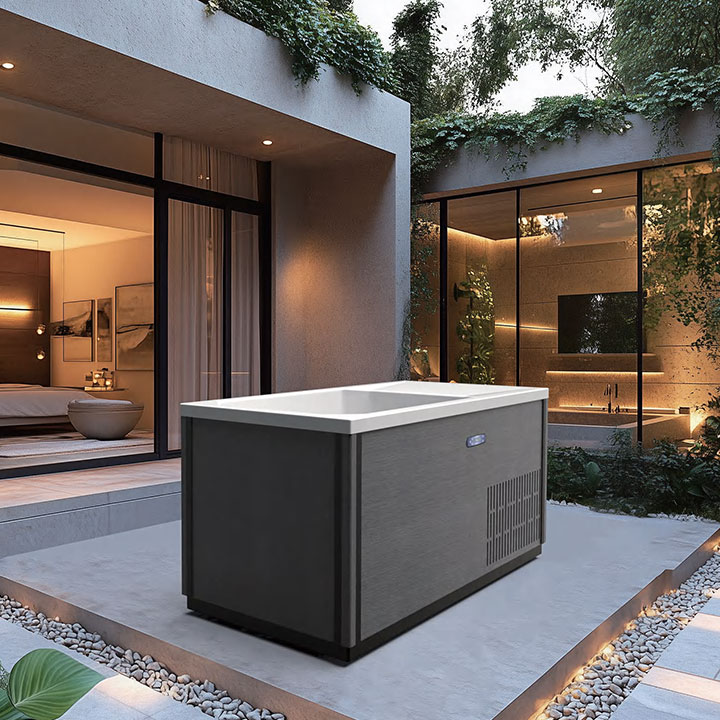
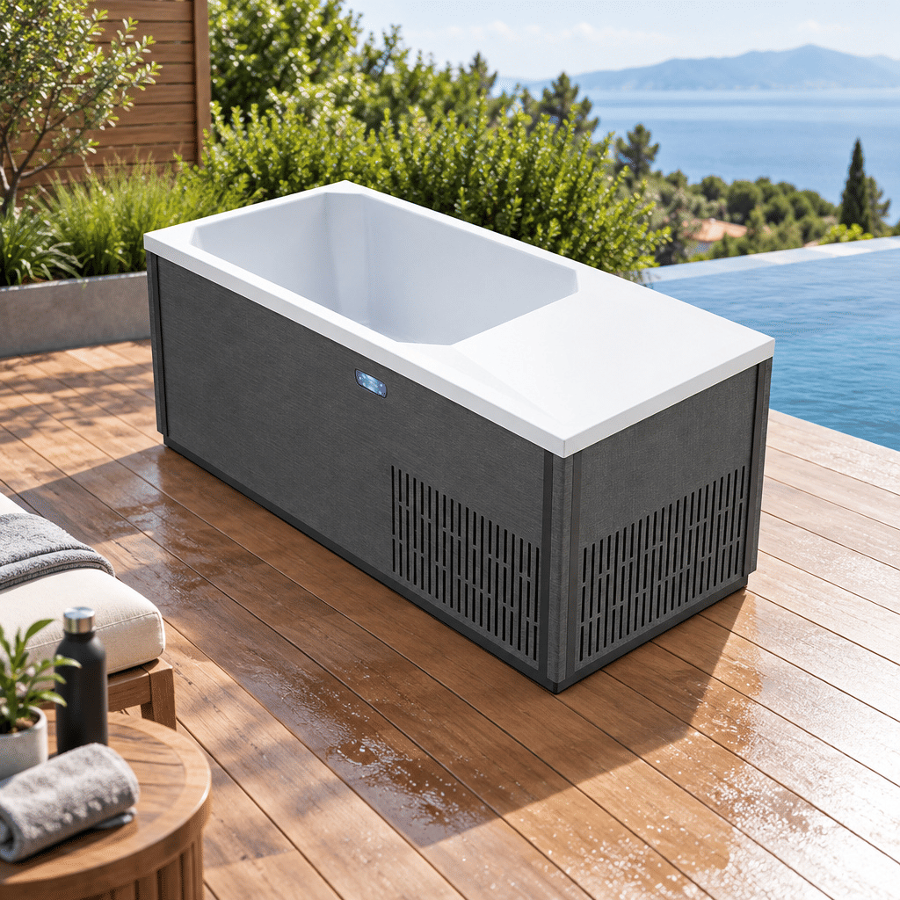
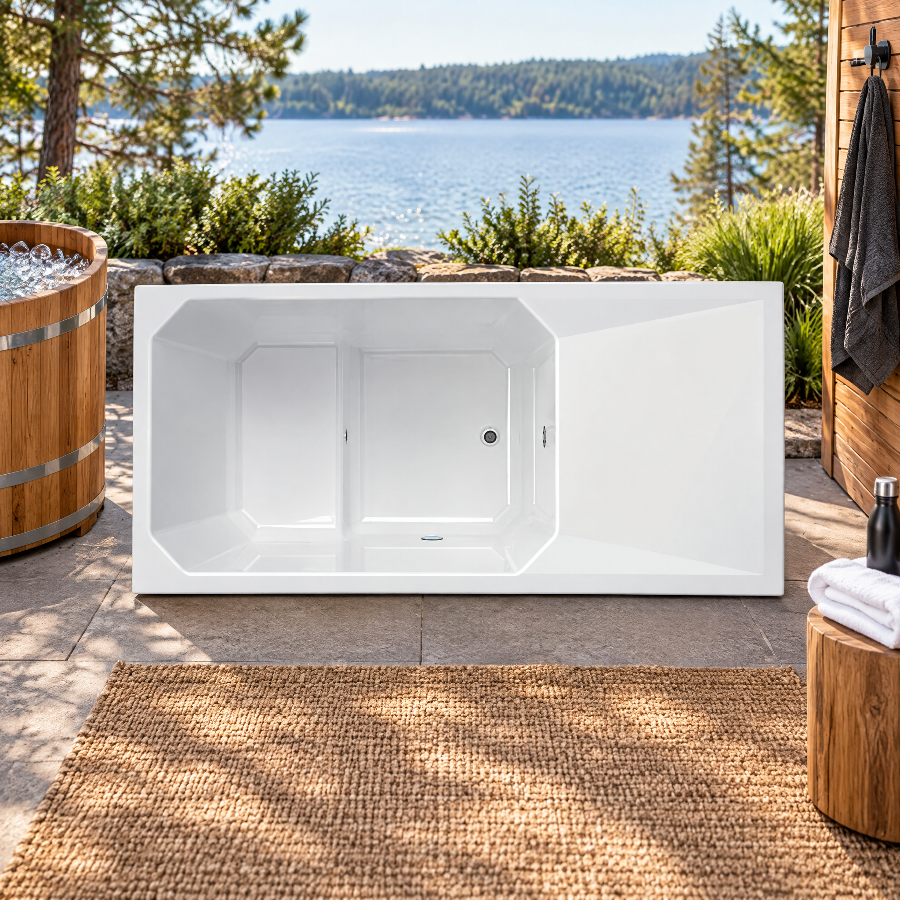
To understand how an engineered horizontal tub compares with an upright barrel ice bath, consider the published technical specifications of the Outdoor Cold Plunge Tub C02. Designed by Victoria Star, this unit represents an integrated approach that packages mechanical cooling, water circulation, and ergonomic seating into a unified structural footprint.
According to the manufacturer’s technical specifications, model C02 features the following core parameters:
Dimensions (Metric): 1695 mm length × 830 mm width × 850 mm height; the product page also lists 6′ × 33" × 34".
Water Capacity: 320 liters. Actual immersion depth and comfort depend on the user’s height and posture.
Structural Mass: Net dry weight of 140 kg, with a gross shipping weight of 180 kg.
Internal Basin: Acrylic in white, featuring an integrated internal seating step.
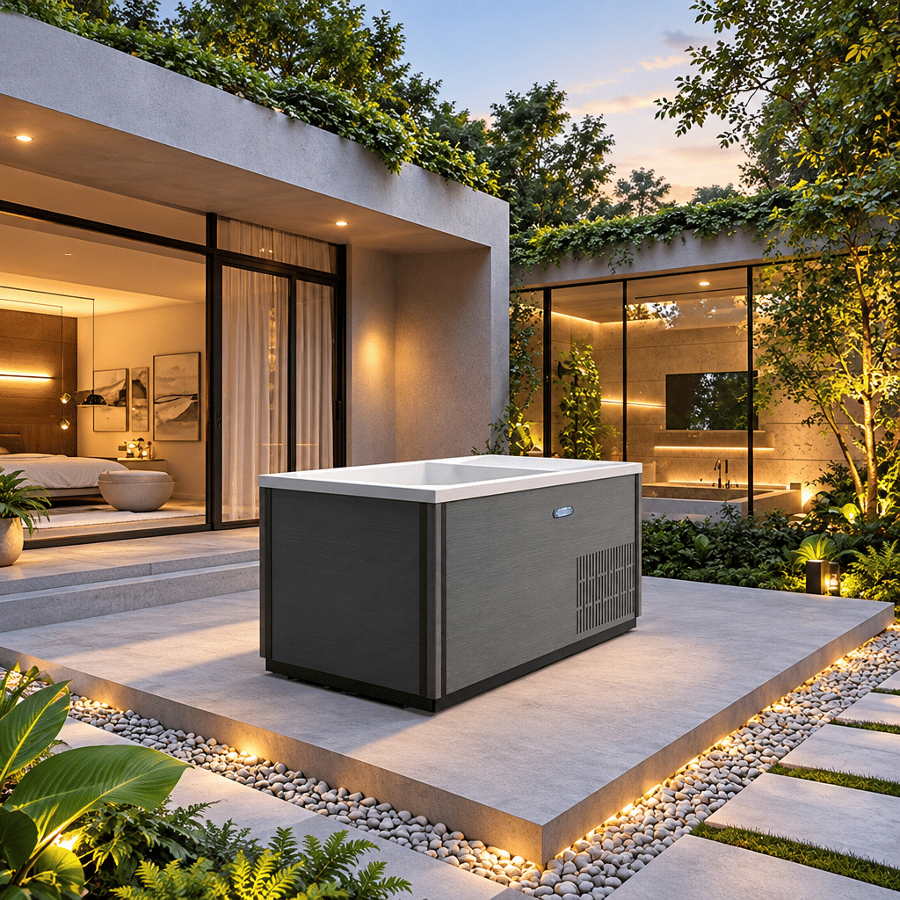
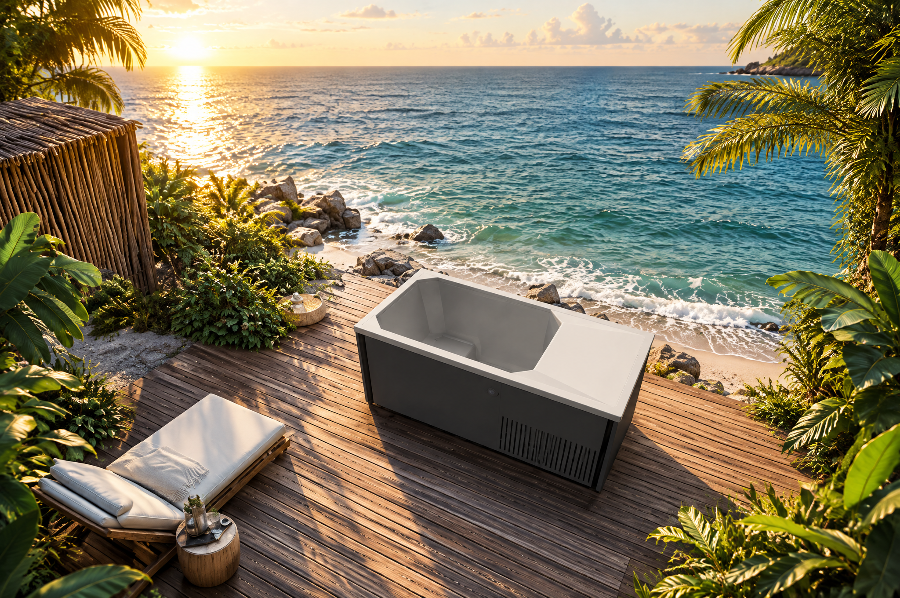
Cabinet Architecture: Weather-resistant composite exterior cabinetry available in Platinum and Midnight finishes, equipped with integrated ventilation grilles.
Mechanical Drive: Integrated 900W heat pump control system paired with a 54W brushless water pump, with a listed power supply specification of 0.954 kW.
Accessories: Includes one cover.
Architectural Application Scenarios: Residential Patios to Commercial Wellness Suites
Integrated horizontal tubs like the C02 offer versatile installation options across private residential and commercial settings. In home backyards, the horizontal geometry aligns naturally with patio deck edges, outdoor kitchen walls, and exterior lounge layouts. The low-profile cabinet integrates seamlessly into landscape designs without obstructing outdoor sightlines like a tall upright barrel might.
In commercial environments such as athletic recovery suites, functional fitness studios, and boutique day spas, horizontal units offer distinct workflow advantages. The integrated seating step provides intuitive entry for clients. Integrated components may reduce the amount of visible equipment compared with systems that use separate external units, depending on the installation. This can help keep commercial deck spaces relatively clean and professional.
Frequently Asked Questions
What is the primary difference between a barrel ice bath and a standard cold plunge?
The primary difference lies in orientation, posture, and footprint. An upright barrel ice bath requires users to sit in an alert vertical or squatting posture, which concentrates water mass into a small circular footprint. A standard cold plunge tub features an elongated horizontal basin that supports varying seating and leg positions depending on the specific design.
Do barrel ice baths stay cold without an external mechanical chiller?
Non-powered barrel vessels depend entirely on passive insulation and manual ice additions to reduce water temperature. In warm ambient weather, thermal conduction through uninsulated walls and air exposure rapidly warms standing water. Maintaining steady cold water temperatures across consecutive days without a mechanical chiller or heat pump requires repeated additions of substantial quantities of ice.
How much total floor load must be planned for a filled ice bath?
A complete load calculation must combine the dry tare weight of the tub, the total water volume, and the body weight of the user. One liter of water has a mass of approximately one kilogram. For instance, a tub holding 320 liters of water carries 320 kg of water mass alone. Adding a 140 kg dry shell and an 80 kg individual yields approximately 540 kg of total operating mass. A structural professional must assess the resulting load over the tub’s actual support area, especially on decks, balconies, or raised floors.
Can cold water immersion hinder long-term strength or muscle gains?
Some studies and reviews suggest that repeated cold-water immersion immediately after resistance training may attenuate muscle-protein-synthesis responses and possibly reduce hypertrophy adaptations. For individuals whose primary objective is maximal muscle growth, delaying cold exposure by several hours post-workout or utilizing it primarily after endurance sessions is recommended.
Who should refrain from using an ice bath without clinical clearance?
People with cardiovascular or other relevant health conditions, or who are pregnant, should consult a qualified clinician before cold-water immersion. The immediate cold shock response places substantial acute stress on the circulatory system.
Conclusion
Choosing between an upright barrel ice bath and a fully integrated horizontal plunge tub comes down to balancing spatial constraints against everyday ergonomic comfort and operational practicality. A compact barrel provides a viable path to regular cold therapy when ground space is limited. Conversely, an integrated horizontal tub like the Outdoor Cold Plunge Tub C02 delivers extended seating configurations, integrated mechanical cooling, and streamlined maintenance that elevates the daily recovery experience. Aligning physical site realities, budget, and physiological recovery goals ensures your cold therapy setup serves as a reliable wellness asset for years to come.
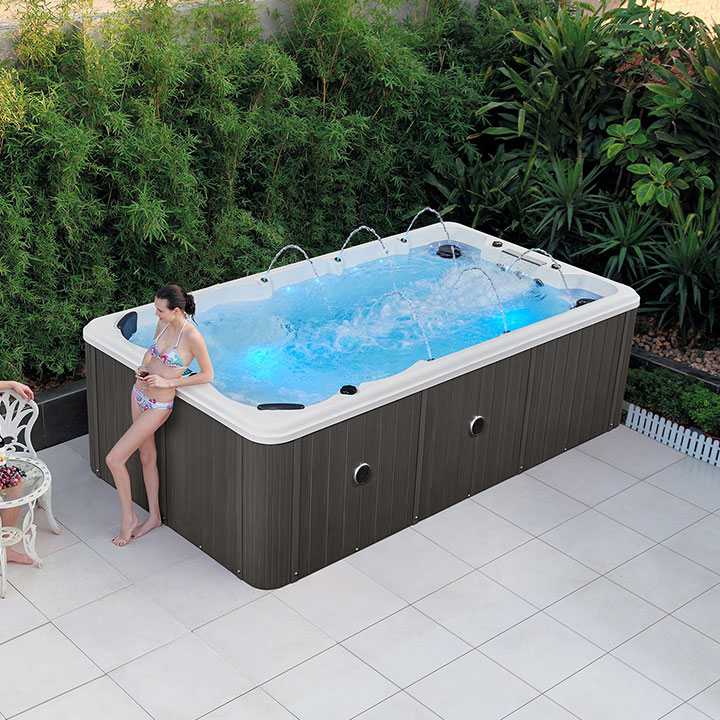
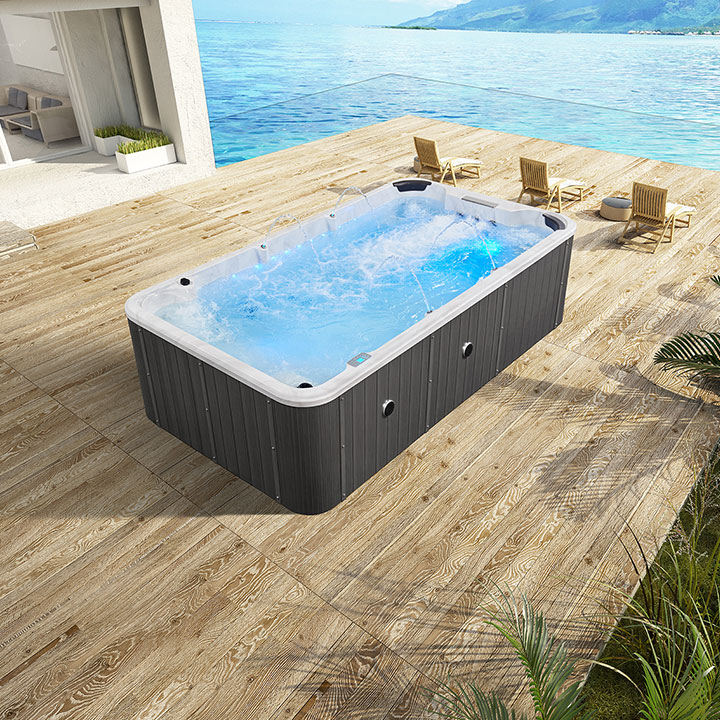
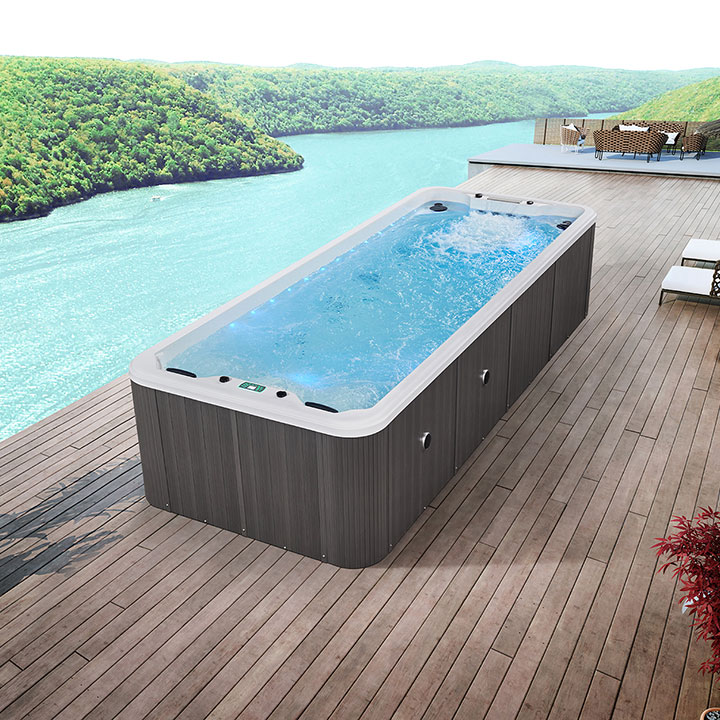
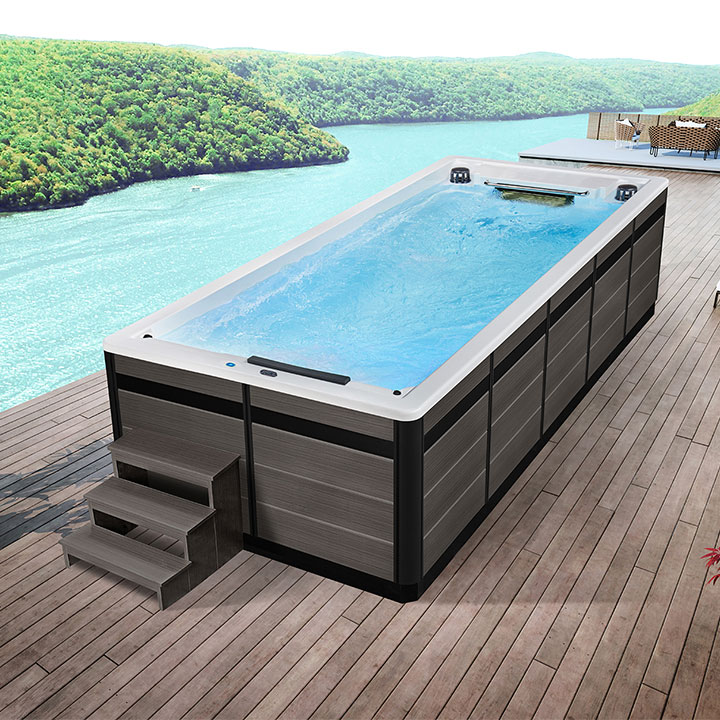
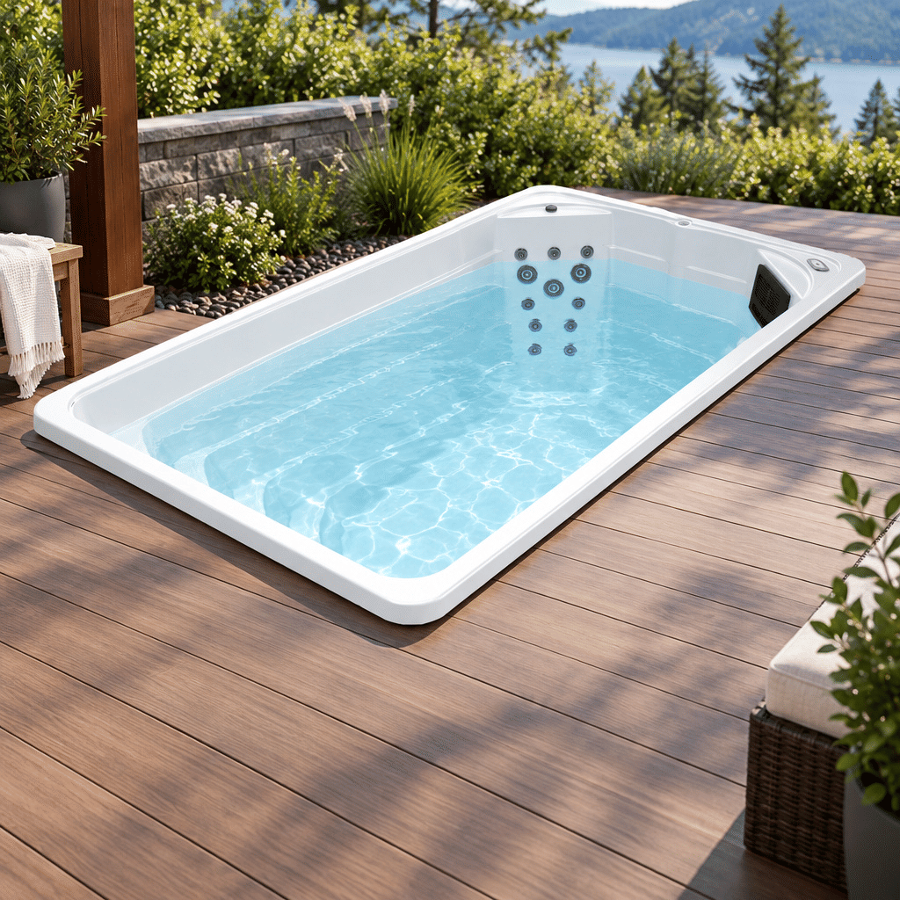
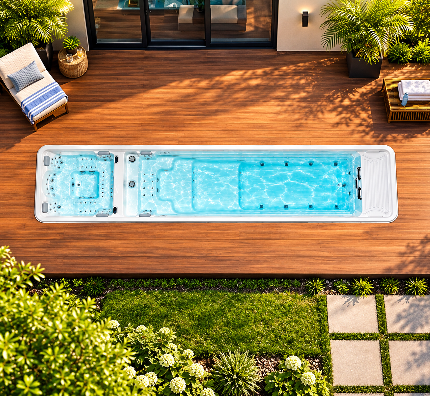
Victoria Star Swim Spa offers the perfect balance between exercise and relaxation, whether you want to swim for fitness or relax in the spacious seating.
Victoria Star Swim Spa offers the perfect balance between exercise and relaxation, whether you want to swim for fitness or relax in the spacious seating.