Backyard Spa Pool Guide: Planning, Selection, and Maintenance for Homeowners
Home / News / Backyard Spa Pool Guide: Planning, Selection, and Maintenance for Homeowners
November 04, 2026
Investing in a backyard spa pool transforms an ordinary residential garden into an integrated zone for aquatic exercise and hydrotherapy. Modern homeowners frequently struggle to choose between massive traditional swimming pools and compact personal hot tubs. An exercise spa balances both disciplines, offering continuous resistance swimming within a structured footprint that fits standard suburban boundaries. Navigating structural weights, hydraulic pump outputs, electrical subpanels, and sanitation requires clear technical direction.
What Is a Backyard Spa Pool and How Does It Differ from Traditional Options?
Backyard Spa Pool, Hot Tub, and Swimming Pool Compared
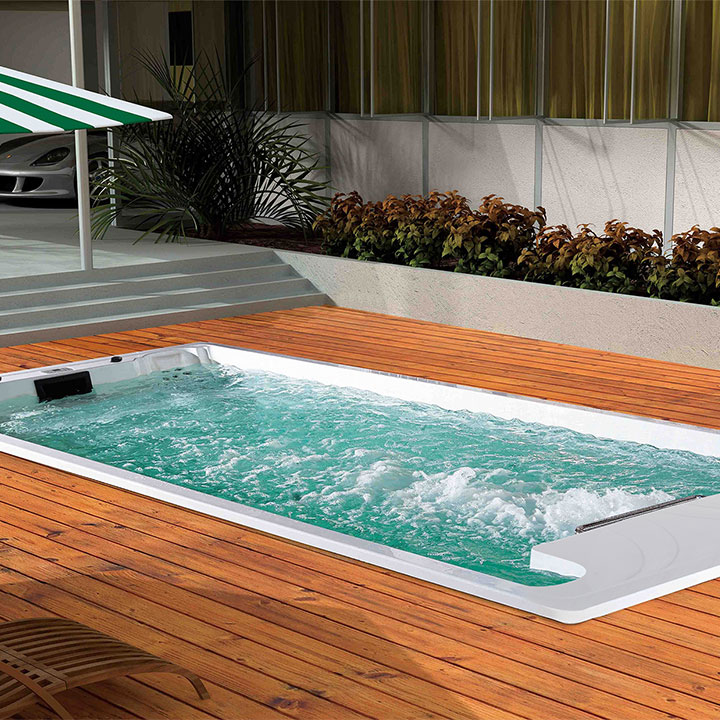
A backyard spa pool occupies the functional sweet spot between an in-ground swimming pool and an ergonomic hot tub. Full-size residential pools demand extensive civil excavation, several months of contractor staging, and substantial water volumes. Conversely, typical hot tubs excel exclusively at seated thermal hydrotherapy, lacking the spatial length or directional flow necessary for stroke training.
A swim spa bridges this divide by housing countercurrent jets inside a reinforced acrylic vessel, allowing continuous lap sessions without turns. When comparing these options, consider their fundamental functional distinctions and check specific model dimensions, capacity, heating characteristics, and installation requirements with manufacturers:
Feature
Traditional In-Ground Pool
Portable Hydrotherapy Hot Tub
Backyard Spa Pool (Swim Spa)
Primary Function
Open recreation & lap swimming
Passive muscle recovery & soaking
Countercurrent exercise & hydrotherapy
Space Utilization
Requires extensive yard excavation
Compact placement on existing surface
Mid-range footprint with dual functionality
Installation Approach
Permanent civil construction
Portable positioning
Semi-permanent pad placement
Matching the Core Purpose: Aquatic Fitness vs. Hydrotherapy Soaking
Selecting the right vessel begins with honest expectations regarding household usage. If daily cardiovascular conditioning, low-impact joint therapy, and athletic rehabilitation drive your search, the hydraulic velocity and current consistency of a swim spa matter most. The countercurrent flow acts like an aquatic treadmill, keeping the swimmer suspended in place regardless of stroke intensity.
When passive evening soaking, social entertaining, and localized deep-tissue massage take precedence, ergonomic seat count and manifold jet layouts outweigh open swim corridors. Many families discover that dual-purpose layouts satisfy both preferences, pairing an open swim lane with sculpted hydrotherapy bucket seats at the opposite end.
Site Planning: Assessing Your Yard and Infrastructure Before Buying
Calculating Footprint, Cover Clearances, and Equipment Access Zones
Accurate site surveys require measuring far beyond the outer cabinet dimensions of the vessel. A unit measuring 4 meters in length still demands adequate peripheral clearance for operational tasks, cover lifters, and technician access. Follow the spa manufacturer’s service-clearance requirements and applicable local codes to determine proper spacing around all maintenance panels.
Bi-fold thermal covers fold backward and require mechanical radius space beyond the cabinet edge when opened. If you install your backyard spa pool against a privacy fence, masonry wall, or architectural pergola, plan your overhead and lateral offsets early to prevent physical interference during daily operation.
Foundation Engineering: Structural Slabs and Total Filled Weight
For a rough planning estimate, 1 liter of water weighs about 1 kilogram. Even a mid-sized spa pool easily exceeds several metric tons once filled and occupied. A vessel holding 6,000 liters of water exerts approximately 6,000 kilograms of liquid mass alone, before adding the dry weight of the acrylic shell and the combined body weight of multiple occupants.
Placing such concentrated mass requires a level, properly prepared foundation. Confirm the foundation design and allowable load capacity with the spa manufacturer and a qualified local structural professional to ensure the installation meets code requirements and site soil conditions.
Delivery Access Routes and Crane Placement Considerations
Unlike modular consumer items delivered in flat boxes, a backyard spa pool arrives as a fully assembled structure. Transporting this single-piece shell from the curbside delivery truck to your backyard pad demands a rigorous pathway audit. Overhead telephone lines, overhanging tree limbs, air conditioning condensors, and narrow garden gates often block ground dollies.
A crane may be needed when the delivery team cannot safely move the spa along the available route. Confirm access and lifting requirements with the supplier well in advance so crane rental and operator fees can be factored into your project timeline and budget.
Electrical Supply Requirements and Municipal Permitting Rules
High-volume exercise spas require substantial dedicated electrical power to simultaneously run multiple high-output water pumps and electric immersion heaters. Standard residential outdoor convenience outlets are wholly inadequate. Most installations necessitate a dedicated circuit hardwired directly through a safety disconnect switch equipped with ground-fault protection.
Local municipal building departments enforce distinct swimming pool safety codes regarding perimeter barrier fencing, self-closing latching gates, and setback distances from property boundaries. Before scheduling equipment delivery, consult local planning officers and a licensed electrician to verify permit requirements and determine the exact voltage, phase, breaker, and disconnect requirements for your specific installation.
How to Select the Right Backyard Spa Pool Specifications
Countercurrent Swim Systems: Pump Array Output vs. Jet Design
A common misconception is that pump horsepower alone dictates the quality of a swim current. Raw water volume pumped through narrow turbulent nozzles creates high-pressure froth that pushes swimmers off-center rather than supporting a stable stroke rhythm.
When evaluating propulsion arrays, ask the manufacturer about pump configuration, nozzle design, and flow characteristics. Request information about how the system handles swimmer positioning and whether you can experience a demonstration or trial before purchase. Current quality depends on the overall system integration, not horsepower specifications alone.
Ergonomic Hydrotherapy Seating and Targeted Jet Configuration
Hydrotherapy seating comfort and functionality depend on jet placement, adjustability, and the contours of the seat design. Effective configurations distribute jets strategically rather than randomly across seating surfaces.
When evaluating a unit, check the number and arrangement of jets, test seat comfort in person if possible, and ask the manufacturer about jet intensity adjustment. Different individuals respond differently to massage, so choosing a model that allows customization can enhance long-term satisfaction.
Thermal Insulation, Locking Covers, and Year-Round Running Costs
Operating costs over a ten-year lifespan can approach the initial purchase price if a spa is poorly insulated. A fitted thermal cover with a dense polystyrene or similar core acts as your primary surface-loss barrier and reduces evaporative cooling.
Beneath the cabinet, insulation applied to the acrylic shell and plumbing lines prevents heat loss to ambient air. Ask the manufacturer about the insulation materials, thickness, and construction methods used in your chosen model to understand how they affect heating efficiency and long-term operating expenses.
Control Systems and Water Quality Sanitation Architecture
A modern backyard spa pool relies on digital control architecture to coordinate heating schedules, filtration timing, and lighting scenes. Intuitive touchscreen panels mounted on the acrylic rim allow bathers to modulate pump outputs and water temperatures without leaving the warm water.
Water purification architecture should combine high-surface-area pleated core filtration with supplemental sanitizing systems. Ozone generators and ultraviolet treatment tubes can help neutralize organic contaminants as water circulates through the primary plumbing loop, potentially reducing chemical handling requirements.
Case Analysis: Evaluating the 13-Foot 3-Seater Swim Spa M-400
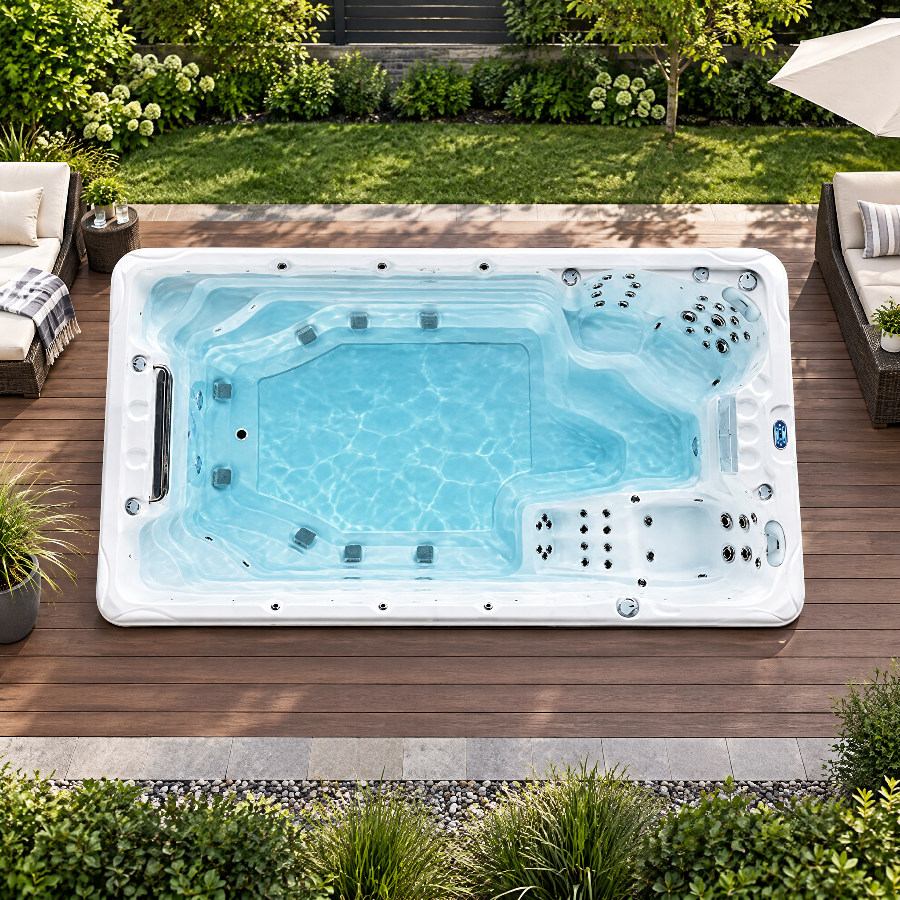
Layout Breakdown: Dedicated Swim Corridor and Three Ergonomic Seats
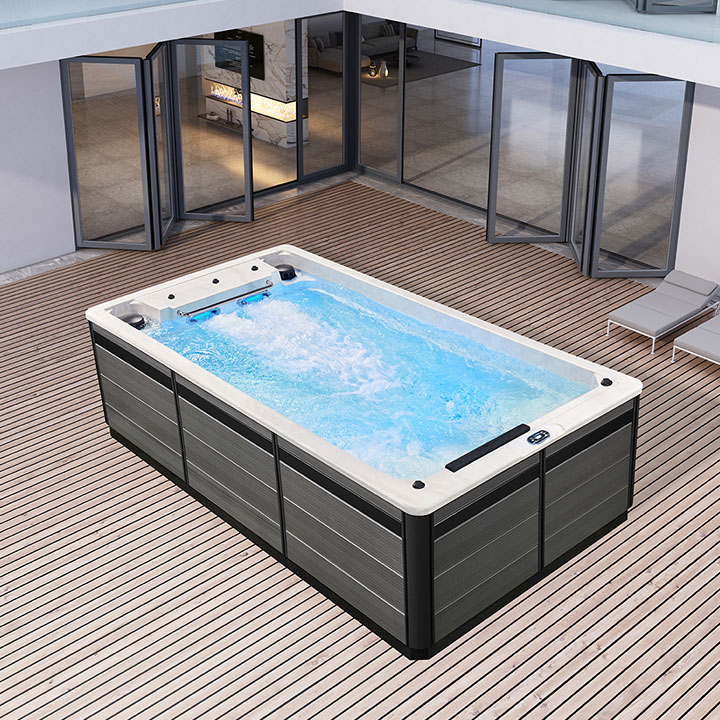
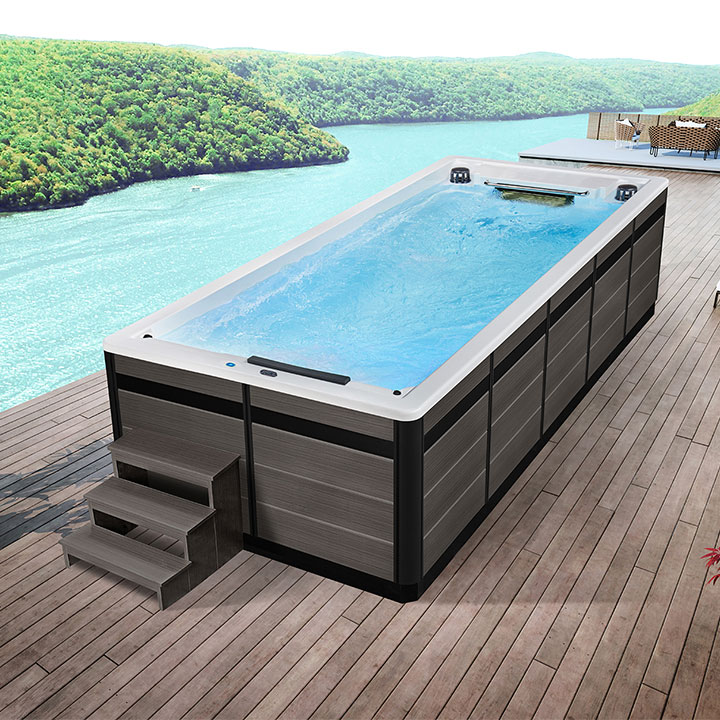
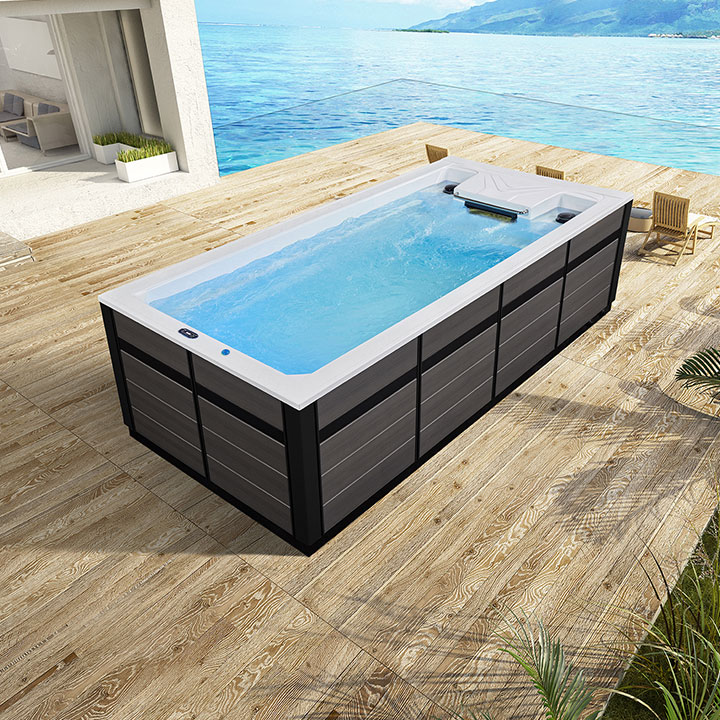
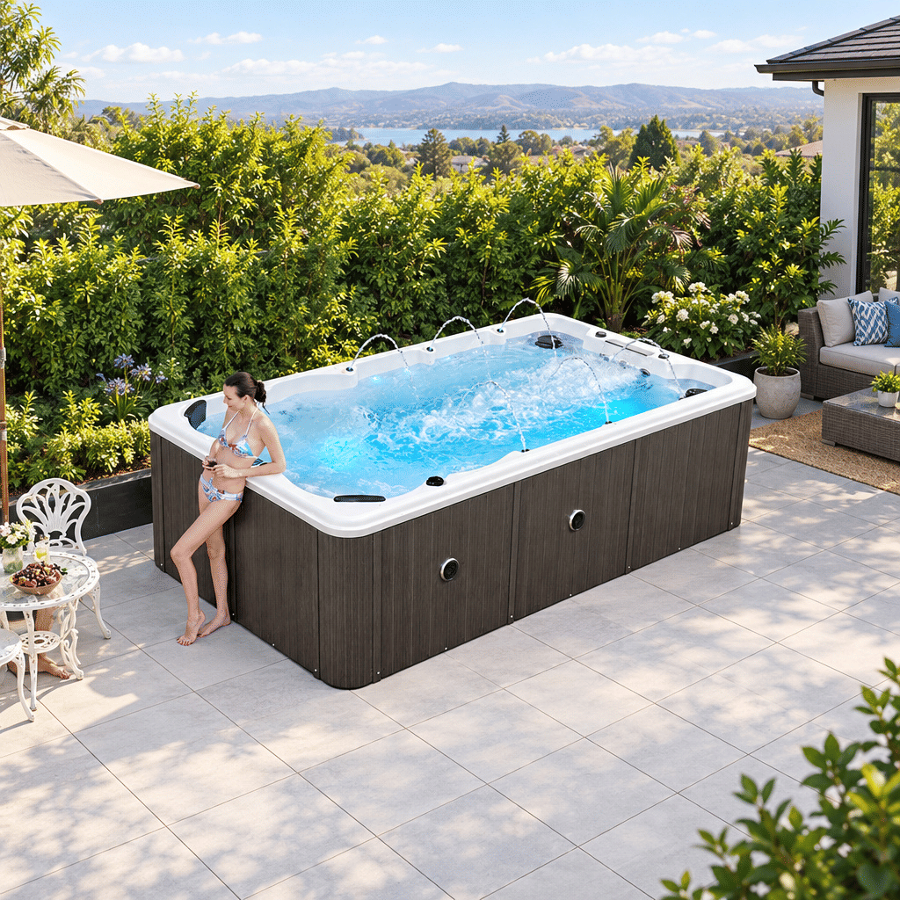
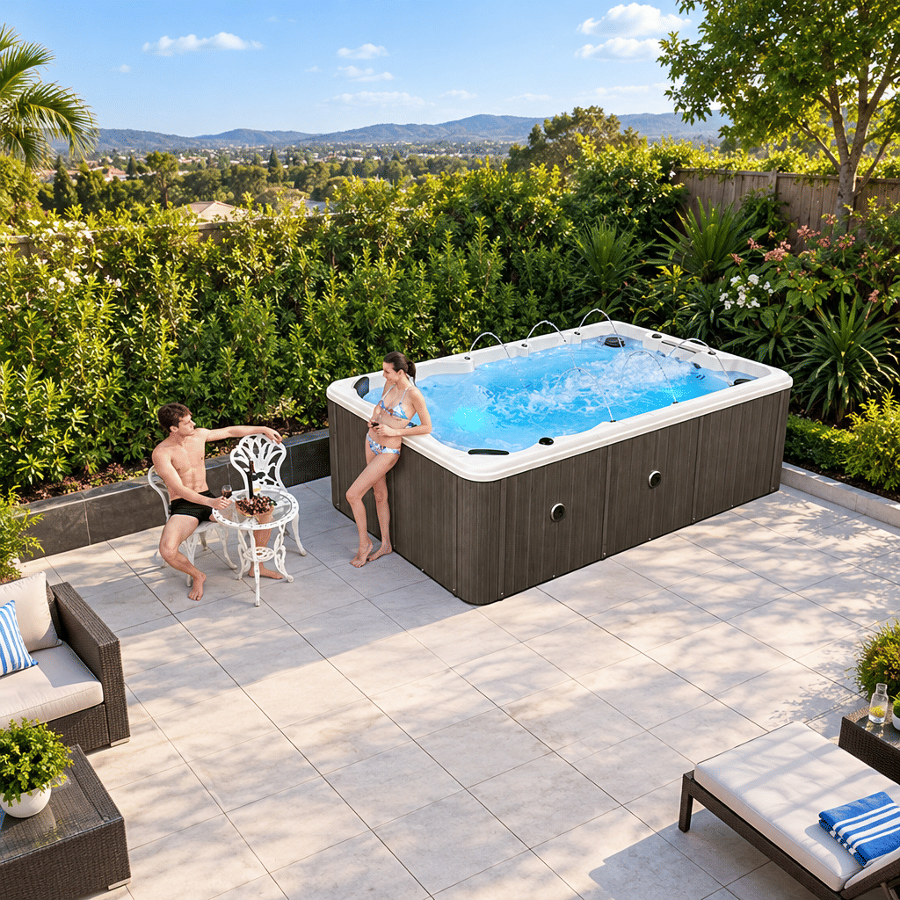
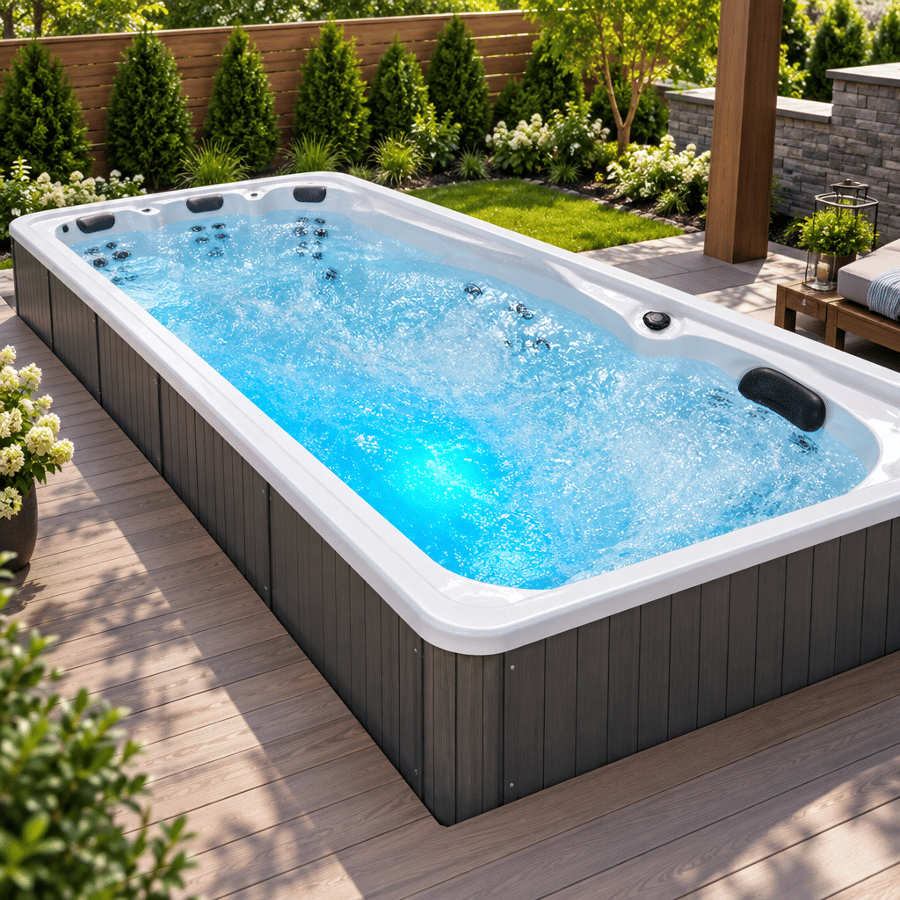
To see how these engineering principles manifest in a residential footprint, consider the 13 Foot 3 Seater Swim Spa M-400. Victoria Star designed the unit to balance compact yard boundaries with genuine swimming utility.
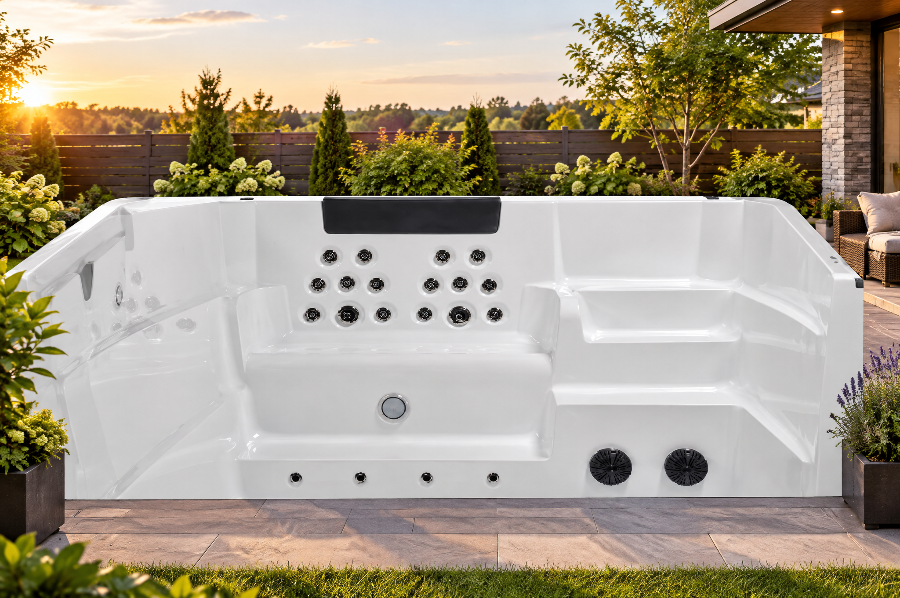
The M-400 occupies an exterior footprint of 4020 mm × 2280 mm × 1260 mm and holds 6,000 liters of water. Despite its compact 13-foot footprint, the interior Porcelain acrylic shell reserves a clear forward swimming corridor while integrating three ergonomic massage stations at the opposite boundary.
Power Array: High-Output Countercurrent Pumps and Dedicated Circulation
The hydraulic configuration of the M-400 demonstrates how specialized pumps handle distinct tasks across an aquatic workout. The model incorporates a substantial pumping array consisting of three 3 HP water pumps and one 2 HP pump dedicated to driving countercurrent flow and hydromassage action.
Rather than forcing high-draw propulsion pumps to manage basic water skimming, the unit separates duties with an independent 1 HP circulation pump. This auxiliary pump operates quietly during programmed filtration cycles, cycling water through the 3,000-watt electric heater to maintain steady temperature profiles across its 12.55 KW total power supply capacity.
Hydrotherapy Matrix: 56 Precision Jets and Water Management
Therapeutic features on the M-400 center on 56 chrome-accented massage jets arranged across contoured seats. Bathers manage operational parameters using an integrated KL2020BT touchscreen control system, which coordinates flow intensities, digital water heating, and multi-color interior LED illumination.
Laminar fountain jets arch smooth streams across the water surface, creating calming ambient soundscapes for evening relaxation. Water hygiene is supported by a multi-stage filtration circuit paired with factory-integrated UV and ozone sanitizing systems, providing an optimal base for crystal-clear bathing conditions.
Questions to Verify with the Dealer Before Placing an Order
Investing in a specialized model like the M-400 requires verifying several logistics and installation checkpoints with your dealer or distributor:
Confirm the exact plumbing schematics and whether external bypass valves are needed for auxiliary heat pumps.
Obtain the exact voltage, phase, breaker size, and disconnect requirements from the manufacturer and have a licensed electrician verify the installation against local code.
Request the precise crane pick points and dry tare weights to provide to your local crane rental specialist.
Verify the composite exterior cabinet finish options, such as Platinum or Midnight, against your outdoor architectural palette.
Water Balance, Safe Operation, and Routine Maintenance
Disinfectant Residuals, pH Testing, and Water Chemistry Limits
Even with supplemental ozone and UV systems installed, maintaining a continuous free chemical sanitizer residual is non-negotiable. Guidance from the Centers for Disease Control and Prevention confirms that UV and ozone act as secondary systems and do not replace EPA-registered residual sanitizers.
Maintain free chlorine at a minimum of 3 ppm, or maintain active bromine between 4 and 8 ppm to prevent bacterial biofilms from colonizing internal plumbing walls. Keep water pH between 7.0 and 7.8 as recommended by CDC guidance for hot-tubs. Follow the manufacturer’s instructions and applicable local requirements in addition to these general recommendations.
Safe Temperature Ceilings and Soak Duration Recommendations
Setting water temperatures requires balancing thermal recovery against the physiological demands of cardiovascular exercise. According to CDC water safety directives, hot tub soaking water must never exceed 104°F (40°C). Prolonged exposure to elevated temperatures can cause heat exhaustion, dizziness, and hyperthermia.
For vigorous exercise, some users prefer cooler water to allow natural metabolic heat dissipation during continuous swimming. Follow the manufacturer’s operating guidance and adjust temperature settings to individual comfort and training intensity. The CDC also advises that children younger than 5 years should avoid hot tubs, and pregnant women should consult medical providers before soaking in warm hydrotherapy pools.
Filter Cartridge Cleaning, Draining Cycles, and Winterization Care
Consistent physical maintenance keeps operating costs predictable and prolongs the lifespan of mechanical seals and heaters. High-density filter cartridges collect environmental debris, requiring a weekly hose rinse and a periodic chemical degreasing soak depending on bather loads and local dust exposure.
Because total dissolved solids naturally accumulate from sweat, balance chemicals, and source water minerals, water replacement becomes necessary. Follow the manufacturer’s recommended schedule and adjust water replacement frequency based on bather load and water quality testing. More frequent use and higher bather loads may require more frequent replacement cycles.
Frequently Asked Questions
Can a Backyard Spa Pool Truly Replace a Traditional Lap Pool for Swimming?
A swim spa may suit users seeking in-place resistance swimming without turns. Swimmers experience continuous countercurrent resistance while stationary, which can enable effective training for some individuals and purposes. However, a swim spa does not necessarily replace a conventional pool for every swimmer or training goal, as preferences and requirements vary widely.
How Much Power Does a Swim Spa Require and Do I Need a Subpanel?
High-performance exercise spas draw substantial current and require a dedicated electrical circuit. Operating multi-pump arrays and heating elements simultaneously demands proper electrical infrastructure. Obtain the exact voltage, phase, breaker, and disconnect requirements from the manufacturer and have a licensed electrician inspect your home service panel to confirm adequate capacity and verify the installation meets local electrical code.
Does Ozone or UV Disinfection Eliminate the Need for Chlorine or Bromine?
No, secondary ozone and UV sanitizers do not eliminate the need for chemical sanitizers. While they destroy pathogens passing directly through the purification chamber, they leave no residual protection in the main vessel. Maintaining an active residual of chlorine or bromine remains essential for controlling free-floating bacteria introduced by bathers.
What Is the Ideal Water Temperature for Swimming Compared to Hydrotherapy Soaking?
Vigorous swim training generates internal metabolic heat, so some users prefer cooler water to prevent heat stress during workouts. Deep-tissue hydrotherapy and passive recovery typically require warmer water, never exceeding the strict 104°F (40°C) safety ceiling. Follow the manufacturer’s operating recommendations and adjust settings to individual comfort and training intensity.
Can a Swim Spa Be Installed Partially In-Ground or Inside a Sunroom?
Yes, semi-inground and indoor installations are viable provided you incorporate appropriate civil engineering details. Sunrooms demand dedicated high-capacity dehumidification systems to prevent condensation and structural mold growth. Semi-inground vaults require concrete retaining walls, perimeter drainage sumps, and adequate walk-around service access to all equipment panels.
Conclusion
Designing the ideal outdoor wellness space centers on realistic site assessments, balanced hydraulic engineering, and consistent water maintenance. Selecting an appropriate backyard spa pool for home fitness allows your household to enjoy low-impact exercise and warm-water relaxation every season of the year. Prioritize a level, properly prepared foundation, verify dedicated electrical service with a licensed professional, and adhere to established sanitation standards. With disciplined site planning and appropriate equipment selection, your backyard swim spa will deliver reliable fitness and therapeutic recovery for years to come.
Victoria Star Swim Spa offers the perfect balance between exercise and relaxation, whether you want to swim for fitness or relax in the spacious seating.
Victoria Star Swim Spa offers the perfect balance between exercise and relaxation, whether you want to swim for fitness or relax in the spacious seating.