Backyard Jacuzzi Installation and Engineering: The Complete Outdoor Spa Guide
Home / News / Backyard Jacuzzi Installation and Engineering: The Complete Outdoor Spa Guide
November 05, 2026
Installing a backyard jacuzzi transforms an open patio or garden terrace into a functional hydrotherapy retreat, combining mechanical water treatment with residential architecture. For many property owners, selecting an outdoor hot tub involves balancing aesthetic integration, structural foundations, and mechanical reliability. Navigating hydraulic demands, power distribution, and soil mechanics helps support safe, efficient, and durable long-term operation.
Understanding Backyard Jacuzzi Systems: Anatomy and Physics
Terminology and Engineering Scope
The phrase backyard jacuzzi is widely used as an everyday term for residential hot tubs and exterior hydrotherapy spas. Jacuzzi itself is a registered trademark and historic manufacturer, but residential landscape planning treats the term as shorthand for self-contained, heated, multi-jet water vessels. Modern residential spas feature an insulated structural shell, closed-loop plumbing manifolds, electric circulation heaters, and dedicated filtration circuits designed to hold water continuously at target temperatures.
Hydrodynamics and Thermal Retention Mechanics
Hydrotherapy operates through the thermodynamic transfer of heat combined with mechanical water action. Spa water is drawn through the circulation and filtration system before pumps return it through the hydrotherapy outlets. Actual jet performance depends on pump curves, plumbing losses, jet design, and zone controls, so compare manufacturer flow or performance data where available. The VS-PC301’s exact filtration components and jet-air configuration should be confirmed from the manufacturer’s technical documentation.
The VS-PC301 is listed with PU insulation; confirm the insulation coverage and installation details with the manufacturer. Insulation can help reduce heat loss, but actual energy use depends on climate, operating temperature, cover use, and installation.
Above-Ground vs. In-Ground Installations: Structural Trade-Offs
Above-Ground Spas: Accessibility and Serviceability
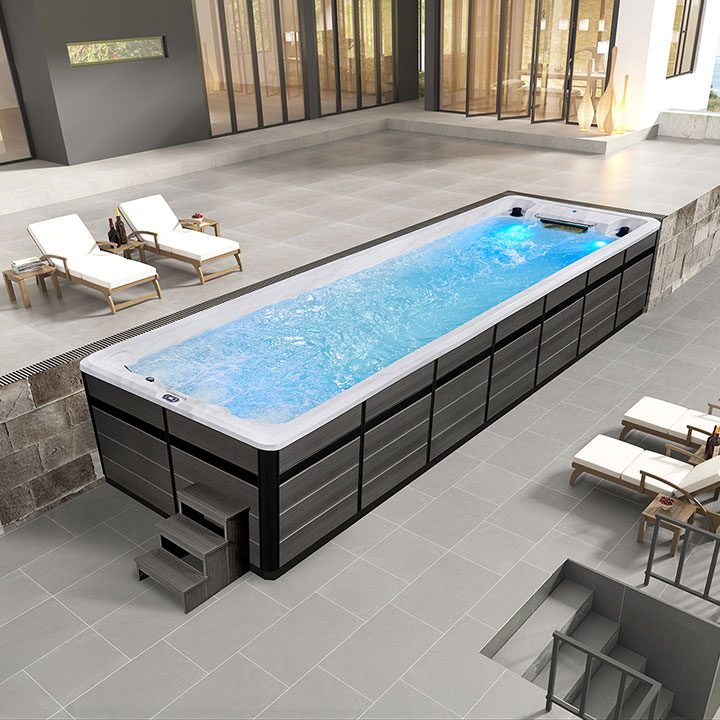
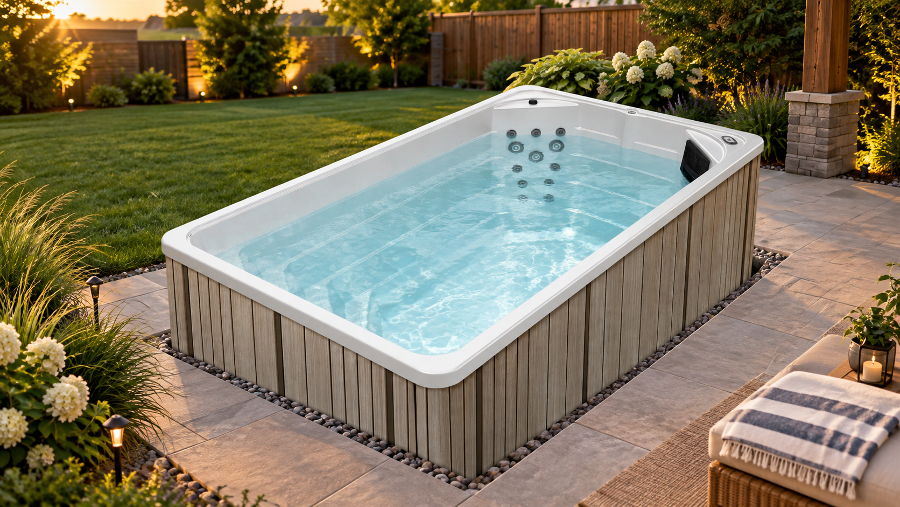
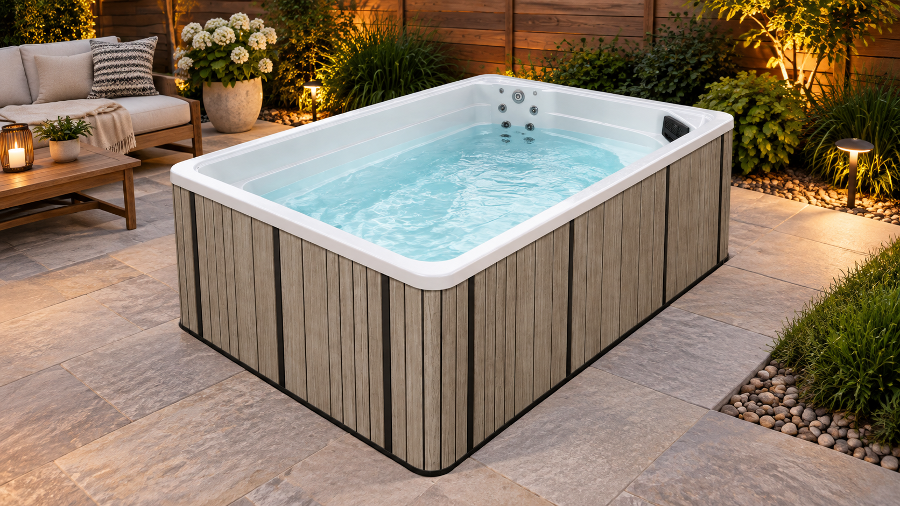
Above-ground units rest directly on level concrete slabs or reinforced decking, housed within removable exterior composite cabinets. This configuration offers superior serviceability because technicians can access plumbing manifolds, heater packs, and pumps by detaching perimeter skirts. However, an above-ground cabinet introduces an imposing visual block that stands roughly three to four feet above grade, requiring integrated steps or raised decking to blend into the landscape.
Recessed and In-Ground Spas: Seamless Sightlines and Engineering Complexities
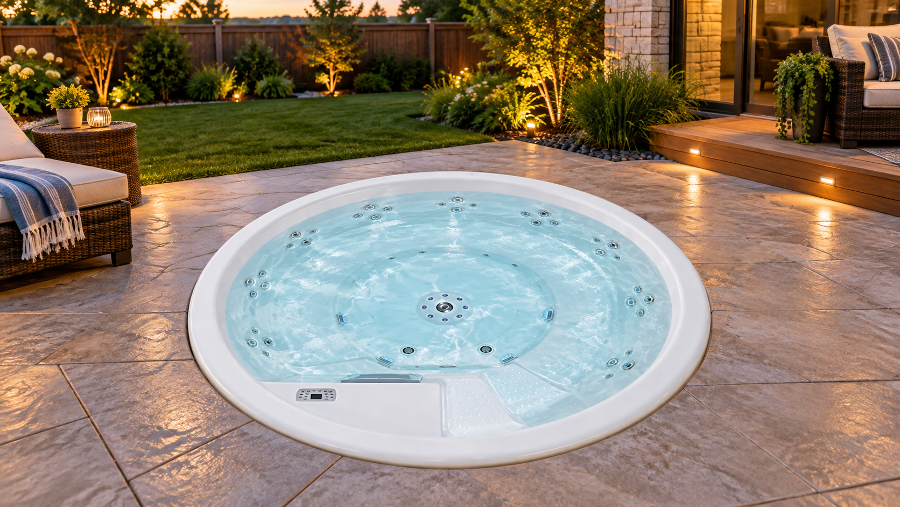
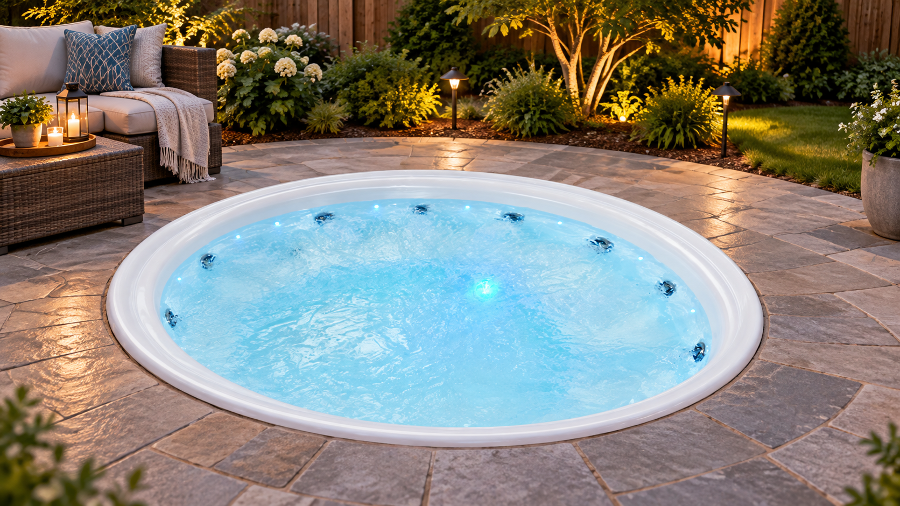
Recessed spas sit flush with stone terraces or sunken timber decks, preserving sightlines across the property. While aesthetically seamless, sunken installations require comprehensive civil engineering. Below-grade installations typically require a designed support structure, effective drainage, and planned service access. The exact vault, drainage, and access arrangement should be established by the project engineer and local contractor.
The trade-off lies in complexity versus visual continuity. Where above-ground spas can be relocated or serviced with minimal site disturbance, in-ground models become permanent architectural features that demand thoughtful long-term planning.
Engineering Dimension
Above-Ground Portable Spa
In-Ground / Recessed Spa
Visual Profile
Raised cabinet profile (36–42 inches high)
Flush or semi-recessed level sightline
Foundation Type
Flat concrete pad or rated substructure
Reinforced concrete bunker/vault with drainage
Service Accessibility
Perimeter cabinet panel removal
Removable deck hatches or utility vault access
Drainage Dependency
Surface run-off shedding
Designed drainage required; gravity drainage, a sump system, or another engineered solution may be appropriate depending on site conditions
Landscape Integration
Standalone furniture footprint
Integrated architectural element
Site Preparation and Civil Engineering Requirements
Foundation Engineering and Sub-Base Preparation
A filled hot tub represents a massive concentrated dead load. Water weighs approximately 8.34 pounds per gallon, and when combined with the acrylic vessel, mechanical components, and a full bather load, the installation can impose substantial weight on the supporting surface. The required foundation thickness and reinforcement must be designed for the filled spa load, site conditions, manufacturer requirements, and local code.
Before pouring the slab, excavate to native soil or compact fill to prevent differential settling. A stable base prevents the corners or center of the pad from sinking independently, which would crack both the concrete and the spa shell. For larger circular spas, consult a licensed structural engineer to determine the appropriate slab thickness, reinforcement, and sub-base preparation.
Moisture Control and Sub-Grade Vault Drainage
Water accumulation is the primary cause of premature motor failure in recessed installations. Below-grade vaults must shed surface run-off and rainwater immediately. Design the vault and surrounding hardscape to drain standing water in accordance with the drainage designer’s specifications and local code; use a sump system where gravity drainage is impractical. Standing water can damage pumps, controls, and electrical connections and may create shock or fire hazards, so the vault must prevent water from reaching the equipment.
Electrical Infrastructure: Codes, Conduit, and Dedicated Circuits
Outdoor spa installations demand dedicated electrical supply lines conforming to regional standards, such as National Electrical Code Article 680. High-capacity, multi-pump systems typically require a dedicated 220V to 240V circuit protected by a Class A Ground-Fault Circuit-Interrupter or Special Purpose Ground-Fault Circuit-Interrupter. A maintenance disconnecting means must be readily accessible, within sight of the equipment it serves, and installed in accordance with the locally adopted NEC provisions, including applicable separation from the spa. Have the licensed electrician verify the current local requirements.
Bury and protect the raceway according to the locally adopted electrical code and the electrician’s approved design; required cover varies by installation method and location. Where the conduit penetrates the foundation or spa apron, seal all openings to prevent rodent intrusion and moisture ingress.
Evaluating Hydrotherapy Ergonomics and Hydraulic Capacity
Pump Horsepower and Dynamic Head
A high jet count does not inherently provide superior hydrotherapy. Manufacturers often specify total jet count as a headline feature, but the real metric is gallons per minute delivered per seating zone. A well-designed spa distributes flow so that each bather receives consistent pressure regardless of how many other zones are active simultaneously.
Ergonomic Seating Profiles and Zone Distribution
Hydrotherapy seats must contour to the human spine rather than forcing rigid upright posture. High-volume spas feature multi-depth seating that accommodates diverse user heights while preventing bathers from floating out of their positions under heavy jet action. Jet clusters should target distinct muscle groups: cervical spine nozzles along the upper collar, broad rotational jets across the thoracic region, and high-volume directional nozzles positioned low for lumbar and plantar stimulation. Circular layouts allow for radial seating arrangements where each bather enjoys symmetrical jet coverage without crowding.
Water Purification Systems
Maintaining clear water in a heated environment requires active mechanical skimming paired with continuous filtration. Modern spas incorporate multi-stage filtration where surface debris passes through skimmer weirs before entering high-density filter cartridges. Some spas may include secondary treatment such as ozone or UV. Confirm whether the VS-PC301 includes either system and follow the manufacturer’s instructions; these systems do not replace required sanitizer residuals, filtration, or water testing.
Product Profile: Victoria Star VS-PC301 In-Ground Circular Spa
Spatial Architecture and Circular Bench Layout
Engineered specifically for recessed architectural installations, the Victoria Star VS-PC301 features a circular geometry measuring 3000 mm in diameter with a 1050 mm total depth. Manufactured by Foshan Gaoming Shiyi Sanitary Ware Technology Co., Ltd. under their Victoria Star brand, the tub incorporates a multi-level bench seating profile. A dedicated textured entry step facilitates safe ingress, while the circular profile distributes bathers symmetrically around the perimeter.
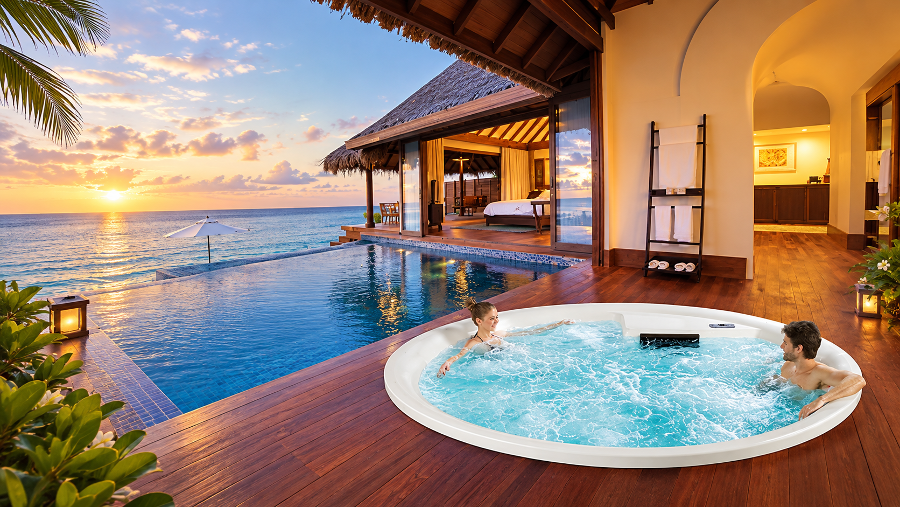
The circular bench layout places users around the perimeter and can support group conversation. Actual seating contours and jet coverage should be confirmed from the manufacturer’s drawings or an in-person inspection. This spatial efficiency makes the VS-PC301 suitable for both family use and social entertaining in a backyard jacuzzi setting. Verify the current manufacturer specification for seating capacity before purchase.
Hydraulic and Electrical Infrastructure (7.15 kW Power Platform)
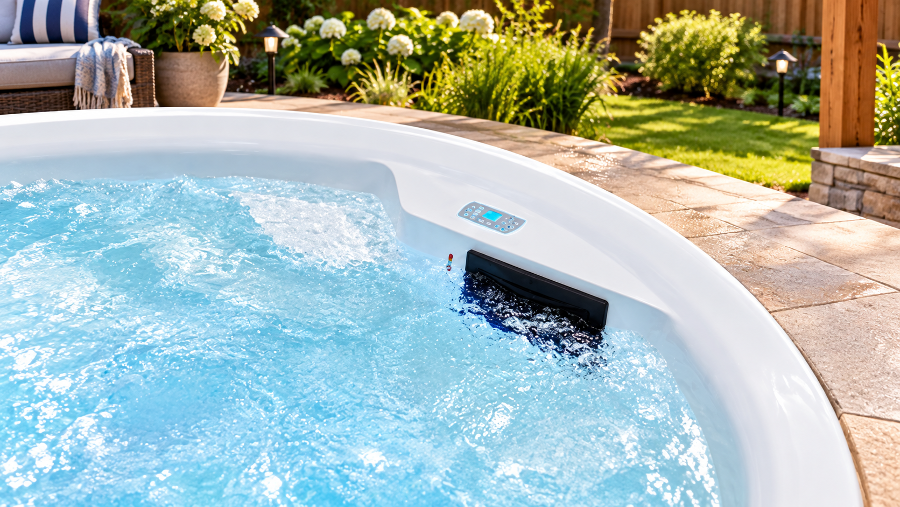
The listed equipment includes two 2 HP water pumps, one 1 HP circulation pump, one 0.5 HP air pump, and one 3 kW heater. Water heating is governed by the heater element managed through the KL2022 digital keypad system. For social settings, the design integrates an ambient multi-color LED underwater lighting array and a Bluetooth audio system with dual AV speakers. The specification lists two water pumps, a circulation pump, and an air pump; the actual jet zoning and operating sequence should be confirmed with the manufacturer.
Technical Specification Matrix: Model VS-PC301
Engineering Specification
Manufacturer Data Metric
Shell Dimensions
3000 mm diameter × 1050 mm height (approximately 9 ft 10 in × 41.3 in)
Bather Seating Capacity
Verify current manufacturer specification for seating capacity
Total Hydrotherapy Jets
53 Perimeter and Footwell Jets
Digital Control Interface
KL2022 Smart Keypad with Digital Display
Primary Water Pumps
2 × 2.0 HP Hydraulic Pumps
Secondary Pumps
1 × 1.0 HP Circulation Pump + 1 × 0.5 HP Air Blower
Electric Heating Element
1 × 3.0 kW Heater
Total Power Supply
Manufacturer-listed total power supply: 7.15 kW
Shell & Cabinet Finishes
Porcelain Shell Finish; Platinum or Midnight Cabinetry
Auxiliary Features
Multi-Color LED Illumination, Bluetooth Audio with 2 AV Speakers
Water Chemistry Management and Operating Hygiene
Halogen Sanitation and pH Equilibrium
Heated water environments accelerate bacterial proliferation and chemical consumption. The U.S. Centers for Disease Control and Prevention advises maintaining hot tub water pH between 7.0 and 7.8 to balance sanitizer efficacy, equipment protection, and skin tolerance. For public or shared-use spas, test disinfectant and pH at least twice daily and more often during heavy use, subject to local code. For private residential use, follow the manufacturer’s and local-health guidance. Sanitizer levels must be measured under routine operation:
Free Chlorine Residual: Maintain at or above 3.0 parts per million.
Bromine Residual: Maintain between 4.0 and 8.0 ppm if using bromine systems.
Total Alkalinity: Keep between 80 and 120 ppm to prevent rapid pH swings.
Low pH can increase corrosion risk, while high pH can reduce sanitizer effectiveness and, depending on calcium hardness and alkalinity, increase scale risk. Regular testing with liquid reagent kits or digital meters prevents both extremes.
Filter Maintenance, Shock Treatment, and Water Replacement
Clean, inspect, replace, and soak filters only as specified by the manufacturer. Drain and refill according to usage, water quality, and the manufacturer’s maintenance schedule. Use only the oxidizing or shock product, dosage, and procedure approved for the spa’s water-care system and follow the product label. Do not mix incompatible chemicals. Victoria Star describes the VS-PC301 as using multi-stage water purification; confirm the exact components and operating instructions with the manufacturer. This system does not replace routine sanitizer, filtration, and water-testing procedures.
Outdoor Bather Safety and Operational Limits
Thermal Regulation and Bather Exposure Limits
According to CDC guidelines, hot tub water temperatures should never exceed 104°F (40°C). Prolonged soaking in hyperthermic water prevents the body from dissipating core metabolic heat through perspiration, which can trigger dizziness, heat exhaustion, or unconsciousness. Start with short sessions, take cooling breaks, and leave immediately if dizziness, nausea, weakness, or overheating occurs. Follow medical advice and the manufacturer’s safety guidance. In a backyard jacuzzi environment, ambient air temperature also influences safe exposure duration. On hot summer afternoons, even 102°F water can elevate core temperature rapidly. Conversely, winter soaking in sub-freezing air may encourage longer sessions that still pose thermal stress.
Demographic Precautions and Restrictions
Certain populations face heightened risks in high-temperature hydrotherapy environments:
Children Under 5 Years: The CDC recommends that children younger than 5 avoid hot tubs due to their limited thermoregulatory capabilities.
Medical Consultations: Individuals with cardiovascular conditions, hypertension, or low blood pressure must consult a physician prior to immersion.
Pregnancy Protocols: Expectant mothers should seek medical advice before using hot tubs, as elevated core temperatures pose clinical developmental concerns.
Substance Restrictions: Alcohol and sedatives severely impair vascular regulation and reaction times, making their use hazardous during spa sessions.
Posting clear signage near the spa entrance reminds guests of these limitations and reinforces safe operating practices.
Frequently Asked Questions
What is the technical difference between a jacuzzi and an outdoor spa?
Jacuzzi is a proprietary brand name established by the Jacuzzi brothers, who pioneered submersible hydrotherapy pumps. In modern usage, the word jacuzzi is applied colloquially to any self-contained outdoor spa or hot tub. Technically, all self-contained vessels combining pumps, heaters, and hydrotherapy jets are spas or hot tubs, regardless of the manufacturer badge.
Can an in-ground outdoor hot tub be repaired after deck construction?
Yes, provided the installation vault incorporates adequate perimeter clearance. Provide the manufacturer- and contractor-specified clearance around equipment access panels, with removable deck hatches or other service access where required. If a tub is buried directly in soil or backfilled with concrete, repairing future plumbing manifold leaks requires destructive excavation.
How thick must the concrete foundation pad be for a backyard jacuzzi?
A level concrete foundation is commonly used, but the required thickness and reinforcement must be designed for the filled spa load, site conditions, manufacturer requirements, and local code. Consult a licensed structural engineer to determine the appropriate slab design for your specific installation.
What electrical circuit is required for a 7 kW spa system?
The manufacturer-listed total power supply is 7.15 kW, but the required circuit, conductors, overcurrent protection, and GFCI equipment must be selected from the unit’s nameplate and installation manual by a licensed electrician in accordance with local code.
How often should outdoor hot tub water be tested?
For public or shared-use spas, test disinfectant and pH at least twice daily and more often during heavy use, subject to local code. For private residential use, follow the manufacturer’s and local-health guidance. Key metrics include free chlorine or bromine residuals alongside pH.
What are the operational advantages of a circular spa layout?
The circular layout places seating around the perimeter and can support group conversation. Circular bench seating facilitates social eye contact among users while providing a centralized footwell area for shared lower-body hydrotherapy. Confirm the internal depth profile and seating arrangement with the manufacturer.
Strategic Decision Framework: Sizing, Selection, and Integration
Selecting the right outdoor spa requires balancing property limitations, utility infrastructure, and long-term operating demands. To evaluate whether your proposed backyard jacuzzi installation aligns with your structural and lifestyle goals, review the following planning criteria:
Verify Property Access: Confirm clear pathways for crane or dolly delivery, accounting for gate widths, roof overhangs, and overhead utility lines.
Calculate Structural Loads: Consult a licensed structural engineer to verify that the patio slab or timber deck framework is rated to carry the full dead load of the filled spa plus bather weight.
Survey Sub-Grade Drainage: For recessed installations, install positive gravity drains or an automated sump pit to prevent vault submergence.
Audit Electrical Service: Confirm that the main residential breaker panel possesses sufficient spare capacity to power a dedicated high-voltage circuit as specified by the manufacturer and electrician.
Plan Perimeter Maintenance Access: Maintain accessible clearance around internal pump bays to allow for future seal, pack, and valve replacements.
Establish Sanitization Routines: Secure dedicated chemical storage, test equipment, and spare filter sets before the initial water fill.
Investing in a backyard jacuzzi is both an architectural enhancement and a long-term engineering commitment. By executing careful site preparation, providing proper electrical infrastructure, and adhering to water chemistry protocols, you ensure that high-capacity systems like the Victoria Star VS-PC301 deliver safe, restorative outdoor hydrotherapy.
Victoria Star Swim Spa offers the perfect balance between exercise and relaxation, whether you want to swim for fitness or relax in the spacious seating.
Victoria Star Swim Spa offers the perfect balance between exercise and relaxation, whether you want to swim for fitness or relax in the spacious seating.