Backyard Hot Tub Guide: How to Choose, Plan, and Compare a Compact Two-Person Spa
Home / News / Backyard Hot Tub Guide: How to Choose, Plan, and Compare a Compact Two-Person Spa
November 04, 2026
Investing in a backyard hot tub transforms an ordinary patch of lawn, patio, or terrace into a dedicated hydrotherapy retreat. Yet finding the right outdoor spa requires balancing site dimensions, structural weight limits, and domestic utility capacities before focusing on personal comfort. A thoughtful purchasing process ensures that water temperature stays consistent, structural supports hold firm, and maintenance routines remain straightforward over years of ownership.
Whether your outdoor living area is a sprawling garden or an intimate courtyard, this guide outlines the practical decisions required to plan, select, and install a compact home spa.
What Are You Looking for in a Backyard Hot Tub?
Match the Guide to Your Priorities
Homeowners approach the purchase of a backyard hot tub with varied expectations, ranging from targeted athletic recovery to tranquil evening relaxation. Establishing your primary purpose early narrows down whether you need expansive open bench seating for social gatherings or an intimate two-person spa focused on deep ergonomic support. When buyers clarify intended usage habits up front, they avoid overspending on oversized equipment that consumes excessive electrical power and outdoor footprint.
Space-conscious homeowners often discover that smaller, specialized layouts deliver better hydrotherapy than cavernous tubs where bathers drift away from massage nozzles. An intentional configuration allows seating and jet placement to focus water flow directly on specific body areas.
Set Expectations Before Comparing Models
Every outdoor spa is an integrated thermodynamic system, not merely a garden ornament or decorative patio furniture. Operating a warm vessel in cold air demands steady electrical current, regular water hygiene surveillance, and an unyielding foundation. Factoring in operating expenses, seasonal weather shifts, and chemical replenishment protects you from unexpected surprises after delivery day.
Looking at the broader ownership horizon helps keep equipment specifications in perspective. A well-constructed shell paired with weather-resistant skirting and accessible mechanical bays minimizes long-term repairs while preserving property value.
Start With the Backyard Space
Measure the Tub Footprint and Access Route
Site planning begins well before delivery crews arrive on your driveway with specialized dollies. You must verify two distinct physical spaces: the permanent installation footprint and the transit path between the curb and your backyard hot tub foundation. Measuring gate clearances, overhead tree branches, gutter downspouts, and external air conditioner compressors prevents costly delivery bottlenecks.
Before finalizing your purchase, check the manufacturer’s handling instructions and have the delivery provider assess your complete access route. Site constraints vary widely, so confirm that the chosen path accommodates the spa’s dimensions and weight safely.
Consider the Base, Surroundings, and Service Access
Hot tubs require an unyielding, level surface that will not settle, crack, or tilt when bearing thousands of pounds. A poured concrete slab or a commercially engineered synthetic spa pad prevents structural deflection that could crack the acrylic shell or stress internal plumbing joints. In addition, water splashing over the rim requires adequate perimeter soil drainage to avoid puddling around the cabinet base.
Technicians also require sufficient working clearance around the spa perimeter. Follow the manufacturer’s specified service clearances to ensure that equipment compartments housing pumps, heaters, and electronics remain accessible for inspection and maintenance without dismantling surrounding structures.
Compare Patios, Decks, Courtyards, and Balconies
Selecting where to locate your backyard hot tub depends on structural load ratings and local living habits. The table below outlines how common installation environments compare across engineering and privacy criteria:
Location Type
Structural Requirement
Ventilation & Drainage
Privacy & Exposure
Ground-Level Concrete Patio
Flat grade, uniform soil compaction
Natural run-off away from home
Variable; easily shielded with screens
Elevated Wooden or Composite Deck
Certified structural engineering sign-off
Free air circulation beneath joists
High visibility; open sightlines
Private Enclosed Courtyard
Stable paver or slab base
Enclosed walls require good airflow
High seclusion; wind-sheltered
Reinforced Balcony or Terrace
Strict live-load structural calculation
Direct floor drain required
Compact foot traffic; urban skyline
While ground patios handle deadweight with straightforward preparation, elevated decks demand cautious structural engineering calculations. Never install a filled spa onto existing residential decking without professional verification that joists and footings can support dynamic loads exceeding several thousand pounds.
Choose a Size and Seating Layout
Decide Between Loungers and Upright Seats
Seating architecture fundamentally shapes how you experience a backyard hot tub. Full-body loungers allow bathers to recline with legs extended, placing massage jets along the calves, hamstrings, lumbar spine, and neck. Upright bench seats, by contrast, permit flexible posture, accommodate more individuals within a given footprint, and prevent smaller bathers from floating out of position.
Choosing between these formats depends on whether your priority is solitary therapeutic decompression or casual conversational seating. Loungers require greater surface length per bather, which is why dual-lounger models excel for couples who prioritize personal comfort over gathering larger crowds.
Read Dimensions as a Planning Check, Not a Load Rating
When reviewing technical specification sheets, external shell measurements provide a baseline for physical clearance rather than operational weight. An empty shell seems deceptively light, but water weighs roughly 8.34 pounds per gallon, quickly turning a compact cabinet into a heavy installation. Buyers must avoid using external dimensions alone to guess floor loads.
Always ask the manufacturer or retailer for exact dry weights and water capacities before setting your spa onto elevated surfaces. Calculating total operating weight requires summing the dry hull, total water volume, and maximum bather weight.
Consider a Compact Two-Person Example
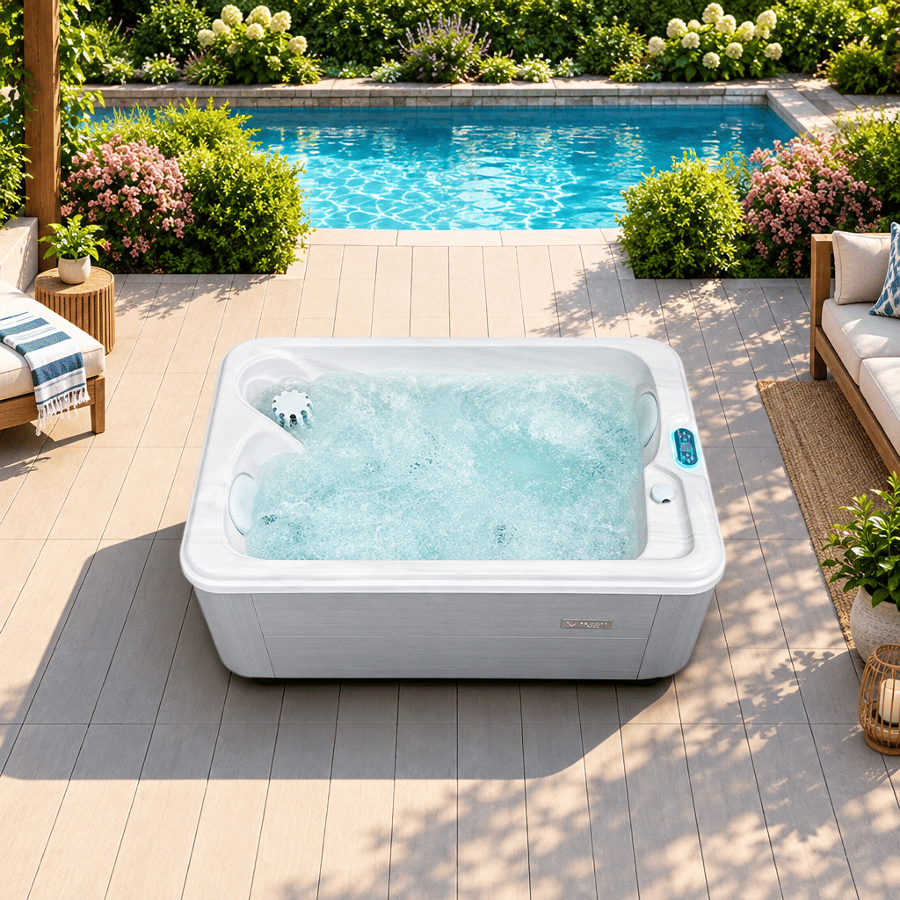
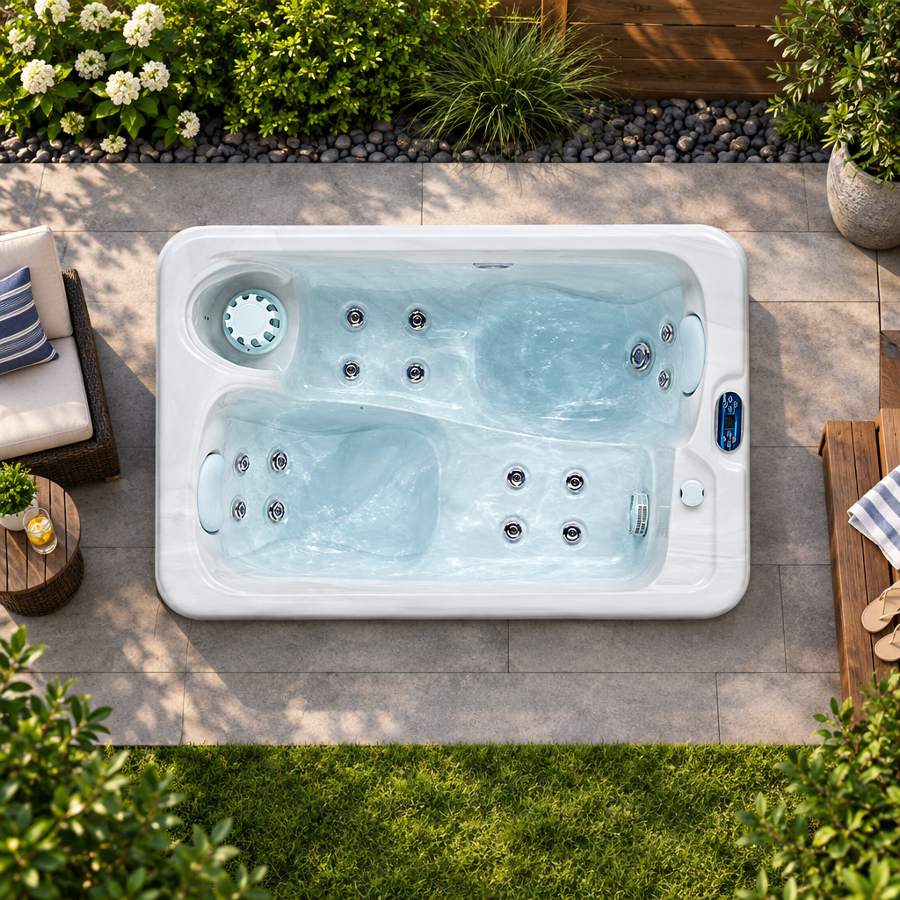
For urban residences, tight garden corners, or private suites, the VS-201C illustrates how efficient dimensions can deliver genuine hydrotherapy. Designed by Victoria Star, this model from the Comfort Series demonstrates space-conscious planning:
Metric Dimensions: 1,750 × 1,150 × 750 mm
Imperial Equivalent: 6′ × 45″ × 30″ footprint
Internal Seating: Two opposing ergonomic full-body loungers
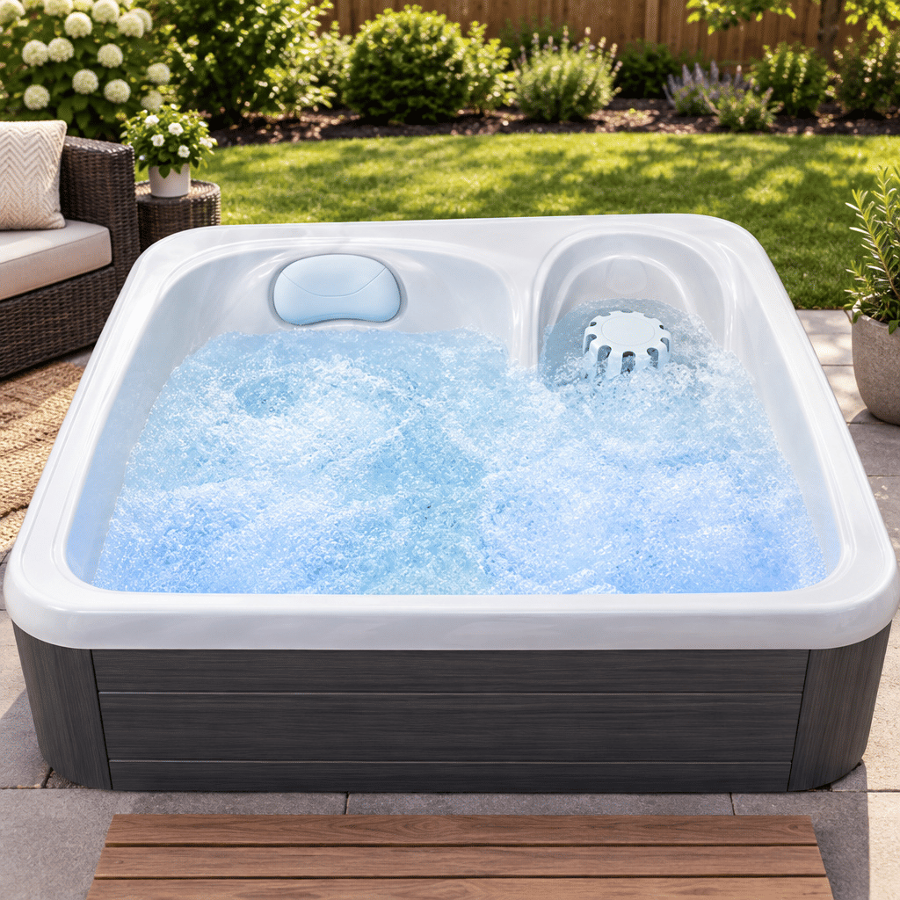
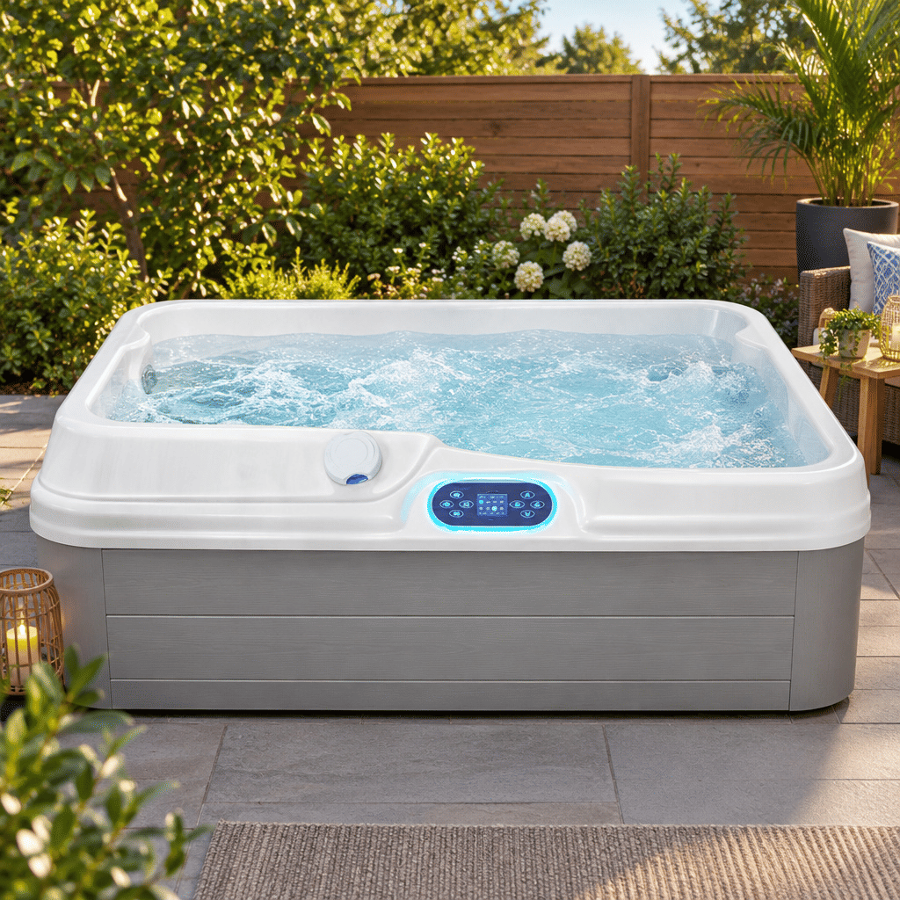
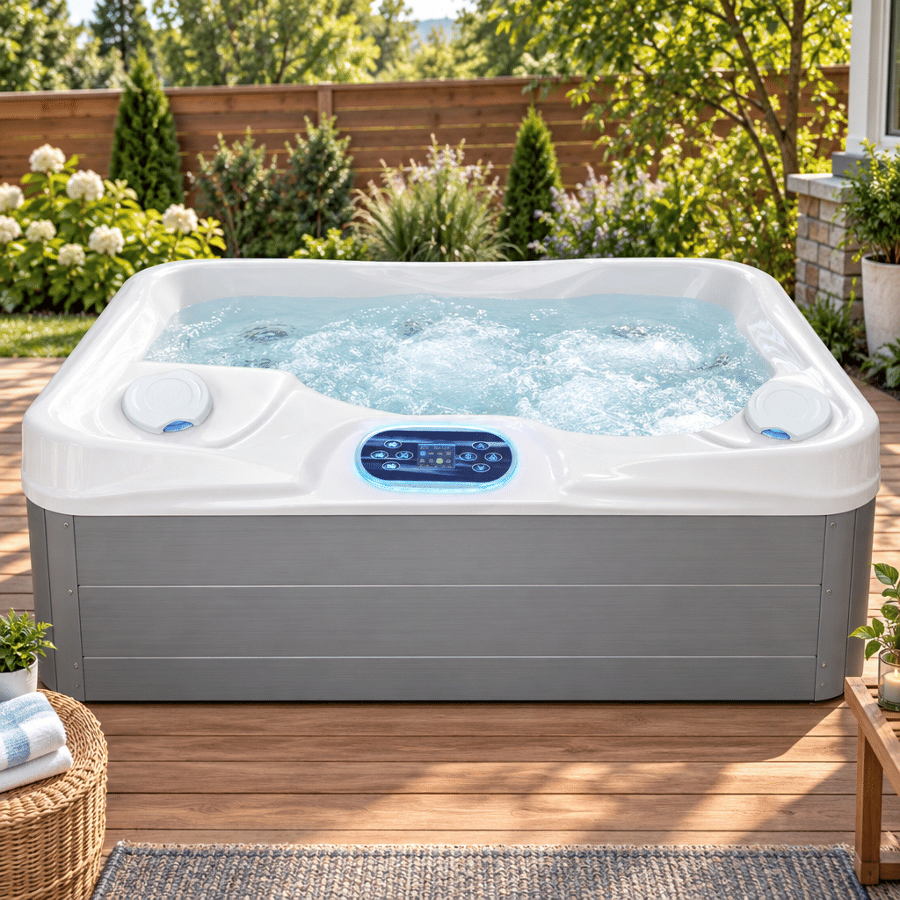
Exterior Finish: Weather-resistant aluminum-plastic skirt in Platinum or Midnight tones
Shell Interior: Porcelain white
This focused footprint fits comfortably onto residential terraces, garden verandas, and luxury patios without dominating the entire landscape.
Compare Features That Affect Everyday Use
Evaluate Jet Placement and Control
Novice buyers frequently fall into the trap of counting total nozzles, assuming higher jet quantities automatically guarantee superior hydrotherapy. In practice, plumbing hydraulics dictate that splitting water pump output across dozens of unrestricted orifices reduces individual pressure. Targeted placement delivers deeper relief for sore muscles than dozens of weak, unfocused streams.
According to the manufacturer, the VS-201C features 15 strategically positioned hydrotherapy jets. The manufacturer positions rotating jets to direct water along the spine and shoulders, allowing bathers to experience focused water flow where they need it most.
Review Heating, Pumps, and Electrical Information
Thermal performance depends on properly sized mechanical equipment working together under an insulated cover. The VS-201C specifications list a 3 kW heater, a 2 HP water massage pump, and a 0.35 HP circulation pump, with a 4.5 kW total power-supply specification.
Prospective buyers should review electrical service capacities early in their planning. Have a qualified electrician determine the required circuit size, protection, and installation method based on the model’s electrical installation instructions and your local electrical code.
Treat Sanitation Features as Part of Water Care
Modern backyard hot tubs frequently incorporate supplementary sanitizing technologies directly inside the circulation loop. According to the product specifications, the VS-201C features a multi-stage water system combining multi-layer mechanical cartridge filtration, ozone oxidation, and ultraviolet sanitation.
Homeowners must understand that ozone generators and UV chambers complement rather than replace EPA-registered sanitizers. Public health guidance, including recommendations from the CDC, confirms that hot tub water still requires routine residual disinfectant testing and pH balancing to maintain sanitary bathing conditions.
Weigh Controls, Lighting, and Audio as Optional Conveniences
Digital convenience features elevate daily usability without complicating equipment operation. The VS-201C utilizes a KL2022 smart digital keypad control system, mounting an intuitive touchpad directly on the acrylic lip. Bathers can adjust target water temperatures and trigger massage jets without leaving their lounger.
Integrated Bluetooth audio speakers provide surround sound streaming directly from mobile devices, turning a brief evening soak into an immersive sensory rest period. While audio and connected features remain non-essential mechanical items, they substantially enrich the overall relaxation experience.
Plan Installation Before Purchase
Verify the Site and Delivery Route
Executing a smooth spa installation requires methodical preparation before the freight truck departs the factory warehouse. Following an organized chronological sequence avoids delivery-day snags:
Measure driveway gates, breezeway openings, and building eaves against the spa dimensions.
Confirm with the delivery provider that the planned route accommodates the spa’s size and weight.
Identify external hose bib locations to verify that fresh water reaches the tub easily for refills.
Clear all garden debris, stone borders, and overhead branches along the planned moving corridor.
Carrying out this walkthrough prevents accidental damage to residential landscaping or the tub skirt during offloading.
Confirm Electrical Requirements With Qualified Professionals
Hardwired outdoor spas require professional installation conforming to local building codes and national electrical standards. Your electrician must evaluate the model’s electrical specifications and determine the required branch circuit, protection device, and installation method according to your locally adopted electrical code.
Have the electrician confirm local code requirements for the disconnect switch. Under the 2024 IRC, the disconnect generally must be within sight of the spa and at least 5 feet horizontally from the spa’s inside walls, subject to a qualifying barrier exception. Never attempt temporary extension cord setups or ungrounded connections for high-power spa systems. Enlisting a licensed electrical contractor safeguards equipment warranties, protects home wiring, and guarantees complete bather safety.
Check Local Rules and Property Constraints
Municipalities and homeowner associations often enforce specific regulations regarding residential outdoor water features. Local zoning bylaws may mandate minimum setback distances from neighboring property lines, public utility easements, or secondary structures. Local rules may treat some spas as pools and impose cover or barrier requirements; check with your local building department.
Investigating these local building codes before ordering your backyard hot tub prevents bureaucratic delays, potential fines, or retroactive installation modifications.
Understand Water Care and Safe Use
Follow the Manufacturer’s Water-Care Instructions
Proper chemical balancing safeguards both bather health and the mechanical longevity of the spa heater and plumbing seals. Consult the spa manufacturer’s water-care instructions and current public health guidance for the correct procedures and target ranges for alkalinity, pH, and sanitizer levels. Imbalanced water can corrode metal components or induce mineral scaling across jet nozzles.
Clean or replace filters according to the manufacturer’s instructions to prevent debris from recirculating into internal components.
Keep Temperature and Health Guidance in View
Safe soaking practices prevent physical exhaustion, dehydration, and heat-induced dizziness. Public health authorities, including the CDC, recommend maintaining water temperatures at or below 104°F (40°C) for healthy adults. Individuals who are pregnant, young children, or those managing cardiovascular conditions should consult their healthcare provider before using a hot tub.
Follow the manufacturer’s guidance for recommended soak durations. Sipping cool water alongside the tub keeps bathers hydrated while warm water jets soothe tired muscles.
Create a Routine for Cleaning and Maintenance
Establishing a steady maintenance routine prevents small water-chemistry imbalances from escalating into persistent algae or cloudy water. Follow the manufacturer’s recommended testing frequency and replacement schedule:
Test Sanitizer and pH: At the frequency recommended by the manufacturer and current public health guidance to maintain safe water conditions.
Filter Maintenance: Clean or replace filters according to the manufacturer’s instructions.
Monthly Exterior Care: Treat the weather-resistant aluminum-plastic exterior skirt with a gentle cleaner, wipe the acrylic water line, and inspect the thermal spa cover for seam wear.
Water Replacement: Drain and refill according to the manufacturer’s instructions, actual usage patterns, and water condition.
Adhering to a structured upkeep schedule preserves equipment efficiency and ensures clear, welcoming water every single day.
Compare Models With a Practical Checklist
Compare the Details That Change the Decision
Comparing hot tubs across various brands requires filtering through sales language to evaluate hard mechanical configurations. The matrix below highlights key technical specifications to evaluate when inspecting prospective models:
Evaluation Metric
What to Look For
Practical Impact on Ownership
Shell Ergonomics
Contoured loungers vs. flat bench seats
Determines lumbar support, leg relaxation, and floating resistance
Jet Hydraulics
Targeted direction and rotation vs. raw count
Influences where users experience water flow and comfort
Mechanical Plumbing
Dedicated circulation pump alongside booster pump
Lowers continuous electrical noise and reduces heating wear
Sanitation Architecture
Multi-layer filtration, ozone oxidation, and UV sanitation
Adds supplementary water-treatment components; does not replace routine sanitizer and pH checks
Cabinet Build
Durable exterior materials
Determines longevity and resistance to weather exposure
Using this framework cuts through superficial marketing and keeps your focus firmly anchored on long-term functionality.
Use the VS-201C Specifications Carefully
Applying this checklist against the VS-201C reveals a highly balanced configuration for compact spaces. Rather than compromising on pump capacity to shave off millimeters, the engineering integrates a 2 HP water pump with a separate 0.35 HP circulation unit and a 3 kW heater. The 1,750 × 1,150 × 750 mm layout provides two adults with dedicated full-body loungers without demanding massive deck footings.
The aluminum-plastic exterior cabinet skirt offers durable weather protection suitable for outdoor residential installations. Paired with the KL2022 digital interface, it delivers dependable ease of ownership in private residential settings.
Identify Questions That Need a Seller’s Answer
Before completing your final spa transaction, confirm several operational details with the seller or authorized distributor. Ask for the precise total dry weight, filled water capacity, and wet operating weight to share with your structural contractor. You should also confirm local parts availability, warranty coverage terms for the acrylic shell and electronics, and specific installation and service requirements.
Clarifying these variables in writing guarantees that your home infrastructure and chosen spa align perfectly prior to shipment.
FAQs
What should I check before buying a backyard hot tub?
Before ordering, measure your backyard space, confirm access paths through gates and corners, and have a licensed electrician evaluate your main breaker panel. Verify that you have a level base or structurally rated deck capable of bearing the total filled weight, and review local municipal setbacks and fence barrier bylaws.
Is a two-person hot tub suitable for a small backyard?
Yes, a compact two-person model provides an exceptional balance of focused hydrotherapy and spatial economy. The listed footprint is approximately six feet in length. Measure your intended location to preserve walkway clearance and confirm delivery access with the seller or delivery provider before finalizing your purchase.
Can a hot tub go on an elevated deck or balcony?
A hot tub can be installed on an elevated deck or balcony only after a qualified structural engineer inspects the framing and signs off on the installation. Water, bather weight, and the acrylic shell together exert substantial localized load, requiring reinforced joists and sturdy support footings.
Does an ozone or UV sanitation system eliminate chemical sanitizers?
No, ozone oxidation and UV sanitation reduce the reliance on harsh chemical dosages, but they do not replace residual disinfectants entirely. Public health agencies advise keeping an active residual sanitizer such as chlorine or bromine in the water, along with routine pH testing, to prevent bacterial growth.
What is the safe maximum water temperature for soaking?
The CDC recommends that residential hot tub water should not exceed 104°F (40°C). Consult your healthcare provider before using a hot tub, particularly if you are pregnant, have cardiovascular concerns, or have young children in your household.
What technical specifications should I verify for the VS-201C?
Verify that your installation base meets the manufacturer’s requirements for levelness and stability, and that your installation dimensions accommodate the spa’s 1,750 × 1,150 × 750 mm footprint. Have a qualified electrician obtain and review the model’s electrical installation instructions to determine the required circuit, protection, and connection method. Finally, confirm dry weight and filled capacity with your dealer to complete any structural assessments.
Conclusion
Selecting the ideal backyard hot tub comes down to understanding your site conditions, respecting structural realities, and choosing an ergonomic layout that matches your daily routine. By measuring your space carefully, installing a stable foundation, securing professional electrical installation, and establishing regular water-care habits based on manufacturer guidance, you protect your investment for years to come. Compact two-person models like the VS-201C demonstrate that limited outdoor space is no barrier to effective hydrotherapy, combining targeted massage jets, dependable digital controls, and durable materials into an intimate personal retreat that enriches your daily home wellness.
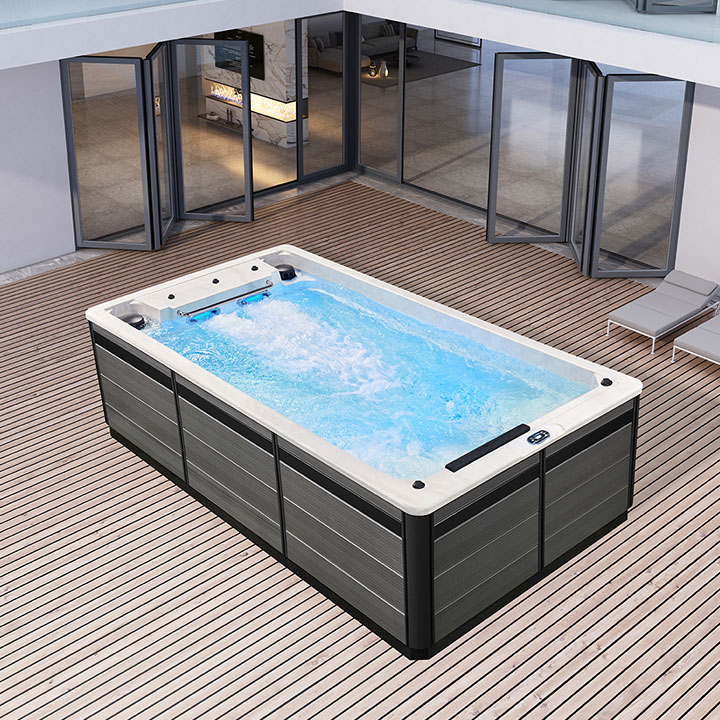
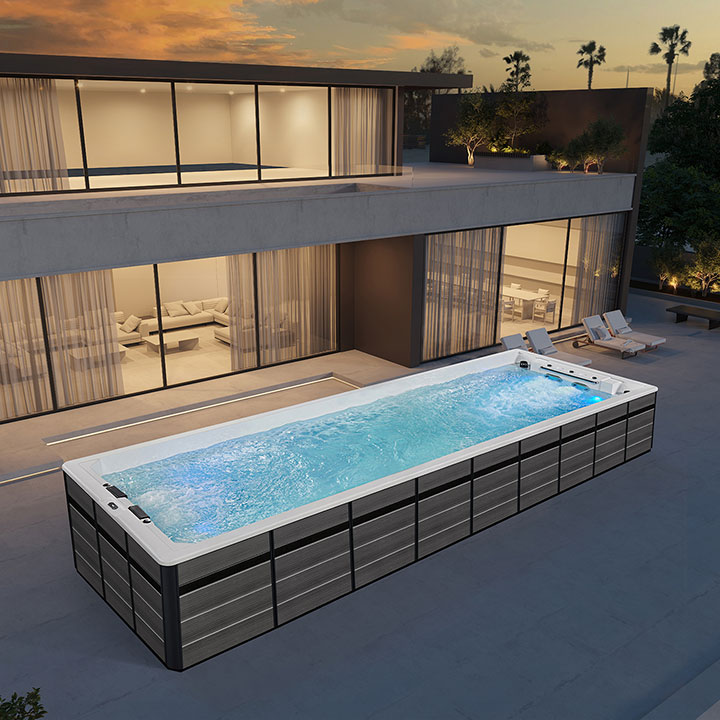
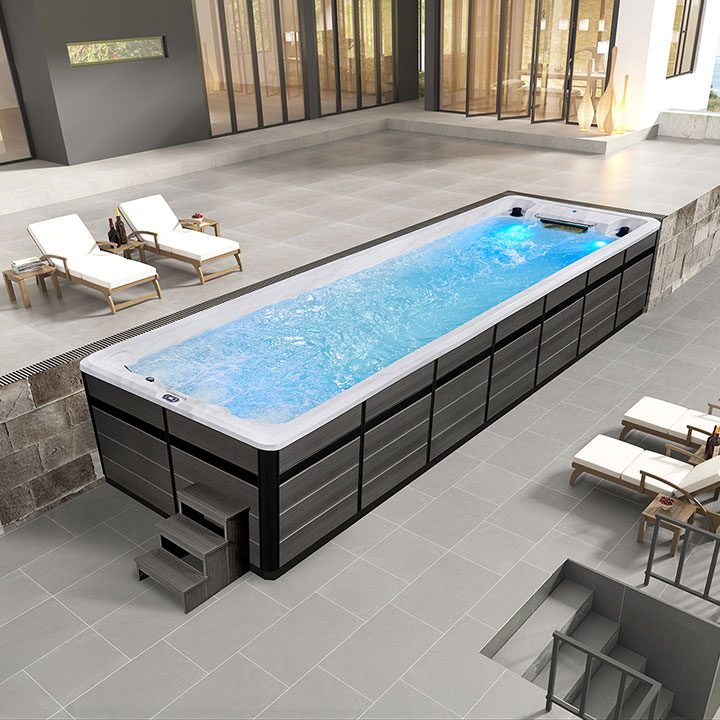
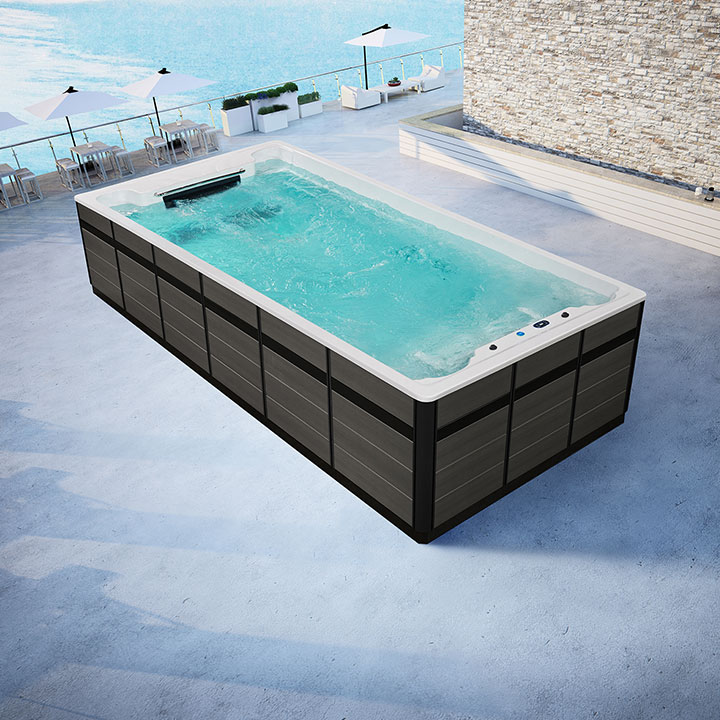
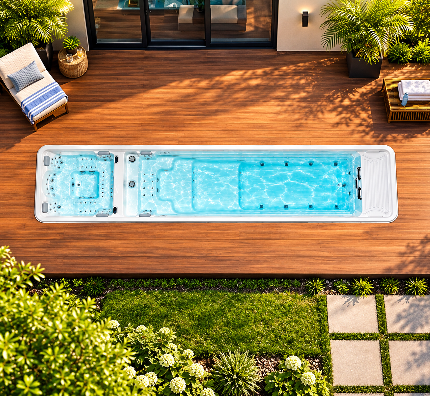
Victoria Star Swim Spa offers the perfect balance between exercise and relaxation, whether you want to swim for fitness or relax in the spacious seating.
Victoria Star Swim Spa offers the perfect balance between exercise and relaxation, whether you want to swim for fitness or relax in the spacious seating.