Automatic Swim Spa Covers: Engineering, Usability, and Selection Guide
Home / News / Automatic Swim Spa Covers: Engineering, Usability, and Selection Guide
November 07, 2026
Investing in automatic swim spa covers transforms how residential owners and commercial facilities interact with large-format aquatic vessels. A swim spa holds substantial volumes of heated water across a wide surface area. When shielded only by multi-panel manual vinyl covers, accessing the water requires significant physical effort, which can turn a spontaneous workout into a cumbersome task.
Modern automated cover systems replace brute physical effort with mechanical convenience. By turning a key or operating an electronic control, owners can retract or deploy a protective barrier over their swim spa smoothly. This guide explores drive mechanisms, operational considerations, energy management factors, and architectural planning needed to select an appropriate automated covering system.
What Is an Automatic Swim Spa Cover?
How motorized lifting and retracting drive systems operate
An automated cover utilizes a motorized mechanism designed to move a protective covering across or above the swim spa. Instead of requiring individuals to manually lift, fold, and drag heavy sections off the vessel, the drive mechanism advances, retracts, or elevates the structure. The specific engineering design varies depending on the manufacturer and model.
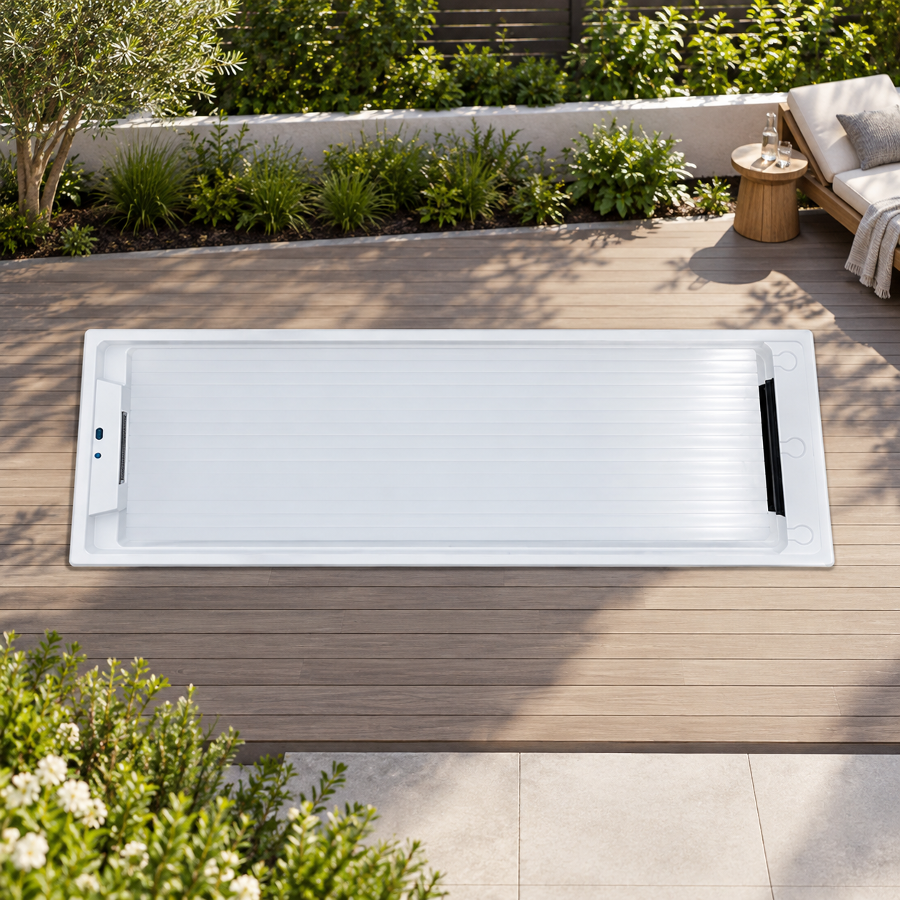
Some manufacturers engineer horizontal systems that guide a flexible fabric membrane or slatted cover along low-profile perimeter tracks. Other designs use vertical-lifting canopies supported by mechanical posts or articulated arms that elevate a rigid insulated structure above the shell. Because drive engineering differs widely across the market, buyers should review the manufacturer’s technical documentation to understand the exact motor and drive assembly used.
Structural differences between automated mechanisms and manual bi-fold insulated covers
Manual swim spa covers typically feature sectional foam cores enclosed in vapor-barrier wrap and marine-grade vinyl skins. Over time, atmospheric exposure and continuous water vapor transmission can saturate internal foam cores, substantially increasing cover weight and making daily handling increasingly difficult.
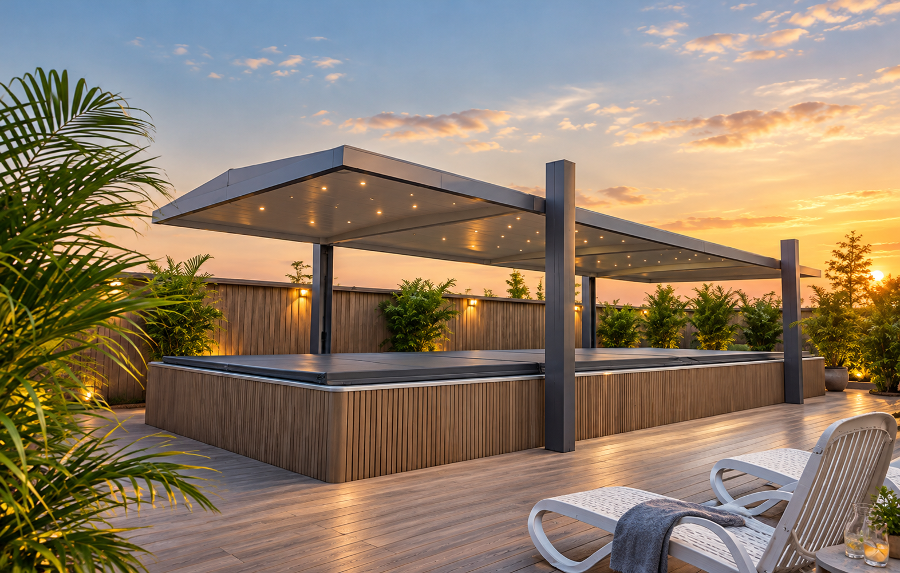
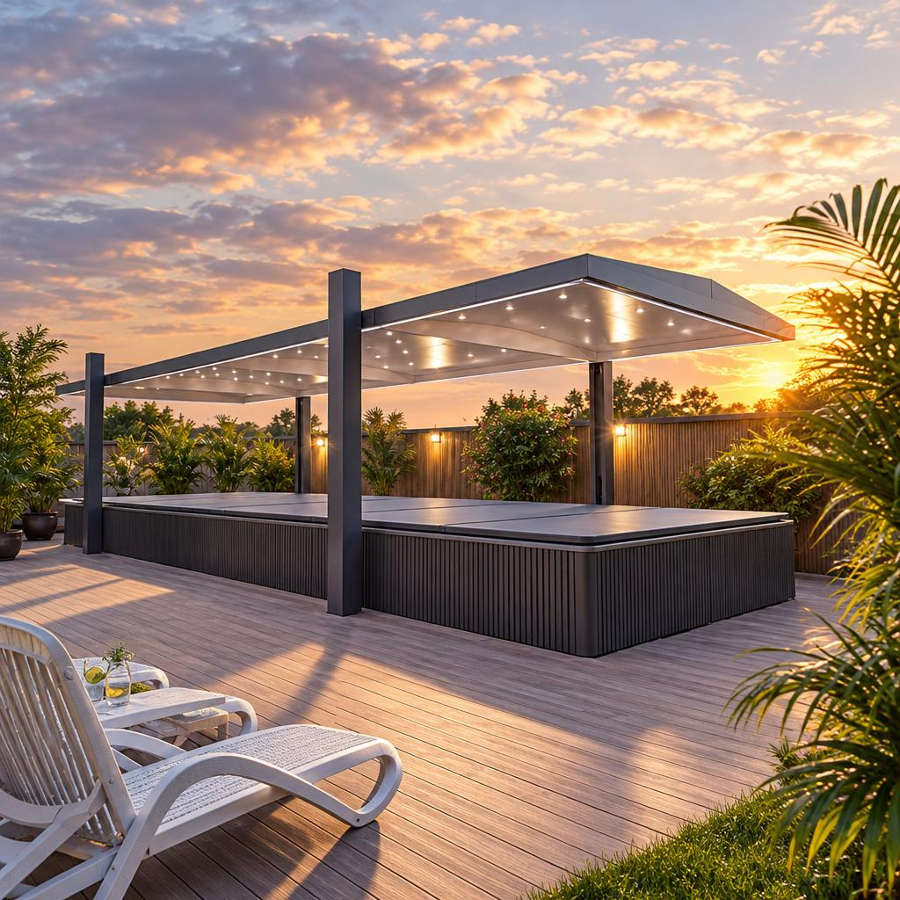
Automated systems decouple weather shielding from manual physical strain. Motorized horizontal track covers rely on structural cross-members that distribute weight along dedicated side tracks. In contrast, vertical automated canopies use rigid exterior structures that house insulation, lifting clear of the shell to provide convenient clearance without requiring users to lift or store heavy sections by hand.
Understanding why motorized automation does not inherently confer safety certification
Property owners sometimes assume that any motorized covering mechanism automatically serves as an approved safety barrier. In pool and spa safety engineering, safety barrier credentials require compliance with recognized performance standards, such as the current ASTM F1346-23 standard.
A motorized unit cannot be assumed to function as a code-compliant safety barrier simply because it operates via an electric motor. The installed assembly must meet the specific performance, labeling, and operational requirements defined under the standard, and it must be installed strictly according to instructions. Unless a specific cover model is documented by the manufacturer as compliant with ASTM F1346-23 or applicable local building codes, it should be treated primarily as a thermal and debris barrier.
Operational Advantages of Automated Cover Systems
Minimizing evaporative loss and thermal dissipation
Evaporation accounts for a substantial portion of heat and water loss in heated swim spas. Because swim spas maintain elevated water temperatures across broad surface areas, unshielded water continuously transfers latent heat and humidity into surrounding ambient air.
When properly fitted and closed, automatic swim spa covers establish a consistent perimeter barrier over the acrylic shell or surrounding coping. This physical barrier suppresses water evaporation, helping to stabilize operating temperatures and reduce supplemental heating demands. Containing surface vapor also protects nearby patio structures from excessive moisture accumulation.
Preventing particulate debris accumulation and chemical breakdown
Outdoor swim spas naturally collect wind-blown dirt, foliage, pollen, and airborne particles. Decomposing organic matter in warm water consumes active sanitizers such as free chlorine or bromine, placing higher demands on water treatment systems and filtration cartridges.
An automated cover provides a continuous physical barrier that keeps falling leaves and coarse debris out of the basin. Additionally, shading the water from direct ultraviolet radiation reduces the solar breakdown of chlorine, supporting consistent water chemistry and helping maintain clear water.
Removing physical handling barriers to daily swim routines
The physical effort required to uncover a swim spa can discourage regular use. When uncovering the water requires releasing multiple perimeter tie-downs, lifting multiple folding sections, and finding storage space on the patio, swimming frequency often declines.
Automated mechanisms substantially reduce handling effort. A simple turn of a key or press of a control switch opens the swim area smoothly, enabling an individual to access the water without strenuous lifting. This operational ease encourages frequent, consistent athletic conditioning and hydrotherapy.
Evaluating real-world convenience versus theoretical energy savings
While automated systems help conserve heat by keeping the vessel covered when idle, they require higher initial capital and installation expenditure than basic manual covers. The practical value of an automated system rests on consistent daily operation as well as thermal management.
Because an automated cover is easy to operate, users are more likely to close the vessel immediately after each session. Manual covers are sometimes left off between uses due to the effort involved in putting them back on. Consistent closure minimizes unnecessary open-air exposure and supports dependable, long-term temperature retention.
Comparative Analysis: Automatic vs. Roll-Up vs. Manual Swim Spa Covers
Mechanical operation, motor load, and space footprint comparison
Selecting an appropriate cover requires evaluating physical operating mechanisms, space requirements, and handling demands. Different designs present distinct operational characteristics suited to particular deck environments.
Cover System Type
Operating Mechanism
Relative Handling Effort
Deck and Overhead Clearance Requirements
Operational Considerations
Fully Automatic Motorized Track
Electric motor driving cables, belts, or tracks
Low (Key switch or button operation)
Clearance needed for motor housing and side guide channels
Tracks require debris clearing; alignment must be maintained
Automated Vertical-Lifting Canopy
Motorized lifting posts or articulated mechanical arms
Low (Key switch or keypad operation)
Clearance needed around support posts and unobstructed vertical travel path
Overhead structures must not obstruct lift; evaluate local wind conditions
Manual Flexible Roll-Up Cover
Flexible slatted panel rolled manually across the spa rim
Moderate (Manual rolling by one or two individuals)
Deck space needed at one end to accommodate rolled assembly
Rolling requires moderate physical effort; surfaces must be kept clean
Traditional Multi-Panel Bi-Fold
Sectional foam cores in vinyl skins with manual hinge folds
High (Manual lifting, typically requiring two people)
Perimeter access required; dedicated off-spa storage area needed
Water absorption over time increases weight; vinyl seams subject to wear
Aligning cover architecture with installation layout and usage frequency
In-ground installations integrated flush with surrounding landscaping often pair well with automated track covers, where guide channels run along the coping. This configuration maintains clear, horizontal sightlines across the property.
For above-ground or semi-recessed installations, automated vertical-lifting canopies offer practical advantages. The structure elevates directly above the spa shell, often acting as a protective canopy while the spa is in use. Users can step directly into the water without needing separate deck space to store wet cover panels.
Identifying the engineering trade-offs of rigid automated structures
Rigid automated structures provide durable protection and integrated insulation, but they introduce structural planning requirements. Because a large elevated canopy is exposed to crosswinds during vertical movement, the lifting assembly and supporting base must handle dynamic wind forces.
These automated installations require stable, level structural foundations, such as an engineered concrete pad, to support the static weight and operating stresses of the lifting posts. Buyers should verify all foundation and anchoring specifications with the manufacturer prior to installation.
Critical Selection Criteria Before Purchasing
Measuring exact shell dimensions, lip radii, and structural tolerances
Swim spas vary across manufacturers in exterior dimensions, corner radii, acrylic lip widths, and the placement of swim-current housings. Because of these variations, universal cover fitment cannot be assumed.
Installers must confirm exact exterior measurements directly against the specific vessel rather than relying solely on generalized model designations. A proper perimeter match is necessary to achieve an effective thermal fit and prevent external precipitation from entering the spa.
Verifying deck clearances, structural footings, and overhead obstacles
Automated drive systems require uninhibited clearance around the vessel. Motor housings, mounting brackets, and mechanical posts demand level, structurally sound surfaces alongside the spa cabinet.
Review horizontal clearance to nearby walls, fences, and railings to ensure service access to drive components.
Check vertical clearance above the installation area for overhead tree branches, eaves, pergolas, or utility lines.
Verify that the supporting foundation extends sufficiently beyond the cabinet footprint to provide solid anchoring points for lift hardware.
Ensure surrounding deck drainage directs standing rainwater away from mechanical enclosures and motor compartments.
Surface rainwater drainage, snow load tolerances, and runoff management
Large covering surfaces can accumulate notable amounts of rainwater or snow during severe weather events. Standing water or heavy snowpack puts mechanical stress on tracks, structural supports, and drive mechanisms.
Flexible horizontal covers typically require surface water management, such as a specialized cover pump, to remove pooling water. Rigid vertical-lifting canopies generally incorporate a sloped exterior surface to shed precipitation naturally, but heavy snow loads must still be managed according to manufacturer guidelines.
Electrical supply, mechanical drive access, and preventative maintenance cycles
Motorized cover systems require dedicated electrical connections configured in accordance with product documentation and local regulations. Because electrical components operate in proximity to water, safety protocols must be followed rigorously.
Electrical Requirements: Operating voltage, amperage, and dedicated circuit needs vary by model; consult the cover manufacturer’s specifications and have a licensed electrician handle power connections.
Service Access: Ensure drive motors, electrical controls, and mechanical linkages remain accessible via removable service panels or deck access hatches.
Manual Override Provisions: Confirm whether the system includes a manual release or override to operate the cover during a power outage.
Maintenance Access: Verify lubrication schedules and service points recommended by the manufacturer to keep moving mechanical parts operating smoothly.
Confirming safety documentation, locking provisions, and municipal codes
Local residential barrier codes vary substantially between jurisdictions. In some areas, an approved safety cover may satisfy barrier requirements under specific conditions, while other jurisdictions mandate perimeter fencing regardless of cover design. Property owners must consult their local building department to determine exact regulatory requirements.
Select a system equipped with physical key switches or secure digital keypad controls. Restricting operation to authorized keyholders prevents unsupervised children from activating the motorized cover, providing an important layer of operational control.
Safety Specifications, Standards, and Responsible Ownership
The scope and boundaries of ASTM F1346 compliance
The current standard ASTM F1346-23 establishes performance specifications and labeling guidelines for pool and spa safety covers. When properly installed and operated according to the manufacturer’s instructions, a compliant cover provides a recognized level of protection against accidental submersion.
Prospective buyers should request documentation from the manufacturer confirming that the specific cover model complies with ASTM F1346-23 when installed on their swim spa configuration. Generic descriptions such as "heavy-duty" or "secure" do not replace verified compliance documentation.
Safe operating procedures: line-of-sight operation and keyed keypads
Motorized cover systems should only be operated with a clear, unobstructed view of the entire swim spa. Never operate the mechanism from a remote or obscured location where the water surface cannot be fully observed.
Before initiating movement, the operator must verify that all swimmers have left the water and that no objects obstruct the track or perimeter rim. Operating keys should remain under the custody of responsible adults and stored safely when the spa is unattended.
Why automated covers augment—but never replace—active supervision
While an automated cover documented as compliant with ASTM F1346-23 can serve as a safety barrier when correctly installed, fully closed, and secured, ordinary automated covers should not be treated as safety barriers. Furthermore, mechanical devices are not infallible. Component wear, electrical interruptions, or improper closure can compromise safety if equipment is neglected.
Automated systems must be viewed as an additional layer of protection rather than a replacement for vigilant adult supervision. Maintaining standard property access barriers and observing disciplined water safety practices remain essential whenever minors or non-swimmers are present.
Architectural Case Study: Cover Planning for Large Swim Spas (VS-GT1202)
Managing massive dimensional spans: the 11.7m × 3.8m footprint
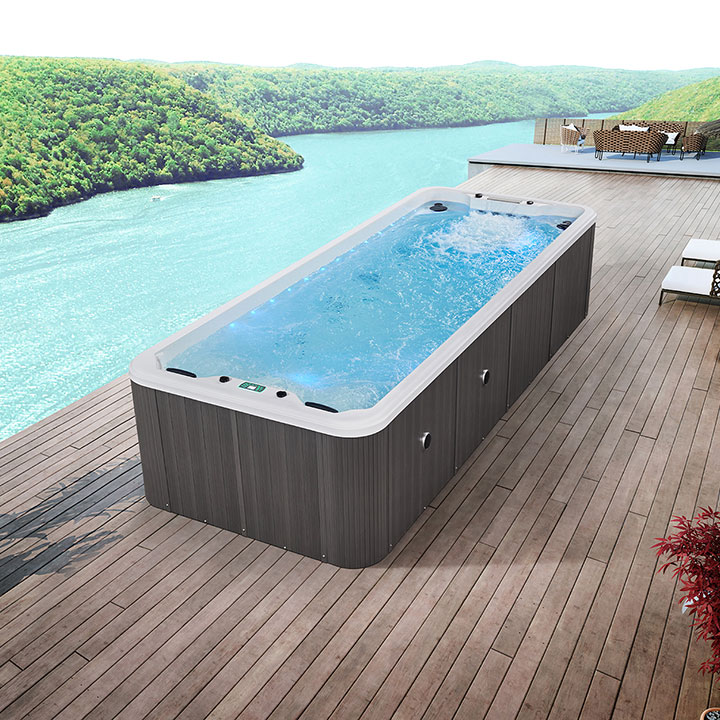
Large aquatic fitness vessels present distinct planning and handling requirements. For us at Victoria Star, engineering expansive installations such as the VS-GT1202 Swim Spa involves accommodating a substantial length of 11,700 mm (approximately 38 feet) and a width of 3,800 mm (approximately 149 inches).
Covering a vessel of these dimensions with traditional manual folding covers presents notable logistical challenges. Wrestling multiple oversized, water-heavy cover sections across a 38-foot span requires significant physical labor and can lead to cover wear or irregular positioning.
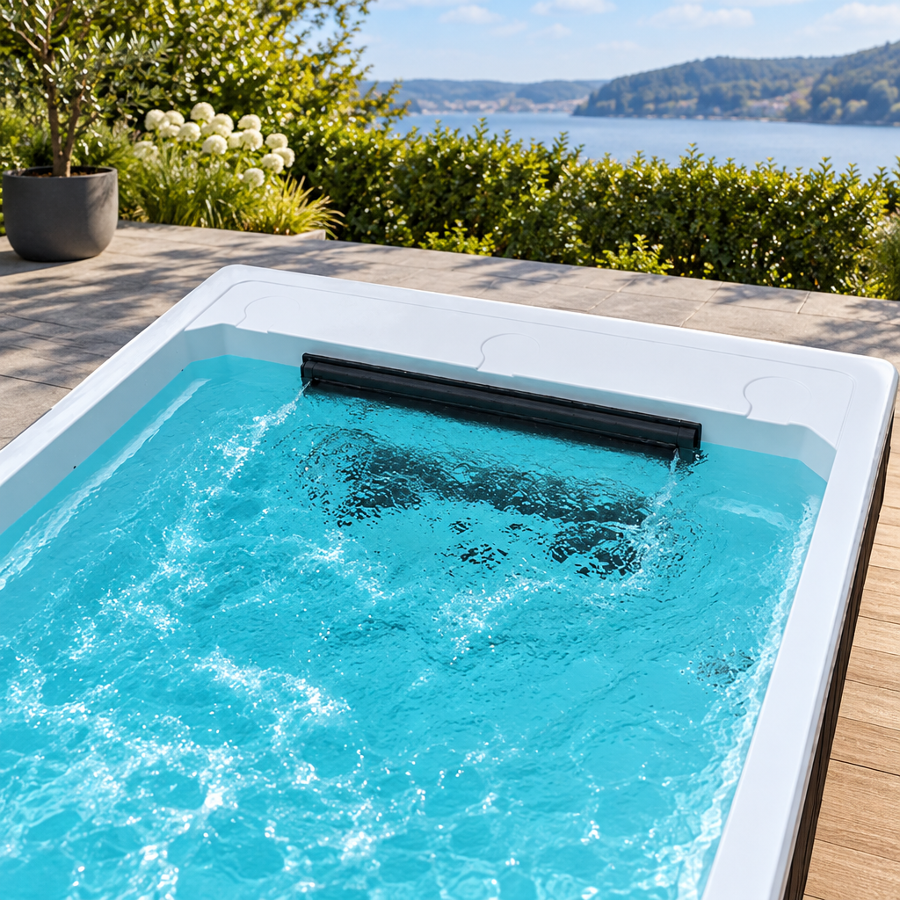
To facilitate convenient daily operation, manufacturer literature lists an automated lifting pool cover as an available feature or option for the VS-GT1202, depending on the customer’s specific configuration and order quotation. The vessel is engineered with polyurethane (PU) insulation, a 4-pump swimming training counter-current propulsion system (5.5 kW per pump across 12 speed levels), and multi-stage Always Clean Water filtration. When configured with the automated lifting mechanism, the cover elevates smoothly to provide convenient access to the porcelain acrylic shell and swim lane without manual lifting.
Technical questions to clarify with the supplier prior to ground prep
When preparing a site for large swim spas equipped with automated cover systems, project planners and contractors should confirm several critical specifications:
Total Operating Weight: Obtain the combined weight of the shell, water capacity, installed equipment, and cover hardware to ensure foundation pad thickness meets engineering requirements.
Electrical Distribution: Verify whether the cover mechanism is powered through the primary 26.1 kW equipment connection or requires an independent circuit supply.
Installation Clearances: When integrating the spa into composite decking or surrounding terraces, verify the lateral clearances required for the cover support posts and moving components.
Control Integration: Confirm operational procedures for the cover control alongside topside systems such as the KL2022 smart keypad.
Distinguishing manufacturer design claims from independent performance data
When evaluating high-performance swim spa specifications, prospective buyers should distinguish between manufacturer-stated features and independent third-party performance ratings. Factory specifications describe internal construction, such as insulation type, jet configurations, and water sanitization components.
Unless a specification sheet references specific independent laboratory test results, thermal and efficiency descriptions should be understood as manufacturer-reported design targets. Reviewing detailed engineering drawings and factory installation documentation ensures the site plan matches real-world operating requirements.
Long-Term Maintenance and Inspection Protocols
Track alignment, seal lubrication, and debris clearing
Track-guided automated systems require clean, parallel guide channels along the length of the spa. Dirt, grit, and seasonal leaves collecting inside aluminum guide tracks increase friction and place unnecessary load on drive components.
Inspect track channels periodically and remove accumulated debris using a brush or vacuum. Inspect perimeter seals regularly for wear or deformation, cleaning them with mild, non-abrasive soap and water in accordance with manufacturer recommendations.
Managing tension cables, motor gearing, and drainage systems
Horizontal motorized systems often rely on tensioned cables, belts, or drive shafts to ensure the leading edge travels evenly across the spa opening. Uneven tension can cause the mechanism to skew or bind during movement.
Periodically check drive cables or belts for proper tension, signs of fraying, or uneven travel during operation.
Follow manufacturer instructions for servicing tensioning assemblies to maintain balanced travel.
Check mechanical drive housings for moisture ingress or loose mounting hardware.
Inspect any automated cover drainage pumps, verifying that discharge ports remain clear of debris.
Seasonal winterization and professional service intervals
In climates subject to sub-freezing weather, automated covers require proactive care. Ice formation along guide tracks or mechanical arms can restrict travel and cause motor strain if engaged while frozen.
Before freezing temperatures arrive, ensure surface water is cleared from the cover, clean moving linkages, and brush off heavy snow accumulation using a soft-bristled broom. Scheduling an annual inspection by an authorized technician helps ensure mechanical alignments, limit switches, and electrical connections remain in safe operating condition.
Frequently Asked Questions
Is an automatic swim spa cover legally recognized as a safety barrier?
An automated cover is recognized as a safety barrier only if it complies with the current ASTM F1346-23 standard and meets the specific barrier requirements of the local building authority. Requirements vary by jurisdiction, so property owners must verify local regulations with their municipal building department.
How effectively does an automatic cover prevent heat loss and evaporation?
When properly fitted and closed, an automatic cover significantly reduces water evaporation, which is the primary source of thermal energy loss in heated swim spas. Adding an insulated physical barrier over the water helps maintain stable temperatures and reduces unnecessary heater cycling.
Can an automated cover be retrofitted to any existing swim spa?
Many automated horizontal track covers and vertical-lifting canopies can be retrofitted to existing swim spas, provided the site meets structural and space requirements. Retrofit feasibility depends on having adequate perimeter clearance, a suitable concrete base for anchoring, and proper electrical service access.
What clearance must be maintained around the spa for motorized lifting arms?
Clearance requirements depend entirely on the specific cover model and lifting architecture. Vertical canopies and articulated mechanical arms require specific horizontal perimeter space around mounting posts, as well as unobstructed vertical clearance overhead. Consult the cover manufacturer’s installation manual for required setback dimensions.
Does the VS-GT1202 include an automated cover as a standard configuration?
Product literature for the VS-GT1202 lists an automatic lifting pool cover as a design feature, but commercial product listings may present cover systems as an optional upgrade. Because packaging configurations and accessory packages vary based on customer specifications and regional distributor arrangements, buyers should confirm with their dealer whether the cover is standard or optional in their specific quotation.
Conclusion
Investing in automatic swim spa covers bridges the gap between high-performance aquatic fitness and everyday convenience. By replacing bulky manual panels with engineered motorized lifting or tracking systems, owners can protect water quality, manage evaporative heat loss, and eliminate the physical handling barriers that hinder routine use.
Achieving the full value of an automated system depends on careful site planning, confirming structural and electrical requirements, and performing regular preventative maintenance. Whether configuring an expansive multi-use vessel or a dedicated training spa, a well-matched automated cover helps ensure your investment remains accessible, clean, and ready for use.
Victoria Star Swim Spa offers the perfect balance between exercise and relaxation, whether you want to swim for fitness or relax in the spacious seating.
Victoria Star Swim Spa offers the perfect balance between exercise and relaxation, whether you want to swim for fitness or relax in the spacious seating.